How to Test a Solar Panel?
How to test a solar panel? Test a solar panel by measuring voltage, current, and power output under sunlight using a multimeter or solar power tester. Comparing measured values with rated specifications helps identify performance issues, wiring problems, or damaged components.
A solar panel may look normal from the outside while producing much less energy than expected. In our experience testing flexible solar panels for RV, marine, and off-grid applications, most performance problems come from three areas: poor connections, shading conditions, or gradual cell degradation.
At Bright Solar, we test solar modules before delivery and during application evaluations. A simple voltage check can reveal obvious faults, but accurate testing requires understanding the difference between open-circuit voltage, operating voltage, and actual power output.
Why Testing Solar Panels Is Important
Understanding Solar Panel Performance Testing
Solar panels are designed to convert sunlight into electrical energy, but several factors influence real-world output:
- Sunlight intensity
- Temperature
- Panel orientation
- Surface condition
- Cable resistance
- Cell condition
A panel producing lower output does not always mean the solar cells are damaged. Environmental conditions can significantly affect measurements.
According to National Renewable Energy Laboratory (NREL) Photovoltaic Research, photovoltaic performance testing considers electrical characteristics, environmental conditions, and long-term reliability factors when evaluating solar modules.
How to Test a Solar Panel with a Multimeter
Testing Solar Panels with Multimeter: Step-by-Step Method
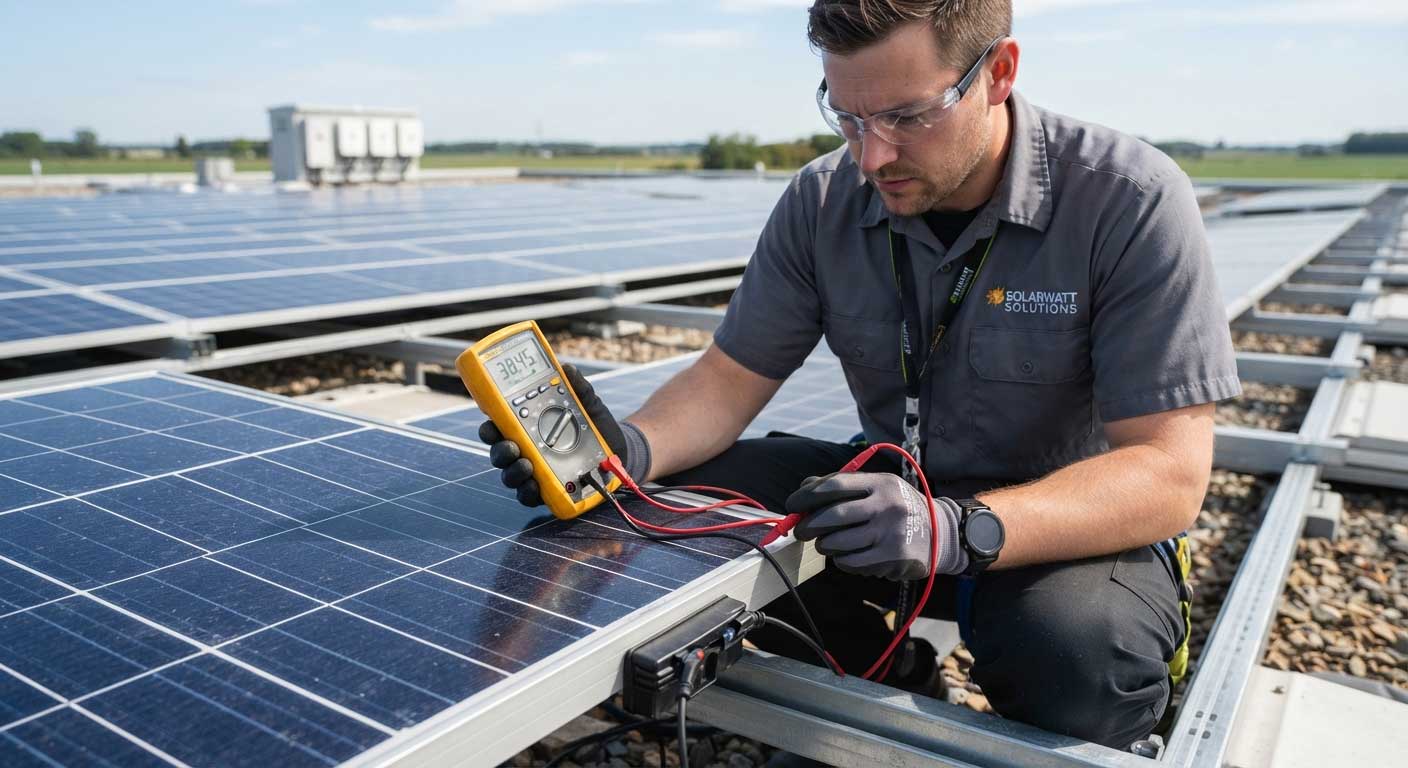
A digital multimeter is one of the most common tools for checking solar panel performance.
Before testing:
- Place the panel under direct sunlight
- Disconnect the panel from batteries or controllers
- Check the rated voltage and current on the specification label
- Set the multimeter correctly
Step 1: Measure Open Circuit Voltage (Voc)
Open circuit voltage shows the maximum voltage a solar panel can produce without a load.
Testing steps:
- Set the multimeter to DC voltage mode.
- Connect the red probe to the positive terminal.
- Connect the black probe to the negative terminal.
- Read the displayed voltage.
Example:
A 100W solar panel may have:
- Rated voltage: around 18V
- Open circuit voltage: around 21V–23V
The exact value depends on panel design and temperature.
If the reading is close to the specification, the solar cells are likely generating voltage normally.
Step 2: Measure Operating Current
Voltage alone does not confirm that a panel is working properly.
Current testing helps determine whether the panel can actually deliver power.
Steps:
- Set the multimeter to DC current mode.
- Connect the meter according to manufacturer instructions.
- Measure output under strong sunlight.
A large difference between rated current and measured current may indicate:
- Partial shading
- Damaged cells
- Poor connectors
- Internal faults
Step 3: Calculate Solar Panel Output Power
Solar power output can be estimated using:
Power (W) = Voltage (V) × Current (A)
Example:
18V × 5A = 90W
If a 100W panel only produces 30W under suitable sunlight, further inspection is needed.
How to Test a Solar Cell Before Building a Panel
How to Test a Solar Cell for Electrical Problems
Individual solar cells can be tested before they are assembled into complete modules.
Important checks include:
- Cell voltage output
- Visible cracks
- Solder connection quality
- Current consistency
When testing solar cells:
- Use controlled lighting conditions
- Avoid touching conductive surfaces
- Compare multiple cells together
A single damaged cell can reduce the performance of an entire solar module.
Common Tools Used for Solar Panel Testing
Solar Power Tester vs Multimeter
Different tools provide different levels of testing accuracy.
| Tool | Main Function | Best Use |
|---|---|---|
| Digital Multimeter | Measures voltage and current | Basic troubleshooting |
| Solar Power Tester | Measures solar output parameters | Professional testing |
| Clamp Meter | Measures current without disconnecting wires | System inspection |
| I-V Curve Tester | Complete electrical analysis | Laboratory testing |
For homeowners, a quality multimeter is usually enough for basic diagnosis. For manufacturers and installers, advanced testing equipment provides deeper performance analysis.
Practical Testing Experience from Real Solar Applications
During solar system evaluations, we often find that users immediately replace panels when output drops. That is not always the right solution.
For example, a flexible solar panel installed on an RV roof may show reduced output because:
- The roof angle changes sunlight exposure
- Dust covers the surface
- Cable connectors loosen over time
- Nearby objects create shadows
A quick electrical test before replacement can save unnecessary costs.
How to Tell If Solar Panels Are Working
Signs of a Properly Working Solar Panel
Homeowners can check several simple indicators:
- Charge controller shows solar input
- Battery charging voltage increases
- Inverter receives solar power
- Monitoring system displays energy production
However, visual inspection alone cannot confirm full performance.
Warning Signs of Solar Panel Problems
Look for:
- Zero voltage output
- Sudden power reduction
- Cracked surface
- Burn marks near connectors
- Loose wiring
- Unusual hot spots
A solar panel can still show voltage while producing very little usable power, which is why current testing is also important.
Professional Methods to Test Solar Panel Performance
How to Know If Solar Panels Are Working Correctly
A solar panel is considered functional when it produces electrical output close to its rated specifications under suitable test conditions.
A professional evaluation usually checks:
- Voltage output
- Current output
- Power generation
- Temperature impact
- Connection quality
At Bright Solar, we recommend comparing actual measurements with the manufacturer datasheet instead of relying only on appearance. A clean-looking panel with a hidden electrical issue may perform worse than an older panel that has been properly maintained.
Testing Solar Panels Under Real Conditions
Check Solar Panel Output in Different Environments
Solar panel testing should consider real installation conditions.
Performance can change because of:
Sunlight Conditions
Solar modules produce their highest output under strong sunlight. Testing during cloudy weather or early morning may show lower readings.
Temperature Effects
Solar panels generally produce lower voltage as temperature rises. This is why professional testing considers module temperature during measurement.
Installation Angle
A panel installed at the wrong angle may generate less energy even when the solar cells are healthy.
How to Diagnose Common Solar Panel Problems
Low Voltage Output
Possible causes:
- Damaged solar cells
- Loose connectors
- Broken cables
- Incorrect wiring
- Heavy shading
Solution:
Check each connection point and compare the measured voltage with the panel specification.
Low Current Output
Possible causes:
- Dirt or dust on the panel surface
- Partial shading
- Internal cell damage
- Poor sunlight conditions
Current problems are often harder to detect because the panel may still show normal voltage.
Zero Output from Solar Panel
If a panel produces no electricity:
Check:
- Cable connections
- Connector polarity
- Junction box condition
- Multimeter settings
- Visible physical damage
Many “dead panel” problems are actually caused by connection failures rather than damaged photovoltaic cells.
Advanced Solar Power Tester Methods
Using Solar Irradiance and I-V Curve Testing Equipment
Professional installers and manufacturers often use advanced testing equipment.
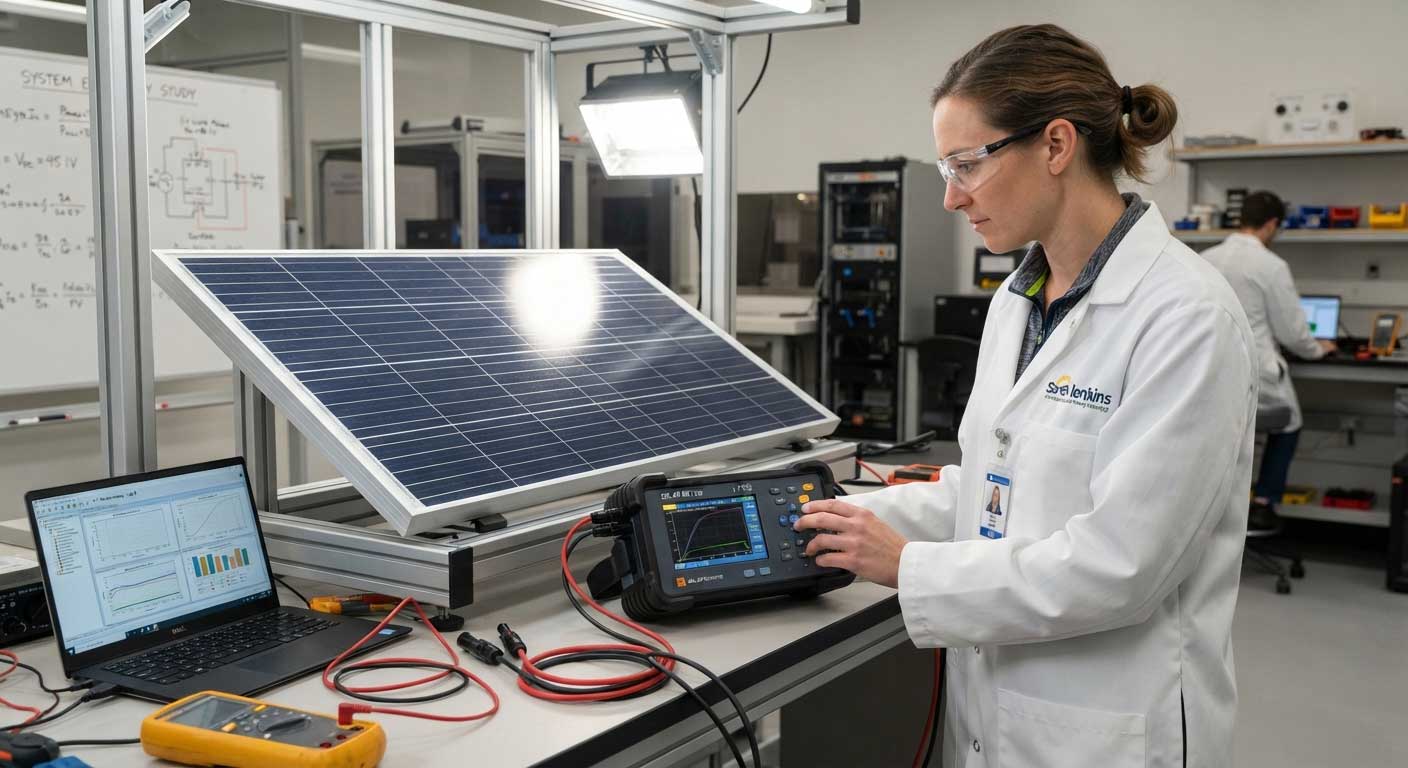
A solar power tester can measure:
- Solar irradiance
- Voltage curve
- Current curve
- Maximum power point
- Module efficiency
I-V curve testing provides a complete picture of solar module performance by showing how voltage and current change under different operating conditions.
The International Electrotechnical Commission (IEC) Photovoltaic Standards Overview provides internationally recognized standards used for photovoltaic module testing and performance evaluation.
Solar Panel Testing Checklist
Before deciding that a solar panel has failed, check the following:
| Testing Item | Expected Result |
|---|---|
| Panel surface | No major cracks or damage |
| Voltage reading | Close to rated Voc |
| Current reading | Matches sunlight conditions |
| Connectors | Secure and corrosion-free |
| Cables | No cuts or overheating |
| Charge controller | Detects solar input |
| Battery charging | Shows normal charging |
This simple checklist can identify most common solar panel issues without replacing equipment unnecessarily.
How to Test a Solar Panel at Home Safely
Simple Home Testing Steps
Homeowners can perform basic checks without specialized equipment.
Follow these steps:
- Clean the solar panel surface.
- Place the panel under direct sunlight.
- Disconnect external loads.
- Measure voltage with a multimeter.
- Compare results with the specification label.
- Check wiring and connectors.
Always avoid short-circuiting solar panels during testing because it may damage connectors or create unnecessary heat.
FAQ About How to Test a Solar Panel?
How do I know if my solar panel is working?
You can check if a solar panel is working by measuring voltage and current output under sunlight. A working panel should produce readings close to its rated specifications.
Can I test a solar panel with a multimeter?
Yes. A multimeter can measure voltage and current to identify common solar panel problems, including wiring issues and reduced output.
What voltage should a 12V solar panel read?
A typical 12V solar panel may show around 18V–22V open-circuit voltage depending on design and environmental conditions.
Why is my solar panel showing voltage but no power?
A panel may show voltage but produce little power because of damaged cells, poor current output, shading, faulty connectors, or incorrect wiring.
How often should solar panels be tested?
Routine visual checks are recommended regularly, while electrical performance testing can be performed when output decreases or system problems appear.
Can a damaged solar cell be repaired?
Most damaged photovoltaic cells cannot be repaired individually after module assembly. In many cases, replacing the affected panel is more practical.
Does cleaning solar panels improve performance?
Yes. Dust, dirt, and debris can reduce sunlight reaching solar cells and lower energy production, especially in dry or dusty environments.
Expert Tips for Accurate Solar Panel Testing
Testing solar panels is not only about measuring numbers; it is about understanding what those numbers mean.
A voltage reading by itself does not prove that a solar panel is healthy. A strong-performing module must produce both correct voltage and usable current.
For reliable testing:
- Test under similar sunlight conditions
- Record measurements over time
- Compare results with original specifications
- Inspect wiring before replacing panels
Bright Solar applies similar testing principles when evaluating flexible solar panels for different applications, including residential systems, RV energy solutions, and portable solar products.Visit product page:Flexible Solar Panels
Conclusion: How to Test a Solar Panel Correctly
How to test a solar panel requires checking voltage, current, connections, and real-world operating conditions. Using a multimeter provides a practical way to identify basic issues, while professional solar power testers provide deeper performance analysis.
Whether you are checking a home solar system or troubleshooting a portable panel, accurate testing helps confirm whether the problem comes from the panel, wiring, or surrounding equipment. Proper inspection extends solar system reliability and protects your investment.
The prev: How to Install Solar Panels on Roof?The next: What Direction Should Solar Panels Face?
Related recommendations
-

How many volts should a 100 watt solar panel produce?
296How many volts should a 100 watt solar panel produce? Learn the normal voltage range, testing methods, and real performance data for 100W solar panels with Bright Solar.
View details -
how to get my solar panels azmuth and declination?
140Learn how to get my solar panels azmuth and declination with field methods, solar geometry data, and Bright solar engineer insights for accurate panel alignment.
View details -
How Many KW Does a Solar Panel Produce?
178How many kw does a solar panel produce? Learn real solar panel output, watt-to-kW conversion, energy production factors, and expert insights from Bright Solar.
View details -
how much do photovoltaic panels cost?
195Discover how much do photovoltaic panels cost with real market data, pricing factors, and Bright solar insights on panel types, efficiency, and system value.
View details