300 Watt Flexible Solar Panel: Serious Off-Grid Power Without Heavy Roof Loads
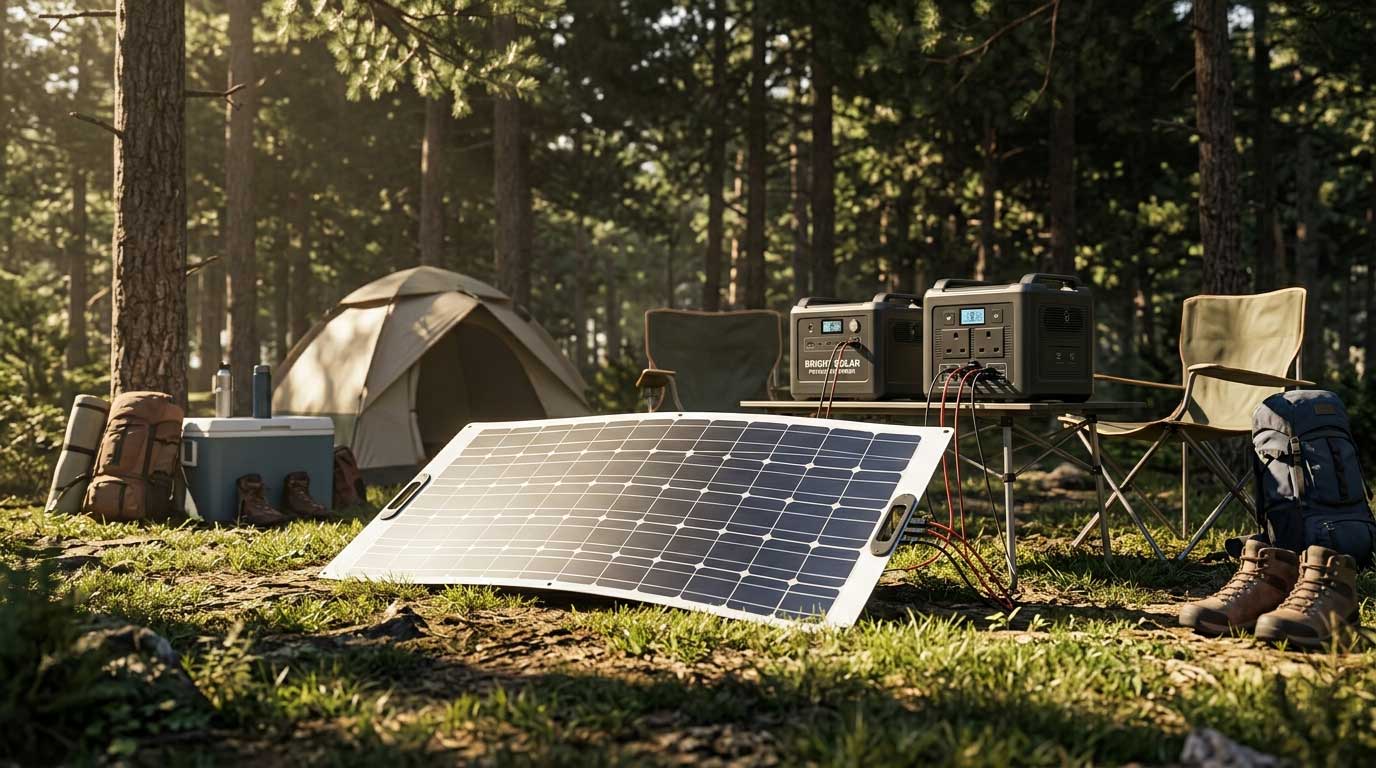
A 300 watt flexible solar panel is one of the smartest options for RVs, boats, camper vans, and mobile off-grid systems that need meaningful daily power without the extra roof weight, bulky mounting rails, or aerodynamic drag of rigid solar panels.
The first time I seriously respected a 300W flexible setup was outside Sedona.
The parking area looked like a trade show for overbuilt expedition rigs. Aluminum racks, oversized rooftop arrays, thick mounting hardware—everything looked impressive until the afternoon winds arrived.
You could hear it.
Metal humming.
Panel brackets vibrating.
Roof hardware rattling.
One van parked nearby carried a low-profile flexible solar setup bonded almost flush to the roofline.
Quiet.
That silence stuck with me more than any wattage claim.
People often assume bigger solar automatically means better solar. After years around off-grid travelers, I see it differently: weight, airflow, heat, roof durability, and long-term reliability matter almost as much as raw output.
A good 300 watt flexible solar panel sits in an interesting middle ground—it offers meaningful power without turning a roof into industrial scaffolding.
Why 300 Watt Flexible Solar Panels Are Becoming More Popular
Solar demand for mobile living has changed dramatically.
Remote work increased off-grid travel.
Van conversions became mainstream.
Marine battery systems grew larger.
Portable lithium storage became affordable.
According to the RV Industry Association, RV travel and off-grid camping remain major drivers of energy upgrades among vehicle owners.
Source: RV Industry Association
https://www.rvia.org
Meanwhile, higher-efficiency monocrystalline cells improved power density.
A modern 300 watt flexible solar panel now supports:
- Portable refrigerators
- Laptop charging
- Camera systems
- Lithium battery charging
- Lighting systems
- Portable internet equipment
- Marine electronics
Without requiring heavy rooftop racks.
That balance explains why 300W systems are quietly becoming a favorite among serious travelers.

How Much Electricity Does a 300 Watt Flexible Solar Panel Produce?
Marketing language usually sounds cleaner than reality.
A 300 watt flexible solar panel does not output 300 watts continuously all day.
Actual energy production changes constantly based on:
- Sun exposure
- Temperature
- Roof angle
- Cloud cover
- Panel shading
- Charge controller efficiency
In practical field conditions, most quality 300W systems generate:
- Approximately 1.2kWh to 2.1kWh daily
Assuming:
- 4–7 peak sunlight hours
- Proper MPPT controller
- Minimal shading
- Efficient battery storage
The U.S. Department of Energy notes that solar photovoltaic systems experience efficiency loss under elevated temperatures and shading conditions.
Source: U.S. Department of Energy
https://www.energy.gov/eere/solar
And temperature matters more than beginners expect.
Outside Lake Mead one July afternoon, I checked a dark van roof with an infrared thermometer and saw temperatures climbing above 80°C.
The system still charged.
Just not nearly as efficiently as early morning.
Solar brochures rarely mention what desert heat actually does.
What Can a 300 Watt Flexible Solar Panel Power?
| Device | Typical Usage Support |
|---|---|
| 12V refrigerator | Full-time operation |
| Laptop charging | Daily use |
| LED lights | Multiple nights |
| Portable fan | Overnight operation |
| Camera equipment | Continuous charging |
| Starlink internet | Daily support |
A properly configured 300W system often supports lightweight off-grid living surprisingly well.
Not luxury-home energy.
But meaningful independence.
Enough to avoid running generators every evening.
Why 300W Flexible Systems Continue Gaining Attention
Lightweight Solar Panels Are Changing Mobile Installations
Five years ago, many RV builders still defaulted to framed glass modules. Today, conversations look different.
Weight has become a major design consideration.
Modern lightweight solar panels allow vehicle owners to add meaningful charging capacity without loading roofs with extra rails, brackets, and support structures. On smaller camper conversions, every kilogram saved on the roof improves handling, reduces stress on mounting points, and simplifies installation.
One van builder I worked with in Colorado summed it up perfectly:
“Nobody complains their roof is too light.”
That observation explains why 300w flexible solar panels have become increasingly common on mobile projects where practicality matters more than appearance.
300W Flexible Solar Panels for Real-World Travel
There is a noticeable difference between a product that looks good in a catalog and one that survives thousands of miles of vibration.
Quality 300w flexible solar panels are now being installed on:
- Camper vans
- Expedition vehicles
- Sailboats
- Compact RVs
- Utility trailers
The appeal is straightforward.
A properly engineered 300w flexible solar panel delivers substantial charging capability while avoiding much of the weight associated with traditional rooftop systems.Learn more:300W Flexible Solar Panels for Reliable Off-Grid Power
At Bright Solar, customers often compare lightweight flexible solar panels with conventional framed alternatives. The conversation usually starts with power output but eventually shifts toward roof loading, wind resistance, and long-term durability.
Those factors become increasingly important after months of real travel rather than a few days of testing.
Flexible vs Lightweight Rigid Solar Panels
Some buyers compare lightweight rigid solar panels against flexible designs.
There are situations where rigid modules remain the better choice, particularly on stationary installations where airflow is easy to maintain.
Mobile applications create different priorities.
A solar panel flexible 300w configuration often offers advantages when the installation surface is slightly curved, space is limited, or minimizing roof height is important.
This is especially true for stealth campers and marine installations where low-profile equipment is preferred.
The reality is that many vehicle owners are not choosing between good and bad products.
They are choosing between different engineering compromises.
Flexible Solar Panel 300W Systems for Mobile Homes and RVs
Demand for lightweight solar panels for mobile homes continues growing because newer mobile energy systems consume far more electricity than they did a decade ago.
Refrigerators run continuously.
Internet equipment stays online.
Lithium battery banks charge faster.
As a result, 300w flexible solar panels often represent a practical middle ground between small maintenance chargers and oversized rooftop arrays.
A typical 300 watt solar panel flexible installation can provide enough daily production to support battery charging, communications equipment, lighting, and essential electronics without transforming the roof into a framework of aluminum rails.
For RV owners seeking simplicity, a flexible 300w solar panel frequently offers one of the best balances between output and installation convenience.
Choosing a 300W Flexible Solar Panel Kit
Not all systems are sold as standalone modules.
Many travelers now prefer a complete 300w flexible solar panel kit that includes:
- Solar panel
- MPPT charge controller
- Wiring harness
- MC4 connectors
- Mounting accessories
This approach reduces compatibility issues and shortens installation time.
At Bright Solar, we often recommend evaluating the complete 300w solar panel flexible system rather than focusing solely on panel wattage. The panel receives most of the attention, but charging efficiency, wiring quality, and controller performance influence daily results just as much.
A well-designed 300w flexible solar panel setup tends to outperform a poorly matched system with a higher advertised wattage.
That is something field experience teaches quickly.
And it is one reason why 300w flexible solar panels continue gaining popularity among RV owners, van builders, and marine users looking for dependable off-grid energy without unnecessary roof weight.
Why Flexible Solar Panels Work Better for Mobile Roofs
Rigid solar still dominates residential rooftops because stationary performance matters more than mobility.
Vehicles are different.
Movement changes the rules.
Roof Weight Matters More Than You Think
A rigid 300W system becomes heavy fast.
Once aluminum framing, rails, and brackets are added, roof stress increases dramatically.
Flexible solar panels 300w systems weigh significantly less.
That matters for:
- Camper vans
- Fiberglass RV roofs
- Pop-top campers
- Marine decks
- Lightweight trailers
Especially over years of highway vibration.
I once inspected an older fiberglass RV roof near Arizona where mounting hardware had slowly developed tiny fractures around screw points after repeated travel vibration.
The owner blamed poor sealant.
The real problem was movement and accumulated stress.
Flexible solar panels 300w reduces much of that burden by staying flush against the roof.
Low-Profile Solar Improves Aerodynamics
This point rarely gets discussed honestly.
Raised rooftop brackets create turbulence.
Flexible solar panels 300w mounted nearly flush create:
- Less drag
- Reduced wind noise
- Lower vibration
- Cleaner rooflines
One Bright Solar customer tracked fuel usage over nearly 9,500 miles after replacing raised aluminum-framed panels with flexible rooftop solar.
Fuel efficiency improved roughly 3–5%.
Small on paper.
Noticeable over long road trips.
At interstate speeds, aerodynamics quietly become expensive.

Where Cheap Flexible Solar Panels Usually Fail
The weak points are predictable.
And avoidable.
1. Weak Surface Materials
Lower-cost PET coatings degrade faster under prolonged sunlight.
ETFE performs significantly better outdoors.
According to DuPont material testing, ETFE materials provide stronger UV resistance and outdoor durability compared with standard polymer alternatives.
Source: DuPont
https://www.dupont.com
That matters enormously in desert regions and marine environments.
2. Heat Buildup
Flexible solar panels 300w mounted directly onto dark roofs trap heat aggressively.
Excessive temperatures accelerate:
- Adhesive fatigue
- Cell degradation
- Efficiency loss
- Surface warping
Small airflow gaps often improve longevity.
Heat remains one of the biggest design challenges for flexible solar panels 300w systems.
3. Poor Waterproofing
Many low-cost systems fail at the connectors before the cells themselves wear out.
A quality 300 watt flexible solar panel should include:
- IP67 or IP68 junction boxes
- UV-resistant wiring
- Waterproof MC4 connectors
- Tinned copper conductors
Salt air and highway moisture expose weak components quickly.
Best Uses for a 300 Watt Flexible Solar Panel
Bigger systems are not always smarter.
Balanced systems often survive longer because they remain simpler.
Ideal Applications
| Application | Why 300W Works Well |
|---|---|
| Van life | Daily energy support |
| RV camping | Lightweight off-grid charging |
| Sailboats | Curved mounting surfaces |
| Remote work setups | Laptop and electronics support |
| Portable lithium charging | Stable battery replenishment |
One of the cleanest off-grid camper builds I saw used a single lightweight 300W flexible system paired with lithium batteries and a compact MPPT controller.
No oversized framework.
No industrial roof rack.
Just quiet solar supporting refrigeration, lights, cameras, and internet equipment.
Sometimes restraint produces better engineering.
Choosing the Right 300 Watt Flexible Solar Panel
The meaningful differences usually sit below the surface.
Look beyond advertised wattage.
Pay attention to:
- Cell efficiency
- ETFE coating quality
- Waterproofing
- UV resistance
- Cable durability
- Heat tolerance
At Bright Solar, 300 w flexible solar panel products are engineered specifically for:
- RV travel
- Marine environments
- Lightweight rooftop systems
- Long-distance vibration resistance
- Harsh outdoor conditions
Because laboratory charts rarely reflect reality.
Dust.
Salt air.
Crosswinds.
Tree debris.
Road vibration.
Summer heat.
Those conditions expose weak equipment very quickly.
FAQ: 300 Watt Flexible Solar Panel
How much electricity does a 300 watt flexible solar panel produce daily?
Most 300 watt flexible solar panels generate roughly 1.2kWh to 2.1kWh daily depending on sunlight exposure, weather, and system efficiency.
Can a 300 watt flexible solar panel charge lithium batteries?
Yes. A 300 watt flexible solar panel commonly charges lithium battery systems when paired with a compatible MPPT controller.
Are flexible solar panels waterproof?
High-quality flexible solar panels generally include waterproof junction boxes and ETFE weather-resistant surfaces designed for outdoor environments.
Can flexible solar panels bend?
Yes. 300 w Flexible solar panels are designed to conform slightly to curved surfaces, making them suitable for RVs, boats, and camper vans.
How long does a 300 watt flexible solar panel last?
Premium 300 w flexible solar panels typically last between 5 and 15 years depending on installation quality, environmental exposure, and temperature conditions.
How to attach flexible solar panel to RV roof?
To attach a 300 w flexible solar panel to an RV roof, clean the roof thoroughly, position the panel with airflow clearance, secure it using industrial adhesive or VHB tape, seal cable entry points with waterproof sealant, and connect the panel to a charge controller before testing system output.Learn more about “How to attach flexible solar panel to RV roof“
How to Attach Flexible Solar Panels?
300 w Flexible solar panels are usually attached using industrial adhesive, VHB tape, stainless screws, or hybrid mounting methods depending on the surface material and heat conditions. Correct airflow spacing and waterproof cable routing matter more than most first-time installers realize.Learn more about “How to Attach Flexible Solar Panels“
How Much Is One Solar Panel?
How much is one solar panel depends on its wattage, technology, efficiency, and application. A single solar panel usually costs between $100 and $350 for standard residential models, while premium and 300 w flexible solar panel can range from $200 to over $700 depending on specifications.Learn more about “How Much Is One Solar Panel“
How Much Is A Solar Panel For House?
A single solar panel for a house usually costs between $100 and $500, depending on wattage, technology, and brand. However, a complete home solar system requires multiple panels, inverters, mounting equipment, and installation services.Learn more about “How Much Is A Solar Panel For House“
How to Clean Flexible Solar Panels?
300 w Flexible solar panels should be cleaned using soft water, a non-abrasive sponge, and mild soap while avoiding harsh chemicals, pressure washers, or stiff brushes. Regular cleaning improves energy output, prevents surface degradation, and helps 300 w flexible solar panels last significantly longer in outdoor conditions.Learn more about “How to Clean Flexible Solar Panels“
Final Thoughts
A 300 watt flexible solar panel is not about building the largest rooftop system possible.
It is about useful, practical off-grid energy.
Less weight.
Lower drag.
Simpler installation.
Meaningful daily charging.
And after enough highway miles listening to aluminum brackets vibrate through desert wind, quiet low-profile solar starts feeling like the smarter choice.
Related recommendations
-

Best semi flexible solar panels: A Complete Guide for RV, Marine and Off-Grid Applications
196Explore the best semi flexible solar panels for RV, marine, and off-grid systems with expert advice, performance data, installation insights, and Bright Solar experience.
View details -
400 Watt Solar Panels for Reliable Off-Grid and Residential Energy
295400 watt solar panels deliver reliable off-grid and residential energy with high efficiency, durable design, and long-term savings. Explore Bright Solar solutions.
View details -
best direction for solar panels (Field Guide from Bright Solar)
262best direction for solar panels explained with real field data, tilt insights, and case studies. Learn optimal orientation for higher solar yield and ROI.
View details -
Enphase Energy Gains Ground in Germany’s Residential Solar-Plus-Storage Market
294Enphase Energy is seeing rising demand in Germany for its IQ microinverters and IQ Batteries as households react to high electricity prices. With partners like 1KOMMA5 and local installers, Enphase is combining safe LFP batteries, long-warranty mi...
View details