Flexible 100 Watt Solar Panel for RV, Marine and Off-Grid Applications
A flexible 100 watt solar panel is a lightweight photovoltaic solution designed for applications where traditional rigid solar modules are difficult to install. It provides portable solar power for RVs, boats, camping equipment, and small off-grid systems while reducing installation weight and space requirements.
Flexible solar technology has changed how many people approach renewable energy.
When customers first contact Bright Solar, they often ask one simple question:
“Can a lightweight solar panel really provide enough power for outdoor applications?”
After years working with flexible photovoltaic products, our answer is clear:
Yes, a properly designed flexible 100 watt solar panel can provide reliable energy for many mobile and off-grid applications when the system is correctly matched with batteries, controllers, and usage requirements.
What is a flexible 100 watt solar panel?
A flexible 100 watt solar panel is a photovoltaic module capable of producing up to 100 watts of electrical power under standard test conditions while using a lightweight and bendable construction.
Unlike traditional solar panels that normally use thick glass and aluminum frames, flexible panels are manufactured with thinner materials that allow easier installation on curved or irregular surfaces.
The basic structure usually includes:
| Layer | Function |
|---|---|
| Protective surface coating | Protects solar cells from weather exposure |
| Photovoltaic cells | Convert sunlight into electricity |
| Flexible backing layer | Provides lightweight support |
| Junction box | Transfers generated electricity |
Bright Solar flexible solar panels are designed around practical applications where weight, installation space, and mobility are important factors.
Typical users include:
- RV owners
- Sailboat operators
- Camping enthusiasts
- Remote monitoring companies
- Off-grid energy users
Why choose a flexible 100 watt solar panel?
The biggest advantage of flexible solar technology is adaptability.
A traditional solar panel works best on flat, permanent structures.
A flexible solar panel works better when the installation environment is constantly changing.
For example:
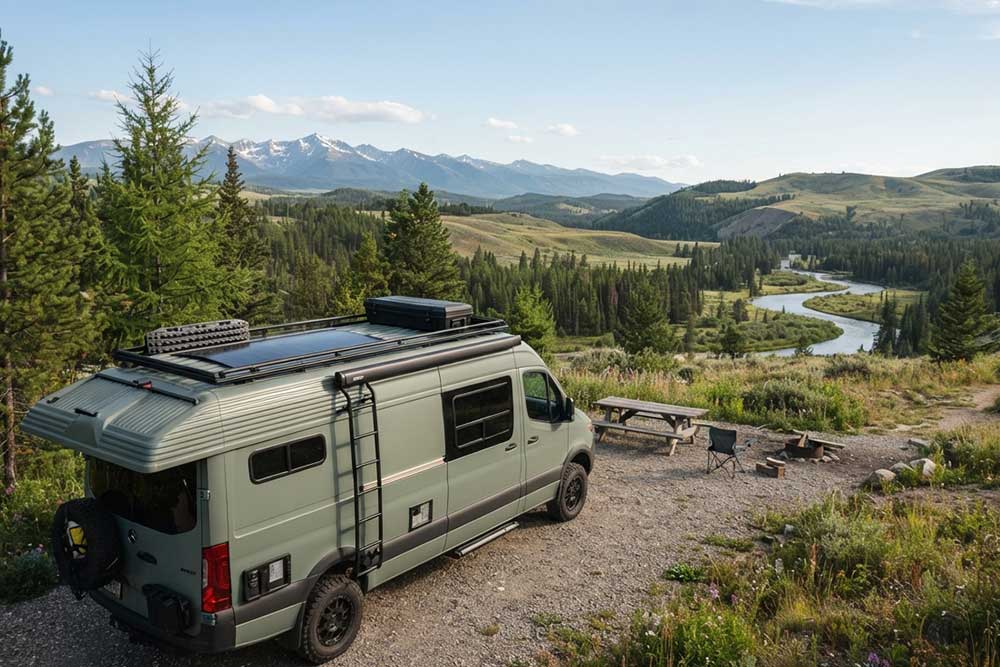
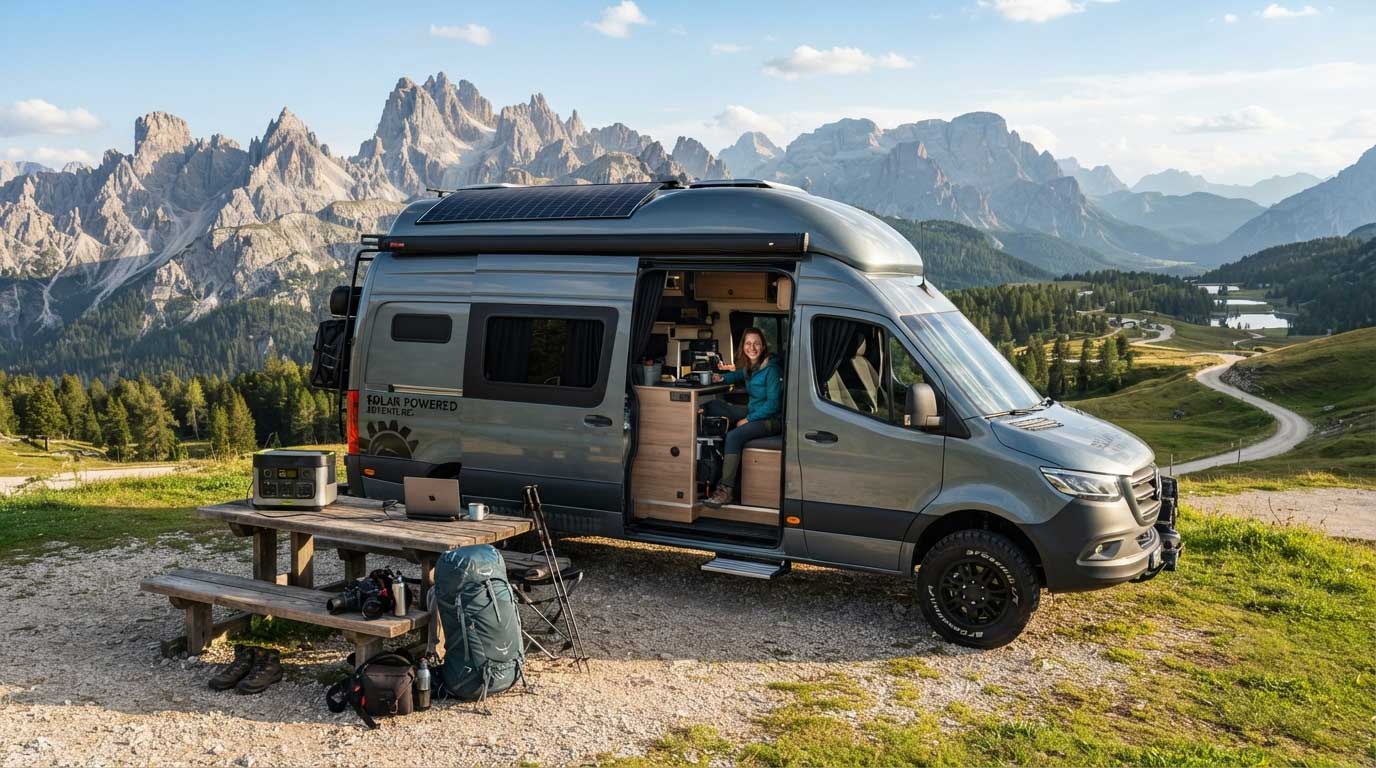
An RV roof may have curves.
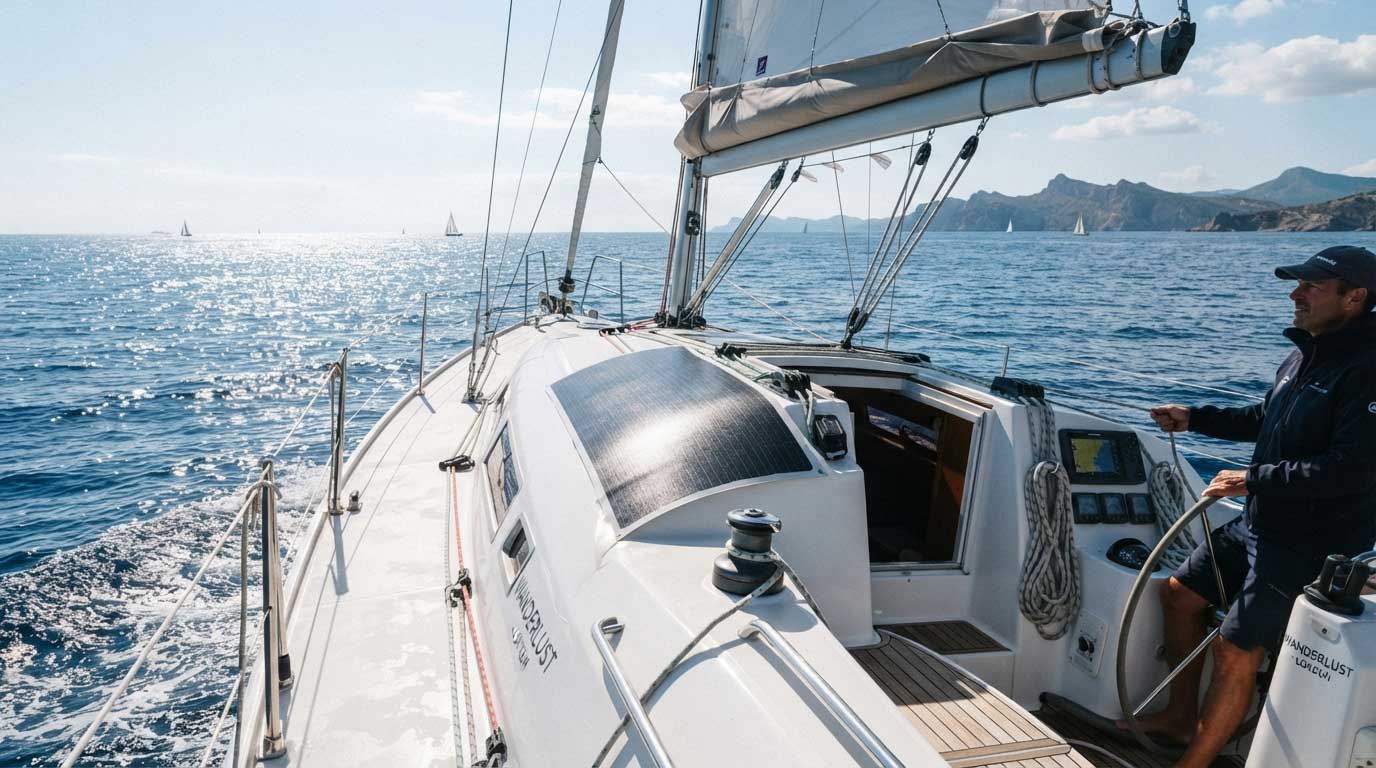
A boat deck may have limited space.
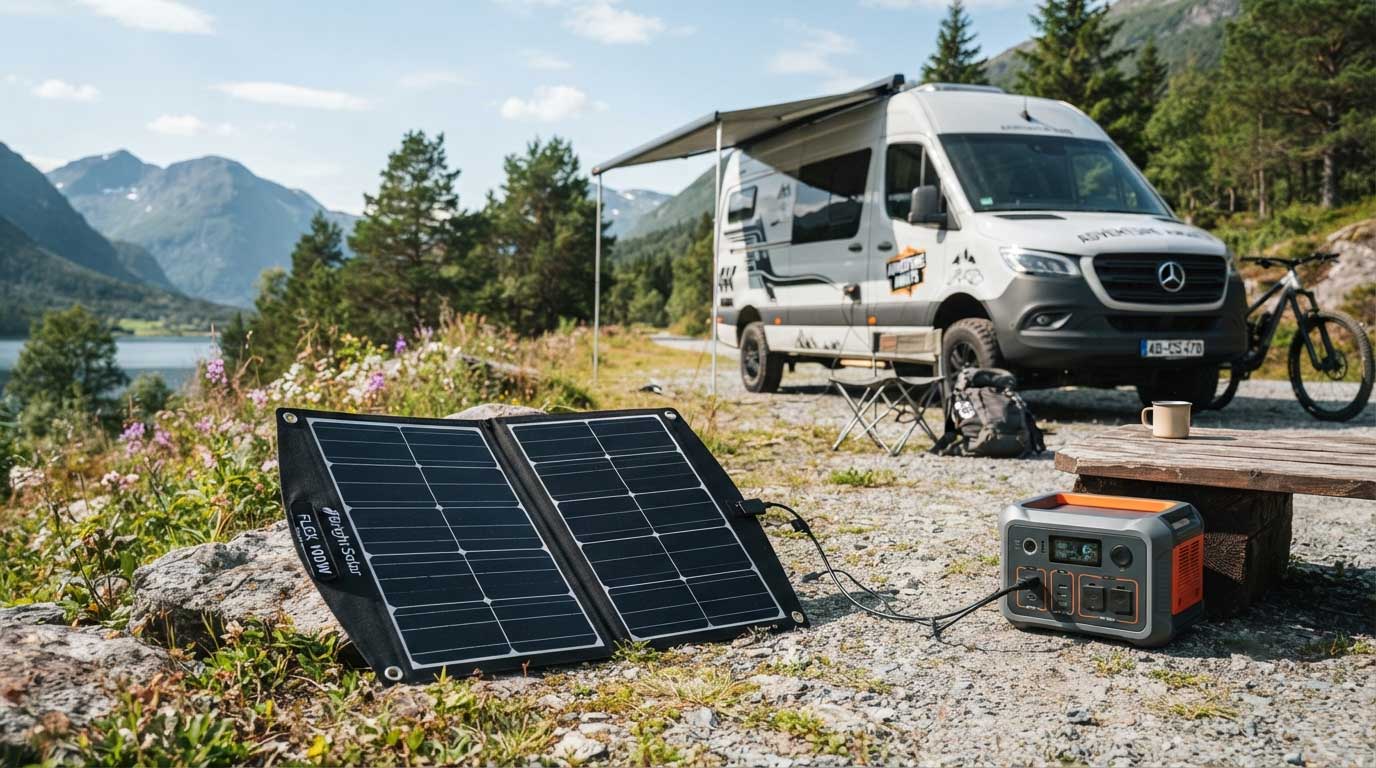
A portable energy kit may need to be carried by one person.
In these situations, flexibility becomes more valuable than simply increasing panel size.
Lightweight design reduces installation challenges
Weight is a major consideration in mobile applications.
For RV owners, every additional kilogram affects fuel efficiency and vehicle loading.
For marine users, unnecessary weight affects storage and balance.
A flexible 100 watt solar panel can reduce structural requirements because it does not always require heavy mounting brackets.
This creates several benefits:
- Easier transportation
- Faster installation
- Lower structural stress
- Better use of limited space
Flexible shape supports curved surfaces
One of the reasons customers choose flexible solar panels is because installation locations are not always flat.
Common examples include:
- Camper van roofs
- Boat cabins
- Emergency equipment boxes
- Portable shelters
During Bright Solar product testing, we noticed that many installation problems were not related to solar output.
They were related to fitting the panel into real environments.
A product designed only for laboratory conditions may perform well on paper but fail when installed in the field.
Technical specifications of flexible 100 watt solar panel
A typical flexible 100W solar panel specification may include:
| Specification | Typical Range |
|---|---|
| Rated Power | 100W |
| Solar Cell Type | Monocrystalline |
| Working Voltage | Around 18V–20V |
| Weight | Lightweight design |
| Application | RV, marine, portable systems |
| Surface Material | ETFE or similar protective coating |
The exact specifications depend on the manufacturer and product design.
Bright Solar focuses on balancing:
- Energy efficiency
- Durability
- Weight reduction
- Outdoor reliability
How much power can a flexible 100 watt solar panel generate?
A 100 watt solar panel does not produce exactly 100 watts every hour.
The actual electricity generated depends on:
- Sunlight intensity
- Installation angle
- Weather conditions
- Temperature
- System efficiency
A simple calculation:
Daily Energy Output = Panel Wattage × Peak Sun Hours × System Efficiency
For example:
100W × 5 peak sunlight hours × 80% efficiency
≈ 400Wh per day
This could support:
- LED lighting
- Mobile devices
- Small fans
- Battery charging
- Outdoor electronics
According to the National Renewable Energy Laboratory (NREL), solar photovoltaic performance varies depending on location, climate, and system design.
Source:
National Renewable Energy Laboratory Solar Research
Real-world experience: choosing the right flexible solar panel size
At Bright Solar, we often communicate with customers who initially select solar panels only by wattage.
However, wattage is only one part of the decision.
One RV customer from Germany contacted us for a compact energy solution.
The original plan was installing a larger rigid solar panel.
After checking the roof structure, storage limitations, and travel requirements, the customer changed to a flexible solar solution.
The final system included:
- Flexible solar panel
- Lithium battery
- MPPT controller
- Portable monitoring system
The result:
| Item | Before | After |
|---|---|---|
| Installation complexity | High | Reduced |
| Roof usage | Limited | Improved |
| Transportation | Difficult | Easier |
| System flexibility | Low | Higher |
The lesson from this project was simple:
The best solar solution is not always the biggest one.
It is the one that fits the user’s environment.
How to install a flexible 100 watt solar panel correctly?
A flexible 100 watt solar panel is easier to install than a traditional framed solar module, but the installation method still affects energy output and product durability.
From Bright Solar’s field experience, most installation failures are not caused by photovoltaic technology problems. They usually happen because the mounting surface was not prepared correctly or the electrical connections were overlooked.
A reliable installation process should include the following steps:
Step 1: Select the right installation surface
The first decision is choosing where the panel will operate.
A flexible solar panel is often installed on:
- RV roofs
- Boat cabins
- Camper trailers
- Portable energy systems
- Off-grid equipment
- Remote monitoring devices
Unlike rigid solar panels, flexible modules can adapt to surfaces where conventional glass panels cannot be mounted.
For example, an RV roof may contain curved areas, vents, and limited flat space.
A rigid panel installation may require additional brackets, while a flexible 100W solar panel can follow the vehicle’s shape and reduce installation complexity.
Step 2: Prepare the mounting area
Before installation, surface preparation is critical.
The recommended preparation process includes:
| Step | Purpose |
|---|---|
| Remove dust | Prevent weak bonding |
| Clean grease | Improve adhesion |
| Dry surface | Avoid moisture problems |
| Measure position | Prevent installation mistakes |
In marine applications, preparation becomes even more important.
Salt spray, humidity, and temperature changes can challenge any outdoor energy equipment.
A properly prepared surface helps reduce long-term maintenance.
Step 3: Connect the solar charging system
A 100 watt flexible solar panel normally works with a complete solar system.
Typical components include:
| Component | Function |
|---|---|
| Flexible solar panel | Converts sunlight into electricity |
| Charge controller | Protects battery charging process |
| Battery | Stores electrical energy |
| Inverter | Converts DC electricity to AC power |
For small off-grid applications, many users choose lithium batteries because of their lighter weight and higher usable capacity.
According to the U.S. Department of Energy, lithium-ion batteries are widely used in renewable energy storage because of their high energy density and efficiency.
Source:
U.S. Department of Energy Energy Storage Research
Flexible 100 watt solar panel performance factors
The rated power of a solar panel is measured under laboratory conditions.
Real-world performance depends on several variables.
Solar radiation conditions
A 100W flexible solar panel produces the highest output under direct sunlight.
Daily energy generation depends on:
- Geographic location
- Weather
- Installation angle
- Seasonal changes
For example:
A camper traveling through Arizona may receive significantly more solar energy than a camper operating in northern Europe during winter.
This difference does not mean the solar panel quality changes.
It means available solar radiation changes.
Temperature impact
Solar cells are affected by temperature.
According to the National Renewable Energy Laboratory (NREL), photovoltaic module performance decreases as operating temperature increases.
Source:
National Renewable Energy Laboratory Photovoltaic Research
This is why installation design matters.
A flexible solar panel mounted directly on a surface may experience different thermal conditions compared with a traditional panel with airflow underneath.
Shading management
Small shading areas can reduce solar generation.
Common shading sources include:
- Roof equipment
- Trees
- Antennas
- Boat structures
During installation, we recommend observing the sunlight path at different times of the day.
A location that looks sunny at 10 AM may become shaded after 3 PM.
Maintenance guide for flexible 100 watt solar panel
Flexible solar panels require less hardware maintenance compared with traditional systems, but regular inspection improves reliability.
Bright Solar recommends checking the following areas:
Clean the panel surface
Dust and dirt reduce the amount of sunlight reaching photovoltaic cells.
Maintenance tips:
- Use clean water
- Avoid abrasive materials
- Remove leaves and debris
- Inspect after storms
For RV and marine users, cleaning frequency depends on the environment.
A boat operating in coastal areas may require more frequent cleaning because salt deposits can accumulate.
Inspect cables and connectors
Electrical connections should be checked periodically.
Look for:
- Loose connectors
- Damaged insulation
- Water exposure
- Corrosion
Small problems found early are usually easier and cheaper to repair.
Monitor energy output
A noticeable reduction in charging performance may indicate:
- Shading problems
- Connection issues
- Battery problems
- Environmental changes
Many users focus only on the solar panel.
However, the complete energy system determines the final result.
Bright Solar application case: flexible solar solution for outdoor equipment
One practical application involved a European outdoor equipment company developing a portable communication system.
The original design used a conventional rigid solar module.
During field testing, engineers found several limitations:
- The panel was difficult to transport
- Storage space was limited
- Additional protection packaging increased weight
The team tested a flexible 100 watt solar panel solution.
After redesigning the system:
| Category | Improvement |
|---|---|
| Equipment weight | Reduced |
| Installation process | Simplified |
| Transportation | Easier |
| Product flexibility | Increased |
The project demonstrated an important point:
The best solar panel is not always the one with the highest wattage.
It is the one that matches the environment where it will be used.
Flexible 100 watt solar panel vs traditional 100W solar panel
| Feature | Flexible 100W Solar Panel | Traditional 100W Panel |
|---|---|---|
| Weight | Lower | Higher |
| Installation | Simple | Requires mounting hardware |
| Shape | Adaptable | Fixed |
| Transportation | Easy | More difficult |
| Best Use | RV, marine, portable systems | Permanent installations |
Both technologies have their advantages.
For residential rooftops, rigid panels remain popular.
For mobile applications, flexible technology offers clear benefits.
FAQ About Flexible 100 watt solar panel
What can a flexible 100 watt solar panel power?
A flexible 100 watt solar panel can support small off-grid applications such as battery charging, RV electronics, LED lighting, portable power stations, and outdoor equipment.
The actual output depends on sunlight conditions and system design.
Can a flexible 100 watt solar panel charge an RV battery?
Yes. It is commonly used as an auxiliary charging solution for RV batteries, especially when combined with a suitable charge controller.
Are flexible solar panels suitable for boats?
Yes. Their lightweight design and low-profile installation make them suitable for many marine applications where space and weight are important considerations.
How long does a flexible 100 watt solar panel last?
The service life depends on materials, installation conditions, and environmental exposure. High-quality flexible solar panels can provide years of reliable operation when properly maintained.
Does a flexible solar panel work on cloudy days?
Yes, but electricity production decreases because solar output depends on available sunlight intensity.
Can I install a flexible 100 watt solar panel myself?
Many small systems can be installed by experienced DIY users. However, electrical connections should always follow safety guidelines.
Why choose Bright Solar flexible solar panels?
Bright Solar provides flexible photovoltaic solutions designed for RV, marine, portable, and customized applications. The company focuses on lightweight design, manufacturing quality, and practical real-world performance.
Conclusion: Is a flexible 100 watt solar panel the right choice?
A flexible 100 watt solar panel is an excellent option for users who need lightweight, adaptable, and efficient solar power in locations where traditional panels are difficult to install.
It works especially well for:
- RV travel
- Marine applications
- Camping systems
- Portable energy solutions
- Small off-grid projects
At Bright Solar, we believe solar technology should adapt to real-life environments.
A solar panel should not only generate electricity.
It should fit the way people travel, work, explore, and live.
From portable outdoor equipment to customized renewable energy projects, flexible solar technology continues to create new possibilities for clean power.
Related recommendations
-

Sungrow and Tata Power Help India’s Photovoltaic Projects with a BESS Project in Ladakh
260Sungrow is working with Tata Power Solar Systems Limited on a 60.56 MWh BESS project in Phyang, Leh, Ladakh, combining PV plus ESS solutions to support India’s photovoltaic projects, peak power management, and long-term clean energy growth.
View details -
Solar Panels on RV Roof: Complete Guide for Off-Grid RV Power
235Solar panels on RV roofs provide off-grid electricity by combining solar generation, battery storage, charge control, and proper roof planning to meet real t...
View details -
Solar Panel Electric Fence: A Practical Guide for Reliable Off-Grid Protection
261Discover how a solar panel electric fence delivers reliable off-grid livestock and property protection. Learn sizing, battery requirements, installation tips, and real-world performance.
View details -
Flexible Adhesive Solar Panels: Uses, Mounting and Buying Guide
142Flexible adhesive solar panels suit selected low-profile installations when the panel, adhesive, and mounting surface are compatible.
View details