Portable Folding Solar Panel: How to Choose and Use One
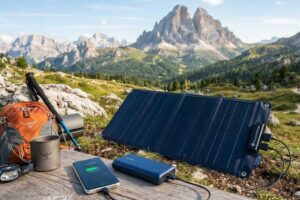
A portable folding solar panel converts sunlight into electricity and folds into a compact package for transport. It is useful for camping, RV trips, and off-grid charging when its wattage, connectors, and output match your equipment.
For outdoor users, portability is only half the equation. A panel also needs to collect enough energy during the hours available, connect safely to the intended device, and withstand repeated packing and deployment. A compact 100W panel may be suitable for a camper with a power station, while a hiker carrying every item may prefer a smaller, lighter model.
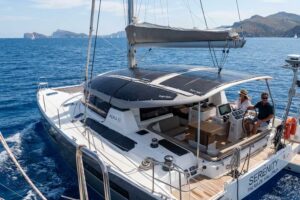
Bright Solar provides flexible solar panel solutions for B2B customers serving RV, outdoor power, and selected marine markets. When evaluating a portable folding solar panel, it is important to distinguish a complete portable charging product from a flexible solar module intended for integration into a larger system. Both can support mobile energy applications, but they have different construction and installation requirements.
What Is a Portable Folding Solar Panel?
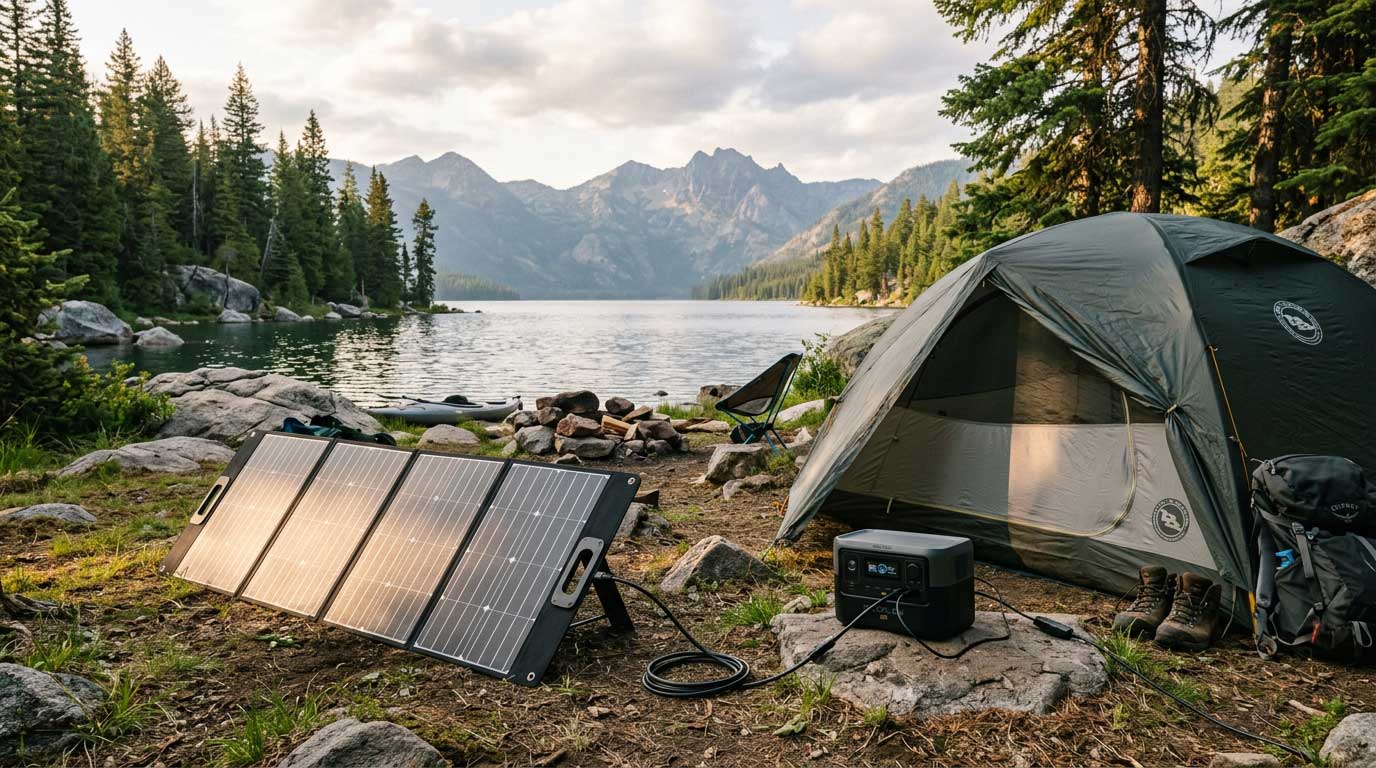
A portable folding solar panel is a photovoltaic panel designed to open for sunlight collection and fold into a smaller form for transport. Most models contain several solar sections joined by hinges or flexible connecting materials, with a carrying case, support legs, or integrated cable connections.
When sunlight reaches the solar cells, the panel generates direct-current electricity. Depending on its design, the output can charge compatible USB devices, supply a portable power station, or connect to a suitable battery system through the required controller.
Unlike a permanently mounted solar panel, a folding model can be carried to a sunny patch of ground and packed away when the trip is over.
Typical applications include:
- Camping: charging phones, cameras, GPS units, and small battery packs.
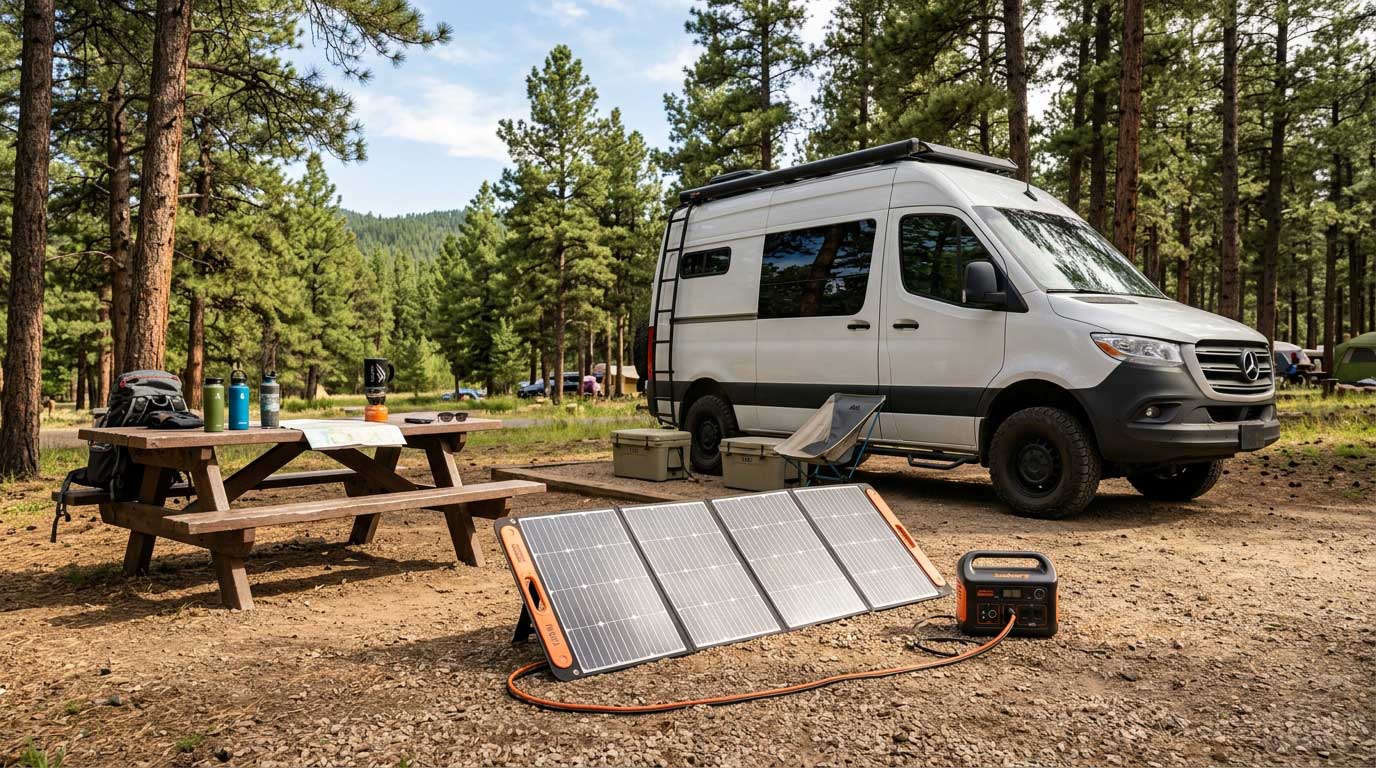
- RV travel: supplementing a compatible power station or off-grid battery system.
- Boating: providing temporary solar charging when the product is suitable for the marine environment.
- Emergency preparedness: supplying supplemental electricity during power interruptions.
- Remote work: charging selected electronic devices where conventional outlets are unavailable.
Not every folding panel includes a charge controller or regulated USB output. Some products are designed primarily to charge a specific portable power station. Always check the actual product specification before connecting a device.
How Much Power Does a Portable Folding Solar Panel Produce?
A portable folding solar panel’s rated wattage indicates its nominal power under specified test conditions. Its actual outdoor output changes with sunlight intensity, orientation, temperature, shading, and electrical losses.
The U.S. Department of Energy explains how photovoltaic cells convert sunlight into electricity and how solar cells are assembled into modules.
Source: U.S. Department of Energy — Solar Photovoltaic Technology Basics.
Common Wattage Ranges and Applications
The table below provides illustrative categories for comparing portable products. These are planning examples, not specifications for a particular Bright Solar model or guarantees of available products.
| Rated power | Possible application | Main consideration |
|---|---|---|
| 20–40W | Phones, GPS devices, small electronics | Limited energy for multiple devices or poor weather |
| 50–80W | Cameras, tablets, rechargeable battery packs | Output connections and positioning |
| 100–120W | Camping systems and compatible power stations | Folded size, weight, and voltage compatibility |
| 160–200W or more | Larger power stations and higher energy demand | More setup space and potentially greater carrying weight |
A larger panel can collect more energy under comparable conditions, but it is not always the better option. A 200W model may be inconvenient for backpacking, while a 40W model may be inadequate for someone who needs to replenish a large battery every day.
Estimate Daily Solar Energy
Use this simple planning formula:
Estimated daily energy (Wh) = rated power (W) × equivalent peak sun hours × system derating factor
For example, assume a 100W panel receives four equivalent peak sun hours and use an illustrative system derating factor of 0.75.
100W × 4 hours × 0.75 = 300Wh per day
This is a planning estimate, not a measured result or guaranteed output. The 0.75 factor is an assumption for this example; actual performance may differ considerably because of weather, shading, panel temperature, and conversion losses.
For a location-specific estimate, the National Renewable Energy Laboratory provides the PVWatts Calculator.
Source: NREL PVWatts Calculator.
One distinction is worth remembering: watts describe power at a given moment, while watt-hours describe energy accumulated over time. A panel’s rated wattage alone cannot tell you how much electricity will be available after a full day outdoors.
Key Benefits of a Portable Folding Solar Panel
1. Portable Power Without Permanent Installation
A folding panel can be stored in an RV compartment, car trunk, or camping equipment bag. You can unpack it when sunlight is available and store it before driving or when the weather turns unfavorable.
This is particularly useful for renters, occasional campers, and vehicle owners who do not want to modify their roofs. The trade-off is that the panel must be positioned and connected each time it is used.
2. Flexible Placement to Capture Sunlight
A portable panel can be placed away from a vehicle parked beneath trees. If a shadow moves across the campsite, the panel can be repositioned rather than accepting reduced exposure for the rest of the day.
Keep the active surface as clear of shade as possible. Depending on the electrical design, shading one section can reduce output disproportionately to the shaded area.
3. Convenient Charging for Outdoor Equipment
A compatible portable folding solar panel can support devices such as:
- Smartphones and tablets
- Cameras and rechargeable accessories
- GPS receivers and selected communication devices
- Portable power stations
- Compatible battery systems with the correct charge controller
The charging method matters. A panel with a regulated USB output may charge a supported phone directly, while a panel designed for a power station may require a particular DC connector and voltage range.
4. Reusable Supplemental Energy
Solar charging can reduce reliance on wall outlets or disposable batteries during trips. However, it is weather-dependent and should not be treated as a guaranteed source of power for critical equipment.
For overnight use, a suitable battery is often more practical than expecting a panel to supply electricity after sunset. The panel collects energy during daylight; the battery stores it for later use.
How to Choose the Right Portable Folding Solar Panel
The right model depends on the equipment you plan to power, how far you need to carry it, and the conditions in which it will operate.
Check Weight and Folded Dimensions
Look beyond the product’s headline weight. A carrying case, extension cable, stand, adapters, and controller may add to the total packed load.
For hiking, compare the complete kit against the available backpack space and the weight you are comfortable carrying. For RV travel, storage dimensions may matter more than a small difference in weight.
Match the Panel to Your Power Station
Before connecting a panel to a portable power station, confirm:
- Maximum solar input voltage
- Supported operating voltage range
- Maximum accepted input power
- Connector type and polarity
- Whether a specific controller or adapter is required
Check the panel’s open-circuit voltage (Voc), not just its rated wattage. A panel may be rated at a power level the power station can accept but still exceed the station’s maximum input voltage.
Never assume that a physically compatible plug guarantees an electrically compatible connection.
Assess Construction and Weather Protection
Inspect the folding hinges, support legs, stitching, cable connections, and protective covers. These parts experience repeated handling and may be exposed to dust, moisture, and temperature changes.
Check the documented ingress protection (IP) rating and the manufacturer’s instructions. A rating for one component does not automatically apply to the complete panel and its accessories.
Compare Warranty and Replacement Support
A portable panel is likely to be unfolded, moved, and packed repeatedly. Before purchasing, review the warranty period, exclusions, cable replacement options, and process for reporting a fault.
For distributors and OEM buyers, also confirm whether the supplier can provide consistent product specifications, packaging details, and technical documentation for the selected model.
How to Set Up a Portable Folding Solar Panel
A careful setup helps protect the panel and makes it easier to identify problems when charging performance is lower than expected.
Step 1 — Identify the Load
List the devices you need to charge and check their energy requirements. For a power station, review its battery capacity and solar input specifications. For direct USB charging, verify that the panel supports the required output and charging protocol.
Step 2 — Choose an Unshaded Location
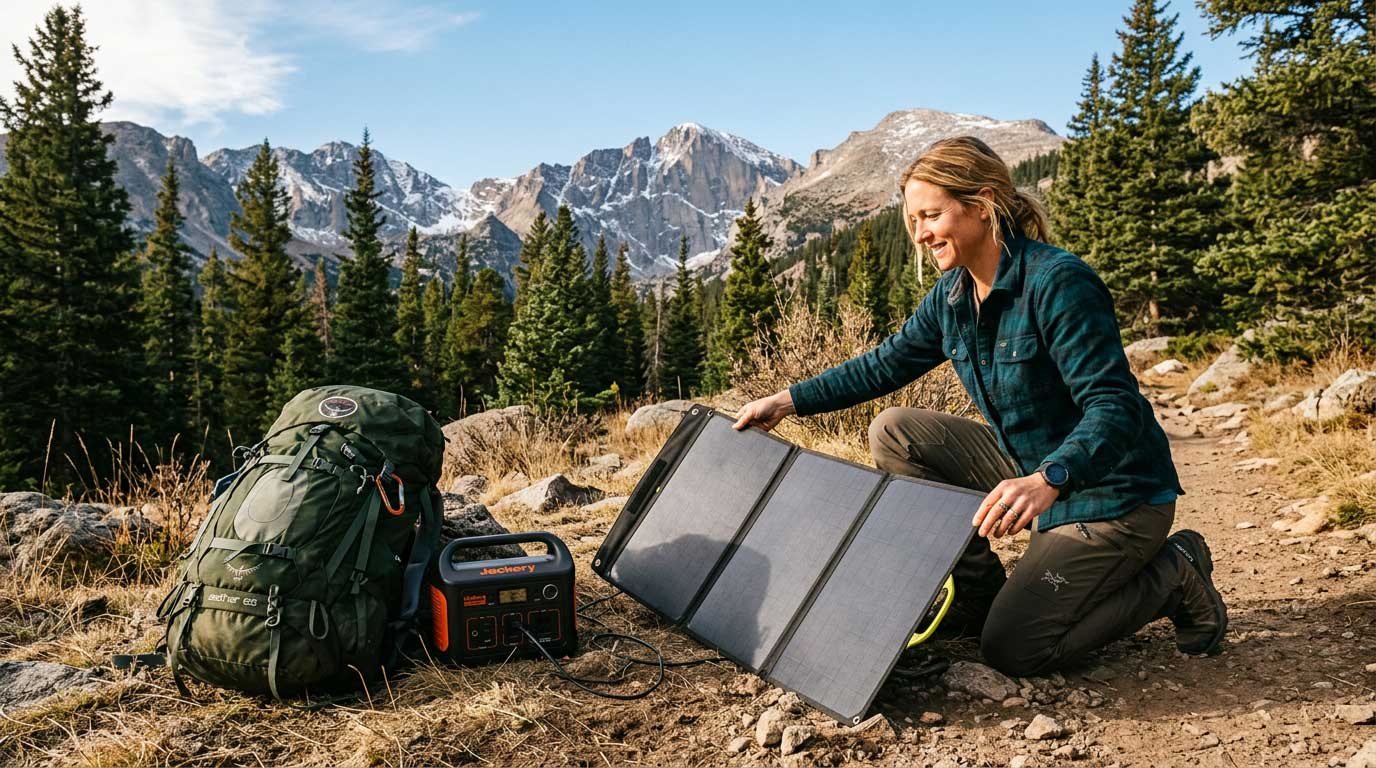
Unfold the panel on stable ground where its active surface receives direct sunlight. Avoid placing it where people might step on it or where wind could knock it over.
At a campsite, a few meters of extra cable may allow the panel to sit in sunlight while the power station remains in a shaded, ventilated position within its operating limits.
Step 3 — Connect the Equipment Correctly
Use the specified cable and connection procedure. If the system requires a charge controller, connect it according to the manufacturer’s instructions.
Do not exceed the receiving equipment’s voltage or current limits. If charging does not begin, check sunlight exposure, connectors, polarity, and the permitted input range before attempting another connection.
Step 4 — Monitor and Reposition
Check the charging power display, if available. If output falls, inspect the panel for new shadows and adjust its position.
Comparing readings at different angles under similar conditions can reveal whether positioning is limiting output. A single reading, however, does not establish the panel’s daily energy production.
Step 5 — Disconnect and Store
Follow the prescribed shutdown procedure, particularly when a controller or battery is involved. Keep cables clear of the folding sections, inspect connectors for wear, and dry the panel before storage when required by the manufacturer.
Do not force a panel to bend at a hinge or curvature that its design does not permit.
A Practical Example: Planning Solar Power for a Weekend Trip
Consider a hypothetical two-day camping trip using a 100W portable folding solar panel and a compatible power station. The traveler needs to recharge a phone, a camera battery, and small electronic accessories.
Assuming four equivalent peak sun hours per day and a 0.75 planning factor:
| Planning detail | Example |
|---|---|
| Panel rated power | 100W |
| Equivalent peak sun hours | 4 hours/day |
| Assumed derating factor | 0.75 |
| Estimated daily energy | 300Wh |
| Estimated energy over two similar days | 600Wh |
These figures are calculated estimates, not observed customer results. They assume similar sunlight on both days and do not guarantee that the system will collect 600Wh.
Now consider what happens if the second day is cloudy and trees cast partial shade over the panel. Production may drop substantially. The traveler may need to prioritize essential devices, reduce consumption, or rely on energy stored in the battery.
For a real trip, record the panel’s position, weather, time of day, and the power station’s accumulated watt-hours. Measurements from several days provide more useful purchasing information than the panel’s maximum rated power alone.
Portable Folding Solar Panels vs. Flexible Solar Panels
These products serve related markets but have different structural designs.
| Feature | Portable folding solar panel | Flexible solar panel |
|---|---|---|
| Construction | Multiple sections joined for folding | Thin module designed to bend within specified limits |
| Primary advantage | Compact storage and portable deployment | Potential integration on suitable curved surfaces |
| Typical use | Camping, travel, temporary charging | Selected RV, outdoor, and marine installations |
| Main buying criteria | Weight, packed size, output, connectors | Bend limits, dimensions, mounting, electrical parameters |
Bright Solar supplies flexible solar panel solutions for B2B applications, including RVs, campers, outdoor power, and selected marine uses. Its L Series has a stated maximum bending capacity of up to 30%. The permitted curvature and handling requirements must be checked against the specific model; this figure does not mean that a panel can be folded like a hinged portable charger.
For an OEM project, first decide whether the finished product needs a ready-to-use portable charging kit or a solar module integrated into a larger system. That decision determines the appropriate construction, connectors, mounting method, and documentation to request from the supplier.
Common Mistakes to Avoid
Even a suitable panel can disappoint if the supporting equipment or operating conditions are overlooked.
- Choosing wattage without calculating demand: Estimate the energy required by your devices first.
- Ignoring voltage limits: Confirm Voc and the receiving equipment’s permitted input range.
- Overlooking shade: Keep the panel clear of trees, chairs, vehicles, and other obstructions.
- Expecting constant rated output: Outdoor power varies with sunlight, temperature, and orientation.
- Forgetting accessory weight: Compare the complete packed kit, including cables and carrying cases.
- Assuming all panels are waterproof: Check the actual protection rating and operating instructions.
- Folding the wrong type of module: Only fold products along their intended hinges and follow the manufacturer’s handling limits.
For procurement teams, it is worth comparing several products using the same checklist: rated power, total weight, folded dimensions, connector type, voltage limits, warranty, and intended application. A consistent comparison makes it easier to identify the best fit without relying on headline wattage alone.
FAQ About Portable Folding Solar Panels
What is a portable folding solar panel used for?
A portable folding solar panel collects sunlight to supply electricity to compatible devices, battery packs, and portable power stations. It is commonly used for camping, RV travel, outdoor work, and temporary off-grid charging.
How many watts should a portable folding solar panel have?
The appropriate wattage depends on your daily energy demand, available sunlight, and the equipment’s input limits. Smaller panels may suit phones and small electronics, while 100W or larger models may be more appropriate for compatible power stations. Calculate energy needs before selecting a rating.
Can a portable folding solar panel charge a power station?
Yes, if the panel’s voltage, output, connector, and other electrical specifications are compatible with the power station. Check its maximum solar input voltage and permitted operating range before connecting the panel.
Do portable folding solar panels work on cloudy days?
Yes. Solar panels can generate electricity in cloudy weather, but output generally decreases as available sunlight falls. Dense clouds, partial shade, and poor orientation may significantly reduce production, so battery storage is useful when charging needs extend beyond daylight hours.
Are portable folding solar panels waterproof?
Not necessarily. Weather resistance varies by product and component. Check the manufacturer’s documented IP rating and instructions for the panel, connectors, cables, and controller. Do not expose components to rain or immersion beyond their specified protection limits.
Are portable folding solar panels suitable for RVs?
Yes. They can provide supplemental charging for compatible portable power stations and battery systems. Their portability allows users to position panels in sunlight without permanently mounting them on the vehicle. Verify electrical compatibility and secure the panel against wind.
What is the difference between a folding and a flexible solar panel?
A folding solar panel uses connected sections designed to fold for storage, while a flexible solar panel is designed to bend within specified limits. Folding models generally suit temporary portable charging; flexible modules may suit certain integrated or curved-surface applications.
Technical References and Editorial Information
The technical principles and illustrative energy calculation in this article are supported by these public resources:
- U.S. Department of Energy — Solar Photovoltaic Technology Basics: Explains how photovoltaic cells convert sunlight into electricity. Read the DOE guide.
- National Renewable Energy Laboratory — PVWatts Calculator: Estimates photovoltaic energy production using location and system inputs. Explore PVWatts.
- U.S. Department of Energy — Solar Photovoltaic Performance and Efficiency Basics: Discusses factors affecting solar conversion performance. Read the performance guide.
Editorial note: Prepared for Bright Solar by its solar-content team. This article draws on published technical references and clearly labeled illustrative calculations. No personal field-test results or customer case studies are claimed. Confirm all model-specific power ratings, dimensions, electrical parameters, weather protection, and warranty terms against the relevant product datasheet.
Related recommendations
-

Small Flexible Solar Panels: Lightweight Solar Power for Compact Spaces
144Discover how small flexible solar panels deliver lightweight, efficient power for RVs, boats, camping, and off-grid devices. Explore real-world applications.
View details -
Flexible solar panel boat: Lightweight Marine Solar Solution for Modern Vessels
230Discover flexible solar panel boat solutions from Bright Solar. Learn how lightweight marine solar panels improve boat energy efficiency, installation flexibility, and off-grid performance.
View details -
USB Solar Panel Flexible: Portable Solar Charging Solution for Outdoor Power Needs
185USB solar panel flexible provides lightweight portable charging for camping, hiking, and emergency power. Explore Bright Solar technology, performance, and real outdoor applications.
View details -
200 Watt Flexible Solar Panels: Lightweight Power Solution for RV, Marine and Off-Grid Applications
162200 watt flexible solar panels deliver lightweight and powerful solar energy for RVs, boats, camping, and off-grid systems. Explore Bright Solar solutions today.
View details