Solar Panels for Trailer Homes: Complete Guide to Off-Grid Trailer Solar Systems
Direct Answer :
Solar panels for trailer homes provide renewable electricity by converting sunlight into usable power for appliances, lighting, batteries, and daily living needs. A properly designed solar system helps trailer homeowners reduce grid dependence, lower energy costs, and maintain reliable power in remote locations or off-grid environments.
From my experience working with flexible solar applications at Bright Solar, I have seen that trailer homeowners usually do not need the largest possible solar system. They need a system that matches their lifestyle.
A weekend traveler using a trailer home has very different energy needs from someone living permanently in an off-grid mobile home.
The biggest mistakes usually happen before installation:
- Choosing panels based only on wattage
- Ignoring battery capacity
- Installing without considering roof space
- Forgetting seasonal sunlight changes
A successful trailer solar system starts with understanding how electricity is used every day.
The U.S. Department of Energy explains that solar photovoltaic systems convert sunlight directly into electricity and can be used for residential and remote power applications. Solar technology has become increasingly accessible because of improvements in efficiency and declining equipment costs.
Source:
https://www.energy.gov/
Trailer homes create a unique solar opportunity because they combine mobility with energy independence. Unlike traditional houses, trailer homes can move between different climates, making lightweight and adaptable solar solutions especially valuable.
Why Are More Trailer Home Owners Choosing Solar Power?
Traditional trailer homes often depend on:
- RV hookups
- Campground electricity
- Generator power
- Limited grid connections
These options work, but they also create limitations.
A solar-powered trailer home can provide electricity in places where electrical infrastructure does not exist.
Common applications include:
- Tiny homes
- Mobile homes
- Travel trailers
- Hunting cabins
- Remote vacation properties
- Off-grid living spaces
Many owners choose solar because they want freedom.
A family traveling through the western United States may stop in remote areas for several days. Without solar power, they must manage battery capacity carefully or carry fuel for generators.
With solar panels installed, daylight hours become an opportunity to recharge batteries naturally.
How Solar Panels for Trailer Homes Work
A trailer home solar system works through several connected components:
| Component | Function |
|---|---|
| Solar panels | Capture sunlight and generate electricity |
| Charge controller | Regulates charging and protects batteries |
| Battery storage | Stores electricity for nighttime use |
| Inverter | Converts DC electricity into AC power |
| Monitoring system | Tracks energy production |
The basic process:
Sunlight
↓
Solar Panels
↓
Charge Controller
↓
Battery Bank
↓
Home Appliances
However, mobile solar systems have additional challenges compared with fixed residential installations.
Trailer homes experience:
- Road vibration
- Changing weather conditions
- Limited roof area
- Weight restrictions
- Frequent movement
This is why flexible solar panels are often considered for trailer applications.Visit the product page:Flexible solar panels for trailer homes
Flexible Solar Panels vs Traditional Solar Panels for Trailer Homes
Choosing the right panel type is one of the most important decisions.
Traditional Rigid Solar Panels
Rigid panels are commonly used in residential systems because they offer high efficiency and strong structural protection.
Advantages:
- High power output
- Long service history
- Easy availability
Limitations for trailer homes:
- Heavier weight
- Larger mounting requirements
- Less adaptable to curved surfaces
Flexible Solar Panels
Flexible panels are designed differently.
They are often preferred for mobile applications because they provide:
- Lower weight
- Easier installation
- Better roof adaptation
- Reduced structural stress
At Bright Solar, we focus on flexible solar solutions where installation conditions are often more challenging than standard rooftops.
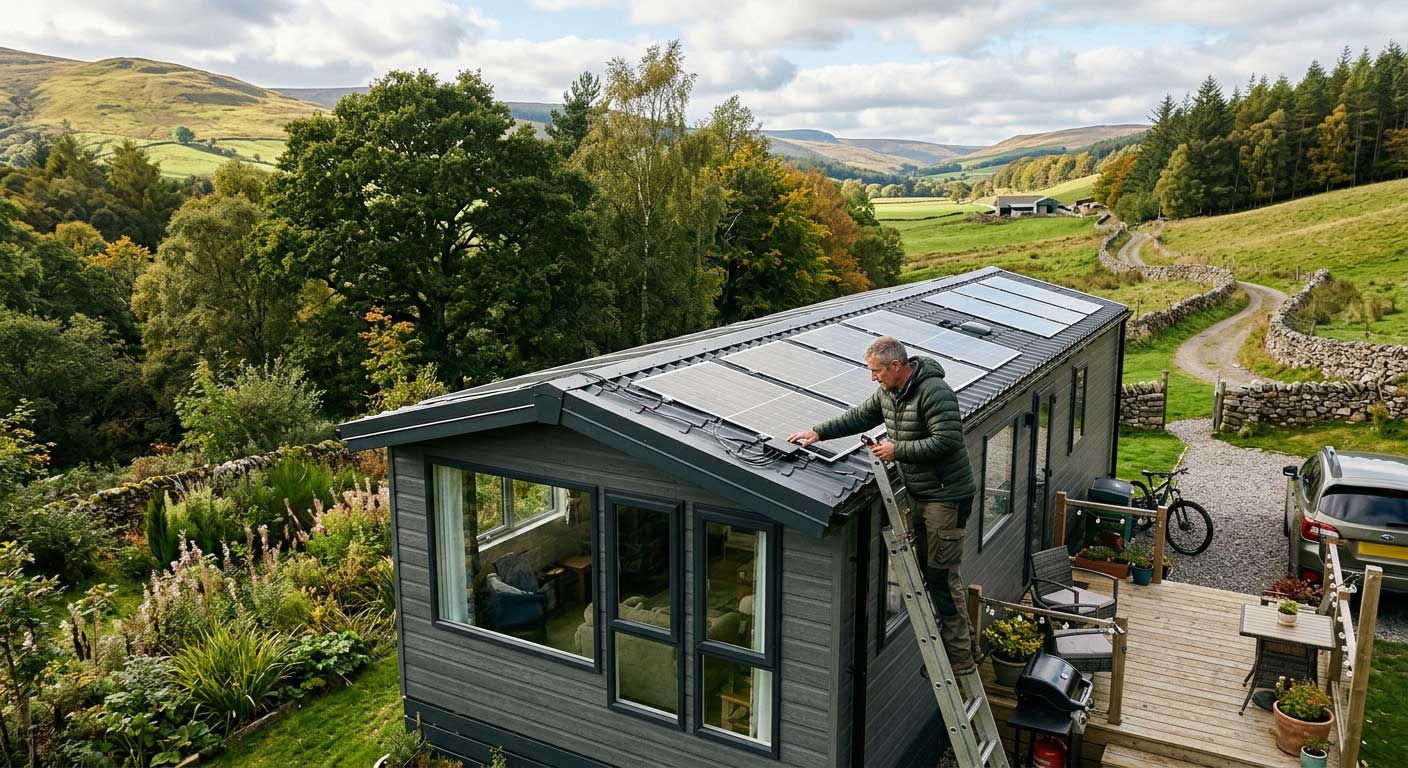
Trailer roofs are not always perfectly flat. Some have curves, limited mounting space, or lightweight construction materials.
A flexible solar panel can provide a practical balance between energy production and installation convenience.
How Many Solar Panels Does a Trailer Home Need?
The correct solar system size depends on electricity consumption.
A common mistake is asking:
“How many panels can fit on my roof?”
The better question is:
“How much electricity do I use every day?”
The calculation starts with:
Daily Energy Usage = Appliance Power × Usage Time
Example:
A small trailer home may use:
| Appliance | Power Consumption | Daily Usage |
|---|---|---|
| LED lighting | 20W | 5 hours |
| Refrigerator | 60W | 10 hours |
| Laptop | 50W | 4 hours |
| Water pump | 40W | 1 hour |
Total daily energy:
Approximately 900Wh–1000Wh
A system between 200W and 400W may support this type of usage depending on sunlight conditions.
Typical trailer solar configurations:
| Solar Capacity | Suitable For |
|---|---|
| 100W–200W | Basic charging and lighting |
| 300W–400W | Refrigerator, electronics, small appliances |
| 500W+ | Full-time off-grid living |
The final design depends on:
- Location
- Battery size
- Weather conditions
- Roof availability
- Lifestyle requirements
For example, a trailer home in Arizona can receive much more solar energy throughout the year compared with one operating in northern Europe during winter months.
Real Experience: Designing Solar Systems for Mobile Homes
One project reviewed by Bright Solar involved a small trailer homeowner using a mobile living setup in a rural area.
The owner needed electricity for:
- Refrigerator
- LED lighting
- Mobile devices
- Small kitchen equipment
The original setup relied heavily on a portable generator.
The problem was not only fuel cost.
The owner also wanted quieter nights and fewer maintenance tasks.
After evaluating daily consumption, the recommended system focused on:
- Lightweight flexible solar panels
- Proper battery storage
- Efficient energy usage
The result was a more stable power supply without depending completely on fuel-based generation.
The lesson from this project was simple:
Solar success comes from system design, not just adding more panels.
Installation Considerations for Trailer Home Solar Systems
Installing solar panels on a trailer home requires careful planning.
Roof Condition Assessment
Before installation, check:
- Roof material
- Available space
- Water sealing condition
- Structural strength
A damaged roof should be repaired before adding solar equipment.
Choose the Correct Mounting Method
Common options include:
- Adhesive mounting
- Bracket mounting
- Custom installation solutions
The best method depends on:
- Roof design
- Travel frequency
- Environmental conditions
Cable Protection
Mobile environments create more movement than stationary buildings.
Important considerations:
- Waterproof cable entry
- Secure connectors
- UV-resistant wiring
Small installation details can determine long-term reliability.
Benefits of Solar Panels for Trailer Homes
Energy Independence
Solar allows trailer owners to generate electricity without relying completely on external power sources.
Lower Operating Costs
Once installed, solar energy production does not require continuous fuel purchases.
Quiet Power Generation
Compared with generators, solar systems operate silently.
Better Off-Grid Capability
Solar makes remote living and travel easier by providing renewable energy wherever sunlight is available.
How Much Do Solar Panels for Trailer Homes Cost?
The cost of solar panels for trailer homes depends on system size, battery storage, installation method, and the type of equipment selected.
Unlike residential solar projects, trailer solar systems are usually customized. A small weekend trailer and a full-time off-grid trailer home have completely different requirements.
Typical cost factors include:
| Equipment | Purpose |
|---|---|
| Solar panels | Generate electricity from sunlight |
| Charge controller | Controls charging efficiency |
| Battery bank | Stores energy for nighttime use |
| Inverter | Powers AC appliances |
| Wiring and installation | Ensures safe operation |
A basic trailer solar setup may focus only on:
- LED lights
- Phones
- Small electronics
- Battery charging
A full-time solar trailer home may require:
- Refrigerator
- Water pump
- Laptop workstation
- Kitchen appliances
- Heating or cooling support
According to EnergySage, RV solar systems commonly include roof-mounted panels connected to battery banks through charge controllers, with system costs varying depending on energy requirements and equipment choices.
In practical applications, many trailer owners spend more money on battery storage than expected. The reason is simple: solar panels generate energy during the day, but daily comfort depends on how much energy can be stored for nighttime and cloudy periods.
Solar Panel Size Recommendations for Different Trailer Home Uses
There is no universal solar panel size for every trailer home.
The correct choice depends on lifestyle.
Weekend Travel Trailer
For occasional camping, the electricity demand is usually lower.
Typical requirements:
- 100W–300W solar panels
- Small battery bank
- Basic DC appliances
Suitable for:
- Phone charging
- LED lighting
- Small refrigerator
- Fans
Extended Off-Grid Trailer Living
People living in trailer homes for weeks or months usually require more energy.
Typical setup:
- 400W–800W solar panels
- Larger lithium battery storage
- MPPT charge controller
This allows operation of:
- Refrigerator
- Laptop
- Internet equipment
- Water pump
- More household electronics
EnergySage notes that many RV solar systems designed for off-grid use are built around permanent roof-mounted panels connected to battery storage systems, allowing users to operate essential equipment away from electrical hookups.
Full-Time Off-Grid Trailer Homes
For permanent mobile living, the system design becomes closer to a small residential solar system.
Possible requirements:
- 800W+ solar capacity
- Multiple batteries
- Larger inverter
- Energy monitoring
At this stage, reducing electricity consumption becomes just as important as adding solar capacity.
A highly efficient trailer home with a 600W system may perform better than a poorly designed trailer with 1000W of solar panels.
Common Mistakes When Installing Solar Panels on Trailer Homes
After reviewing many mobile solar applications, I noticed several mistakes appearing repeatedly.
Choosing Panels Before Calculating Energy Usage
Many customers start with:
“I have space for six panels, so I need six panels.”
That approach often creates an unbalanced system.
The correct order is:
- Calculate daily electricity usage
- Select battery capacity
- Choose solar panel size
- Design wiring and protection
Ignoring Battery Storage
Solar panels only produce energy when sunlight is available.
A trailer home still needs power:
- At night
- During storms
- Under shade
- During winter conditions
A properly sized battery is essential.
Installing Heavy Panels on Lightweight Roofs
Some trailer homes are designed with strict weight limitations.
Adding heavy equipment without checking roof structure can create long-term problems.
This is one reason flexible solar panels are attractive for mobile applications.
They provide:
- Lower weight
- Lower profile
- Easier installation
Not Considering Partial Shading
Trailer homes often park near:
- Trees
- Buildings
- Mountains
Even partial shading can reduce solar performance.
Before installation, consider where the trailer will usually stay.
Maintenance Guide for Trailer Home Solar Systems
Solar panels are generally low-maintenance, but mobile environments require regular inspection.
A trailer moves differently from a house.
Road vibration can affect:
- Cable connections
- Mounting points
- Waterproof seals
Cleaning Solar Panels
Recommended cleaning method:
- Use soft water
- Use microfiber cloth
- Avoid abrasive materials
- Avoid strong chemicals
Dust, bird residue, and road pollution can reduce sunlight absorption.
Inspect Mounting and Connections
Every few months check:
- Panel attachment points
- Cable routing
- Connector condition
- Water sealing areas
Small problems are easier to fix before they become expensive repairs.
Monitor Battery Performance
Battery health directly affects solar system reliability.
Important measurements:
- Charging voltage
- Battery temperature
- Discharge cycles
- Available capacity
A solar system is not only about generating electricity.
It is about managing energy correctly.
Solar Panels for Trailer Homes: Practical Benefits for Off-Grid Living
Freedom From Electrical Hookups
One of the biggest advantages is location flexibility.
Trailer owners can stay:
- Remote campsites
- Rural properties
- Mountain areas
- National park locations
without depending completely on campground electricity.
Reduced Generator Dependence
Generators provide reliable power but come with disadvantages:
- Fuel costs
- Noise
- Maintenance
- Exhaust emissions
Solar provides silent energy generation during daylight hours.
Improved Travel Experience
Many trailer owners choose solar not only for savings but for comfort.
Having reliable electricity means:
- Cold food storage
- Charged devices
- Better lighting
- More comfortable remote living
FAQ About Solar Panels for Trailer Homes
Can solar panels power a trailer home completely?
Yes, but the system must be properly designed. Full off-grid operation requires enough solar capacity, battery storage, and efficient appliances.
Many small trailer systems are designed for essential loads rather than high-power appliances.
How many solar panels does a trailer home need?
Most trailer homes require between 200W and 800W of solar panels depending on electricity usage.
A weekend camper may need less, while a full-time off-grid home usually requires more.
Are flexible solar panels good for trailer homes?
Yes. Flexible solar panels are often suitable because they are lightweight and adaptable to curved or limited roof spaces.
They are commonly used in mobile applications where weight and installation flexibility matter.
Can trailer solar panels run air conditioning?
Air conditioning requires significantly more energy than basic trailer appliances.
Running AC from solar usually requires:
- Large solar capacity
- Large battery storage
- Proper inverter sizing
For many users, solar is better suited for essential loads.
How long do solar panels on trailer homes last?
The lifespan depends on panel quality, installation, weather exposure, and maintenance.
High-quality outdoor solar panels can provide reliable performance for many years when properly installed.
Can solar panels charge trailer batteries while traveling?
Yes.
Solar panels can generate electricity while the trailer is parked or moving, depending on sunlight conditions and system design.
What is the best solar panel type for trailer homes?
The best choice depends on the trailer design.
Flexible solar panels are often preferred for lightweight trailers, curved roofs, and mobile applications.
Why Choose Bright Solar for Trailer Home Solar Solutions?
Bright Solar focuses on flexible solar technology designed for applications where traditional solar panels may not be practical.
For trailer homes, we consider:
- Weight limitations
- Roof structure
- Outdoor durability
- Installation method
- Real electricity demand
A good trailer solar system is not created by adding the maximum number of panels.
It is created by understanding how people actually live.
From weekend travelers exploring remote areas to full-time off-grid homeowners, the right solar design provides more independence, quieter operation, and reliable renewable energy.
Related recommendations
-

300 Watt Solar Panels for RV, Marine and Off-Grid Power Systems
262Discover how 300 watt solar panels power RVs, boats, cabins, and off-grid systems. Learn real performance, battery charging, and installation tips from Bright Solar.
View details -
Portable Solar Panels with Battery Storage: Complete Guide
171Portable solar panels with battery storage generate electricity during daylight and store it for later use in RVs, camping, boats, work sites, and emergency ...
View details -
Charge Battery with Solar Panel: Complete Guide
287Learn how to charge battery with solar panel safely and efficiently. Understand panel sizing, charge controllers, battery voltage, wiring, charging time, and system design.
View details -
Best Flexible Solar Panel for RVs, Boats, and Off-Grid Travel
265Find the best flexible solar panel for RVs, boats, vans, and off-grid systems. Lightweight, durable, and built for real outdoor conditions.
View details