150 Watt Flexible Solar Panel: Lightweight Solar Power Solution for RV and Off-Grid Applications
A 150 watt flexible solar panel is a lightweight solar solution designed for RVs, boats, camping systems, and portable energy applications. It delivers reliable power generation while fitting surfaces where traditional rigid solar panels cannot be installed.
Unlike standard framed solar modules, flexible solar panels focus on adaptability.Visit the product page: Flexible Solar Panel
They are designed for users who need solar energy in places where weight, space, and installation flexibility matter.
At Bright Solar, we have worked with customers who do not simply ask for “a solar panel”.
They usually have a specific problem:
“My roof is curved.”
“My vehicle cannot carry heavy equipment.”
“My boat has limited installation space.”
Those practical limitations are where flexible solar technology becomes valuable.
What is a 150 watt flexible solar panel?
A 150 watt flexible solar panel is a photovoltaic module that can generate up to 150 watts of power under Standard Test Conditions (STC) while maintaining a lightweight and bendable structure.
Compared with conventional rigid solar panels, flexible models use alternative materials and construction methods to reduce thickness and weight.
A typical flexible solar panel includes:
| Component | Function |
|---|---|
| Solar cells | Convert sunlight into electricity |
| Protective surface layer | Improves durability |
| Encapsulation material | Protects internal components |
| Junction box | Transfers electrical output |
| Flexible backing layer | Allows bending and lightweight installation |
Most modern flexible solar panels use monocrystalline solar cells because they provide better efficiency in limited installation areas.
According to the U.S. Department of Energy, photovoltaic module efficiency has improved significantly through advances in solar cell technology and manufacturing processes.
Source:
U.S. Department of Energy – Solar Energy Technologies Office
https://www.energy.gov/eere/solar
Why choose a 150 watt flexible solar panel?
A 150W flexible solar panel is not designed to replace every large solar system.
Its strength is solving installation challenges.
The biggest advantages include:
- Lightweight construction
- Easy transportation
- Simple installation
- Space-saving design
- Compatibility with curved surfaces
For many mobile applications, these advantages are more important than maximum power output.
Lightweight design for mobile applications
Weight is a major consideration for RV and marine users.
A traditional glass solar panel can add significant load to a vehicle or boat.
A flexible 150W solar panel reduces:
- Roof load
- Installation difficulty
- Transportation effort
For example:
An RV owner travelling across Europe may already carry:
- Water tanks
- Batteries
- Outdoor equipment
- Camping accessories
Every kilogram matters.
A lightweight solar solution allows more freedom when designing the complete energy system.
Suitable power output for small energy systems
A 150 watt flexible solar panel provides enough power for many daily applications.
Typical uses include:
| Application | Performance |
|---|---|
| Smartphone charging | Excellent |
| Laptop charging | Good |
| LED lighting | Excellent |
| Portable battery charging | Excellent |
| Small RV appliances | Suitable |
| Marine electronics | Suitable |
A simple daily production calculation:
150W × 5 peak sun hours × 80% efficiency
≈ 0.6kWh per day
Actual results depend on:
- Location
- Weather conditions
- Installation angle
- Temperature
The National Renewable Energy Laboratory (NREL) explains that solar output changes depending on solar radiation and environmental conditions.
Source:
National Renewable Energy Laboratory
https://www.nrel.gov/
150 watt flexible solar panel applications
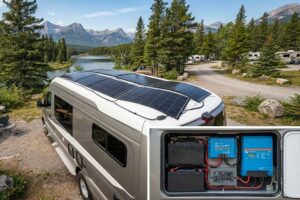
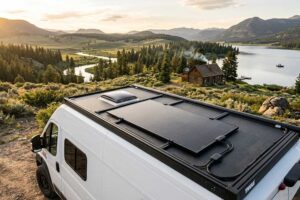
RV and camper solar systems
RV owners are one of the most common users of flexible solar panels.
The challenge is simple:
RV roofs are limited.
There may be space for only a few panels, and the roof shape is often not completely flat.
A 150W flexible solar panel can be installed on:
- Camper vans
- Motorhomes
- Travel trailers
- Emergency vehicles
A customer from France contacted Bright Solar for a camper conversion project.
The vehicle owner had installed traditional rigid panels before.
The problem appeared during travel:
- Additional roof weight
- Difficult mounting
- Reduced available space
After switching to flexible solar panels, the customer improved installation flexibility and reduced the complexity of the system.
The final setup included:
| Component | Specification |
|---|---|
| Solar panel | 150W flexible solar panel |
| Battery | Lithium battery system |
| Application | Camper energy supply |
| Main purpose | Off-grid travel |
The customer’s feedback was clear:
The biggest improvement was not only power generation.
It was easier integration into the vehicle design.
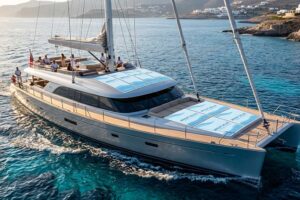
Marine solar applications
Boats create unique solar challenges.
Curved surfaces, limited deck space, and exposure to harsh environments make installation more complicated.
A 150 watt flexible solar panel can be useful for:
- Sailboats
- Fishing boats
- Small yachts
- Marine backup systems
Common powered equipment includes:
- GPS systems
- Communication devices
- Navigation electronics
- Battery charging systems
Flexible solar technology allows installation where rigid panels may not fit.
Portable and off-grid energy systems
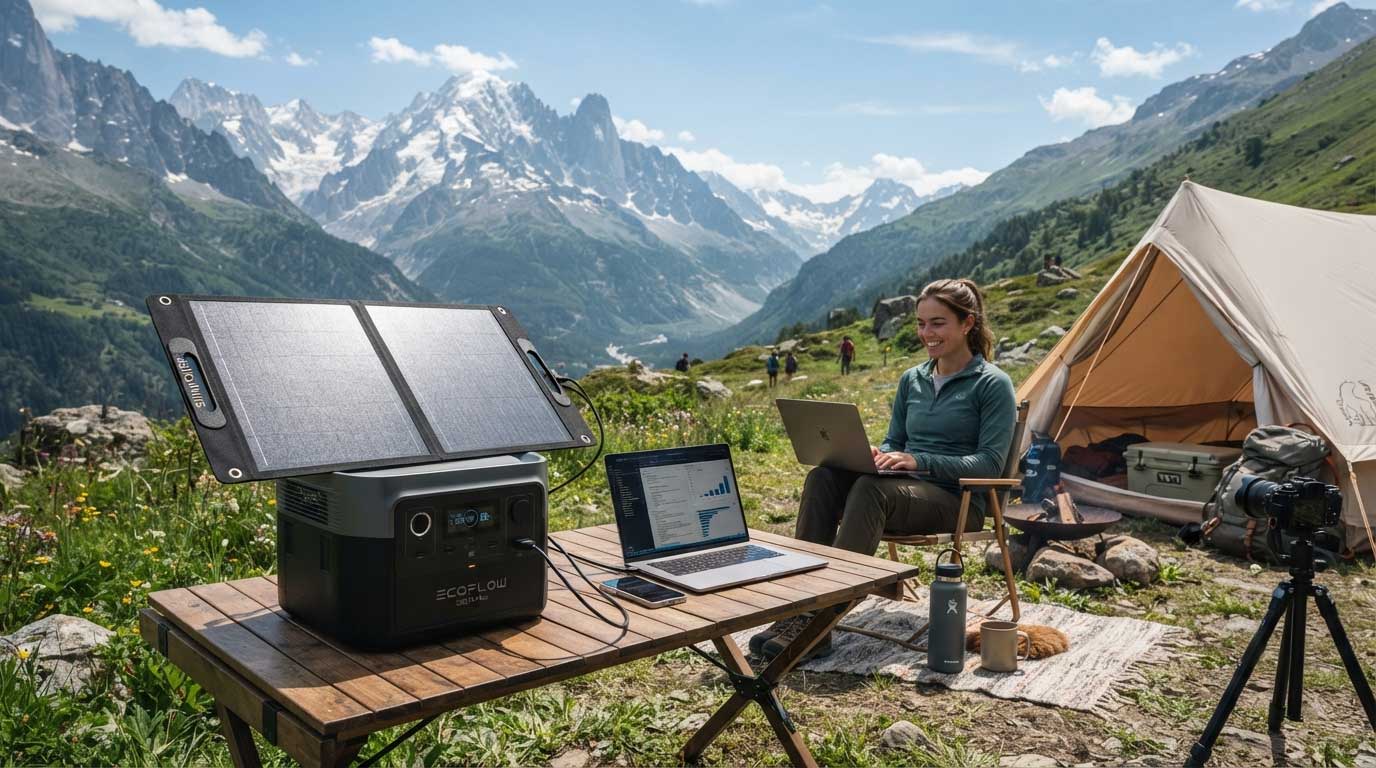
Outdoor users increasingly rely on solar power.
Applications include:
- Camping
- Remote work locations
- Emergency backup
- Outdoor photography equipment
A 150W flexible panel can be paired with:
- Portable power stations
- Lithium batteries
- Solar controllers
This creates a compact renewable energy system without requiring permanent installation.
Bright Solar experience with 150W flexible solar solutions
At Bright Solar, we focus on real application problems rather than only product specifications.
Over years working with solar customers, we found one common pattern:
Users often underestimate installation challenges.
A solar panel may have excellent efficiency numbers, but if it cannot physically fit the installation location, it does not solve the problem.
One project involved an outdoor equipment supplier in the United States.
Their requirement:
Create a portable power kit for field workers.
The original design used rigid solar modules.
Problems:
- Difficult transportation
- Too much storage space
- Complicated setup process
After testing flexible 150W solar panels, the system became easier to carry and deploy.
The improvement included:
| Area | Result |
|---|---|
| Storage space | Reduced |
| Installation time | Shorter |
| Mobility | Improved |
| User experience | Better |
This project showed us an important lesson:
Solar technology should adapt to the environment where it is used.

How much power can a 150 watt flexible solar panel produce?
The energy output of a 150 watt flexible solar panel depends on sunlight availability, installation conditions, and system efficiency.
A basic calculation method is:
Solar Output = Panel Wattage × Peak Sun Hours × System Efficiency
For example:
150W × 5 peak sun hours × 80% efficiency
≈ 600Wh (0.6kWh) per day
In practical applications, daily production can vary because solar panels do not operate under laboratory conditions.
Factors affecting output include:
- Geographic location
- Seasonal sunlight changes
- Panel angle
- Surface temperature
- Partial shading
A user in Arizona may achieve higher production than someone installing the same panel in northern Europe during winter.
Solar performance should always be evaluated according to the actual environment.
How to install a 150 watt flexible solar panel?
One reason customers choose flexible solar technology is easier installation.
However, correct preparation remains important.
At Bright Solar, we usually recommend checking three points before installation:
- Surface condition
- Cable routing
- Electrical compatibility
A flexible panel is easier to install, but poor preparation can reduce long-term reliability.
Step 1: Check the installation surface
Before mounting the panel:
- Clean the surface completely
- Remove dust, grease, and debris
- Confirm available space
- Check sunlight exposure
For RV installation:
Avoid placing the panel where roof equipment creates shadows.
For marine installation:
Consider:
- Water exposure
- Salt environment
- Surface curvature
Step 2: Position the flexible solar panel
A 150W flexible solar panel can be installed on various surfaces, including:
- RV roofs
- Boat cabins
- Portable structures
- Custom equipment surfaces
Before final installation:
Place the panel temporarily and check:
- Cable direction
- Connection position
- Future maintenance access
Small installation mistakes can create unnecessary problems later.
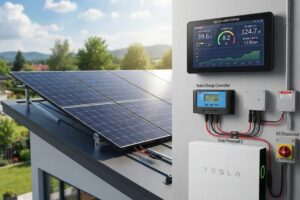
Step 3: Connect the solar system
A typical 150W flexible solar setup includes:
150W Flexible Solar Panel → Solar Charge Controller → Battery → Inverter → Devices
Recommended components:
| Component | Purpose |
|---|---|
| Solar panel | Generates electricity |
| MPPT controller | Improves charging efficiency |
| Lithium battery | Stores energy |
| Inverter | Provides AC power |
For portable and RV systems, MPPT controllers are often selected because they can better optimize solar energy harvesting.
Step 4: Test and monitor performance
After installation, users should monitor:
- Charging voltage
- Battery status
- Daily energy production
- Connection condition
A simple record helps identify problems early.
Example:
| Parameter | Example Value |
|---|---|
| Panel power | 150W |
| Battery | 100Ah lithium |
| Controller | MPPT |
| Application | RV backup |
| Monitoring | Daily check |
What battery size works with a 150 watt flexible solar panel?
Battery selection depends on energy demand.
A 150W panel is commonly paired with:
| Application | Battery Recommendation |
|---|---|
| Small portable system | 50Ah lithium |
| Camping setup | 50Ah–100Ah lithium |
| RV system | 100Ah lithium |
| – | |
| Backup system | Larger capacity based on usage |
For example:
A camper user may combine:
- 150W flexible solar panel
- 100Ah lithium battery
- MPPT charge controller
This setup can support:
- Lighting
- Mobile devices
- Small electronics
- Communication equipment
150 watt flexible solar panel vs rigid solar panel
Both flexible and rigid solar panels have advantages.
The correct choice depends on the application.
| Feature | Flexible Solar Panel | Rigid Solar Panel |
|---|---|---|
| Weight | Lower | Higher |
| Installation | Easier | More complex |
| Curved surfaces | Suitable | Limited |
| RV applications | Excellent | Good |
| Marine applications | Excellent | Moderate |
| Durability requirements | Depends on material | Usually stronger frame protection |
Flexible panels are often selected when installation conditions are challenging.
Rigid panels remain popular for traditional rooftop solar projects.

Advantages of Bright Solar 150 watt flexible solar panel
Bright Solar develops flexible solar solutions for customers who need reliable energy in unusual environments.
Key advantages include:
Lightweight construction
For mobile applications, weight directly affects usability.
A lighter panel means:
- Easier transportation
- Simpler installation
- Lower structural requirements
This is especially important for:
- RV owners
- Boat operators
- Outdoor professionals
Flexible installation possibilities
Traditional solar panels require flat mounting areas.
Flexible panels provide additional options:
- Curved roofs
- Custom equipment
- Limited spaces
This design advantage creates opportunities that conventional panels cannot easily provide.
Portable energy independence
Many outdoor users want electricity without depending on grid power.
A 150W flexible solar system can support:
- Remote camping
- Emergency preparation
- Outdoor working
- Mobile lifestyles
Solar energy becomes more practical when the equipment can travel with the user.
Limitations of a 150 watt flexible solar panel
Although flexible solar panels offer many benefits, users should understand their limitations.
Not designed for large household electricity demand
A single 150W panel cannot replace a complete residential solar system.
Large homes normally require:
- Multiple panels
- Larger battery storage
- Grid connection or backup systems
Installation quality matters
Flexible panels are easier to install, but they still require:
- Correct mounting method
- Proper cable protection
- Suitable electrical components
A good installation improves long-term performance.
Output depends on sunlight conditions
Like all photovoltaic products, flexible panels generate more energy in strong sunlight.
Cloudy weather and shading reduce production.
Users should design systems according to realistic energy expectations.
Real Bright Solar customer example: portable energy system project
A practical example came from an outdoor equipment company in Canada.
The company needed a lightweight solar charging solution for remote workers.
Their requirements:
- Easy transportation
- Fast deployment
- Reliable battery charging
The first prototype used conventional solar panels.
However, field testing revealed problems:
- Too much storage space
- Difficult transportation
- Limited installation options
Bright Solar provided a flexible solar solution based on a 150W module.
After testing:
| Requirement | Improvement |
|---|---|
| Carrying weight | Reduced |
| Setup process | Simplified |
| Outdoor usability | Improved |
| Space requirement | Reduced |
The company reported that the biggest benefit was operational flexibility.
The solar panel became part of the equipment instead of an additional burden.
FAQ About 150 Watt Flexible Solar Panel
How much electricity can a 150 watt flexible solar panel produce?
A 150W flexible solar panel can produce approximately 0.5–0.8kWh per day depending on sunlight conditions, installation angle, and system efficiency.
Can a 150 watt flexible solar panel power an RV?
Yes. A 150W flexible solar panel is suitable for small RV systems, especially for charging batteries and powering basic electronics.
Is a flexible solar panel better than a rigid panel?
It depends on the application. Flexible panels are better for curved surfaces and lightweight installations, while rigid panels are commonly preferred for fixed rooftop systems.
What battery should I use with a 150W flexible solar panel?
Many users combine a 150W panel with a 50Ah–100Ah lithium battery depending on their energy requirements.
Can a 150W flexible solar panel be installed on a boat?
Yes. Flexible solar panels are commonly used in marine applications because they can fit curved surfaces and limited installation areas.
How long does a flexible solar panel last?
The lifespan depends on materials, environmental exposure, and manufacturing quality. Proper installation and maintenance help extend service life.
Why choose Bright Solar 150 watt flexible solar panel?
Bright Solar focuses on lightweight solar solutions designed for RV, marine, portable, and customized energy applications.
Conclusion: Is a 150 watt flexible solar panel the right choice?
A 150 watt flexible solar panel is an excellent choice for users who need lightweight, adaptable, and practical solar power.
It is especially suitable for:
- RV travel
- Marine applications
- Camping
- Portable energy systems
- Off-grid solutions
The biggest advantage is not only the wattage.
It is the ability to install solar power where traditional panels may not work.
At Bright Solar, we believe effective solar technology should match real-world environments.
A successful solar system is not only about producing electricity.
It is about creating a reliable energy solution that fits the user’s lifestyle.
Related recommendations
-

Flexible Marine Solar Panels: Reliable Solar Power for Boats and Yachts
260Discover how flexible marine solar panels provide lightweight, reliable power for boats and yachts. Learn about efficiency, durability, installation, and marine applications.
View details -
Solar Panel Voltage vs Current Explained: Understanding Volts, Amps, and Power
303Understand solar panel voltage vs current explained with clear examples of volts, amps, watts, series and parallel wiring to design efficient solar systems.
View details -
1000W Solar Panel: Complete Guide to Size, Power Output, Cost, and System Setup
311Explore 1000w solar panel size, cost, power output, and system setup. Learn how to choose the right 1000 watt solar solution for RV, off-grid, and backup energy needs with Bright Solar.
View details -
100 Watt Flexible Solar Panel Kit: Complete Guide
229A 100W flexible solar panel kit combines a 100W flexible panel with compatible charging, wiring, and mounting components for small off-grid systems such as R...
View details