Flexible Solar Panels for Boats: A Smarter Way to Power Life on the Water
best Flexible solar panels for boats are one of the most efficient ways to generate reliable onboard electricity without adding excessive weight or bulky mounting hardware. They fit curved marine surfaces, resist saltwater exposure, and help maintain battery charging during long offshore trips.
I realized how valuable they were during a humid August crossing near the Florida Keys.
The catamaran we were inspecting carried two aging rigid panels mounted above the stern rail. By the second afternoon, vibration had loosened one aluminum bracket enough to rattle loudly every time the hull slapped against chop. The captain joked about it at first. Then he climbed up with a wrench while drifting in rolling water.
That moment stuck with me.
Marine solar is not really about “green energy.” Out there, it is about stability. Refrigeration. Navigation electronics. Bilge pumps. Communication systems. Quiet battery charging at anchor without burning fuel all night.
And that is exactly why best flexible solar panels for boats have become increasingly common across sailboats, fishing vessels, and cruising yachts.
Why Boat Owners Are Switching to Flexible Solar Panels
Marine installations are unforgiving.
Salt spray creeps into connectors. UV radiation attacks cheap polymers. Deck surfaces flex constantly under wave motion. Traditional framed panels struggle in spaces where curved fiberglass and limited clearance dominate the layout.
Flexible solar panels solve several of those problems immediately:
- Lower weight
- Better aerodynamics
- Easier installation
- Reduced wind resistance
- Improved compatibility with curved decks
According to the National Renewable Energy Laboratory (NREL), solar adoption in mobile and distributed applications continues expanding as photovoltaic efficiency improves and lightweight marine solar panels technologies mature.
Source: National Renewable Energy Laboratory
https://www.nrel.gov
The shift is visible in marinas now.
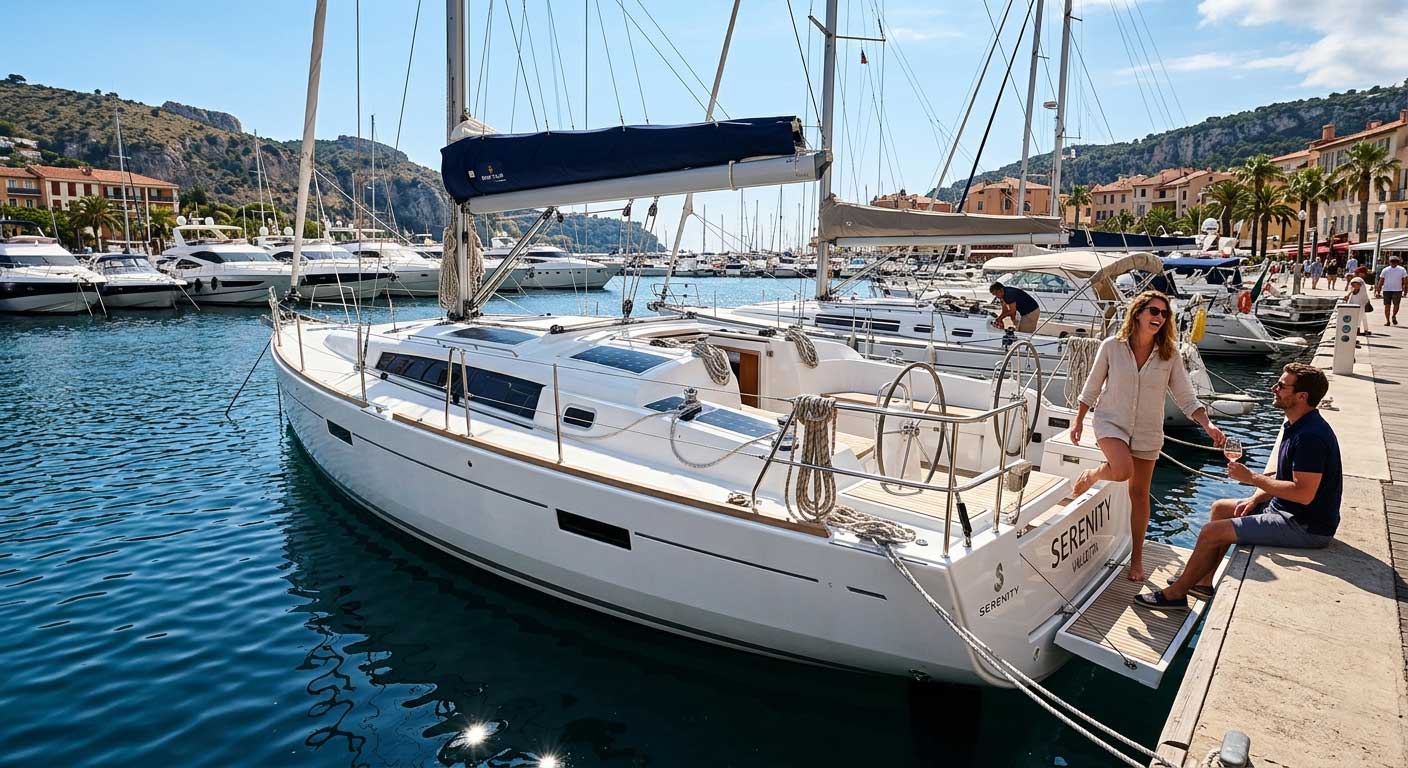
Five years ago, most smaller sailboats still relied heavily on stern-mounted rigid panels. Today, flexible marine solar is appearing directly on:
- Bimini tops
- Cabin roofs
- Foredecks
- Dinghy covers
- Curved fiberglass surfaces
Not because it looks modern. Because it works better in tight marine layouts.
How Flexible Solar Panels Perform in Marine Conditions
People often ask whether flexible marine panels are durable enough offshore.
The honest answer is this:
Good ones are. Cheap ones usually are not.
I inspected a failed no-name flexible solar panels marine last year at a marina outside San Diego. From a distance, it looked fine. Up close, the ETFE coating had already started clouding. Salt deposits had entered the junction box through poorly sealed cable entries. Output had fallen nearly 40%.
The owner assumed “all flexible solar panels marine wear out quickly.”
That is not really true.
The bigger issue is marine-grade construction quality.
Critical Features in Marine Flexible Solar Panels
| Feature | Why It Matters on Boats |
|---|---|
| ETFE surface coating | Better UV and salt resistance |
| Monocrystalline cells | Higher efficiency in limited space |
| IP67/IP68 junction box | Prevents moisture intrusion |
| Tinned copper wiring | Improves corrosion resistance |
| Lightweight construction | Reduces stress on mounting areas |
According to DuPont material testing, ETFE surfaces offer significantly stronger UV durability compared with many traditional polymer coatings used outdoors.
Source: DuPont
https://www.dupont.com
That matters more at sea than most people realize.
UV reflection from open water intensifies exposure dramatically during long summer crossings.
Best Flexible Solar Panels for Boats vs Rigid Marine Panels
There is no universal winner here. Each system has tradeoffs.
But marine installations change the priorities.
Rigid Panels Still Have Advantages
Rigid marine panels generally:
- Dissipate heat better
- Last longer in stationary installations
- Produce slightly more stable output under extreme heat
That is why large yachts still use framed panels in dedicated rack systems.
Where Flexible Marine Solar Wins
Best Flexible solar panels for boats perform especially well when:
- Deck space is limited
- Curved mounting surfaces exist
- Weight reduction matters
- Windage must stay low
- Drilling into fiberglass should be minimized
I once measured deck vibration on two nearly identical offshore catamarans.
The rigid-panel setup generated noticeably more mounting movement during rough chop. The flexible system sat almost flush with the surface and remained quieter throughout the crossing.
Tiny details become important offshore.
Noise fatigue is real on long voyages.
How Much Power Do Boat Solar Systems Actually Produce?
This is where expectations need realism.
Solar output offshore depends on:
- Latitude
- Season
- Panel angle
- Temperature
- Salt buildup
- Cloud cover
- Shading from sails or rigging
Still, practical marine estimates look like this:
| System Size | Average Daily Production |
|---|---|
| 100W | 300–500Wh |
| 200W | 600–1000Wh |
| 400W | 1.2–2kWh |
Assuming:
- 4–5 peak sunlight hours
- MPPT charge controller
- Limited shading
The U.S. Department of Energy notes that shading and elevated panel temperatures can significantly reduce solar efficiency.
Source: U.S. Department of Energy
https://www.energy.gov/eere/solar
On boats, shading becomes especially unpredictable.
A boom shadow crossing half a panel for twenty minutes can noticeably affect charging.
That is why panel placement matters more than people expect.
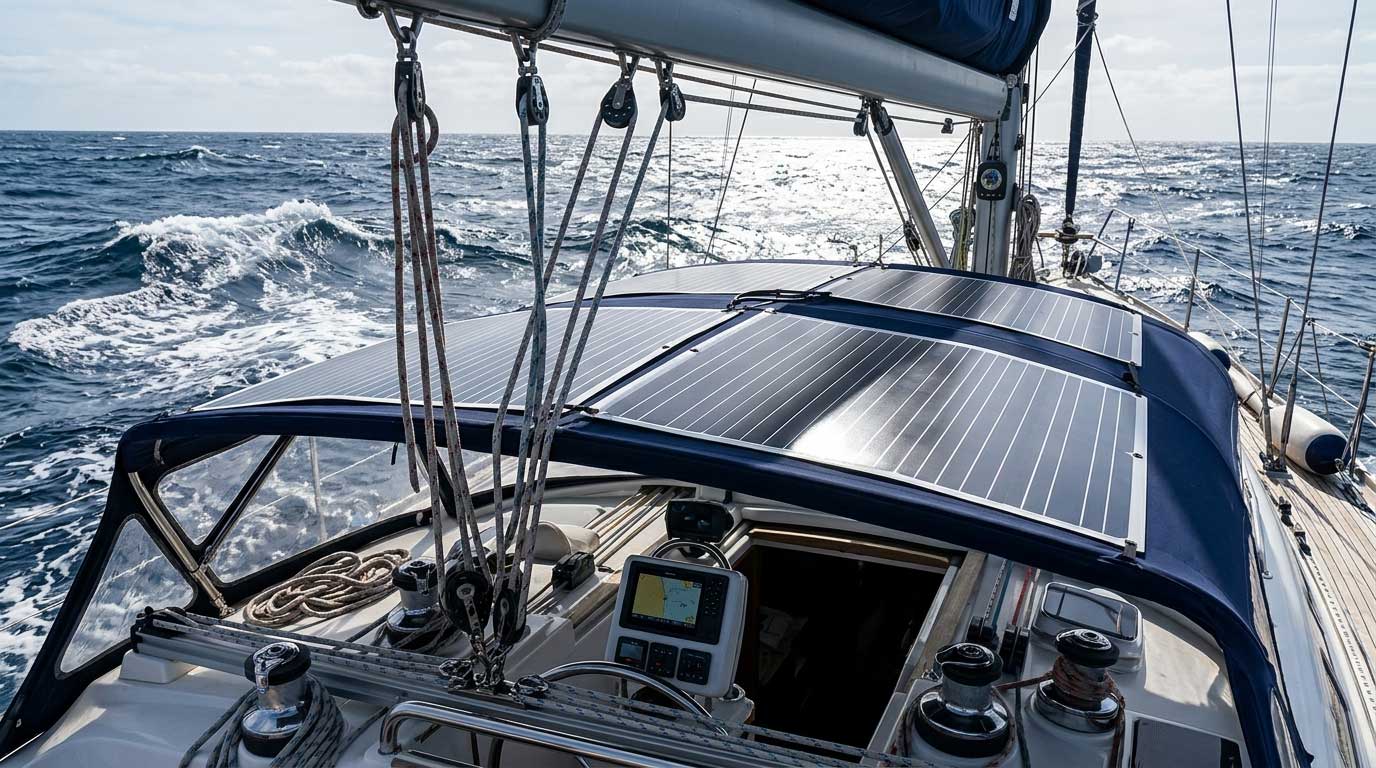
Where Marine Solar Installations Usually Fail
Most marine solar failures are not caused by the cells themselves.
The failures usually happen around them.
1. Poor Adhesive Selection
Marine heat cycles destroy weak adhesive systems quickly.
I have seen flexible solar panels marine partially detach after one tropical season because installers used automotive tape instead of marine-rated bonding materials.
That repair becomes expensive once water intrusion starts underneath.
2. Saltwater Connector Corrosion
Cheap MC4 connectors often corrode internally.
Voltage drop appears slowly at first. Then charging performance collapses unexpectedly.
Marine-grade tinned copper wiring matters.
So does waterproof sealing.
3. Excessive Heat Buildup
flexible solar panels marine mounted completely flush against dark fiberglass surfaces can overheat.
Small airflow spacing helps reduce thermal stress significantly.
One charter captain in Greece added 8mm ventilation spacers beneath his flexible array and measured noticeably lower afternoon surface temperatures using an infrared thermometer.
The charging curve stabilized immediately afterward.
Best Locations to Install Flexible Solar Panels on Boats
Not every surface is equally effective.
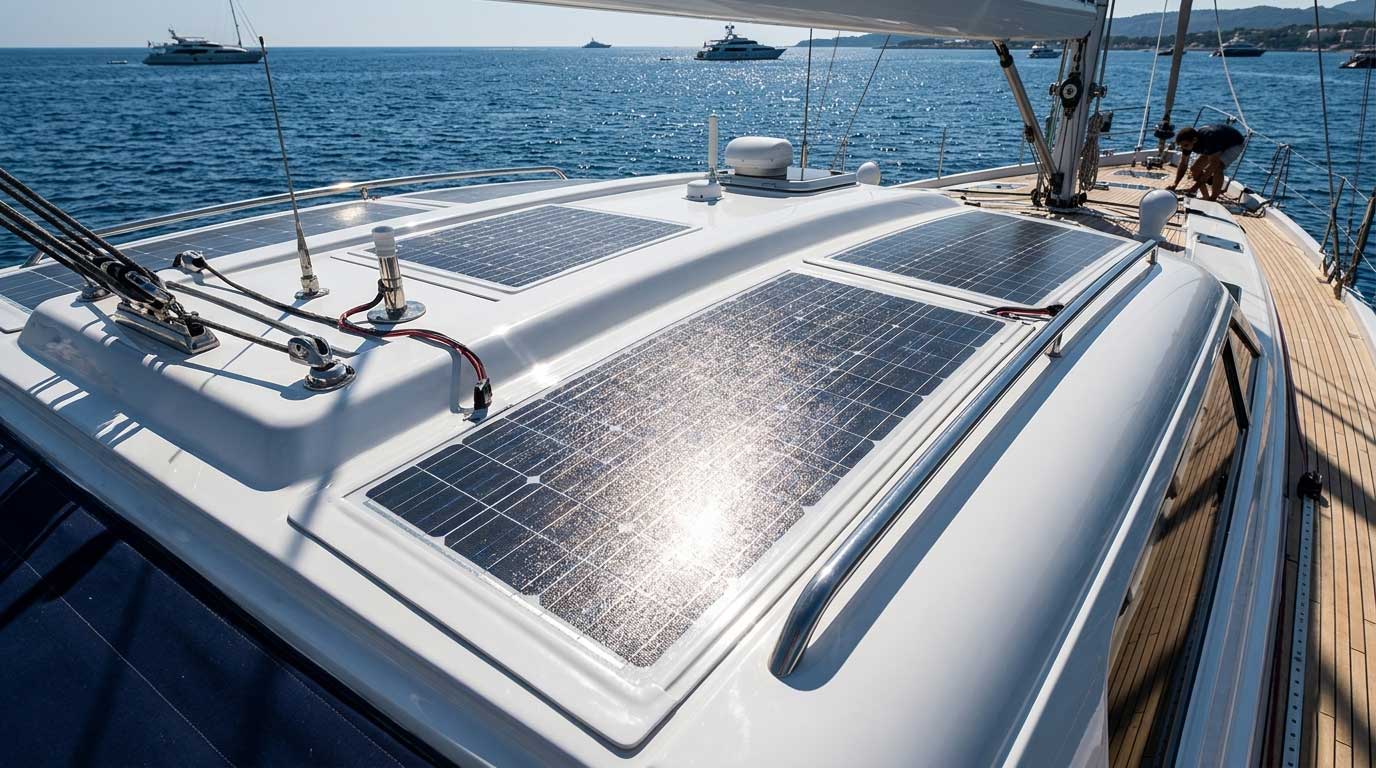
Most Common Marine Mounting Areas
| Mounting Location | Advantages |
|---|---|
| Bimini top | Excellent sunlight exposure |
| Cabin roof | Stable mounting surface |
| Foredeck | Large usable area |
| Dinghy davits | Supplemental charging |
| Curved fiberglass roof | Flexible panels conform naturally |
The best installations usually avoid:
- Heavy foot traffic
- Sail shading
- Rope interference
- Constant standing water
Simple, clean layouts generally outperform crowded “maximum wattage” designs.
Choosing the Right Flexible Solar Panels for Boats
A proper marine solar setup depends less on headline wattage and more on balance.
The smartest systems usually combine:
- High-efficiency monocrystalline cells
- MPPT charging
- Lithium battery storage
- Waterproof connectors
- Low-profile mounting
At Bright Solar, marine-focused flexible solar systems are designed specifically for:
- Saltwater durability
- Lightweight installations
- Curved deck compatibility
- Long-term UV exposure
- Stable offshore charging
Because marine environments punish weak equipment fast.
And once you lose refrigeration offshore in midsummer, specifications stop feeling theoretical very quickly.
FAQ: Best Flexible Solar Panels for Boats
Are flexible solar panels good for boats?
Yes. Best Flexible solar panels for boats are widely used because they are lightweight, low-profile, and easier to install on curved marine surfaces.
Can flexible marine solar panels handle saltwater?
High-quality marine flexible panels with ETFE coatings and waterproof junction boxes are specifically designed for saltwater exposure.
How long do flexible solar panels last on boats?
Premium marine flexible solar panels typically last between 5 and 15 years depending on installation quality, ventilation, and UV exposure.
Can you walk on flexible solar panels?
Some marine-grade panels tolerate light foot traffic, but repeated pressure can eventually damage solar cells.
Do flexible solar panels charge batteries while sailing?
Yes. Flexible solar systems continue charging batteries while underway, helping support navigation electronics, lighting, refrigeration, and onboard systems.
Final Thoughts
Best Flexible solar panels for boats are not just a lighter alternative to rigid marine panels.
They are a better fit for the realities of life at sea.
Curved decks.
Constant vibration.
Salt spray.
Limited mounting space.
Wind resistance.
Those conditions change everything about solar design offshore.
And after spending enough time listening to aluminum panel brackets rattle through rough coastal chop at 2 a.m., most boat owners start appreciating quiet, low-profile solar systems very quickly.
Related recommendations
-

300w flexible solar panel for RV, Marine and Off-Grid Solar Applications
210Explore 300w flexible solar panel technology from Bright Solar for RV, marine, and off-grid applications. Learn output, installation methods, materials, and real project experience.
View details -
200 Watt Flexible Solar Panel for RV, Marine, and Off-Grid Applications
169200 watt flexible solar panel solutions provide lightweight, durable off-grid energy for RVs, boats, cabins, and mobile systems with reliable solar efficiency.
View details -
450 Watt Solar Panel Performance and Applications Guide
190Discover how a 450 watt solar panel delivers reliable power for RVs, homes, marine and off-grid systems. Learn output, efficiency and installation tips.
View details -
Series vs Parallel Solar Panels: Which Wiring Method Performs Better?
109Compare series vs parallel solar panels for RVs, homes, and off-grid systems. Bright Solar explains voltage, current, shading, and wiring efficiency.
View details