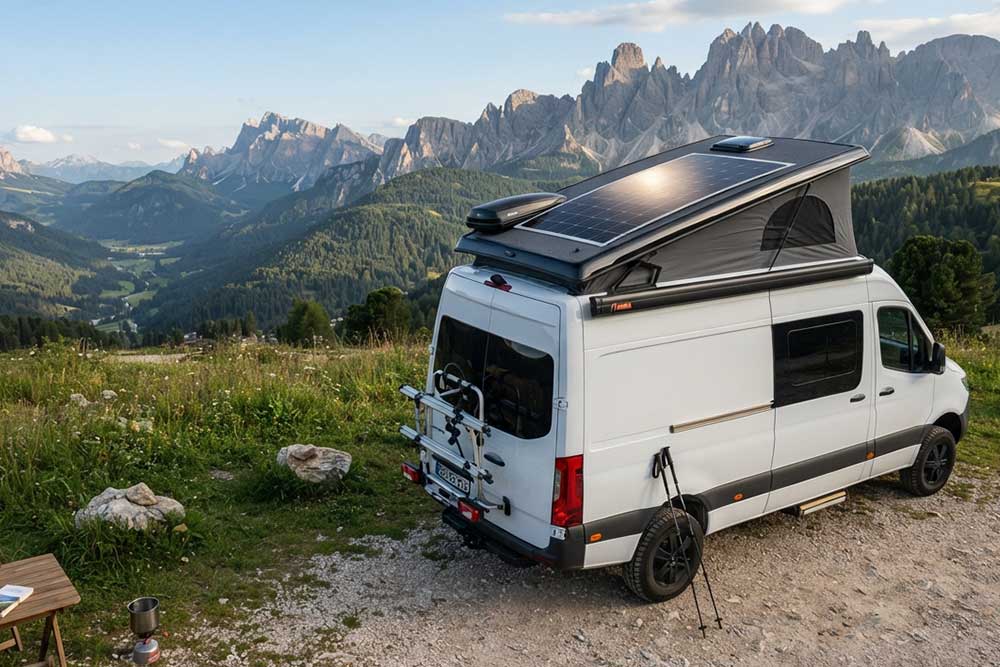
10W Flexible Solar Panel: Compact Power for Portable and Off-Grid Use
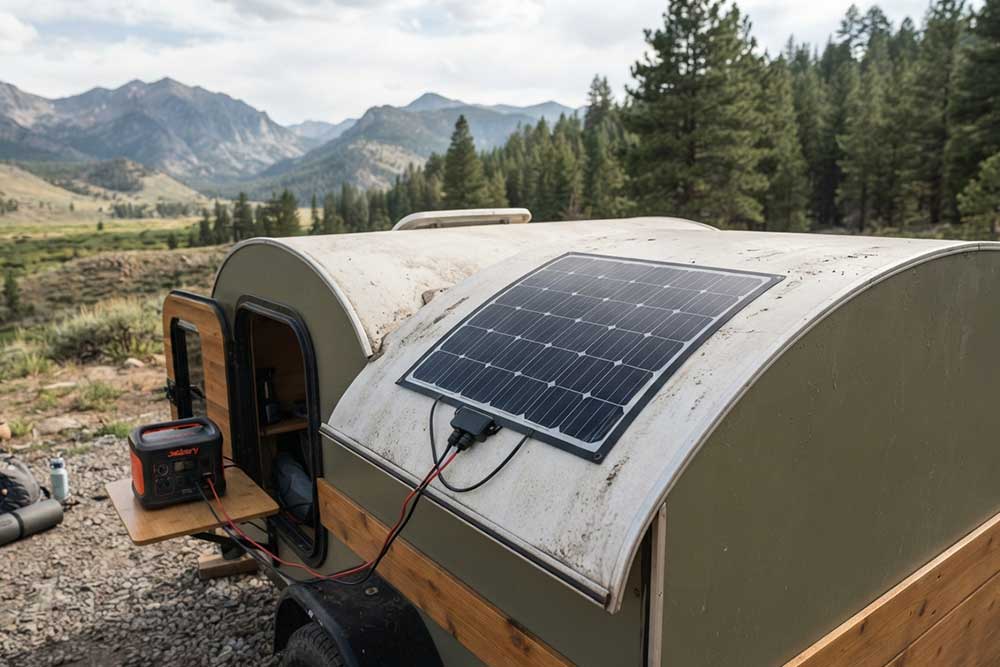
A 10W Flexible Solar Panel is a compact photovoltaic solution for low-power charging, battery maintenance, portable equipment, and small off-grid applications. Bright Solar’s 10W model, BS10-FS-M(E), uses PERC monocrystalline cells and a thin semi-flexible construction, making it suitable where available mounting space, low weight, and installation adaptability are more important than high power capacity.
10W Flexible Solar Panel Specifications
The following specifications are based on Bright Solar’s published H Series semi-flexible solar panel datasheet, which lists the BS10-FS-M(E) as the 10W model. Because this product belongs to the H Series rather than the current L Series, its construction and specifications should not be mixed with L Series data.
| Specification | BS10-FS-M(E) |
|---|---|
| Rated Power | 10W |
| Maximum Power Voltage (Vmp) | 18V |
| Maximum Power Current (Imp) | 0.56A |
| Open Circuit Voltage (Voc) | 21.6V |
| Short Circuit Current (Isc) | 0.62A |
| Solar Cell Type | PERC 158.75 × 158.75 mm Mono |
| Module Efficiency | 22.3% |
| Dimensions | Confirm with Bright Solar for final configuration |
| Weight | Confirm with Bright Solar for final configuration |
| Maximum Bending Radius | Not specified in the published datasheet |
| Operating Temperature | Temperature coefficients and NOCT 45 ± 2°C are listed; operating range should be confirmed for the final model |
| Connector | Confirm final configuration |
| IP Rating | Not specified for the complete module in the published datasheet |
| Warranty | Confirm final order specification |
The datasheet also describes the construction as DuPont ETFE / EVA / solar cell / EVA / substrate plate / EVA / TPT / DuPont ETFE, with a stated maximum system voltage of 1000V DC.
For a product page, it is better to leave unpublished values as “Confirm with Bright Solar” than to fill them with assumptions. This is particularly important for dimensions, weight, IP rating, bending radius, and warranty because these specifications can vary by product configuration.
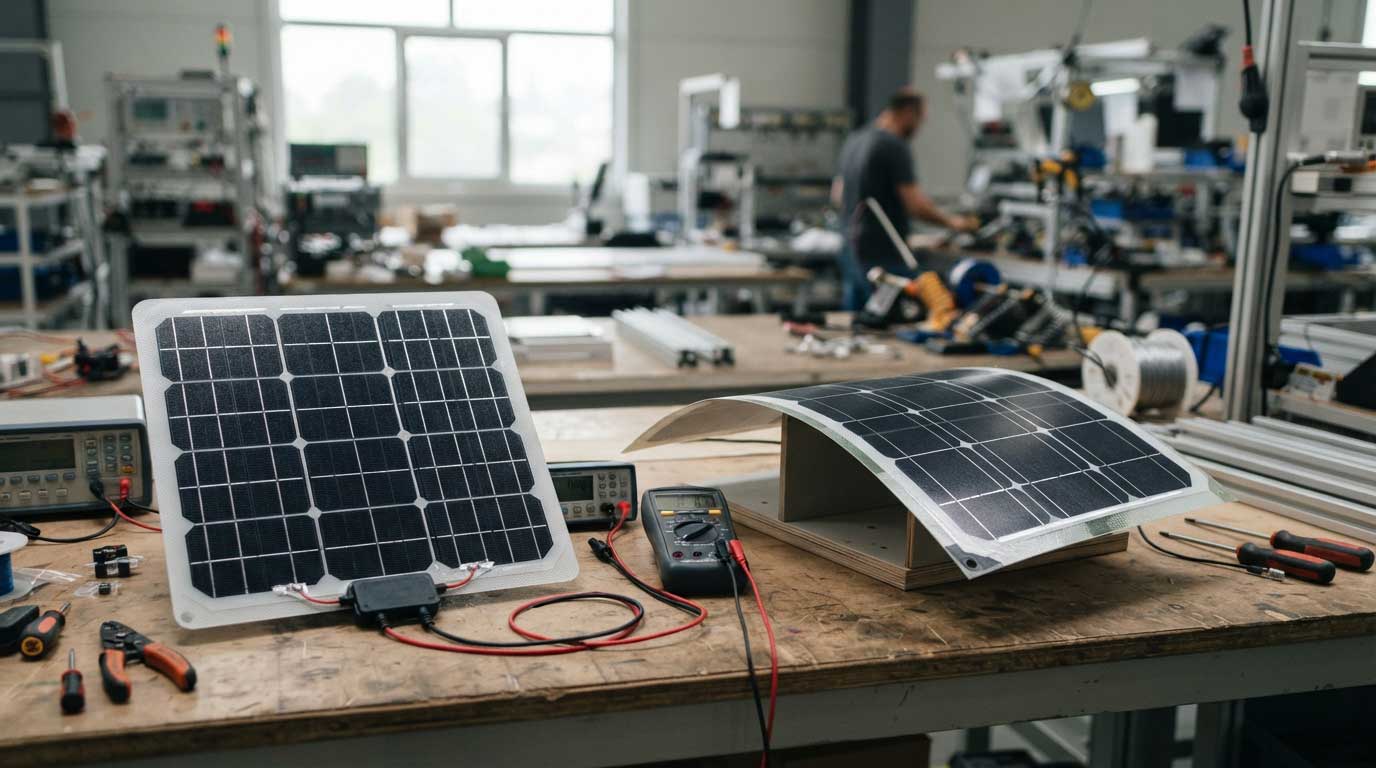
Key Features of the 10W Flexible Solar Panel
10W Power Output
A 10W solar panel is designed for relatively small electrical loads rather than high-power appliances. It can be used for applications such as battery maintenance, small monitoring equipment, portable electronics, and other low-energy systems.
Bright Solar’s published material places 10W–30W panels within the compact end of the small flexible solar panel category.
The 10W rating describes the panel’s nominal peak power under specified test conditions. It should not be interpreted as a continuous 10W output throughout the day.
For example, the published electrical specifications of the BS10-FS-M(E) give:
18V × 0.56A ≈ 10W
This shows how the rated power relates to the panel’s maximum-power voltage and current.
Flexible and Lightweight Design
The BS10-FS-M(E) is part of Bright Solar’s H Series semi-flexible solar panel range. Its construction uses photovoltaic cells integrated into a layered composite structure rather than a conventional framed glass module.
This type of construction is useful when the installation has limited space or when a traditional rigid panel is unnecessarily large or difficult to mount.
For a small 10W module, the physical footprint can also be easier to integrate into:
- Small battery systems
- Portable equipment
- Remote monitoring equipment
- Compact outdoor installations
- Auxiliary charging applications
The exact bending limit should not be inferred from the term “flexible” or “semi-flexible.” Bright Solar’s published datasheet does not provide a specific maximum bending radius for BS10-FS-M(E), so the final installation should follow the confirmed product specification.
Easy to Install
A small solar module generally requires less mounting space than a larger panel, which gives installers more options when working with compact equipment.
The exact mounting method for the BS10-FS-M(E) should be confirmed with Bright Solar before installation. The H Series datasheet provides the product construction and electrical specifications but does not establish a universal adhesive, drilling, or mounting procedure for every installation.
For OEM projects, the mounting method should be selected according to:
- Mounting surface
- Mechanical vibration
- Outdoor exposure
- Cable routing
- Required service access
- Final product enclosure
This is more reliable than applying the same installation method to every small flexible solar panel.
Durable for Outdoor Applications
The H Series datasheet identifies several material and environmental characteristics, including DuPont ETFE, resistance to salt-spray corrosion, resistance to ammonia corrosion, and the layered composite construction.
The ETFE-based outer construction is relevant to outdoor photovoltaic applications because the surface material is designed for environmental exposure.
However, individual characteristics should not be turned into unsupported claims. For example, the published document does not provide a complete IP rating for the BS10-FS-M(E), so the product should not be advertised as IP67 or IP68 unless Bright Solar supplies the applicable test documentation.
For a 10W panel, environmental suitability should therefore be evaluated together with:
- UV exposure
- Moisture
- Corrosive environments
- Temperature changes
- Mechanical stress
- Installation quality
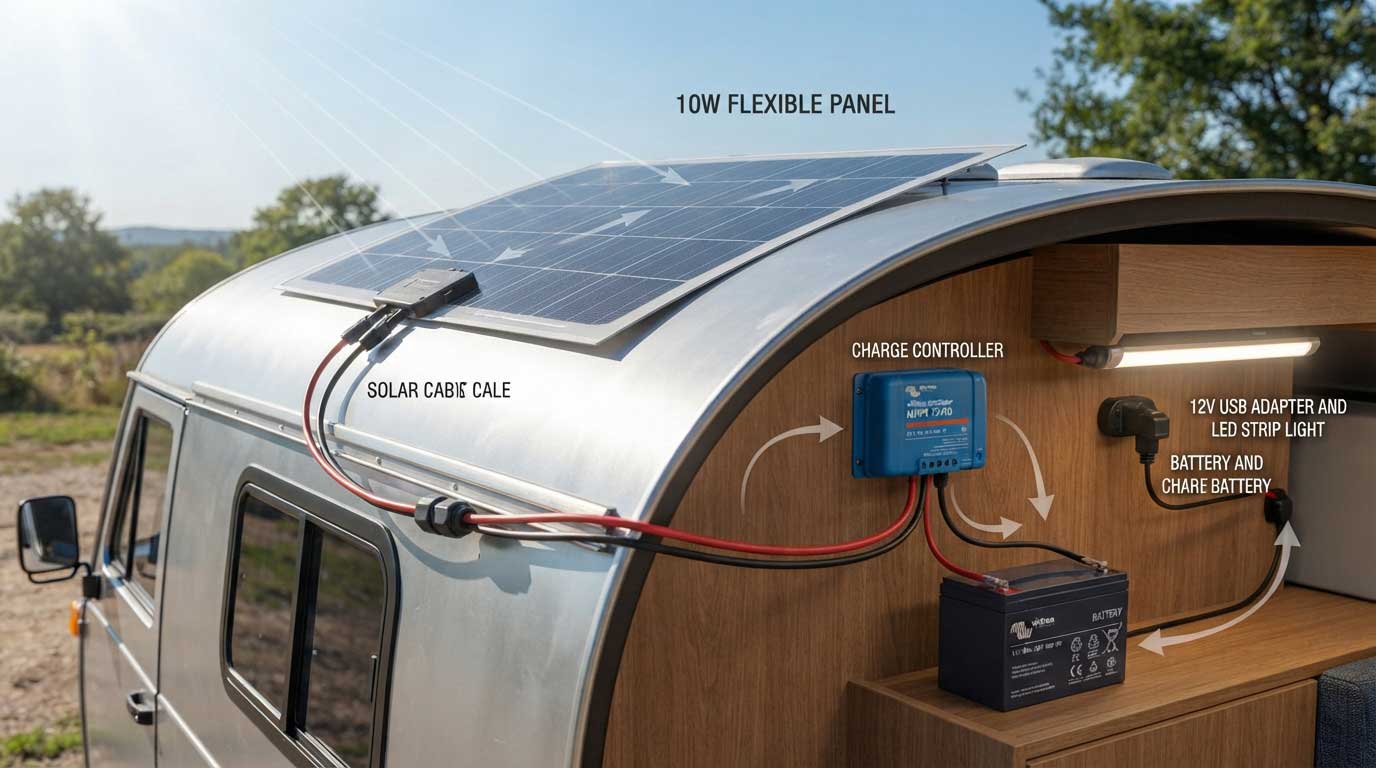
How Does a 10W Flexible Solar Panel Work?
A 10W flexible solar panel works through the same photovoltaic principle as larger solar modules:
Sunlight → Solar Cells → DC Electricity → Charge Controller → Battery / Load
When sunlight reaches the photovoltaic cells, the cells generate DC electricity. A suitable charge controller can then regulate the energy before it is supplied to a battery or compatible electrical load.
The important point is that 10W is the nominal peak power rating, not guaranteed continuous output. Actual output changes with sunlight intensity, temperature, shading, panel orientation, and electrical system losses.
For small solar systems, this distinction matters because a 10W panel may be sufficient for a low-power application while being completely unsuitable for a high-consumption load.
Applications of 10W Flexible Solar Panel
A 10W flexible solar panel is most appropriate where the energy requirement is modest and the available installation area is limited.
RV and Camper
10W flexible solar panel for RV
A 10W panel can be used as a small auxiliary charging or battery-maintenance source. It is not intended to replace the larger solar array normally required for significant RV loads.

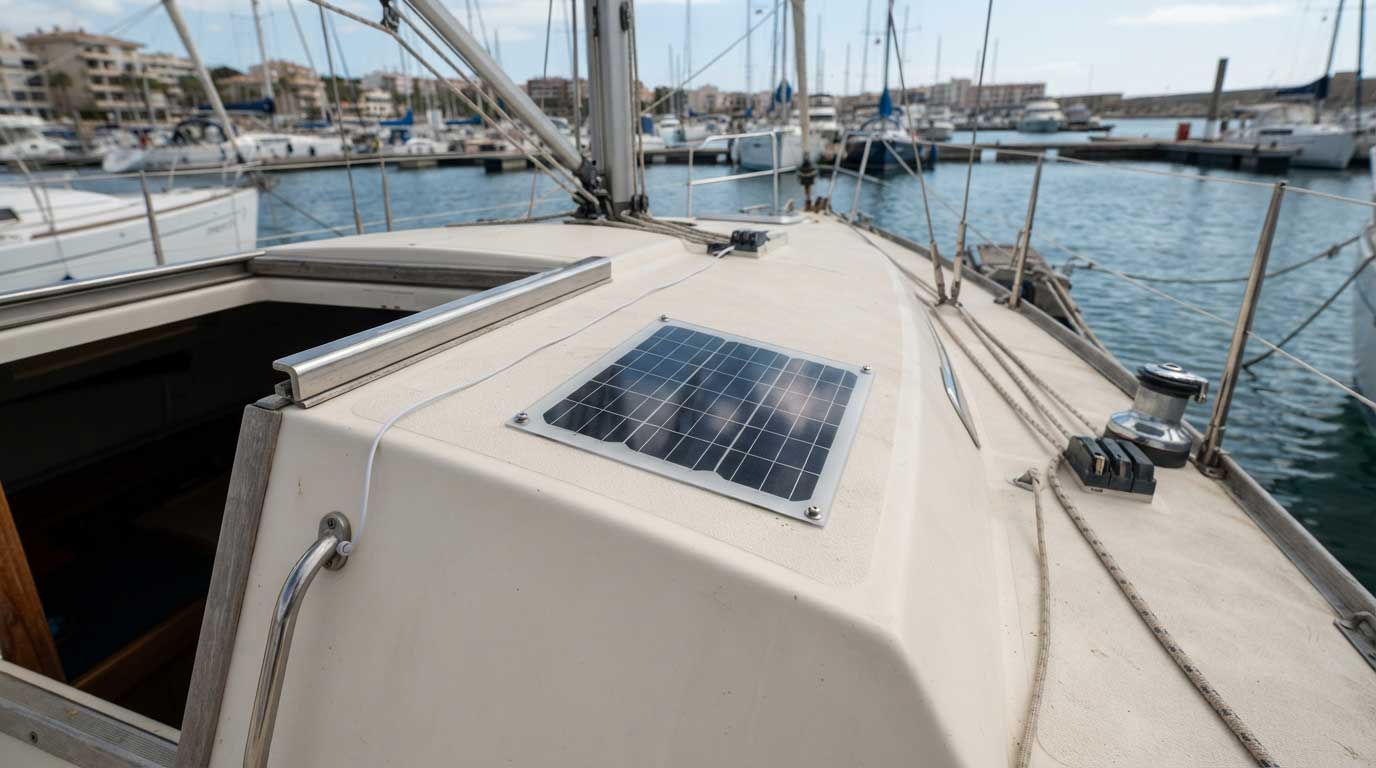
Marine and Boat
10W flexible solar panel for boat
The compact size can be useful for small marine electronics, auxiliary battery maintenance, or equipment where only a limited mounting area is available.
For saltwater environments, the H Series material construction is particularly relevant because Bright Solar’s datasheet specifies resistance to salt-spray corrosion.
Off-Grid Solar Systems
10W flexible solar panel for off-grid
A 10W panel can work as part of a small off-grid system for low-energy devices or battery maintenance. When the load increases, additional solar capacity should be added rather than expecting a single 10W panel to supply the entire system.
Camping and Outdoor Power
10W flexible solar panel for camping
For camping, 10W is better suited to small electronics and low-energy charging than appliances requiring substantial power. Its compact format makes it easier to incorporate into portable outdoor equipment.
Remote and Mobile Applications
Small remote systems can benefit from low-power solar generation when grid electricity is unavailable. Potential applications include small monitoring equipment, sensors, communication accessories, and battery-maintenance systems.
The key consideration is the daily energy requirement. If the device consumes more energy than the panel can reasonably generate, the system needs a larger panel, additional storage, or both.
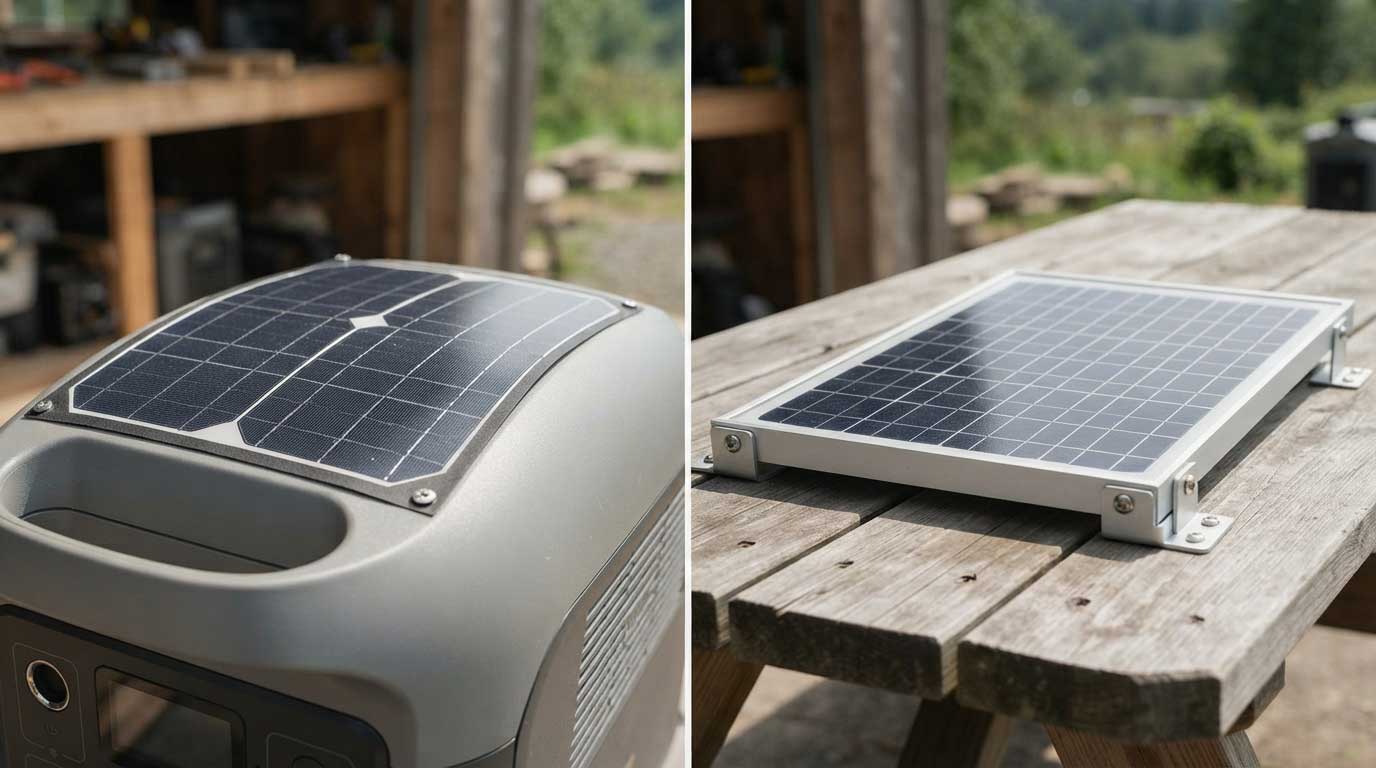
10W Flexible Solar Panel vs. Rigid Solar Panel
The choice between flexible and rigid construction depends on the installation rather than simply the rated wattage.
| Feature | 10W Flexible Solar Panel | 10W Rigid Solar Panel |
|---|---|---|
| Flexibility | Designed as a flexible or semi-flexible construction | Fixed rigid structure |
| Weight | Typically designed for lightweight applications | Usually includes a rigid frame or glass structure |
| Installation | More adaptable to compact installation areas | Requires a suitable rigid mounting surface |
| Mounting Surface | Useful where a slightly curved or irregular surface is required | Best suited to flat, stable surfaces |
| Portability | Suitable for compact and mobile equipment | Less convenient where low weight and flexibility are priorities |
| Typical Applications | Portable, marine, small off-grid and auxiliary systems | Fixed small-scale solar installations |
A flexible solar panel is useful when weight, space, or mounting geometry are important. A rigid panel can be the better choice when the installation already has a stable flat mounting structure and conventional hardware is preferred.
The objective is not to make flexible panels appear universally superior. For a small 10W system, the physical installation requirements can be more important than the difference in panel construction.
How Much Power Can a 10W Flexible Solar Panel Produce?
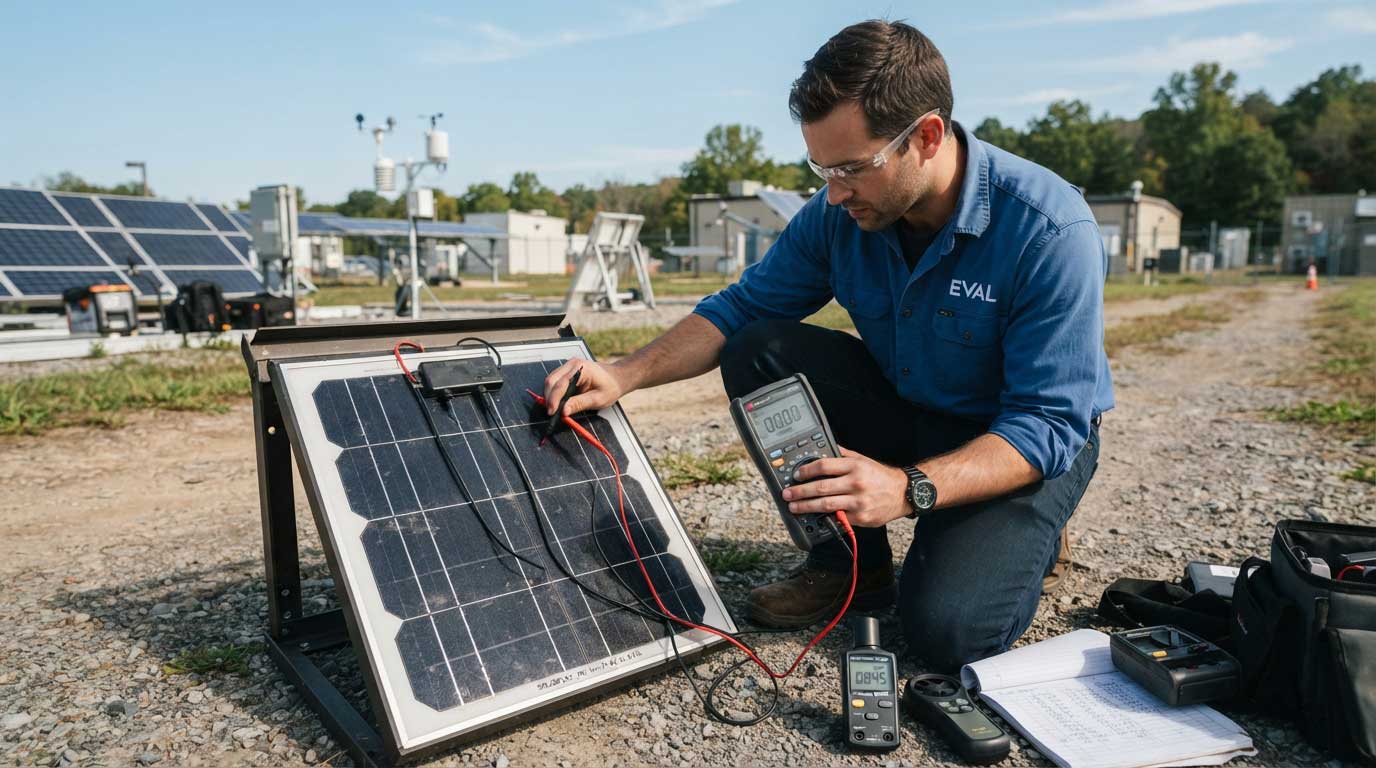
A 10W flexible solar panel is rated for 10 watts of nominal peak power under its specified test conditions.
For the BS10-FS-M(E), the published maximum-power values are 18V and approximately 0.56A, giving roughly 10W.
Actual outdoor output will normally vary. Important factors include:
- Solar irradiance
- Panel orientation
- Shading
- Temperature
- Cable losses
- Charge-controller efficiency
- Installation conditions
A simple energy estimate can be expressed as:
Daily Energy ≈ Panel Power × Equivalent Peak Sun Hours × System Efficiency
For example, if a 10W panel receives the equivalent of five hours of full-output sunlight, the theoretical energy before system losses would be:
10W × 5h = 50Wh
That is a planning calculation, not a guaranteed daily production figure.
Bright Solar’s portable solar guidance similarly uses 10W flexible panels for small charging applications and notes that actual output depends on sunlight, orientation, temperature, clouds, shading, and system requirements.
How to Install a 10W Flexible Solar Panel
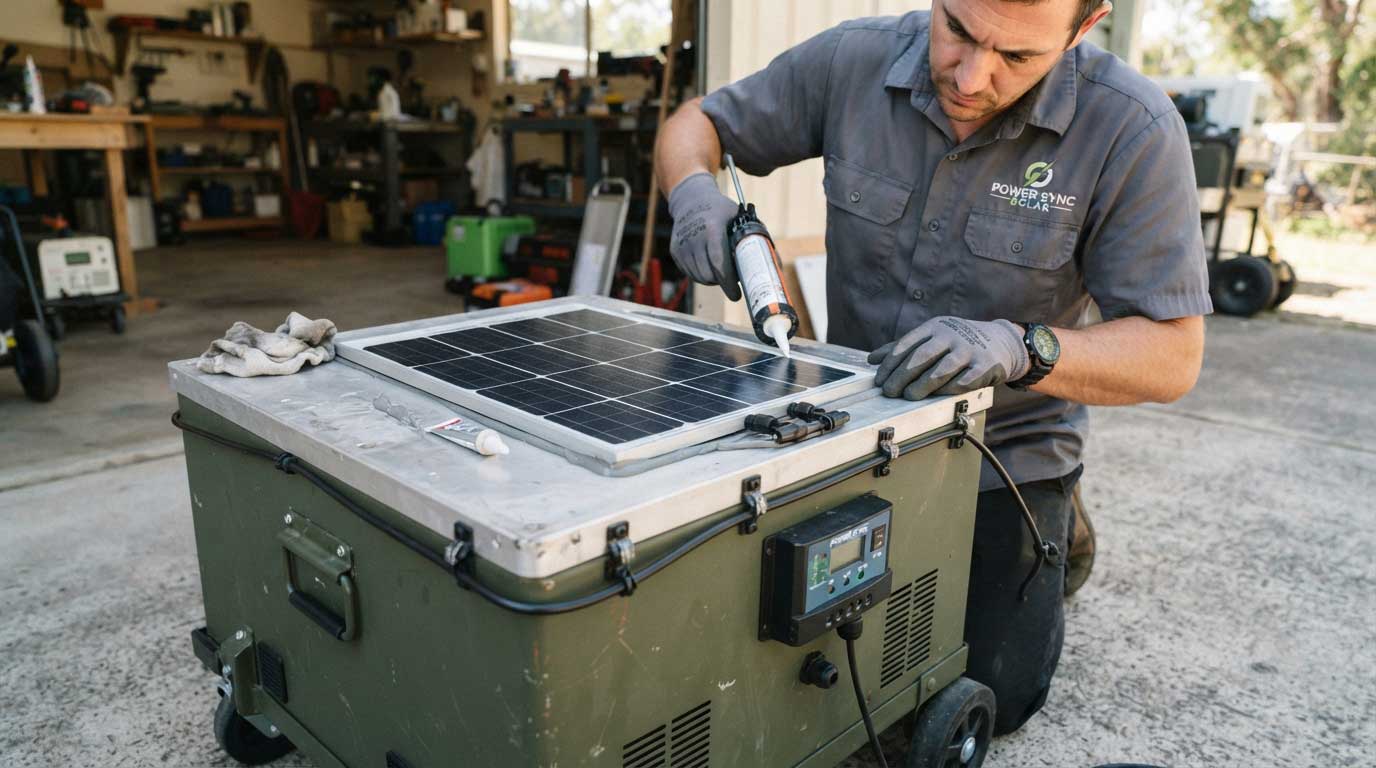
The installation method should follow the final BS10-FS-M(E) configuration and mounting instructions supplied by Bright Solar.
1. Choose a Suitable Surface
Select a surface that can safely support the panel and provide adequate exposure to sunlight. Avoid locations with persistent shading from equipment or surrounding structures.
2. Position the Panel
Place the panel where sunlight can reach the photovoltaic surface for as much of the operating period as possible.
For small panels, even partial shading can have a noticeable effect on the available power because the total generation capacity is only 10W.
3. Secure the Panel
Use a mounting method appropriate for the surface and the panel construction.
Do not assume that an adhesive or VHB installation method used for another Bright Solar series automatically applies to BS10-FS-M(E). Confirm the recommended mounting method for the actual H Series model.
4. Connect the Cables
Connect the panel using the specified cable and connector configuration.
Check polarity before connecting the panel to a charge controller, battery system, or compatible load.
5. Connect the Charge Controller
For battery charging, use a charge controller that is compatible with the panel’s voltage and current characteristics and the battery chemistry.
The controller should also be appropriate for the complete system voltage and charging requirements.
6. Check System Output
After installation, check the panel voltage, polarity, controller status, and battery charging behavior.
If output is lower than expected, check sunlight exposure, shading, cable connections, panel orientation, and system losses before concluding that there is a panel problem.
Why Choose Bright Solar 10W Flexible Solar Panel?
Bright Solar provides flexible and semi-flexible photovoltaic products for mobile, marine, portable, and off-grid applications. Its product range includes small panels as well as larger flexible modules, allowing system requirements to be considered by application rather than by wattage alone.
For the 10W H Series model, relevant product considerations include:
- Product construction: The BS10-FS-M(E) uses a multi-layer composite structure with DuPont ETFE and EVA layers.
- Cell technology: The published specification identifies PERC monocrystalline cells.
- Quality considerations: The datasheet includes electrical specifications, material construction, temperature coefficients, and NOCT information.
- Application flexibility: Bright Solar develops panels for portable, RV, marine, and off-grid applications.
- Customization: Bright Solar’s flexible-panel product information states that customized panel sizes are supported for its flexible product range.
- Technical support: Bright Solar’s product development and project workflow includes solution design, sample production, testing, mass production, packaging, and technical support.
The right product should be selected according to the electrical load, mounting surface, environment, and required system voltage rather than simply choosing the smallest or largest available panel.
10W Flexible Solar Panel for OEM & Wholesale
For B2B buyers, a 10W flexible solar panel can be developed around a specific low-power application instead of being treated as a generic consumer product.
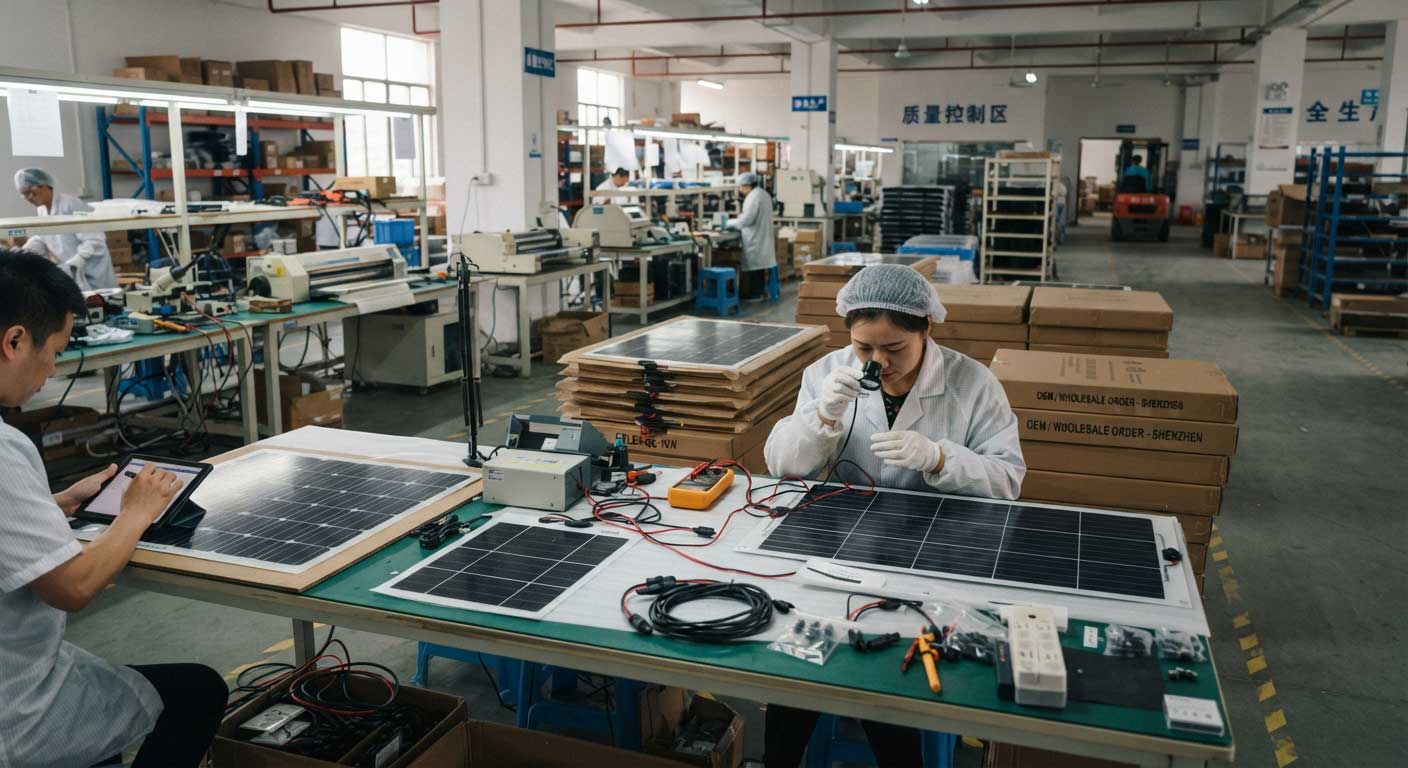
Bright Solar’s flexible solar product information states that customized sizes are available, while its project workflow describes solution design, sample production and testing, mass production, quality control, packaging, shipping, and after-sales support.
Potential OEM and wholesale requirements can include:
- Custom panel dimensions
- Electrical specifications
- Cable configuration
- Connector configuration
- Product branding
- Packaging requirements
- Sample orders
- Bulk production
- Application-specific design requirements
For 10W flexible solar panel wholesale, MOQ, unit pricing, sample costs, lead time, logo printing, packaging, and final connector configuration should be confirmed with Bright Solar for the specific project. These should not be presented as fixed standard terms without an applicable quotation.
For developers searching for a 10W flexible solar panel manufacturer or 10W flexible solar panel supplier, the more useful evaluation criteria are the manufacturer’s ability to provide consistent electrical specifications, appropriate materials, testing, production control, and project support.
FAQ About 10W Flexible Solar Panel
What is a 10W flexible solar panel?
A 10W flexible solar panel is a small photovoltaic module with a nominal peak power rating of 10 watts. Bright Solar’s BS10-FS-M(E) is listed in its H Series semi-flexible solar panel datasheet and uses PERC monocrystalline cells.
How much power does a 10W flexible solar panel produce?
The panel is rated for 10W of nominal peak power. Actual outdoor output varies with sunlight, temperature, shading, orientation, wiring, and charge-controller losses.
Can a 10W flexible solar panel charge a 12V battery?
It can be used in a small battery-charging system when the panel, charge controller, and battery are electrically compatible. The BS10-FS-M(E) has a published Vmp of 18V and Voc of 21.6V, but the complete charging setup must still be designed correctly.
Can a 10W flexible solar panel be used on an RV?
Yes, for small auxiliary loads or battery-maintenance applications. It should not be expected to provide the same energy production as the larger 100W, 200W, or 300W panels commonly used for substantial RV power requirements.
Can a 10W flexible solar panel be installed on a curved surface?
The BS10-FS-M(E) belongs to Bright Solar’s semi-flexible H Series, but the published datasheet does not specify a maximum bending radius. Therefore, curved installation should follow the confirmed mechanical specifications for the final product rather than assuming a particular bending limit.
How do you install a 10W flexible solar panel?
First select a suitable surface and position the panel for good sunlight exposure. Then secure it using the approved mounting method, connect the specified cables, connect a compatible charge controller when battery charging is required, and verify voltage and system operation.
How long does a 10W flexible solar panel last?
Service life depends on materials, environmental exposure, temperature, mechanical stress, installation, and maintenance. Bright Solar’s H Series documentation specifies a multi-layer ETFE/EVA-based construction and environmental resistance characteristics, but a specific service-life number should not be invented without the applicable product warranty or test documentation.
What is the difference between a flexible and rigid 10W solar panel?
A flexible 10W panel is intended for applications where low weight, compact installation, or adaptable mounting is useful. A rigid 10W panel is better suited to a stable fixed mounting structure. The better option depends on the installation rather than the wattage alone.
Conclusion
A 10W Flexible Solar Panel is best viewed as a compact source of photovoltaic power for low-energy and auxiliary applications. Bright Solar’s BS10-FS-M(E) provides 10W nominal peak power, 18V maximum-power voltage, 0.56A maximum-power current, and PERC monocrystalline cells in a semi-flexible H Series construction.
For portable equipment, small battery systems, marine electronics, remote monitoring, camping, and other low-power applications, 10W can be useful when the system is correctly sized. The key is to match the panel’s actual electrical output and mounting characteristics to the application’s energy demand rather than assuming that a 10W rating represents continuous daily production.
For OEM and wholesale projects, Bright Solar can discuss the required dimensions, electrical configuration, cables, connectors, packaging, testing, and production requirements according to the final application. The product specification should always be confirmed against the final quotation and technical documentation before production.
Related recommendations
-

marine solar panels: What Boat Owners Learn After Installing Solar at Sea
262Discover how marine solar panels power boats, sailboats, and yachts efficiently. Learn installation tips, real marine cases, wiring advice, and maintenance.
View details -
Solar Camping Gear: A Practical Guide to Off-Grid Power
303Solar camping gear combines portable solar generation and battery storage for reliable off-grid power during camping, RV travel, boating, and outdoor work.
View details -
DIY Flexible Solar Panels: A Practical Guide to Building a Solar Setup
188DIY flexible solar panels can be used in self-built solar systems, but finished, tested modules are generally more practical than fabricating panels from ind...
View details -
Amorphous Flexible Solar Panel: Thin Film Solar Technology for Lightweight Applications
105Amorphous flexible solar panels use thin-film silicon for lightweight, flexible solar applications where adaptability and low-light response matter.
View details