100w Solar Panel Portable: Output, Uses, and Buying Guide
A 100w solar panel portable setup provides a compact way to generate electricity for camping, RV trips, outdoor devices, and small off-grid systems. Actual energy production depends on sunlight, panel orientation, shading, and charging losses, so choose a panel that matches your equipment and daily power needs.
A portable solar panel is most useful when you can place it in good sunlight without moving your entire vehicle or campsite. That flexibility is often more valuable than a headline wattage figure. A panel rated at 100 watts can support useful charging, but it will not deliver 100 watts continuously throughout the day.
For buyers, the key questions are straightforward: How much energy can the panel realistically produce? What can it power? Will it connect safely to an existing battery or power station? And is a portable panel the right design for the intended application?
What Is a Portable 100W Solar Panel?
A portable 100W solar panel is a photovoltaic module rated to produce 100 watts under specified test conditions. It can be a rigid portable panel, a folding panel, or a flexible module designed for compatible mounting surfaces. These designs are not interchangeable, even if their rated power is identical.
The U.S. Department of Energy explains that photovoltaic cells convert sunlight directly into electricity. The electrical output of a real system varies with operating conditions, so the panel’s rated power should be treated as a reference value rather than a guarantee of continuous production. U.S. Department of Energy: Solar Photovoltaic Technology Basics
Portable, Folding, and Flexible Panels Compared
| Panel type | Typical use | Main consideration |
|---|---|---|
| Rigid portable panel | Campsites, temporary charging, portable power stations | Requires suitable support and storage space |
| Folding solar panel | Camping and travel where compact storage matters | Hinges and folds need careful handling |
| Flexible solar panel | Compatible curved surfaces, weight-sensitive installations | Must follow the model’s specified bending limits |
| Permanently mounted rigid panel | RV roofs, sheds, and fixed solar systems | Requires suitable mounting and structural support |
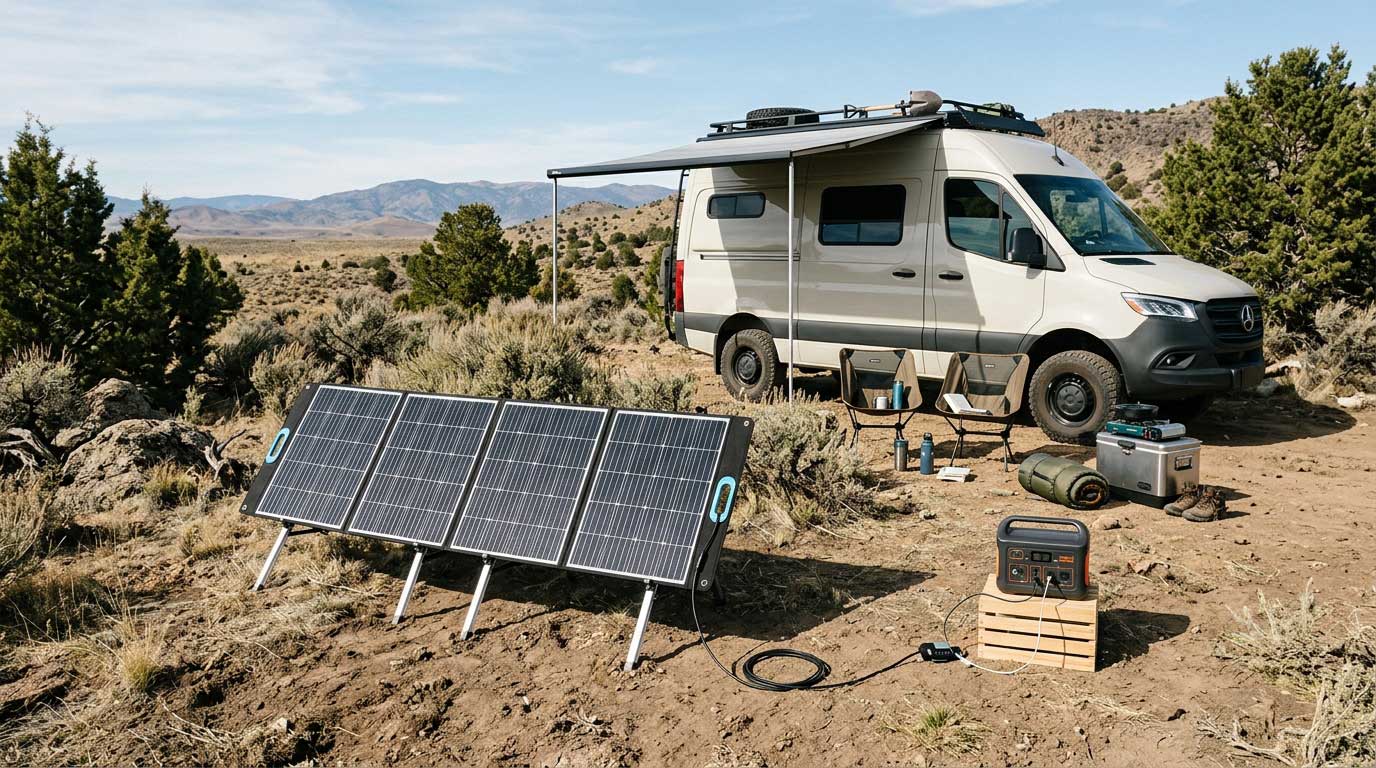
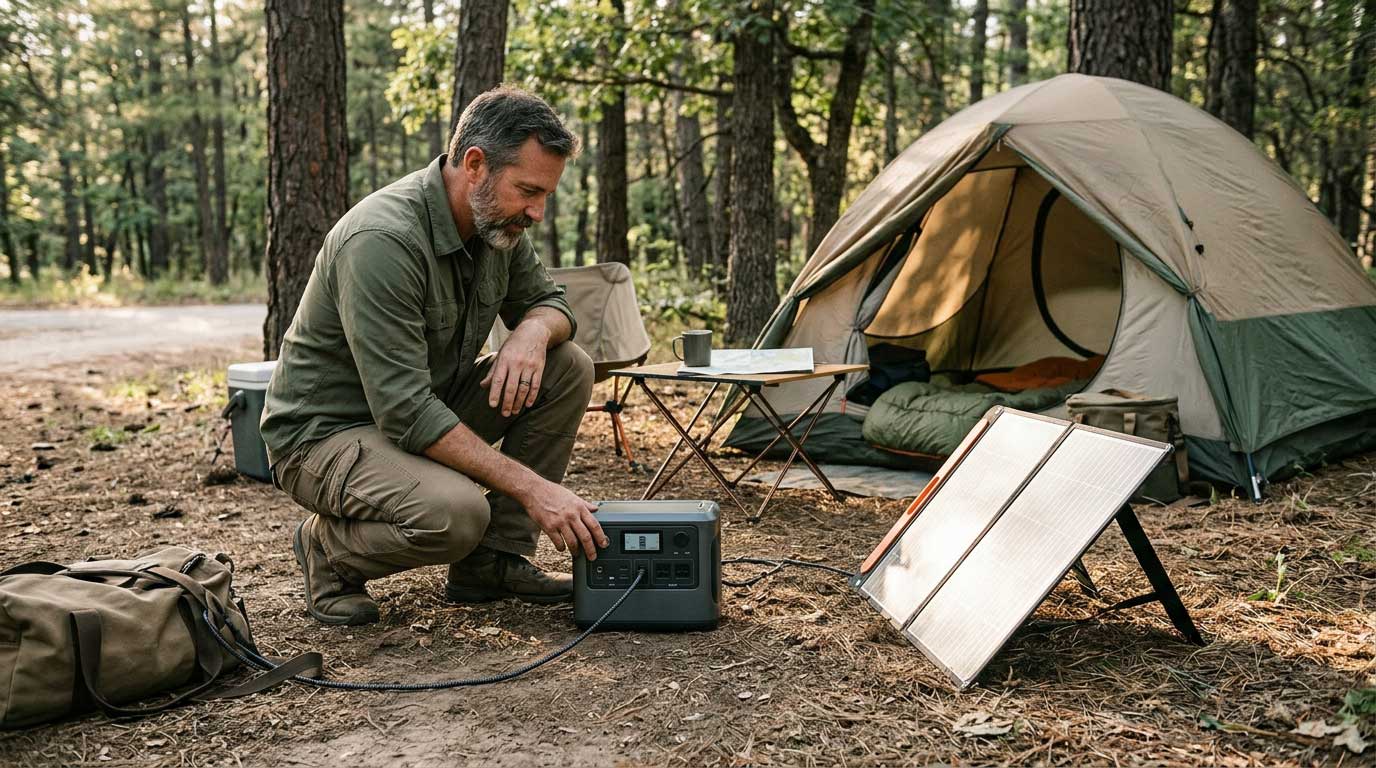
A portable panel can be carried to a sunny patch while a battery remains in a shaded, ventilated location. That is particularly helpful at campsites where a vehicle is parked under trees but an open area nearby receives direct sunlight.
Flexible solar panels serve a different purpose. Bright Solar supplies flexible solar panel solutions for B2B customers who need modules for defined installation conditions. Its L Series has a stated maximum bending capacity of 30%; that specification should not be interpreted as permission to fold the module repeatedly like a hinged camping panel. Buyers should confirm the exact model specifications and installation requirements.
How Much Power Does a 100W Portable Solar Panel Produce?
A 100W solar panel can theoretically generate 100 watt-hours of energy for every hour it operates at its full rated output. In actual outdoor conditions, the amount of energy collected depends on the available sunlight, panel temperature, orientation, shading, and system losses.
Use this estimate to plan daily production:
Daily energy (Wh) = rated power (W) × peak sun hours × system efficiency
Peak sun hours represent equivalent hours at a reference irradiance of 1,000 watts per square metre, not simply the number of daylight hours.
For example, if a 100W panel receives four peak sun hours, its theoretical daily energy is 400Wh. Applying an illustrative system-efficiency factor of 75–85% gives an estimated 300–340Wh per day before any additional battery-storage or device-conversion losses.
| Peak sun hours | Theoretical energy at 100W | Estimated energy at 75–85% efficiency |
|---|---|---|
| 2 hours | 200Wh | 150–170Wh |
| 3 hours | 300Wh | 225–255Wh |
| 4 hours | 400Wh | 300–340Wh |
| 5 hours | 500Wh | 375–425Wh |
| 6 hours | 600Wh | 450–510Wh |
These figures are planning examples, not performance guarantees. Cloud cover, partial shade, poor orientation, high temperatures, and equipment limits can reduce the actual output. The assumed efficiency factor is illustrative, not a specification for every portable solar product.
For a location-specific estimate, use the National Renewable Energy Laboratory’s PVWatts calculator. It models solar production based on location and system inputs, although its assumptions may need adjustment when estimating a small portable setup. NREL PVWatts Calculator
What Can a Portable 100W Solar Panel Power?
A portable 100W panel is best suited to smaller loads and battery charging. Whether it can support a particular device depends on the device’s energy consumption and how long the panel receives useful sunlight.
Common Uses for a Portable 100W Solar Panel
| Application | Potential use | Important limitation |
|---|---|---|
| Camping | Recharge phones, lights, and small USB devices through compatible equipment | Cloudy weather reduces available energy |
| RV travel | Replenish a portable power station or compatible auxiliary battery | A single 100W panel may not cover all daily RV loads |
| Emergency preparedness | Maintain some charging capability during daylight | Solar output is weather-dependent |
| Outdoor work | Supply energy to compatible small electronics | Check input voltage and connector requirements |
| Off-grid activities | Support modest loads when grid power is unavailable | Battery capacity and daily energy demand must be considered |
For a rough example, imagine a camper using 15Wh for phone charging, 25Wh for LED lights, and 40Wh for other small electronics over one day. The total is 80Wh. Under favourable conditions, a panel producing an estimated 300–340Wh could generate more energy than those loads consume, leaving some energy available to replenish a battery.
That calculation does not mean every 100W panel will achieve that result at every campsite. If the panel sits partly shaded beside a van, output may fall sharply. If the camper needs to run a refrigerator or electric cooking appliance, the energy budget changes substantially.
Can It Run a Refrigerator or Laptop?
Possibly, but the answer depends on the device and the complete power system.
A laptop may draw different amounts of power depending on its processor, screen brightness, workload, and charging state. A compressor refrigerator also cycles on and off, with consumption affected by ambient temperature, ventilation, thermostat settings, and how often its door opens.
Before relying on a 100W panel for either device:
- Find the device’s energy consumption in watt-hours, if available.
- If only watts are listed, multiply power by expected operating hours to estimate energy use.
- Account for inverter and battery losses when applicable.
- Compare the daily demand with realistic solar production, not the panel’s peak rating.
- Allow a margin for cloudy periods and seasonal changes.
A 100W panel may contribute to charging a battery that runs a laptop or refrigerator. That is different from expecting the panel to power the appliance directly and continuously.
How to Choose a Portable 100 Watt Solar Panel
A good purchase starts with the charging system, not the product photograph. Two panels with the same rated wattage may differ in voltage, connector type, construction, packed size, and compatibility.
Check Voltage, Current, and Connectors
If you plan to charge a portable power station, check the manufacturer’s solar-input specifications before buying. Compare the panel’s operating voltage, open-circuit voltage (Voc), current, and connector with the power station’s permitted input range.
Pay particular attention to maximum input voltage. A panel’s open-circuit voltage can rise in cold conditions, and the combined voltage of multiple connected panels may exceed a device’s limit. Never assume that two connectors are compatible simply because they fit together.
If the panel charges a separate battery, the charge controller must be appropriate for the battery voltage and chemistry. Some portable power stations already include solar charging electronics, so an external controller may not be required—or may not be appropriate for that connection.
Evaluate Portability and Build Quality
Before purchasing, check these practical details:
- Packed dimensions: Will the panel fit in the vehicle, storage locker, or equipment bag?
- Weight: Can one person carry and position it comfortably?
- Support system: Can it stand securely on the intended surface?
- Cable length: Can the panel reach a sunny location while the battery or power station stays in a suitable place?
- Weather limitations: What do the manufacturer’s instructions say about rain, moisture, dust, and wind?
- Warranty and service: Are technical documents, replacement cables, and support available?
Do not treat “portable” as a synonym for waterproof. The panel, connectors, controller, and power station can have different environmental limits. Keep electrical connections protected as directed by the manufacturer.
Consider the Difference Between Portable and Permanently Mounted Solar
Portable panels are designed to be deployed when needed and stored between uses. They are useful for people who move frequently or want to place a panel away from vehicle shade.
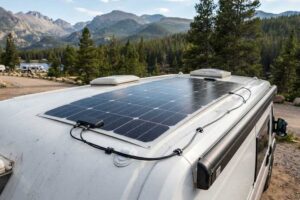
A permanently mounted module has different requirements: mounting compatibility, cable routing, vibration resistance, and long-term exposure all matter. Flexible solar modules may suit certain curved or weight-sensitive surfaces, but the manufacturer’s approved installation method and bending limit must be followed.
For B2B buyers, this distinction is especially important. A folding consumer panel should not be assumed suitable for permanent vehicle integration, and a flexible module should not be marketed or handled as though it were a hinged folding product.
How to Set Up and Use a 100W Portable Solar Panel
A portable panel does not need a complicated installation, but a few careful checks can prevent poor charging performance and avoidable connection problems.
Step 1 — Choose a Clear, Stable Location
Place the panel where direct sunlight reaches as much of its active surface as possible. Avoid shadows from tree branches, awnings, roof racks, chairs, or the vehicle itself. On uneven ground, make sure the supports are stable and the panel cannot slide or tip over.
Step 2 — Read the Equipment Labels
Before connecting anything, check the panel’s voltage and current ratings and the receiving device’s input limits. Inspect the cables for damage, confirm connector compatibility, and follow the manufacturer’s polarity and connection instructions.
Step 3 — Connect the Panel Correctly
Some systems require a charge controller between the panel and battery. Others are designed to connect directly to a portable power station with an integrated solar controller. Follow the connection sequence provided for your specific equipment; do not assume all systems use the same procedure.
Step 4 — Monitor Charging Performance
If your power station or controller has a display, check the actual input reading after the panel is positioned. If output is lower than expected, inspect the panel angle, shading, connectors, and device input limits before assuming the panel is defective.
A reading below 100W is not automatically a fault. Rated power is measured under specified conditions, and those conditions rarely remain constant throughout a day outdoors.
A Practical Energy-Budget Example for RV Travel
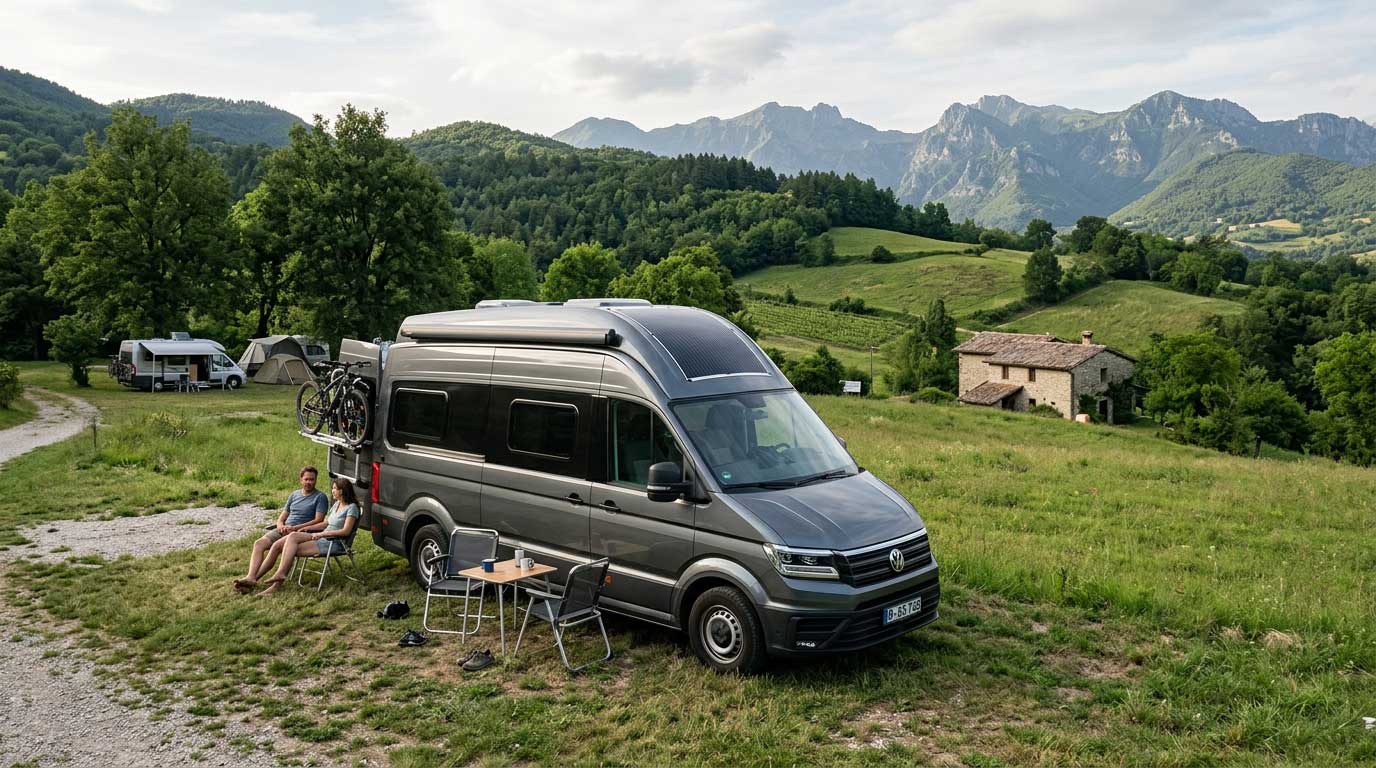
Consider a hypothetical two-day RV trip in a sunny region. The traveller uses a portable power station to charge phones, operate LED lights, and power a few small electronic accessories.
Assume these daily loads:
| Device | Illustrative daily energy use |
|---|---|
| Two phones | 30Wh |
| LED campsite lighting | 25Wh |
| Small electronic accessories | 40Wh |
| Total | 95Wh |
If the panel receives four peak sun hours and the planning assumption of 75–85% system efficiency applies, the estimated production is 300–340Wh per day. On paper, that exceeds the example’s 95Wh daily demand.
However, the difference is not automatically energy available at the devices. Battery charging, inverter operation, conversion losses, and changes in weather can reduce the amount delivered. The traveller should also consider whether the power station has enough storage capacity to supply the loads after sunset.
This is an illustrative energy calculation, not a measured field test or a claim about a particular Bright Solar product. Its practical value is that it gives the buyer a starting point for comparing daily demand with expected generation.
What Affects Real-World Solar Performance?
Three variables deserve particular attention when assessing portable solar equipment.
- Sunlight and location: The amount of solar energy available varies with geography, season, weather, and time of day.
- Panel orientation and shade: A poorly positioned panel can produce substantially less energy than one receiving unobstructed sunlight.
- System design: Controller limits, cable connections, battery charging behaviour, and power conversion all influence the energy that reaches the final load.
The U.S. Department of Energy explains the role of operating conditions in photovoltaic performance. For more detailed background, consult its Solar Photovoltaic Performance and Efficiency Basics resource.
FAQ About 100w Solar Panel Portable
How much power does a 100W portable solar panel produce?
Under ideal rated conditions, it produces 100 watts of power. Daily energy depends on peak sun hours and system losses. For example, four peak sun hours and an illustrative 75–85% efficiency factor give an estimate of 300–340Wh per day.
Can a portable 100W solar panel charge a power station?
Yes, provided the panel’s voltage, current, connector, and output are compatible with the power station’s solar input. Check the manufacturer’s limits before connecting it.
Is a 100W portable solar panel enough for camping?
It can support modest charging needs, including phones, LED lights, and selected small electronics. Whether it is sufficient depends on daily energy consumption, sunlight, and battery capacity.
Can a 100W solar panel run a refrigerator?
It may contribute energy to a battery that runs a small refrigerator, but a single 100W panel may not generate enough energy to cover the refrigerator’s full daily consumption. Check measured or manufacturer-stated watt-hour use and estimate local solar production before relying on it.
Do I need a charge controller for a portable solar panel?
It depends on the system. A separate battery generally needs a suitable charge controller, while many portable power stations have integrated solar charging electronics. Follow the equipment manufacturer’s wiring instructions.
What is the difference between a portable and a flexible solar panel?
A portable panel is intended to be carried and deployed temporarily. A flexible panel is designed for compatible mounting surfaces and has a defined bending limit. Flexible does not mean repeatedly foldable, and not every flexible panel is suitable for every curved surface.
How do I choose the right portable solar panel for an RV?
Start by calculating daily energy consumption in watt-hours. Then check realistic solar production, battery capacity, voltage and current compatibility, connector type, packed dimensions, weight, and mounting requirements. If the panel will remain on the RV roof, select a module specifically suited to that installation.
Conclusion
A 100w solar panel portable setup is a useful option for campers, RV travellers, and people who need supplemental electricity away from the grid. Its practical performance depends on available sunlight, system compatibility, and how much energy the connected devices consume—not simply the 100W rating.
Estimate your daily watt-hour needs, verify the panel’s electrical specifications, and allow for changing weather. For B2B projects requiring solar modules designed around specific mounting conditions, Bright Solar provides flexible-panel solutions that can be evaluated against the project’s technical requirements.
Technical References
- U.S. Department of Energy: Solar Photovoltaic Technology Basics — overview of how photovoltaic technology converts sunlight into electricity.
- U.S. Department of Energy: Solar Photovoltaic Performance and Efficiency Basics — background on factors affecting solar module performance.
- National Renewable Energy Laboratory: PVWatts Calculator — tool for estimating solar energy production based on location and system assumptions.
Related recommendations
-

Durable Flexible Solar Panel: Built for Long-Term Solar Performance
225Explore durable flexible solar panel solutions designed for RV, marine and off-grid applications. Learn durability factors, materials, testing, and real installation experience from Bright Solar.
View details -
flexible solar panels for car roof: Lightweight Solar Power Solution for Vehicles
278Discover flexible solar panels for car roof solutions with lightweight design, durable ETFE protection, and reliable solar power for EVs, camping cars, and outdoor travel.
View details -
100W Flexible Solar Panel – RV & Off-Grid
314Bright Solar’s 100W flexible solar panel combines 100W peak power with a lightweight, 2.8 mm-thick design for RV, marine, and off-grid applications.
View details -
Flexible solar panel boat: Lightweight Marine Solar Solution for Modern Vessels
268Discover flexible solar panel boat solutions from Bright Solar. Learn how lightweight marine solar panels improve boat energy efficiency, installation flexibility, and off-grid performance.
View details