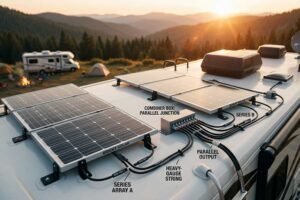
Solar Panel for Electric Fence: How to Choose the Right System
A solar panel for electric fence systems provides daytime charging while a battery keeps the fence energizer running after sunset. The correct panel size depends on the energizer’s power consumption, battery capacity, sunlight, fence condition, and local weather.
An electric fence does not need a huge solar array. It needs a reliable energy balance.
That distinction matters.
A fence energizer sends short pulses rather than continuously powering a load. The solar panel charges the battery during daylight, and the battery supplies the energizer through the night and during poor weather. If the panel is oversized but the battery or controller is wrong, the system can still fail. If the panel is undersized, the battery gradually falls behind.
I have seen this most often on remote pasture installations. The owner looks at the fence on a sunny afternoon, sees a healthy pulse, and assumes everything is fine. Three or four cloudy days later, the battery is low and the fence voltage has dropped.
The better approach is to size the complete system rather than shopping for a panel by wattage alone.
How Does a Solar Panel for Electric Fence Work?
A typical solar electric fence system has four main components:
- Solar panel
- Solar charge controller or integrated regulator
- Rechargeable battery
- Electric fence energizer
The basic energy path is:
Sunlight → Solar Panel → Charge Controller → Battery → Fence Energizer → Fence
The energizer then delivers periodic high-voltage pulses to the fence conductor.
This is different from powering a conventional appliance.
The panel does not normally connect directly to the fence. The battery acts as the energy reservoir, allowing the energizer to continue operating when sunlight disappears.
Premier1Supplies, for example, specifies that its DC energizers can be operated as solar systems by connecting a solar panel to charge the battery. Its published recommendations range from 6W to 70W, depending on the energizer model and power requirement.
That range is useful because it immediately shows why there is no universal “best” solar panel for every electric fence.
How Many Watts Does an Electric Fence Solar Panel Need?
Start With the Energizer, Not the Fence Length
The first specification I check is the energizer’s 12V DC consumption.
For example, a low-power fence energizer may consume only a fraction of a watt on average. A larger unit designed for long livestock fences can require considerably more energy.
One published example is the Patriot P20. Its specifications list:
- 12V DC consumption: 163 mA
- Approximate power consumption: about 2W at 12V
- Recommended solar panel: 20–40W
- 12V 100Ah deep-cycle battery: approximately 15 days under its stated assumptions
Another Premier1Supplies model, the PrimaShock 4, lists a 200 mA 12V battery draw and recommends a 20–60W solar panel.
The lesson is simple: panel wattage must be matched to the energizer and battery, not guessed from fence mileage alone.
A Practical Solar Panel Sizing Table
The following is a starting point rather than a universal specification:
| Energizer Type | Approx. Solar Panel Starting Range | Typical Use |
|---|---|---|
| Very low-power energizer | 5–15W | Small paddocks, temporary fencing |
| Small 12V energizer | 10–30W | Garden, poultry, small livestock |
| Medium energizer | 20–60W | Sheep, goats, cattle |
| Higher-power energizer | 50–100W+ | Longer or more demanding fences |
| Large remote energizer | 100W–250W+ | Long fence systems, heavy vegetation |
The actual requirement should always follow the energizer manufacturer’s specifications.
A useful real-world example comes from Premier1Supplies’ SolarStop 80. The complete system uses a 10W solar panel, a 12V 15Ah sealed lead-acid battery, and a 0.8-joule energizer.
By comparison, its SolarStop 240 uses 30W of solar capacity—two 15W panels—with a 12V 22Ah battery and a 2.4-joule energizer.
Those two systems are built around very different electrical demands.
What Size Battery Should You Use?
The battery is the part that keeps the electric fence alive overnight.
For remote fencing, I would rather see a correctly sized battery paired with an adequately sized panel than a large panel connected to a marginal battery.
Battery capacity is normally expressed in amp-hours (Ah).
For a simplified 12V calculation:
Energy capacity ≈ Voltage × Amp-hours
So a nominal 12V, 100Ah battery represents approximately:
12V × 100Ah = 1,200Wh
That does not mean 1,200Wh is safely available for every battery chemistry. Usable capacity depends on battery type, allowable depth of discharge, temperature, age, and the manufacturer’s specifications.
Stafix documentation also emphasizes that battery sizing should account for periods of little or no sunlight, rather than assuming every day will provide ideal solar charging.
That is particularly important for agricultural fencing.
A fence in an isolated pasture cannot simply be plugged into a wall outlet when three cloudy days arrive.
Solar Panel for Electric Fence Sizing Example
Example — Small Livestock Pasture
Imagine a 12V fence energizer drawing approximately 0.16A continuously.
Estimated daily consumption:
0.16A × 24 hours = 3.84Ah/day
If we use a simplified five-day autonomy target:
3.84Ah × 5 = 19.2Ah
That gives a rough starting point around 20Ah of usable battery capacity before accounting for temperature, battery aging, conversion losses, and other design margins.
Now consider solar charging.
A 30W panel under five equivalent peak-sun-hours would theoretically produce:
30W × 5h = 150Wh/day
At nominal 12V, that is roughly:
150Wh ÷ 12V ≈ 12.5Ah/day
Real output will be lower because of temperature, controller losses, wiring, orientation, dirt, and changing irradiance.
This is why experienced system designers avoid treating the panel’s nameplate wattage as guaranteed daily production.
The numbers need breathing room.
Why Sunlight Conditions Change the Required Panel Size
A 30W solar panel does not produce 30W from sunrise to sunset.
Its rated output is measured under defined test conditions.
Actual production changes with:
- Solar irradiance
- Panel angle
- Temperature
- Clouds
- Shade
- Dirt
- Snow
- Cable losses
- Seasonal sun position
This becomes especially noticeable on agricultural properties surrounded by trees.
A fence charger installed beside a line of mature oak trees may receive strong sunlight at noon but almost none during the morning and late afternoon.
That is not a panel problem.
It is a site-selection problem.
Premier1Supplies specifically advises keeping solar fence panels clear of shadows from trees, bushes, buildings, fence posts, and tall vegetation, and recommends regularly removing debris from the panel surface.
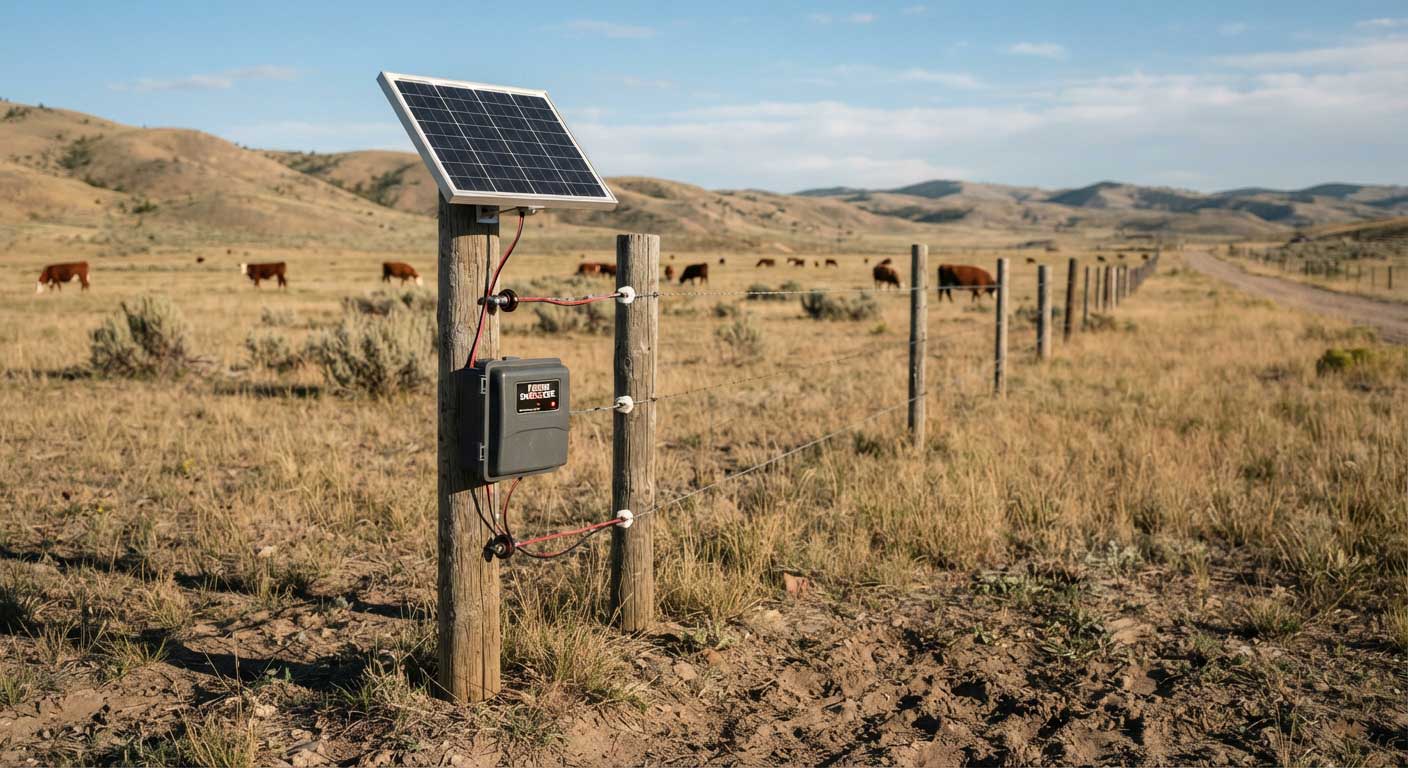
Solar Panel Size Should Match Fence Energizer Output
A common mistake is choosing the panel based entirely on fence length.
Fence length matters, but it does not directly tell you how many watts the solar panel needs.
The energizer’s electrical demand comes first.
Fence conditions then affect how hard the energizer has to work.
For example, vegetation touching the fence creates leakage. Wet grass can make the problem worse. A poorly grounded system can also produce disappointing fence performance.
Premier1Supplies states that inadequate grounding is the most common failure in an electric fence system for its listed energizers.
That is a detail worth remembering.
If the fence voltage is low, adding another solar panel may not solve the problem.
The real issue could be:
- Poor grounding
- Vegetation touching the wire
- Broken insulators
- Damaged high-voltage cable
- Loose connections
- Battery deterioration
- Incorrect energizer settings
Grounding Matters as Much as Solar Charging
A Good Solar Panel Cannot Fix Poor Grounding
The solar system supplies energy to the energizer.
The grounding system allows the electric fence circuit to function correctly.
If grounding is poor, the fence may show disappointing voltage even when the battery is fully charged.
Installation guidance from Premier1Supplies recommends placing the energizer grounding system away from other electrical grounding sources and using suitable galvanized grounding components.
The exact grounding arrangement depends on the energizer, soil, fence design, and local requirements.
Dry sandy soil can be particularly troublesome because electrical conductivity may be lower than in moist ground.
For that reason, grounding should be considered during site planning—not added as an afterthought when the fence tester shows a problem.
Choosing Flexible or Rigid Solar Panels for an Electric Fence
For a permanent farm installation, a conventional rigid panel may be the straightforward option.
For mobile fencing, temporary paddocks, or locations where weight and transport matter, flexible solar panels can be more convenient.
Rigid Solar Panels
Advantages:
- Higher mechanical rigidity
- Familiar mounting hardware
- Broad availability
- Suitable for permanent installations
Flexible Solar Panels
Advantages:
- Lower weight
- Easier transportation
- Can conform to curved surfaces
- Useful for portable and mobile systems
- Easier integration into unusual mounting locations
Bright Solar focuses on flexible solar technology for applications where conventional rigid modules are inconvenient.
For an electric fence, however, flexibility should never come at the expense of correct electrical specifications, weather protection, or secure mounting.
The panel still needs to deliver enough energy to keep the battery charged.
Where Should You Install a Solar Panel for Electric Fence?
For remote fence systems, panel placement deserves more attention than it usually receives.
Choose a location with:
- Maximum daily sunlight
- Minimal tree shade
- Protection from accidental livestock contact
- Secure mounting
- Short, protected cable runs
- Easy access for cleaning and inspection
The solar panel should not be placed where cattle, horses, goats, or other animals can easily rub against it.
That sounds obvious until you see how creative livestock can be.
A panel that survives the weather but gets knocked sideways by a curious cow is not a successful installation.
For solar orientation, follow the panel and energizer manufacturer’s installation instructions and consider the seasonal sun path at the actual site. Premier1Supplies’ SolarStop documentation, for example, specifies south-facing orientation for its installation and stresses avoiding shadows.
Solar Panel for Electric Fence Maintenance
A solar fence system is relatively low-maintenance, but it is not maintenance-free.
A practical inspection routine should include:
Weekly or routine visual checks
- Look for vegetation touching fence wires
- Check whether the solar panel is shaded
- Inspect obvious cable damage
- Confirm the energizer indicator is operating
Periodic checks
- Clean accumulated dirt from the panel
- Check battery condition
- Inspect terminal connections
- Test fence voltage with an appropriate fence tester
- Check grounding performance
In winter or prolonged cloudy periods, pay particular attention to battery state.
Premier1Supplies notes that solar charging may not always fully recharge the battery during dark, gray, or foggy periods, and its operating instructions include external battery charging when necessary.
That is an important operational detail for remote installations.
How to Size a Solar Panel for an Electric Fence
The most reliable way to size a solar panel for electric fence use is to start with the energizer’s actual energy consumption, then account for available sunlight, charging losses, battery reserve, and seasonal conditions.
Do not size the panel from fence length alone.
Fence length is primarily used when selecting the energizer output. The solar panel is then sized to replace the energy that the energizer consumes.
This distinction is easy to miss.
Virginia Tech’s Cooperative Extension explains that solar energizers are particularly useful where grid electricity is unavailable, while larger permanent fences can use a deep-cycle battery paired with a matched solar panel. It also warns that repeatedly discharging lead-acid batteries below about 50% state of charge can substantially shorten battery life.
Step 1 — Find the Energizer’s Current Draw
Look at the energizer specification sheet.
You may find:
- Current draw in amps
- Battery consumption per day
- Recommended solar panel wattage
- Recommended battery capacity
- Stored joules
- Output joules
If current draw is available, a basic calculation is:
Power (W) = Voltage (V) × Current (A)
For a 12V energizer drawing 0.20A:
12V × 0.20A = 2.4W
Estimated daily consumption:
2.4W × 24 hours = 57.6Wh/day
This is the number that matters when estimating the solar charging requirement.
It is not the same as saying the energizer is a “2.4-joule” unit.
Joules describe the energy delivered in each fence pulse. Watts describe the rate of electrical power consumption. Mixing the two is one of the easiest ways to oversize or undersize a solar system.
Step 2 — Account for Local Sunlight
A solar panel’s rated wattage is not its daily energy production.
A 40W panel does not produce 40W continuously for eight or ten hours.
A simple planning equation is:
Daily solar energy ≈ Panel watts × peak sun hours × system efficiency
Suppose a 50W panel receives an effective 4.5 peak-sun-hour equivalent:
50W × 4.5h = 225Wh/day
If we use an illustrative 80% overall system efficiency:
225Wh × 0.80 = 180Wh/day
That leaves a considerable margin for a 57.6Wh/day load.
But the calculation changes sharply in winter.
If the same location produces only 2.5 equivalent peak-sun-hours:
50W × 2.5h × 0.80 = 100Wh/day
Still workable in this example, but the margin has become much smaller.
For a real installation, use location-specific solar data rather than a generic “sunny climate” assumption. NREL’s PVWatts tool is useful for estimating photovoltaic production by location and system parameters.
Step 3 — Add a Weather Reserve
This is where agricultural systems differ from simple portable solar products.
A fence cannot stop working because Tuesday was cloudy.
For a remote pasture, I prefer to think in terms of energy reserve, not average weather.
If the energizer consumes approximately 60Wh per day and the system needs three days of battery autonomy:
60Wh × 3 = 180Wh
At a nominal 12V:
180Wh ÷ 12V = 15Ah
That is only a simplified calculation. Battery chemistry, allowable depth of discharge, temperature, aging, and conversion losses need to be included before selecting the actual battery.
The USDA Natural Resources Conservation Service provides a particularly useful design rule: its Colorado specification recommends approximately 7W of solar panel capacity per joule of energizer output in high-sun areas and 10W per joule in lower-sun areas. It also specifies different panel orientation and tilt considerations for seasonal grazing.
That is a much more useful starting point than choosing a panel simply because it “looks big enough.”
How Much Solar Power Does a 1-Joule Fence Energizer Need?
There is no single universal answer because energizer efficiency and operating conditions vary.
However, the NRCS Colorado specification provides a concrete field-planning benchmark:
| Energizer Output | High-Sun Area | Lower-Sun Area |
|---|---|---|
| 0.5 J | ~3.5W | ~5W |
| 1 J | ~7W | ~10W |
| 2 J | ~14W | ~20W |
| 3 J | ~21W | ~30W |
| 5 J | ~35W | ~50W |
| 10 J | ~70W | ~100W |
These figures are planning guidance from the NRCS specification, not a universal product-sizing formula. The actual manufacturer’s requirements should take priority.
For example, a 5-joule energizer in a lower-sun location would have a very different solar requirement from a small 0.5-joule portable unit.
Don’t Confuse Energizer Joules With Solar Panel Watts
What Joules Tell You
Joule rating describes the energy delivered by an electric fence energizer’s pulse.
The required energizer output depends on:
- Fence length
- Number of electrified wires
- Animal species
- Vegetation contact
- Fence construction
- Soil conditions
- Desired voltage at the fence
The University of Georgia Cooperative Extension recommends considering the total length of energized wire rather than simply the physical perimeter. It gives an example where a four-mile, five-strand fence with three electrified strands represents 12 miles of energized wire, with an additional allowance for vegetation-related power drain.
That is a very practical point.
A “four-mile fence” can electrically behave like a much longer system.
Realistic Example: Solar Fence for a Cattle Pasture
Consider a hypothetical but realistic ranch installation in the western United States.
The setup:
- 4-mile physical perimeter
- 3 electrified wires
- 12 miles of energized wire
- Cattle
- No grid connection
- Moderate vegetation
- 12V solar energizer
- Year-round operation
The first mistake would be buying a panel based on the four-mile number.
The second would be buying the smallest energizer that claims “up to 12 miles.”
Instead, the system designer should determine the required energizer output, account for vegetation and fence losses, then select the solar panel and battery around the energizer’s actual consumption.
The University of Georgia recommends adding 25% to the energized-wire calculation to compensate for power loss caused by vegetation. In the example above, 12 miles becomes approximately 15 miles of rated capacity.
That is the sort of field detail that can prevent a system from becoming unreliable six months after installation.
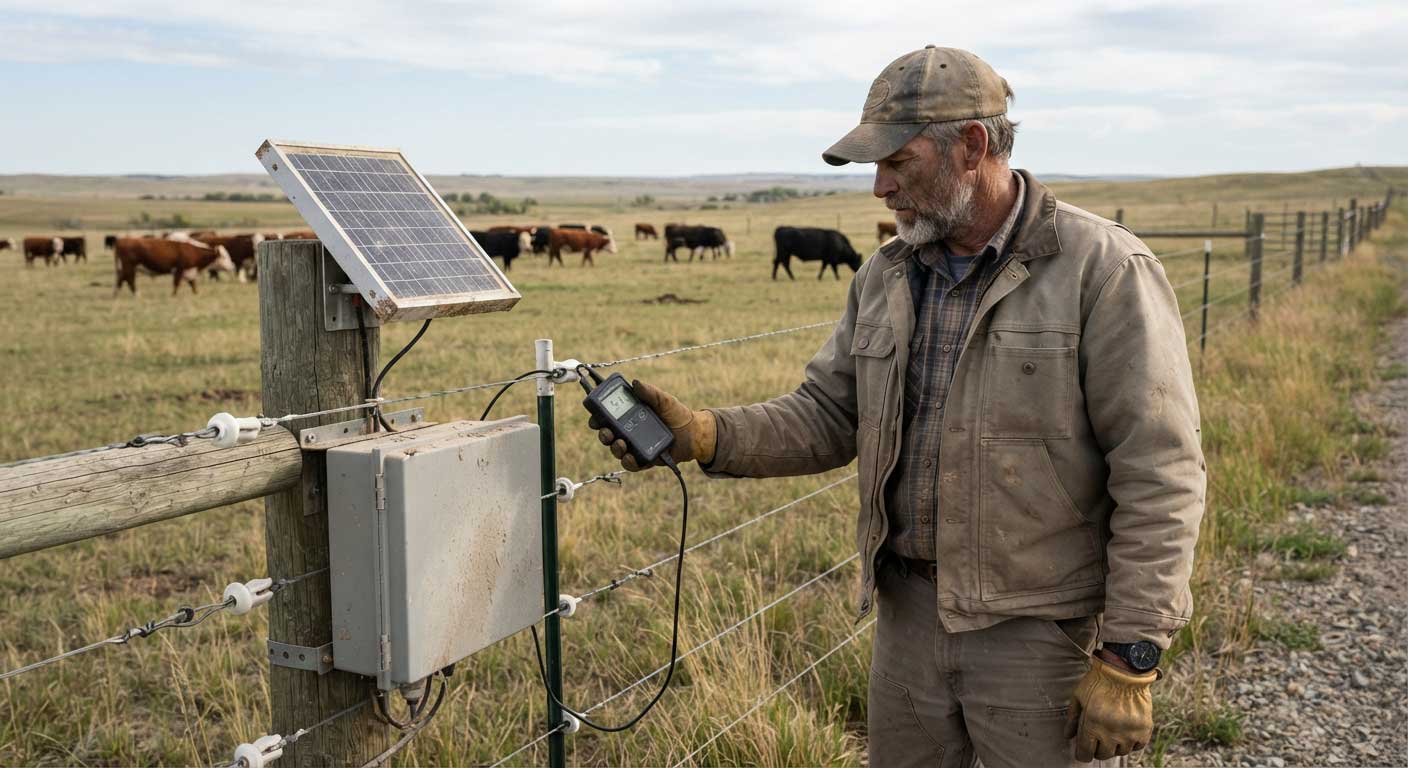
Common Solar Electric Fence Problems
The Battery Keeps Going Flat
If the battery repeatedly reaches a low state of charge, check these items before replacing it:
- Is the solar panel receiving full sunlight?
- Is the panel large enough for the energizer?
- Is the battery aging?
- Are the terminals clean and tight?
- Is the charge controller functioning correctly?
- Has winter reduced solar production?
- Is the energizer consuming more power than expected?
Texas A&M AgriLife Extension notes that solar energizers require enough solar capacity to keep a deep-cycle battery charged and that the solar installation needs sufficient sunlight for sustainable charging.
The Fence Voltage Is Too Low
Do not immediately blame the solar panel.
Check the fence itself.
Look for:
- Wet vegetation touching the conductor
- Broken insulators
- Corroded connections
- Damaged wire
- Poor grounding
- Excessive fence length for the energizer
The USDA specification emphasizes that vegetation loads and electrical shorts can reduce fence voltage and may require an energizer with greater output capacity.
A fully charged battery does not guarantee a strong fence.
The Panel Is Producing Less Power Than Expected
Inspect the panel at midday.
If it is shaded by:
- Trees
- Barns
- Water tanks
- Fence structures
- Tall grass
- Nearby equipment
the issue may be installation location rather than panel quality.
Also check for dirt, bird droppings, cracked surfaces, loose connectors, and damaged cables.
For a remote agricultural installation, a five-minute visual inspection can save a much longer troubleshooting trip later.
Solar Panel Orientation for Electric Fence Systems
Panel orientation becomes especially important when the fence operates year-round.
The NRCS Colorado specification recommends orienting panels generally toward the south, with seasonal adjustments to tilt. For spring-to-fall grazing, it gives a recommended range around 25–30 degrees from horizontal, while winter grazing may require a substantially steeper angle.
The exact installation should be adjusted to:
- Latitude
- Seasonal operation
- Local terrain
- Trees and structures
- Panel manufacturer’s recommendations
For a temporary summer fence, the ideal setup may be quite different from a permanent winter installation.
Why Bright Solar Flexible Panels Can Fit Remote Fence Applications
A conventional rigid panel is perfectly suitable for many permanent fence installations.
But some agricultural systems have unusual mounting requirements.
A flexible solar panel can be useful where:
- Weight needs to be minimized
- Equipment is frequently relocated
- Mounting surfaces are curved
- Transport space is limited
- A conventional frame is inconvenient
Bright Solar develops flexible photovoltaic panels for mobile and off-grid applications, including RV, marine, portable, and customized solar projects.
For an electric fence application, the panel should be selected according to the energizer manufacturer’s voltage and charging requirements. The flexible construction is an installation advantage—not a substitute for correct system sizing.
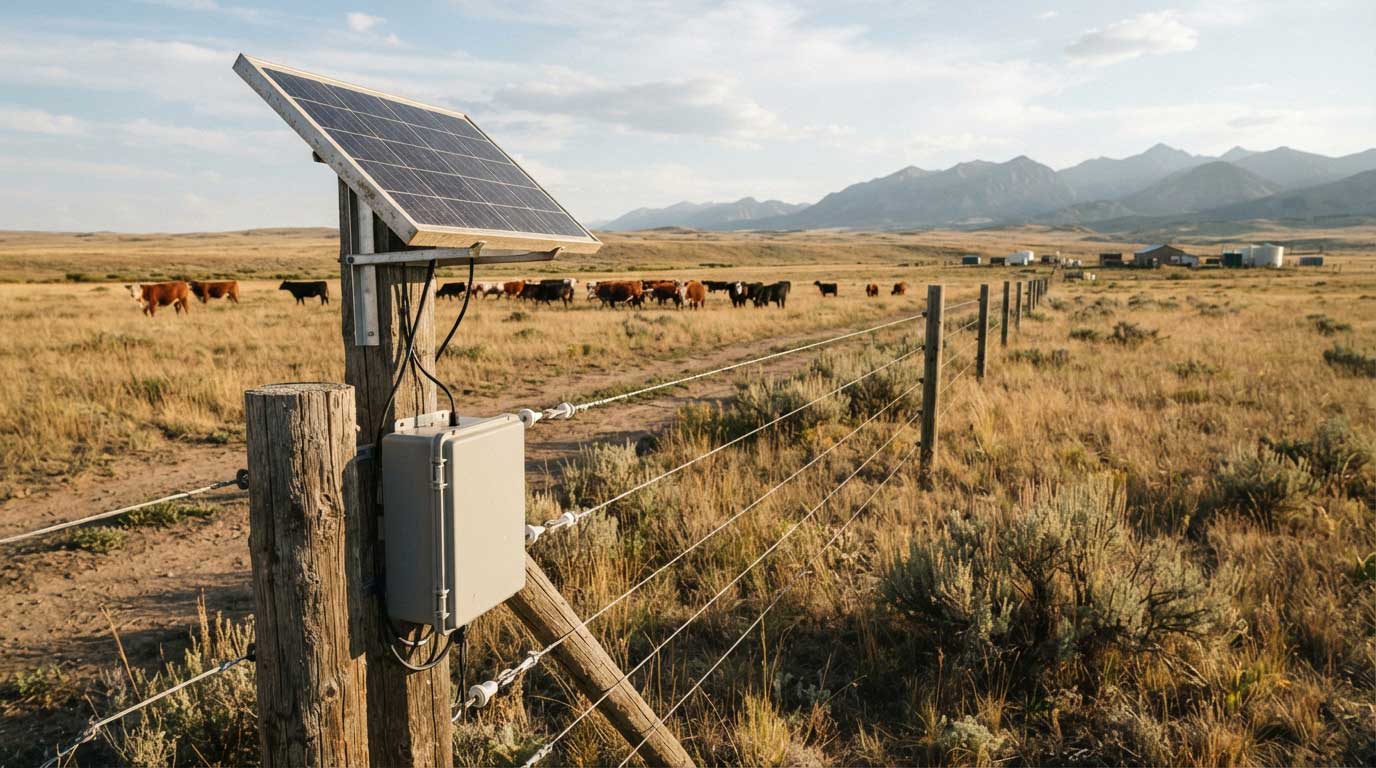
Solar Panel for Electric Fence: Practical Sizing Checklist
Before purchasing the panel, record these numbers:
Electrical load
- Energizer voltage
- Current draw
- Output joules
- Recommended panel wattage
- Recommended battery size
Fence conditions
- Physical fence length
- Number of electrified strands
- Vegetation pressure
- Soil conditions
- Animal species
Solar conditions
- Location
- Seasonal operating period
- Available peak sun
- Shading
- Panel orientation
Battery requirements
- Battery chemistry
- Nominal voltage
- Capacity in Ah
- Desired backup days
- Temperature conditions
Once these numbers are known, panel sizing becomes much less mysterious.
FAQ — Solar Panel for Electric Fence
Can I use a 100W solar panel for an electric fence?
Yes, if the 100W panel is electrically compatible and provides enough charging energy for the energizer and battery. For a small energizer, 100W may provide substantial charging capacity; for a larger system, it may or may not be enough.
What size solar panel do I need for a 12V electric fence?
There is no single size. A small energizer may use only a few watts of solar capacity, while larger systems can require tens or hundreds of watts. The energizer manufacturer’s specifications and local solar conditions should determine the final panel size.
Can a solar panel directly power an electric fence charger?
Most systems use a rechargeable battery between the solar panel and energizer. The battery stores daytime energy and allows the energizer to operate at night and during periods of weak sunlight.
How many watts of solar power are needed per joule?
The NRCS Colorado specification recommends approximately 7W of solar panel capacity per output joule in high-sun areas and 10W per joule in lower-sun areas. Actual requirements vary by energizer and location.
Can a solar electric fence work on cloudy days?
Yes, provided the battery has sufficient stored energy. Extended cloudy periods reduce charging, so adequate panel capacity and battery reserve are important.
Why does my solar electric fence battery keep dying?
Common causes include an undersized solar panel, insufficient sunlight, an aging battery, excessive fence leakage, poor connections, or an energizer consuming more energy than expected.
Is a flexible solar panel suitable for an electric fence?
Yes, when its electrical specifications match the charging system and it is securely mounted and protected from livestock and weather. Flexible panels can be particularly useful for lightweight or mobile installations.
Final Takeaway
A solar panel for electric fence should be sized around the energizer’s actual energy demand, available sunlight, battery reserve, and fence conditions—not simply the physical length of the fence.
For a reliable remote system:
- Match panel watts to the energizer.
- Size the battery for poor-weather periods.
- Allow for charging losses.
- Keep the panel completely unshaded.
- Check grounding before increasing panel capacity.
- Account for vegetation and fence leakage.
- Use location-specific solar data.
- Follow the energizer manufacturer’s electrical requirements.
For agricultural, portable, RV, marine, and other off-grid applications, Bright Solar can provide flexible solar panel configurations where conventional rigid modules are difficult to integrate.
The panel is only one part of the system. The real goal is a fence that remains energized when nobody is standing beside it.
Related recommendations
-

100 Watt Semi Flexible Solar Panel: Output, Uses and Installation Guide
181A 100 watt semi flexible solar panel is designed for compact systems such as RVs, vans, boats, and cabins where low weight, slim profile, and limited curvatu...
View details -
Best flexible solar panels for RV: A Complete Guide for Mobile Solar Power
208Discover the best flexible solar panels for RV use with expert selection tips, real installation experience, performance data, and Bright Solar insights.
View details -
100W Semi Flexible Solar Panel: Lightweight Solar Solution for RV and Off-Grid Applications
166A 100W semi flexible solar panel is a lightweight solar solution for RVs, marine, vans, and off-grid systems, balancing flexibility, durability, and installa...
View details -
Solar Panel Series vs Parallel: Which Wiring Setup Works Better?
237Compare solar panel series vs parallel wiring for RVs, boats, and off-grid systems. Learn efficiency, shading, voltage, and real installation tips.
View details