DIY Flexible Solar Panels: A Practical Guide to Building a Solar Setup
DIY flexible solar panels can be part of a home-built solar project, but the safest and most reliable approach for most users is to design the system around a commercially manufactured, tested module rather than attempting to fabricate photovoltaic cells and encapsulation from raw materials. A DIY installation still requires careful electrical design, secure mounting, weather protection, and compliance with local requirements.
What Does “DIY Flexible Solar Panels” Actually Mean?
The phrase DIY flexible solar panels can describe two very different projects:
- Building a solar power system using ready-made flexible modules. You select the panels, plan the wiring, choose a charge controller and battery, and install the system yourself.
- Manufacturing a photovoltaic module from individual cells and materials. This involves assembling cells, electrical connections, protective layers, and a suitable enclosure or laminate.
These are not equivalent in difficulty or risk. Installing a commercially manufactured module can be manageable for a capable DIYer who follows the manufacturer’s instructions and electrical safety requirements. Fabricating a durable outdoor module is a much more demanding engineering task.
This guide focuses primarily on system design and installation using finished flexible solar panels. It also explains why making a panel from loose cells can be challenging.
Why Choose Flexible Solar Panels for a DIY Project?
Flexible modules are often considered when a conventional framed panel is difficult to accommodate. Their thin construction and low profile can be useful on certain RV roofs, boats, campervans, and specialized off-grid equipment.
Potential advantages include:
- Lower profile: A flexible module may sit closer to a suitable mounting surface than a framed panel.
- Reduced weight: Some flexible products are designed for weight-sensitive installations.
- Fit on gentle curves: A module may conform to a curved surface within its specified bending limits.
- Adaptable layouts: Multiple modules can sometimes be arranged around roof fittings and other obstructions.
- Useful for mobile systems: Flexible panels may suit selected RV or marine applications when the product is rated for the environment.
These features are not universal. Flexible panels vary in construction, output, durability, and installation requirements. A module intended for a protected surface should not automatically be used on a boat deck or an area exposed to regular foot traffic.
Flexible Does Not Mean Foldable
A flexible panel is generally designed to tolerate a limited degree of bending during installation or use. That does not mean it can be folded repeatedly, creased, rolled tightly, or forced over compound curves.
Check the exact product’s:
- Maximum bending radius.
- Permitted bend direction.
- Installation and handling instructions.
- Approved mounting method.
- Operating-temperature range.
If the datasheet does not clearly state that repeated flexing is permitted, do not treat the panel as a folding or portable blanket.
DIY Flexible Solar Panels vs. Making a Panel from Scratch
Using a Finished Flexible Module
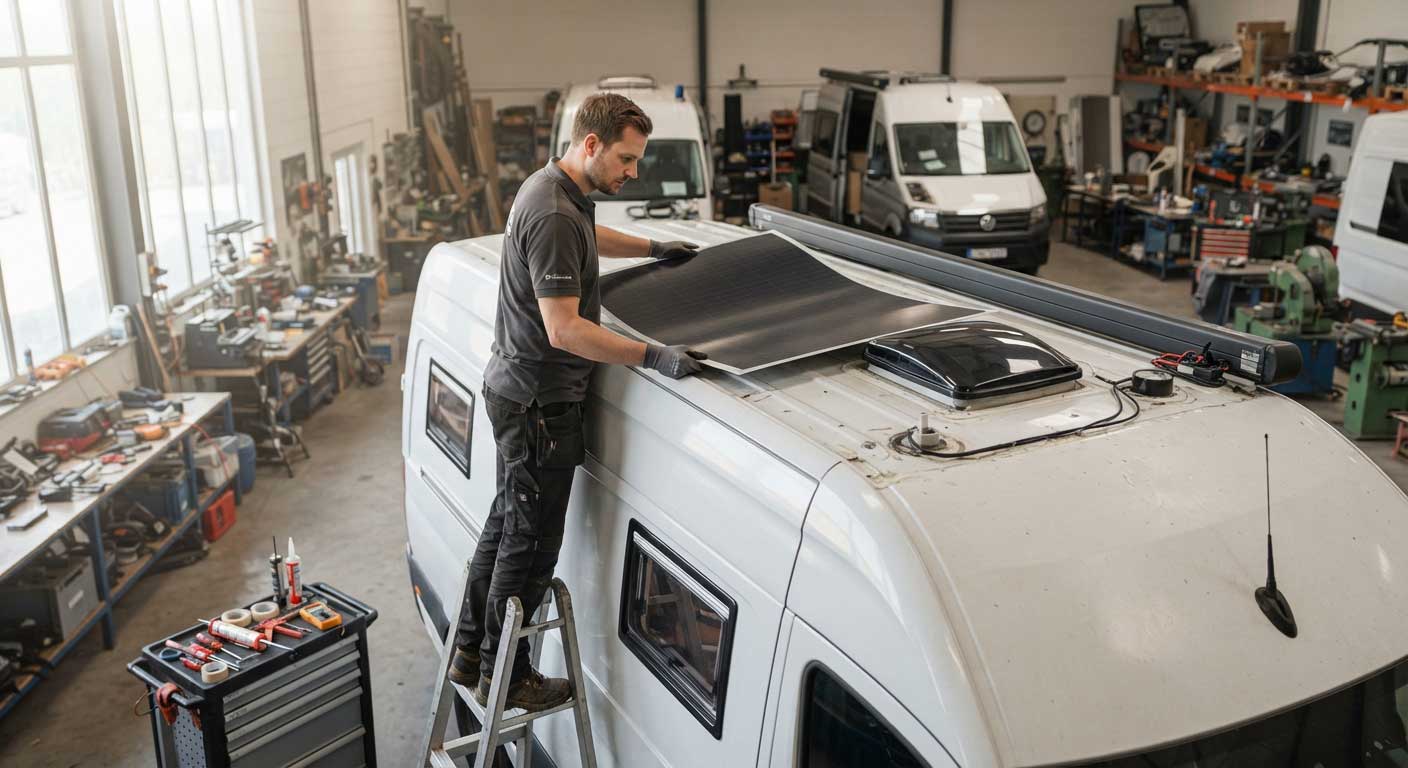
For most DIY installations, a finished module is the more straightforward starting point. The manufacturer has assembled the photovoltaic cells and protective construction, and provides electrical ratings and installation information for the product.
Your project still needs a complete design. The panel must be compatible with the charge controller or inverter, wiring, protection devices, battery system, and mounting surface.
Fabricating a Module from Individual Cells
Making a working panel from loose photovoltaic cells may appear simple in online demonstrations, but producing a reliable outdoor module involves much more than connecting cells together.
A finished module needs appropriate:
- Cell interconnections.
- Electrical insulation and protection.
- Front and rear protective materials.
- Edge sealing and environmental protection.
- Mechanical support.
- Cable connections and strain relief.
- Testing and quality control.
A homemade module may produce voltage in sunlight without being suitable for long-term outdoor use. Moisture ingress, thermal cycling, mechanical stress, and poor electrical connections can create failures that are difficult to identify through a quick indoor test.
For a vehicle, boat, or occupied building, use equipment and installation methods appropriate to the application. Do not rely on an improvised laminate as a substitute for a qualified commercial module.
Plan a DIY Flexible Solar Power System Before Buying Parts
A DIY solar setup should begin with the loads you want to power, not with a panel wattage selected because it looks convenient. A 100W module, for example, does not provide 100W continuously throughout the day. Its rated power is measured under defined test conditions, and actual output changes with sunlight, temperature, orientation, shading, and system losses.
The National Renewable Energy Laboratory’s System Advisor Model uses a reference irradiance of 1,000 W/m² and a reference temperature of 25°C in its PV module calculations. These are test and modeling reference values, not a promise that a panel will operate at its rated power in a real installation.
Step 1 — Estimate Your Daily Energy Use
List the devices you intend to run and estimate their daily consumption.
| Device | Example power | Example daily use | Estimated energy |
|---|---|---|---|
| LED lighting | 10W | 4 hours | 40Wh |
| Phone charging | 12W | 2 hours | 24Wh |
| Small ventilation fan | 20W | 5 hours | 100Wh |
| Laptop | 60W | 2 hours | 120Wh |
| Total | — | — | 284Wh/day |
These figures are illustrative. Replace them with the actual wattage and expected operating time of your own devices. Appliances with motors or compressors may also draw more power when starting.
Step 2 — Estimate Solar Production Conservatively
A basic planning estimate is:
Daily energy (Wh) ≈ panel rated power (W) × peak sun hours × system performance factor
For illustration, a 100W panel receiving the equivalent of 4 peak sun hours, with an assumed system performance factor of 0.75, would produce:
100W × 4h × 0.75 = 300Wh/day
The 4 peak sun hours and 0.75 factor here are assumptions for explaining the calculation, not a forecast for a particular location or a guarantee. Use local solar data and the actual system design for a real estimate. Shading, panel temperature, roof orientation, charge-controller behavior, and battery charging conditions can all change the result.
Step 3 — Match the Controller and Battery
Check the module’s voltage and current against the controller’s input limits. For a battery-based system, the controller must also support the battery chemistry and nominal voltage.
Before purchasing, verify:
- Maximum PV input voltage, including the module’s open-circuit voltage under the coldest expected conditions.
- Maximum PV input current and power supported by the controller.
- Battery voltage and charging profile.
- Required fuses, disconnects, cable sizes, and connectors.
- Whether an inverter is needed for AC loads, and its continuous and surge ratings.
Do not select a controller based only on the panel’s wattage. Voltage limits and array configuration matter too.
DIY Flexible Solar Panel Installation: A Safer Workflow
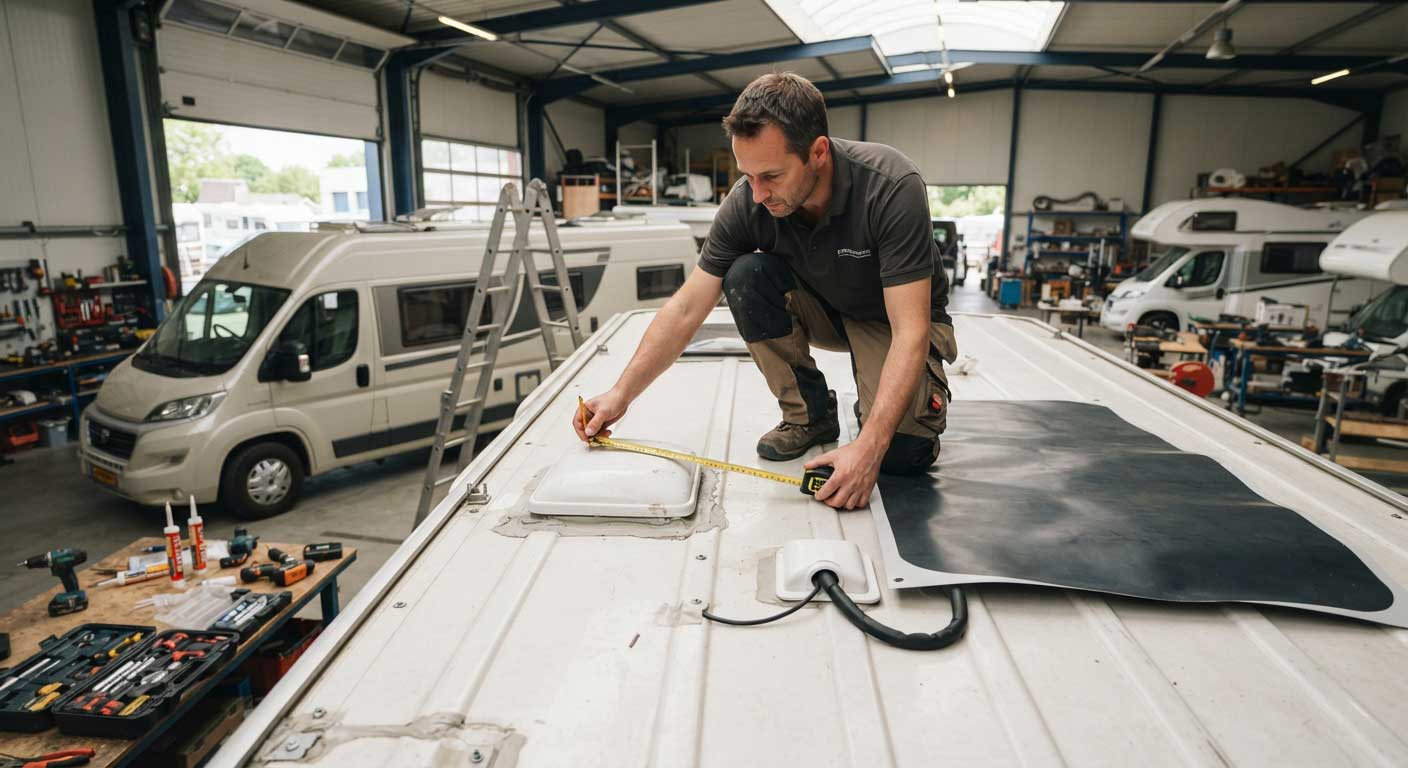
Step 1 — Inspect and Measure the Mounting Surface
Check the roof or deck for dirt, loose coatings, damage, seams, and fittings. Measure the usable area and leave the clearances required by the module and vehicle or vessel manufacturer.
If the surface is curved, confirm the panel’s approved bending radius and direction. Do not force the module into a curve that exceeds its specifications.
Step 2 — Confirm the Mounting Method
Use the attachment method specified for the particular module and substrate. Adhesive requirements vary, and the roof material may have its own restrictions. Confirm surface preparation, application temperature, curing time, and whether mechanical retention is required.
A panel that appears securely attached on installation day may still be vulnerable if the surface was contaminated or the adhesive was not compatible.
Step 3 — Plan Cable Routing and Protection
Route cables away from sharp edges, hot components, moving parts, and locations where water can collect. Provide suitable strain relief and protect wiring from abrasion. Use connectors and electrical protection devices appropriate to the system.
Flexible panels generate DC electricity when illuminated. Follow the module manufacturer’s instructions for safe handling and connection. SunPower’s flexible-module installation manual, for example, warns that modules can be energized in light and instructs users to read the full safety and installation guidance before wiring or using the product.
Step 4 — Test the System Before Regular Use
Before relying on the installation, verify polarity, connector compatibility, controller configuration, and the electrical readings using appropriate equipment and procedures. Check for unexpected shading, cable strain, or panel lifting.
For installations connected to a vehicle, vessel, building, or permanent electrical system, consult a qualified installer where required by local codes or where the work is beyond your competence. A DIY approach should never mean bypassing electrical protection or manufacturer instructions.
Can You Make Flexible Solar Panels from Scratch?
It is possible to assemble photovoltaic cells into a module, but producing a dependable outdoor panel is a specialized task. A working voltage reading is not proof that the module is electrically safe, weather-resistant, mechanically durable, or suitable for a vehicle or marine environment.
A homemade panel may lack controlled lamination, reliable edge sealing, tested electrical insulation, and documented performance under environmental stress. Damage can be difficult to spot once cells are covered, and an improvised module may not have a meaningful warranty or qualification record.
Why Commercial Module Construction Matters
PV modules are tested against defined requirements. The International Electrotechnical Commission’s IEC 61215 series addresses design qualification and type approval for terrestrial PV modules, while IEC 61730 addresses module safety qualification. Applicability depends on the product and installation; buyers should confirm which standards and reports apply to the exact module.
The Japanese energy agency NEDO also publishes design and construction guidance for photovoltaic systems using flexible solar cells, reflecting that flexible PV installations have their own engineering and installation considerations.
For a DIY project that will be exposed to weather, vibration, or regular use, a finished module with relevant documentation is generally the more practical route. Use scratch-built modules for controlled learning or experimentation, not as a substitute for appropriately qualified equipment in a safety-critical installation.
Example DIY Project: A Small Campervan Charging System
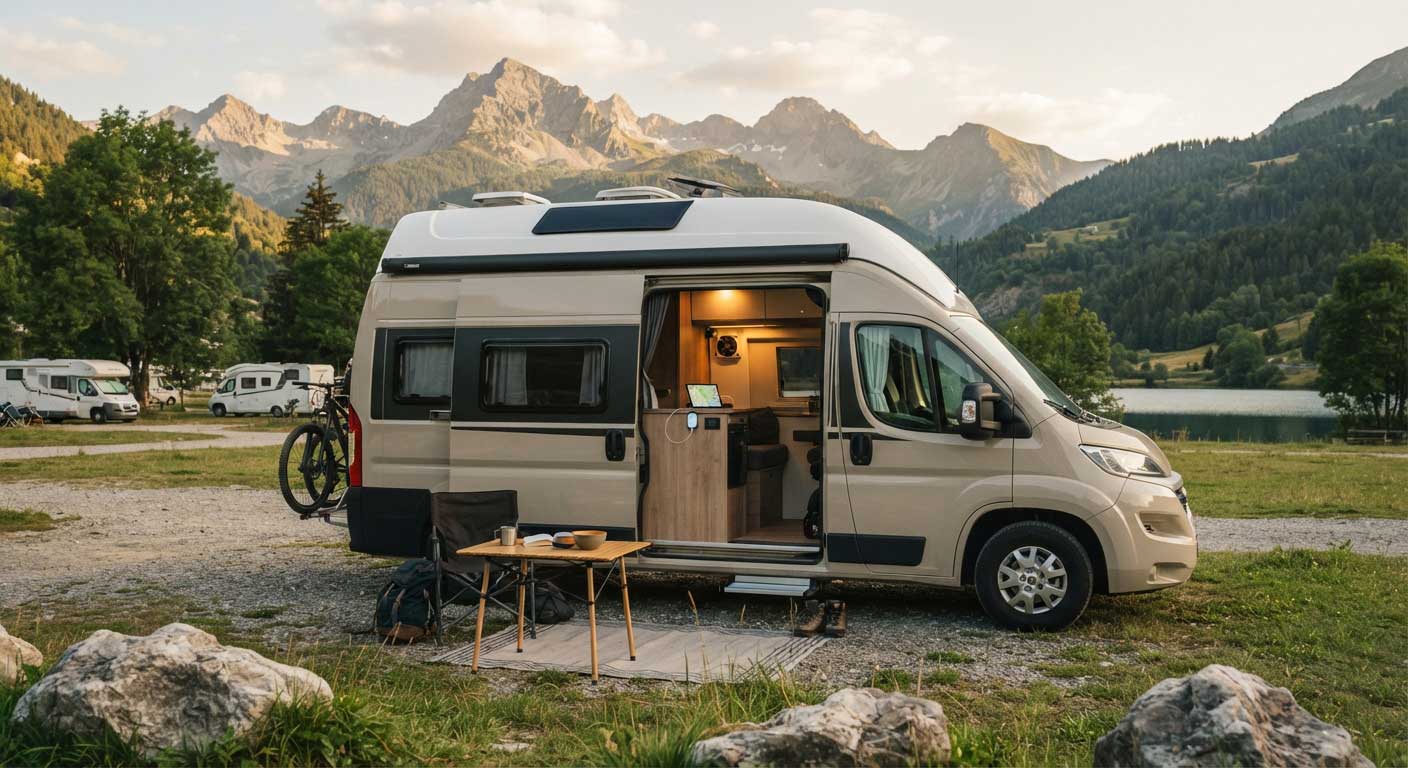
Imagine a campervan owner in France who wants to charge phones, run LED lights, and power a small ventilation fan while parked at campsites. The roof has a skylight, so the owner is considering a flexible panel that fits the remaining usable area.
The following is a hypothetical planning example, not a Bright Solar product specification or a performance guarantee.
| Item | Illustrative value |
|---|---|
| Panel | One 100W finished flexible module |
| Daily energy target | Approximately 250–300Wh |
| Main loads | Lighting, phone charging, small fan |
| Mounting constraint | Roof fittings reduce the available area |
| Design checks | Module dimensions, bend limits, controller compatibility, cable route, attachment method |
| Before use | Verify installation, polarity, protection, and controller settings |
At an assumed 4 peak sun hours and a 0.75 system performance factor, the simple estimate is 300Wh per day. Actual production could be lower or higher depending on season, location, shade, temperature, orientation, and system configuration.
The owner should first check whether a 100W module physically fits and whether its electrical characteristics match the controller. If the usable roof area is too small, the correct response is not to trim the panel or bend it harder. The owner should reconsider the layout, choose a compatible module designed for the available space, or revise the energy target.
Bright Solar Product Considerations for DIY Buyers
Bright Solar offers flexible and semi-flexible solar panel products for applications including RVs, marine projects, and off-grid systems. Buyers should select a model based on its actual datasheet and intended use, not simply on the fact that it is described as flexible.
L Series
Bright Solar’s L Series uses monocrystalline PERC cells and a DuPont ETFE surface. The series is specified with a maximum flexibility of 30% and salt-water-resistant characteristics. Confirm the specific model’s bending requirements, dimensions, electrical values, and approved installation method before using it in a DIY project.
H Series
The H Series is designed for marine and yacht applications and features double ETFE construction. Bright Solar describes the series as walkable and specifies an IP67 junction box. Verify the exact model and intended installation conditions before relying on those features; they should not be generalized to other flexible modules.
What to Include in a Product Inquiry
When contacting Bright Solar, provide:
- Your application: RV, yacht, campervan, or another project.
- Available mounting dimensions and photographs.
- Target rated power and system voltage.
- Charge controller or power station model.
- Surface type and curvature.
- Environmental exposure, including heat, moisture, and saltwater.
- Cable and connector requirements.
- Estimated quantity and project schedule.
A complete brief makes it easier to check product fit and identify which technical details need confirmation.
FAQ About DIY flexible solar panels
Can I make flexible solar panels at home?
You can experiment with assembling photovoltaic cells, but producing a durable, weather-resistant module requires suitable materials, electrical connections, encapsulation, testing, and quality control. For a working RV, marine, or off-grid system, a finished module with clear specifications is generally the more practical option.
Is it safe to install flexible solar panels myself?
It may be possible for a competent DIYer to install a suitable finished module, provided they follow the manufacturer’s instructions and applicable electrical codes. Panels can generate electricity whenever illuminated. If you are unsure about wiring, protection, roof attachment, or system integration, use a qualified installer.
Can I cut a flexible solar panel to fit my roof?
Do not cut a finished module unless the manufacturer explicitly designs and approves it for that process. Cutting can damage cells, conductors, insulation, and protective layers. Measure the usable roof area first and choose a module or approved custom design that fits.
Do flexible solar panels need a charge controller?
For a battery-charging system, a compatible charge controller is normally required unless the equipment manufacturer specifies a different integrated charging arrangement. Match the controller to the module’s voltage and current, the battery chemistry, and the system configuration.
Will a 100W flexible panel produce 100W all day?
No. The 100W rating refers to output under specified test conditions, not continuous daily production. Real output varies with irradiance, temperature, shading, orientation, and system losses. Estimate energy using local sunlight data and the actual installation conditions.
Can I use a flexible solar panel on a boat?
Only use a model whose specifications and installation instructions suit the intended marine location. Check moisture and salt exposure, mounting requirements, cable protection, and any walkability claims. A flexible design alone does not establish marine suitability.
Are flexible solar panels better than rigid panels for DIY projects?
Neither type is universally better. Flexible panels may suit some weight-sensitive or curved installations, while rigid panels may offer different mounting, airflow, and physical-protection characteristics. Compare the specific products against your roof, energy target, budget, and maintenance needs.
Conclusion
DIY solar projects work best when the panel is treated as one component of a complete electrical and mechanical system. Flexible modules can be useful where low profile, weight, or a gently curved mounting surface matters, but they still have defined bending limits, temperature conditions, and attachment requirements.
For most practical installations, use a finished module with clear specifications, estimate energy demand before buying, and check controller compatibility, wiring protection, and mounting instructions carefully. DIY flexible solar panels should be chosen for a suitable application—not because flexibility is assumed to remove the need for sound system design.
Related recommendations
-

RV Solar Panel Installation: Complete Guide for Off-Grid RV Power
122Learn rv solar panel installation with our complete guide covering solar panel selection, wiring, mounting, costs, and tips for reliable off-grid RV power with Bright Solar.
View details -
Best Marine Solar Panels for Boats and Yachts
242Find the best marine solar panels for boats, yachts and RVs near the water. Compare flexible and rigid panels, salt-mist resistance, mounting, wiring and maintenance.
View details -
Solar Camping Gear: A Practical Guide to Off-Grid Power
303Solar camping gear combines portable solar generation and battery storage for reliable off-grid power during camping, RV travel, boating, and outdoor work.
View details -
Flexible RV Solar Panels for Reliable Off-Grid Power
180Flexible RV solar panels deliver lightweight off-grid energy for campers, vans, and motorhomes. Discover durable ETFE solar solutions from Bright Solar.
View details