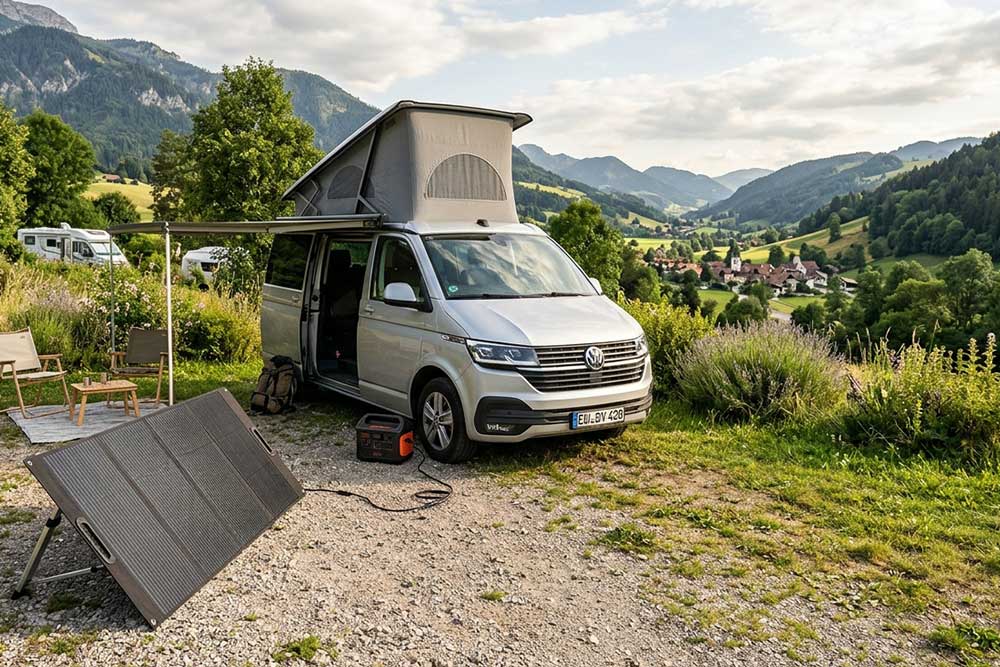
100W Semi Flexible Solar Panel: Lightweight Solar Solution for RV and Off-Grid Applications
A 100W semi flexible solar panel is a lightweight photovoltaic module designed for RVs, marine applications, vans, and off-grid systems where traditional rigid panels are difficult to install. It combines improved durability with limited bending capability, providing reliable solar charging without adding unnecessary weight.
Unlike fully rigid glass solar panels, semi flexible solar panels are built with thinner materials and a reinforced structure that allows slight curvature while maintaining better mechanical stability.
This balance makes them popular among users who need:
- Lower installation weight
- Better roof adaptation
- Easier mounting on curved surfaces
- Reliable outdoor performance
At Bright Solar, our experience developing flexible and semi-flexible solar solutions shows that mobile energy systems are rarely limited by panel efficiency alone. The real challenge is installation space, environmental exposure, and matching solar production with actual energy needs.
A 100W semi flexible solar panel is not designed to replace a large rooftop solar system. Its value comes from fitting where conventional panels cannot.
What Is a 100W Semi Flexible Solar Panel?
A 100W semi flexible solar panel is a solar module rated to produce up to 100 watts under Standard Test Conditions (STC).
The term “semi flexible” means the panel can tolerate a certain amount of bending but usually has more structural support than ultra-thin flexible modules.
It typically uses:
- High-efficiency solar cells
- Protective surface layers
- Lightweight composite materials
- Reinforced backing layers
The design sits between traditional rigid panels and fully flexible solar sheets.
A rigid solar panel may require a flat mounting surface.
A fully flexible panel may prioritize maximum bending capability.
A semi flexible solar panel focuses on balance.
For example, a camper van roof may have:
- Slight curves
- Limited mounting space
- Weight restrictions
- Roof accessories creating installation challenges
A semi flexible module can often follow these conditions better than a standard framed panel.
How Much Power Does a 100W Semi Flexible Solar Panel Produce?
A 100W semi flexible solar panel is rated for 100 watts of maximum output under laboratory testing conditions.
However, real-world energy production depends on:
- Solar irradiance
- Installation angle
- Temperature
- Shading
- Location
- Controller efficiency
- Battery condition
The U.S. Department of Energy explains that photovoltaic system output varies depending on sunlight availability, orientation, system losses, and environmental conditions.
Source: https://www.energy.gov/cmei/femp/solar-photovoltaic-system-design-basics
A realistic daily energy estimate:
| Environment | Approximate Daily Production |
|---|---|
| Strong summer sunlight | 400–600Wh/day |
| Average sunny conditions | 300–500Wh/day |
| Cloudy weather | Reduced output |
For example:
A 100W panel receiving five peak sun hours:
100W × 5 hours = approximately 500Wh before system losses.
After considering charging losses and environmental factors, the usable energy will normally be lower.
This is why experienced solar designers avoid promising a fixed daily output.
The same panel installed on a sunny Arizona RV roof and a shaded Pacific Northwest camper will perform very differently.
100W Semi Flexible Solar Panel Electrical Specifications
Specifications vary by manufacturer, but a typical 100W semi flexible solar panel may include:
| Parameter | Typical Value |
|---|---|
| Rated Power | 100W |
| Solar System Voltage | 12V nominal |
| Working Voltage | Around 17–20V |
| Open Circuit Voltage | Around 20–24V |
| Working Current | Around 5–6A |
| Weight | Lower than traditional framed panels |
| Surface Material | ETFE or similar protective coating |
| Application | RV, marine, camping, off-grid |
The phrase “12V solar panel” often causes confusion.
A solar module labeled 12V does not usually output exactly 12 volts.
A 12V battery needs a higher charging voltage, and the charge controller regulates the energy flow.
A typical connection:
100W Semi Flexible Solar Panel → Solar Charge Controller → Battery → DC Loads
Choosing the correct controller is just as important as selecting the panel.
Why Choose a 100W Semi Flexible Solar Panel?
The main reason customers choose semi flexible solar panels is installation freedom.
A traditional solar module works well on:
- Residential roofs
- Large flat surfaces
- Permanent structures
But mobile applications create different challenges.
Lower Weight for Mobile Applications
Weight is a serious consideration for:
- RV manufacturers
- Camper owners
- Boat operators
- Portable power users
A lighter solar solution reduces roof load and simplifies installation.
For vehicles, every kilogram affects:
- Fuel efficiency
- Payload capacity
- Handling
This is especially important for compact camper vans where roof space is limited.
Better Fit for Curved Surfaces
Many mobile platforms are not perfectly flat.
Examples:
- Van roofs
- Boat cabins
- Trailer tops
- Portable structures
A semi flexible solar panel can better follow slight surface curves compared with rigid modules.
However, it is important to understand the limitation.
Semi flexible does not mean the panel can be folded repeatedly.
Excessive bending can damage internal connections.
The correct installation follows the manufacturer’s recommended bending radius.
Low Profile Installation
A semi flexible solar panel creates a cleaner appearance.
Compared with framed modules:
- Less height
- Less wind resistance
- Lower visual impact
For RV owners who want to maintain a streamlined vehicle profile, this can be an important advantage.

100W Semi Flexible Solar Panel Applications
A 100W semi flexible solar panel is commonly used in situations where portability and installation flexibility matter.
RV and Camper Solar Systems
RV users often need energy for:
- LED lighting
- Mobile phones
- Laptops
- Fans
- Small refrigerators
- Communication equipment
A 100W system is often used as:
- A starter solar setup
- An additional charging source
- A lightweight expansion panel
For weekend camping, one panel may provide enough support.
For full-time van living, multiple panels are usually required.
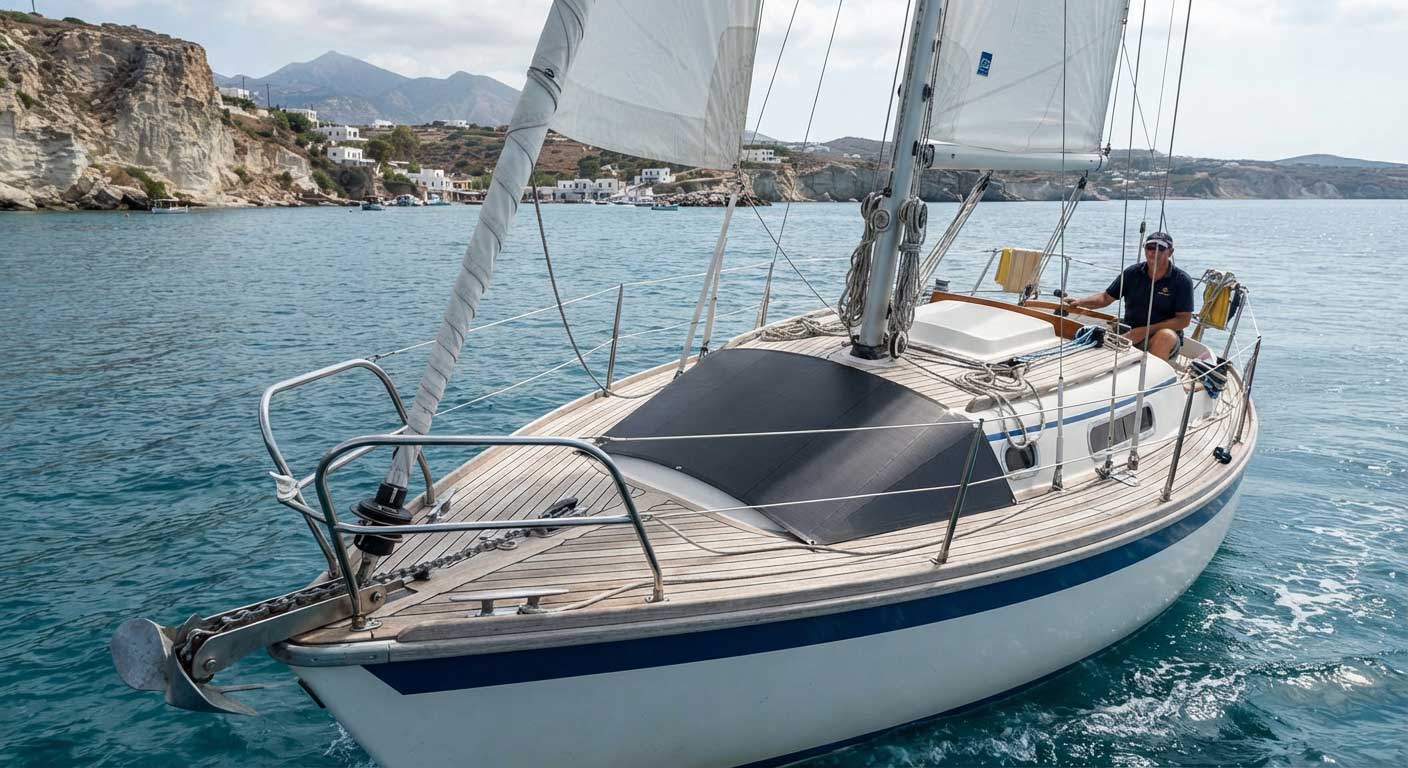
Marine Solar Applications
Boats have unique solar installation challenges.
Available space is limited.
Surfaces may be curved.
Saltwater exposure increases material requirements.
A semi flexible panel can be installed on:
- Boat cabins
- Deck surfaces
- Bimini tops
- Small marine platforms
Marine systems often use solar energy for:
- Battery maintenance
- Navigation equipment
- Communication systems
- Small onboard electronics
Off-Grid and Remote Applications
Remote users often prioritize reliability over maximum output.
Examples include:
- Remote monitoring stations
- Outdoor sensors
- Small cabins
- Emergency backup systems
A lightweight 100W panel can provide independent charging capability without complex infrastructure.
How to Install a 100W Semi Flexible Solar Panel
A successful installation depends on preparation.
The installation process usually includes:
Step 1: Evaluate the Installation Surface
Before installation, check:
- Available sunlight
- Roof condition
- Surface curvature
- Cable pathway
- Potential shading
A panel installed under constant shade will not perform as expected.
Step 2: Prepare the Surface
The mounting area should be:
- Clean
- Dry
- Free of grease
- Free of dust
Many installation problems are caused by poor surface preparation rather than panel quality.
Step 3: Connect Solar Components
A basic system includes:
- Solar panel
- Charge controller
- Battery
- Electrical loads
Before connecting:
- Check polarity
- Confirm voltage ratings
- Select correct wire size
- Install appropriate protection devices
Step 4: Test System Performance
After installation:
Check:
- Charging current
- Battery voltage
- Controller status
- Cable connections
Professional installers usually verify system performance rather than assuming the installation is complete.
100W Semi Flexible Solar Panel vs Flexible and Rigid Solar Panels
Choosing between different solar panel types depends on where the panel will be installed.
A 100W semi flexible solar panel is designed to balance flexibility, durability, and weight. It is not as rigid as a traditional framed module and not as bendable as ultra-thin flexible sheets.
The right choice depends on the environment.
| Feature | 100W Semi Flexible Solar Panel | Fully Flexible Solar Panel | Rigid Solar Panel |
|---|---|---|---|
| Weight | Lightweight | Usually the lightest | Heavier |
| Bending ability | Moderate | Highest | Minimal |
| Structural strength | Higher than thin flexible panels | Lower | Highest |
| Installation surface | Slight curves | More complex curves | Flat surfaces |
| RV suitability | Excellent | Excellent | Good |
| Marine use | Very suitable | Suitable | Limited by mounting |
| Wind exposure | Low profile | Low profile | Higher profile |
| Maintenance access | Depends on installation | Depends on installation | Easier replacement |
For RV and marine customers, semi flexible panels often provide a practical middle ground.
They offer more structural support than extremely thin flexible panels while still solving the installation limitations of rigid modules.
How Many 100W Semi Flexible Solar Panels Do You Need?
The number of panels depends on energy consumption, not only battery size.
A common mistake is purchasing solar panels first and calculating energy needs later.
A better approach:
Step 1: List daily electricity usage
Example:
| Device | Daily Energy Use |
|---|---|
| LED lighting | 30Wh |
| Smartphone charging | 15Wh |
| Laptop | 80Wh |
| Ventilation fan | 100Wh |
| Small refrigerator | 300Wh |
| Total | Around 525Wh |
Step 2: Estimate solar production
A single 100W semi flexible solar panel may generate approximately:
300–600Wh/day depending on location and sunlight conditions.
Step 3: Add system margin
Solar production changes with:
- Season
- Weather
- Temperature
- Shade
- Installation angle
Experienced solar designers usually avoid sizing a system exactly at the minimum requirement.
A small energy buffer improves reliability.
100W Semi Flexible Solar Panel Battery Charging Guide
A 100W semi flexible solar panel is commonly paired with:
- 12V lead-acid batteries
- 12V lithium batteries
- Portable power stations
The charging performance depends on:
- Battery capacity
- Battery chemistry
- Solar controller
- Daily sunlight
Example:
A 100Ah 12V lithium battery stores approximately:
12.8V × 100Ah = 1280Wh
If a solar panel produces around 400Wh on a good day, it can replace a meaningful portion of the consumed energy.
However, the battery will not always charge at the same speed.
Charging slows when:
- The battery approaches full capacity
- Temperature changes
- Solar intensity decreases
This is why battery management and solar generation should be designed together.
Best Charge Controller for a 100W Semi Flexible Solar Panel
A charge controller is essential because solar panels produce variable voltage.
The two common options are:
PWM Solar Controller
PWM controllers are:
- Simple
- Affordable
- Suitable for basic systems
They work well for small installations where budget is the priority.
MPPT Solar Controller
MPPT controllers are often selected for higher performance systems.
Advantages include:
- Better energy harvesting
- Improved performance during changing sunlight
- Better use of panel voltage
The National Renewable Energy Laboratory (NREL) highlights that photovoltaic system performance depends on multiple factors, including system components, operating conditions, and environmental effects.
Source:
https://www.nrel.gov/research/re-photovoltaics.html
For a premium RV or marine installation, an MPPT controller is frequently preferred because available roof space is limited and maximizing energy production matters.
100W Semi Flexible Solar Panel Wiring Options
A single 100W semi flexible solar panel system is usually straightforward.
Basic wiring:
Solar Panel → Charge Controller → Battery
For multiple panels, there are three common configurations.
Parallel Connection
Parallel wiring increases current while maintaining voltage.
Example:
Two 100W panels:
Voltage remains similar.
Current doubles.
Advantages:
- Useful for lower voltage systems
- Some flexibility with shading
Considerations:
- Requires larger cable capacity
- Higher current flow
Series Connection
Series wiring increases voltage.
Example:
Two 100W panels:
Voltage doubles.
Current remains similar.
Advantages:
- Lower current losses
- Useful for longer cable runs
Considerations:
- Controller maximum voltage must be checked
- Shading effects should be evaluated
Series-Parallel Connection
Larger systems may combine both methods.
Example:
Four 100W panels:
Two panels connected in series.
Two identical strings connected in parallel.
This creates:
- Higher voltage
- Increased current
- Better system design flexibility
Real Installation Example: 100W Semi Flexible Solar Panel on Camper Van
A practical installation example comes from a compact camper conversion project in western North America.
The owner had:
- Limited roof space
- Curved fiberglass roof
- 12V lithium battery
- Weekend travel requirements
The electrical loads included:
- LED lighting
- Phone charging
- Small refrigerator
- Roof ventilation fan
A rigid solar panel would have required additional mounting brackets and increased roof height.
The final design used:
- One 100W semi flexible solar panel
- MPPT controller
- 100Ah lithium battery
During clear summer conditions, the system provided enough daily energy support for basic camping needs.
The biggest improvement was not only energy generation.
It was installation simplicity.
The low-profile panel maintained the vehicle appearance and avoided additional roof structures.
This type of application represents where semi flexible solar technology provides the most value.

How to Maintain a 100W Semi Flexible Solar Panel
Semi flexible solar panels require limited maintenance, but regular inspection improves long-term performance.
Cleaning the Panel Surface
Dust, pollen, bird residue, and road dirt can reduce sunlight absorption.
Recommended cleaning:
- Use clean water
- Use a soft cloth
- Avoid abrasive brushes
- Avoid harsh chemicals
For RV owners, cleaning frequency depends on travel conditions.
A vehicle traveling through desert areas may require more frequent cleaning than one stored in a humid climate.
Checking Connections
Inspect:
- Solar connectors
- Cable entry points
- Waterproof seals
- Battery connections
Vibration from vehicles can gradually loosen electrical connections.
Inspecting the Panel Surface
Look for:
- Surface damage
- Delamination
- Cracks
- Discoloration
Early inspection can prevent larger problems.
Common Mistakes When Buying a 100W Semi Flexible Solar Panel
Choosing Only Based on Price
The cheapest panel may not provide the best long-term value.
Important factors include:
- Solar cell quality
- Protective materials
- Warranty support
- Manufacturer experience
Ignoring Temperature Effects
Solar panels operate differently under extreme heat.
A panel installed on a dark RV roof may experience significantly higher temperatures than laboratory conditions.
Temperature affects solar efficiency.
Installing in Partial Shade
Even a small shaded area can reduce output.
Before installation, observe:
- Roof equipment shadows
- Trees
- Antennas
- Nearby structures
Using Incorrect Adhesive Methods
A semi flexible panel installation requires appropriate mounting materials.
Incorrect adhesive selection can lead to:
- Panel lifting
- Moisture problems
- Surface damage
FAQ About 100W Semi Flexible Solar Panel
What can a 100W semi flexible solar panel power?
A 100W semi flexible solar panel can support small electrical systems including LED lights, phones, laptops, fans, small refrigerators, and battery charging. It is commonly used for RV, marine, and camping applications.
Is a 100W semi flexible solar panel enough for an RV?
It depends on energy usage. A single 100W panel works well for basic weekend camping needs. Full-time RV users often require multiple panels and a larger battery system.
How many amps does a 100W semi flexible solar panel produce?
A typical 100W panel produces around 5–6 amps under normal operating conditions. Actual output changes depending on sunlight, temperature, and system design.
Can a 100W semi flexible solar panel charge a lithium battery?
Yes. A 100W semi flexible solar panel can charge a 12V lithium battery when paired with a compatible solar charge controller designed for lithium charging requirements.
Can I install a semi flexible solar panel directly on my RV roof?
Many semi flexible panels are designed for RV installation, but the surface must be properly prepared and installation instructions should be followed carefully.
Are semi flexible solar panels better than rigid panels?
Neither is always better. Semi flexible panels are better for curved, lightweight, mobile applications, while rigid panels may be better for permanent flat installations.
How long does a 100W semi flexible solar panel last?
The lifespan depends on material quality, installation conditions, and environmental exposure. Proper installation and regular inspection help maximize service life.
Bright Solar 100W Semi Flexible Solar Panel Solution
Bright Solar develops lightweight solar solutions for applications where traditional panels are difficult to install.
Our semi flexible solar panels are designed for:
- RV manufacturers
- Marine equipment suppliers
- Outdoor power systems
- Off-grid applications
- Custom solar projects
The purpose of a 100W semi flexible solar panel is not simply producing electricity.
It is creating a practical energy solution that fits real-world environments.
For a camper traveling across changing climates, a boat operating offshore, or a remote system requiring dependable charging, installation design matters as much as the solar module itself.
Conclusion: Choosing the Right 100W Semi Flexible Solar Panel
A 100W semi flexible solar panel provides a practical balance between lightweight construction, installation flexibility, and reliable solar generation.”Learn more about the Flexible Solar Panel Installation Guide“
It is especially suitable for:
- RVs
- Camper vans
- Boats
- Small off-grid systems
Before selecting a panel, consider:
- Daily energy requirements
- Available installation area
- Battery capacity
- Charge controller type
- Environmental conditions
A properly designed solar system is not built around the largest panel.
It is built around the right combination of solar generation, storage, and real usage.
Related recommendations
-

Flexible Amorphous Solar Panels: Uses, Efficiency and Buying Guide
138Flexible amorphous solar panels use thin-film amorphous silicon in lightweight, bendable modules for curved, lightweight, or unconventional surfaces.
View details -
120 Watt Flexible Solar Panel: Lightweight Solar Solution for Mobile Power
138Discover the 120 watt flexible solar panel from Bright Solar. Learn how lightweight solar technology delivers reliable energy for RVs, boats, camping, and off-grid applications.
View details -
12 Volt Flexible Solar Panels: Lightweight Solar Power for RV, Marine and Off-Grid Systems
17412 volt flexible solar panels provide lightweight solar power for RVs, boats, camping, and off-grid battery systems. Discover Bright Solar solutions for reliable energy.
View details -
140 Watt Folding Solar Panel: Output, Battery Charging and Camping Guide
27A 140W folding solar panel provides portable power for camping, RVs, and small off-grid systems. Actual energy output depends on sunlight, system efficiency,...
View details