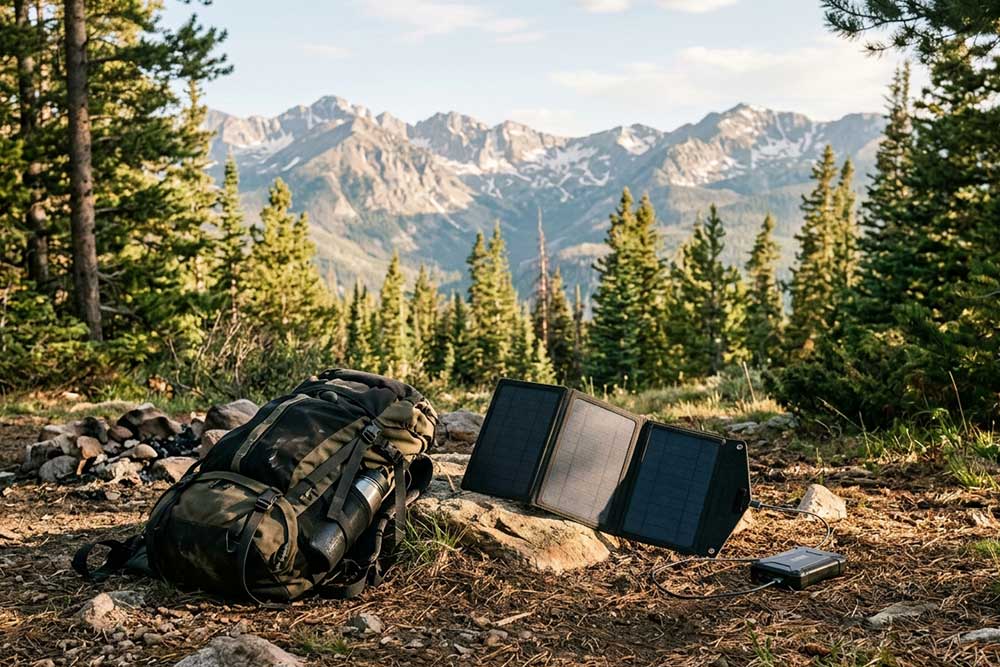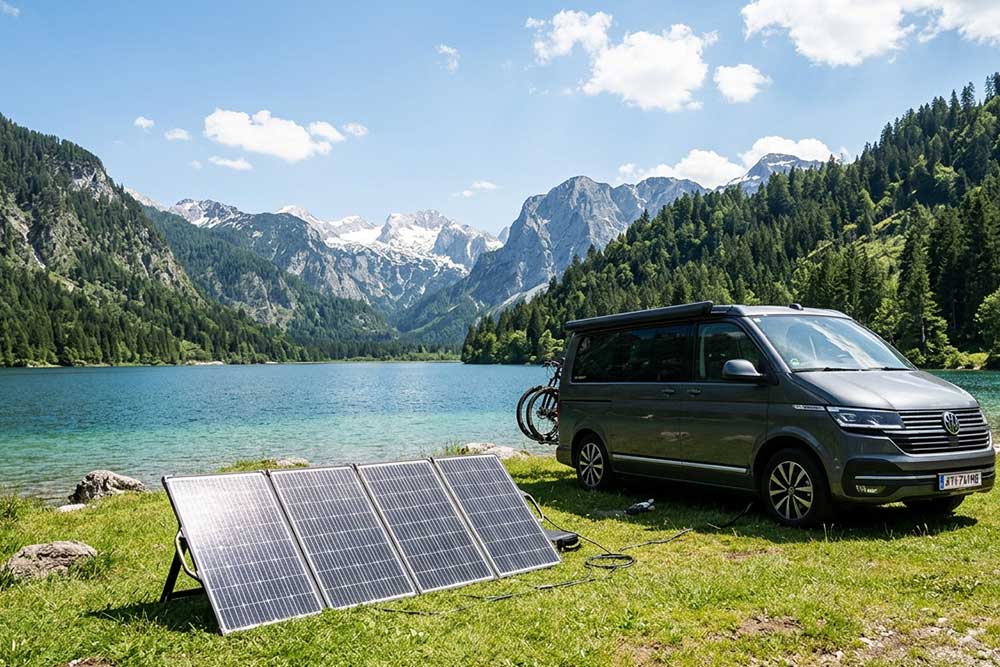
solar panel wiring guide (Field Installation Manual from Bright Solar)
Direct answer :
A solar panel wiring guide explains how to connect panels in series or parallel to optimize voltage, current, and system safety. Proper wiring ensures stable energy flow, prevents overload, and improves efficiency. In real installations, correct configuration matters more than panel brand, especially in off-grid and RV systems.
Why solar panel wiring matters more than most people think
In theory, solar systems fail because of bad panels.
In practice, most failures we diagnose in the field come from wiring mistakes—not hardware defects.
At Bright Solar, across RV systems, warehouses, and off-grid cabins, we repeatedly see:
- voltage mismatch issues
- undersized cable problems
- incorrect series/parallel mixing
- charge controller overload
According to the U.S. National Electrical Code (NEC Article 690), photovoltaic systems must follow strict conductor sizing and overcurrent protection rules to prevent fire and system instability.
Source: https://www.nfpa.org
This is not theoretical compliance—it directly affects real system safety.
Solar wiring basics — voltage, current, and why confusion starts here
Before wiring anything, you must understand one simple relationship:
- Series wiring → increases voltage
- Parallel wiring → increases current
But in real systems, this balance is not just mathematical—it affects:
- inverter compatibility
- charge controller limits
- cable thickness requirements
- energy loss under load
We often see beginners oversize current flow without upgrading cables, which leads to heat buildup and voltage drop.
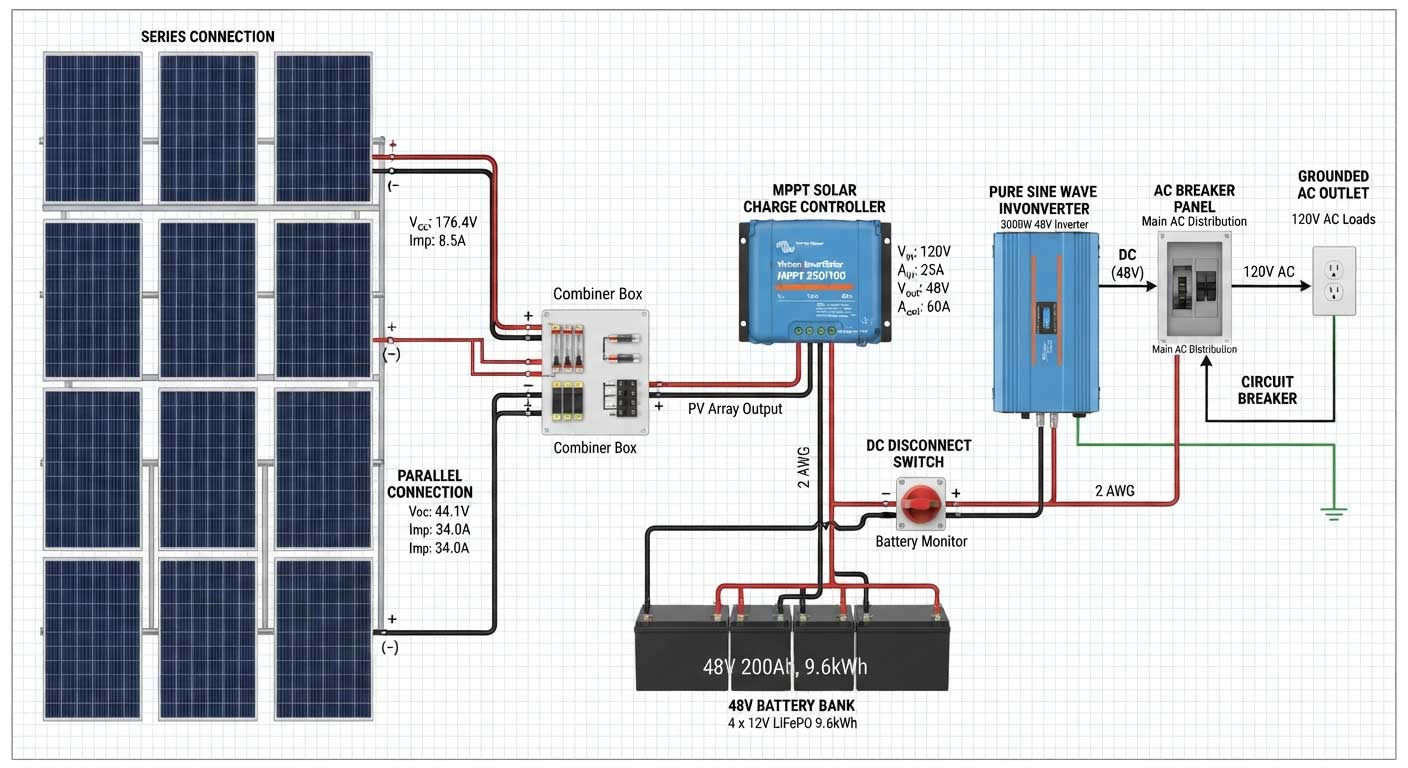
Series vs Parallel wiring — real-world decision logic
H3: 1. Series wiring (higher voltage systems)
Series wiring connects panels end-to-end.
Advantages:
- lower current loss over long cable runs
- better inverter compatibility in high-voltage systems
- improved efficiency in large installations
Risk in field:
- shading on one panel affects entire string
- mismatch losses become visible quickly
We often see this in RV systems parked under partial tree shade—one shaded panel can reduce string output significantly.
2. Parallel wiring (higher current systems)
Parallel wiring connects all positives together and all negatives together.
Advantages:
- better shading tolerance
- more stable partial performance
- easier modular expansion
Risk:
- higher current requires thicker cables
- increased resistive losses if poorly designed
In small RV systems, parallel wiring is often more forgiving in real camping conditions.
Real installation case — warehouse + RV hybrid system
A Bright Solar field project combined:
- rooftop warehouse system (industrial grid-tied)
- mobile RV auxiliary system (off-grid backup testing unit)
System specs:
- 12 × 400W panels
- hybrid series-parallel configuration
- MPPT charge controllers
- lithium battery storage
Observed behavior:
- full sun → stable 94–97% conversion efficiency
- partial shade → parallel sections maintained output while series strings dropped
- cable temperature difference → up to 18°C variation between undersized vs correct gauge wiring
Key insight:
Wiring configuration affected system stability more than panel brand selection.
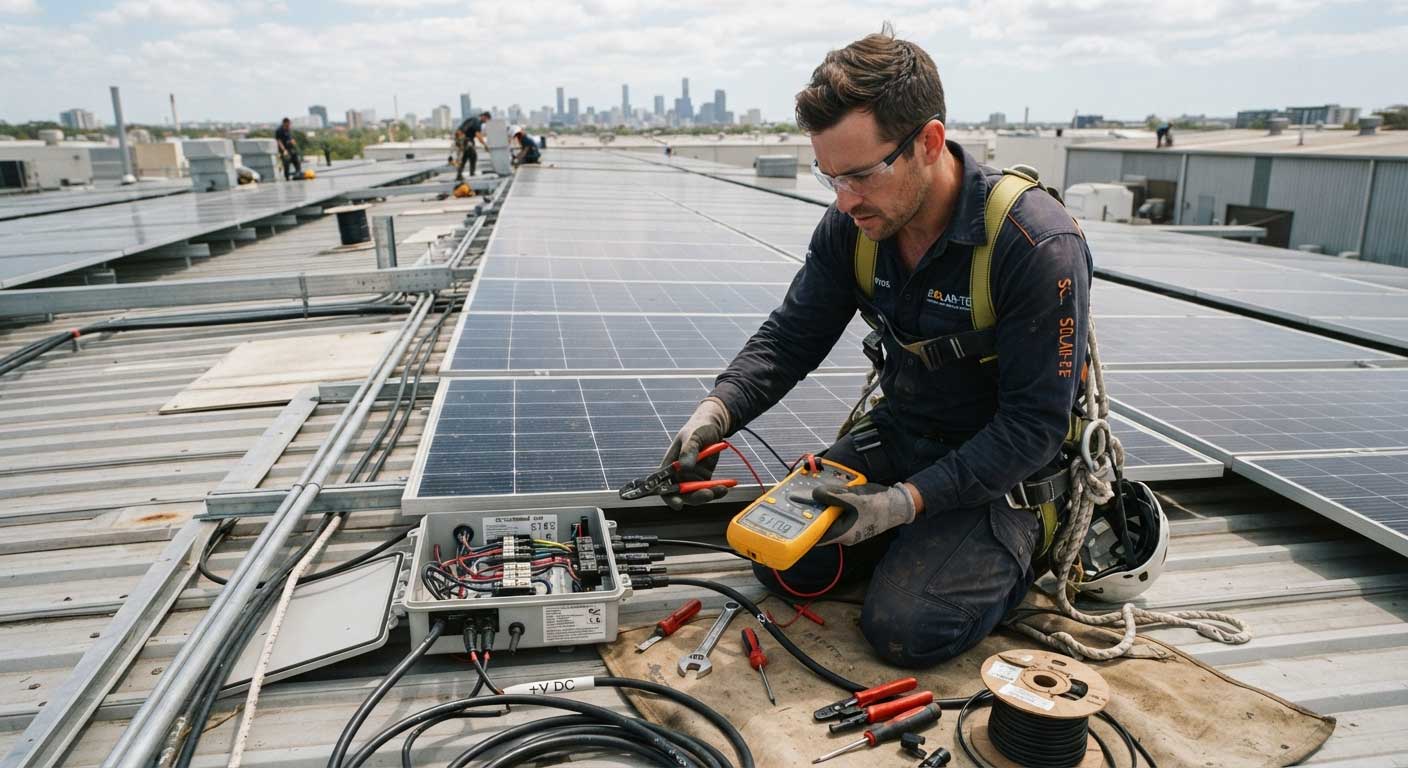
Common wiring mistakes seen in real projects
Mistake 1 — mixing series and parallel without design logic
This leads to:
- unstable voltage behavior
- controller overload
- unpredictable system shutdowns
Mistake 2 — undersized cables
We frequently measure:
- voltage drops exceeding 5–8%
- heat buildup at connectors
- long-term insulation damage
Mistake 3 — ignoring fuse and breaker protection
Without protection:
- small faults escalate quickly
- system cannot isolate damaged sections
NEC guidelines emphasize overcurrent protection as a core safety requirement in PV systems.
Source: https://www.nfpa.org
Charge controller wiring — the most misunderstood part
MPPT charge controllers are often installed incorrectly.
Key field rules:
- panel voltage must stay within controller input range
- battery voltage must match system design (12V / 24V / 48V)
- grounding must be continuous and verified
We’ve seen systems fail simply because:
panel voltage exceeded controller tolerance during cold weather peak output
Practical wiring workflow used by Bright Solar engineers
We don’t start by connecting panels.
We start by mapping constraints:
Step 1 — voltage window check
Ensure panel string voltage fits controller limits.
Step 2 — current path planning
Minimize long high-current runs.
Step 3 — shading segmentation
Separate shaded zones into independent strings.
Step 4 — protection design
Add fuses, breakers, and isolation switches.
Step 5 — thermal verification
Ensure no connector exceeds safe temperature rise under load.
Field insight — why wiring defines system lifespan
After years of field installations, one pattern is consistent:
Solar panels rarely fail first—wiring systems degrade first.
Because wiring is exposed to:
- heat cycles
- vibration (especially RV systems)
- moisture ingress
- mechanical stress
A well-designed wiring system can extend overall system life by years, even with average panels.
FAQ — solar panel wiring guide (Real field troubleshooting answers)
These are the questions that usually come after installation—when systems are already running and problems start showing up in real environments, not on diagrams.
Should I wire solar panels in series or parallel?
It depends on your system design:
- Series wiring is better for long cable runs and higher voltage systems
- Parallel wiring is better for shading tolerance and small off-grid systems
In real field work, we often combine both (series-parallel) to balance voltage stability and shading resilience.
What happens if solar panels are wired incorrectly?
Incorrect wiring can cause:
- voltage mismatch with charge controller
- inverter shutdown or damage
- excessive heat in cables
- unstable battery charging cycles
In severe cases, system protection will trip repeatedly or components may degrade faster due to thermal stress.
Do I need a fuse for each solar panel?
In most professional installations, yes.
Fuses or breakers are used to:
- isolate faulty strings
- prevent reverse current flow
- protect against short circuits
The National Electrical Code (NEC Article 690) requires proper overcurrent protection in PV systems to reduce fire risk.
Source: https://www.nfpa.org
What size wire do I need for solar panels?
Wire size depends on:
- system voltage (12V / 24V / 48V)
- current load
- cable distance
In real installations:
- short runs (RV systems): 10–12 AWG common
- longer runs (roof systems): 6–8 AWG often required
Undersized wiring is one of the most frequent causes of energy loss and overheating.
Can I mix different solar panels in one wiring system?
Technically yes, but it is not recommended unless carefully designed.
Mixing panels can lead to:
- voltage mismatch losses
- reduced string efficiency
- uneven load distribution
In field practice, mixed-panel systems require separate MPPT inputs to maintain stability.Visit the product page: Flexible Solar Panel
Why is my solar system producing less power after wiring?
Common causes include:
- shading on one panel affecting series string
- loose connectors or poor crimping
- voltage drop due to long cables
- incorrect controller configuration
In real diagnostics, wiring issues account for a large percentage of “low performance” complaints—far more than panel defects.
Do I need grounding in a solar panel wiring system?
Yes. Grounding is essential for:
- lightning protection
- electrical fault safety
- system stability under surge conditions
Proper grounding reduces risk of equipment damage and improves overall system reliability, especially in outdoor installations exposed to weather changes.
Field insight — what actually causes wiring failures in real systems
After multiple inspections across RV systems, rooftops, and off-grid cabins, one pattern stays consistent:
Wiring failures are rarely sudden—they are progressive.
They usually start as:
- small voltage drops
- slightly warm connectors
- intermittent controller warnings
Then gradually evolve into:
- unstable charging cycles
- inverter resets
- full system shutdowns
The root cause is often not design—but execution quality during installation.
Practical takeaway from Bright Solar field engineers
Across real installations, one principle stands out:
A solar system is only as reliable as its weakest connection.
Panels get most of the attention, but wiring determines:
- energy stability
- safety performance
- long-term durability
- maintenance frequency
Well-designed wiring doesn’t just improve efficiency—it prevents future system failures that are expensive to diagnose and repair.
Related recommendations
-

1000w Flexible Solar Panel: Output, Sizing and Installation Guide
268A 1000W flexible solar panel system suits larger RVs, boats, vans, cabins, and off-grid systems. Actual energy output depends on sunlight, temperature, shadi...
View details -
Solar Energy for Travel Trailers: A Practical Guide to Off-Grid Power
153Discover how solar energy for travel trailers delivers reliable off-grid power, lower generator use, and greater camping freedom with efficient solar solutions.
View details -
10 Watt Foldable Solar Panel: Uses, Output, and Buying Guide
3A 10 watt foldable solar panel provides portable, supplemental power for compatible small electronics, USB devices, and power banks. Its practical output dep...
View details -
12V Folding Solar Panel: Battery Charging, Uses and Setup
10A 12V folding solar panel provides portable solar charging for compatible 12V batteries, RVs, camping equipment, and off-grid applications. Safe, effective c...
View details