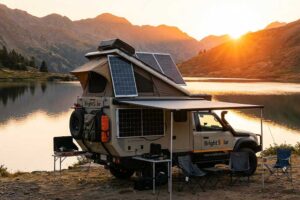
100W Flexible Solar Panels: Lightweight Solar Power for RV, Marine and Off-Grid Applications
100W flexible solar panels provide a practical balance between portability and energy output, delivering enough solar power for RVs, boats, camping equipment, and small off-grid systems while maintaining a lightweight and adaptable design.
When customers contact Bright Solar asking which flexible solar panel size is the most versatile, 100W is often one of the first options we discuss.
It is not the largest panel.
It is not designed to power an entire home.
But for mobile energy applications, 100 watts often sits in the sweet spot between performance, weight, and installation flexibility.
During our product development work, we tested 100W flexible solar panels in different environments, from camper vans traveling through Europe to marine applications exposed to coastal weather.
The same pattern appeared repeatedly:
Users wanted enough power for daily essentials, but they did not want heavy equipment that complicated installation.
A good portable solar solution needs to disappear into the lifestyle of the user.
What Are 100W Flexible Solar Panels?
100W flexible solar panels are photovoltaic modules designed to generate up to 100 watts of electrical power under standard test conditions while maintaining a lightweight and bendable structure.
Unlike traditional rigid solar modules that rely on glass and aluminum frames, flexible panels use advanced materials that allow installation on curved or irregular surfaces.
A typical 100W flexible solar panel includes:
| Component | Purpose |
|---|---|
| Monocrystalline solar cells | Convert sunlight into electricity |
| Flexible backing layer | Allows bending and reduces weight |
| ETFE surface coating | Protects against UV, scratches, and weather |
| Encapsulation layer | Prevents moisture damage |
| Junction box | Transfers generated electricity safely |
The goal of flexible solar technology is not simply making panels thinner.
The goal is creating solar products that can be installed where conventional panels cannot.
How Much Power Can a 100W Flexible Solar Panel Produce?
A 100W flexible solar panel can theoretically produce 100 watts of power under laboratory Standard Test Conditions (STC).
However, real-world output changes depending on:
- Location
- Sunlight hours
- Panel angle
- Temperature
- Weather
- Installation surface
A simple calculation:
Daily Energy Production = Panel Wattage × Peak Sun Hours × System Efficiency
For example:
A 100W flexible solar panel receiving approximately 5 peak sun hours per day may generate:
100W × 5 hours × 80% efficiency ≈ 400Wh/day
This amount of energy may support:
- Smartphone charging
- LED lighting
- GPS devices
- Small refrigerators
- Communication equipment
- Battery maintenance systems
According to the National Renewable Energy Laboratory (NREL), photovoltaic system performance depends heavily on solar resources, environmental conditions, and system design.
Source:
National Renewable Energy Laboratory
https://www.nrel.gov/solar/
This is why professional solar designers focus on actual usage conditions rather than only panel wattage.
Why Choose 100W Flexible Solar Panels?
The popularity of 100W flexible solar panels comes from their balance.
A smaller panel may be easy to carry but provide limited energy.
A larger panel may generate more power but increase:
- Weight
- Installation difficulty
- Transportation challenges
100W flexible solar panels provide a middle ground.
Lightweight Solar Solution
Weight is one of the biggest advantages of flexible solar technology.
For RV owners, sailors, and outdoor travelers, every kilogram matters.
A traditional rigid 100W solar panel usually requires:
- Glass protection
- Aluminum frame
- Mounting brackets
Flexible versions remove much of this structure.
Benefits include:
- Easier transportation
- Lower roof load
- Faster installation
- Better suitability for mobile applications
At Bright Solar, weight reduction is not achieved by simply removing materials.
The challenge is maintaining:
- Electrical performance
- Mechanical strength
- Outdoor durability
Flexible Installation on Curved Surfaces
Many real-world surfaces are not designed for rigid solar panels.
Examples include:
- RV roofs
- Boat cabins
- Camper trailers
- Portable structures
A flexible 100W solar panel can adapt to these environments.
This creates new possibilities for solar installation.
A customer does not need to redesign the entire structure around the solar panel.
The solar panel adapts to the structure.
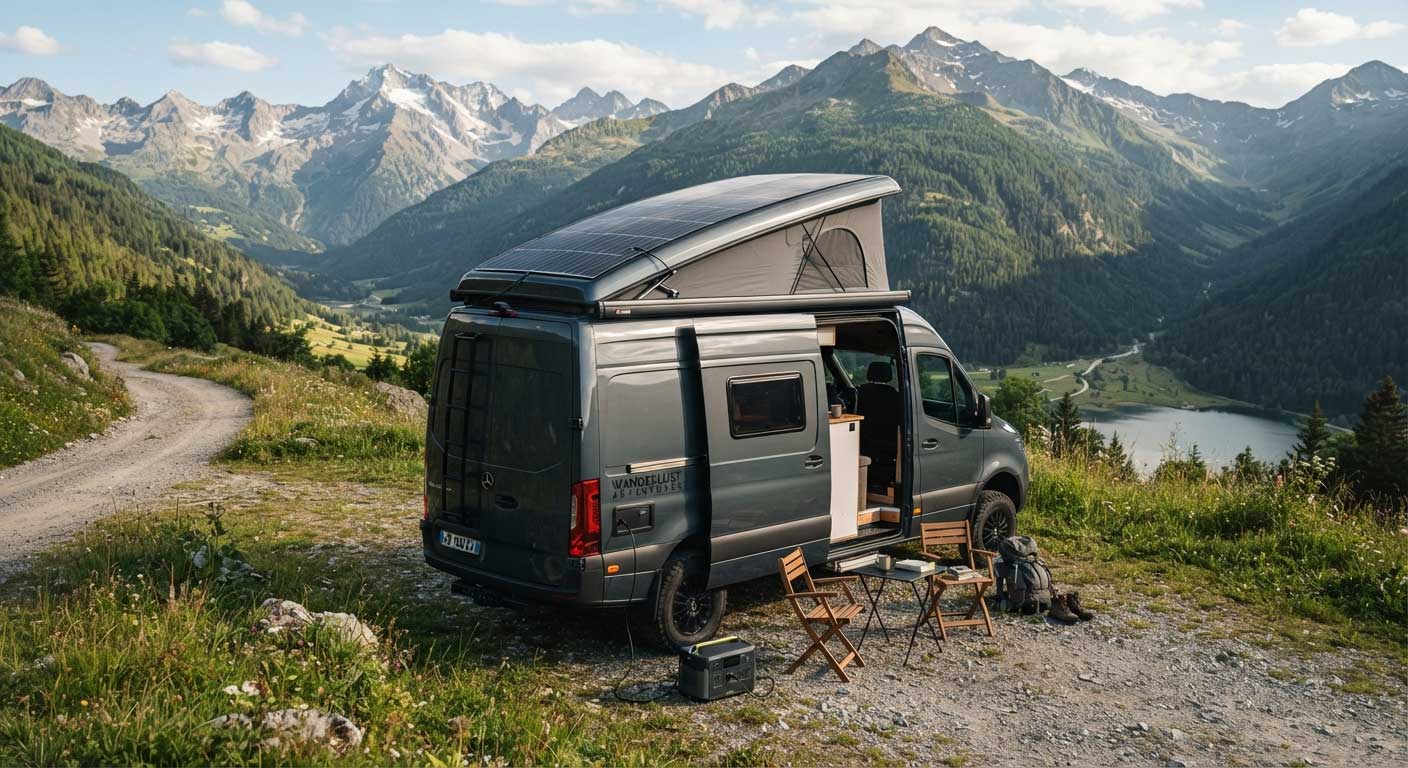
100W Flexible Solar Panels for RV Applications
RV solar is one of the most common uses for 100W flexible solar panels.
Travelers often need electricity for:
- Phones
- Cameras
- LED lighting
- Fans
- Small appliances
- Battery charging
However, RV roofs have limitations.
Common challenges include:
- Limited flat space
- Weight restrictions
- Curved surfaces
- Desire for low-profile appearance
Flexible solar panels solve many of these installation issues.
RV Case Study: Lightweight Solar Upgrade
A European camper manufacturer approached Bright Solar for a lightweight auxiliary charging solution.
The original design used rigid solar modules.
During testing, several issues appeared:
- Additional mounting hardware increased installation time
- Roof weight increased
- The panel structure was visually noticeable
The engineering team evaluated a 100W flexible solar panel solution.
The final design reduced installation complexity while maintaining sufficient power for:
- Battery charging
- Interior LED lighting
- Communication devices
Customer feedback showed that the low-profile design was a major advantage.
The solar system looked like part of the vehicle rather than an external attachment.
100W Flexible Solar Panels for Marine Applications
Marine environments create unique solar challenges.
Boats require energy for:
- Navigation systems
- Communication equipment
- Battery charging
- Lighting
- Small electronics
However, available installation areas are often limited.
Rigid panels may require:
- Metal supports
- Additional structures
- Larger mounting areas
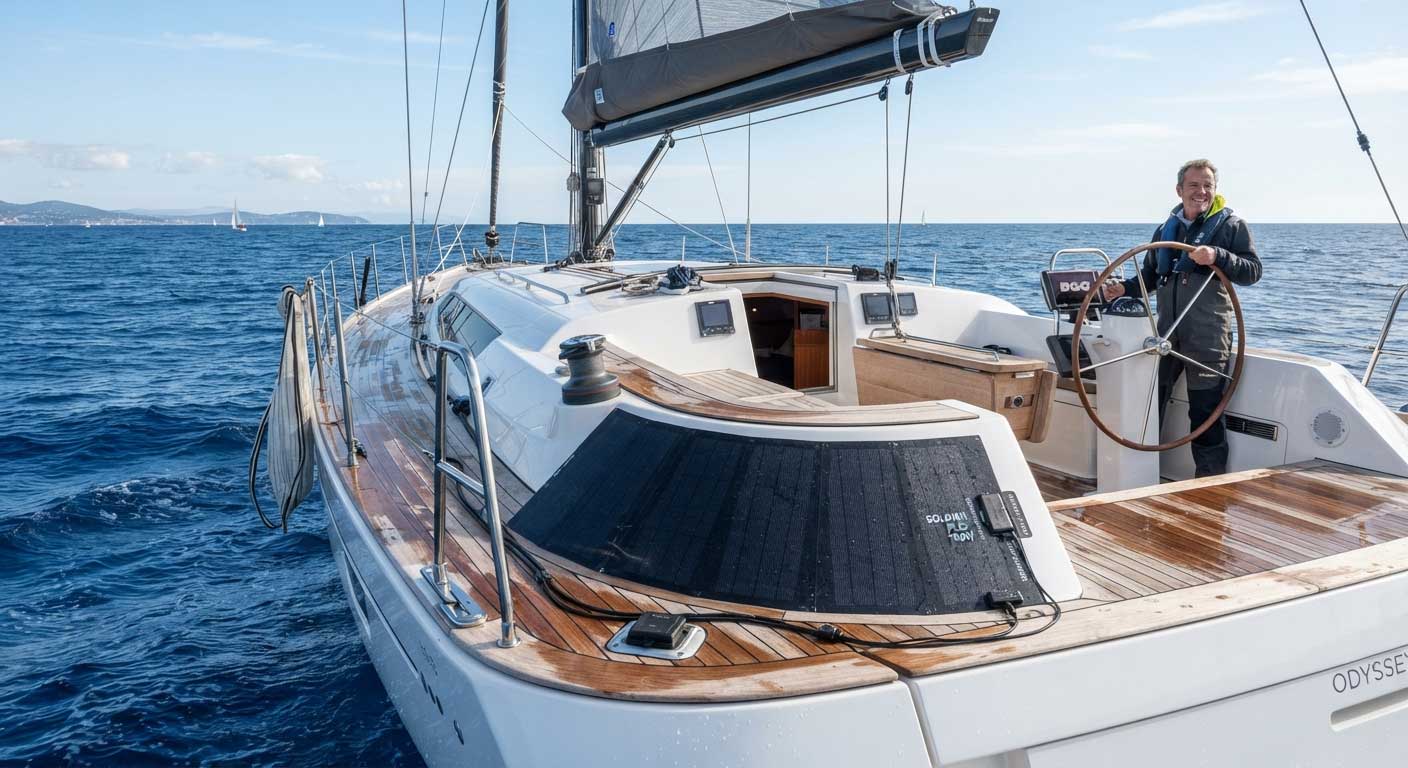
A flexible 100W solar panel can be installed on:
- Yacht cabins
- Deck surfaces
- Boat canopies
- Curved marine structures
Marine Installation Experience
During a marine project evaluation, Bright Solar engineers worked with a sailing equipment supplier that needed additional energy generation without changing the vessel appearance.
The main requirements were:
- Lightweight design
- Low visual impact
- Resistance to outdoor exposure
The flexible solar solution allowed installation on a curved surface where traditional panels were difficult to use.
The project highlighted an important point:
Marine solar is not only about producing electricity.
It is about integrating energy production into a moving environment.
How to Install 100W Flexible Solar Panels Correctly
Installing 100W flexible solar panels is usually easier than installing traditional rigid modules, but the installation method still determines long-term performance.
At Bright Solar, we have inspected many solar installations where the panel itself performed well, but poor installation reduced the overall system reliability.
Common installation problems include:
- Poor surface preparation
- Incorrect adhesive selection
- Unprotected cable routing
- Insufficient ventilation
- Improper connection methods
A flexible solar panel is lightweight, but it still needs a professional installation approach.
Step 1: Choose the Right Installation Location
Before mounting a 100W flexible solar panel, evaluate the available area.
The ideal location should have:
- Maximum sunlight exposure
- Minimal shading
- Strong surface condition
- Easy cable access
- Safe maintenance access
For different applications:
| Application | Recommended Installation Area |
|---|---|
| RV | Roof, luggage area, curved top surface |
| Boat | Cabin roof, deck, canopy |
| Camper trailer | Roof or side structure |
| Off-grid system | Portable frame or custom surface |
Avoid placing panels near objects that create frequent shadows.
Even partial shading can significantly reduce solar output because photovoltaic cells are connected together electrically.
Step 2: Prepare the Surface
Surface preparation is one of the most overlooked steps.
Before installation:
- Remove dust and dirt
- Clean oil or wax residue
- Ensure the surface is completely dry
- Check material compatibility
For RV and marine applications, surfaces may contain protective coatings that affect bonding performance.
During one Bright Solar installation review, engineers discovered that a vehicle roof had a factory-applied protective layer.
The surface looked clean, but adhesion strength was lower than expected.
After proper preparation, the installation became significantly more stable.
Small details often determine whether a solar system lasts months or years.
Step 3: Connect the Solar Charging System
A 100W flexible solar panel usually works together with:
- Solar charge controller
- Battery system
- Inverter (if AC power is needed)
- Monitoring equipment
A typical connection:
100W Flexible Solar Panel → Charge Controller → Battery → Electrical Devices
The charge controller protects the battery by controlling charging voltage and current.
For mobile applications, many users combine a 100W flexible solar panel with:
- Lithium batteries
- Portable power stations
- 12V battery systems
100W Flexible Solar Panels vs 200W Flexible Solar Panels
Choosing between 100W and 200W depends on energy requirements.
Both sizes have advantages.
| Feature | 100W Flexible Solar Panels | 200W Flexible Solar Panels |
|---|---|---|
| Power output | Suitable for basic energy needs | Higher energy generation |
| Weight | Lower | Higher |
| Installation space | Smaller | Larger |
| Portability | Easier | Less portable |
| Best applications | Camping, small RVs, marine electronics | Larger RVs, extended off-grid use |
A 100W panel is often preferred when:
- Space is limited
- Weight matters
- Energy needs are moderate
A 200W system may be better when users require:
- More battery charging
- Longer off-grid operation
- More electrical equipment
The correct choice depends on energy consumption, not simply choosing the largest available panel.
How Long Do 100W Flexible Solar Panels Last?
The lifespan of flexible solar panels depends on:
- Material quality
- Manufacturing process
- Installation environment
- Maintenance
Outdoor solar products face:
- UV exposure
- Rain
- Temperature changes
- Mechanical stress
According to the International Energy Agency (IEA), solar photovoltaic technology has achieved significant improvements in reliability and cost competitiveness, making PV systems a major renewable energy technology worldwide.
Source:
International Energy Agency – Solar PV
https://www.iea.org/energy-system/renewables/solar-pv
For flexible solar panels, protective materials are especially important.
At Bright Solar, we focus on:
- ETFE surface protection
- Waterproof encapsulation
- Reliable electrical connections
- Outdoor durability testing
The solar cells produce power, but the surrounding materials protect that performance over time.
Common Applications of 100W Flexible Solar Panels
Camping and Outdoor Travel
A 100W flexible solar panel is popular among campers because it provides a practical amount of energy without excessive weight.
Typical uses include:
- Charging phones
- Powering lights
- Running small electronics
- Maintaining portable batteries
For weekend camping, a 100W panel can provide useful energy independence.
RV and Van Life
The RV community has become one of the fastest-growing markets for flexible solar technology.
Users choose 100W flexible panels because they provide:
- Low-profile installation
- Reduced roof weight
- Easy integration
They are especially useful for:
- Camper vans
- Small trailers
- Mobile offices
Remote Monitoring Systems
Some remote equipment requires continuous low-power energy.
Examples:
- Weather stations
- Security cameras
- Communication devices
A 100W flexible solar panel can support these applications when combined with proper battery storage.
Why Bright Solar 100W Flexible Solar Panels?
Bright Solar designs flexible solar solutions based on real customer requirements.
Our development process focuses on practical conditions:
- How will the product be transported?
- Where will it be installed?
- What environment will it face?
- How will users maintain it?
Through years of solar product development, we have learned that specifications alone do not determine product success.
A 100W flexible solar panel should balance:
Energy Performance
The panel should provide reliable output within realistic installation conditions.
Lightweight Design
Portable users need products that are easy to handle.
Durability
Outdoor products must survive real weather exposure.
Customization
Different applications require different dimensions, connectors, and designs.
Bright Solar supports OEM and customized flexible solar panel solutions for various industries.
FAQ About 100W Flexible Solar Panels
What can a 100W flexible solar panel power?
A 100W flexible solar panel can support small electronic devices, battery charging systems, LED lighting, GPS equipment, and other low-power applications depending on sunlight conditions.
Are 100W flexible solar panels good for RVs?
Yes. They are widely used in RV applications because they are lightweight, easy to install, and suitable for curved vehicle surfaces.
Can a 100W flexible solar panel charge a battery?
Yes. When connected with a suitable solar charge controller, a 100W flexible solar panel can charge 12V or other compatible battery systems.
Are flexible solar panels waterproof?
Many high-quality flexible solar panels are designed with waterproof protection. However, waterproof performance depends on product materials, sealing design, and installation quality.
Is a 100W flexible solar panel enough for camping?
For basic camping needs such as charging electronics and powering lights, 100W is often suitable. Larger energy requirements may require additional panels.
What is the difference between a 100W flexible solar panel and a rigid panel?
Flexible panels are lighter and easier to install on curved surfaces, while rigid panels often provide higher mechanical protection and are commonly used for permanent installations.
Can I install a 100W flexible solar panel myself?
Yes, many portable applications allow DIY installation. However, permanent RV or marine installations require careful attention to waterproofing, wiring, and safety.
Final Thoughts: Choosing the Right 100W Flexible Solar Panels
100W flexible solar panels represent a practical middle point between portability and performance.
They are not designed to replace large rooftop solar systems.
Their strength is providing reliable energy where traditional panels are inconvenient.
For:
- RV travelers
- Boat owners
- Campers
- Remote workers
- Outdoor enthusiasts
a 100W flexible solar panel can provide valuable energy independence without adding unnecessary weight.
At Bright Solar, our experience shows that successful solar solutions are built around real applications.
The best panel is not always the largest one.
It is the one that fits the environment, the user, and the way energy is actually needed.
Related recommendations
-

flexible solar panels for car roof: Lightweight Solar Power Solution for Vehicles
252Discover flexible solar panels for car roof solutions with lightweight design, durable ETFE protection, and reliable solar power for EVs, camping cars, and outdoor travel.
View details -
Solar Energy for Travel Trailers: A Practical Guide to Off-Grid Power
154Discover how solar energy for travel trailers delivers reliable off-grid power, lower generator use, and greater camping freedom with efficient solar solutions.
View details -
300 w flexible solar panel (High-Power Mobile Energy System Guide from Bright Solar)
260300 w flexible solar panel explained with real RV field performance data, installation insights, energy output behavior, and off-grid system design notes.
View details -
Flexible Solar Panel Kits: Complete Solar Solutions for Mobile and Off-Grid Power
166Explore flexible solar panel kits for RVs, boats, campervans, and off-grid systems. Lightweight, efficient, and easy to install for reliable solar power anywhere.
View details