100 watt solar panel flexible: A Practical Guide for RV, Marine and Off-Grid Applications
Direct answer :
A 100 watt solar panel flexible is a lightweight photovoltaic solution designed for small RVs, boats, camping systems, and portable off-grid applications. It provides reliable daily energy for essential devices, but actual output depends on sunlight conditions, installation angle, temperature, battery capacity, and charge controller efficiency.
Understanding the role of a 100 watt solar panel flexible system
A 100 watt solar panel flexible is often the first step into mobile solar power.
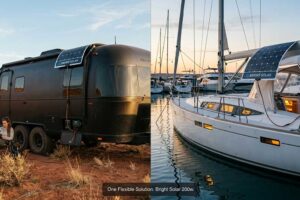
Unlike traditional rigid panels, flexible modules are designed where weight, shape, and installation limitations matter. They are commonly installed on:
- RV roofs with curved surfaces
- camper trailers
- boat cabins and decks
- portable camping structures
- remote monitoring equipment
At Bright Solar, we have tested flexible solar modules in different environments, from European camper routes to marine applications. The biggest lesson from these projects is simple:
A smaller solar panel does not mean a smaller design challenge.
A 100W panel can work extremely well when the energy demand is matched correctly.
How much power can a 100 watt solar panel flexible produce?
The rated power of 100W represents laboratory test conditions, not everyday output.
According to the National Renewable Energy Laboratory (NREL), photovoltaic module performance changes significantly due to temperature, irradiance, shading, and system losses.
Source: https://www.nrel.gov
In practical applications, a 100W flexible solar panel usually produces:
| Environment | Daily Energy Output |
|---|---|
| Strong summer sunlight | 400–600Wh/day |
| Normal RV travel conditions | 300–500Wh/day |
| Cloudy weather | 100–250Wh/day |
| Winter low sunlight | 80–200Wh/day |
Actual results depend on:
- geographical location
- panel orientation
- roof shading
- battery charging efficiency
- controller quality
Why choose a flexible 100W solar panel instead of rigid panels?
A 100W flexible solar panel is not designed to compete with every rigid panel.
It solves a different problem.
Weight advantage
A typical rigid glass solar panel can weigh several kilograms.
Flexible versions are significantly lighter, making them suitable for:
- RV roofs with weight limitations
- portable energy kits
- marine structures where additional weight affects fuel consumption
For mobile applications, reducing roof load is often more valuable than achieving the highest possible efficiency number.
Installation flexibility
Traditional panels require:
- mounting brackets
- drilling holes
- fixed frames
Flexible panels can often be installed using:
- industrial adhesive systems
- lightweight mounting solutions
- curved surface installation methods
This makes them especially useful for vehicles where aerodynamic profile matters.

Typical applications of a 100 watt solar panel flexible
A 100W system is popular because it fits many small energy scenarios.
RV and camper applications
Common loads include:
- LED lighting
- USB charging devices
- mobile phones
- tablets
- small fans
- Wi-Fi routers
- GPS equipment
Example:
A camper traveling through western Europe may use a 100W panel to generate approximately 300–500Wh daily, enough for essential electronics and battery maintenance.
Marine applications
Small boats often have limited installation space.
A flexible 100W panel can support:
- navigation electronics
- battery maintenance
- communication equipment
- cabin lighting
The lightweight design reduces stress on smaller vessels.
Remote monitoring systems
A 100W flexible solar system is also suitable for:
- agricultural sensors
- security cameras
- environmental monitoring equipment
- remote communication stations
These applications benefit from low maintenance and independent power generation.
Bright Solar field observation — what matters more than watt rating
During product testing and customer discussions, one pattern appears repeatedly:
Many users focus only on “100 watts.”
However, successful installations depend on:
1. Energy consumption planning
Before installation, we recommend calculating:
| Device | Typical Consumption |
|---|---|
| LED lights | 5–20W |
| Smartphone charging | 5–15W |
| Laptop | 40–80W |
| Small fan | 10–30W |
| Router | 10–20W |
A 100W system works best when the daily consumption is controlled.
2. Battery matching
A common mistake is installing a solar panel without considering storage.
Typical combinations:
| Solar Panel | Recommended Battery |
|---|---|
| 100W flexible panel | 50Ah–100Ah lithium battery |
| 100W × 2 system | 100Ah–200Ah lithium battery |
The battery determines how much generated energy can actually be used later.
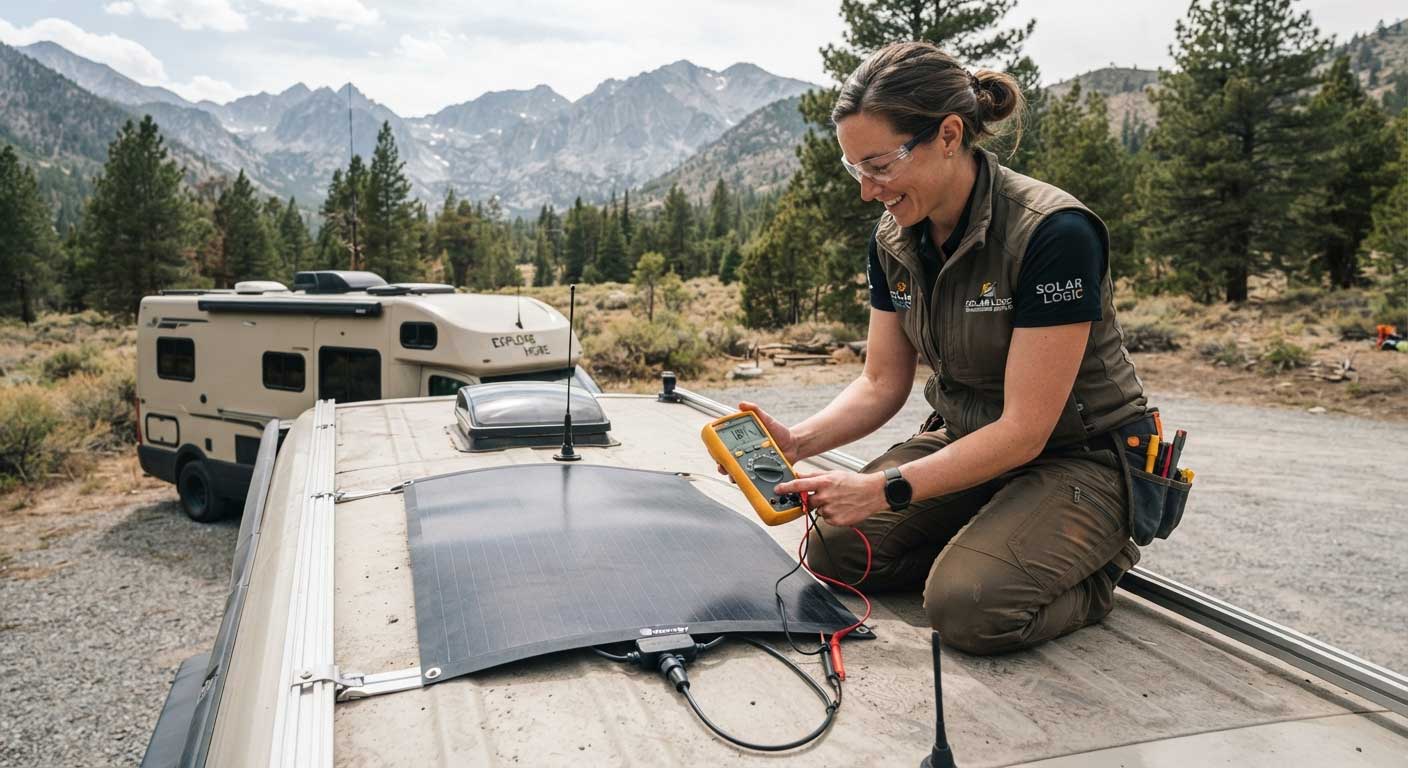
3. Installation position
A perfectly installed 100W panel can outperform a larger panel installed poorly.
Avoid:
- permanent shade areas
- exhaust heat zones
- antenna shadows
- dirty surfaces
Technical specifications to consider before buying
| Feature | Recommended Consideration |
|---|---|
| Power rating | 100W |
| Cell type | Monocrystalline preferred |
| Surface material | ETFE coating for durability |
| Flexibility | Suitable for curved surfaces |
| Waterproof rating | Outdoor marine/RV application |
| Controller type | MPPT recommended |
| Connector quality | Weather-resistant design |
Bright Solar flexible modules use lightweight construction designed for mobile environments where durability and installation convenience are important.
Expert insight from Bright Solar engineering experience
After working with flexible solar systems across different applications, one conclusion is consistent:
A 100W flexible panel is not purchased because it is the largest energy source.
It is selected because it solves installation limitations.
In one RV project, the customer originally planned to install a rigid panel system. However, the curved fiberglass roof and limited mounting area created problems. After switching to a flexible 100W configuration:
- installation time decreased
- roof drilling was avoided
- total system weight was reduced
- appearance remained cleaner
The final system produced enough energy for daily communication devices, lighting, and battery maintenance.
The lesson was not about adding more watts.
It was about matching the solar system to the environment.
Real Field Case Studies — 100 watt solar panel flexible applications from Bright Solar projects
A 100 watt solar panel flexible system is often selected for situations where installation space, weight, and mobility are more important than maximum energy output. Through Bright Solar project feedback and application testing, we found that the same 100W panel can perform very differently depending on how it is integrated into the complete energy system.
The following cases represent typical real-world application patterns from RV, marine, and off-grid environments.
Case Study 1 — Compact RV camper energy system in Europe
Project background
A European customer operating a compact camper van needed a lightweight solar solution.
The vehicle had:
- limited roof space
- curved fiberglass surface
- strict weight considerations
- frequent travel between different climates
The original plan was to install a traditional rigid solar panel, but the mounting structure added unnecessary complexity.
Bright Solar recommended a flexible solution based on:
- 100 watt solar panel flexible module
- 100Ah LiFePO₄ battery
- MPPT charge controller
- 12V DC electrical system
Installation details
The installation process included:
- Cleaning the fiberglass roof surface
- Positioning the flexible panel to avoid roof obstacles
- Installing weather-resistant cable routing
- Connecting the MPPT controller near the battery location
- Testing charging performance under direct sunlight
The total installation avoided roof drilling and maintained the original vehicle appearance.
Performance results
After several weeks of travel:
| Measurement | Result |
|---|---|
| Average daily generation | 350–480Wh |
| Battery charging stability | Consistent |
| Main loads supported | Lights, phone, router, small electronics |
| Generator usage | Reduced significantly |
Field observation
The owner initially expected the panel rating to be the most important factor.
After actual use, the bigger advantage was installation freedom.
The curved roof could utilize available space without adding heavy mounting hardware.
In mobile solar systems, the best panel is often the one that fits the vehicle correctly.
Case Study 2 — Small marine boat battery maintenance system
Project background
A small fishing and leisure boat owner required independent battery charging during long periods without shore power.
The challenges included:
- limited flat installation areas
- constant vibration
- saltwater exposure
- changing sunlight angles
The final system included:
- 100 watt solar panel flexible
- marine-grade cable protection
- 12V deep-cycle battery
- waterproof charge controller enclosure
Operating conditions
The boat operated in:
- coastal environments
- high humidity conditions
- direct sunlight exposure
- salt spray conditions
Field results
| Category | Performance |
|---|---|
| Daily energy generation | 250–450Wh |
| Battery maintenance | Stable |
| Electronics supported | GPS, lighting, communication devices |
| Maintenance requirement | Low |
Engineering observation
Marine applications are rarely limited by solar capacity alone.
The bigger challenges are:
- connector protection
- cable sealing
- installation position
A well-installed 100W flexible panel can outperform a larger system that suffers from corrosion problems.
Case Study 3 — Remote monitoring equipment power system
Project background
A customer needed independent power for remote environmental monitoring equipment.
The location had:
- no grid connection
- limited maintenance access
- seasonal weather changes
System configuration:
- 100W flexible solar panel
- lithium battery storage
- low-power controller
- sensor equipment
Performance data
During testing:
| Condition | Output |
|---|---|
| Clear sunny day | 400–550Wh |
| Cloudy day | 150–250Wh |
| Winter conditions | 80–180Wh |
The system maintained continuous operation by balancing:
- solar generation
- battery storage
- low-power consumption strategy
Bright Solar Engineering Experience — What we learned from real installations
Author experience and technical perspective
At Bright Solar, our work with flexible photovoltaic products focuses on practical application rather than laboratory numbers alone.
During product evaluation, we examine:
- installation environment
- mechanical stress
- weather exposure
- customer usage patterns
- long-term maintenance requirements
One important lesson from field experience:
A flexible solar panel is not simply a thinner version of a rigid panel.
Its design philosophy is different.
Rigid Solar Panels optimize:
- maximum efficiency
- fixed installations
- open roof areas
Flexible Solar Panels optimize:
- weight reduction
- surface adaptation
- mobile applications
Three practical lessons from field testing
1. Correct sizing prevents disappointment
Many problems happen because users expect a 100W system to behave like a 500W system.
A 100W panel is excellent for:
- maintaining batteries
- powering small electronics
- supporting low-energy lifestyles
It is not designed for:
- air conditioning
- electric heating
- high-power appliances
2. Installation quality directly affects energy output
Two identical panels can produce different results.
Common performance differences come from:
- shading
- poor cable routing
- incorrect controller selection
- dirty surfaces
Field testing shows installation quality can create 15–30% output differences between otherwise identical systems.
3. Real users care about reliability more than peak numbers
A camper owner usually does not ask:
“How many watts did I produce at noon?”
They ask:
“Will my battery be ready tomorrow morning?”
That difference changes how flexible solar systems should be designed.
FAQ — 100 watt solar panel flexible
How much power can a 100 watt solar panel flexible produce per day?
A 100W flexible solar panel typically produces:
- 300–600Wh/day in good sunlight
- 100–250Wh/day during cloudy conditions
Actual production depends on location, season, installation angle, and system efficiency.
What can a 100W flexible solar panel run?
A 100W system can support:
- smartphones
- tablets
- LED lighting
- small fans
- GPS devices
- Wi-Fi routers
- battery maintenance charging
It is mainly designed for low and medium energy applications.
Is a 100 watt flexible solar panel enough for an RV?
Yes, for small RVs and camper vans with controlled energy usage.
It works well for:
- weekend camping
- travel electronics
- lighting systems
- battery charging support
For full-time RV living, multiple panels are usually recommended.
How long does a 100 watt flexible solar panel last?
A quality flexible solar panel can typically provide:
- 8–15 years of useful service depending on environment
- longer lifespan with proper installation and maintenance
The main aging factors include:
- UV exposure
- heat cycles
- mechanical stress
- installation quality
Can a 100W flexible solar panel charge a battery?
Yes.
A 100W panel can charge:
- 12V lead-acid batteries
- lithium batteries
- portable power stations
An MPPT charge controller is recommended because it improves energy harvesting, especially under changing sunlight conditions.
Are flexible solar panels better than rigid panels?
Neither is universally better.
Flexible panels are better when you need:
- lightweight design
- curved installation
- simple integration
Rigid panels are better when you need:
- maximum cooling
- fixed rooftop installation
- traditional mounting structures
The right choice depends on the application.
Can a 100 watt flexible solar panel be used on boats?
Yes.
Many small marine systems use flexible 100W panels because they:
- reduce weight
- fit irregular surfaces
- avoid large mounting structures
However, marine installations require proper waterproof connectors and cable protection.
Final Conclusion — Is a 100 watt solar panel flexible the right choice?
A 100 watt solar panel flexible is not designed to replace large solar arrays.
Its strength is precision.
It delivers reliable energy where traditional panels struggle:
- curved RV roofs
- compact boats
- portable systems
- remote equipment
From Bright Solar field experience, the most successful installations are not always the ones with the highest wattage.
They are the systems where:
- energy demand matches generation
- installation matches the environment
- components work together correctly
For lightweight mobile power, a 100W flexible solar panel remains one of the most practical entry-level solutions.
Related recommendations
-

300 Watt Solar Panels for RV, Marine and Off-Grid Power Systems
204Discover how 300 watt solar panels power RVs, boats, cabins, and off-grid systems. Learn real performance, battery charging, and installation tips from Bright Solar.
View details -
200W Flexible Solar Panel: Lightweight Solar Power for RV, Marine, and Off-Grid Use
228200w flexible solar panel solutions for RVs, boats, and off-grid travel. Discover lightweight ETFE solar panels with high efficiency and real-world durability.
View details -
Off Grid Solar Power System: Complete Guide for Energy Independence
158Explore an off grid solar power system with complete guidance on components, sizing, installation, cost, and benefits for homes, RVs, farms, and remote energy solutions.
View details -
Solar Panels for Shade: How to Reduce Power Loss
159Solar panels can work in shade, but output decreases as sunlight falls. Proper site assessment, panel placement, bypass diodes, and module-level electronics ...
View details