100 Watt Briefcase Solar Panel: Output, Uses, and Buying Guide
A 100 watt briefcase solar panel provides portable solar electricity for camping, RV travel, and off-grid charging. Its hinged panels fold into a carrying case, making setup and storage convenient when paired with compatible charging equipment.
The briefcase format is designed for people who want more collection area than a small USB solar charger can offer without permanently installing a panel on a vehicle. Open the case, position the panels in sunlight, connect a compatible power station or battery system, and pack it away when finished.
However, a 100W rating is not a promise of 100 watts throughout the day. Weather, shading, panel angle, temperature, and electrical conversion losses all influence the amount of energy collected. Choosing the right model means understanding both its rated output and the equipment it will charge.
Bright Solar provides flexible solar panel solutions for B2B customers serving RV, outdoor power, and selected marine applications. For buyers comparing a 100 watt briefcase solar panel with a flexible solar module, the first distinction is the product format: a briefcase panel is designed for portable deployment, while a flexible module is intended for applications that permit bending within specified limits.
What Is a 100 Watt Briefcase Solar Panel?
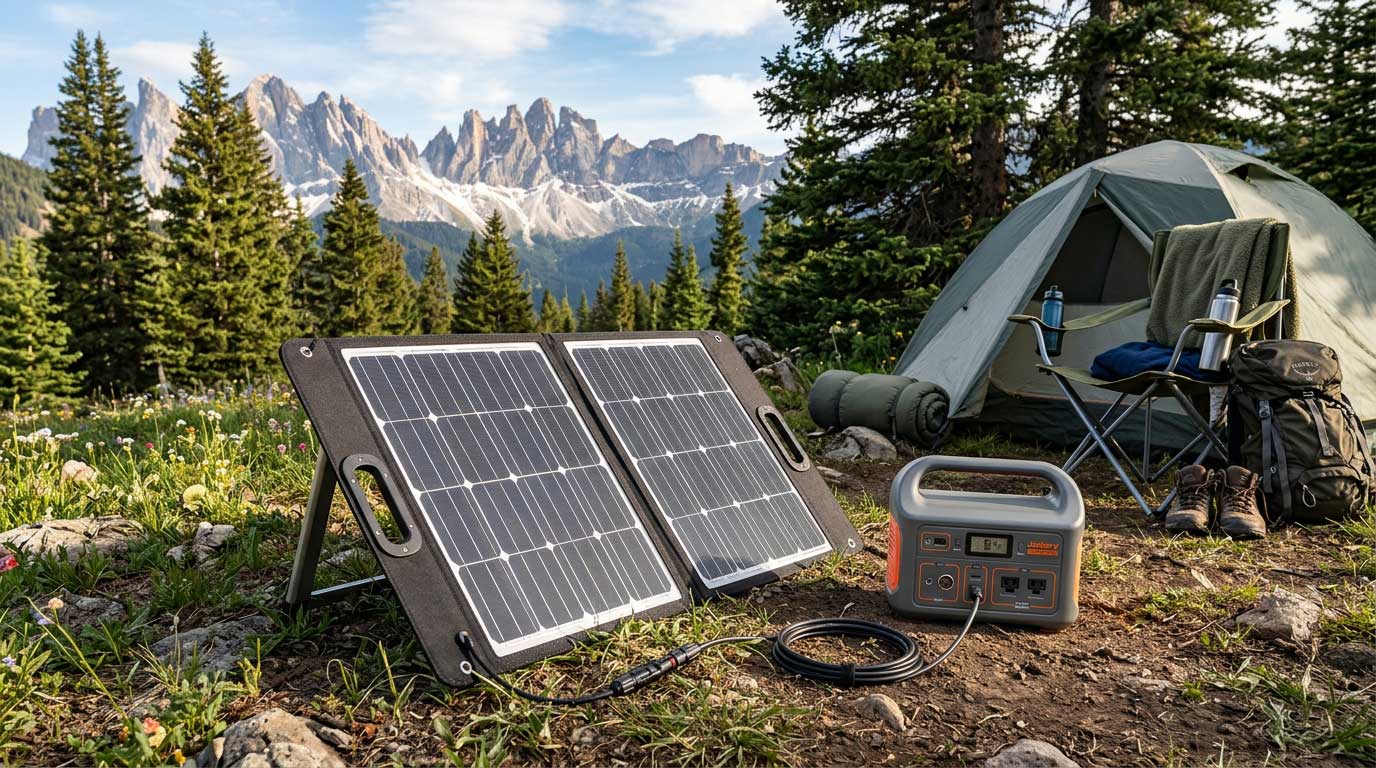
A 100 watt briefcase solar panel is a portable photovoltaic system that typically consists of two or more panel sections joined by hinges and protected by a folding frame or carrying case. When opened, the sections expose the solar cells to sunlight; when closed, the unit becomes easier to transport and store.
The panel converts sunlight into direct-current electricity. Depending on the model, it may connect to a portable power station, a compatible battery system through a charge controller, or other equipment designed for its electrical output.
A briefcase panel may include:
- Hinged solar panels and a folding frame.
- Adjustable support legs for positioning toward the sun.
- A cable with a specified DC connector.
- A carrying handle or protective case.
- Optional accessories, depending on the product.
These features are not universal. Some models include a controller or USB outputs, while others are intended primarily for power stations. Check the manufacturer’s datasheet rather than assuming that every 100W briefcase panel has the same connections.
Why Choose the Briefcase Design?
The main advantage is the combination of portable storage and a relatively substantial solar collection area. Compared with a small panel intended mainly for phones, a 100W model can be more useful for replenishing a compatible battery station during a camping trip.
The design also allows the panel to be placed away from a vehicle. If the RV is parked in partial shade, the briefcase panel can be positioned in a sunnier location while the power station remains somewhere suitable for its operating temperature and ventilation requirements.
There is a trade-off. The frame, hinges, and protective case add weight and bulk. A briefcase panel may be practical to carry from a car to a campsite, but less convenient for someone who needs to carry every item in a hiking backpack.
How Much Power Does a 100 Watt Briefcase Solar Panel Produce?
A 100W panel is rated to deliver 100 watts under specified test conditions. Its actual outdoor output changes with solar irradiance, orientation, temperature, shading, and system design.
The U.S. Department of Energy explains how photovoltaic cells convert sunlight into electricity and how solar modules operate under defined conditions.
Source: U.S. Department of Energy — Solar Photovoltaic Technology Basics.
Estimate Daily Energy Production
Use this formula for an initial estimate:
Estimated daily energy (Wh) = rated power (W) × equivalent peak sun hours × system derating factor
Suppose a 100W briefcase panel receives four equivalent peak sun hours and a planning factor of 0.75 is used to account for system losses.
100W × 4 hours × 0.75 = 300Wh per day
The 0.75 factor is an illustrative assumption, not a measured efficiency rating for a particular product. Actual results may differ, especially when clouds, shade, poor positioning, or temperature reduce output.
| Equivalent peak sun hours | Estimated energy with a 0.75 factor |
|---|---|
| 2 hours | 150Wh |
| 4 hours | 300Wh |
| 6 hours | 450Wh |
These figures are calculations based on stated assumptions, not guaranteed daily output. Equivalent peak sun hours also do not mean that the panel receives the same intensity of sunlight throughout the day.
For a location-specific solar estimate, use the National Renewable Energy Laboratory’s PVWatts Calculator.
Source: NREL PVWatts Calculator.
Watts and Watt-Hours Are Not the Same
Watts measure power at a particular moment. Watt-hours measure energy accumulated over time.
That distinction matters when choosing a panel for a portable power station. A 100W panel might generate several hundred watt-hours over a suitable day, but it will not necessarily deliver 100W continuously. The battery’s usable capacity, the station’s charging limits, and the energy required by connected equipment all affect the result.
A briefcase panel can be a useful supplemental energy source, but it should not be treated as a guaranteed replacement for a wall outlet or a larger solar installation.
What Can You Power With a 100W Briefcase Solar Panel?
A 100 watt briefcase solar panel is best suited to charging a compatible battery system, which can then supply electricity to devices throughout the day or evening.
Camping and Portable Power Stations
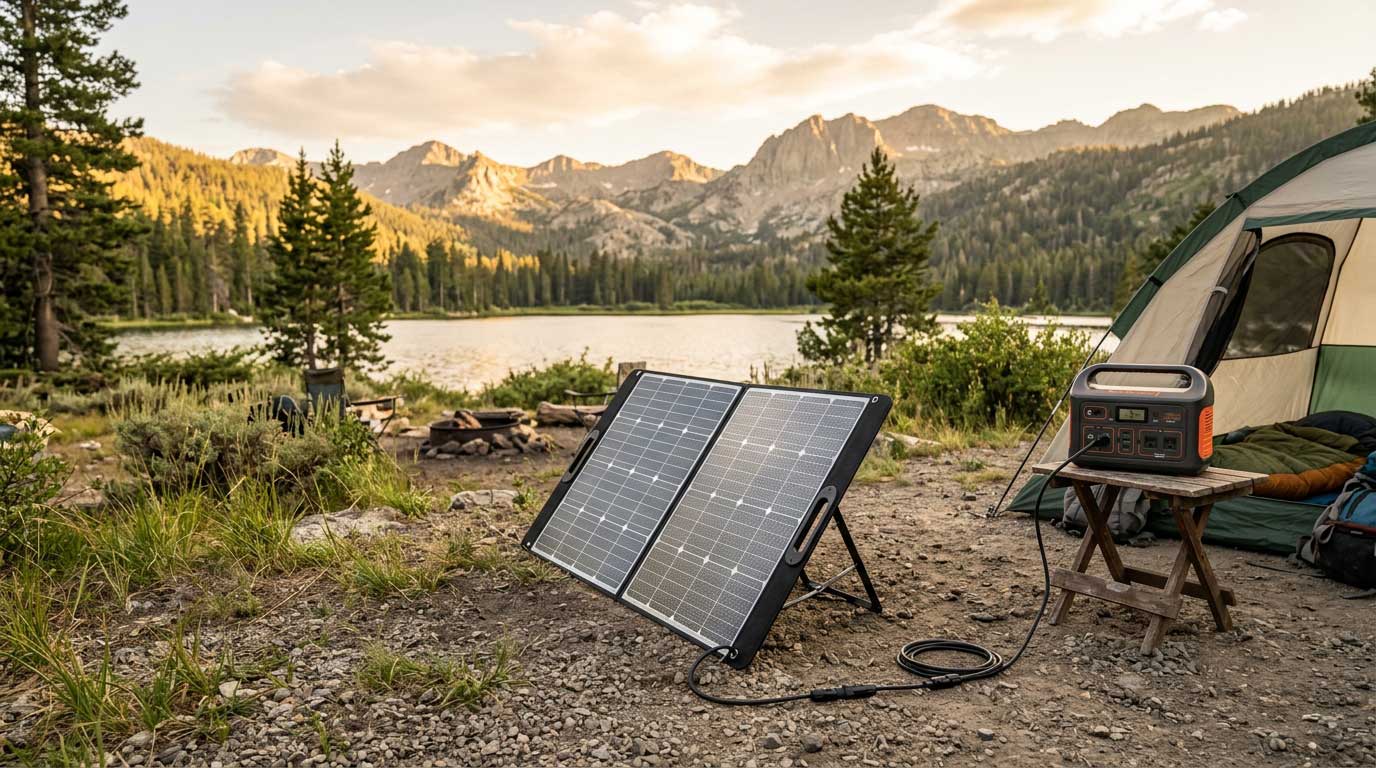
For car camping, a 100W panel can supplement a portable power station used for phones, camera batteries, lights, and other compatible electronics. Whether it can keep up with demand depends on the energy used each day and the amount of sunlight available.
For example, a camping setup that consumes 250Wh daily may be able to replenish much of that energy under favorable conditions if the panel collects approximately 300Wh. This is an illustrative comparison, not a guarantee: charging losses, changing weather, and the power station’s own requirements may leave less usable energy.
RV Trips and Weekend Travel
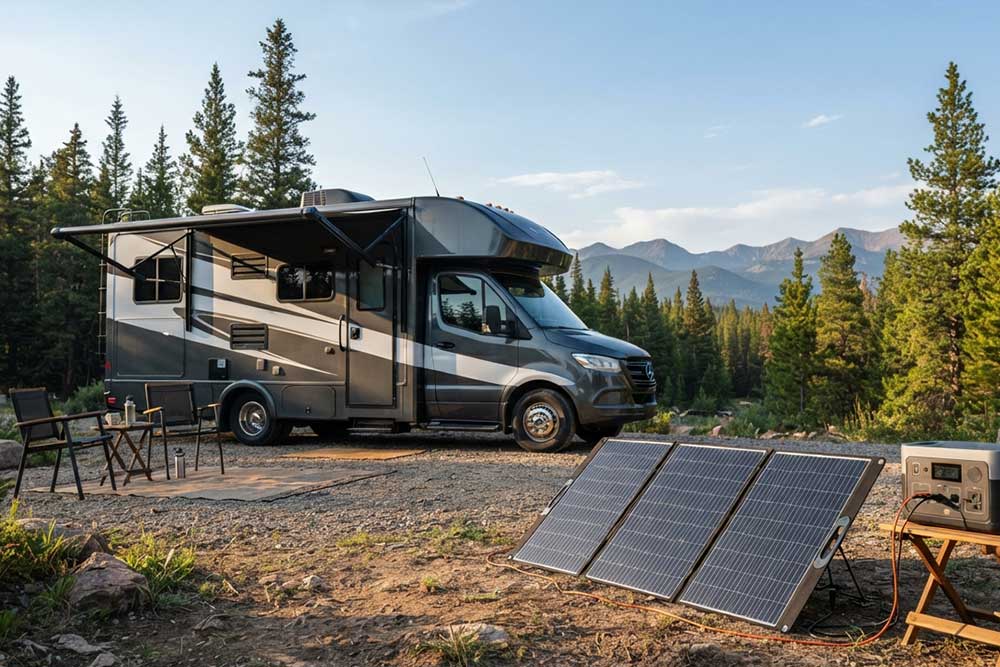
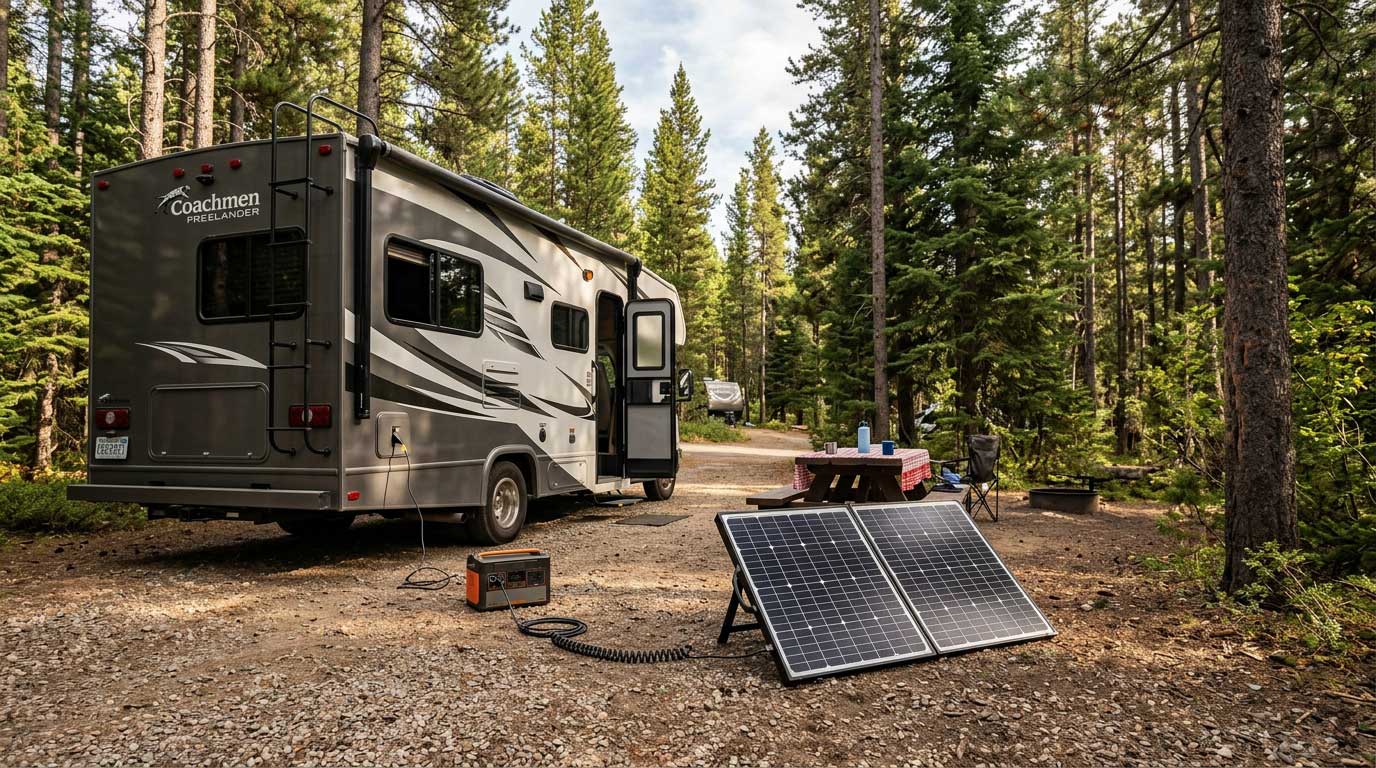
A briefcase panel can provide additional charging without permanent roof installation. This is useful for occasional travelers, rented RVs, or owners who want to move the panel into direct sunlight rather than leave a vehicle in an exposed parking location.
Before purchasing, check whether the panel’s connector and voltage range match the RV’s portable power station or battery controller. A nominal 100W rating alone does not establish compatibility.
Cameras, Phones, and Small Electronics
A compatible power station or battery bank can supply regulated charging to small electronics. This arrangement is often more dependable than connecting devices directly to a panel whose output fluctuates with passing clouds.
A briefcase panel is generally not a direct solution for high-power appliances such as electric heaters, kettles, or air conditioners. Those loads require much more energy and may need a larger solar array, adequate battery storage, and an appropriately rated inverter.
How to Choose the Right 100 Watt Briefcase Solar Panel
The best model is not necessarily the one with the most accessories. Focus on the features that affect compatibility, transport, and real-world use.
| Buying factor | What to check | Why it matters |
|---|---|---|
| Rated power | 100W nominal output | Provides a basis for energy estimates |
| Open-circuit voltage | Voc on the datasheet | Must remain within the receiving equipment’s limit |
| Operating voltage | Vmp and supported input range | Helps establish charging compatibility |
| Output connections | DC, USB, or specified connectors | Determines how the panel connects |
| Packed dimensions | Closed-case measurements | Must fit your vehicle or storage space |
| Complete weight | Panel plus case and accessories | Affects portability |
| Support legs | Adjustment and stability | Helps position the panel toward sunlight |
| Weather protection | Documented rating and instructions | Defines outdoor-use limitations |
| Warranty | Coverage and exclusions | Clarifies support for defects |
Check Voltage Before Connecting a Power Station
A portable power station usually specifies a maximum solar input voltage and a supported operating range. Compare these figures with the panel’s Voc and Vmp.
Do not connect a panel solely because its wattage matches the station’s advertised input capacity. The open-circuit voltage can exceed the station’s permitted maximum even when the panel’s rated power seems appropriate.
If the product requires a charge controller, use the specified controller and follow the connection sequence in the manual. Never bypass protection circuitry or improvise a connection with unknown polarity.
Consider Weight and Storage Space
Briefcase construction makes folding and carrying easier, but the frame and case can add considerable bulk compared with a bare solar module.
Measure the available storage space before ordering. For RV owners, the panel should fit without obstructing other equipment. For camping, consider the distance between the parking area and the place where the panel will be deployed.
Inspect Build Quality and Weather Protection
Check the hinges, handle, support legs, cable strain relief, and connector covers. These components are exposed to repeated handling and may wear faster than the solar cells themselves.
An IP rating applies to the product or component tested; it should not be assumed to cover every accessory. Follow the manufacturer’s guidance on rain, moisture, storage, and operating temperatures.
How to Set Up a 100W Briefcase Solar Panel
Step 1 — Choose a Clear Location
Open the panel on stable ground with as little shading as possible. Avoid locations where people might step on it or where wind could overturn it.
Step 2 — Aim the Panels Toward the Sun
Adjust the support legs so the active surface faces the sun as directly as practical. The best orientation changes with location, season, and time of day.
Step 3 — Verify the Electrical Connection
Confirm the connector, polarity, voltage, and permitted input power before connecting the panel. If the power station requires a specific adapter or controller, use the approved equipment.
Step 4 — Monitor Charging Output
If the power station displays solar input, observe the reading after setup. If output is unexpectedly low, check for shade, loose connections, poor orientation, and changing weather before concluding that the panel is faulty.
Step 5 — Disconnect and Store Safely
Follow the manufacturer’s shutdown procedure. Keep cables clear of the hinges, close the case without forcing it, and store the panel where its surface and connections will not be damaged.
A Practical Example: Using a 100W Briefcase Solar Panel on a Weekend Trip
Imagine an RV traveler using a 100W briefcase panel with a compatible portable power station for two days of camping. The main loads are phones, LED lighting, and camera batteries.
Assume four equivalent peak sun hours per day and an illustrative 0.75 system derating factor.
| Planning item | Example value |
|---|---|
| Panel rated power | 100W |
| Equivalent peak sun hours | 4 hours/day |
| Assumed derating factor | 0.75 |
| Estimated daily energy | 300Wh |
| Estimated energy over two similar days | 600Wh |
These are calculated estimates, not measurements from an actual customer installation. Cloud cover, shading, battery charging losses, and equipment consumption can change the outcome.
On the first morning, the traveler places the briefcase panel in an open area beside the RV. By afternoon, a shadow from nearby trees crosses part of the panel. Moving it into a clearer position may improve production, provided the new location is safe and stable.
This illustrates a useful planning principle: a portable solar panel‘s advantage is not just that it folds. Its mobility lets the user respond to changing site conditions. For a realistic assessment, record the power station’s accumulated watt-hours and compare them with the energy used during the trip.
Briefcase Solar Panels vs. Flexible Solar Panels
Both product types can support mobile solar applications, but they are designed for different installation methods.
| Feature | Briefcase solar panel | Flexible solar panel |
|---|---|---|
| Construction | Hinged sections in a folding frame or case | Thin module designed to bend within specified limits |
| Typical use | Temporary outdoor charging | Suitable integrated or surface-mounted applications |
| Portability | Folds into a carrying format | Depends on dimensions and product construction |
| Installation | Unfold and position for sunlight | Mount according to the model’s requirements |
| Main considerations | Packed weight, voltage, connectors | Bend limits, mounting, dimensions, electrical specifications |
Bright Solar supplies flexible solar panel solutions for B2B customers serving RV, camper, outdoor power, and selected marine applications. Its L Series has a stated maximum bending capacity of up to 30%. That specification should be interpreted according to the particular product’s design and installation instructions, not as permission to fold a flexible module like a hinged briefcase panel.
For distributors and OEM buyers, the decision should begin with the finished application. A ready-to-use portable charging kit and a flexible module integrated into an RV accessory require different product specifications, mounting methods, and electrical documentation.
FAQ About 100 Watt Briefcase Solar Panels
How much power does a 100 watt briefcase solar panel produce per day?
With four equivalent peak sun hours and an illustrative 0.75 system derating factor, a 100W panel would produce an estimated 300Wh per day. Actual output depends on sunlight, shading, temperature, positioning, and system losses.
Can a 100W briefcase solar panel charge a portable power station?
Yes, if the panel’s voltage, connector, and output specifications are compatible with the power station. Check the maximum solar input voltage and supported operating range before connecting it.
Is a 100W briefcase solar panel suitable for camping?
Yes. It can provide supplemental energy for compatible power stations, phones, lights, and other small electronics. Its usefulness depends on daily energy consumption, sunlight availability, and battery capacity.
Can a 100W briefcase solar panel power a refrigerator?
It may contribute energy to a compatible battery system that runs a refrigerator, but a single 100W panel may not replenish the energy consumed each day. Check the refrigerator’s daily energy use, battery capacity, and expected solar production before relying on this setup.
Does a briefcase solar panel work on cloudy days?
Yes. Photovoltaic panels can still generate electricity in cloudy weather, but output generally decreases as available sunlight falls. A battery reserve is useful when charging needs continue through poor weather or overnight.
Is a briefcase solar panel waterproof?
Not necessarily. Weather resistance varies by product and component. Check the manufacturer’s documented IP rating and operating instructions, including requirements for cables, connectors, and controllers.
What is the difference between a briefcase solar panel and a folding solar panel?
A briefcase solar panel is a type of folding solar panel, usually designed with hinged sections and a carrying case or frame. Other folding panels may use fabric hinges or different support structures. Compare the actual construction, weight, dimensions, and electrical specifications rather than relying on the product name alone.
Conclusion: Is a 100 Watt Briefcase Solar Panel Worth Buying?
A 100 watt briefcase solar panel is a practical option for campers, RV travelers, and outdoor users who need portable solar charging without permanent installation. It can supplement a compatible power station, but its actual energy production depends on sunlight, panel positioning, electrical compatibility, and system losses.
Before buying, check the panel’s voltage specifications, connector type, packed dimensions, total weight, and weather-protection limits. Estimate your daily energy demand and compare it with a realistic solar production estimate rather than assuming the panel will deliver 100W throughout the day.
For B2B projects, Bright Solar’s flexible solar panel solutions may also be relevant when the product requires an integrated solar module rather than a ready-to-use briefcase charger. The correct choice depends on the finished application and its technical requirements.
Technical References and Editorial Information
- U.S. Department of Energy — Solar Photovoltaic Technology Basics: Explains photovoltaic electricity generation and solar module fundamentals. Read the DOE guide.
- National Renewable Energy Laboratory — PVWatts Calculator: Estimates photovoltaic energy production using location and system parameters. Explore PVWatts.
Editorial note: Prepared for Bright Solar by its solar-content team. Technical explanations draw on published references, while the numerical examples are explicitly identified as calculations rather than measured field results. Confirm product-specific specifications against the manufacturer’s current datasheet.
Related recommendations
-

Flexible 200 Watt Solar Panel: Reliable Off-Grid Energy Without the Extra Weight
169Discover how a flexible 200 watt solar panel delivers lightweight, reliable off-grid energy for RVs, boats, campers, and mobile solar systems.
View details -
Foldable Portable Solar Panels: A Practical Guide to Mobile Power
89Foldable portable solar panels provide mobile electricity and can be repositioned toward better sunlight without permanent installation.
View details -
How Many Solar Panels Can Be Connected in Series?
306Learn how many solar panels can be connected in series with voltage calculations, Voc limits, inverter requirements, and wiring tips for safe solar system design.
View details -
Flexible Solar Panels Marine Solutions for Boats and Offshore Power
182Discover how flexible solar panels marine solutions provide lightweight, durable power for boats, yachts, and offshore vessels. Learn installation, efficiency, and marine benefits.
View details