How To Mount Solar Panels On RV Roof?
How To Mount Solar Panels On RV Roof?
Mounting solar panels on an RV roof requires proper planning, secure attachment methods, and waterproof installation. The process includes selecting the right mounting method, preparing the roof surface, fixing panels safely, and sealing all connection points to prevent leaks.
How To Mount Solar Panels On RV Roof Step by Step
The process of how to mount solar panels on RV roof starts before placing the first panel. A successful RV solar installation depends on roof inspection, panel positioning, mounting selection, and cable management.
During RV solar projects I have reviewed, the most common installation mistakes were not caused by the solar panels themselves. They usually came from poor roof preparation, incorrect adhesive selection, or ignoring future maintenance access.
An RV roof is different from a residential roof. It moves while driving, experiences vibration, temperature changes, and constant outdoor exposure. The mounting method must handle these conditions for years.
A professional RV solar installation usually follows these steps:
- Check the RV roof structure and available space
- Decide panel location and orientation
- Choose a suitable mounting method
- Prepare the roof surface
- Attach solar panels securely
- Seal mounting areas and cable entry points
- Connect panels to charge controller and battery system
At Bright Solar, we have worked with flexible solar panels designed specifically for mobile applications. Compared with traditional rigid modules, flexible panels can reduce weight and adapt better to curved RV surfaces.
Choosing the Right Solar Panel Mounting Method for RV Roof
Before installing solar panels, RV owners need to decide how the panels will be attached.
There are three common mounting methods:
| Mounting Method | Suitable For | Advantages |
|---|---|---|
| Adhesive mounting | Flexible solar panels | Lightweight, no drilling required |
| Bracket mounting | Rigid solar panels | Strong mechanical fixing |
| Combination mounting | Larger RV systems | Additional security |
Adhesive Mounting for Flexible RV Solar Panels
Adhesive mounting is popular among RV owners because it avoids drilling holes into the roof.
The advantages include:
- Lower risk of roof damage
- Reduced installation time
- Cleaner appearance
- Lower overall weight
Flexible solar panels are especially suitable for this method because they are lightweight and can follow slightly curved surfaces.
However, adhesive installation requires careful preparation.
The roof must be:
- Clean
- Dry
- Free from grease
- Free from loose coating materials
A common mistake I have seen is applying adhesive directly onto dusty RV roofs. The panel may appear secure at first, but long-term bonding strength can be affected.
Bracket Mounting for Rigid Solar Panels
Rigid solar panels are often installed with aluminum brackets.
This method provides:
- Strong mechanical support
- Better airflow underneath panels
- Easy removal if maintenance is needed
However, drilling creates potential waterproofing challenges.
Every drilled hole should be properly sealed using appropriate RV roof sealants.
According to the National Renewable Energy Laboratory (NREL), installation quality and system design significantly influence photovoltaic system performance and reliability.
Source:
https://www.nrel.gov/
For RV applications, the mounting method should balance strength, weight, and roof protection.
How To Prepare an RV Roof Before Installing Solar Panels
Roof preparation is the step that determines whether the installation lasts for years.
Before mounting panels:
1. Inspect the Roof Condition
Check for:
- Cracks
- Soft areas
- Existing leaks
- Damaged sealant
Installing solar panels over damaged roofing can make future repairs more difficult.
2. Measure Available Roof Space
RV roofs contain many obstacles:
- Air conditioners
- Roof vents
- Antennas
- Skylights
- Storage accessories
Before installation, measure the available area carefully.
A small amount of unused space may be necessary for maintenance access.
3. Plan Panel Layout
The best position is usually the area receiving the most sunlight with minimal shading.
Avoid placing panels near:
- Roof vents
- Large antennas
- Air conditioning units
Even partial shading can reduce the output of a solar panel system.
What Tools Are Needed to Mount Solar Panels on an RV?
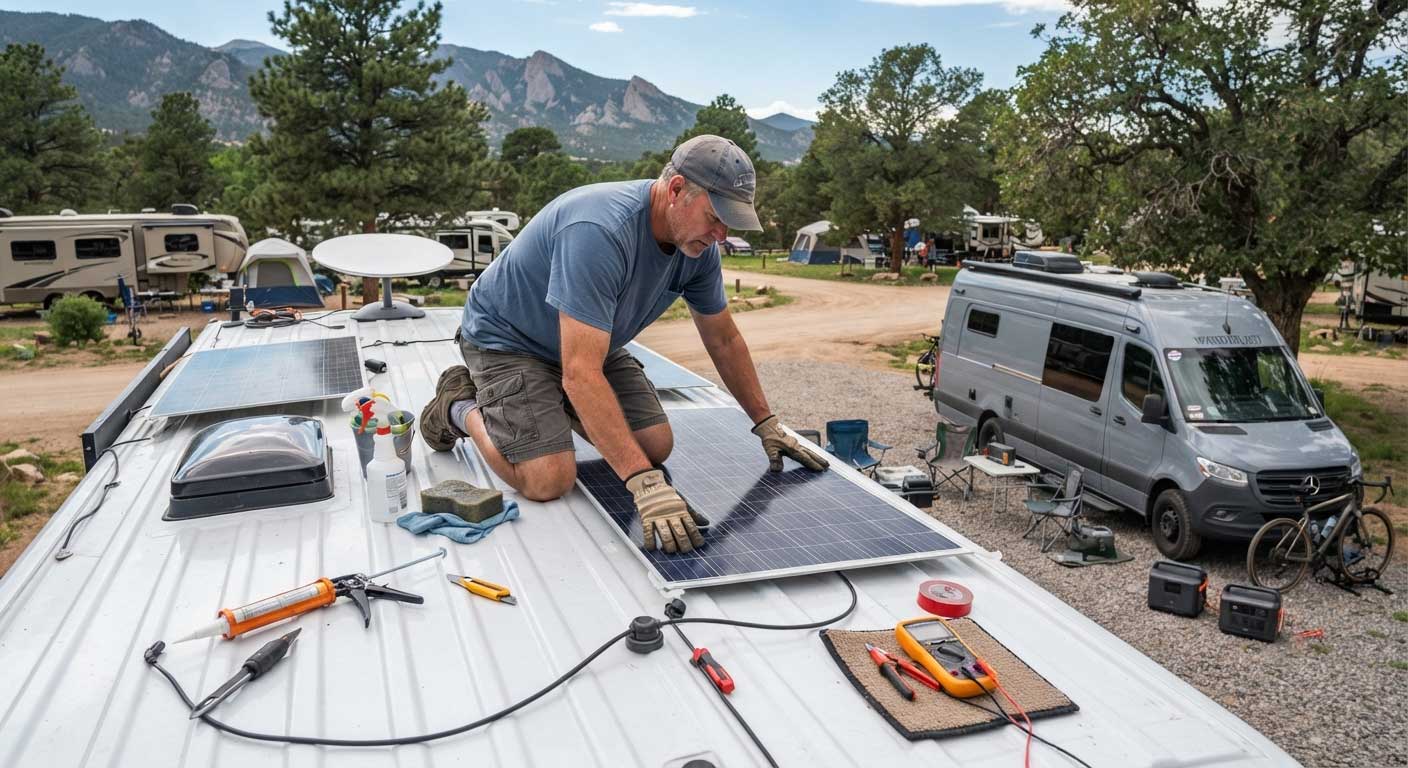
A basic RV solar installation requires several tools and materials:
| Tool / Material | Purpose |
|---|---|
| Measuring tape | Planning panel placement |
| Cleaning supplies | Preparing roof surface |
| Adhesive or mounting brackets | Securing panels |
| Roof sealant | Preventing water leaks |
| Cable glands | Protecting wiring entry points |
| Electrical connectors | Connecting solar components |
The exact tools depend on the panel type and mounting method.
Flexible solar panels usually require fewer mechanical components, while rigid panels need additional hardware.
Common Mistakes When Mounting Solar Panels on RV Roof
Many RV owners focus only on attaching panels but overlook system durability.
Common problems include:
Poor Surface Preparation
Dust or moisture can reduce adhesive performance.
Blocking Maintenance Areas
Covering roof vents or equipment makes future servicing difficult.
Weak Cable Protection
Unprotected cables can suffer from:
- UV exposure
- Wind movement
- Water intrusion
Incorrect Panel Position
A poorly positioned panel may produce much less electricity during travel or camping.
How To Secure and Waterproof Solar Panels on an RV Roof
After attaching the solar panels, waterproofing becomes one of the most important steps in an RV solar installation.
An RV roof experiences constant movement while driving. Unlike a stationary home rooftop, the installation must handle vibration, wind pressure, rain, and temperature changes.
A secure installation should include:
- Proper sealing around mounting points
- Protected cable entry locations
- Flexible sealant that can handle movement
- Regular inspection after installation
For drilled mounting systems, every penetration point must be sealed carefully. Even a small gap around a screw or cable opening can allow water to enter the roof structure over time.
For adhesive-mounted flexible solar panels, the edges should also be checked carefully. Strong bonding is important, but the panel surface should still allow normal thermal expansion and contraction.
From my experience reviewing RV solar installations, water leaks are usually discovered months after installation, not immediately. The installation may look perfect on day one, but poor sealing choices can create hidden problems during long-distance travel.
How To Install Solar Panel Wiring on an RV Roof
The wiring system is another important part of how to mount solar panels on RV roof.
After the panels are secured, cables need to be routed safely into the RV interior.
A typical connection path is:
Solar Panel → Charge Controller → Battery Bank → Inverter → RV Appliances
When installing cables:
Protect Wires From Weather Exposure
Outdoor cables should be protected from:
- Direct sunlight
- Rainwater
- Wind movement
- Sharp roof edges
Cable clips, conduits, or protective covers can help prevent damage.
Use Proper Cable Entry Points
Most RV solar systems require cables to enter through the roof.
The cable entry point should include:
- Waterproof cable gland
- UV-resistant sealant
- Secure cable positioning
A loose cable gland is one of the most common causes of RV roof leaks.
Keep Cable Length Efficient
Long cable runs can create electrical losses.
A good design keeps the distance between solar panels and charge controllers reasonably short while maintaining safe installation practices.
The wire size should also match:
- Solar panel output current
- System voltage
- Cable distance
Flexible Solar Panels vs Rigid Solar Panels for RV Roofs
RV owners often compare flexible and rigid solar panels before installation.
| Feature | Flexible Solar Panels | Rigid Solar Panels |
|---|---|---|
| Weight | Very lightweight | Heavier |
| Installation | Easier mounting | Requires brackets |
| Roof impact | Lower stress | Higher structural demand |
| Airflow | Minimal gap | Better ventilation |
| Curved surfaces | Excellent | Limited |
Flexible solar panels are often selected for camper vans, boats, and RVs where weight and roof shape are important considerations.
Rigid panels remain popular for larger RVs because they provide strong mechanical protection and often have excellent long-term durability.
The right choice depends on:
- RV size
- Available roof space
- Travel conditions
- Energy requirements
How Many Solar Panels Should You Mount on an RV?
The number of solar panels depends on your electricity usage.
Typical RV solar setups include:
| RV Usage | Recommended Solar Capacity |
|---|---|
| Basic lighting and charging | 100W–300W |
| Refrigerator and electronics | 400W–600W |
| Full-time RV living | 800W–1200W+ |
For example:
A camper using LED lights, phones, laptops, and a small refrigerator may work well with a 400W solar system.
A full-time traveler running multiple appliances may need a larger system with battery storage.
The solar system should be designed around daily energy consumption rather than available roof space alone.
Maintaining Solar Panels After RV Roof Installation
A properly installed RV solar system requires minimal maintenance, but regular checks improve reliability.
Recommended maintenance includes:
Monthly Inspection
Check:
- Panel surface condition
- Cable connections
- Sealant condition
- Mounting points
Cleaning Solar Panels
Dust, leaves, and road dirt can reduce sunlight reaching the photovoltaic cells.
Cleaning frequency depends on:
- Travel environment
- Weather conditions
- Parking location
RVs traveling through dry desert areas may require more frequent cleaning than vehicles used in rainy climates.
Monitor Solar Performance
Modern solar controllers and monitoring systems allow RV owners to track:
- Daily energy production
- Battery status
- Charging performance
Unexpected drops in output can indicate shading, wiring problems, or equipment issues.
FAQ About How To Mount Solar Panels On RV Roof?
Can I install solar panels on an RV roof myself?
Yes. Many RV owners install solar panels themselves, especially flexible panels. However, waterproofing, electrical connections, and safety checks require careful attention.
Should I drill holes to mount solar panels on an RV roof?
Not always. Flexible solar panels can often be installed with strong adhesives, while rigid panels commonly use brackets. The best method depends on panel type and RV structure.
Can flexible solar panels stay attached while driving?
Yes, when installed correctly with suitable adhesive and proper surface preparation, flexible solar panels can handle normal RV travel conditions.
How long does RV solar panel installation take?
A simple installation may take several hours, while larger systems with batteries and complex wiring can require multiple days.
Do RV solar panels damage the roof?
Proper installation should not damage the roof. Problems usually occur because of poor sealing, incorrect mounting methods, or installation on already damaged roofing.
Are flexible solar panels better for RVs?
Flexible panels are often better for lightweight RV applications, curved roofs, and installations where drilling is not preferred. Rigid panels may be better for larger systems requiring maximum durability.
How to attach flexible solar panel to RV roof?
To attach a flexible solar panel to an RV roof, clean the roof thoroughly, position the panel with airflow clearance, secure it using industrial adhesive or VHB tape, seal cable entry points with waterproof sealant, and connect the panel to a charge controller before testing system output.Learn more about “How to attach flexible solar panel to RV roof“
How to Install Flexible Solar Panels on RV Roof?
Flexible solar panels are installed on RV roofs using industrial adhesive, proper surface preparation, safe cable routing, and airflow spacing. A well-installed flexible panel can power RV appliances for years without drilling large mounting brackets into the roof.Learn more about the How to Install Flexible Solar Panels on RV Roof?
Conclusion
Learning how to mount solar panels on RV roof is not only about attaching panels to a surface. A reliable RV solar system requires careful planning, correct mounting techniques, waterproof installation, and proper electrical design.
From my experience working with Bright Solar flexible solar solutions, the best RV installations are those designed around real travel conditions. Weight, vibration, roof structure, and energy consumption all matter.
A well-installed RV solar system can provide years of clean energy for camping, road trips, and off-grid living. Taking extra time during preparation and sealing can prevent expensive repairs later.
The goal is not simply installing solar panels. The goal is creating a dependable mobile power system that works wherever the road takes you.
The prev: How Is Solar Energy Made Into Electricity?The next: How to attach solar panels to rv roof?
Related recommendations
-

How do you convert solar energy into electricity?
116How do you convert solar energy into electricity? Learn how solar panels generate power, photovoltaic technology, inverters, and complete solar systems.
View details -
How To Mount Flexible Solar Panels To RV Roof?
134How to mount flexible solar panels to RV roof? Learn professional installation methods, adhesive selection, wiring tips, and RV solar solutions from Bright Solar.
View details -
how do portable solar panels work?
138How do portable solar panels work in real outdoor conditions? Learn how sunlight becomes usable electricity for camping, RVs, and backup power with Bright Solar.
View details -
how to use solar panels during power outage?
186how to use solar panels during power outage? Learn how solar batteries, backup systems, and solar generators keep your home powered when the grid goes down.
View details