
Parallel vs Series Solar Panels: Complete Guide to Solar Panel Connections
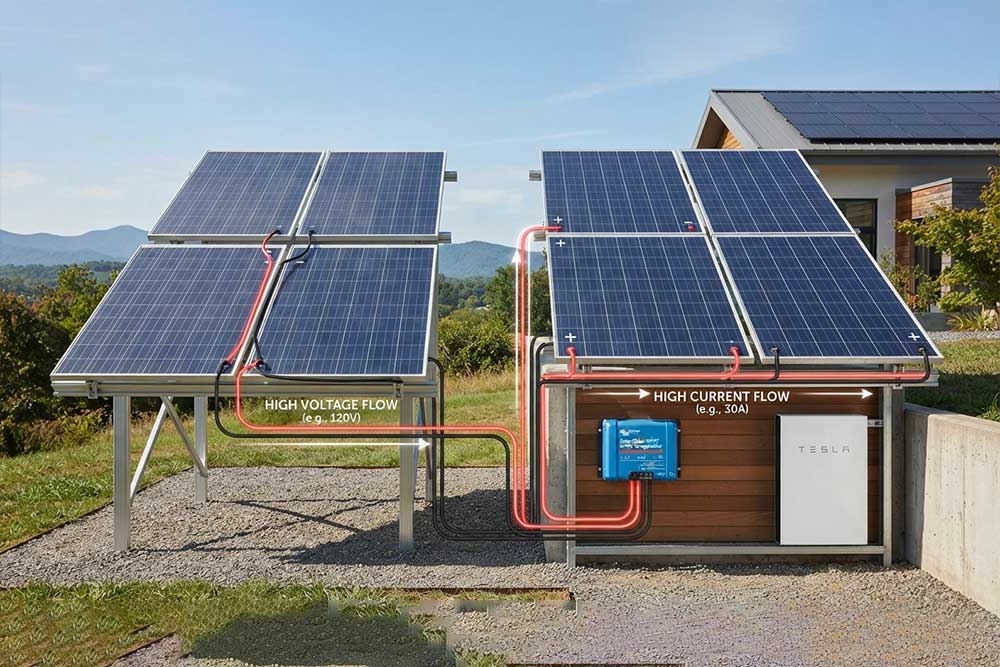
Solar panels can be connected in series or parallel depending on the required voltage, current, and system design. Series connections increase voltage, while parallel connections increase current. The best choice depends on your charge controller, battery system, installation environment, and energy requirements.
When designing a solar system, wiring configuration is just as important as choosing the right solar panels. A correct connection method improves system performance, reduces power losses, and ensures compatibility between solar panels, batteries, and controllers.
Many beginners assume that connecting more panels automatically creates more power. However, the way panels are wired determines how electricity flows through the system.
This guide explains the differences between parallel vs series solar panels, including voltage and current changes, advantages and disadvantages, RV applications, MPPT compatibility, and practical installation advice.
What Is the Difference Between Parallel vs Series Solar Panels?
The main difference between solar panels connected in series and parallel is how voltage and current behave.
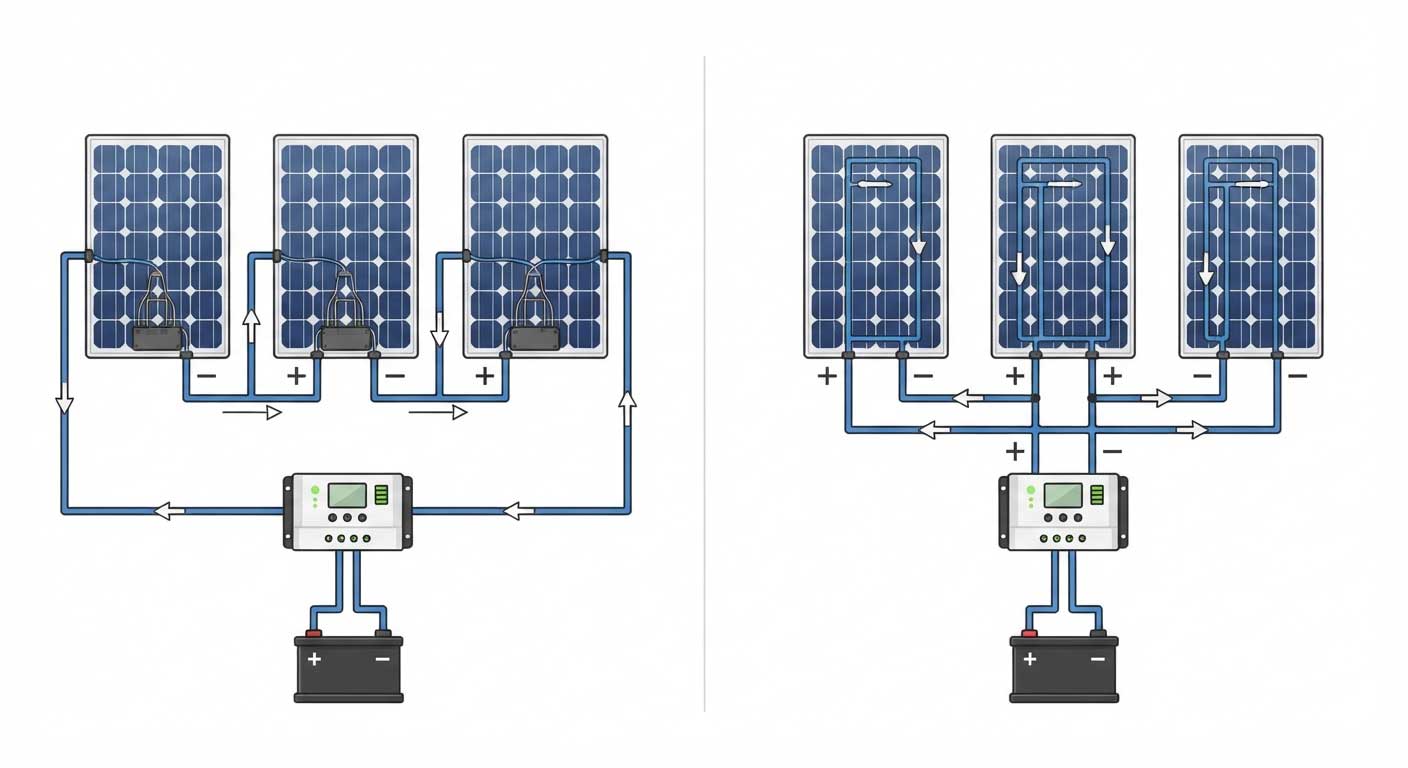
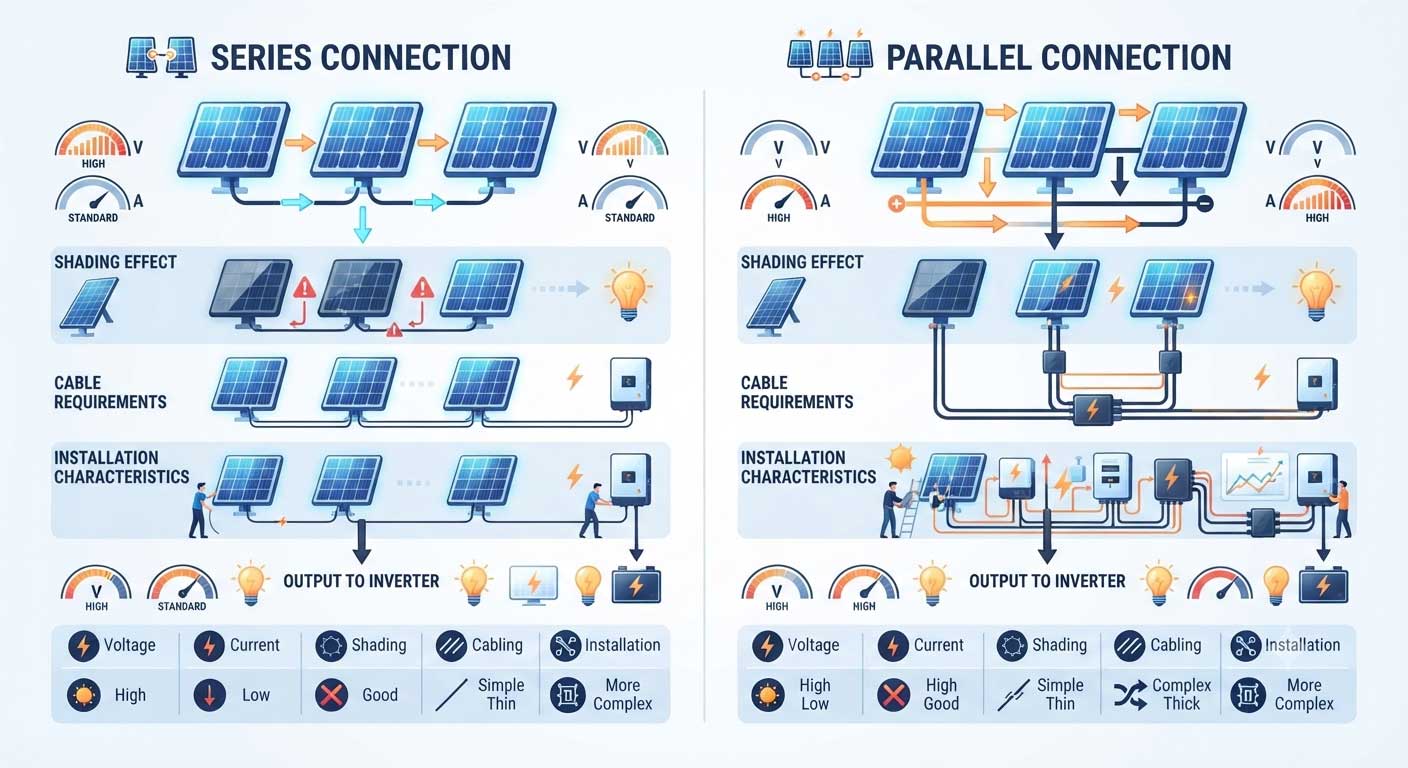
In a series connection, solar panels are linked together in a chain. The voltage of each panel adds together, while the current remains the same.
In a parallel connection, solar panels are connected through the same positive and negative terminals. The current increases, while the voltage remains unchanged.
Understanding this difference is essential because every solar system has specific voltage and current requirements.
For example:
A solar panel rated at:
- 400W
- 40V
- 10A
Two panels connected in series:
Voltage: 40V + 40V = 80V
Current: remains 10A
Two panels connected in parallel:
Voltage: remains 40V
Current: 10A + 10A = 20A
Both methods produce the same total wattage:
400W × 2 = 800W
However, the electrical characteristics are different.
Solar Panels in Series Explained
When solar panels are connected in series, the positive terminal of one panel connects to the negative terminal of the next panel.
The electricity flows through each panel in a single path.
The calculation is:
Total System Voltage = Panel Voltage × Number of Panels
Example:
Three solar panels:
- Voltage per panel: 40V
- Current per panel: 10A
Series connection:
Voltage:
40V × 3 = 120V
Current:
10A
Total power:
120V × 10A = 1200W
The system voltage increases while current stays unchanged.
Solar Panels in Parallel Explained
When solar panels are connected in parallel, all positive terminals are connected together, and all negative terminals are connected together.
The calculation is:
Total System Current = Panel Current × Number of Panels
Example:
Three solar panels:
- Voltage per panel: 40V
- Current per panel: 10A
Parallel connection:
Voltage:
40V
Current:
10A × 3 = 30A
Total power:
40V × 30A = 1200W
The system voltage stays the same while available current increases.
How Do Solar Panels Connected in Series Work?
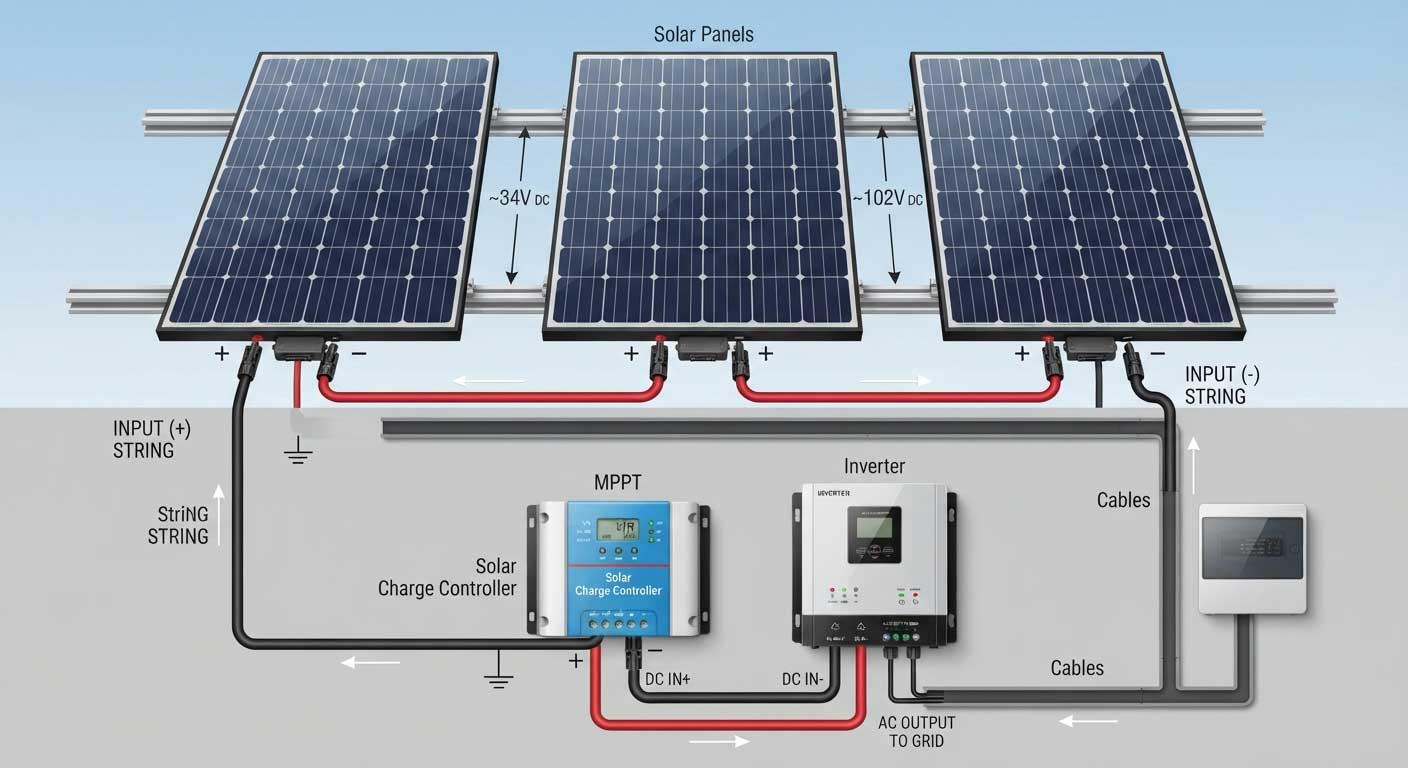
Solar panels connected in series work similarly to batteries connected in a chain. Each panel adds its voltage to the total system voltage.
This approach is widely used in residential solar installations because higher voltage systems can transmit energy more efficiently over longer distances.
For example, a rooftop solar system may connect several high-wattage panels in series before sending power to an inverter.
Advantages of Series Solar Panel Connections
1. Higher Voltage Output
The biggest advantage of series wiring is increased voltage.
Higher voltage allows the system to:
- Reduce current flow
- Minimize cable losses
- Improve transmission efficiency
This is especially useful when solar panels are installed far away from the inverter or charge controller.
2. Smaller Cable Requirements
Because current remains lower, series systems can often use smaller cables compared with equivalent parallel systems.
Lower current means reduced voltage drop across wires.
For larger solar installations, this can reduce installation complexity and material costs.
3. Better Compatibility With MPPT Controllers
Most modern solar systems use MPPT (Maximum Power Point Tracking) charge controllers.
MPPT controllers perform efficiently when solar input voltage is higher than battery voltage.
For example:
A 12V battery system can benefit from solar panels connected in series because the controller has more voltage range to optimize power production.
Disadvantages of Series Solar Panels
Although series connections have many advantages, they also have some limitations.
1. Shading Can Reduce Output
The biggest disadvantage of series wiring is that all panels share the same current path.
If one panel receives less sunlight because of:
- Tree shadows
- Roof obstacles
- Dirt buildup
the performance of the entire series string can decrease.
2. Requires Voltage Planning
The total voltage of a series system must stay within the limits of:
- Charge controller
- Inverter
- Battery system
Connecting too many panels in series may exceed equipment voltage ratings and damage components.
How Do Solar Panels Connected in Parallel Work?
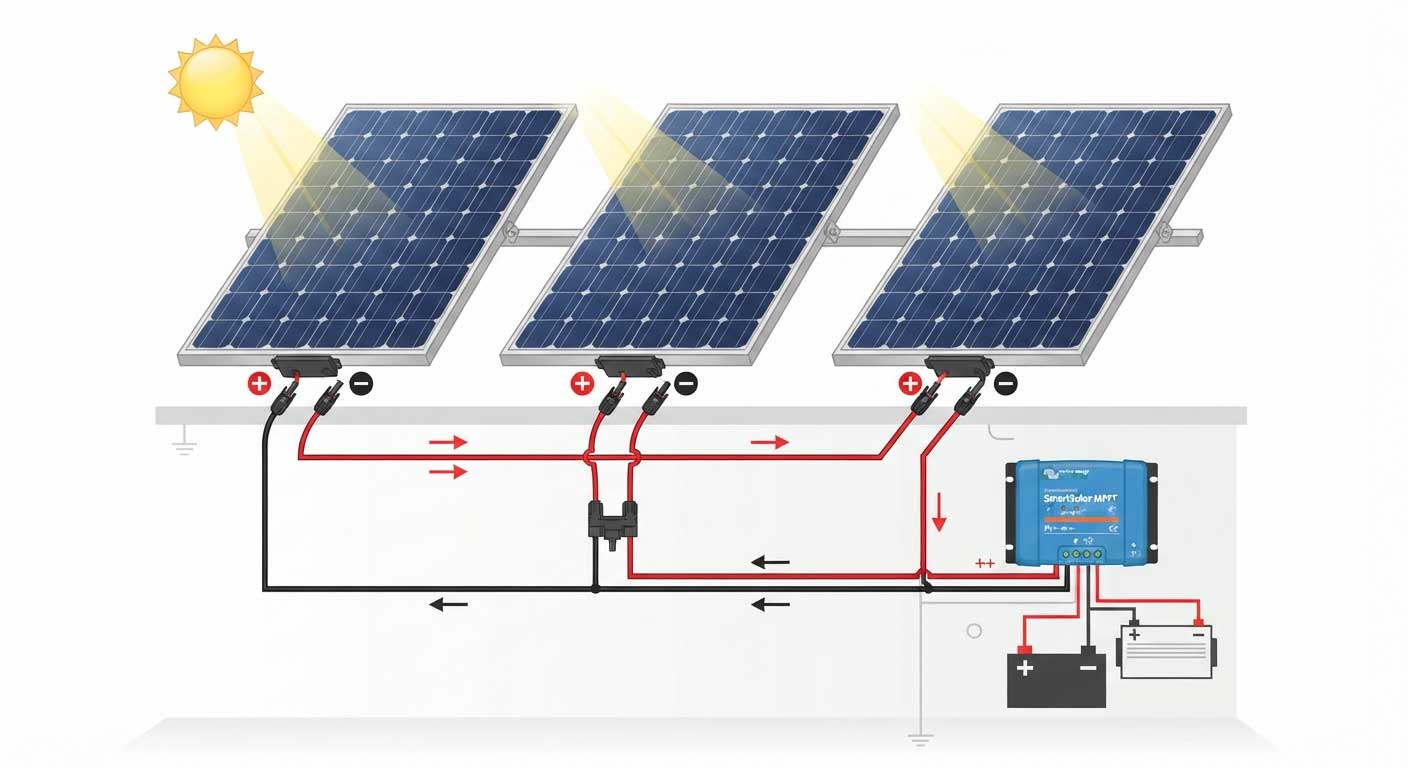
Parallel solar panel connections combine multiple panels to increase current while maintaining the same voltage.
This configuration is common in smaller solar systems, including:
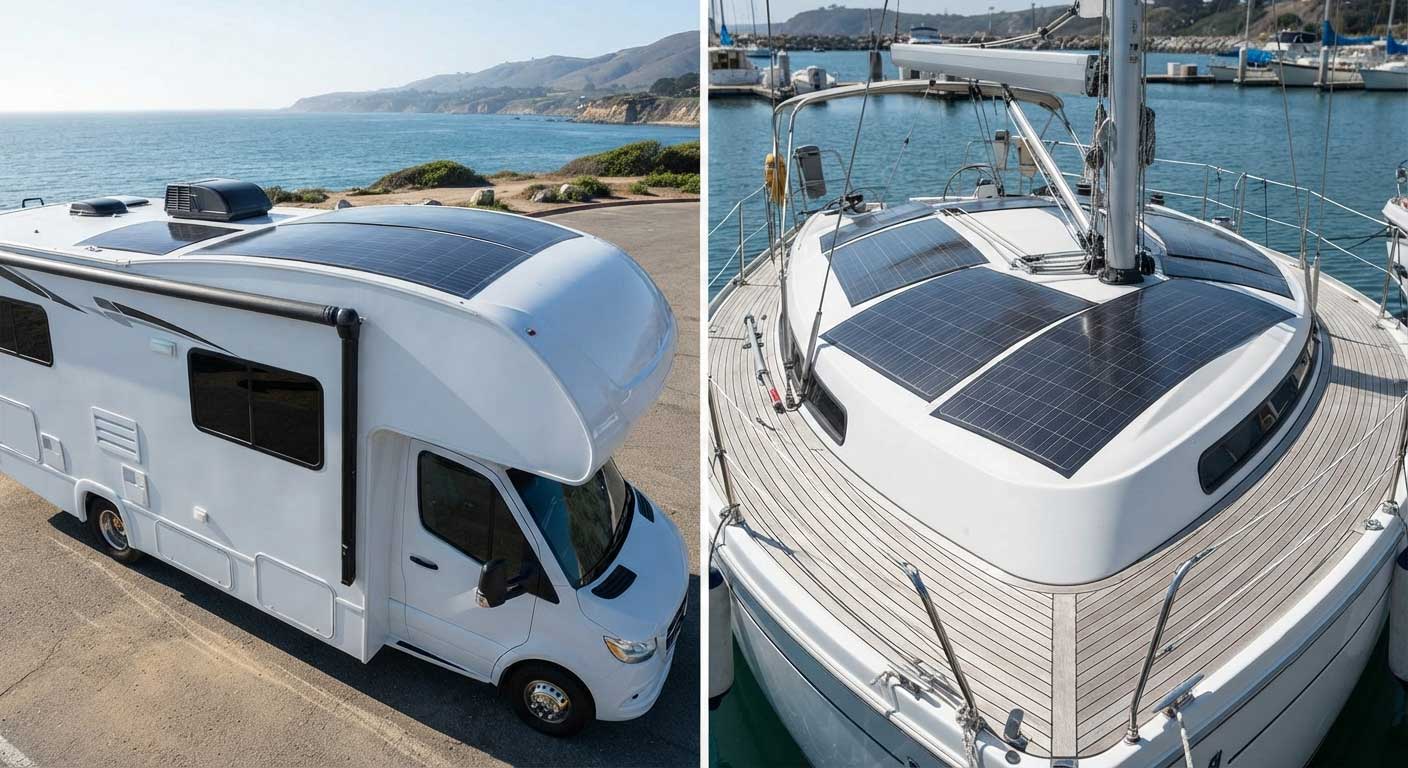
- RV solar setups
- Marine applications
- Portable solar systems
- Off-grid cabins
Because each panel works more independently, parallel systems can continue producing power even when one panel receives less sunlight.
Advantages of Parallel Solar Panel Connections
1. Better Performance Under Partial Shading
One major advantage of parallel wiring is improved shade tolerance.
If one panel is partially shaded, the other panels can continue operating at normal output.
This makes parallel connections attractive for mobile applications where shading conditions change frequently.
2. Easy System Expansion
Parallel systems are easier to expand.
For example, an RV owner may start with two solar panels and add another panel later without significantly changing system voltage.
3. Suitable for Low Voltage Systems
Many small solar systems use:
- 12V batteries
- 24V batteries
Parallel wiring allows additional solar capacity without increasing voltage beyond system requirements.
Disadvantages of Parallel Solar Panels
1. Higher Current Requirements
Because parallel systems increase current, they require:
- Larger cables
- Proper fuses
- Correct combiner equipment
Higher current systems need more attention to wiring design.
2. More Complex Cable Management
Multiple positive and negative connections can create more wiring compared with simple series configurations.
Professional installation planning helps keep the system safe and organized.
Series vs Parallel Solar Panels Comparison Table
| Feature | Series Connection | Parallel Connection |
|---|---|---|
| Voltage | Increases | Stays the same |
| Current | Stays the same | Increases |
| Wiring method | Panel-to-panel connection | Positive-to-positive, negative-to-negative |
| Cable size | Usually smaller | Usually larger |
| Shade performance | Lower | Better |
| Long-distance installation | Better | Less suitable |
| RV applications | Depends on design | Very common |
| MPPT controller compatibility | Excellent | Good |
The correct choice is not about which method is universally better.
A properly designed solar system considers:
- Panel specifications
- Battery voltage
- Controller type
- Installation location
- Shading conditions
Which Is Better: Series or Parallel Solar Panels?
There is no single answer to whether series or parallel solar panels are better. The ideal connection method depends on the solar system design, installation environment, and equipment specifications.
Series connections are usually preferred when a system needs higher voltage, longer cable distances, or better compatibility with MPPT charge controllers.
Parallel connections are often better when the system requires stable voltage, easier expansion, or improved performance under partial shading.
The best choice is determined by the actual application.
Choose Series Solar Panels When:
1. You Need Higher System Voltage
Series wiring increases voltage, which helps solar systems operate more efficiently with many modern inverters and MPPT controllers.
This is commonly used in:
- Residential rooftop solar
- Commercial solar installations
- Large off-grid systems
2. Solar Panels Are Far From the Controller
When solar panels are installed far away from batteries or controllers, higher voltage helps reduce energy loss during transmission.
For example:
A 100-foot cable run benefits from higher voltage because lower current creates less resistance loss.
3. You Use an MPPT Charge Controller
MPPT controllers can convert higher solar input voltage into usable battery charging power.
A series-connected solar array often allows the MPPT controller to operate within its most efficient range.
Choose Parallel Solar Panels When:
1. Your Installation Has Partial Shading
Parallel connections can perform better when some panels receive different amounts of sunlight.
This is useful for:
- RVs parked near trees
- Boats
- Mobile solar systems
- Locations with changing sunlight
2. You Use Low Voltage Battery Systems
Many small solar applications use:
- 12V batteries
- 24V batteries
Parallel wiring allows users to add more solar capacity without creating excessive voltage.
3. You Need Simple Expansion
Parallel systems make it easier to add additional panels later.
For example:
An RV owner may install two solar panels initially and add another panel when more power is needed.
Series vs Parallel Solar Panels for RV Systems
RV solar systems are one of the most common applications where people compare parallel vs series solar panels.
Unlike fixed residential systems, RV installations have unique challenges:
- Limited roof space
- Weight restrictions
- Changing sunlight conditions
- Battery capacity limitations
The best wiring method depends on the RV design and electrical system.
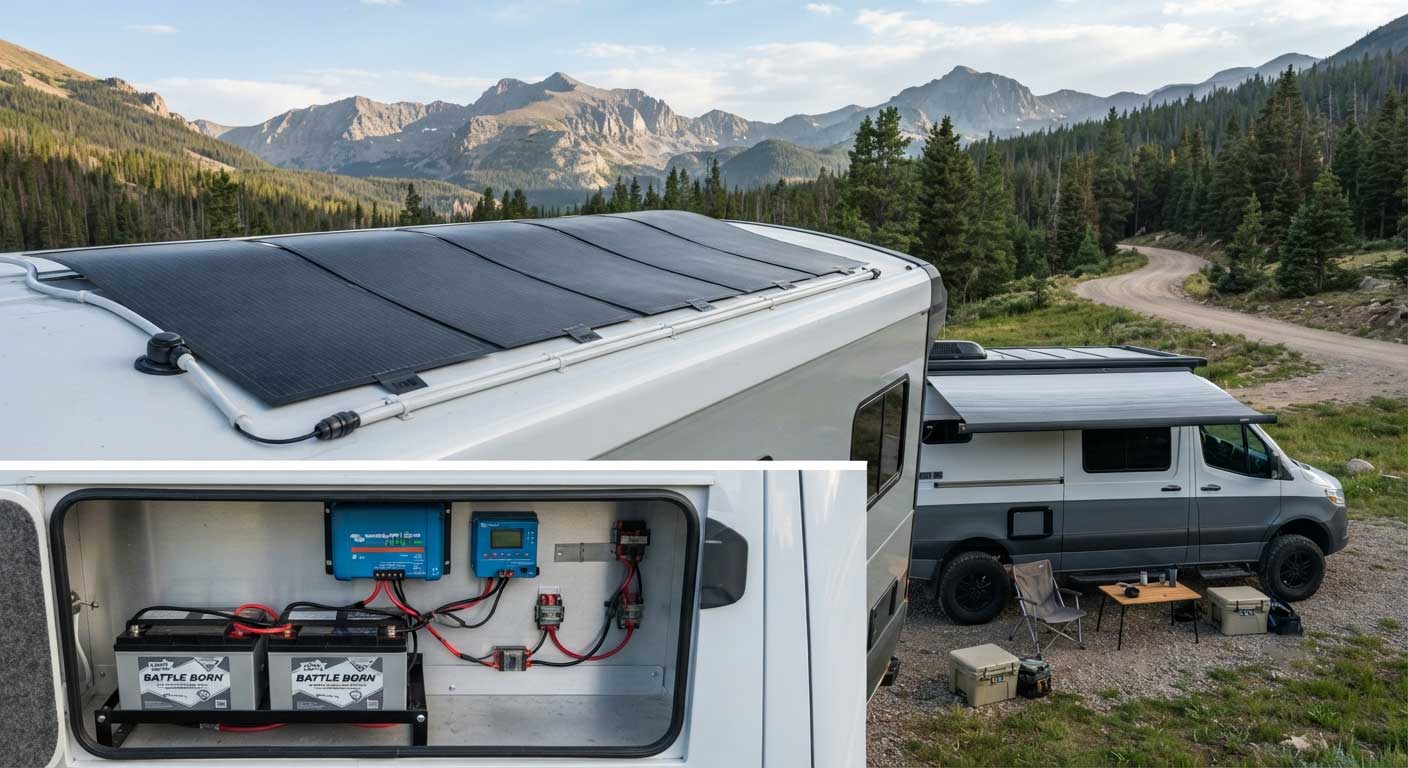
Series Solar Panels for RVs
Series connections can be useful for RV owners who need:
- Higher charging voltage
- Lower cable losses
- Longer cable distances
For example, multiple panels connected in series can provide enough voltage for an MPPT controller to efficiently charge a battery bank.
However, RV users should consider shading conditions.
A single shaded panel may reduce the performance of the entire series string.
Parallel Solar Panels for RVs
Parallel connections are popular in RV applications because they offer better flexibility.
Advantages include:
- Better shade tolerance
- Easy panel expansion
- Stable voltage output
For example, when an RV parks under trees, one panel may receive less sunlight while other panels continue producing energy.
Flexible Solar Panels for RV Applications
RV owners often choose flexible solar panels because traditional rigid panels may add unnecessary weight and require more installation space.
Flexible solar panels provide advantages such as:
- Lightweight construction
- Low-profile installation
- Better compatibility with curved roofs
- Easier mounting
Bright Solar develops flexible solar panel solutions designed for mobile applications, including:
- RVs
- Camper vans
- Marine equipment
- Off-grid systems
For RV owners, the ideal connection method depends on:
- Solar panel voltage
- Battery voltage
- Charge controller rating
- Daily energy requirements
Should Solar Panels Be Connected in Series or Parallel With an MPPT Controller?
An MPPT charge controller can work with both series and parallel solar panel configurations, but series connections are often preferred because they provide higher input voltage.
MPPT controllers improve solar charging efficiency by continuously adjusting the operating point of the solar array.
For example:
A 12V battery system may receive better charging performance from a higher-voltage solar array connected in series.
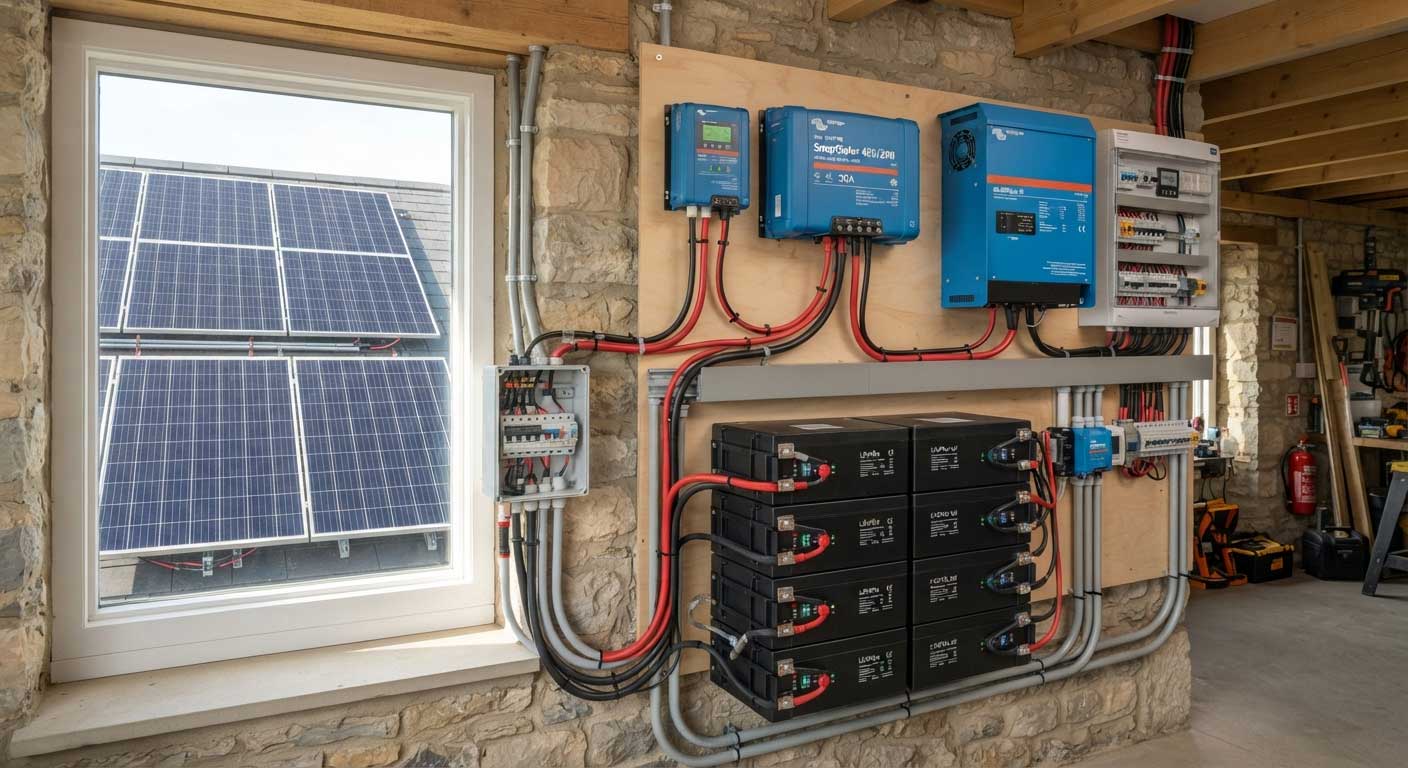
Series Connection With MPPT Controller
Advantages:
- Higher solar input voltage
- Lower current loss
- Better performance with long cables
Common applications:
- Residential solar
- Large RV systems
- Off-grid cabins
Parallel Connection With MPPT Controller
Advantages:
- Lower operating voltage
- Better shade tolerance
- Easier expansion
Common applications:
- Small RV systems
- Portable solar setups
Check MPPT Controller Limits Before Installation
Before connecting solar panels, always check:
Maximum PV input voltage
The controller must handle the total voltage from panels connected in series.
Maximum charging current
Parallel systems increase current, so the controller must support the higher output.
Incorrect system design can lead to:
- Reduced efficiency
- Controller overload
- Safety issues
Can You Mix Series and Parallel Solar Panels?
Yes. Many solar systems use a combination of series and parallel connections, known as a series-parallel solar configuration.
This method combines the advantages of both approaches:
- Higher voltage from series connection
- Higher current from parallel connection
Example of Series-Parallel Wiring
Imagine four solar panels:
Step 1:
Connect two panels in series.
Voltage:
40V + 40V = 80V
Current:
10A
Step 2:
Connect another two panels in series.
Step 3:
Connect both series strings in parallel.
Final output:
Voltage:
80V
Current:
20A
Power:
80V × 20A = 1600W
This configuration is commonly used in larger solar systems where both voltage and current need to be optimized.
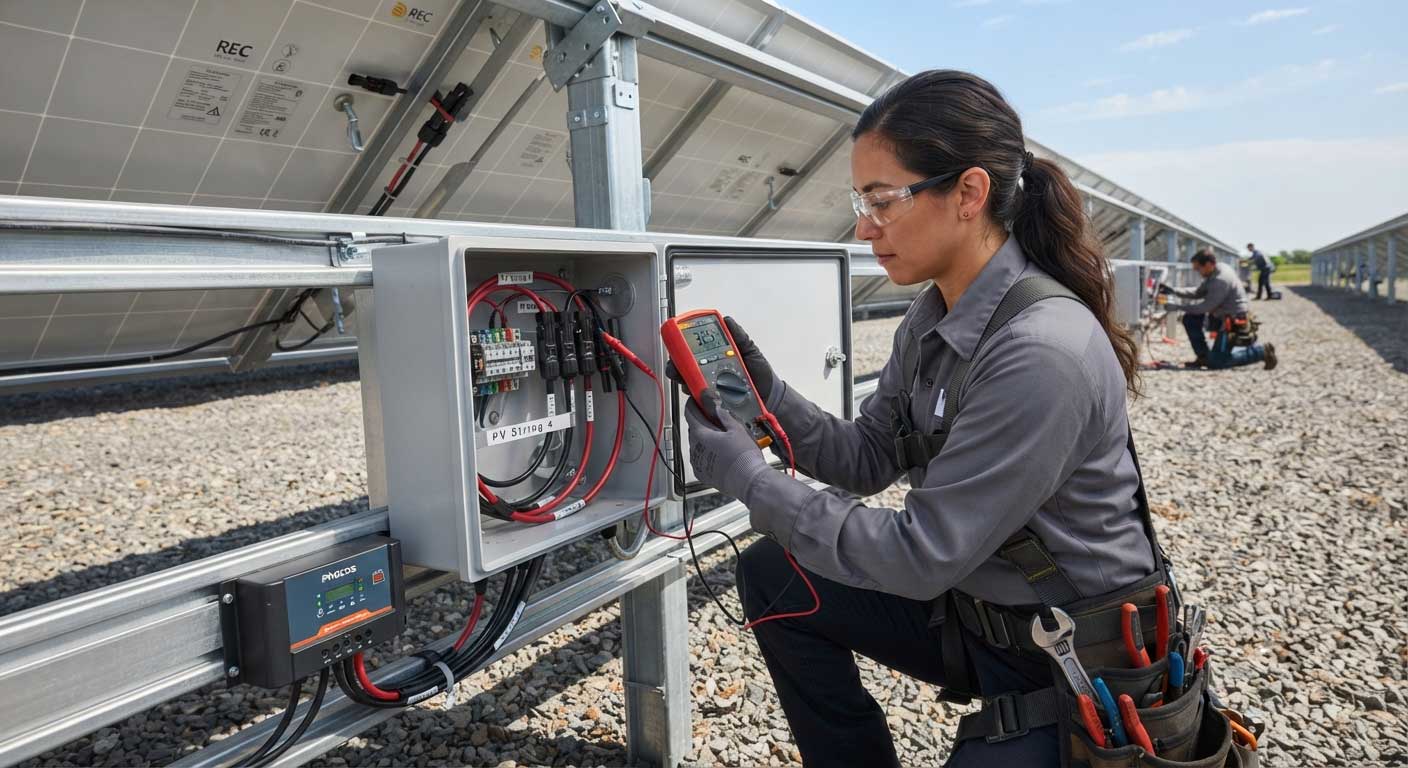
Common Mistakes When Connecting Solar Panels in Series or Parallel
Incorrect wiring can reduce solar performance or damage equipment.
Here are the most common mistakes:
1. Mixing Different Solar Panel Specifications
Connecting panels with very different:
- Voltage ratings
- Current ratings
- Wattages
can reduce overall system performance.
For best results, use panels with similar electrical characteristics.
2. Exceeding Controller Voltage Limits
When panels are connected in series, voltage adds together.
Always calculate:
- Maximum open circuit voltage (Voc)
- Temperature effects
- Controller input limits
3. Ignoring Cable Size
Parallel systems produce higher current.
Using cables that are too small may cause:
- Voltage drop
- Heat generation
- Energy loss
4. Incorrect Polarity Connection
Always check:
- Positive terminal
- Negative terminal
before connecting solar panels.
Reverse polarity can damage:
- Charge controllers
- Batteries
- Solar equipment
FAQ About Parallel vs Series Solar Panels
Are solar panels better in series or parallel?
Neither connection method is always better. Series connections are better for higher voltage and longer cable distances, while parallel connections are better for shade tolerance and low-voltage applications.
Do solar panels produce more power in series or parallel?
Both series and parallel connections can produce the same total wattage. The difference is how the voltage and current are combined.
Can I connect solar panels in series and parallel together?
Yes. Many larger solar systems use series-parallel configurations to achieve the required voltage and current levels.
Are parallel solar panels better for RVs?
Parallel solar panels can be a good choice for RVs because they handle partial shading better. However, many RV systems use series connections with MPPT controllers for improved efficiency.
How many solar panels can I connect in series?
The number of panels depends on the maximum voltage rating of your inverter or charge controller. Always calculate the total voltage before installation.
Do solar panels charge faster in series or parallel?
Charging speed depends on total solar power, battery capacity, controller efficiency, and sunlight conditions. Neither connection method automatically charges faster.
Final Conclusion: Parallel vs Series Solar Panels, Which Should You Choose?
Choosing between parallel vs series solar panels depends on your specific energy system rather than a simple “better or worse” comparison.
Series connections are ideal when you need:
- Higher voltage
- Lower current losses
- Better MPPT performance
- Longer cable distances
Parallel connections are suitable when you need:
- Better shade tolerance
- Easier expansion
- Stable voltage output
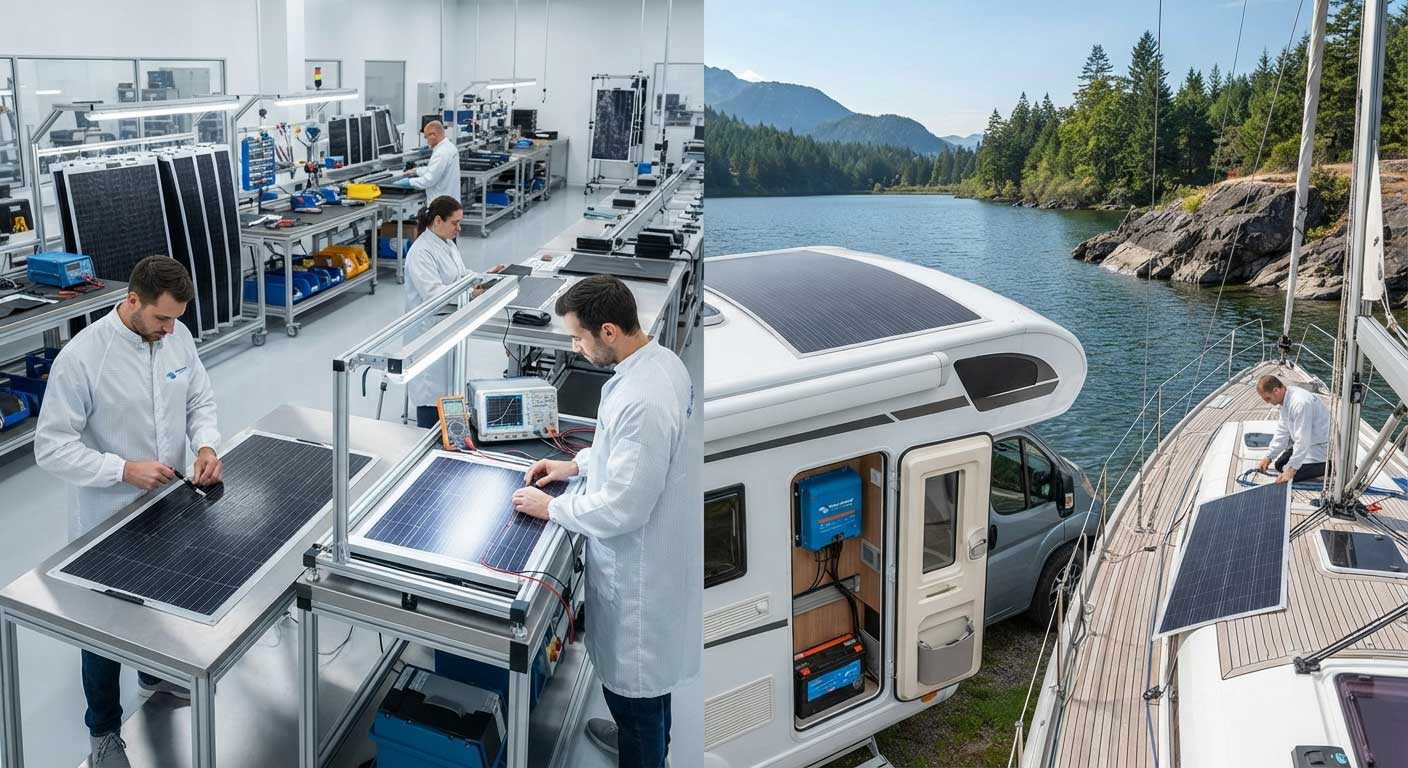
For RVs, marine applications, and off-grid projects, the correct choice should consider available space, sunlight conditions, battery voltage, and installation requirements.
Bright Solar provides flexible solar panel solutions designed for applications where lightweight construction, reliable power output, and installation flexibility are important. Whether the system uses series, parallel, or series-parallel wiring, selecting the right solar panel design is the foundation of a reliable renewable energy system.
A properly configured solar array can improve efficiency, reduce installation problems, and provide dependable clean energy for years.
Related recommendations
-

300w flexible solar panel for RV, Marine and Off-Grid Solar Applications
210Explore 300w flexible solar panel technology from Bright Solar for RV, marine, and off-grid applications. Learn output, installation methods, materials, and real project experience.
View details -
Solar Camping Gear: A Practical Guide to Off-Grid Power
208Solar camping gear combines portable solar generation and battery storage for reliable off-grid power during camping, RV travel, boating, and outdoor work.
View details -
450w Solar Panels: Output, Size and Applications
183450w solar panels deliver high power in limited space. Compare output, efficiency, dimensions, wiring and applications for RV, home and off-grid solar systems.
View details -
10W Flexible Solar Panel: Compact Power for Portable and Off-Grid Use
106A 10W flexible solar panel is a compact power source for low-energy, portable, marine, RV, and small off-grid applications.
View details