Flexible Solar Power Panels for RVs, Boats, and Off-Grid Living
Flexible solar power panels are lightweight solar modules designed for curved surfaces, mobile energy systems, and off-grid travel where traditional rigid panels add unnecessary weight, vibration, and installation complexity. Modern flexible panels now power RVs, boats, vans, and portable battery systems with surprisingly reliable performance in real outdoor conditions.
The first time I seriously understood the appeal of flexible solar power panels was not at a trade show or inside a clean warehouse.
It happened in the parking area behind a marina near San Diego.
A sailboat owner had spent two years trying to reduce onboard generator use. He originally installed traditional aluminum-frame panels on adjustable brackets above the stern. The setup worked electrically, but the hardware rattled constantly, added noticeable wind resistance, and complicated maintenance around the deck.
Eventually he replaced the entire system with low-profile flexible solar.
The difference was immediate.
Less vibration.
Less weight.
Cleaner cable routing.
And honestly, the boat simply felt quieter underway.
That detail matters more than people expect.
Most discussions about solar focus only on wattage and efficiency. Real-world experience teaches something different: usability often determines whether a system actually improves travel life or becomes another rooftop problem waiting to happen.
Why Flexible Solar Power Panels Became So Popular
Mobile energy demand has changed dramatically over the past decade.
According to the International Energy Agency (IEA), global solar deployment continues accelerating as distributed energy systems become increasingly important for transportation, remote work, and decentralized power generation.
Source: International Energy Agency
https://www.iea.org/reports/renewables-2024
At the same time:
- Lithium batteries became more efficient
- Remote work increased mobile living
- Van life culture expanded globally
- Marine solar adoption grew rapidly
- Lightweight power systems improved
Traditional rigid solar panels still dominate residential rooftops.
But flexible solar power panels filled a different niche entirely.
They became ideal for:
- RV roofs
- Camper vans
- Boats
- Curved fiberglass surfaces
- Portable charging systems
- Lightweight expedition builds
Especially where every kilogram matters.

What Makes Flexible Solar Power Panels Different?
The difference starts with construction.
Traditional rigid solar panels rely on:
- Aluminum frames
- Tempered glass
- Heavy mounting brackets
Flexible solar power panels use:
- Lightweight polymer layers
- Thin monocrystalline cells
- Flexible composite backing
- ETFE protective surfaces
That reduces overall weight dramatically.
Some flexible panels weigh less than 30% of comparable rigid systems.
And that changes installation possibilities completely.
Curved Surface Compatibility
One major advantage is adaptability.
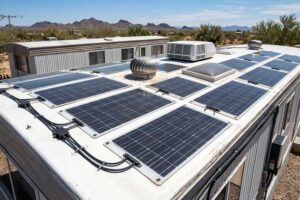
Flexible solar power panels can conform slightly to:
- RV roofs
- Sailboat decks
- Fiberglass camper tops
- Rounded trailer surfaces
Rigid panels cannot do that easily without custom brackets.
I once watched a van owner spend almost an entire weekend fabricating aluminum mounting rails just to fit rigid panels onto a curved Sprinter roof.
The neighboring van used adhesive-mounted flexible panels and finished installation before lunch.
Sometimes simpler engineering wins.
Lower Wind Resistance
This part gets overlooked constantly.
Low-profile solar reduces aerodynamic drag significantly compared with raised rigid racks.
On long highway drives, that matters.
One Bright Solar customer tracked fuel economy over several thousand miles after replacing elevated rigid rooftop panels with flexible solar.
Fuel efficiency improved roughly 3–5%.
Not dramatic in a single weekend.
Very noticeable over years of travel.
How Efficient Are Flexible Solar Power Panels?
Older flexible panels had a reputation for lower efficiency.
Modern monocrystalline technology changed that.
High-quality flexible solar power panels now commonly reach:
- 20–23% conversion efficiency
According to the U.S. Department of Energy, photovoltaic efficiency depends heavily on sunlight conditions, temperature, and material quality.
Source: U.S. Department of Energy
https://www.energy.gov/eere/solar
Real-world output depends more on installation quality than laboratory specifications alone.
That becomes obvious outdoors.
Dust accumulation.
Roof heat.
Partial shading.
Cable quality.
Ventilation.
All influence performance more than most marketing brochures admit.
Typical Daily Power Production
| Panel Size | Estimated Daily Output |
|---|---|
| 100W | 400Wh–700Wh |
| 200W | 800Wh–1.4kWh |
| 300W | 1.2kWh–2.1kWh |
| 400W | 1.6kWh–2.8kWh |
Assuming:
- 4–7 peak sunlight hours
- MPPT charging
- Minimal shading
- Proper battery storage
One shadow from a rooftop antenna or sailboat mast can reduce output quickly.
Marine environments teach that lesson fast.
Where Flexible Solar Power Panels Work Best
Not every solar project needs heavy rooftop arrays.
Flexible systems excel where mobility matters.
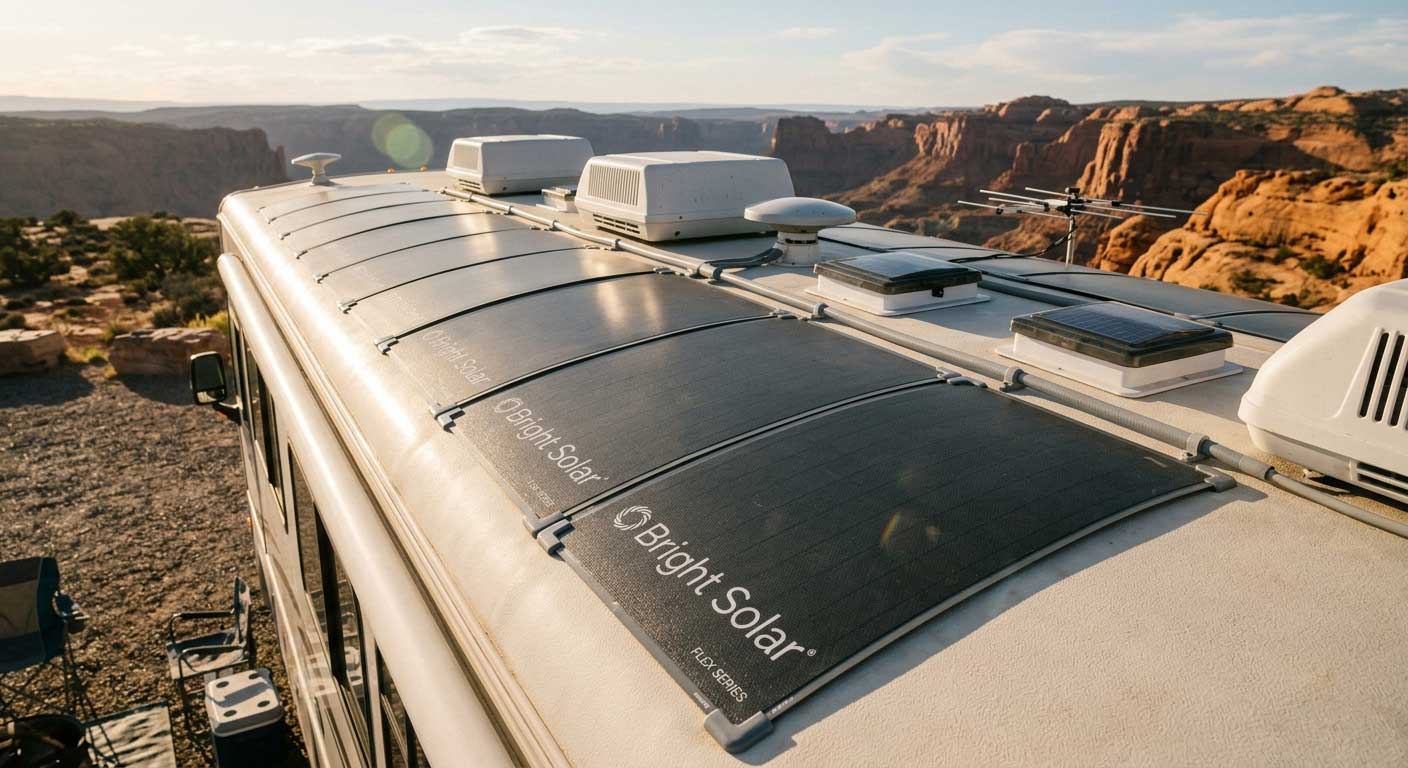
RV and Camper Van Applications
Flexible panels are especially useful for:
- Lightweight RV roofs
- Pop-top campers
- Expedition vans
- Fiberglass trailers
Advantages include:
- Lower roof stress
- Easier installation
- Reduced vibration
- Better aerodynamics
And honestly, quieter driving.
That becomes surprisingly important during long highway travel.
Marine Solar Systems
Boats expose weak hardware quickly.
Salt air destroys cheap connectors.
Humidity corrodes wiring.
Continuous vibration loosens mounting systems.
Flexible solar power panels perform well in marine environments because they:
- Conform to curved surfaces
- Reduce mounting hardware
- Lower weight overhead
- Simplify deck integration
According to DuPont material testing, ETFE protective materials provide strong UV and environmental resistance compared with many standard outdoor plastics.
Source: DuPont
https://www.dupont.com
That matters enormously offshore.
Portable Off-Grid Systems
Portable lithium batteries pair naturally with flexible solar.
Common applications include:
- Remote workstations
- Outdoor photography
- Camping refrigeration
- Emergency backup power
- Portable communication systems
And unlike generators, solar does not announce itself to everyone nearby.
That quiet changes the atmosphere of remote camping entirely.
Common Problems Cheap Flexible Solar Power Panels Develop
The internet is full of solar products that look nearly identical in photos.
Real differences appear outdoors after months of exposure.
Surface Delamination
Low-quality adhesives separate under repeated heat cycling.
Bubbles begin forming beneath protective layers.
Performance drops soon afterward.
Connector Corrosion
Marine environments expose poor waterproofing extremely quickly.
One failed connector can shut down an otherwise healthy system.
Heat Damage
Flexible panels mounted directly against dark roofs accumulate extreme temperatures.
Heat accelerates:
- Efficiency loss
- Material aging
- Adhesive fatigue
- Cell degradation
Arizona desert conditions expose weak products fast.
How to Choose High-Quality Flexible Solar Power Panels
Ignore exaggerated advertising claims.
Focus on engineering quality instead.
Look for:
- ETFE protective surfaces
- Monocrystalline solar cells
- Waterproof MC4 connectors
- UV-resistant wiring
- Stable power output
- Heat-resistant materials
- Lightweight construction
At Bright Solar, flexible solar power panels are engineered specifically for:
- RV travel
- Marine environments
- Portable off-grid systems
- Long-distance vibration resistance
- Harsh outdoor conditions
Because real travel conditions are far harsher than laboratory testing environments.
Highway vibration alone exposes weak products quickly.
FAQ: Flexible Solar Power Panels
Are flexible solar power panels worth buying?
Yes. Flexible solar power panels are ideal for RVs, boats, vans, and lightweight off-grid systems where reduced weight and low-profile installation matter.
How long do flexible solar power panels last?
High-quality flexible solar power panels typically last between 5 and 15 years depending on environmental conditions and installation quality.
Do flexible solar panels overheat?
Flexible solar panels can become very hot under direct sunlight because they sit close to roof surfaces. Proper ventilation and ETFE materials help improve durability.
Can flexible solar panels charge lithium batteries?
Yes. Flexible solar panels commonly charge lithium battery systems when paired with compatible MPPT charge controllers.
Are flexible solar power panels waterproof?
Most premium flexible solar power panels include waterproof junction boxes and weather-resistant surfaces designed for outdoor use.
Final Thoughts
Flexible solar power panels are no longer niche products built only for small portable chargers.
Modern systems now power serious off-grid travel.
RVs crossing deserts.
Sailboats offshore.
Remote workstations deep in forests.
Camper vans parked beside mountain trails.
And after enough time around mobile solar, one thing becomes obvious:
The best systems are rarely the loudest or flashiest.
They are the quiet ones still producing power years later after heat, vibration, weather, and thousands of miles on the road.
Related recommendations
-

RV Flexible Solar Panels: Lightweight Solar Power Solution for Off-Grid Travel
138Discover rv flexible solar panels from Bright Solar. Learn how lightweight solar technology helps RV owners generate reliable off-grid power with easy installation and durable performance.
View details -
Solar Panels in Parallel: When Parallel Wiring Is the Smartest Choice
296Learn how solar panels in parallel improve system reliability, reduce shading losses, and optimize 12V battery charging. Expert guide from Bright Solar.
View details -
Flexible RV Solar Panels for Reliable Off-Grid Power
180Flexible RV solar panels deliver lightweight off-grid energy for campers, vans, and motorhomes. Discover durable ETFE solar solutions from Bright Solar.
View details -
JA Solar DeepBlue 3.0 Modules Power JSW Energy 225MW Solar Plant in India
271JA Solar DeepBlue 3.0 modules have been installed at JSW Energy’s 225MW solar plant in Karnataka, India, supporting JSW Group’s low-carbon strategy and helping drive India’s transition to clean energy through large-scale PV projects.
View details