how to mount flexible solar panels to rv roof?
how to mount flexible solar panels to rv roof?
The safest way to mount flexible solar panels to an RV roof is by using high-strength adhesive sealant, partial airflow spacing, waterproof cable glands, and proper roof surface preparation. Avoid fully sealing panels flat against the roof because excessive heat buildup can reduce performance and shorten panel lifespan over time.
I did not fully understand that until I climbed onto a fifth-wheel trailer outside Nevada in late July.
The roof was almost too hot to touch. The owner complained that his “200W system barely charged anymore.” When we removed the old flexible panel, the underside had browned from thermal stress. No airflow. No expansion gap. Just adhesive directly on hot fiberglass for three summers.
That installation looked clean from the ground.
It failed from underneath.
Why RV Owners Prefer Flexible Solar Panels
Rigid solar panels still dominate residential rooftops, but RV roofs are different. Curves, vents, AC units, antennas, and weight limitations complicate everything.
Flexible solar panels solve several practical problems:
- Lightweight installation
- Lower wind drag
- Easier rooftop integration
- Better aesthetics
- Simpler mounting on curved surfaces
For RV travelers constantly crossing states, reducing rooftop drag matters more than most brochures admit.
According to the U.S. Department of Energy, lightweight solar technologies continue expanding in mobile and off-grid energy applications because transportation efficiency and installation flexibility are increasingly important.
That shift is easy to see in modern camper builds.
The Biggest Mistake in RV Solar Installation
Most Flexible Panels Fail From Heat, Not Rain
Water gets blamed constantly.
Heat is usually the real killer.
Flexible panels naturally operate at higher temperatures because they sit close to the roof membrane. Without ventilation space, trapped heat accelerates degradation of:
- EVA layers
- Adhesive backing
- Cell interconnections
- Junction box sealing
The National Renewable Energy Laboratory (NREL) has repeatedly documented that solar module efficiency declines as operating temperature rises.
On dark RV roofs in Arizona or Texas, surface temperatures can exceed 170°F (76°C).
That changes everything.
What You Need Before Mounting Flexible Solar Panels
Recommended Installation Materials
I have seen expensive solar systems fail because somebody saved $12 on adhesive.
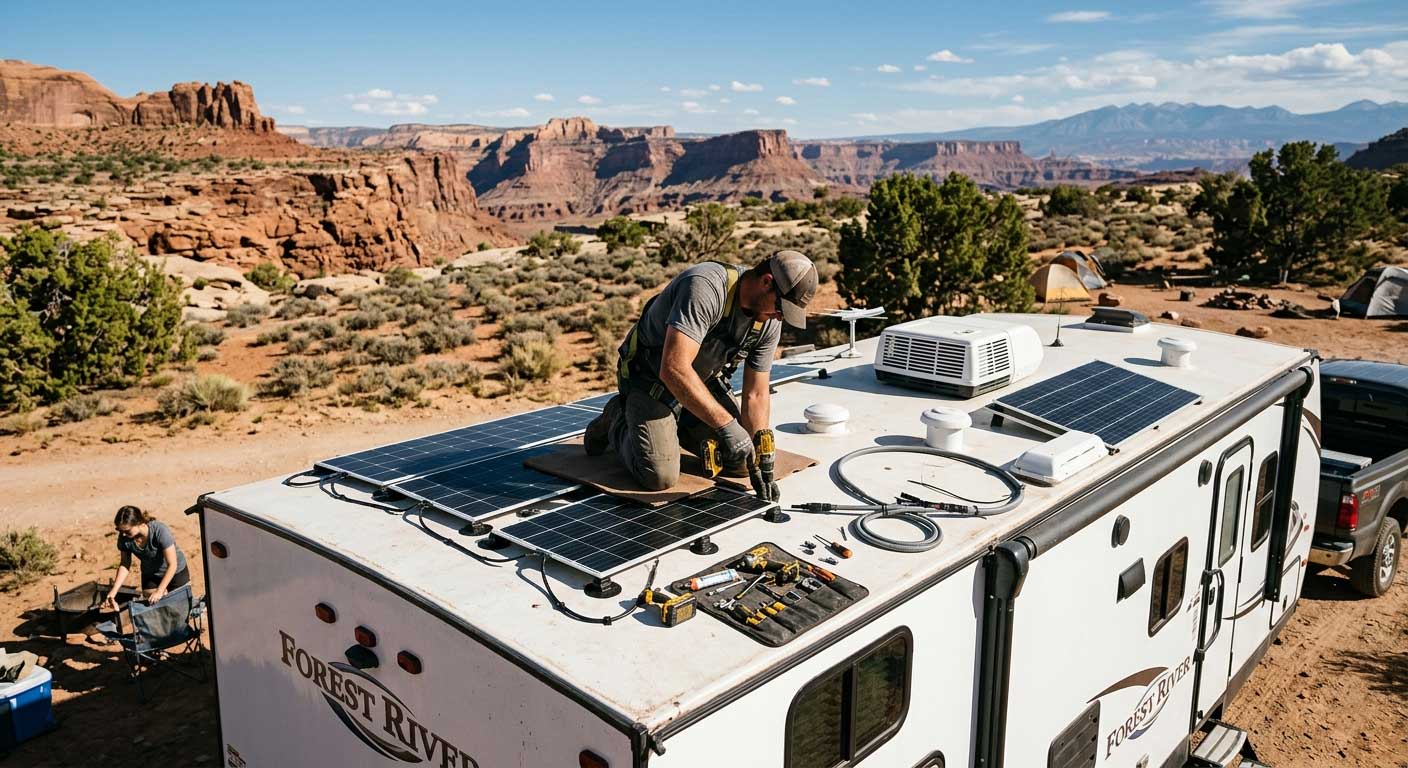
For long-term RV installations, these are the materials I trust most:
| Material | Purpose |
|---|---|
| ETFE flexible solar panel | Higher weather resistance |
| Sikaflex 252 or 3M 5200 | Structural adhesive bonding |
| ABS spacers | Airflow management |
| UV-resistant cable glands | Waterproof roof entry |
| Butyl tape | Secondary sealing |
| Isopropyl alcohol | Surface preparation |
| MPPT charge controller | Better charging efficiency |
| Stainless cable clips | Vibration control |
Avoid cheap household silicone. It becomes brittle faster than many RV owners expect.
Especially under UV exposure.
Step-by-Step: How to Mount Flexible Solar Panels to RV Roof
Installation Process That Actually Lasts
Step 1 — Clean the Roof Thoroughly
This sounds boring. It matters enormously.
RV roofs collect:
- Oxidation
- Dust
- Sealant residue
- Road oils
- Tree sap
I usually clean the mounting area three separate times:
- Soap and water
- Degreaser
- Isopropyl alcohol
If adhesive touches contamination instead of roofing material, failure becomes a countdown timer.
Step 2 — Plan Around Roof Obstacles
RV roofs are crowded.
Before placing panels, identify:
- Air conditioners
- Roof vents
- Skylights
- Satellite hardware
- Roof seams
Shading destroys output surprisingly fast.
Even partial shadow from a vent pipe can reduce panel production significantly during peak sunlight hours.
Step 3 — Create Small Ventilation Gaps
Do Not Mount Panels Fully Flush
This is the detail most DIY articles skip.
I now leave roughly:
- 6–10mm airflow spacing
- Partial drainage channels
- Thermal expansion room
During one summer comparison test:
- Flush-mounted panel reached 163°F
- Spacer-mounted panel stayed near 139°F
That temperature difference affects both efficiency and lifespan.
Heat accumulates quietly.
Damage follows slowly.
Step 4 — Route Cables Correctly
Loose rooftop cables eventually fail.
Not immediately.
After months of vibration.
I secure every cable with:
- UV-resistant clips
- Flexible conduit
- Roof-safe adhesive anchors
Never allow MC4 connectors to bounce against the roof surface while driving.
That small mistake becomes an expensive repair later.
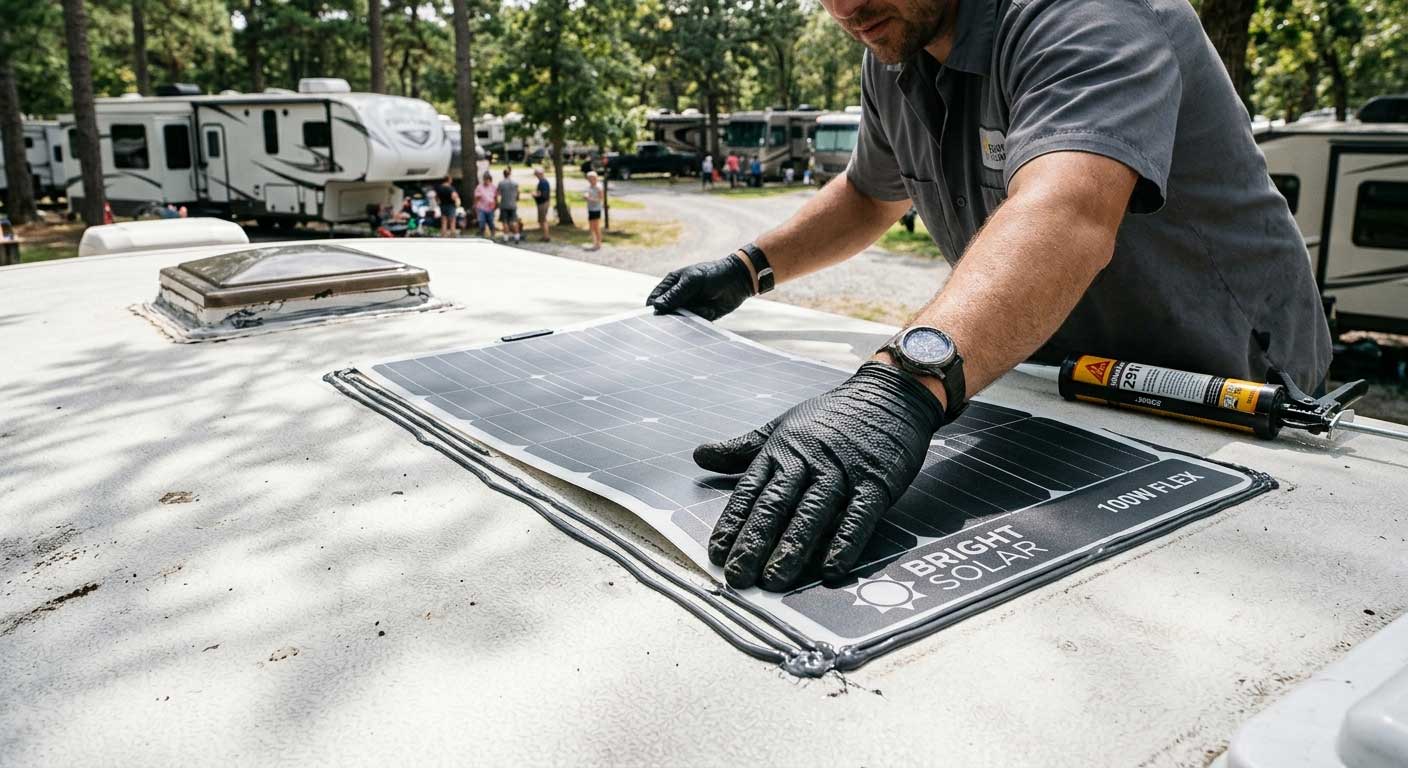
Step 5 — Seal Roof Penetrations Properly
Water intrusion ruins RV roofs silently.
For cable entry:
- Use weatherproof gland boxes
- Add butyl tape underneath
- Finish edges with UV-rated sealant
One improperly sealed cable hole can cause thousands in structural damage.
I have seen entire plywood roof sections rot from openings smaller than a coin.
How Long Do Flexible Solar Panels Last on RV Roofs?
Realistic Lifespan Expectations
Marketing numbers are often optimistic.
In real RV conditions, flexible panel lifespan depends heavily on:
- Heat exposure
- Mounting quality
- Road vibration
- Moisture cycling
- Roof curvature stress
From actual field experience:
| Panel Type | Typical RV Lifespan |
|---|---|
| Cheap PET laminate panels | 3–5 years |
| Mid-range ETFE panels | 6–9 years |
| Premium ETFE with airflow spacing | 10+ years |
The installation method matters almost as much as the panel quality itself.
Things I Would Never Do Again
Hard Lessons From RV Installations
Fully Bonding the Entire Back Surface
It traps too much heat.
Installing Panels Near AC Exhaust
Hot airflow accelerates aging dramatically.
Using Generic Hardware Store Silicone
It cracks under UV exposure.
Ignoring Roof Flex
RV roofs flex constantly while driving.
Panels need slight tolerance for expansion and movement.
FAQ:how to mount flexible solar panels to rv roof?
Frequently Asked Questions
Can flexible solar panels be glued directly to an RV roof?
Yes, but partial airflow spacing is strongly recommended to reduce heat buildup and improve long-term durability.
Are flexible solar panels waterproof?
Most ETFE flexible panels are weather-resistant, but all cable entry points still require proper sealing.
Do flexible solar panels damage RV roofs?
Not when installed correctly with compatible adhesives and proper waterproof sealing techniques.
Can flexible solar panels handle highway wind?
Yes. Properly bonded flexible panels create very low aerodynamic drag and usually perform well during highway travel.
Are flexible solar panels worth it for RVs?
For lightweight RV systems and curved roof layouts, flexible solar panels are often the most practical solution.
How to Mount Flexible Solar Panel?
Flexible solar panels are usually mounted using industrial adhesive, VHB tape, screws with spacers, or hybrid mounting systems. The safest installation keeps airflow under the panel, prevents water buildup, and avoids over-bending the panel surface. Done correctly, a flexible solar panel can stay securely mounted for 5–10 years on RVs, vans, boats, and curved roofs.Learn more about “How to Mount Flexible Solar Panel“
Final Thoughts
The cleanest RV solar installations usually look simple.
But underneath that simplicity sits careful planning:
- airflow control
- thermal expansion
- waterproof sealing
- vibration management
Most failed flexible solar systems I inspect were not caused by defective panels.
They failed because installers treated RV roofs like stationary buildings.
They are not.
An RV roof twists, heats, cools, flexes, vibrates, and bakes under UV exposure every single travel season. Once you respect that reality, flexible solar installations become dramatically more reliable.
And honestly, that is where long-term off-grid confidence really begins.
References
- U.S. Department of Energy — https://www.energy.gov
- National Renewable Energy Laboratory — https://www.nrel.gov
- PV Education Solar Temperature Studies — https://www.pveducation.org
Related recommendations
-

Are Solar Panels Worth It?
232Are solar panels worth it? Discover real installation costs, electricity savings, payback periods, and long-term value based on industry data and field experience from Bright Solar.
View details -
How Many Solar Panels Do I Need?
107Learn how many solar panels do I need based on electricity usage, roof size, and panel wattage. Discover real examples, calculations, and expert advice.
View details -
how to install flexible solar panel on rv?
173Learn how to install flexible solar panel on rv with real field-tested RV wiring steps, safety notes, and expert insights from Bright Solar installers.
View details -
how are solar panels made?
141Learn how are solar panels made with real factory process insights, silicon production steps, and Bright solar engineering experience from global manufacturing lines.
View details