how to install flexible solar panel on rv?
Answer :
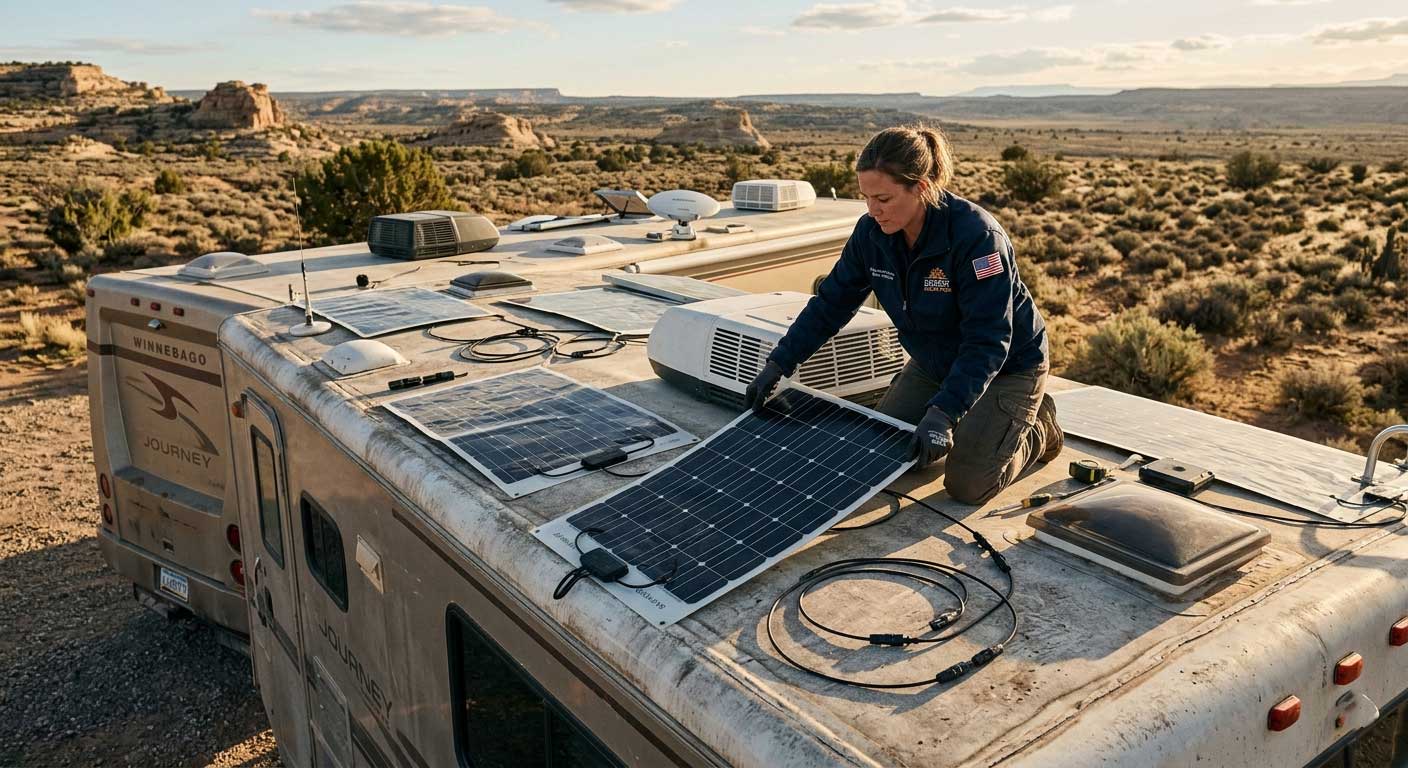
how to install flexible solar panel on rv starts with cleaning the roof, mapping shade-free zones, bonding panels with marine-grade adhesive, then wiring through a fused MPPT controller into the battery bank. Done correctly, it delivers stable off-grid power and reduces roof load without structural modification.
Field Context — Not a Lab Procedure
I’ve installed flexible RV solar systems across Nevada desert routes and California coastal trailers. One pattern repeats: failures rarely come from the panel itself, but from heat stress and rushed surface prep.
The U.S. Department of Energy highlights solar adoption growth driven by lightweight off-grid systems Energy.gov Solar Basics. Meanwhile, NREL studies show shading and temperature are two of the biggest real-world efficiency variables in mobile PV systems NREL Photovoltaics Research.
On RV roofs in Arizona summer testing, surface temperatures can exceed 65°C. That detail matters more than most manuals admit.
how to install flexible solar panel on rv roof setup flow
Not a clean textbook sequence. More like layers stacking under heat, vibration, and motion.
Step 1 — Roof surface preparation (critical, often rushed)
Dust, silicone residue, and oxidation are silent failures.
Field rule:
- Wipe with 90%+ isopropyl alcohol
- Avoid detergent films
- Let surface fully dry (no shortcut here)
Even a thin oil layer can reduce adhesive bond strength significantly over time.
Step 2 — Dry layout before bonding
You don’t “install” first—you place and observe.
Watch for:
- AC shadow zones
- roof vent turbulence edges
- cable routing distance to controller
NREL performance data consistently shows partial shading can disproportionately reduce output in series-connected PV arrays.
Step 3 — Adhesive bonding (where most installs fail)
Bright Solar field notes:
- Use MS polymer or marine-grade adhesive systems
- Apply even pressure across full panel surface
- Avoid trapped air pockets (they become heat hotspots)
RV vibration + UV exposure creates long-cycle stress. Cheap adhesives fail not instantly—but seasonally.
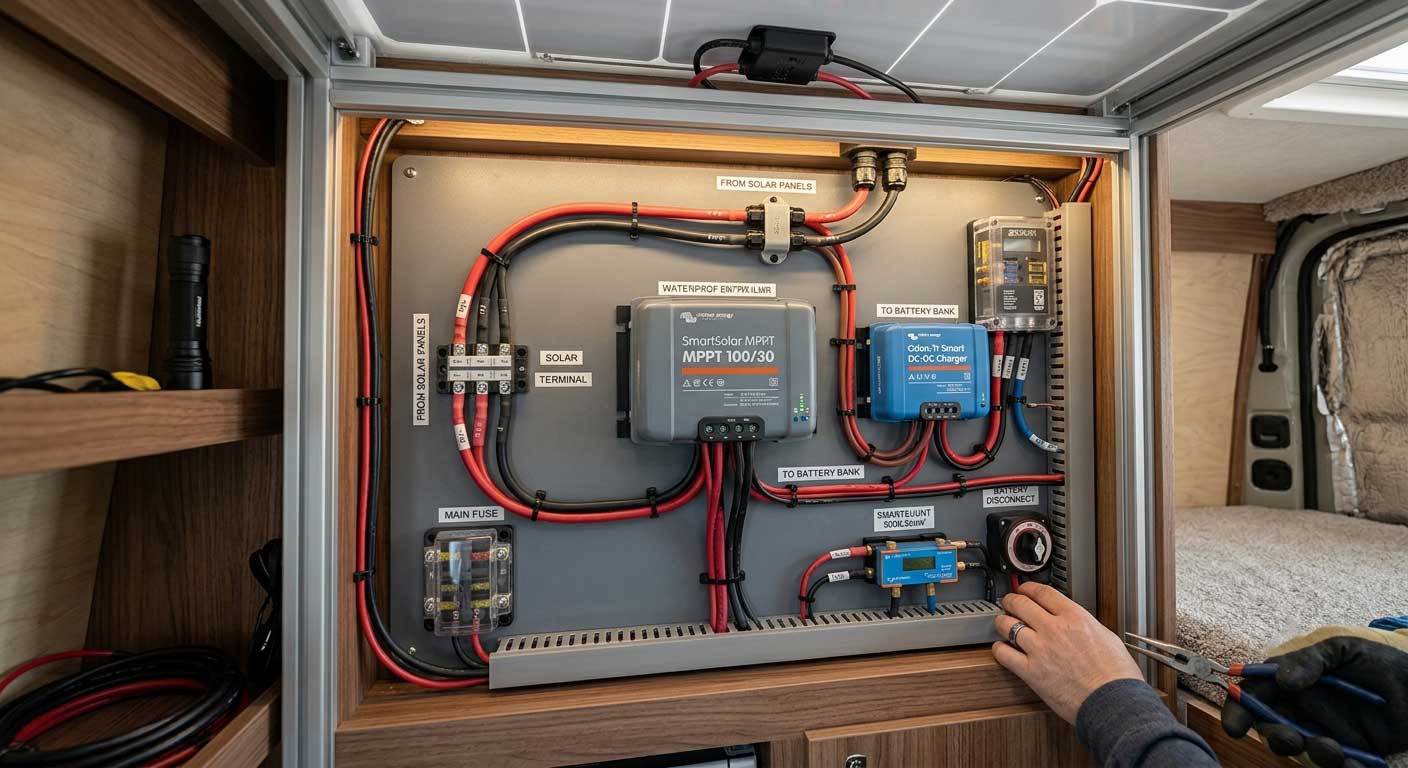
Step 4 — Electrical routing into MPPT system
This is where electrical discipline matters more than hardware.
Typical RV setup:
| Component | Function |
|---|---|
| MC4 connectors | PV input sealing |
| MPPT controller | voltage optimization |
| LiFePO4 battery | energy storage |
Keep voltage drop under control (short cable runs, proper gauge selection).
Step 5 — System testing under real sunlight
Not simulation. Real load.
Observe:
- charge curve stability
- voltage drop behavior
- heat response after 30–60 minutes
A stable system doesn’t spike—it breathes steadily.
real-world performance insight (field truth vs spec sheet)
Flexible panels on RV roofs typically trade efficiency for mobility advantages:
- lighter weight (roof load reduction)
- curved surface adaptability
- reduced wind profile
But efficiency loss exists under thermal stress conditions. NREL research confirms PV output declines as module temperature rises beyond standard test conditions NREL PV Temperature Effects.
That’s why ventilation gaps—even small ones—matter more than most users expect.

common mistakes in rv flexible solar installation
Not theoretical—seen repeatedly in field repairs.
- sealing panels without cleaning roof properly
- running cables through sharp bend points
- ignoring thermal expansion gaps
- undersized charge controller selection
One repeated issue: installers trust adhesive too early. Cure time is not optional—it’s structural time.
Bright Solar installation insight
Bright Solar systems are designed around mobile environments, not static rooftops.
Key design assumptions:
- vibration exposure
- temperature cycling
- irregular charging loads
That’s why installation discipline matters as much as hardware selection.

FAQ:how to install flexible solar panel on rv?
Q1: how to install flexible solar panel on rv safely?
Clean roof, apply proper adhesive curing time, and use fused MPPT wiring for safety stability.
Q2: Do flexible solar panels overheat on RV roofs?
They can. Roof temperature buildup is a real factor, especially in desert climates.
Q3: How long do RV flexible solar panels last?
Typically 5–10 years depending on UV exposure and thermal cycling conditions.
Q4: Do I need MPPT controller?
Yes. It significantly improves energy harvest efficiency under variable sunlight conditions.
Visit the product page:Flexible Solar Panel
Closing Note
how to install flexible solar panel on rv is not a pure instruction set—it’s a sequence of environmental decisions, material behavior, and electrical discipline that defines long-term reliability.
Bright Solar installs are built on that reality: field conditions first, theory second.
Related recommendations
-

How To Install Solar Panels On A Camper?
206How to install solar panels on a camper? Learn the complete RV solar installation process, wiring tips, mounting methods, and expert advice from Bright Solar.
View details -
do it yourself solar panel kits?
259Explore do it yourself solar panel kits with real installation insights, safety notes, system limits, and Bright solar field experience for off-grid setups.
View details -
How Much For Solar Panels On House?
125How much for solar panels on house? Learn average home solar costs, installation factors, equipment pricing, and investment considerations with Bright Solar.
View details -
How do solar panels work simple explanation?
96Solar panels use photovoltaic cells to convert sunlight into DC electricity, which can be used directly, converted to AC, or stored in batteries.
View details