How Much Energy Does a Solar Panel Produce?
How Much Energy Does a Solar Panel Produce?
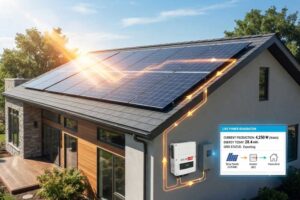
A typical residential solar panel produces approximately 1–2.5 kWh of electricity per day, or 300–900 kWh per year, depending on panel wattage, available sunlight, roof orientation, temperature, and overall system efficiency. Actual energy production varies by location and installation quality rather than panel rating alone.
When homeowners first explore solar energy, this is usually the first technical question they ask. The answer sounds simple, yet after designing photovoltaic systems for different climates, we’ve learned that no single number tells the whole story.
At Bright Solar, our engineers evaluate projects using both manufacturer specifications and real operating data collected after installation. Comparing these results with production models from the National Renewable Energy Laboratory (NREL) has shown us something important: two identical panels can deliver noticeably different annual energy output simply because of roof angle, seasonal weather, or nearby shading.
Understanding those variables helps homeowners set realistic expectations before investing in solar.
What Determines How Much Energy Does a Solar Panel Produce?
Solar panels convert sunlight into electricity, but the amount of usable energy depends on several interconnected factors.
1. Panel Wattage Is Only the Starting Point
Modern residential solar panels are commonly available in ratings between 350 W and 550 W.
Higher wattage means the panel can generate more electricity under ideal testing conditions, but laboratory ratings don’t automatically translate into identical real-world production.
The table below illustrates typical annual energy generation under average U.S. solar conditions.
| Panel Size | Estimated Daily Output | Estimated Annual Output |
|---|---|---|
| 350 W | 1.3–1.8 kWh | 470–650 kWh |
| 400 W | 1.5–2.2 kWh | 550–800 kWh |
| 450 W | 1.7–2.5 kWh | 620–910 kWh |
| 550 W | 2.0–3.0 kWh | 730–1,090 kWh |
Estimated using approximately 4–5.5 peak sun hours per day.
According to the U.S. Department of Energy, improvements in photovoltaic efficiency over the past decade allow today’s residential systems to generate substantially more electricity from the same roof area than earlier generations.
2. Peak Sun Hours Matter More Than Total Daylight
One misconception we frequently hear is that solar panels generate full power from sunrise until sunset.
In practice, installers use Peak Sun Hours (PSH) rather than daylight hours.
Peak sun hours represent the amount of solar irradiance equivalent to 1,000 watts per square meter.
Typical averages include:
- Arizona: 6–7 PSH
- Texas: 5–6 PSH
- Florida: 5 PSH
- California: 5–6 PSH
- New York: 4 PSH
- Washington State: 3.5–4 PSH
This explains why the same 400 W panel installed in Phoenix can produce hundreds of additional kilowatt-hours annually compared with one installed farther north.
3. Temperature Influences Efficiency
Many people assume hotter weather automatically increases electricity production.
Our field inspections tell a different story.
While strong sunlight is essential, excessive heat reduces photovoltaic efficiency. Most crystalline silicon panels lose approximately 0.3%–0.5% of output for every 1°C above 25°C (77°F), depending on the manufacturer’s temperature coefficient.
During midsummer maintenance visits, we’ve recorded module temperatures exceeding 60°C (140°F) on dark asphalt roofs. Even under perfectly clear skies, production temporarily declined until panel temperatures dropped later in the afternoon.
Proper airflow beneath the panels often helps minimize these thermal losses.
4. Installation Quality Has a Lasting Impact
A premium solar panel cannot compensate for poor installation.
Factors that consistently affect long-term energy production include:
- Roof orientation
- Tilt angle
- Partial shading
- Inverter efficiency
- Cable losses
- Dust accumulation
- Tree growth over time
One of the most overlooked issues is seasonal shading. A roof that appears unobstructed in summer may receive significantly more shade during winter as the sun sits lower on the horizon.
That is why professional site assessments include solar path analysis rather than relying solely on aerial imagery.
Average Solar Panel Energy Production in Real Conditions
Standard Test Conditions (STC) provide a useful benchmark, but outdoor performance is influenced by weather, seasonal sunlight, and normal system losses.
Based on long-term production modeling using the NREL PVWatts® Calculator, homeowners can generally expect the following output from a 400 W residential solar panel.
| Time Period | Typical Energy Production |
|---|---|
| Per Hour (Peak Sun) | ~0.40 kWh |
| Per Day | 1.5–2.2 kWh |
| Per Month | 45–66 kWh |
| Per Year | 550–800 kWh |
Rather than focusing exclusively on the panel’s wattage, experienced designers evaluate annual electricity production because it provides a much more meaningful estimate of energy savings and system payback.
Real-World Examples of How Much Energy Does a Solar Panel Produce
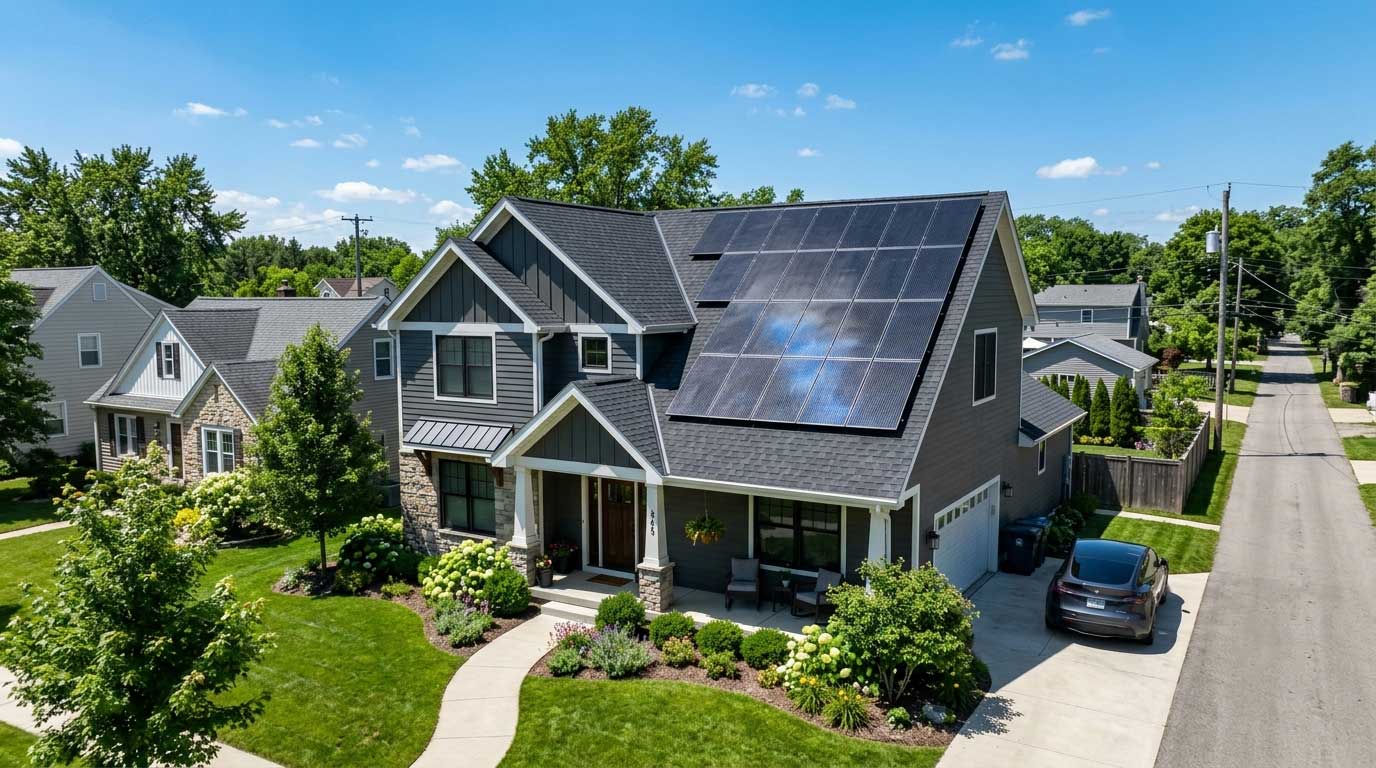
Solar panels are tested under Standard Test Conditions (STC), but rooftops rarely experience laboratory conditions. Cloud cover, seasonal daylight, roof orientation, ambient temperature, inverter efficiency, and even airborne dust all influence how much electricity a system ultimately delivers.
At Bright Solar, we compare predicted production with inverter monitoring data after projects are commissioned. Most well-designed systems perform within the expected range, but local conditions can shift annual production by 10–25%. That is why we encourage homeowners to evaluate projected yearly generation instead of focusing only on panel wattage.
Example 1: 400 W Solar Panel in Arizona
A south-facing 400 W monocrystalline panel installed with minimal shading in Phoenix benefits from approximately 6–7 peak sun hours on many days throughout the year.
Typical production includes:
- Daily: 2.3–2.6 kWh
- Monthly: 70–80 kWh
- Yearly: 840–950 kWh
Although summer temperatures can temporarily reduce efficiency, Arizona’s abundant solar irradiance generally results in excellent annual energy production.
Example 2: 400 W Solar Panel in Illinois
Install the same panel near Chicago and the available solar resource changes noticeably.
Expected production:
- Daily: 1.4–1.8 kWh
- Monthly: 42–55 kWh
- Yearly: 520–670 kWh
Despite producing fewer kilowatt-hours annually, homeowners often achieve meaningful electricity savings because local utility prices remain relatively high.
Example 3: Typical Residential Solar System
Homeowners rarely install just one panel. Residential systems combine multiple modules to meet annual household electricity demand.
| System Size | Approximate Number of 400 W Panels | Estimated Annual Production* |
|---|---|---|
| 4 kW | 10 | 5,500–6,500 kWh |
| 6 kW | 15 | 8,200–9,800 kWh |
| 8 kW | 20 | 11,000–13,000 kWh |
| 10 kW | 25 | 13,700–16,200 kWh |
Actual production depends on location, weather patterns, roof orientation, and system losses.
According to the U.S. Energy Information Administration (EIA), the average U.S. household uses roughly 10,500–11,000 kWh of electricity per year, meaning an appropriately designed 8–10 kW system can offset most or all annual electricity consumption for many families.
How to Calculate How Much Energy Does a Solar Panel Produce
While professional design software provides the most accurate estimates, homeowners can make a reliable first calculation using a simple formula.
Basic Formula
Panel Wattage × Peak Sun Hours × System Efficiency ÷ 1000 = Daily kWh
For example:
- Panel rating: 400 W
- Peak sun hours: 5.5
- Overall efficiency: 85%
Calculation:
400 × 5.5 × 0.85 ÷ 1000 = 1.87 kWh/day
Annual production:
1.87 × 365 = approximately 683 kWh per year
Professional designers often refine this estimate using the PVWatts® Calculator developed by the National Renewable Energy Laboratory (NREL), which incorporates historical weather data, array orientation, tilt angle, shading, and estimated system losses.
How to Increase Solar Panel Energy Production
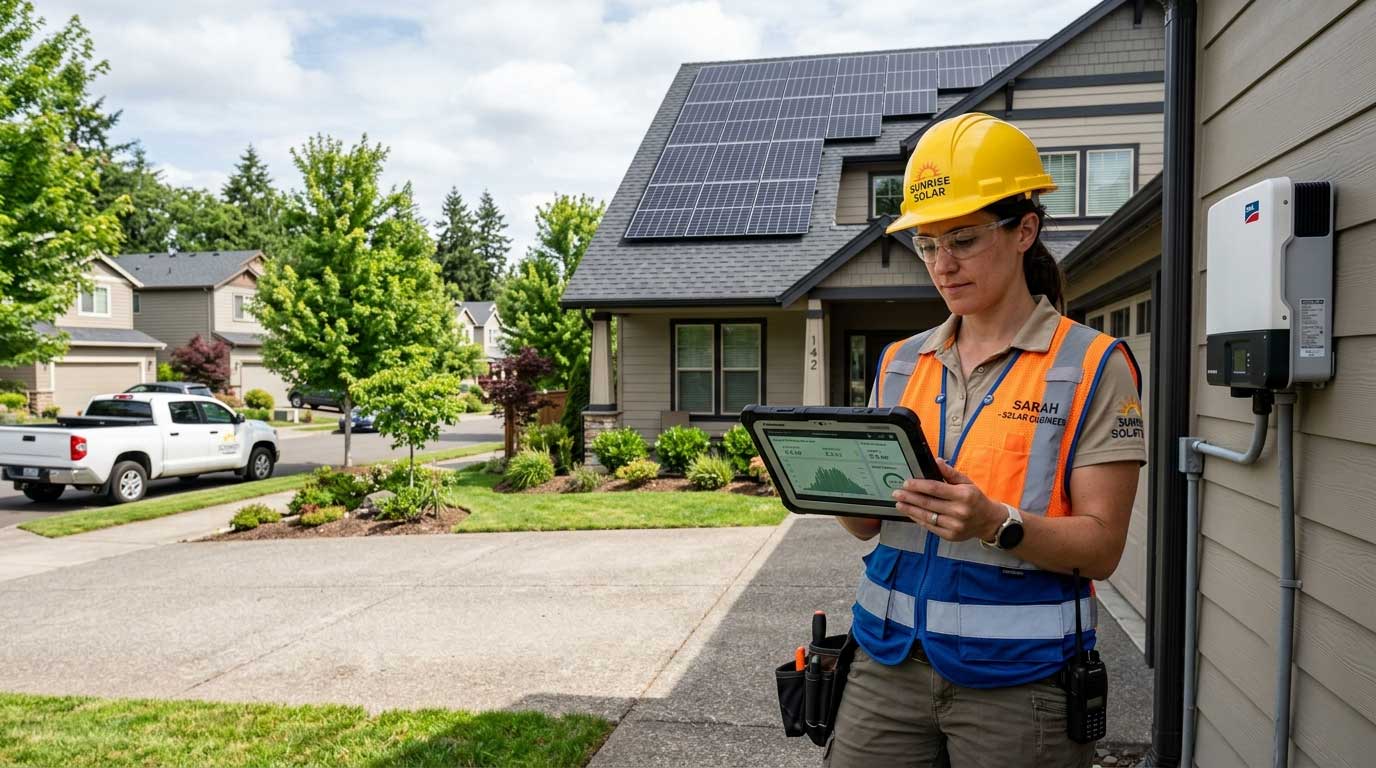
Even high-efficiency panels cannot perform at their best if installation and maintenance are overlooked. During routine inspections, our engineering team consistently finds that small improvements can have a measurable effect on annual energy generation.
Recommended practices include:
- Install panels where they receive unobstructed sunlight for most of the day.
- Position the array at an angle appropriate for the site’s latitude.
- Keep the panel surface free from heavy dust, leaves, bird droppings, or other debris.
- Choose high-efficiency inverters and quality electrical components to reduce conversion losses.
- Trim nearby trees before seasonal shading becomes significant.
- Use system monitoring software to identify performance issues early.
One observation from long-term monitoring is that homeowners who review inverter performance regularly are more likely to identify production losses before they affect an entire season’s energy yield.
FAQ About How Much Energy Does a Solar Panel Produce?
How much energy does a solar panel produce per day?
Most residential solar panels generate 1–2.5 kWh of electricity per day, depending on panel wattage, available sunlight, weather conditions, roof orientation, and overall system efficiency.
How much energy does a 400 W solar panel produce?
A 400 W solar panel typically produces 550–800 kWh per year, or approximately 1.5–2.2 kWh per day under average U.S. solar conditions.Visit the product page: Flexible Solar Panel
Can one solar panel power an entire house?
No. A single residential panel cannot meet the annual electricity demand of a typical household. Most homes require 15–25 solar panels, depending on energy usage and local solar resources.
Do solar panels generate electricity on cloudy days?
Yes. Solar panels continue producing electricity under cloudy conditions, although output is lower because less solar radiation reaches the photovoltaic cells.
Why is my solar panel producing less energy than expected?
Common reasons include seasonal weather changes, shading, dust buildup, high operating temperatures, inverter losses, or equipment faults. Routine monitoring helps identify these issues before they significantly affect annual production.
How Much Energy Can a Solar Panel Generate?
A solar panel can typically generate between 0.8 and 2.5 kWh of electricity per day depending on its wattage, sunlight hours, temperature, installation angle, and geographic location. A 400W solar panel often produces 1.6–2.2 kWh daily under good conditions.Learn more about “How Much Energy Can a Solar Panel Generate“
How Much Electric Does a Solar Panel Generate?
A typical residential solar panel generates between 1.2 and 2.5 kWh of electricity per day, depending on its wattage, sunlight hours, installation angle, temperature, and location. A modern 400W panel commonly produces about 1.6–2.2 kWh daily under favorable conditions.Learn more about “How Much Electric Does a Solar Panel Generate“
How Many kWh Does a Solar Panel Produce?
A modern residential solar panel typically produces between 1 and 2.5 kWh of electricity per day, or roughly 300–900 kWh per year, depending on its wattage, local sunlight, orientation, temperature, and system efficiency. Most homeowners see actual production fall within this range under normal operating conditions.Learn more about “How Many kWh Does a Solar Panel Produce“
How Many Kilowatts Can a Solar Panel Produce?
A residential solar panel typically delivers 0.35–0.55 kilowatts (kW) of peak power, depending on its rated capacity. Under normal operating conditions, that translates into roughly 1–3 kilowatt-hours (kWh) of electricity per day, with actual output varying according to sunlight, location, temperature, and installation quality.Learn more about “How Many Kilowatts Can a Solar Panel Produce“
How Much Energy Will a Solar Panel Produce?
A modern residential solar panel typically produces between 1.2 and 2.5 kWh of electricity per day, or roughly 400 to 900 kWh per year, depending on its wattage, local sunlight conditions, installation angle, temperature, and overall system efficiency.Learn more about “How Much Energy Will a Solar Panel Produce“
About the Author
This guide was prepared and technically reviewed by the engineering team at Bright Solar. Our specialists have experience designing residential and commercial photovoltaic systems, evaluating production forecasts, and analyzing long-term system performance. The information presented in this article combines field experience with publicly available research from internationally recognized energy organizations to provide homeowners with practical, evidence-based guidance.
References
- U.S. Department of Energy (DOE) – Homeowner’s Guide to Going Solar
https://www.energy.gov - National Renewable Energy Laboratory (NREL) – PVWatts® Calculator
https://pvwatts.nrel.gov - National Renewable Energy Laboratory (NREL) – Solar Research and Performance Resources
https://www.nrel.gov - U.S. Energy Information Administration (EIA) – Residential Electricity Consumption
https://www.eia.gov - International Energy Agency (IEA) – Solar PV Reports
https://www.iea.org
Related recommendations
-

How Long Do Flexible Solar Panels Last?
287How long do flexible solar panels last in real outdoor use? Learn the true lifespan, degradation rates, maintenance tips, and durability facts from Bright Solar.
View details -
How Long Do Solar Panels Last?
125Learn how long do solar panels last, what affects solar lifespan, degradation rates, and real-world durability data from long-term solar installations.
View details -
How Many Watts Does a Solar Panel Produce?
228Learn how many watts does a solar panel produce, understand solar panel output, energy generation factors, and kWh production with Bright Solar.
View details -
how to install flexible solar panel on rv?
140Learn how to install flexible solar panel on rv with real field-tested RV wiring steps, safety notes, and expert insights from Bright Solar installers.
View details