
How Many kWh Does a Solar Panel Produce?
How Many kWh Does a Solar Panel Produce?
A modern residential solar panel typically produces between 1 and 2.5 kWh of electricity per day, or roughly 300–900 kWh per year, depending on its wattage, local sunlight, orientation, temperature, and system efficiency. Most homeowners see actual production fall within this range under normal operating conditions.
One question comes up in nearly every conversation with homeowners planning their first solar installation: “How many kWh does a solar panel produce?” It’s a simple question, yet the answer depends on far more than the number printed on the back of the panel.
At Bright Solar, we’ve worked with customers in climates ranging from humid coastal regions to dry inland areas. One lesson has remained remarkably consistent: identical panels can produce noticeably different amounts of electricity simply because they operate under different environmental conditions. That’s why experienced installers rarely promise a single production figure without first evaluating the site.
Instead of relying on estimates alone, we compare manufacturer specifications with field performance and recognized industry models such as the PVWatts® Calculator developed by the National Renewable Energy Laboratory (NREL). This approach provides a far more realistic expectation of annual energy production than laboratory ratings alone.
What Determines How Many kWh Does a Solar Panel Produce?
A solar panel’s rated wattage tells only part of the story. Real electricity generation depends on several variables working together throughout the year.
Panel Power Rating
Residential modules today commonly range from 350 W to 550 W.
Higher wattage panels generally generate more electricity because they convert more sunlight into usable power during the same period.
For example:
| Panel Rating | Approx. Daily Output* | Approx. Annual Output* |
|---|---|---|
| 350 W | 1.3–1.8 kWh | 470–650 kWh |
| 400 W | 1.5–2.2 kWh | 550–800 kWh |
| 450 W | 1.7–2.5 kWh | 620–910 kWh |
| 550 W | 2.0–3.0 kWh | 730–1,090 kWh |
Estimated using average U.S. solar irradiance of approximately 4–5.5 peak sun hours per day. Actual production varies by location.
According to the U.S. Department of Energy, today’s photovoltaic modules are considerably more efficient than those installed a decade ago, allowing homeowners to generate more electricity from the same roof area.
Peak Sun Hours Matter More Than Sunshine Hours
Many people assume ten hours of daylight means ten hours of full solar production.
It doesn’t.
Solar professionals measure usable sunlight as Peak Sun Hours (PSH)—the equivalent number of hours per day when solar irradiance averages 1,000 watts per square meter.
Examples include:
- Arizona: around 6–7 PSH
- Texas: approximately 5–6 PSH
- Florida: about 5 PSH
- New York: roughly 4 PSH
- Pacific Northwest: closer to 3.5–4 PSH
This explains why identical systems installed in different states often produce significantly different annual energy totals.
Weather and Temperature
A surprising observation from field installations is that extremely hot weather does not necessarily increase electricity production.
Solar panels need sunlight—not excessive heat.
Most crystalline silicon modules lose approximately 0.3%–0.5% of output for every 1°C increase above 25°C (77°F), depending on their temperature coefficient.
During several summer inspections, we’ve measured rooftop module temperatures exceeding 60°C (140°F). Under these conditions, output declined despite perfectly clear skies. Proper airflow beneath roof-mounted panels often helps maintain higher efficiency than panels installed flush against a surface.
Average Solar Panel Output in Real Conditions
Laboratory ratings assume ideal testing conditions that rarely exist outdoors. Dust, seasonal weather, inverter efficiency, shading, and cable losses all influence real-world performance.
Based on production modeling from NREL PVWatts and practical installation experience, homeowners can generally expect:
| Time Period | Typical Energy Production (400 W Panel) |
|---|---|
| Per Hour (Peak Sun) | ~0.40 kWh |
| Per Day | 1.5–2.2 kWh |
| Per Month | 45–66 kWh |
| Per Year | 550–800 kWh |
Rather than focusing solely on the panel’s rated wattage, evaluating expected annual production provides a more meaningful measure when estimating energy savings or system payback.
Real-World Examples of Solar Panel Energy Production
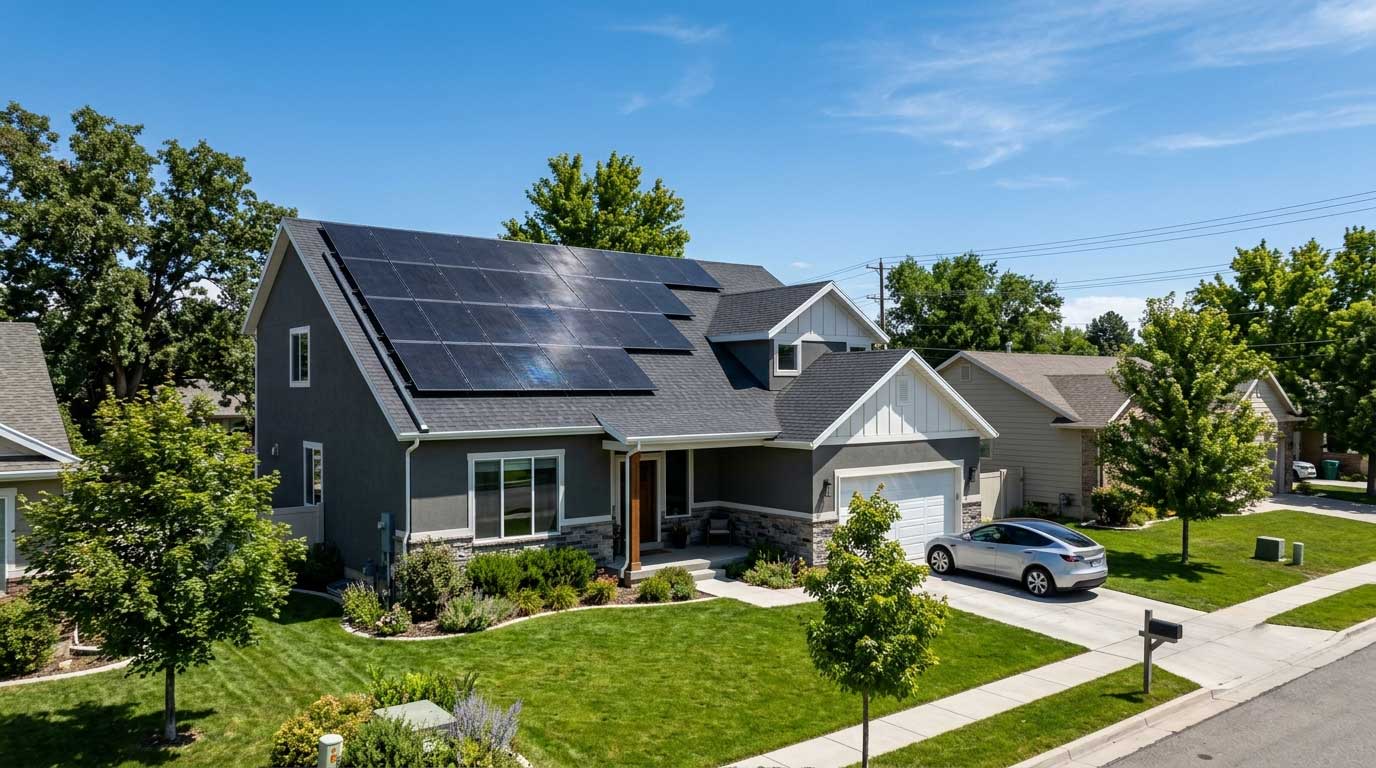
Manufacturer specifications provide a useful baseline, but real performance is measured over months and years—not under laboratory conditions. When our engineering team reviews completed projects, we compare expected production with actual inverter data. The difference is usually small on well-designed systems, but site conditions always matter.
Example 1 – 400 W Panel in Phoenix, Arizona
A south-facing 400 W monocrystalline panel installed at a 25° tilt receives around 6.5 peak sun hours on an average day.
Estimated production:
- Daily: 2.3–2.6 kWh
- Monthly: 70–80 kWh
- Yearly: 840–950 kWh
Summer output is high, although elevated module temperatures can slightly reduce efficiency during the hottest afternoons.
Example 2 – 400 W Panel in Chicago, Illinois
The same panel, installed with minimal shading, experiences fewer annual peak sun hours.
Typical production:
- Daily: 1.4–1.8 kWh
- Monthly: 42–55 kWh
- Yearly: 520–670 kWh
Despite lower annual production, many homeowners still achieve attractive electricity savings because retail utility rates are comparatively high.
Example 3 – Residential 8 kW System
A single panel rarely powers an entire home. Most residential systems include multiple modules working together.
| System Size | Number of 400 W Panels | Estimated Annual Production* |
|---|---|---|
| 4 kW | 10 | 5,500–6,500 kWh |
| 6 kW | 15 | 8,200–9,800 kWh |
| 8 kW | 20 | 11,000–13,000 kWh |
| 10 kW | 25 | 13,700–16,200 kWh |
Estimates vary by location, roof orientation, and available sunlight.
According to the U.S. Energy Information Administration (EIA), the average U.S. residential customer consumes approximately 10,500–11,000 kWh of electricity annually, making an 8–10 kW solar system sufficient for many households, depending on regional energy use.
How to Calculate How Many kWh Does a Solar Panel Produce
You don’t need advanced engineering software to estimate solar output. A simple calculation provides a reliable starting point.
Basic Formula
Panel Wattage × Peak Sun Hours × System Efficiency ÷ 1000 = Daily kWh
For example:
- Panel size: 400 W
- Peak sun hours: 5.5
- Overall system efficiency: 85%
Calculation:
400 × 5.5 × 0.85 ÷ 1000
≈ 1.87 kWh per day
Multiply that value by 365 for an approximate annual production of 683 kWh.
For more accurate estimates, professional designers often use the PVWatts® Calculator developed by the National Renewable Energy Laboratory (NREL), which incorporates historical weather data, system losses, array tilt, and orientation.
Practical Ways to Increase Solar Panel Output
Improving energy production is often easier than adding more panels.
Based on our installation and maintenance experience, these practices consistently deliver measurable improvements:
- Reduce shading. Even partial shade from a chimney or nearby tree can significantly reduce string output.
- Choose the correct roof orientation. In the Northern Hemisphere, south-facing arrays generally receive the highest annual solar exposure.
- Optimize tilt angle. Matching the roof pitch to local latitude improves yearly production.
- Keep panels reasonably clean. Dust, pollen, leaves, and bird droppings can reduce performance over time, particularly in dry climates.
- Select high-efficiency components. Premium inverters and low-loss wiring help maximize usable electricity.
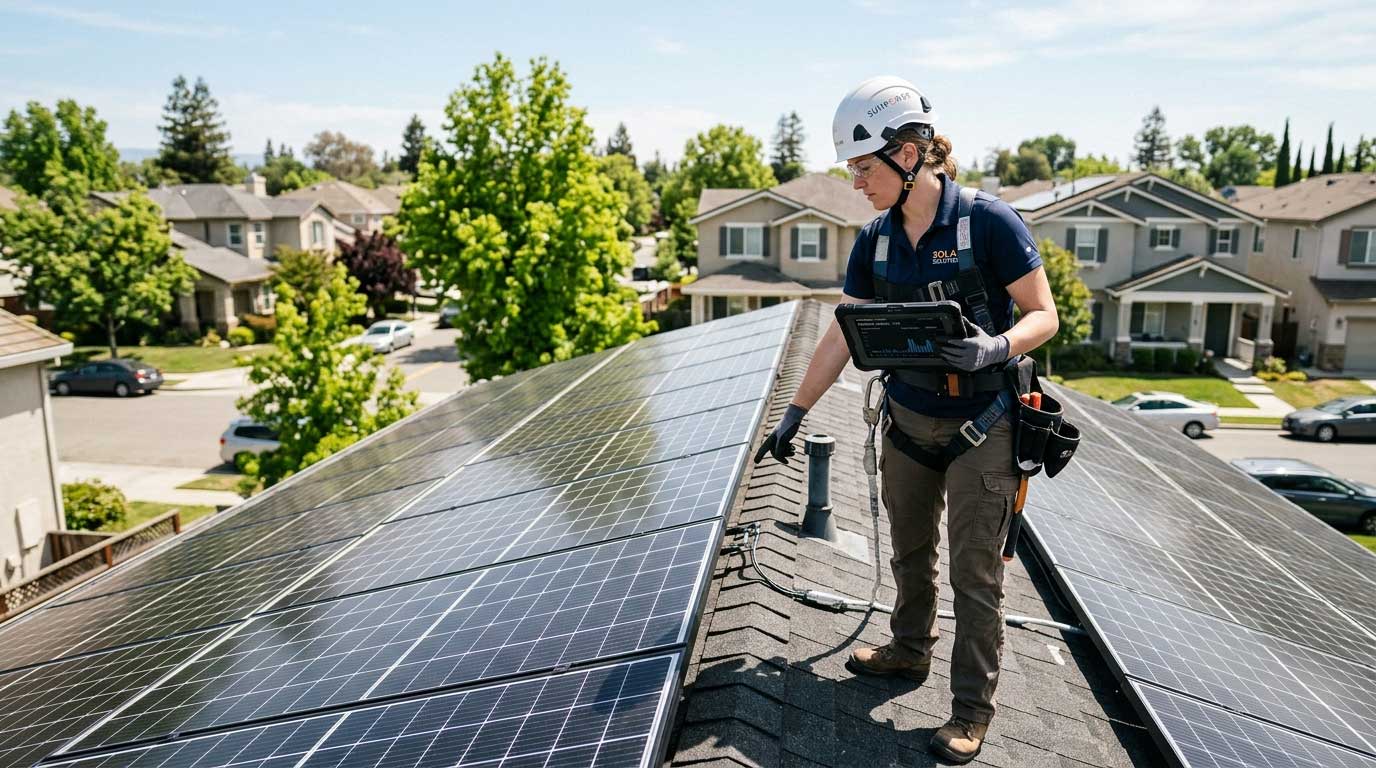
- Monitor system performance. Most modern inverters provide mobile apps that make it easy to identify unexpected production drops before they become major issues.
One pattern we’ve repeatedly observed is that consistent monitoring often prevents small issues—such as debris buildup or a malfunctioning optimizer—from affecting annual energy production for months without notice.
FAQ About How Many kWh Does a Solar Panel Produce?
How many kWh does a solar panel produce per day?
A modern residential solar panel typically generates 1–2.5 kWh per day, depending on its wattage, available peak sun hours, weather conditions, shading, and overall system efficiency.
How many kWh does a 400 W solar panel produce?
Under average U.S. conditions, a 400 W panel produces approximately 550–800 kWh per year, or 1.5–2.2 kWh per day.Visit the product page: Flexible Solar Panel
Can one solar panel power an entire house?
No. A single residential panel cannot supply the annual electricity demand of a typical home. Most households require 15–25 panels, depending on energy consumption and local solar resources.
Does cloudy weather stop solar panels from producing electricity?
No. Solar panels continue generating electricity on cloudy days, although production is lower because less sunlight reaches the photovoltaic cells.
Why is my solar panel producing less electricity than expected?
Reduced output is commonly caused by shading, seasonal weather changes, dust accumulation, high operating temperatures, equipment losses, or changes in household monitoring settings.
How Much Energy Can a Solar Panel Generate?
A solar panel can typically generate between 0.8 and 2.5 kWh of electricity per day depending on its wattage, sunlight hours, temperature, installation angle, and geographic location. A 400W solar panel often produces 1.6–2.2 kWh daily under good conditions.Learn more about “How Much Energy Can a Solar Panel Generate“
How Much Electric Does a Solar Panel Generate?
A typical residential solar panel generates between 1.2 and 2.5 kWh of electricity per day, depending on its wattage, sunlight hours, installation angle, temperature, and location. A modern 400W panel commonly produces about 1.6–2.2 kWh daily under favorable conditions.Learn more about “How Much Electric Does a Solar Panel Generate“
How Much Energy Does a Solar Panel Produce?
A typical residential solar panel produces approximately 1–2.5 kWh of electricity per day, or 300–900 kWh per year, depending on panel wattage, available sunlight, roof orientation, temperature, and overall system efficiency. Actual energy production varies by location and installation quality rather than panel rating alone.Learn more about “How Much Energy Does a Solar Panel Produce“
How Many Kilowatts Can a Solar Panel Produce?
A residential solar panel typically delivers 0.35–0.55 kilowatts (kW) of peak power, depending on its rated capacity. Under normal operating conditions, that translates into roughly 1–3 kilowatt-hours (kWh) of electricity per day, with actual output varying according to sunlight, location, temperature, and installation quality.Learn more about “How Many Kilowatts Can a Solar Panel Produce“
How Much Energy Will a Solar Panel Produce?
A modern residential solar panel typically produces between 1.2 and 2.5 kWh of electricity per day, or roughly 400 to 900 kWh per year, depending on its wattage, local sunlight conditions, installation angle, temperature, and overall system efficiency.Learn more about “How Much Energy Will a Solar Panel Produce“
How Much Solar Panel Generate Electricity?
A solar panel can generate between 300Wh and 2kWh of electricity per day depending on its wattage, sunlight hours, installation angle, and environmental conditions. A typical 400W solar panel receiving 5 peak sun hours can produce around 2kWh daily.Learn more about “How Much Solar Panel Generate Electricity“
How Much a Solar Panel Can Generate Electricity?
A typical solar panel can generate around 1.5–2.5 kWh of electricity per day under good sunlight conditions. A modern 400W panel usually produces approximately 550–750 kWh annually, depending on location, weather, shading, and installation angle.Learn more about “How Much a Solar Panel Can Generate Electricity“
How Many kWh Does a Solar Panel Generate?
How many kWh does a solar panel generate? A typical solar panel generates about 1–2 kWh of electricity per day, depending on its wattage, sunlight hours, installation angle, weather, and operating conditions.Learn more about “How Many kWh Does a Solar Panel Generate“
About the Author
This article was reviewed by the technical team at Bright Solar, which specializes in residential and commercial photovoltaic system design. Our engineers use production modeling, field installation experience, and long-term performance analysis to evaluate real-world solar energy generation. Every technical recommendation in this guide is based on established industry practices and publicly available research from leading energy organizations.
References
- U.S. Department of Energy – Homeowner’s Guide to Going Solar
https://www.energy.gov - National Renewable Energy Laboratory (NREL) – PVWatts® Calculator
https://pvwatts.nrel.gov - National Renewable Energy Laboratory (NREL) – Best Practices in PV Performance
https://www.nrel.gov - U.S. Energy Information Administration (EIA) – Residential Electricity Consumption
https://www.eia.gov - International Energy Agency (IEA) – Solar PV Market Reports
https://www.iea.org
Related recommendations
-

How Does Solar Panels Work?
128Discover how does solar panels work, how sunlight becomes electricity, and how modern solar systems power homes, RVs, and off-grid applications.
View details -
How to Make Your Own Flexible Solar Panel?
230Discover how to make your own flexible solar panel through real workshop experience, practical mistakes, material selection, and proven engineering methods.
View details -
How Do Solar PV Panels Generate Electricity?
214Learn how do solar pv panels generate electricity through solar cells, photovoltaic effects, and energy conversion. Bright Solar explains how PV systems work.
View details -
How to Clean Solar Panels?
167Learn how to clean solar panels safely using expert methods, real maintenance experience, and proven cleaning techniques to improve solar performance and longevity.
View details