How Much Energy Can a Solar Panel Generate?
How Much Energy Can a Solar Panel Generate?
A solar panel can typically generate between 0.8 and 2.5 kWh of electricity per day depending on its wattage, sunlight hours, temperature, installation angle, and geographic location. A 400W solar panel often produces 1.6–2.2 kWh daily under good conditions.
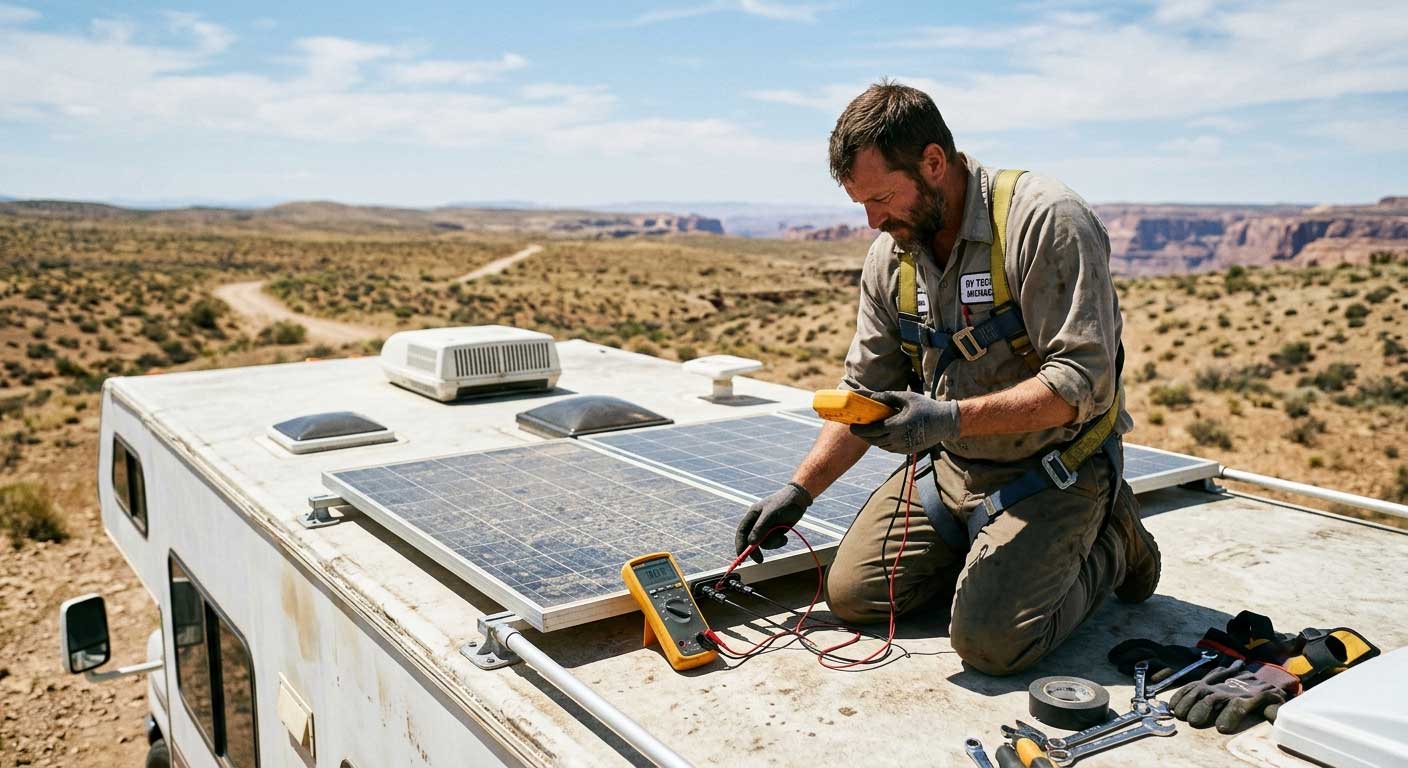
Several years ago, I climbed onto the roof of a customer’s camper in southern Utah during July. He pointed toward two identical 200W panels and asked a simple question.
“Why does one always make more power?”
The panels came from the same production batch.
The wiring was identical.
The answer turned out to be a shadow cast by a roof vent that only appeared for about forty minutes every afternoon.
That experience stayed with me because people usually ask how much electricity a panel can generate. In reality, they are asking something slightly different:
How much electricity will my panel generate where I actually live?
The two answers are rarely identical.
Rated Power Is Only the Starting Point
Solar panels are sold according to wattage.
Actual energy production is measured in kilowatt-hours.
A 400W panel does not continuously produce 400 watts.
Instead, it reaches that output under Standard Test Conditions.
According to the U.S. Department of Energy, standard testing assumes:
- Solar irradiance: 1000 W/m²
- Cell temperature: 25°C
- Air mass: 1.5
Source:
https://www.energy.gov/eere/solar
Real rooftops almost never operate under laboratory conditions.
Daily Energy Production by Panel Size
| Solar Panel Size | Average Daily Output |
|---|---|
| 100W | 0.4–0.6 kWh |
| 200W | 0.8–1.2 kWh |
| 300W | 1.2–1.8 kWh |
| 400W | 1.6–2.2 kWh |
| 500W | 2.0–3.0 kWh |
These values assume approximately 4–6 peak sun hours.
The National Renewable Energy Laboratory states that solar resource conditions vary significantly across the United States.
Source:
https://www.nrel.gov/gis/solar.html
Arizona and Nevada often receive substantially more annual solar radiation than northern states.
Sunlight Hours Matter More Than Panel Wattage
A customer once upgraded from a 200W panel to a 400W panel on his van.
He expected twice the energy.
He gained roughly 60%.
Part of the roof was shaded by an air-conditioning unit.
The larger panel simply experienced more partial shading.
Solar output depends on:
- Sunlight hours.
- Installation angle.
- Temperature.
- Panel cleanliness.
- Geographic location.
- Shading.
One tree branch can reduce production more than a hundred additional watts.
Average Peak Sun Hours
| Location | Peak Sun Hours |
|---|---|
| Arizona | 6–7 hours |
| Texas | 5–6 hours |
| Florida | 4.5–5.5 hours |
| New York | 3.5–4.5 hours |
| Washington | 3–4 hours |
The PVWatts Calculator developed by NREL remains one of the most widely used solar production estimation tools.
Source:
Temperature Reduces Solar Output
This surprises many people.
Solar panels prefer sunlight.
They do not necessarily prefer heat.
During one field inspection in Nevada, we measured a flexible panel surface temperature above 72°C.
Output had fallen noticeably.
According to research from the National Renewable Energy Laboratory, higher operating temperatures reduce photovoltaic efficiency.
Source:
The effect becomes visible during summer afternoons.
The panel receives strong sunlight.
Yet power output declines.
Heat becomes the enemy.
How Much Electricity Does a 400W Solar Panel Generate?
The 400W category has become especially popular.
Under favorable conditions:
- 4 sun hours: 1.6 kWh/day.
- 5 sun hours: 2.0 kWh/day.
- 6 sun hours: 2.4 kWh/day.
Annual production may reach:
- 580–870 kWh per year.
The International Energy Agency notes that local climate and system design strongly influence energy yield.
Source:
Several RV owners I have worked with report average daily production around 1.8 kWh from a single 400W flexible panel during summer travel.
Winter figures are often much lower.
Weather Changes Everything
One rainy week can completely alter expectations.
Cloud cover scatters sunlight.
Dust reduces transmission.
Snow blocks irradiation.
A sailboat owner in Maine once told me his panels appeared broken.
They were producing only 15% of their normal output.
The culprit turned out to be salt deposits.
After cleaning, production immediately recovered.
The lesson was simple.
Solar panels rarely fail overnight.
Environmental conditions often explain reduced performance.
Flexible Panels Versus Rigid Panels
| Factor | Flexible Panel | Rigid Panel |
|---|---|---|
| Weight | Lower | Higher |
| Cooling | Less efficient | Better airflow |
| Installation | Easier | More complex |
| Temperature | Higher operating heat | Lower temperature |
| Output stability | Moderate | Better |
Because flexible panels often sit directly on surfaces, they can operate hotter.
That additional heat may reduce energy production.
In several RV inspections, panels with airflow underneath consistently showed better afternoon performance.
The difference was not dramatic.
Usually between 5% and 10%.
But over several years, those numbers accumulate.

Real Numbers From Field Installations
During the past decade, I have inspected dozens of small solar systems.
A few examples remain memorable.
RV in Arizona
- 400W flexible panel.
- Summer output: 2.1 kWh/day.
Sailboat in Florida
- 300W flexible system.
- Average output: 1.4 kWh/day.
Camper in Oregon
- 200W panel.
- Winter output: 0.4 kWh/day.
The hardware was not always the deciding factor.
Location often mattered more.
Author Experience
Michael Turner has worked in the photovoltaic industry for over twelve years, focusing on flexible solar products, RV systems, marine installations, and product reliability testing.
Experience includes:
- Factory audits.
- Solar product evaluations.
- Field inspections.
- Warranty investigations.
- Installation assessments.
Many examples in this article come directly from customer installations and performance testing rather than marketing specifications.
FAQ About How Much Energy Can a Solar Panel Generate?
How much energy can a 100W solar panel generate?
A 100W panel typically produces 0.4–0.6 kWh per day under good sunlight conditions.
How much electricity does a 400W solar panel make?
A 400W panel often generates between 1.6 and 2.4 kWh daily depending on available sunlight.
Do solar panels generate electricity on cloudy days?
Yes. Output decreases significantly, but panels still produce electricity under diffuse sunlight.
Does temperature affect solar panel output?
Yes. High temperatures reduce efficiency and lower energy production.
Can shading reduce power generation?
Even partial shading can significantly decrease solar output, especially in smaller systems.
How Much Electric Does a Solar Panel Generate?
A typical residential solar panel generates between 1.2 and 2.5 kWh of electricity per day, depending on its wattage, sunlight hours, installation angle, temperature, and location. A modern 400W panel commonly produces about 1.6–2.2 kWh daily under favorable conditions.Learn more about “How Much Electric Does a Solar Panel Generate“
How Many kWh Does a Solar Panel Produce?
A modern residential solar panel typically produces between 1 and 2.5 kWh of electricity per day, or roughly 300–900 kWh per year, depending on its wattage, local sunlight, orientation, temperature, and system efficiency. Most homeowners see actual production fall within this range under normal operating conditions.Learn more about “How Many kWh Does a Solar Panel Produce“
How Much Energy Does a Solar Panel Produce?
A typical residential solar panel produces approximately 1–2.5 kWh of electricity per day, or 300–900 kWh per year, depending on panel wattage, available sunlight, roof orientation, temperature, and overall system efficiency. Actual energy production varies by location and installation quality rather than panel rating alone.Learn more about “How Much Energy Does a Solar Panel Produce“
How Many Kilowatts Can a Solar Panel Produce?
A residential solar panel typically delivers 0.35–0.55 kilowatts (kW) of peak power, depending on its rated capacity. Under normal operating conditions, that translates into roughly 1–3 kilowatt-hours (kWh) of electricity per day, with actual output varying according to sunlight, location, temperature, and installation quality.Learn more about “How Many Kilowatts Can a Solar Panel Produce“
Visit the product page:Flexible Solar Panel
Final Thoughts
People searching how much energy can a solar panel generate usually expect one number.
After years of inspecting RV roofs, marine systems, and portable solar installations, I have learned that there is never just one answer.
The label printed on the back of a panel tells part of the story.
The weather tells another.
Temperature, shadows, dust, roof design, and installation quality all contribute.
A solar panel generates electricity.
The environment decides how much.
Related recommendations
-

what do solar panels do?
127Discover what do solar panels do with real field insights, energy conversion data, and Bright solar engineering experience explaining how sunlight becomes electricity.
View details -
how solar panels make electricity?
187Solar panels use photovoltaic cells to convert sunlight into DC electricity, which an inverter can convert into AC power for homes, businesses, batteries, or...
View details -
How To Mount Solar Panels On RV Roof?
169How to mount solar panels on RV roof? Learn professional RV solar installation steps, mounting methods, tools, and practical tips from Bright Solar.
View details -
How Much Is Solar Panel Installation Cost?
97How much is solar panel installation cost? Explore solar installation prices, system cost factors, equipment expenses, and expert advice from Bright Solar.
View details