how to fasten flexible solar panels to roof?
how to fasten flexible solar panels to roof?
The most reliable way to fasten flexible solar panels to roof surfaces is by using a high-strength structural adhesive designed for outdoor photovoltaic applications, sometimes combined with mechanical fasteners in areas exposed to high winds. The correct method depends on the roof material, local climate, and expected wind loads.
A surprising number of flexible solar panel failures have nothing to do with the panel itself.
I’ve spent more than a decade around lightweight photovoltaic installations, from camper vans crossing Nevada deserts to commercial metal-roof warehouses near the Gulf Coast. The pattern is remarkably consistent. When a flexible panel lifts, curls, or separates, the culprit is usually poor roof preparation rather than inadequate hardware.
One project still stands out. A customer called after a storm convinced him his solar panels had failed. They hadn’t. The adhesive had detached from a layer of chalky oxidation on the roof surface. The panels were fine. The preparation wasn’t.
That’s why understanding how to fasten flexible solar panels to roof structures properly matters far more than simply choosing glue or screws.
Why Flexible Solar Panels Require a Different Mounting Approach
Rigid solar modules benefit from aluminum frames that distribute stress across mounting rails.
Flexible modules don’t.
They bend. They expand. They react more noticeably to temperature swings.
According to the National Renewable Energy Laboratory (NREL), rooftop solar modules can experience significant thermal cycling throughout their lifespan, creating expansion and contraction forces that affect mounting systems. Installers who ignore these movements often discover edge lifting years before the panel itself reaches end-of-life.
For that reason, mounting strategy should be viewed as an engineering decision rather than a simple installation step.
Common Roof Types and Recommended Fastening Methods
| Roof Type | Recommended Mounting Method | Typical Application |
|---|---|---|
| Aluminum Roof | Structural adhesive | RVs, trailers |
| Steel Roof | Adhesive or hybrid mounting | Commercial buildings |
| Fiberglass Roof | Marine-grade adhesive | Boats and yachts |
| Asphalt Shingle Roof | Mechanical fasteners with sealant | Residential properties |
| EPDM Membrane Roof | Compatible adhesive system | Flat commercial roofs |
The roof material should always determine the fastening method—not convenience.
Adhesive Mounting: The Method Most Installers Prefer
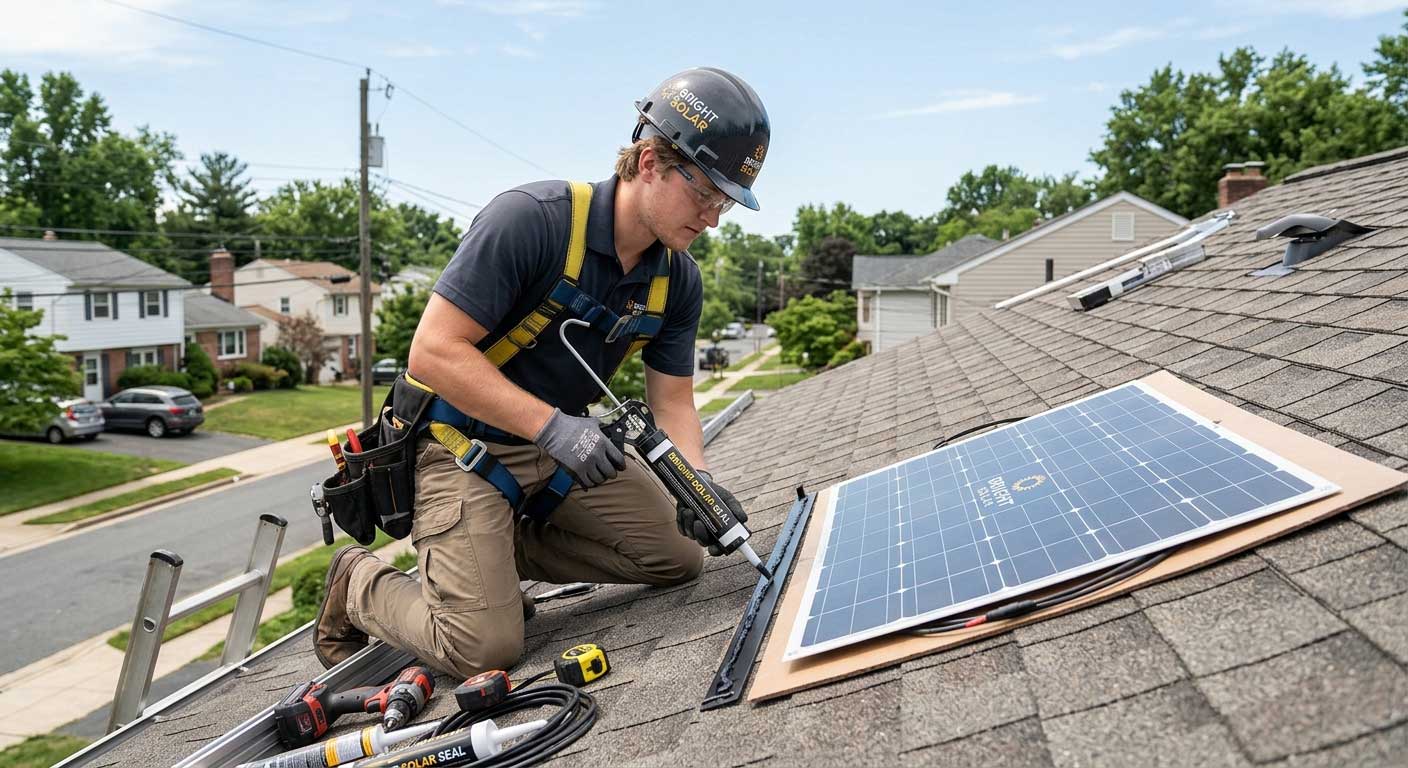
For many installations, adhesive mounting provides the cleanest appearance and eliminates roof penetrations.
The catch?
Surface preparation becomes everything.
A roof that appears clean can still contain oils, oxidation, silicone residue, or microscopic contaminants that weaken adhesion.
During a fleet vehicle project involving dozens of lightweight solar systems, our team spent almost as much time cleaning roof surfaces as installing panels. That extra effort paid off. Several years later, every panel remained fully bonded.
Best Practices Before Applying Adhesive
- Remove dirt and oxidation
- Degrease the mounting area
- Allow the roof surface to dry completely
- Follow adhesive temperature recommendations
- Apply consistent pressure during bonding
According to testing published by ASTM International, surface preparation can dramatically influence adhesive bond performance across exterior applications.
Mechanical Fasteners: When Extra Holding Power Is Needed
Not every environment is suitable for adhesive-only installation.
Coastal regions, hurricane-prone states, and elevated structures often experience forces that deserve additional consideration.
The U.S. Department of Energy has documented wind-related challenges affecting rooftop solar systems, particularly in regions regularly exposed to severe weather.
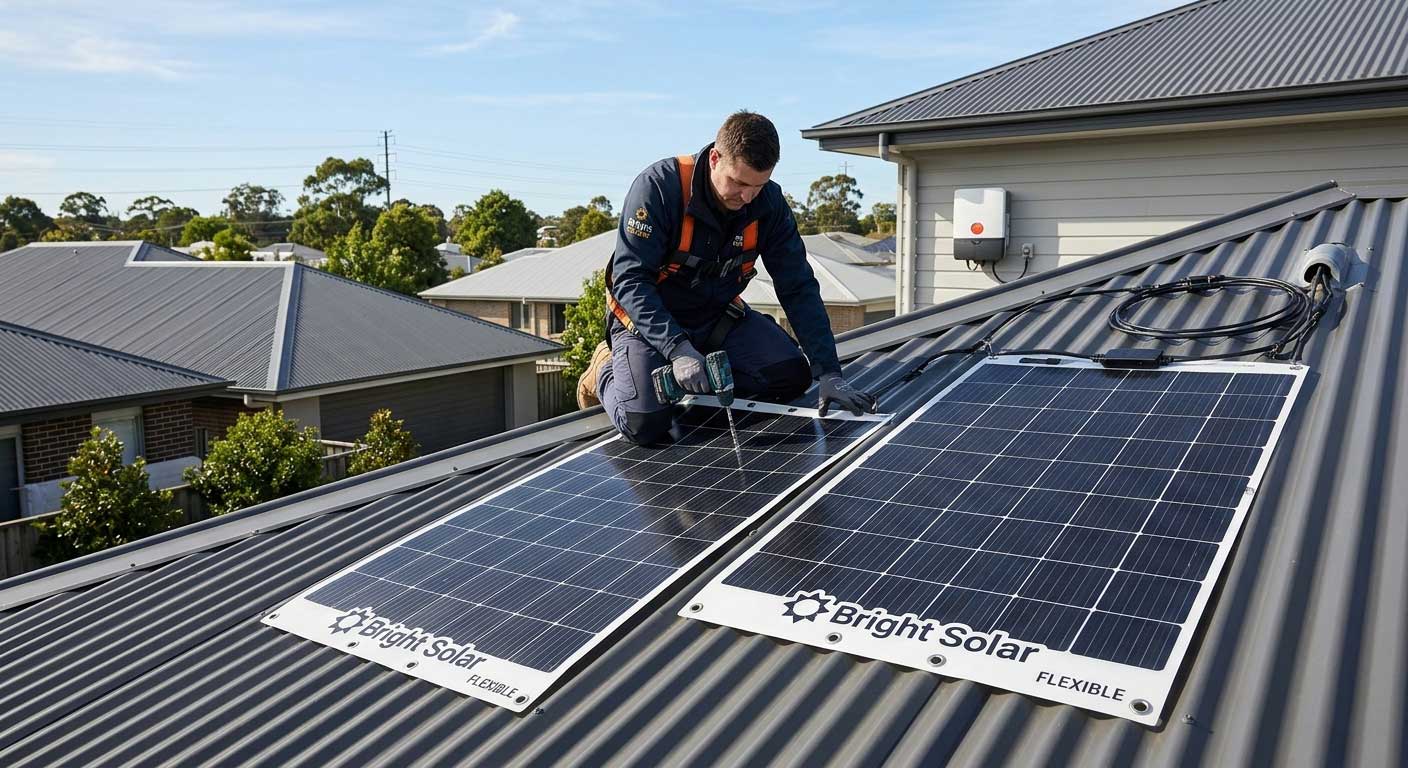
In those situations, installers frequently use:
- Stainless steel screws
- Rivets
- Waterproof sealing washers
- Reinforced mounting brackets
What matters isn’t simply the screw.
It’s the waterproofing.
A poorly sealed penetration can create damage long before a mounting failure appears.
Common Mistakes with Mechanical Mounting
- Overtightening fasteners
- Skipping sealing washers
- Using carbon-steel hardware
- Ignoring roof manufacturer guidelines
One leaking roof can erase years of energy savings.
Hybrid Mounting Systems: Often the Best Long-Term Solution
If I were installing flexible solar panels on a large commercial roof exposed to frequent storms, I wouldn’t rely exclusively on either method.
I’d combine them.
Many experienced installers quietly do the same.
Structural adhesive distributes loads evenly across the panel surface. Mechanical fasteners provide backup protection against extreme uplift forces.
The result is a system that benefits from both technologies.
Not because either method is inadequate.
Because redundancy is valuable.
Especially after seeing what 70 mph wind gusts can do.
Understanding Wind Loads Before Installation
Most homeowners underestimate wind pressure.
A panel sitting flat on a roof appears secure. Yet turbulent airflow around edges creates uplift forces that can exceed expectations.
The Solar Energy Industries Association (SEIA) recommends that rooftop solar systems comply with local structural and wind-load requirements established by applicable building codes.
Before fastening flexible solar panels, consider:
- Roof height
- Building exposure
- Regional wind zone
- Panel size
- Roof geometry
These variables influence mounting requirements far more than panel wattage.
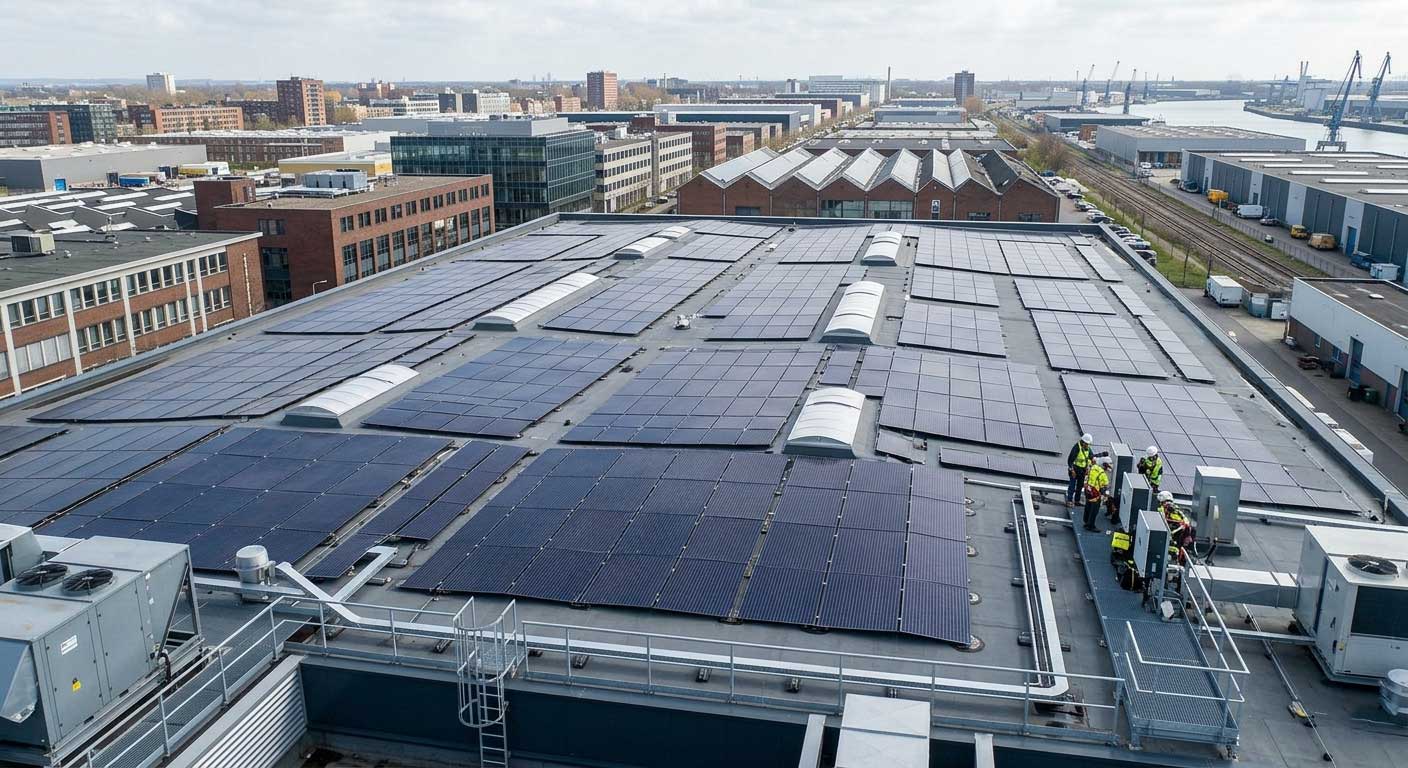
Installation Conditions That Many Guides Ignore
Temperature matters.
More than most people realize.
On a summer afternoon, dark metal roofing can exceed 70°C (158°F). Adhesive behavior changes dramatically under those conditions.
Likewise, attempting installation during cold weather may prevent proper curing.
I’ve watched installers rush jobs because rain was approaching.
Months later, they were replacing sections that never bonded correctly.
Patience usually costs less than repairs.
FAQs About how to fasten flexible solar panels to roof?
Can flexible solar panels be mounted without drilling?
Yes. Many flexible solar installations successfully use structural adhesives without any roof penetrations, provided the roof material is compatible and properly prepared.
What is the best adhesive for flexible solar panels?
A UV-resistant structural adhesive designed for exterior bonding and photovoltaic applications generally provides the most reliable results.
Are screws better than adhesive?
Not necessarily. Adhesives distribute loads evenly, while screws provide concentrated mechanical retention. The best choice depends on environmental conditions.
How long will adhesive-mounted panels stay attached?
When installed correctly, quality structural adhesives can remain effective for well over a decade, depending on climate exposure and maintenance practices.
Can flexible solar panels survive strong winds?
Yes. Properly installed systems routinely withstand severe weather, although coastal and hurricane-prone areas often benefit from hybrid mounting methods.
Visit the product page:Flexible Solar Panel
Final Answer
When evaluating how to fasten flexible solar panels to roof structures, the most dependable solution is to match the mounting method to the roof type and environmental conditions. Adhesive mounting works exceptionally well on many smooth surfaces, mechanical fasteners provide additional security in demanding climates, and hybrid systems often deliver the greatest long-term reliability. At Bright Solar, we’ve consistently found that careful preparation, proper material selection, and realistic assessment of local weather conditions determine installation success far more than any single mounting product.
The prev: How to Fix Flexible Solar Panel?The next: how to fix flexible solar panel on roof?
Related recommendations
-

Do Solar Panels Add Value to Your House?
148Solar panels can add value to a house, but the effect is not guaranteed. Ownership, system condition, documented performance, local electricity prices, and b...
View details -
How to Install Flexible Solar Panel on RV Roof?
227Learn how to install flexible solar panel on RV roof safely and correctly. Discover real-world installation tips, mounting methods, wiring advice, and common mistakes to avoid.
View details -
how to set up a portable solar panel system?
148Set up a portable solar panel system by positioning the panel in direct sunlight, connecting it to a compatible controller or power station, and checking vol...
View details -
How many solar panels do I need to run an AC?
248How many solar panels do I need to run an AC? Learn the exact solar panel size, wattage, and system setup required to power air conditioners efficiently with Bright Solar.
View details