
How Many Kilowatts Can a Solar Panel Produce?
How Many Kilowatts Can a Solar Panel Produce?
A residential solar panel typically delivers 0.35–0.55 kilowatts (kW) of peak power, depending on its rated capacity. Under normal operating conditions, that translates into roughly 1–3 kilowatt-hours (kWh) of electricity per day, with actual output varying according to sunlight, location, temperature, and installation quality.
One detail often causes confusion: homeowners frequently use kilowatts (kW) and kilowatt-hours (kWh) interchangeably. They describe different things. A solar panel’s kilowatt rating refers to its maximum power output at a specific moment, while kilowatt-hours measure the amount of electricity generated over time.
At Bright Solar, we spend as much time explaining this distinction as we do designing photovoltaic systems. During site evaluations, customers often point to a “400 W panel” and ask whether it can continuously produce 400 watts all day. In reality, the panel reaches its rated output only when sunlight, temperature, and irradiance closely match laboratory testing conditions.
Understanding that difference leads to more realistic expectations—and ultimately better system design.
Understanding Kilowatts vs. Kilowatt-Hours
Before estimating production, it’s helpful to distinguish two related but different measurements.
| Measurement | Meaning | Example |
|---|---|---|
| Kilowatt (kW) | Instantaneous power output | A 400 W panel = 0.4 kW peak power |
| Kilowatt-hour (kWh) | Energy generated over time | A 400 W panel may generate about 1.8–2.2 kWh on a sunny day |
Think of power as the speed of a moving car, while energy is the total distance traveled. One measures capacity at a given moment; the other measures work completed over time.
According to the U.S. Department of Energy (DOE), residential photovoltaic systems are generally sized using kilowatts, whereas household electricity bills record consumption in kilowatt-hours.
How Many Kilowatts Can a Solar Panel Produce at Peak Output?
Modern residential modules have become considerably more powerful than those installed only a decade ago.
Typical ratings include:
| Solar Panel Rating | Peak Power Output |
|---|---|
| 350 W | 0.35 kW |
| 400 W | 0.40 kW |
| 450 W | 0.45 kW |
| 500 W | 0.50 kW |
| 550 W | 0.55 kW |
Commercial installations may use larger modules approaching 600–700 W, but most residential roofs today rely on panels rated between 400 W and 550 W, balancing efficiency, size, and installation flexibility.
It’s important to remember that these values represent maximum DC output under Standard Test Conditions (STC):
- Solar irradiance: 1,000 W/m²
- Cell temperature: 25°C (77°F)
- Air mass: AM1.5
Outdoor conditions rarely remain identical to laboratory settings throughout the day.
Why Peak Output Rarely Lasts All Day
During commissioning visits, our engineers often compare inverter production curves with manufacturer specifications.
One pattern appears consistently.
Output gradually increases after sunrise, reaches its highest point near solar noon, and then declines through the afternoon. Cloud movement, seasonal sun angle, roof orientation, and rising module temperatures all influence this curve.
Even in regions with exceptional solar resources, most panels produce their rated power only for a relatively short period around midday.
This is why annual energy generation is a much better indicator of system performance than momentary peak output.
What Factors Affect Solar Panel Kilowatt Output?
The panel rating printed on its label represents potential—not guaranteed production.
Several environmental and installation factors determine whether a panel approaches its rated capacity.
Available Solar Irradiance
Solar irradiance measures the amount of sunlight reaching the panel surface.
States such as Arizona, Nevada, and New Mexico receive substantially higher annual irradiance than northern regions, allowing systems to operate closer to their rated capacity for longer periods.
The National Renewable Energy Laboratory (NREL) models these regional differences using long-term weather observations through its widely used PVWatts® Calculator.
Temperature
More sunlight generally means more electricity, but higher temperatures do not.
Most crystalline silicon modules lose approximately 0.3%–0.5% of rated power for every 1°C above 25°C, depending on the manufacturer’s temperature coefficient.
During summer maintenance visits, we’ve measured rooftop panel temperatures exceeding 60°C, resulting in noticeably lower instantaneous output despite clear skies.
Adequate airflow beneath roof-mounted systems helps reduce thermal losses.
Roof Orientation and Tilt
Panel positioning influences annual production almost as much as local weather.
For installations in the Northern Hemisphere:
- South-facing roofs generally provide the highest annual output.
- East- and west-facing roofs often produce slightly less total energy but may better match household electricity demand patterns.
- Roof pitch should be selected according to regional latitude whenever possible.
Small differences in orientation become increasingly significant over the lifespan of a solar system.
System Losses
Even under ideal weather conditions, not all generated electricity reaches household appliances.
Typical losses include:
- Inverter conversion
- Electrical wiring
- Dust accumulation
- Partial shading
- Module mismatch
- Aging components
According to NREL, total system losses of approximately 14% are commonly used for residential production modeling.
Typical Solar Panel Output in Real Conditions
While a residential solar panel may be rated at 0.4–0.55 kW, actual electricity generation depends on the number of effective sunlight hours received each day.
The following estimates represent typical annual performance for a 400 W panel installed under average U.S. conditions.
| Time Period | Typical Output |
|---|---|
| Peak Instantaneous Output | 0.40 kW |
| Daily Energy Production | 1.5–2.2 kWh |
| Monthly Energy Production | 45–66 kWh |
| Annual Energy Production | 550–800 kWh |
Looking beyond the nameplate rating helps homeowners better estimate long-term electricity savings and determine the appropriate system size for their property.
Real-World Examples of Solar Panel Kilowatt Output
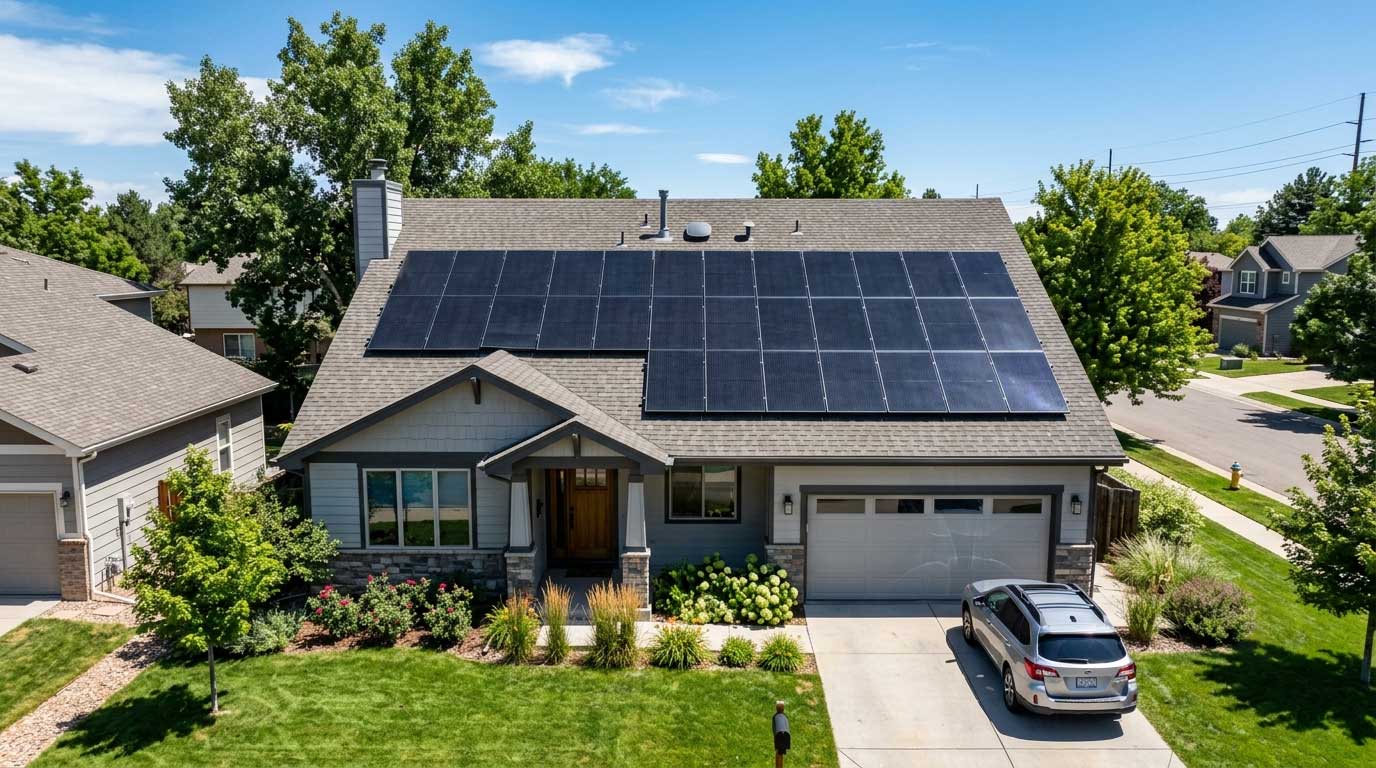
A solar panel’s rated power tells you what it can produce under controlled laboratory conditions. Daily operation is different. Weather changes, seasonal sunlight, roof pitch, and surrounding obstacles all influence how close a panel comes to its nameplate rating.
At Bright Solar, we compare design estimates with actual inverter monitoring data after installation. Across dozens of residential projects, the largest differences usually come from roof orientation and shading rather than the solar panels themselves. Two homes using identical 400 W modules can finish the year with noticeably different energy production simply because one roof receives uninterrupted afternoon sunlight while the other loses two hours to a neighboring tree.
Example 1: 400 W Panel in Phoenix, Arizona
Phoenix receives some of the highest annual solar irradiance in the United States. A properly installed south-facing 400 W panel often performs close to its design expectations.
Typical performance:
| Metric | Estimated Output |
|---|---|
| Peak Power | 0.40 kW |
| Daily Energy | 2.2–2.6 kWh |
| Monthly Energy | 67–80 kWh |
| Annual Energy | 820–950 kWh |
The panel rarely stays at 0.40 kW throughout the day. Instead, production rises during the morning, reaches its highest point around solar noon, then gradually declines as the sun moves lower.
Example 2: 400 W Panel in New York
The same panel installed in New York operates under different weather patterns and fewer peak sun hours.
Typical production:
| Metric | Estimated Output |
|---|---|
| Peak Power | 0.40 kW |
| Daily Energy | 1.4–1.8 kWh |
| Monthly Energy | 42–55 kWh |
| Annual Energy | 520–670 kWh |
Even though the rated power remains identical, annual electricity generation is lower because available solar irradiance changes with geography and season.
Example 3: Complete Residential Solar Systems
Homeowners usually purchase complete photovoltaic systems rather than individual panels.
The table below shows how panel quantities relate to common residential system sizes.
| System Size | Approximate Number of 400 W Panels | Estimated Annual Generation* |
|---|---|---|
| 1 kW | 3 | 1,350–1,650 kWh |
| 5 kW | 13 | 6,800–8,200 kWh |
| 8 kW | 20 | 11,000–13,000 kWh |
| 10 kW | 25 | 13,700–16,200 kWh |
Production estimates vary according to climate, roof orientation, and system efficiency.
According to the U.S. Energy Information Administration (EIA), an average American household consumes approximately 10,500–11,000 kWh of electricity annually. In many regions, a well-designed 8–10 kW solar system can offset most household electricity use.
How to Calculate How Many Kilowatts a Solar Panel Can Produce
Estimating production begins with understanding both power and energy.
Step 1: Identify the Panel’s Rated Power
For example:
- Panel rating: 400 W
- Peak power: 0.40 kW
This value represents maximum output under Standard Test Conditions.
Step 2: Estimate Daily Energy Production
Use the following equation:
Panel Wattage × Peak Sun Hours × System Efficiency ÷ 1000
Example:
- Panel: 400 W
- Peak sun hours: 5.5
- Overall efficiency: 85%
Calculation:
400 × 5.5 × 0.85 ÷ 1000
≈ 1.87 kWh per day
Annual production:
1.87 × 365
≈ 683 kWh per year
For location-specific estimates, our engineering team frequently uses the PVWatts® Calculator, developed by the National Renewable Energy Laboratory (NREL). It combines historical weather data with array orientation, shading assumptions, and system losses to produce more realistic forecasts.
How to Maximize Solar Panel Output
Increasing production often depends more on installation quality than on purchasing higher-wattage panels.
Based on our field experience, these practices consistently improve long-term performance:
- Install panels where shading is minimal throughout the year.
- Match roof tilt to the site’s latitude whenever practical.
- Keep panel surfaces reasonably clean in dusty or agricultural areas.
- Use premium inverters with high conversion efficiency.
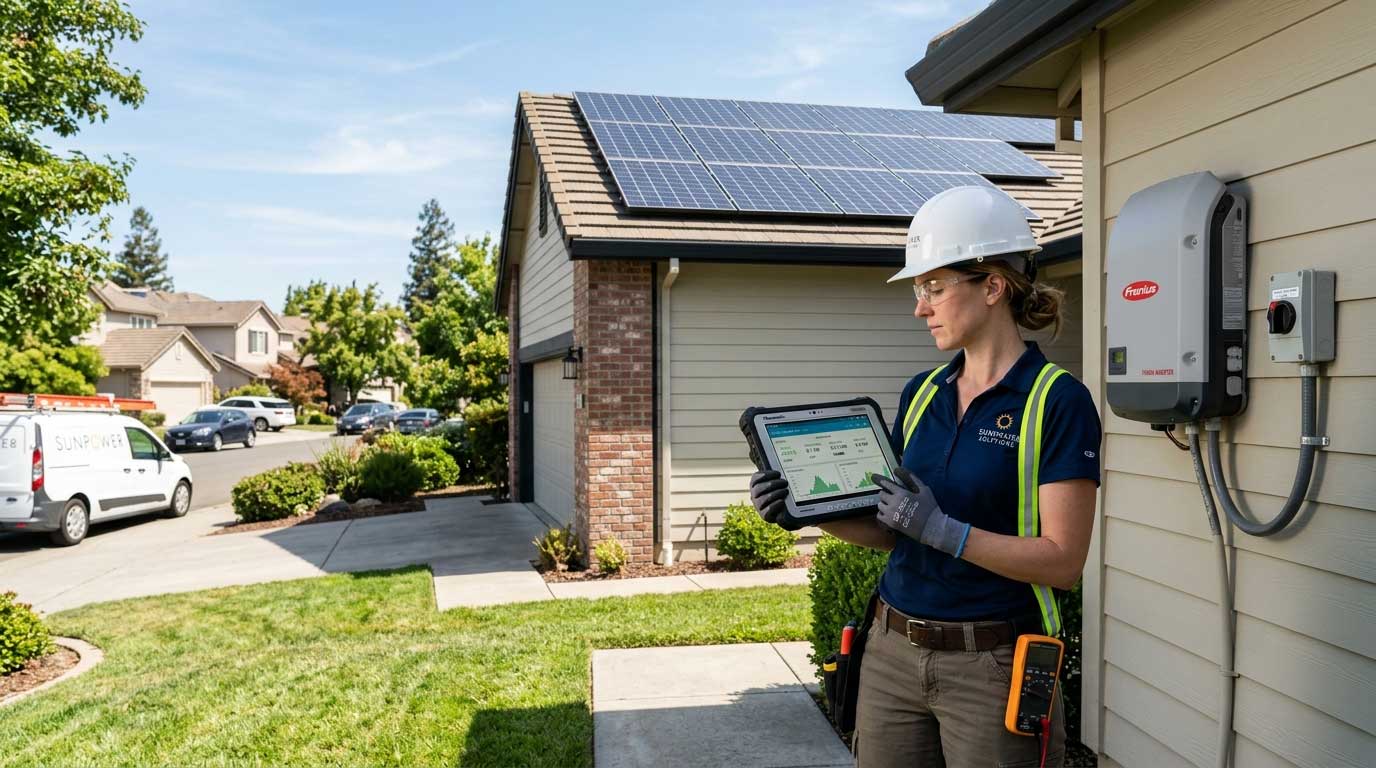
- Monitor production through inverter software to detect faults early.
- Schedule periodic inspections to identify loose wiring, damaged connectors, or excessive debris.
One detail we frequently notice is that homeowners who monitor their systems monthly tend to identify small production issues before they become significant annual energy losses.Visit the product page: Flexible Solar Panel
FAQ About How Many Kilowatts Can a Solar Panel Produce?
How many kilowatts can a residential solar panel produce?
Most residential solar panels are rated between 0.35 kW and 0.55 kW of peak power. Actual electricity generation depends on sunlight, temperature, and installation conditions.
Is a 400 W solar panel equal to 0.4 kW?
Yes. Since 1,000 watts equals 1 kilowatt, a 400 W panel has a rated output of 0.4 kW.
How many 400 W panels are needed for a 5 kW solar system?
A typical 5 kW residential system requires approximately 13 panels, although the exact number depends on the panel’s rated power.
Does a solar panel produce its rated kilowatts all day?
No. Peak power is achieved only under ideal sunlight conditions. Throughout the day, output rises and falls with solar irradiance, weather, and module temperature.
What is the difference between kW and kWh?
kW measures instantaneous power, while kWh measures the amount of electricity produced or consumed over time.
How Much Energy Can a Solar Panel Generate?
A solar panel can typically generate between 0.8 and 2.5 kWh of electricity per day depending on its wattage, sunlight hours, temperature, installation angle, and geographic location. A 400W solar panel often produces 1.6–2.2 kWh daily under good conditions.Learn more about “How Much Energy Can a Solar Panel Generate“
How Much Electric Does a Solar Panel Generate?
A typical residential solar panel generates between 1.2 and 2.5 kWh of electricity per day, depending on its wattage, sunlight hours, installation angle, temperature, and location. A modern 400W panel commonly produces about 1.6–2.2 kWh daily under favorable conditions.Learn more about “How Much Electric Does a Solar Panel Generate“
How Many kWh Does a Solar Panel Produce?
A modern residential solar panel typically produces between 1 and 2.5 kWh of electricity per day, or roughly 300–900 kWh per year, depending on its wattage, local sunlight, orientation, temperature, and system efficiency. Most homeowners see actual production fall within this range under normal operating conditions.Learn more about “How Many kWh Does a Solar Panel Produce“
How Much Energy Does a Solar Panel Produce?
A typical residential solar panel produces approximately 1–2.5 kWh of electricity per day, or 300–900 kWh per year, depending on panel wattage, available sunlight, roof orientation, temperature, and overall system efficiency. Actual energy production varies by location and installation quality rather than panel rating alone.Learn more about “How Much Energy Does a Solar Panel Produce“
About the Author
This article was prepared and technically reviewed by the engineering team at Bright Solar. Our specialists design residential and commercial photovoltaic systems, evaluate production forecasts, and analyze long-term field performance. The guidance presented here combines practical installation experience with publicly available research from internationally recognized energy organizations, helping homeowners make informed decisions based on realistic performance expectations rather than laboratory ratings alone.
References
For transparency and technical accuracy, the data referenced in this guide is based on publications and tools from the following organizations:
- U.S. Department of Energy (DOE) – Homeowner’s Guide to Going Solar
https://www.energy.gov - National Renewable Energy Laboratory (NREL) – PVWatts® Calculator
https://pvwatts.nrel.gov - National Renewable Energy Laboratory (NREL) – Solar Research Resources
https://www.nrel.gov - U.S. Energy Information Administration (EIA) – Residential Electricity Consumption Statistics
https://www.eia.gov - International Energy Agency (IEA) – Solar PV Market Reports
https://www.iea.org
The prev: How Much Energy Does a Solar Panel Produce?The next: How Long Do Solar Panels Last?
Related recommendations
-

How to Mount Flexible Solar Panels?
223How to mount flexible solar panels safely on RVs, vans, boats, and curved roofs. Learn adhesive methods, airflow tips, wiring practices, and installation mistakes to avoid.
View details -
How to Install Flexible Solar Panels on Van?
196Learn how to install flexible solar panels on van roofs safely and efficiently. Real installer tips, wiring advice, mounting methods, and maintenance insights.
View details -
How Much Does One Solar Panel Cost?
156How much does one solar panel cost? Discover current solar panel prices, what affects costs, and how to choose the right panel for your home with Bright Solar's expert guide.
View details -
How Much Are Solar Panels for House?
106How much are solar panels for house? Explore real home solar costs, installation factors, system pricing, and expert insights from Bright Solar.
View details