How Much Is 1 Solar Panel?
How Much Is 1 Solar Panel?
One residential solar panel typically costs between $150 and $400 for the panel alone, while premium high-efficiency models may cost $450 to $700. The final price depends on panel wattage, cell technology, manufacturer, efficiency, warranty, and purchase volume.
When homeowners search “how much is 1 solar panel”, they’re often surprised that there isn’t a universal price tag. A 350W module, a 450W module, and a premium 600W panel are designed for different applications and naturally carry different costs.
At Bright Solar, we’ve found that evaluating a solar panel by purchase price alone rarely leads to the best investment. Production efficiency, long-term reliability, degradation rate, and warranty coverage often have a much greater impact on lifetime value than the initial purchase price.Visit the product page: Flexible Solar Panel
Average Price of One Solar Panel
The table below shows typical retail price ranges for common residential photovoltaic modules.
| Panel Power | Typical Panel Price (USD) |
|---|---|
| 350W | $150–$220 |
| 400W | $180–$280 |
| 450W | $220–$350 |
| 550W | $300–$500 |
| 600W+ Premium | $450–$700 |
These prices generally refer to the solar panel only and do not include mounting hardware, inverter, wiring, labor, permitting, or installation.
According to the U.S. Department of Energy, total residential solar system pricing depends on equipment, installation labor, permitting, and local market conditions rather than module cost alone.
Reference:
https://www.energy.gov/eere/solar
How Much Does One Solar Panel Cost Per Watt?
Many solar professionals compare products using price per watt rather than total panel price.
The calculation is straightforward:
Price per Watt = Panel Price ÷ Panel Wattage
Examples:
| Panel Price | Panel Size | Cost per Watt |
|---|---|---|
| $180 | 400W | $0.45/W |
| $250 | 450W | $0.56/W |
| $350 | 550W | $0.64/W |
Price per watt provides a more meaningful comparison because larger panels naturally cost more.
However, lower cost per watt does not always represent better overall value. Warranty, efficiency, and long-term performance should also be considered.
What Determines the Price of a Solar Panel?
Several factors influence the cost of an individual photovoltaic module.
Panel Wattage
Higher-wattage modules require more photovoltaic cells and generally command higher prices.
For example:
- 350W
- 400W
- 450W
- 550W
- 600W
Larger modules typically generate more electricity under identical sunlight conditions.
Solar Cell Technology
Different cell technologies carry different manufacturing costs.
Common examples include:
- Monocrystalline PERC
- TOPCon
- Heterojunction (HJT)
- Back Contact (IBC)
Higher-efficiency technologies usually cost more initially but may provide greater long-term energy production.
Panel Efficiency
Premium residential modules now commonly exceed 22% efficiency.
Higher efficiency allows homeowners to install fewer panels where roof space is limited.
Manufacturer Reputation
Established manufacturers often include:
- Longer product warranties
- Lower annual degradation rates
- More extensive quality testing
- Better technical support
Although these products may cost more, they often reduce long-term ownership costs.
Is Buying the Cheapest Solar Panel the Best Choice?
Not necessarily.
During project evaluations at Bright Solar, we’ve seen situations where a lower-priced module produced less electricity over its lifetime than a slightly more expensive alternative.
Instead of asking only:
“How much is 1 solar panel?”
Homeowners should also consider:
- Expected annual electricity generation
- Product warranty
- Performance warranty
- Annual degradation rate
- Manufacturer reliability
- Local technical support
The National Renewable Energy Laboratory (NREL) emphasizes that long-term system performance depends on module quality as well as proper installation and system design.
Reference:
How Much Does Installation Add to the Cost?
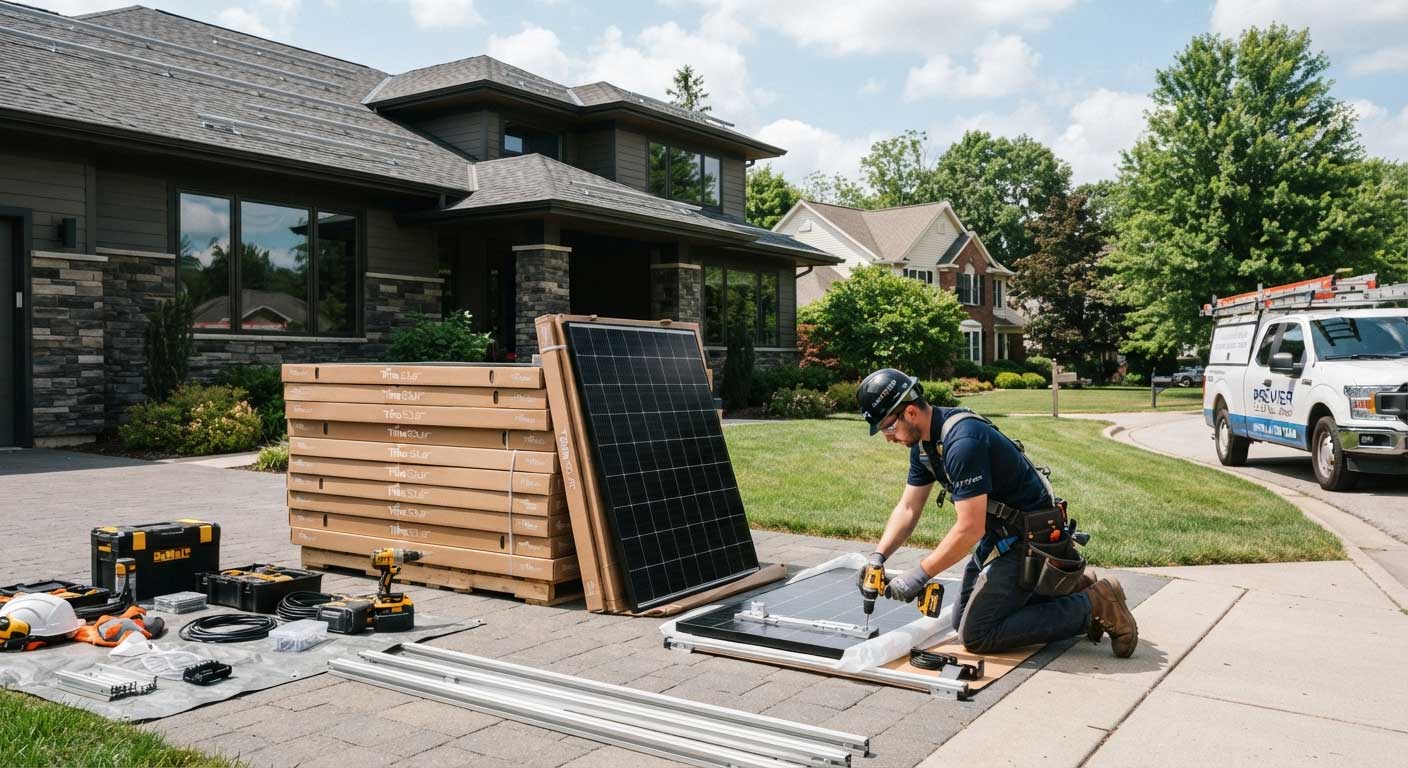
Purchasing a single solar panel represents only one portion of the total investment.
A complete residential solar project typically includes:
| Cost Component | Included |
|---|---|
| Solar panels | ✓ |
| Inverter | ✓ |
| Mounting hardware | ✓ |
| Electrical wiring | ✓ |
| Monitoring equipment | ✓ |
| Installation labor | ✓ |
| Permits and inspections | ✓ |
For this reason, the cost of one solar panel should not be confused with the total installed price of a residential photovoltaic system.
According to the Solar Energy Industries Association (SEIA), equipment represents only part of the overall cost, while installation, permitting, and balance-of-system components make up the remaining investment.
Reference:
Is Buying One Solar Panel More Expensive Than Buying a Full System?
In many cases, yes.
Manufacturers and distributors typically offer lower unit prices for bulk purchases. A homeowner purchasing a single module for a small off-grid project usually pays a higher price per panel than a contractor ordering an entire residential system.
From our experience at Bright Solar, homeowners occasionally purchase one replacement panel only to discover that finding an exact match several years later is difficult. Module dimensions, cell technology, and electrical specifications change over time, so planning for future compatibility is just as important as considering today’s purchase price.
How to Evaluate the Real Value of One Solar Panel
The purchase price tells only part of the story.
When comparing products, we recommend considering the following factors together.
| Evaluation Factor | Why It Matters |
|---|---|
| Purchase price | Initial investment |
| Efficiency | More energy from limited roof space |
| Annual degradation | Influences long-term production |
| Product warranty | Protects against manufacturing defects |
| Performance warranty | Guarantees future output |
| Manufacturer reputation | Indicates quality consistency |
A slightly more expensive module with lower degradation may generate significantly more electricity over 25 years than a cheaper alternative.
For many homeowners, the lowest purchase price is not necessarily the lowest lifetime cost.
Should You Replace One Panel or Upgrade the Entire System?
The answer depends on the age of the existing installation.
General guidance includes:
- Less than 10 years old: Replacing one damaged panel is often practical.
- 10–20 years old: Compatibility with newer modules should be carefully evaluated.
- More than 20 years old: A complete system upgrade may deliver better long-term value, especially if efficiency improvements allow greater energy production from the same roof area.
A professional inspection can determine whether the existing inverter, mounting system, and electrical configuration remain suitable for modern photovoltaic modules.
FAQ About How Much Is 1 Solar Panel?
How much is 1 solar panel?
A residential solar panel generally costs $150 to $400 for the module alone, while premium high-efficiency models may range from $450 to $700, depending on wattage, technology, and manufacturer.
Does the panel price include installation?
No. The price of one solar panel usually covers only the module itself. Inverters, mounting hardware, electrical components, permits, and labor are additional costs.
Is a more expensive solar panel always better?
Not necessarily. A higher-priced panel may offer better efficiency, a longer warranty, or lower degradation, but overall value should be evaluated using lifetime energy production rather than purchase price alone.
What is a good price per watt for a solar panel?
For individual retail purchases, many residential panels fall between $0.40 and $0.70 per watt, although pricing varies with technology, order quantity, and market conditions.
Why do two panels with similar wattage have different prices?
Differences in manufacturing quality, cell technology, efficiency, warranty coverage, brand reputation, and certification standards all influence the final selling price.
Is it better to buy one panel or a complete solar system?
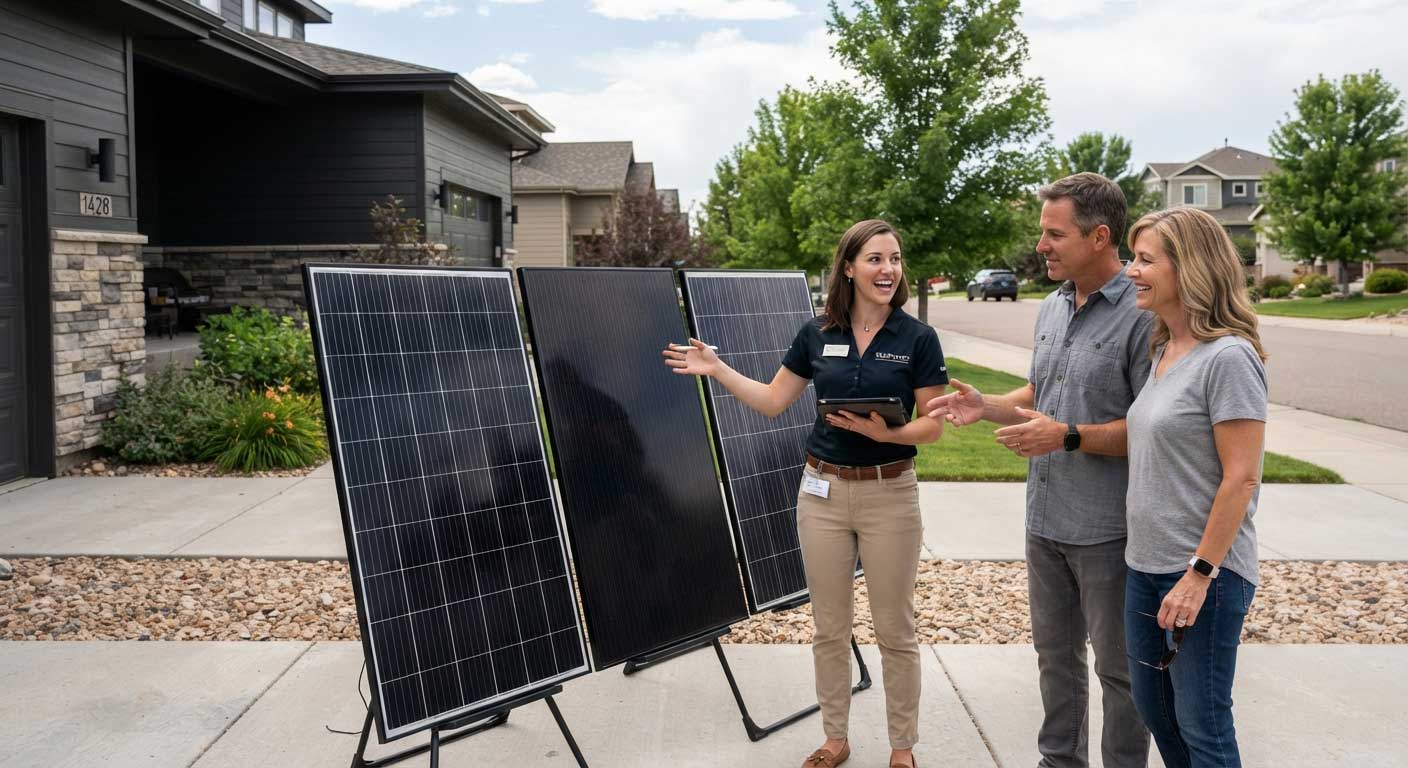
For most homeowners, purchasing a complete, professionally designed system provides better value because equipment compatibility, installation quality, and overall system performance are optimized together.
how much does a solar panel cost?
how much does a solar panel cost depends on wattage, quality, and installation scope. In 2026, a single panel typically ranges from $100–$350, while full residential systems average $15,000–$30,000 installed. Prices vary widely due to labor, inverter choice, and regional incentives.Learn more about “how much does a solar panel cost“
how much solar panels cost?
how much solar panels cost typically ranges from $100–$350 per panel, while full residential systems cost about $15,000–$30,000 installed. Pricing depends on wattage, efficiency, roof type, and labor conditions. In real projects, soft costs often exceed hardware, making installation the key price driver.Learn more about “how much solar panels cost“
Conclusion
The answer to how much is 1 solar panel depends on several factors, including wattage, efficiency, manufacturing technology, warranty coverage, and brand reputation. While most residential modules cost between $150 and $400, the lowest purchase price does not always represent the best long-term investment.
At Bright Solar, we encourage homeowners to evaluate solar panels based on lifetime energy production, product reliability, and system compatibility rather than price alone. A well-selected photovoltaic module can continue producing clean electricity for decades, making long-term performance far more valuable than short-term savings.
Related recommendations
-

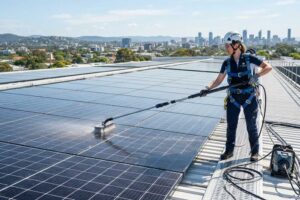
How to clean solar panels on a roof?
195How to clean solar panels on a roof? Learn safe solar panel cleaning methods, tools, and maintenance tips to improve energy performance with Bright Solar.
View details -
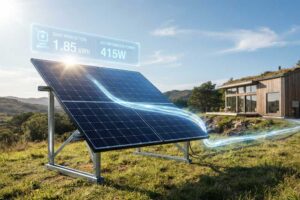
How Much Energy Can One Solar Panel Produce?
208Discover how much energy can one solar panel produce, including solar panel output, watts, kWh generation, and real-world factors affecting electricity production.
View details -
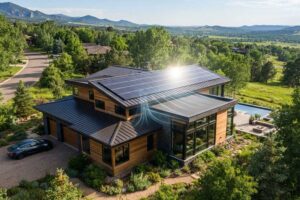
How Solar Panels Generate Electricity?
252How solar panels generate electricity explained with photovoltaic technology, solar cells, energy conversion steps, and expert solar insights from Bright Solar.
View details -
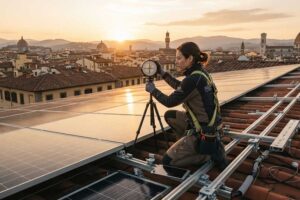
how to get my solar panels azmuth and declination?
139Learn how to get my solar panels azmuth and declination with field methods, solar geometry data, and Bright solar engineer insights for accurate panel alignment.
View details