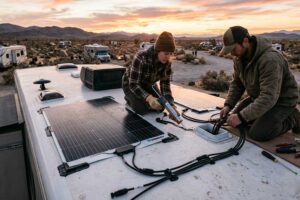
How to Attach Solar Panel Semi Flexible?
How to Attach Solar Panel Semi Flexible?
A semi flexible solar panel should be attached using a clean mounting surface, marine-grade adhesive or approved fasteners, and proper cable management. The most reliable installations balance secure bonding with heat dissipation and water drainage, helping the panel remain productive for years in RV, marine, and off-grid environments.
A few years ago, I climbed onto the roof of a customer’s motorhome in northern Arizona to inspect a solar installation that had started lifting at the corners.
The panel itself wasn’t defective.
The adhesive wasn’t defective either.
The problem was hidden underneath.
Dust. Old wax residue. Poor surface preparation.
The installer had spent less than ten minutes cleaning the roof before bonding the panel.
Three summers later, desert heat finished the job.
That experience reinforced something I’ve seen repeatedly while working with mobile solar systems: attaching a semi flexible solar panel is rarely complicated, but the small details determine whether it lasts three years or thirteen.
Why Semi Flexible Solar Panels Require a Different Installation Approach
Unlike framed solar modules, semi flexible panels don’t rely on aluminum rails for structural support.
Instead, the panel itself becomes part of the mounting system.
That creates advantages:
- Lower weight
- Reduced roof penetrations
- Better aerodynamics
- Easier installation on curved surfaces
But it also means the installation method matters more.
The National Renewable Energy Laboratory (NREL) notes that environmental conditions, thermal cycling, and mounting design all influence long-term photovoltaic reliability.
Source:
https://www.nrel.gov
A semi flexible panel may weigh only a fraction of a traditional glass module, yet it still experiences years of wind loading, vibration, UV exposure, and thermal expansion.
Choosing the Best Mounting Method
There isn’t one universal answer.
The correct attachment method depends on where the panel will spend most of its life.
Adhesive Bonding
This is the most common approach for:
- RV roofs
- Camper vans
- Sailboats
- Fiberglass structures
Advantages include:
- No drilling
- Reduced leak risk
- Cleaner appearance
- Faster installation
Most premium installations use marine-grade polyurethane adhesives designed for outdoor structural bonding.
Mechanical Fastening
Some semi flexible panels include reinforced mounting eyelets.
These can be secured using:
- Stainless-steel screws
- Rivets
- Bolted fasteners
Mechanical mounting remains popular on workboats and commercial vehicles where vibration levels are high.
Combination Installations
Many experienced installers quietly use both methods.
Adhesive handles surface loads.
Mechanical fasteners provide secondary security.
The result is often greater long-term reliability.
The Surface Preparation Step Most People Rush
I’ve never seen a solar panel fail because someone cleaned the roof too thoroughly.
I’ve seen plenty fail because they didn’t.
Before attaching a panel:
- Remove dirt
- Remove wax
- Remove grease
- Remove oxidation
- Ensure the surface is completely dry
According to 3M technical bonding guidance, contaminants significantly reduce adhesive performance and long-term bond strength.
Source:
https://www.3m.com
In practical terms, this means spending more time preparing the roof than most first-time installers expect.
That’s normal.
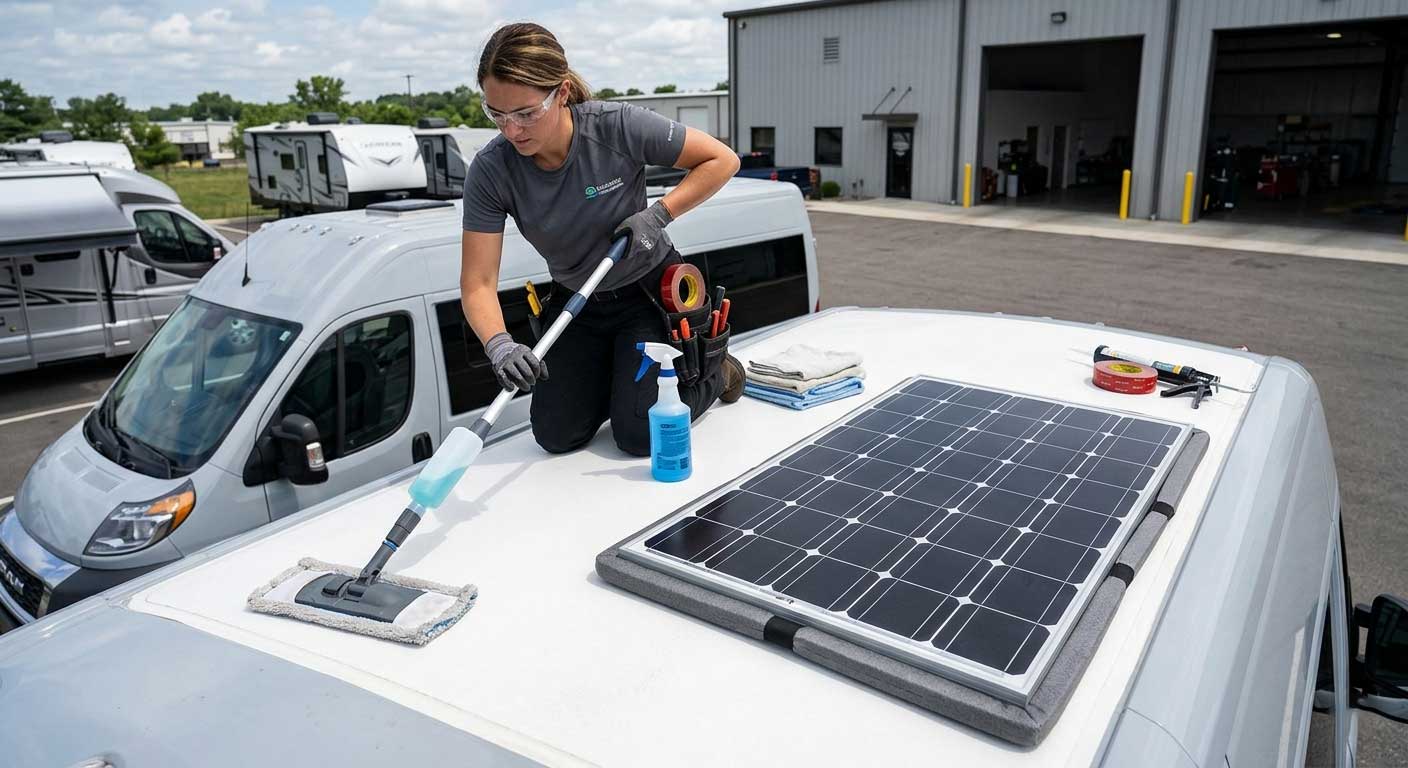
Step-by-Step Guide: How to Attach Solar Panel Semi Flexible
Step 1: Plan Panel Placement
Before opening the adhesive cartridge, determine:
- Cable entry location
- Roof obstructions
- Vent placement
- Future maintenance access
Move around the roof.
Look from multiple angles.
Many positioning mistakes become obvious only after a few minutes of observation.
Step 2: Verify Curvature
Semi flexible does not mean infinitely flexible.
Most panels have maximum bend limitations.
Exceeding those limits may create microcracks within the solar cells.
Always follow manufacturer specifications.
Step 3: Dry Fit the Panel
Place the panel exactly where it will be installed.
Check:
- Clearance
- Cable routing
- Roof accessories
- Shade sources
I usually leave a panel in place for several minutes before committing.
Small adjustments made now prevent large frustrations later.
Step 4: Apply Adhesive
Apply adhesive in controlled beads.
Avoid random blobs.
Uniform distribution provides better support.
Many marine installers intentionally leave drainage channels beneath the panel to prevent trapped moisture.
Step 5: Secure and Cure
Apply gentle, even pressure.
Do not rush curing times.
The temptation to drive away immediately is understandable.
Resisting that temptation is usually the smarter choice.
Heat Is the Hidden Enemy
One mistake appears again and again.
Installers focus entirely on attachment strength.
They forget about temperature.
Solar modules operate outdoors for years.
On a dark RV roof in Arizona, surface temperatures can exceed 160°F (71°C).
The U.S. Department of Energy notes that photovoltaic performance decreases as operating temperatures rise.
Source:
https://www.energy.gov
Heat affects:
- Power output
- Adhesive longevity
- Material expansion
- Long-term durability
Good installations account for this reality.
Practical Ways to Reduce Heat Stress
- Avoid covering drainage paths
- Use ETFE-coated panels
- Maintain recommended mounting practices
- Follow manufacturer spacing guidelines
Heat cannot be eliminated.
It can be managed.
Lessons Learned from Marine Installations
Boat owners are often surprisingly demanding solar customers.
For good reason.
The ocean exposes weaknesses quickly.
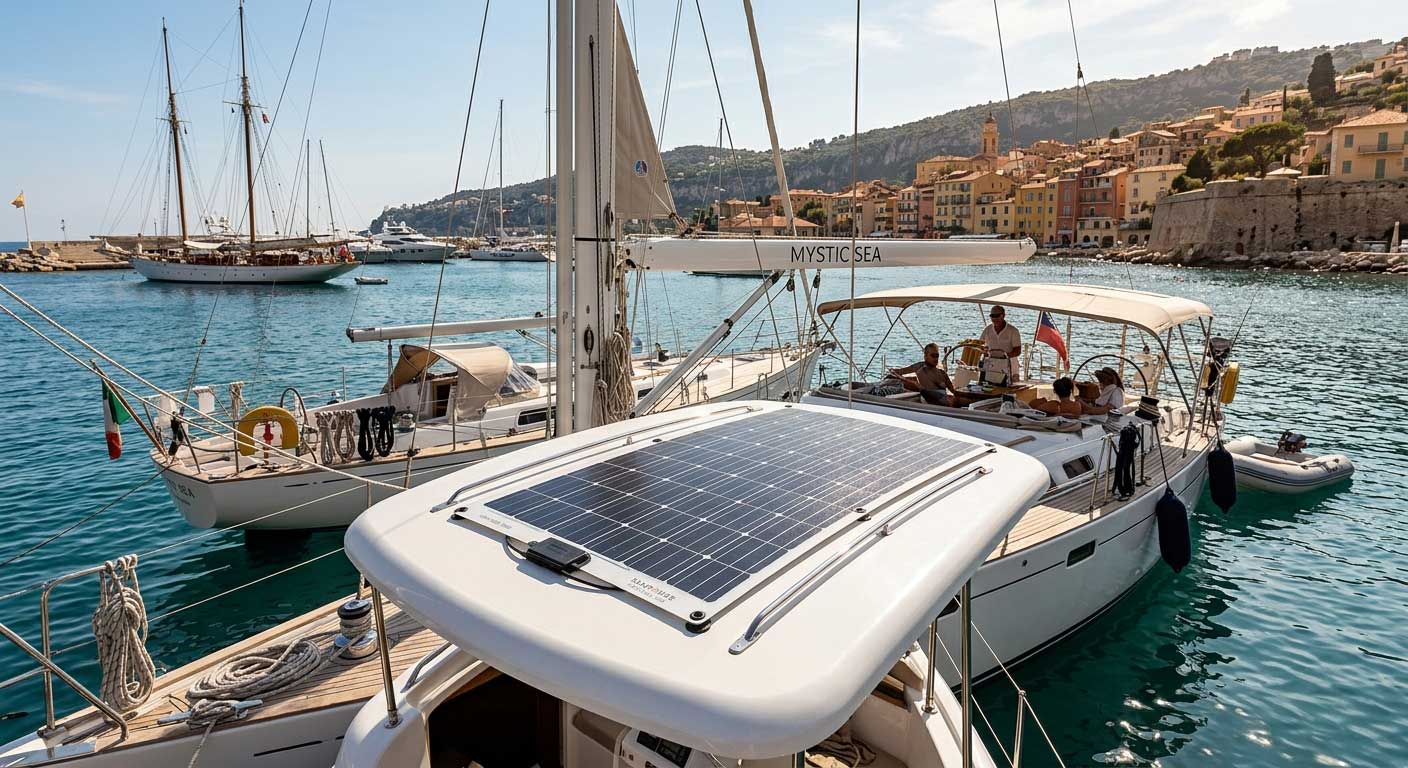
A panel attached to a yacht experiences:
- Salt spray
- Continuous vibration
- Intense UV exposure
- Moisture intrusion risks
The American Boat and Yacht Council (ABYC) regularly emphasizes proper installation practices and environmental protection for onboard electrical systems.
Source:
https://www.abycinc.org
When I inspect marine systems that have lasted a decade or more, I rarely find exotic installation techniques.
I find attention to detail.
Neat cable routing.
Clean sealant work.
Thoughtful drainage.
Nothing glamorous.
Everything important.
Common Installation Mistakes
The failures I encounter most frequently are surprisingly predictable.
Inadequate Cleaning
The most common issue.
Not the adhesive.
Not the panel.
The cleaning.
Blocking Water Drainage
Trapped moisture accelerates aging.
Excessive Bending
Flexibility has limits.
Ignoring those limits creates cell stress.
Poor Cable Protection
Loose cables eventually rub, vibrate, and wear.
Using Generic Construction Adhesives
Not all adhesives are suitable for long-term outdoor solar installations.
What Bright Solar Recommends
After reviewing hundreds of RV, marine, and off-grid projects, our recommendation remains consistent:
- Choose premium ETFE panels
- Prepare surfaces carefully
- Use marine-grade bonding products
- Protect cable entries
- Follow bend-radius specifications
Most successful installations are not the fastest ones.
They’re the ones where the installer slows down during preparation.

FAQ About How to Attach Solar Panel Semi Flexible?
How to attach solar panel semi flexible without drilling?
Most RV and marine owners use structural marine-grade adhesives that eliminate the need for roof penetrations.
Can semi flexible solar panels be glued directly to a roof?
Yes. Adhesive bonding is one of the most common installation methods when approved products and proper preparation techniques are used.
What is the best adhesive for semi flexible solar panels?
Marine-grade polyurethane adhesives are commonly selected because of their weather resistance and long-term durability.
Should semi flexible solar panels be mounted flat?
The answer depends on manufacturer recommendations, roof design, drainage requirements, and operating temperatures.
Are semi flexible solar panels suitable for boats?
Yes. Their lightweight design and ability to conform to curved surfaces make them particularly popular in marine environments.
Final Thoughts
Understanding how to attach solar panel semi flexible systems correctly is less about choosing a specific adhesive and more about respecting the installation process. Surface preparation, thermal management, drainage, and careful placement all influence long-term reliability. When those details are handled properly, a semi flexible solar panel can provide dependable power for years on RVs, boats, camper vans, and remote off-grid systems.
The prev: How Many Watts in a Volt?The next: How to Compare Marine Flexible Solar Panels?
Related recommendations
-

How Many Watts Are Solar Panels?
225How many watts are solar panels? Learn common solar panel wattages, output differences, and how to choose the right solar power size with Bright Solar.
View details -
How Solar Panels Generate Electricity?
252How solar panels generate electricity explained with photovoltaic technology, solar cells, energy conversion steps, and expert solar insights from Bright Solar.
View details -
how do solar panels generate power?
295how do solar panels generate power? Learn how photovoltaic cells convert sunlight into electricity, from solar energy absorption to usable home power systems.
View details -
how do you mount flexible solar panels?
289How do you mount flexible solar panels? Learn proven RV and van installation methods, adhesive tips, airflow strategies, and real-world mounting mistakes to avoid.
View details