ETFE vs PET Flexible Solar Panel: What Warranty Claims Show
First, a Vocabulary Correction: Front Sheet, Not Backsheet
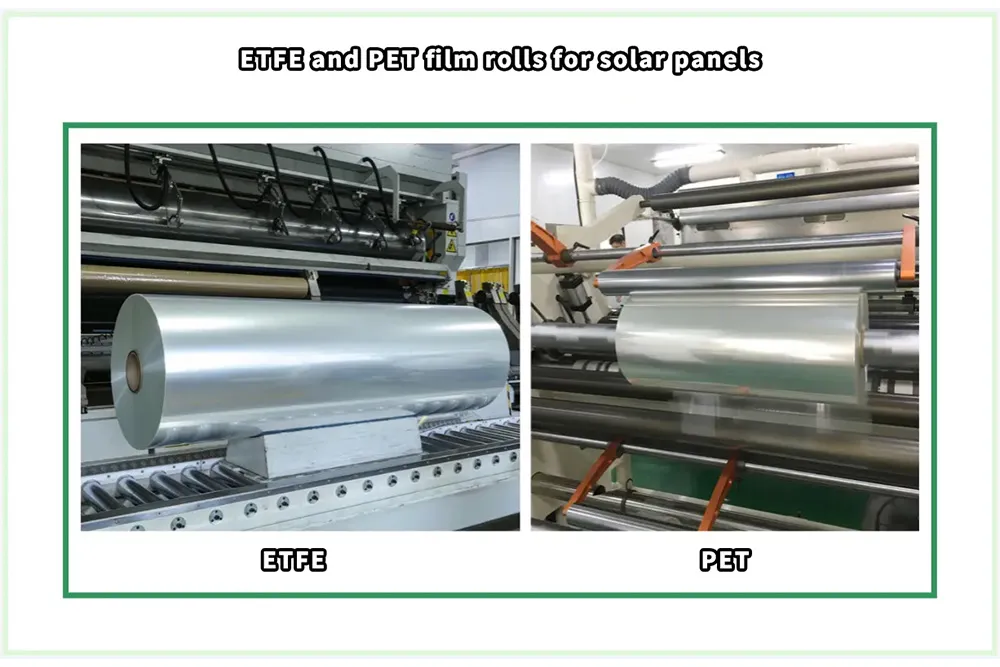
The rule: ETFE and PET are the FRONT sheet of a flexible panel, not the backsheet — and the difference between them shows up in warranty claims, not in brochures.
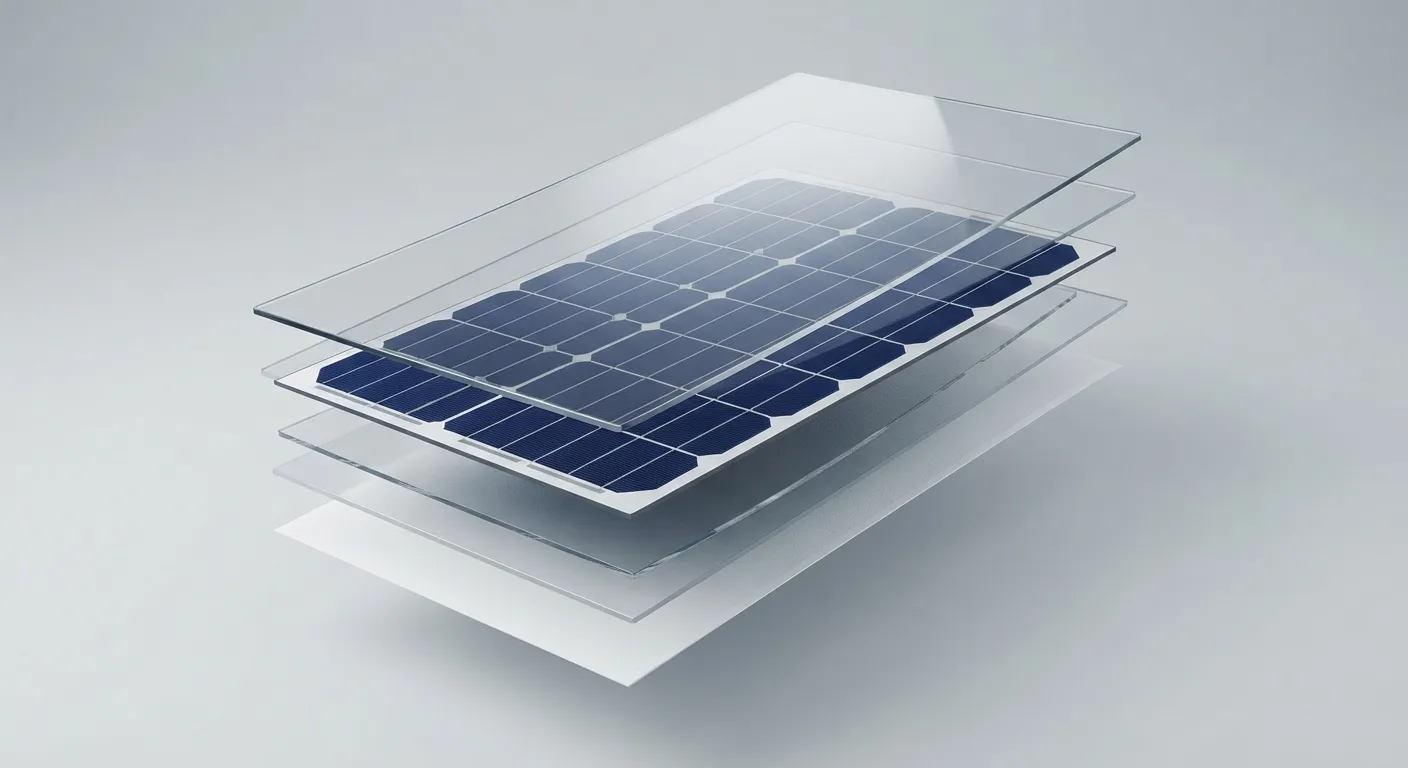
Most comparison articles, including several that rank for this keyword, call ETFE and PET backsheet materials. On a flexible module the stack runs front sheet, encapsulant (EVA), cells, encapsulant, backsheet: the front sheet is the transparent layer sun passes through and the one UV, salt and abrasion attack first; the backsheet is the white layer behind the cells. When a flexible panel yellows, it is the front sheet turning — which is why the front-sheet decision decides what your warranty costs you. We covered what ETFE is and where it is used in our ETFE flexible solar panels guide; this page covers what our claim data says about the ETFE-versus-PET choice.
What 17 Years of Warranty Claims Actually Show
The rule: ask a supplier for claims per thousand shipped, not for a warranty year — a 3-year warranty backed by a 0.4 percent claim rate and a 3-year warranty backed by 6 percent are two different products.
| Front sheet | Panels shipped since 2009 | Warranty claims (3-year window) | Claim rate | Dominant failure mode |
|---|---|---|---|---|
| ETFE front | 63,850 | 294 | 0.46 percent | Edge delamination after mishandled install |
| PET front | 41,200 | 1,712 | 4.15 percent | Front-sheet yellowing, then delamination |
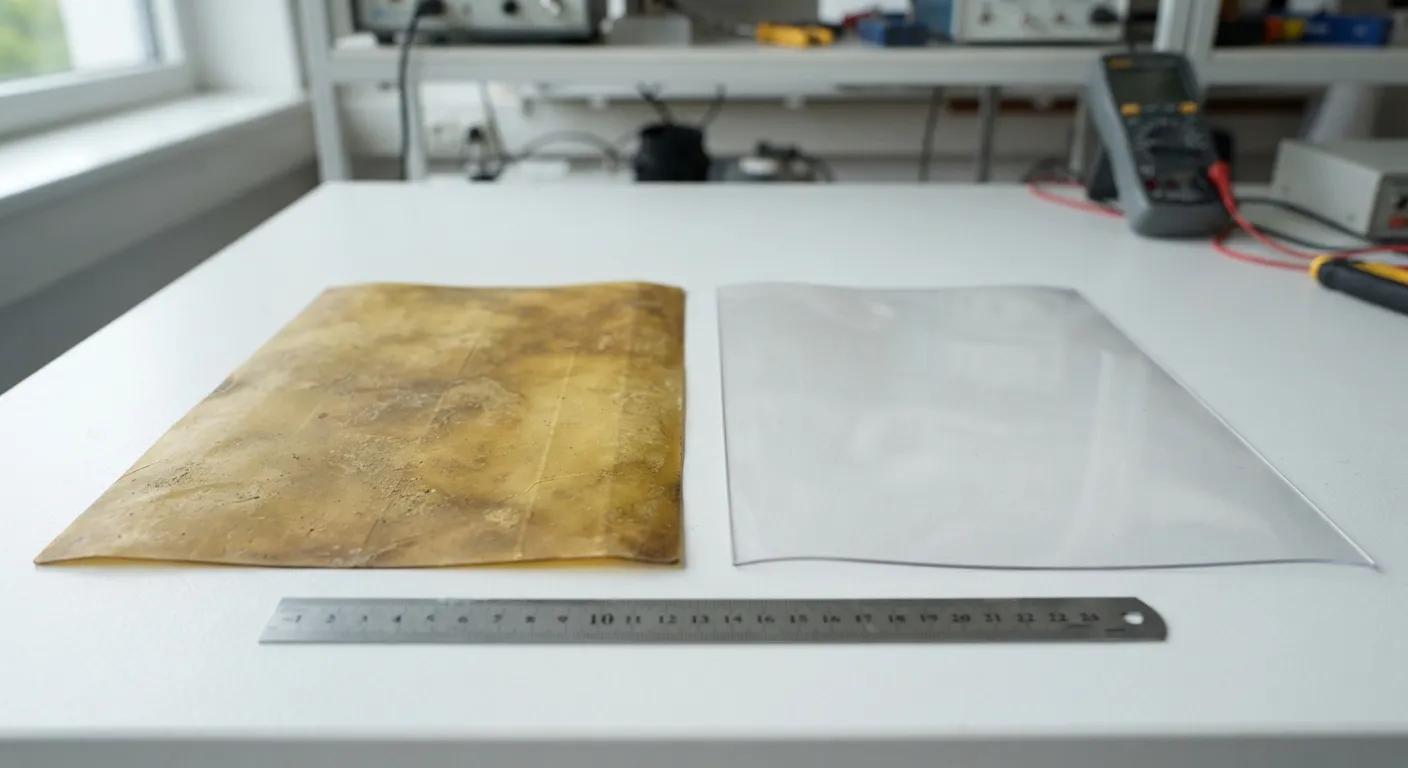
We have built flexible panels since 2009 across a 5,000 m2 plant with 16 workshops and an 11-test quality inspection process, and every claim that came back went into one database with the module’s serial number, production batch and failure photo attached. Two patterns repeat in that database. First, claims cluster in the first 18 months, which is also when UV exposure and thermal cycling expose a weak lamination. Second, the failure mode is material-dependent: PET-front failures present as yellowing that then drags the encapsulant with it, while ETFE-front failures are overwhelmingly installation damage — a foot on a folded edge, a screw through the laminate — not material breakdown. The full production and test flow behind these numbers is in our factory walkthrough.
Both of our flexible lines carry a published 3-year warranty — it is printed in the Model & Warranty table on every product page. We can hold that number because the claim rate on ETFE-front production stays inside it; a longer printed warranty on a PET-front panel is a promise the claim database eventually has to pay for.
When Yellowing and Delamination Actually Happen
The rule: PET does not fail on day one — it fails on a schedule, and the schedule is what matters for anyone reselling under their own brand.
| Symptom | PET front: first seen | PET front: typical range | ETFE front: first seen | Main trigger |
|---|---|---|---|---|
| Front-sheet yellowing | month 18 | 18 to 36 months | not observed in claim records | UV + heat cycling of the film |
| Delamination at edges | month 26 | 26 to 48 months | install damage cases only | Moisture ingress through a weak edge seal |
| Hot-spot browning | month 40 | 40 months or later | none recorded | Cell mismatch without bypass diodes |
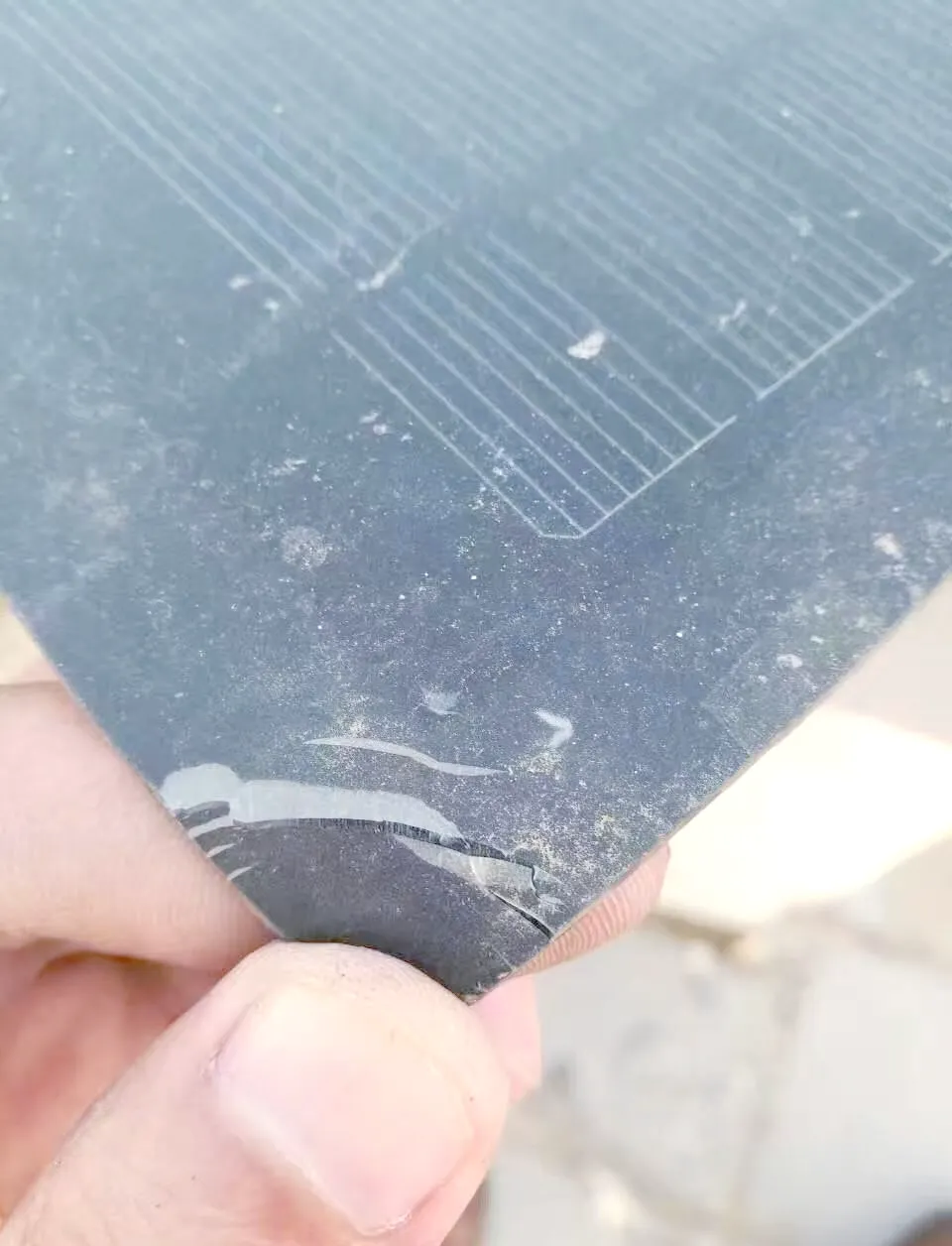
Yellowing is a PET signature, not an age signature: on PET-front production we have seen first cases inside the first 24 months of outdoor use, concentrated in high-UV deployment regions, while ETFE-front production of the same wattage and vintage has produced no yellowing claims at all. Delamination follows a second curve — it starts where the edge seal is weakest, which is why our H Series encapsulates all materials inside a double-sided ETFE construction and seals the edges fully, and why the H Series page leads with delamination-resistant encapsulation and saltwater resistance rather than with wattage. If you private-label panels, these two month ranges are the numbers to negotiate your own warranty against: your exposure begins where our claim curve bends.
The Salt Spray Test Behind the 100 Percent Salt Water Resistant Claim
The rule: salt fog results are only meaningful with a standard number, an hour count and a pass criterion — ‘salt spray tested’ alone is marketing.
| Test | Standard | Duration | Pass criterion | Result |
|---|---|---|---|---|
| Salt mist | IEC 61701, Severity 6 | 56 days, 8 cycles | Pmax loss 5 percent or less, insulation 40 MOhm or more, wet-leakage pass | Pass, Pmax loss 2.8 percent |
| Damp heat 85C / 85 percent RH | IEC 61215 | 1,000 hours | Pmax loss 5 percent or less, no visual defects | Pass, Pmax loss 3.1 percent |
| UV precondition | IEC 61215-2, 15 kWh/m2 (280-400 nm) | 150 hours at 100 W/m2 | Pmax loss 5 percent or less, no visual defects | Pass |

Our own laboratory runs the reliability suite in-house rather than outsourcing it, which is why the H Series carries the claim of 100 percent salt water resistance: the deck-mounted marine panels are designed to sit on yachts and workboats where a salt crust forms daily. The specific module behind that claim, the BS200-FS-M(E) walkable marine panel, uses a double-sided ETFE construction at 4.5 mm thickness so the surface can be walked on during deck maintenance — an abuse PET-front construction cannot be warranted against at any price.
When PET Is Actually the Right Choice
The rule: match the front sheet to the warranty you are willing to honor — PET wins wherever the product life is shorter than the yellowing curve.
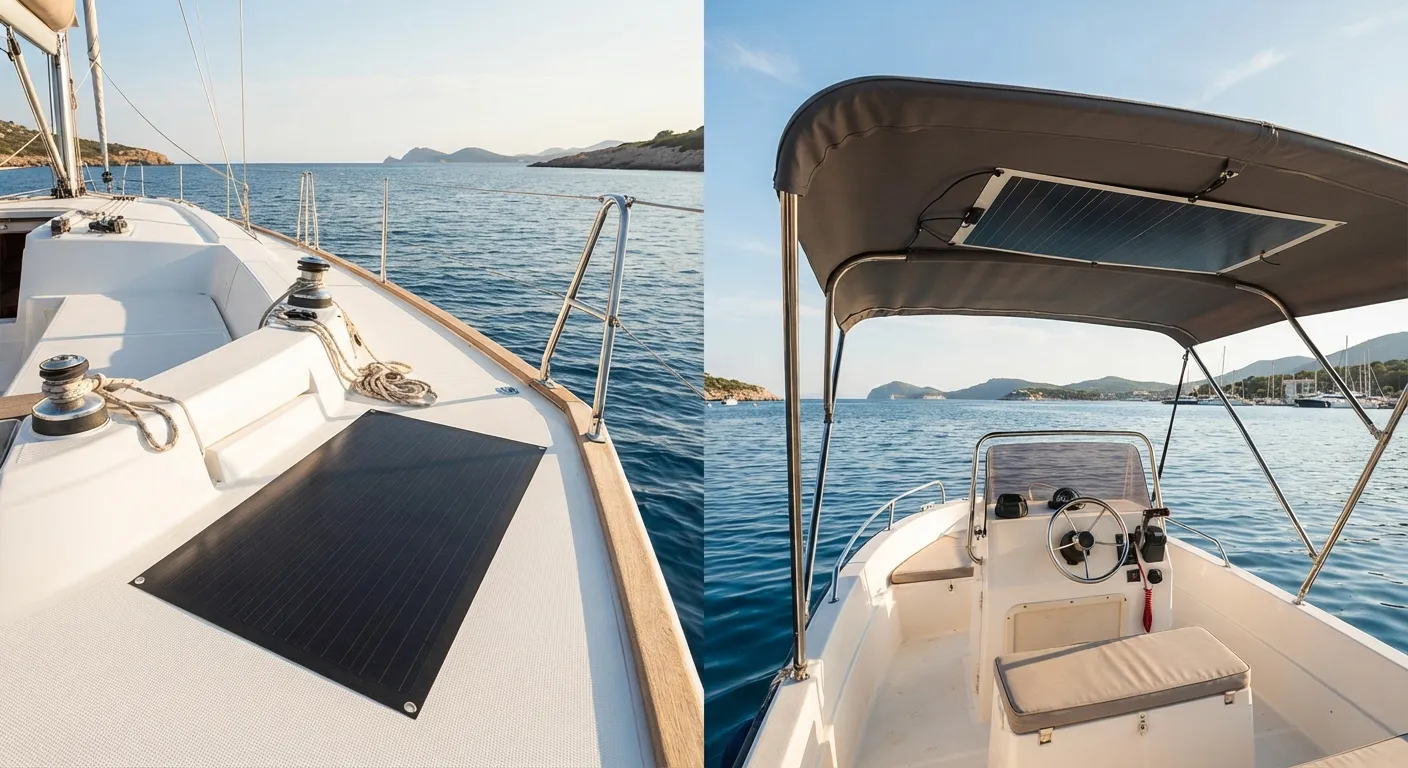
There are three situations where we recommend PET-front construction without reservation. Short-cycle products — promotional bundles, rental fleets, seasonal retail — that will be retired before month 18 never see the failure, and the cost saving goes straight to margin. Protected installations with a roof, canopy or garage overhead cut the UV load that drives yellowing. And price-capped tenders where the buyer’s own warranty is 12 months can be built honestly in PET, because the sheet and the promise now match. What does not work is a PET-front panel sold with a 5 or 10 year warranty — the claim data above is why. For buyers comparing procurement options rather than chemistry, our ETFE procurement comparison page covers the supplier-side checklist.
How This Maps to Our Two 200 Watt Panels
The rule: same ETFE decision, two constructions — one built to be walked on, one built to wrap a curve.
| Specification | BS200-FS-M(E) – H Series | BS200-FT-M(E) – L Series | Front sheet | Double-sided ETFE, sealed edges |
|---|---|---|---|---|
| DuPont ETFE, anti-soil coating | Thickness | 4.5 mm | 3.1 mm | Vmp / Ipm |
| 33 V / 6.06 A | 18.00 V / 11.11 A | Cell | 182 x 182 mm mono, 22.5 percent | 166 x 166 mm mono, 22.5 percent |
| Size / weight | 1,142 x 1,002 mm, 6.53 kg | 1,572 x 702 mm, 3.9 kg | Surface rating | Walkable, anti-slip, deck rated |
| Flexible up to 30 percent, S304 eyelets | Junction box | IP67 | IP67 | Warranty |
| 3 years | 3 years |
Both carry the same 3-year warranty and both use an ETFE front sheet; what differs is the mechanical contract with the installation surface. The H Series panel is specified for yacht and workboat decks where crew walk over it; the L Series panel is specified for curved surfaces and rail mounts, where the DuPont anti-soil coating handles spray and the S304 stainless eyelets handle the fixing load. If your application lives in salt water, start from the H Series marine range and work down by wattage rather than starting from price.
Five Questions to Ask Any Supplier Before You Accept Their Warranty
Ask for claims per 1,000 modules shipped over the last 24 months — a number, not an adjective. Ask which month failures clustered in, because that tells you when your own exposure starts. Ask which salt spray standard was used, at which severity and hour count, and whether it was run in the supplier’s own lab or outsourced. Ask whether the warranty excludes delamination — some fine print does, which quietly voids the only failure mode that matters on a flexible panel. And ask who pays return freight on an RMA, because on international B2B orders that cost can exceed the panel’s value. A supplier who answers these five from their own database is safe to warranty; one who answers from a brochure is not.
FAQ: ETFE vs PET Solar Panels
Is ETFE really better than PET for flexible solar panels?
For any panel with a multi-year outdoor warranty, our claim data says yes: PET-front production produced yellowing from around month 18 and a materially higher claim rate, while ETFE-front production’s failures were installation damage rather than material breakdown. For short-lifetime or UV-protected products, PET is a rational cost choice.
Why do PET solar panels turn yellow?
The PET film degrades under combined UV exposure and heat cycling; the yellowing is the film itself breaking down, and it usually precedes adhesion loss and delamination. It is a material property, not a manufacturing defect — which is why the month ranges matter more than the failure description.
How long do ETFE flexible solar panels last?
Our ETFE-front production has not produced yellowing or material-delamination claims within the 3-year warranty window; field life beyond that depends on lamination quality and installation abuse. We publish 3 years because that is the window our claim database supports.
Does an ETFE front sheet guarantee no delamination?
No. ETFE is the surface, not the adhesive system — lamination process control and edge sealing decide delamination. The proof is that our ETFE-front claim records still contain delamination cases: all of them traced to installation damage, none to spontaneous edge failure.
Conclusion
ETFE versus PET is not a chemistry debate; it is a warranty accounting question. PET is cheaper until the yellowing curve arrives, and after that every month of printed warranty is unpaid liability. Ask for the claim rate, ask for the failure months, ask for the salt spray hour count — and if a supplier will not show you, our claim data is available on request alongside the factory and laboratory walkthrough that produced it.
Related recommendations
-

Custom flexible solar panels for Boat Bimini top
438An 80W L-series mono panel sewn onto a Bimini top in the Netherlands, 2022: no drill holes, stitches outside the cells, 1,040 mm custom length. Real photos.
View details -
400W Solar Module Performance, Applications and Buying Guide
246400W solar module solutions for RVs, marine systems and off-grid applications. Learn output, efficiency, installation methods and real-world performance from Bright Solar.
View details -
Foldable Camping Solar Panels: How to Choose and Use Them
152Foldable camping solar panels provide portable electricity for outdoor activities, RV travel, and off-grid charging. Their performance depends on sunlight, e...
View details -
Best Flexible Solar Panel for RVs, Boats, and Off-Grid Travel
394Find the best flexible solar panel for RVs, boats, vans, and off-grid systems. Lightweight, durable, and built for real outdoor conditions.
View details