400W Solar Module Performance, Applications and Buying Guide
A 400W solar module can generate approximately 1.6–2.4 kWh of electricity per day depending on sunlight conditions, installation angle and location. It is one of the most practical power ranges for RVs, marine systems, small off-grid installations and residential backup applications because it balances output, installation area and system cost.
I still remember a customer from southern France who called after installing four 400W modules on a camper conversion. His question was not about efficiency. It was simple:
“Will these panels actually run our trip?”
Three months later he sent photos from Portugal. The refrigerator, lights, laptops and batteries had all been powered entirely by solar.
That experience reflects why the 400W solar module has become one of the most popular sizes in today’s market.
Why 400W Solar Modules Have Become So Popular
Ten years ago, 250W modules dominated residential installations.
Five years ago, 300W modules became the standard.
Today, 400W modules sit in a sweet spot.
They offer:
- Higher energy density.
- Reduced installation costs.
- Fewer modules required.
- Lower mounting expenses.
- Improved transportation efficiency.
According to the International Energy Agency, solar PV has become the fastest-growing electricity technology worldwide.
Source:
https://www.iea.org/reports/solar-pv
Modern cell technologies such as:
- PERC
- TOPCon
- Half-cut cells
- Multi-busbar technology
have made 400W modules economically attractive for both residential and mobile applications.
Typical Specifications of a 400W Solar Module
| Parameter | Typical Value |
|---|---|
| Rated Power | 400W |
| Open Circuit Voltage | 48V-50V |
| Operating Voltage | 40V-42V |
| Operating Current | 9A-10A |
| Efficiency | 20%-23% |
| Weight | 7-22 kg |
| Cell Type | Monocrystalline |
| Expected Life | 25+ years |
The actual numbers depend on whether the module is:
- Rigid glass panel.
- Lightweight composite panel.
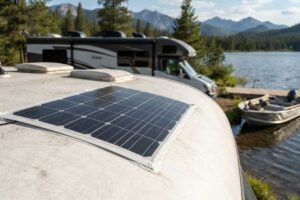
- Flexible ETFE module.
- Marine solar module.
Bright Solar lightweight modules are particularly attractive for:
- RV manufacturers.
- Marine builders.
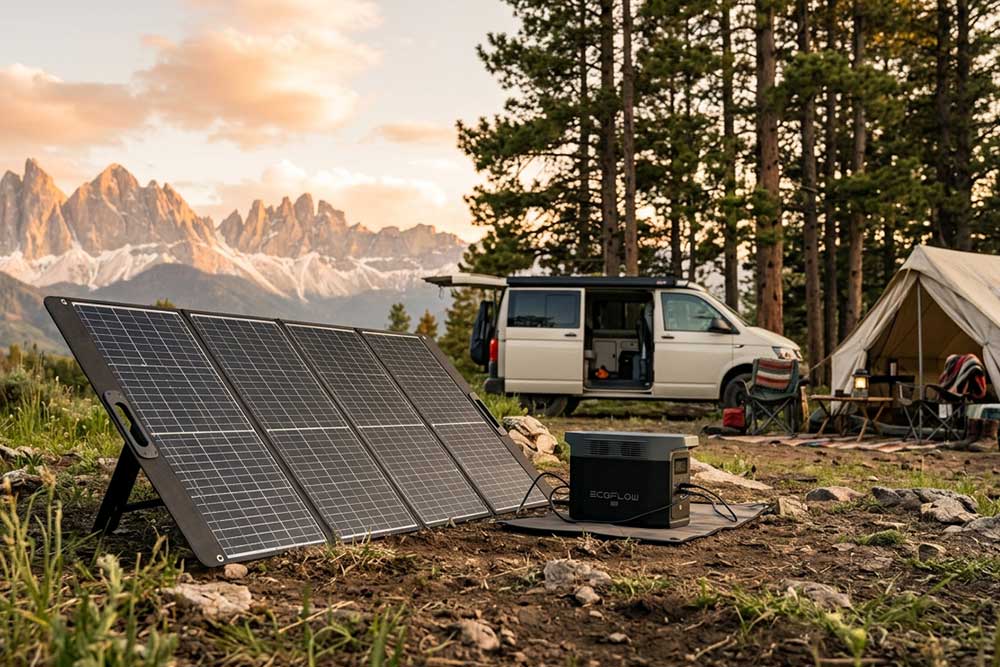
- Portable power integrators.
- Lightweight structures.
How Much Electricity Does a 400W Solar Module Produce?
The answer depends on available sunlight.
The U.S. National Renewable Energy Laboratory PVWatts database provides reliable production estimates.
Source:
https://pvwatts.nrel.gov/
| Peak Sun Hours | Daily Output |
|---|---|
| 3 hours | 1.2 kWh |
| 4 hours | 1.6 kWh |
| 5 hours | 2.0 kWh |
| 6 hours | 2.4 kWh |
Annual production may reach:
- 730 kWh/year in moderate climates.
- 850–950 kWh/year in sunny regions.
- Over 1,000 kWh/year in desert environments.
A single 400W solar module can typically power:
- Portable refrigerator.
- LED lighting.
- WiFi router.
- Laptop charging.
- Small water pumps.
- Ventilation fans.
- Battery charging systems.
Applications for a 400W Solar Module
RV Power Systems
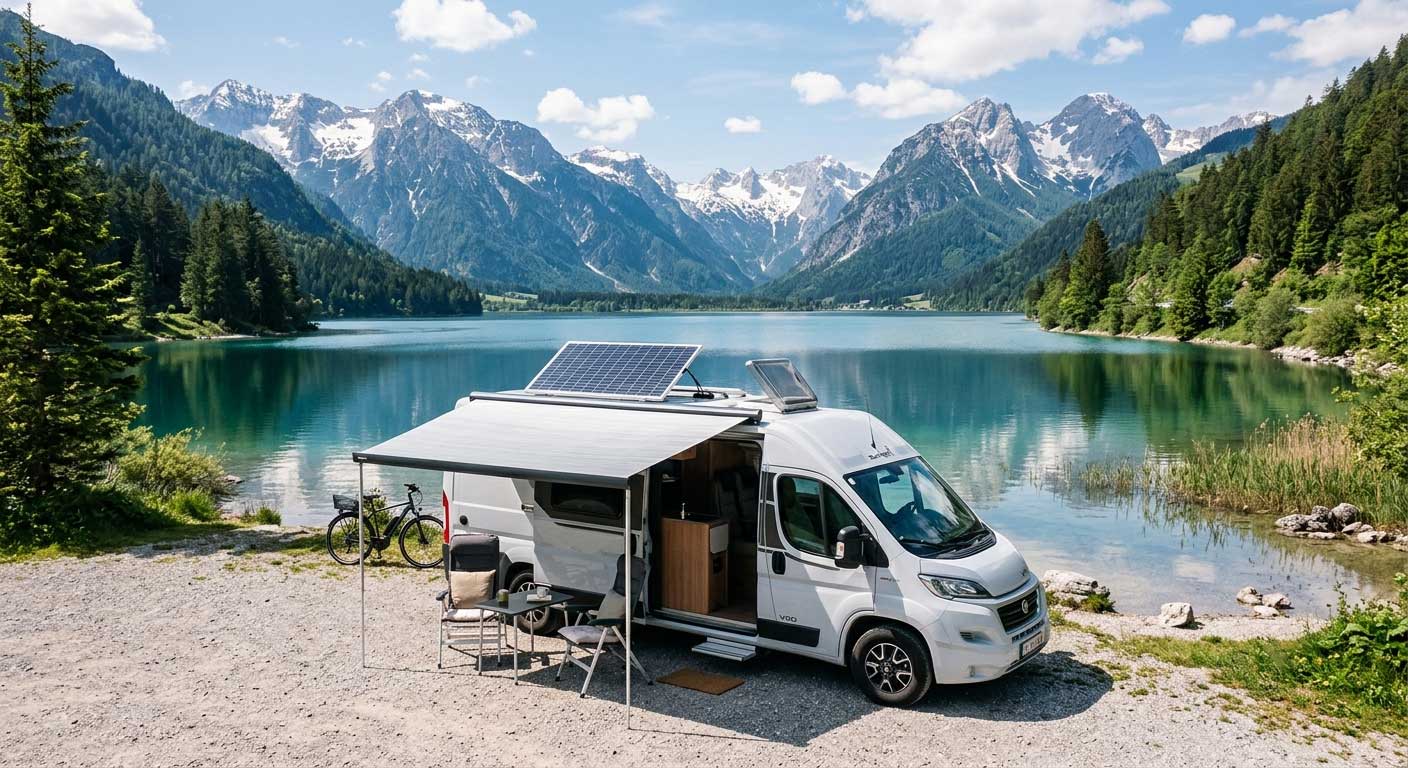
Many Class B and Class C RV owners install one or two 400W modules.
This usually supports:
- Refrigerators.
- Battery charging.
- Interior lighting.
- Fans.
- USB charging.
Marine Applications
Boat owners often prefer lightweight panels.
Reduced weight means:
- Lower fuel consumption.
- Easier installation.
- Improved deck safety.
Off-Grid Cabins
Remote cabins frequently use:
- Two to six 400W modules.
- Lithium batteries.
- MPPT controllers.
Residential Backup Systems
Homeowners increasingly install small backup arrays for:
- Emergency power.
- Essential appliances.
- Battery storage systems.
Flexible Versus Rigid 400W Solar Modules
The debate between flexible and rigid modules often depends on installation conditions.
| Feature | Flexible Module | Rigid Module |
|---|---|---|
| Weight | Very low | Heavy |
| Curved Roof | Excellent | Poor |
| Installation | Fast | Moderate |
| Wind Resistance | Low profile | Higher |
| Roof Load | Minimal | High |
| RV Use | Excellent | Limited |
| Residential Roof | Limited | Excellent |
In one project involving a lightweight aluminum trailer, replacing glass modules with flexible 400W panels reduced roof weight by nearly 40 kilograms.
That weight reduction directly improved towing efficiency.
Visit product page: 400W Flexible Solar Panel
What Can a 400W Solar Module Run?
Approximate operating times:
| Appliance | Runtime Per Day |
|---|---|
| LED lights | 20+ hours |
| Laptop | 12 charges |
| Portable fridge | 24 hours |
| CPAP machine | 2 nights |
| Television | 8 hours |
| Router | 24 hours |
Of course, battery storage significantly influences actual performance.
Author Experience
Over the past decade, our engineering team at Bright Solar has worked with:
- RV manufacturers.
- Marine equipment suppliers.
- Portable energy companies.
- Off-grid installers.
What repeatedly surprises new customers is that system design often matters more than panel wattage.
A properly installed 400W module can outperform a poorly positioned 500W panel.
Tilt angle.
Ventilation.
Shading.
Cable losses.
These factors quietly determine long-term performance.
Long-Tail Keywords Covered
- 400 watt solar panel output
- flexible 400w solar panel
- 400w solar panel for RV
- 400w off grid solar panel
Industry Data Supporting Larger Modules
The U.S. Department of Energy reports that solar module efficiency has steadily improved over the last decade.
Source:
https://www.energy.gov/eere/solar
Higher efficiency means:
- Smaller installation area.
- Lower balance-of-system costs.
- Reduced labor.
- Higher energy density.
These improvements explain why 400W modules have become increasingly common in both residential and mobile energy markets.
How Many Batteries Can a 400W Solar Module Charge?
One of the most common misunderstandings is assuming that a 400W solar module directly powers appliances. In reality, most systems charge batteries first.
Typical charging examples:
| Battery System | Battery Capacity | Approximate Charging Time* |
|---|---|---|
| 12V 100Ah Lithium | 1.28 kWh | 4-6 hours |
| 12V 200Ah Lithium | 2.56 kWh | 7-10 hours |
| 24V 100Ah Lithium | 2.56 kWh | 7-10 hours |
| 48V 50Ah Lithium | 2.4 kWh | 7-9 hours |
Actual charging time depends on sunlight conditions, controller efficiency, battery state of charge, and temperature.
In Arizona, Nevada, Spain, or Australia, a single 400W module often delivers close to its rated production during summer. In northern Europe or Canada, the same module may produce only half that energy during winter months.
Recommended System Configurations
RV Solar System
- 1 × 400W solar module
- 12V 200Ah lithium battery
- 40A MPPT controller
- 2000W inverter
Suitable for:
- Refrigerators
- Lighting
- Laptop charging
- Water pumps
- Fans
Marine System
- 2 × 400W modules
- 24V battery bank
- MPPT controller
- Marine inverter
Ideal for:
- Navigation equipment
- Refrigeration
- Lighting
- Electronics
Off-Grid Cabin
- 4 × 400W solar modules
- 48V battery bank
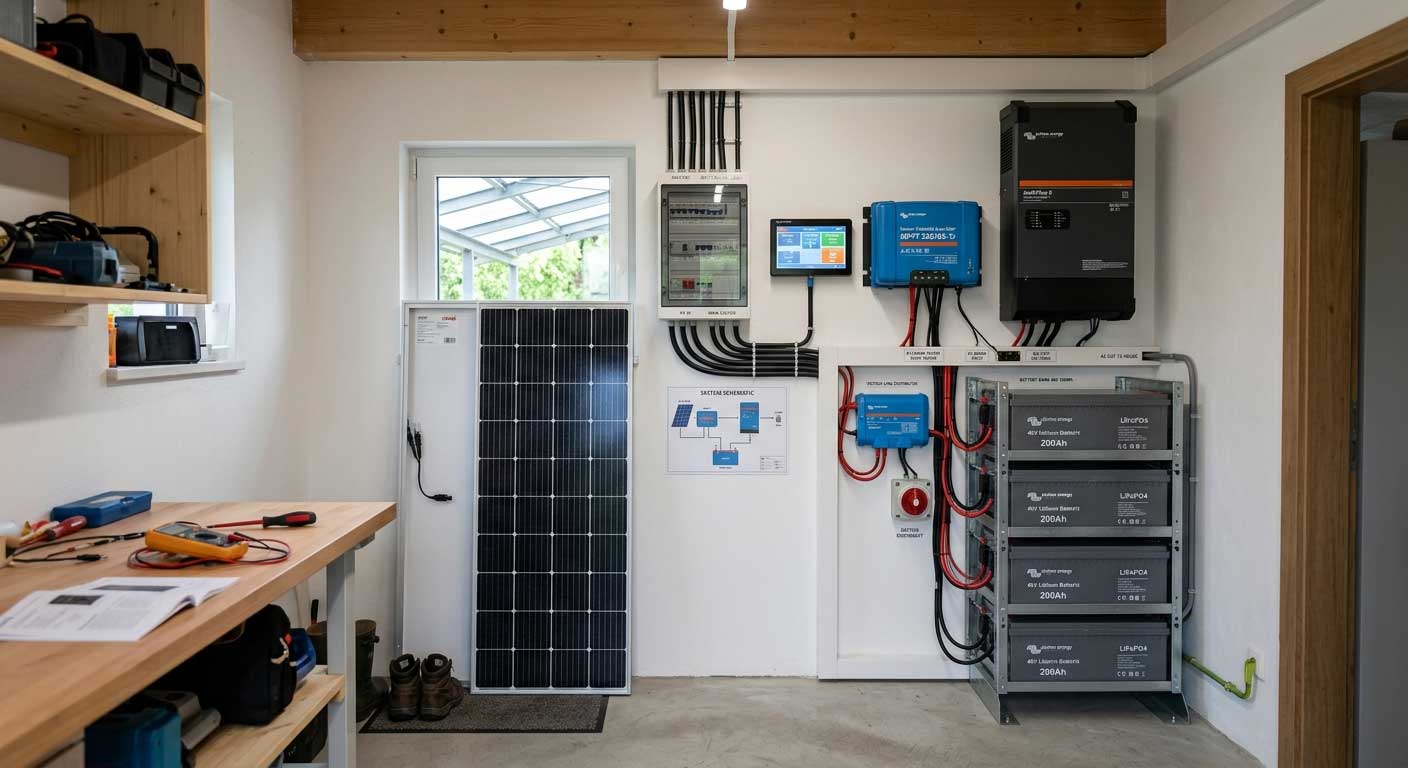
- 5kW inverter
Suitable for:
- Small houses
- Remote cabins
- Tiny homes
Installation Considerations
A 400W solar module performs very differently depending on installation.
Factors affecting output:
- Roof angle.
- Ventilation.
- Temperature.
- Shading.
- Cable losses.
- Controller efficiency.
The National Renewable Energy Laboratory indicates that operating temperature directly affects solar efficiency.
Reference:
https://www.nrel.gov/
A module mounted directly against a hot roof can lose noticeable output during summer.
Raised installations often improve cooling and increase production.
Real Customer Project
Last year, a camper conversion company in Germany installed three lightweight 400W modules on an aluminum roof.
System details:
- Total power: 1200W.
- Battery: 24V 200Ah lithium.
- Inverter: 3000W.
During a 14-day trip through southern France:
- Refrigerator ran continuously.
- Two laptops charged daily.
- Coffee machine operated each morning.
- Air ventilation operated overnight.
Generator use: zero.
The installer later reported approximately 5.8 kWh of average daily production during July.
That number closely matched PVWatts estimates.
Common Mistakes Buyers Make
After working with hundreds of projects, several mistakes appear repeatedly.
Oversizing the Inverter
Many buyers install 5000W or 6000W inverters for a single 400W module.
This increases costs unnecessarily.
Ignoring Shading
Even small shadows can reduce production.
The U.S. Department of Energy notes that shading significantly affects solar output.
Reference:
https://www.energy.gov/eere/solar
Poor Cable Selection
Voltage drop becomes more noticeable in low-voltage systems.
Proper cable sizing improves efficiency.
Wrong Controller Size
A low-cost PWM controller may reduce charging performance.
MPPT controllers generally provide better efficiency.
Why Lightweight 400W Modules Are Growing
Traditional glass modules remain excellent for residential roofs.
However, lightweight modules continue to gain popularity because they solve structural problems.
Applications include:
- RV roofs.
- Marine decks.
- Tiny houses.
- Curved surfaces.
- Portable systems.
- Lightweight metal roofs.
For many customers, reducing roof weight by 15–20 kilograms per module becomes more valuable than gaining an extra percentage point of efficiency.
This shift explains why flexible and composite 400W modules have seen increasing demand.
FAQ About 400W Solar Module
How many kWh does a 400W solar module produce daily?
Usually between 1.5 and 2.4 kWh depending on sunlight.
Can a 400W solar module run a refrigerator?
Yes. Most residential and RV refrigerators can operate using a properly designed battery system.
Is a 400W solar module enough for an RV?
For many RV users, one or two 400W modules provide sufficient daily energy.
How long does a 400W solar module last?
Most modern modules are designed for 25 years or longer.
According to the U.S. Department of Energy, solar panels can continue operating well beyond their warranty period.
Reference:
https://www.energy.gov/eere/solar
Flexible or rigid 400W modules?
Rigid modules offer maximum efficiency.
Flexible modules provide:
- Lower weight.
- Easier installation.
- Curved surface compatibility.
The best choice depends on the application.
Final Thoughts from Bright Solar
Over the years, one lesson has become clear.
A 400W solar module is not simply a number printed on a label.
Its real value depends on:
- Installation quality.
- Environmental conditions.
- Battery sizing.
- System design.
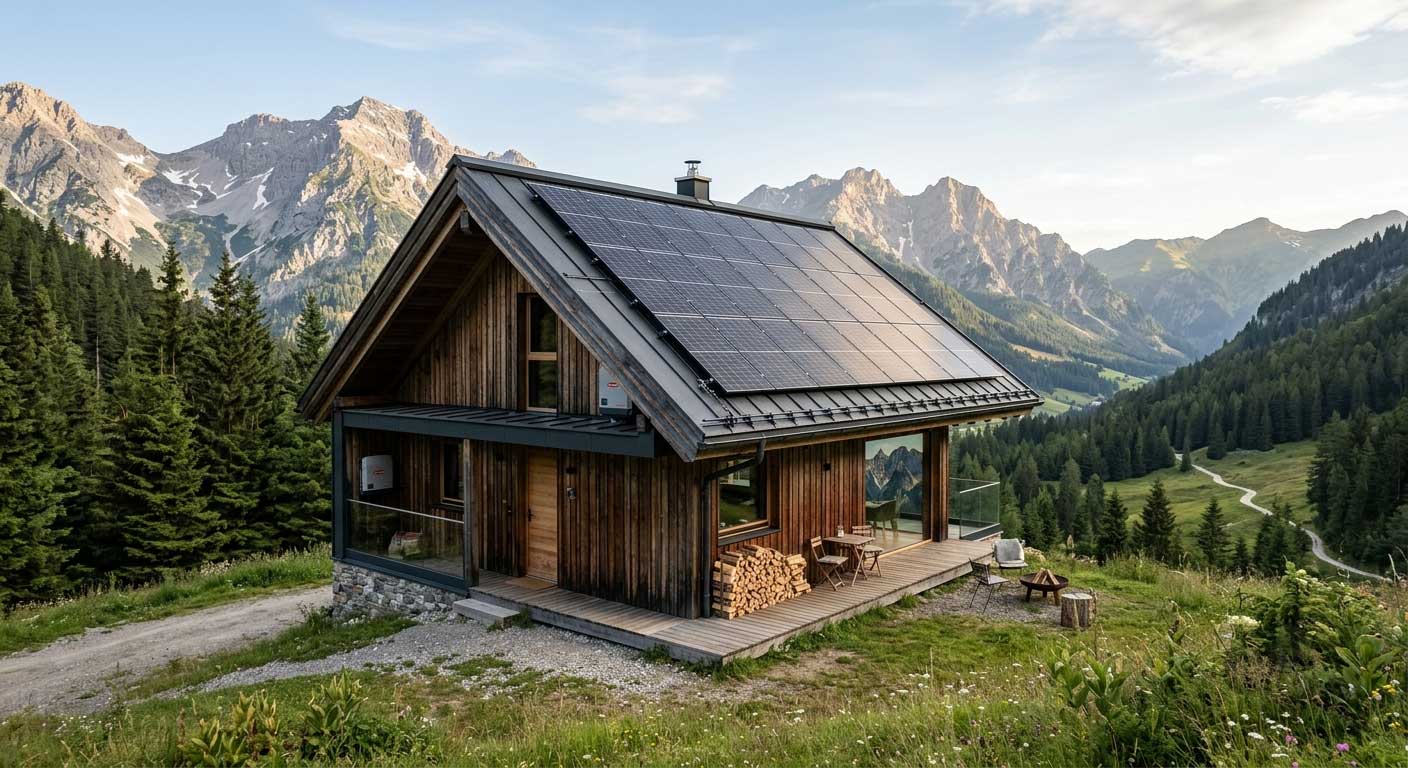
- User expectations.
For RV owners, marine builders, off-grid cabins, and lightweight structures, 400W modules often deliver one of the best balances between performance, weight, and installation flexibility.
At Bright Solar, we continue to see growing demand for lightweight 400W solutions because they allow customers to install solar where traditional glass panels simply cannot.
The future of solar is not always bigger.
Sometimes it is simply lighter, smarter, and better matched to the real world.
Related recommendations
-

Best flexible solar panels for boats: Lightweight Marine Solar Solutions
230Find the best flexible solar panels for boats with Bright Solar. Learn marine installation tips, durability factors, power output, and real-world sailing applications.
View details -
10 Watt Flexible Solar Panel: Uses, Output and Installation Guide
168A 10 watt flexible solar panel is designed for low-power applications such as sensors, small lights, GPS devices, battery maintenance, and small RV or marine...
View details -
Flexible Solar Panels 200W: Lightweight Solar Power for RV, Marine and Off-Grid Applications
173Flexible solar panels 200w deliver lightweight, efficient solar power for RVs, boats, and off-grid systems. Explore Bright Solar technology, real applications, and installation insights.
View details -
Lightweight Folding Solar Panels: How to Choose the Right Portable Power System
11Lightweight folding solar panels provide portable power for camping, hiking, RV travel, and off-grid use. Choose based on total kit weight, wattage, folded d...
View details