What to Use to Clean Solar Panels?
Use clean, low-mineral water and a soft microfiber cloth, non-abrasive sponge, or soft-bristle brush to clean solar panels. Add mild detergent only when the manufacturer’s instructions permit it.
Solar panels spend years outdoors, so dust, pollen, bird droppings, leaves, and pollution gradually accumulate on their surfaces. The challenge is removing this contamination without scratching the glass, damaging protective coatings, or affecting electrical components.
You do not need an aggressive chemical cleaner or expensive cleaning equipment for most residential installations. In fact, using too many cleaning products can create more problems than it solves.
For homeowners, RV owners, and marine solar users, the right cleaning materials depend on the panel construction and installation environment.
What Supplies Do You Need to Clean Solar Panels?
A basic solar panel cleaning kit should contain a few simple items. Each has a specific purpose.
| Cleaning Equipment | Main Purpose | Recommendation |
|---|---|---|
| Deionized water | Removes dirt and minimizes mineral spots | Preferred where available |
| Microfiber cloth | Removes light contamination | Use a clean, soft cloth |
| Soft-bristle brush | Cleans larger panel surfaces | Avoid stiff bristles |
| Non-abrasive sponge | Removes stubborn deposits | Do not scrub aggressively |
| Garden hose | Rinses away loose dirt | Use gentle water pressure |
| Mild detergent | Helps remove sticky contamination | Only if manufacturer-approved |
1. Use Deionized or Low-Mineral Water
Water is usually the first cleaning material to reach for.
Deionized water contains very few dissolved minerals, reducing the white spots that ordinary hard tap water can leave behind. Rainwater or low-mineral tap water may also be suitable, provided it is clean and free of sand or other particles.
This matters particularly in dry regions. When water evaporates quickly, dissolved minerals remain on the glass. Repeated cleaning with hard water can leave visible deposits that require additional attention.
2. Choose a Soft Cleaning Brush
A soft-bristle brush with an extension handle is useful for larger rooftop installations. A microfiber cloth or sponge works well for smaller modules and accessible surfaces.
Avoid:
- Steel wool and metal brushes.
- Kitchen scouring pads.
- Hard plastic scrapers.
- Rough towels.
- Brushes with damaged or dirty bristles.
A brush that feels soft in your hand may still contain trapped grit. Rinse the cleaning tool before touching the panel surface.
3. Do You Need Solar Panel Cleaning Solution?
Not always. For ordinary dust and loose dirt, clean water is generally sufficient.
If bird droppings, greasy deposits, or sticky pollution remain after rinsing, a small amount of mild, non-abrasive detergent may help. However, check the panel manufacturer’s cleaning instructions first.
Avoid assuming that household window cleaners are suitable. Some contain ammonia, solvents, fragrances, or other additives that may leave residue or be incompatible with module coatings and seals.
The U.S. Department of Energy recommends plain water or mild dishwashing detergent for solar PV cleaning while advising against solvents, abrasives, and harsh detergents.
Source: U.S. Department of Energy – Operations and Maintenance.
What Should You Never Use on Solar Panels?
The wrong cleaning product can damage a module even when the dirt disappears.
| Product or Tool | Why It Is Not Recommended |
|---|---|
| Bleach | May damage surrounding materials and seals |
| Ammonia-based cleaner | May be incompatible with coatings |
| Strong acids or alkalis | Can attack module materials |
| Abrasive powder | Can scratch the surface |
| Steel wool | Causes surface damage |
| High-pressure washer | May damage seals and electrical components |
| Metal scraper | Can scratch glass or protective surfaces |
One practical distinction: cleaning solar panel glass is not the same as cleaning ordinary household windows. A photovoltaic module includes encapsulation, electrical connections, junction boxes, and sometimes specialized surface treatments. The entire assembly needs protection.
How to Clean Solar Panels With the Right Equipment
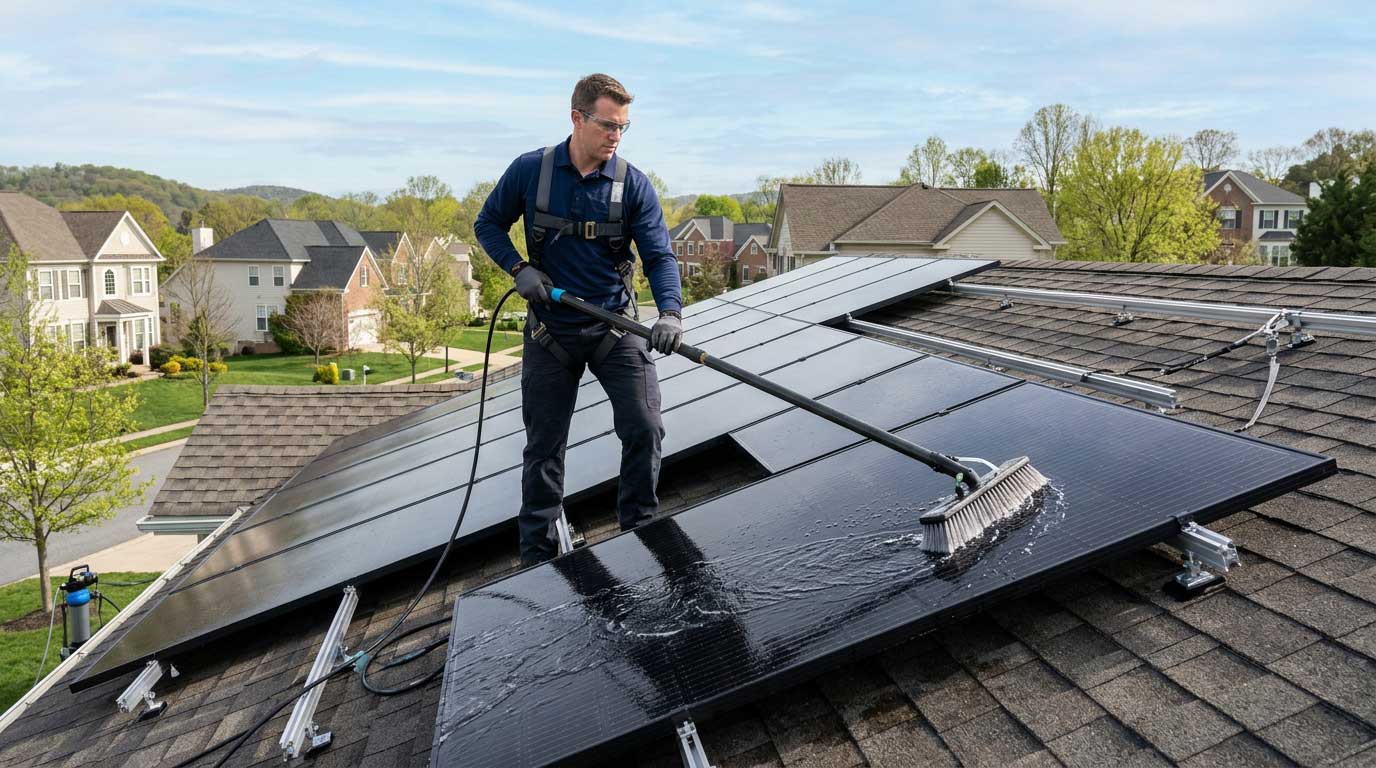
Step 1. Clean the Panels When They Are Cool
Early morning, late afternoon, or an overcast day is preferable. Hot glass causes water to evaporate quickly and can leave mineral deposits.
Avoid applying cold water suddenly to extremely hot modules. Follow the manufacturer’s temperature recommendations.
Step 2. Rinse Before Wiping
Use gentle water flow to loosen dust, pollen, and loose particles. This reduces the risk of dragging grit across the surface.
Step 3. Remove Stubborn Dirt Carefully
Soak dried bird droppings before attempting to remove them. Use a soft sponge or microfiber cloth, applying minimal pressure.
Do not scrape dried contamination with a knife or metal tool.
Step 4. Rinse Away Any Remaining Cleaner
If detergent is permitted and has been used, rinse the surface thoroughly. Low-mineral water helps prevent visible water spots.
For rooftop systems, prioritize ground-level cleaning or hire a qualified professional. Never stand or kneel on solar modules.
Does the Cleaning Method Change for Flexible Solar Panels?
Yes. Flexible solar panels need particular attention because their surface materials, encapsulation, and mounting arrangements may differ from conventional glass modules.
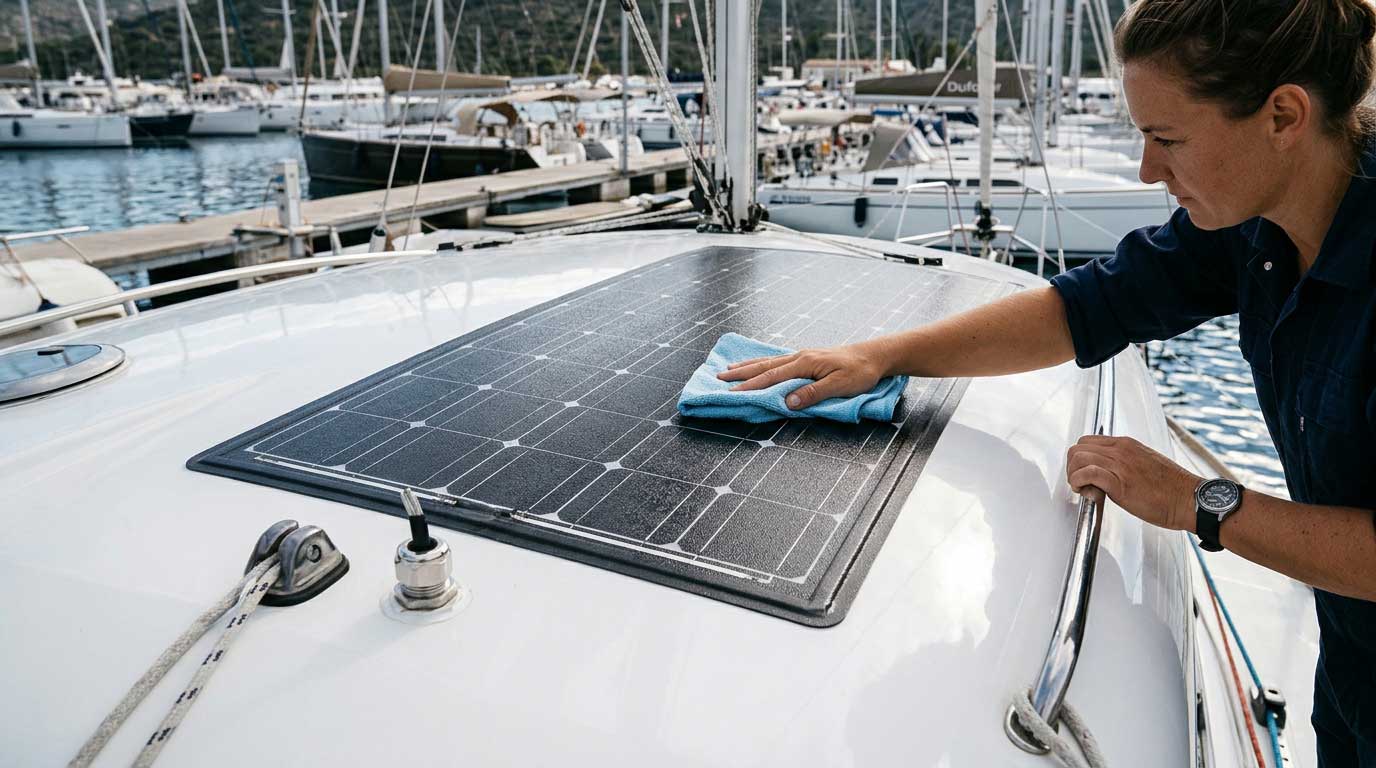
For flexible modules, remember these points:
- Use a clean, soft microfiber cloth.
- Avoid pulling or stretching the panel during cleaning.
- Do not apply excessive pressure to bonded surfaces.
- Check the manufacturer’s approved cleaning agents.
- Inspect cable entries and mounting areas without disturbing electrical connections.
Bright Solar’s L Series uses an ETFE surface and offers up to 30% flexibility. Its outdoor applications include RVs, campers, and selected marine installations. Cleaning procedures should always follow the specific product documentation rather than assuming every flexible module has identical material compatibility.
How Often Should You Clean Solar Panels?
There is no fixed cleaning schedule for every installation. Local conditions matter more than the calendar.
According to the National Renewable Energy Laboratory (NREL), soiling can cause energy losses of more than 6% per year in some conditions. Common sources include agricultural dust, construction dust, pollen, bird droppings, and diesel soot.
Source: NREL – Photovoltaic Operations and Maintenance Best Practices.
Consider more frequent inspections if your panels are installed:
- Near farms, construction sites, or dusty roads.
- In dry regions with limited rainfall.
- Under trees where bird droppings and pollen accumulate.
- On boats exposed to salt spray.
- On low-tilt roofs where rainwater does not drain easily.
Check actual electricity production before deciding to clean. A dirty-looking panel does not necessarily need immediate washing, and unnecessary cleaning introduces additional handling risks.
FAQ About What to Use to Clean Solar Panels?
Can I use dish soap to clean solar panels?
Yes, some manufacturers permit a small amount of mild dish soap. Choose a non-abrasive product, avoid excessive detergent, and rinse thoroughly. Always check the module cleaning instructions.
Is vinegar good for cleaning solar panels?
Vinegar is not a universal solar panel cleaner. Its acidity may be unsuitable for certain coatings, frames, and seals. Use clean water unless the manufacturer approves another solution.
Can I use Windex on solar panels?
It is better to avoid ordinary household glass cleaners unless the panel manufacturer specifically approves the formulation. Some products contain ingredients that may leave residue or damage sensitive materials.
Can I clean solar panels with tap water?
Yes, if the water is clean and has relatively low mineral content. Deionized water is preferable when hard water leaves white mineral deposits.
What is the best brush for cleaning solar panels?
A soft-bristle, non-abrasive brush with an extension handle is suitable for many conventional modules. A clean microfiber cloth is useful for smaller or more delicate surfaces.
Can I use a pressure washer to clean solar panels?
Avoid high-pressure washing unless the manufacturer explicitly permits a specified pressure and cleaning method. Gentle water flow is a safer general approach.
Conclusion
The best answer to what to use to clean solar panels is clean, low-mineral water, a soft microfiber cloth, and a non-abrasive brush. Mild detergent is only necessary for stubborn contamination and should be manufacturer-approved.
For conventional glass panels, focus on removing dirt without scratching the surface. For flexible ETFE modules, pay additional attention to surface compatibility, bonding materials, and electrical connections.
Bright Solar recommends treating cleaning as part of proper solar module maintenance. Choosing appropriate cleaning materials and following product-specific instructions helps protect panel surfaces and support reliable long-term operation.
Author Information
Author: Bright Solar Technical Content Team
Technical Expertise: Flexible and semi-flexible photovoltaic modules, ETFE surface materials, solar panel cleaning and maintenance, RV and marine solar applications, and OEM/ODM solar module development.
Editorial Review: Cleaning recommendations are based on published photovoltaic maintenance guidance and general module-care principles. Always verify water quality, cleaning-agent compatibility, and permitted cleaning methods against the specific manufacturer’s datasheet and maintenance instructions.
The prev: What to Clean Solar Panels With?The next: Which Way Should a Solar Panel Face?
Related recommendations
-

how to use portable solar panels?
365Use portable solar panels by placing them in unobstructed sunlight, connecting them to a compatible power station or charge controller, and checking voltage,...
View details -
do solar panels work on cloudy days?
391Discover do solar panels work on cloudy days with real performance data, field-tested output rates, and Bright solar engineering insights from global installations.
View details -
How Long Do Solar Panels Last?
225Learn how long do solar panels last, what affects solar lifespan, degradation rates, and real-world durability data from long-term solar installations.
View details -
How Much for One Solar Panel?
343How much for one solar panel? Discover real solar panel prices, wattage options, cost factors, and expert buying advice from Bright Solar.
View details