How Much for One Solar Panel?
How Much for One Solar Panel?
One solar panel usually costs between $100 and $400, while higher-power or specialized models can cost $400–$700 or more. The final price depends on wattage, efficiency, materials, brand, order quantity, and whether the panel is designed for home, RV, or off-grid use.
When customers ask how much for one solar panel, they usually want a simple number. However, solar panel pricing is influenced by several technical details that determine the real value of the product.
A 100W portable panel and a 500W residential module are both called “solar panels,” but they serve completely different purposes. Their prices cannot be compared directly because their materials, size, efficiency, and applications are different.
Through years of working with Bright Solar customers, I have reviewed pricing for residential systems, flexible solar panels, RV solutions, and custom solar applications. The biggest misunderstanding I see is that buyers compare panels only by purchase price instead of comparing the electricity they can generate over their operating life.
What Is the Average Price of One Solar Panel?
The cost of one solar panel depends mainly on its power rating and technology.
Typical market prices:
| Solar Panel Type | Average Price Range |
|---|---|
| 100W solar panel | $80–$180 |
| 200W solar panel | $180–$350 |
| 300W solar panel | $280–$500 |
| 400W solar panel | $400–$700 |
| 500W+ high-power panel | $500+ |
For standard residential projects, homeowners usually purchase multiple panels instead of a single unit.
For example:
A 6kW solar system using 400W panels requires:
6,000W ÷ 400W = approximately 15 solar panels
The cost of each panel is only one part of the total project budget. A complete installation also includes:
- Solar inverter
- Mounting hardware
- Electrical wiring
- Installation labor
- Safety equipment
- Permits and inspection
How Much Does a 400 Watt Solar Panel Cost?
A 400W solar panel is one of the most common sizes used in modern residential solar installations.
Typical pricing:
$400–$700 per panel
The final cost depends on:
- Solar cell technology
- Efficiency rating
- Manufacturer
- Warranty period
- Purchase volume
A higher-efficiency 400W panel may cost more initially but can provide better value when roof space is limited.
For example, a homeowner with a small roof may prefer fewer high-efficiency panels rather than installing more lower-output modules.
According to data published by the National Renewable Energy Laboratory (NREL), photovoltaic system performance depends on factors including module efficiency, orientation, shading, and environmental conditions.
Source:
https://www.nrel.gov/
The panel specification sheet shows potential output, but the installation environment determines actual energy production.
What Factors Affect the Price of One Solar Panel?
1. Solar Panel Wattage
The wattage rating is one of the biggest factors affecting price.
Common examples:
| Panel Wattage | Typical Application |
|---|---|
| 50W–100W | Portable power, small devices |
| 200W–300W | RV and camping systems |
| 350W–450W | Residential rooftops |
| 500W+ | Large commercial installations |
Higher wattage panels usually cost more because they contain more photovoltaic cells and produce greater electricity output.
However, comparing price alone can be misleading.
A $200 panel producing limited electricity may not provide better value than a $400 panel generating significantly more energy over many years.
2. Solar Panel Technology
Different solar technologies affect manufacturing costs and performance.
Common types include:
Monocrystalline Solar Panels
These are widely used because they offer:
- Higher efficiency
- Better space utilization
- Strong long-term performance
Flexible Solar Panels
Flexible panels usually cost more because they require lightweight materials and specialized manufacturing.
They are commonly used for:
- RV roofs
- Boats
- Portable systems
- Curved surfaces
At Bright Solar, many customers choose flexible panels not because they are the cheapest option, but because installation flexibility solves problems that traditional rigid panels cannot.
Are Solar Panels Sold Individually?
Yes, individual solar panels can be purchased, but pricing depends on the supplier and project requirements.
Single-panel purchases are common for:
- DIY solar projects
- RV upgrades
- Small off-grid systems
- Replacement panels
Large residential installations usually purchase panels in bulk because:
- Unit prices are lower
- Shipping costs are reduced
- Installation becomes more efficient
When purchasing only one solar panel, buyers should check:
- Panel dimensions
- Connector type
- Voltage compatibility
- Power requirements
- Warranty conditions
A panel that does not match the existing system may create compatibility issues.
How Much Does a Flexible Solar Panel Cost?
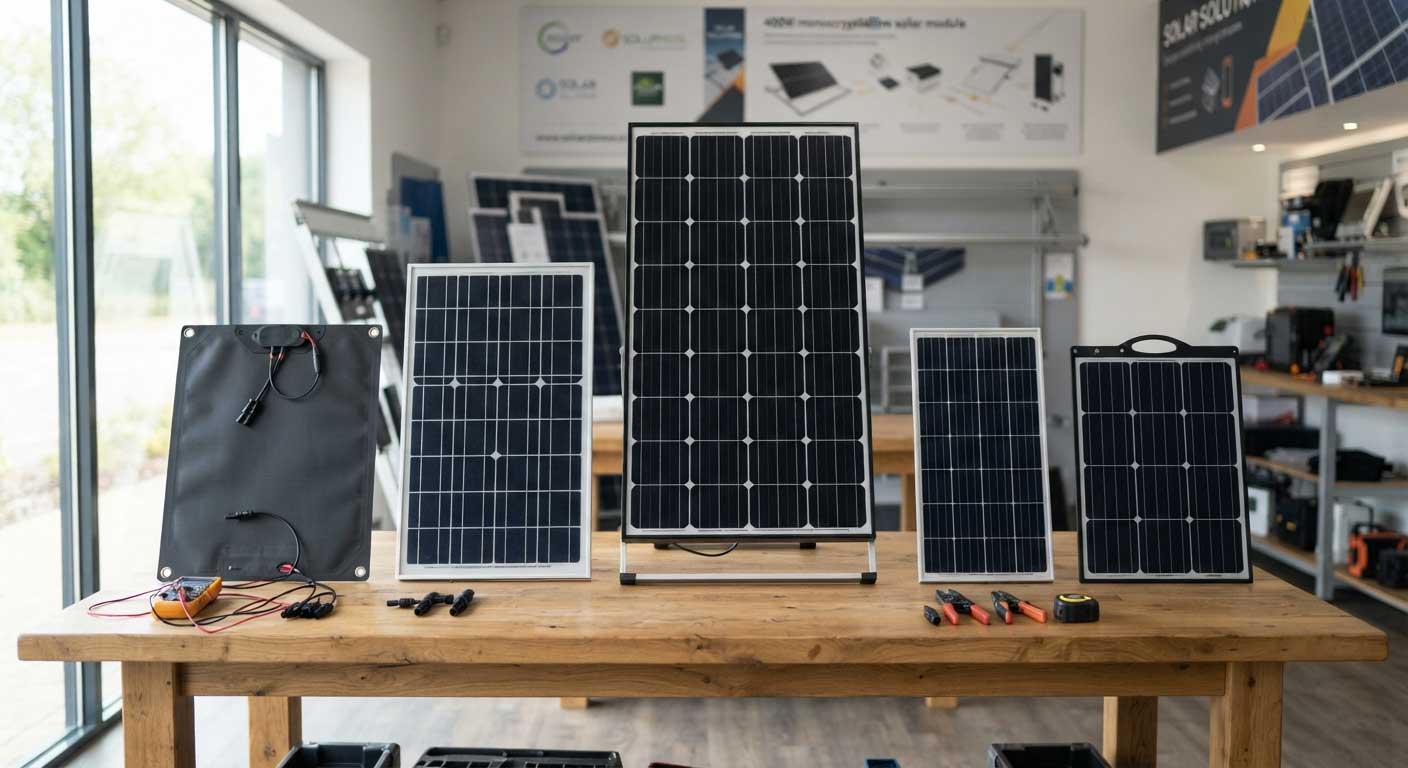
Flexible solar panels usually cost more than standard rigid panels because they are designed for special applications where weight, thickness, and installation flexibility matter.
Typical flexible solar panel prices:
| Flexible Panel Size | Average Price Range |
|---|---|
| 100W flexible solar panel | $80–$180 |
| 200W flexible solar panel | $180–$350 |
| 300W flexible solar panel | $280–$500 |
| 400W flexible solar panel | $400–$700 |
Flexible panels are often selected for:
- RV roofs
- Marine applications
- Camper systems
- Portable solar solutions
- Curved installation surfaces
In these situations, the cheapest panel is not always the best choice. A lightweight panel that fits the installation area correctly can provide more practical value.
During Bright Solar project discussions, I have seen customers initially compare flexible panels with standard modules only by price. After considering roof limitations and installation requirements, many realized the flexible option solved problems that a traditional panel could not.
Does Buying More Solar Panels Reduce the Cost?
Yes, purchasing multiple solar panels usually reduces the average cost per unit.
Solar suppliers commonly offer different pricing levels:
| Purchase Quantity | Typical Pricing Situation |
|---|---|
| 1–2 panels | Highest unit price |
| Small project quantity | Moderate discount |
| Residential system quantity | Lower cost per panel |
| Commercial bulk order | Best unit pricing |
For homeowners, buying one panel for a small project may cost more per watt than purchasing a complete solar system.
For businesses, installers, and distributors, bulk purchasing can significantly reduce equipment costs.
However, price should always be evaluated together with:
- Product quality
- Warranty support
- Delivery reliability
- Technical compatibility
A cheaper panel that fails earlier can create higher costs over time.
What Is Included When Buying One Solar Panel?
A single solar panel purchase may include different items depending on the supplier.
Some sellers provide only the module, while others include accessories.
A typical solar panel package may contain:
- Photovoltaic module
- Junction box
- Solar connectors
- Product warranty documentation
- Installation instructions
Additional items may need to be purchased separately:
- Charge controller
- Battery
- Inverter
- Mounting brackets
- Extension cables
For example, a customer buying a 200W solar panel for an RV may need a completely different setup compared with someone replacing a rooftop panel in a residential system.
Understanding the complete application prevents unexpected costs.
Is a More Expensive Solar Panel Better?
Not necessarily.
The right solar panel depends on the application.
A higher-priced panel may offer:
- Better efficiency
- Stronger materials
- Longer warranty
- Improved temperature performance
- Better durability
However, paying more only makes sense if those features provide real benefits.
For example:
- A homeowner with limited roof space may benefit from premium high-efficiency panels.
- An RV owner may prioritize lightweight flexible construction.
- A remote cabin owner may prioritize reliability and durability.
At Bright Solar, we recommend choosing panels based on energy requirements and installation conditions rather than simply selecting the most expensive product.
FAQ About How Much for One Solar Panel?
How much for one solar panel?
One solar panel usually costs between $100 and $400, while specialized or high-power panels can cost $400–$700 or more depending on wattage and technology.
How much does a 100W solar panel cost?
A 100W solar panel typically costs around $80–$180. These panels are commonly used for portable systems, camping, and small off-grid applications.
How much does a 400W solar panel cost?
A 400W solar panel generally costs around $400–$700. The price depends on efficiency, manufacturer, materials, and purchase quantity.
Why do solar panels have different prices?
Solar panel prices vary because of differences in wattage, efficiency, technology, materials, warranty coverage, and manufacturing quality.
Are flexible solar panels more expensive?
Yes. Flexible solar panels usually cost more because they use lightweight materials and specialized designs for applications such as RVs, boats, and curved surfaces.
Can I buy only one solar panel?
Yes. Individual solar panels are available for DIY projects, replacements, portable systems, and small energy applications.
How Much Is A Solar Panel For House?
A single solar panel for a house usually costs between $100 and $500, depending on wattage, technology, and brand. However, a complete home solar system requires multiple panels, inverters, mounting equipment, and installation services.Learn more about “How Much Is A Solar Panel For House“
Conclusion
The answer to how much for one solar panel depends on more than the number printed on a price tag.
A solar panel’s cost is influenced by wattage, technology, application, and long-term performance. After working with Bright Solar customers across different markets, I have learned that the lowest upfront price is not always the most practical investment.
A homeowner, RV traveler, and off-grid user may all purchase solar panels, but their requirements are completely different.
Before buying a single panel, consider:
- How much electricity you need
- Where the panel will be installed
- Available space
- Expected operating conditions
- Future expansion plans
Choosing the right solar panel can improve energy production, reduce unnecessary expenses, and create a more reliable solar system for years.
The prev: How Are Solar Panels Produced?The next: How Much Are Solar Panels for House?
Related recommendations
-

how to mount flexible solar panels on RV?
175Learn how to mount flexible solar panels on RV roofs safely using adhesive or low-profile hardware. Real installation tips, wiring advice, and maintenance insights.
View details -
How Does the Solar Power Work?
251How does the solar power work? Learn how solar energy converts sunlight into electricity, from photovoltaic cells to home power systems with expert insights from Bright Solar.
View details -
How Solar Panels Manufactured?
259How solar panels manufactured? Explore the complete photovoltaic manufacturing process, from silicon wafers and solar cells to testing and quality control with Bright Solar.
View details -
How do you convert solar energy into electricity?
143How do you convert solar energy into electricity? Learn how solar panels generate power, photovoltaic technology, inverters, and complete solar systems.
View details