Which Way Should a Solar Panel Face?
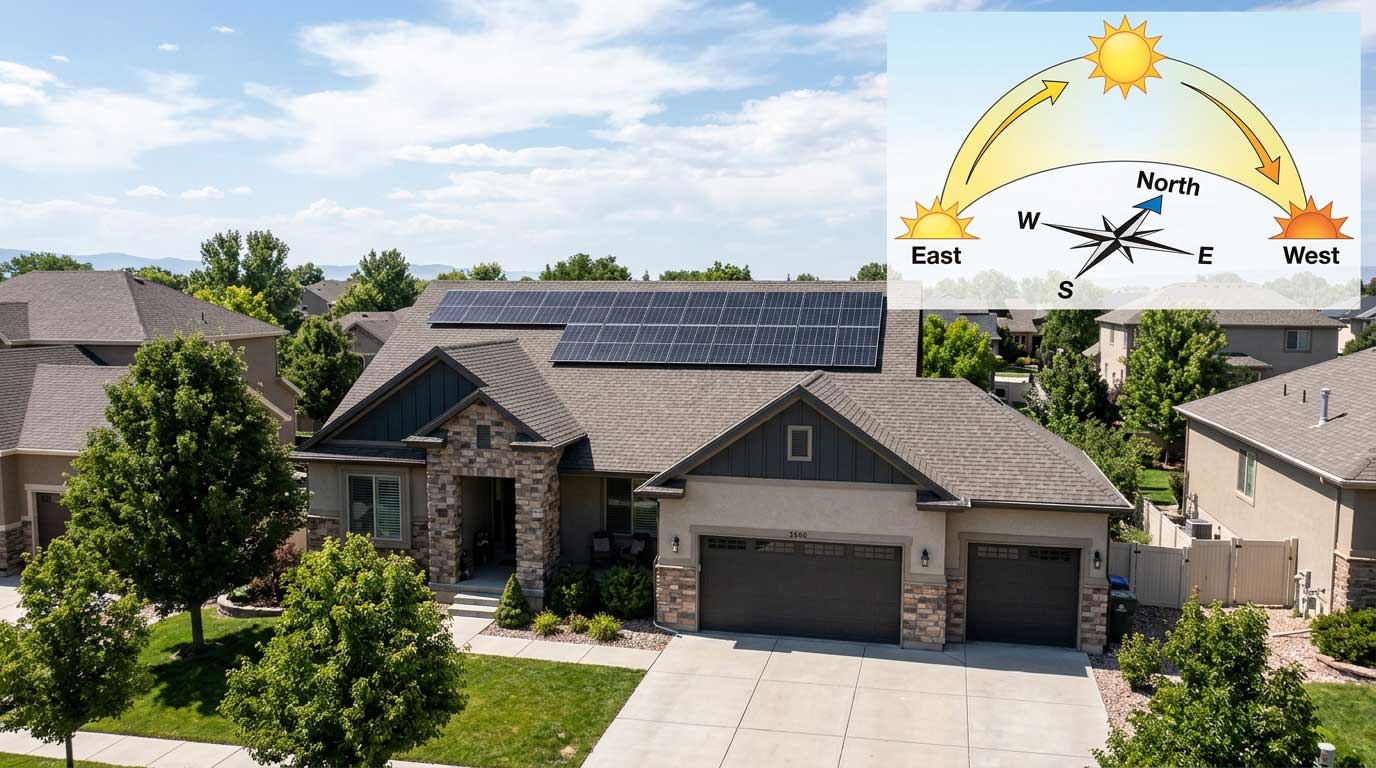
Which way should a solar panel face? In the Northern Hemisphere, solar panels generally produce the most annual electricity when facing true south. In the Southern Hemisphere, true north is usually best. Roof angle, shading, and local sunlight patterns also affect output.
Direction is one of the first things to check before installing a solar panel. However, the compass direction alone does not tell the whole story. A south-facing panel under a chimney shadow may produce less electricity than an unobstructed east- or west-facing panel.
For homeowners, RV owners, boat operators, and off-grid system designers, the practical goal is to expose the solar cells to useful sunlight for as much of the day as possible. Bright Solar considers orientation alongside mounting conditions, panel characteristics, and the actual energy demand of the installation.
What Is the Best Direction for Solar Panels?
The best direction depends primarily on which hemisphere the installation is in.
| Installation Location | Generally Preferred Direction | Main Consideration |
|---|---|---|
| Northern Hemisphere | True south | Better annual solar exposure |
| Southern Hemisphere | True north | Better annual solar exposure |
| Near the Equator | North or south, depending on latitude and season | Sun path changes throughout the year |
| East-facing roof | East | Earlier morning production |
| West-facing roof | West | Later afternoon production |
In the United States, Canada, and most European countries, south-facing installations are generally preferred for maximizing annual electricity generation.
There is an important distinction between true south and magnetic south. A standard compass points toward magnetic north, not geographic north. Magnetic declination varies by location, so a compass reading should not automatically be treated as the correct solar installation direction.
For a fixed rooftop system, a site-specific solar assessment is more reliable than simply following a compass.
Does a Solar Panel Produce Electricity Facing East or West?
Yes. Solar panels generate electricity when facing east or west, although their production patterns differ from those of south-facing panels.
- East-facing panels: Receive more direct sunlight in the morning. They can be useful when household electricity consumption is highest before noon.
- West-facing panels: Receive more sunlight in the afternoon. They may better match air-conditioning and cooling demand later in the day.
- North-facing panels in the Northern Hemisphere: Usually receive less direct sunlight and are generally less favorable for fixed installations.
- South-facing panels: Typically provide a stronger annual production profile in the Northern Hemisphere.
A west-facing installation is not automatically a poor choice. If a building has an east-facing roof shaded by neighboring structures but an open western roof, the western surface may be the better installation location.
The same principle applies to portable solar panels: the panel should be repositioned as the sun moves rather than left facing one direction throughout the day.
How Does Panel Angle Affect Solar Energy Production?
Direction and tilt are two different installation variables.
- Azimuth describes the compass direction the panel faces.
- Tilt angle measures how far the panel surface is inclined from horizontal.
- Solar exposure describes how much sunlight reaches the panel throughout the day and year.
The U.S. Department of Energy identifies an angle between 15° and 40° facing south as a productive configuration for many installations in the continental United States. It also explains that the ideal tilt is influenced by local latitude and practical roof conditions.
For example, a fixed panel installed at a 30° tilt and facing south has an azimuth of 180° under the standard PVWatts convention. The four principal compass directions are:
| Direction | Azimuth |
|---|---|
| North | 0° |
| East | 90° |
| South | 180° |
| West | 270° |
These values are useful when entering system specifications into solar simulation software.
NREL’s technical guidance provides another useful real-world reference: in an example for Boulder, Colorado, an array facing 45° east of south experienced approximately 4% orientation-related energy loss, while one facing 45° west of south experienced approximately 10% loss. These are location-specific figures, not universal percentages, but they demonstrate why a small change in direction does not always make a system unsuitable.
Which Way Should Solar Panels Face on an RV, Boat, or Off-Grid System?
The ideal orientation becomes more complicated when solar panels are installed on mobile or curved surfaces.
Unlike a residential rooftop system, an RV or boat may not always remain in one direction. Parking position, anchoring location, available mounting space, and movement throughout the day can all affect solar exposure.
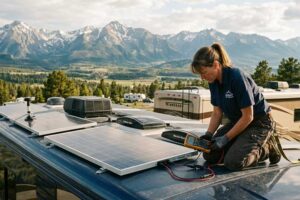
For RVs and camper vans
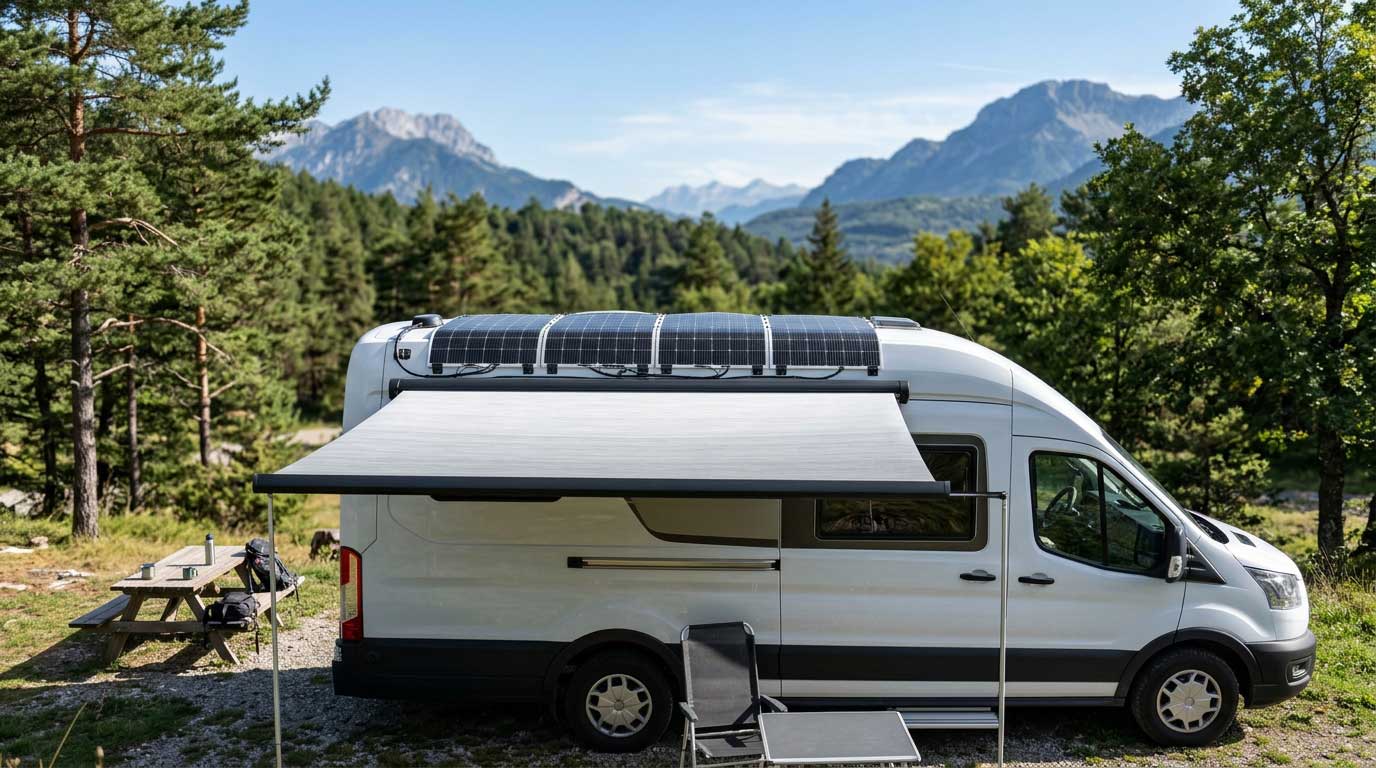
- When parked for extended periods in the Northern Hemisphere, position adjustable panels toward true south when practical.
- Avoid placing panels where roof air conditioners, antennas, luggage racks, or nearby trees create persistent shadows.
- If using fixed flexible panels, prioritize a suitable roof surface and unobstructed sunlight over forcing a particular compass direction.
For boats and marine installations
- Consider the vessel’s usual mooring direction and operating environment.
- Account for shadows from masts, radar equipment, antennas, and other deck structures.
- Choose a mounting position that balances sunlight exposure with waterproofing, wind resistance, and marine durability.
For off-grid systems
- Match panel orientation to the hours when electricity is actually needed.
- Consider seasonal sunlight changes, especially in locations with long winters.
- Use a solar production simulation before finalizing a large fixed installation.
For flexible solar panels, there is an additional installation consideration: the available mounting surface may be curved or nearly horizontal. A flexible panel can follow an appropriately designed surface, but flexibility does not automatically provide ideal solar orientation. Mounting design and electrical performance must be evaluated together.
Bright Solar develops flexible and semi-flexible solar panel solutions for applications including RVs, boats, and off-grid systems. For OEM and ODM projects, the panel dimensions, mounting configuration, and intended operating environment should be considered during product selection rather than treating compass direction as the only design requirement.
How Can You Find the Correct Direction Before Installation?
You do not need complicated equipment to make an initial assessment.
- Identify your location and determine which hemisphere you are in.
- Use a reliable compass or solar site assessment tool to identify true south or true north.
- Check the roof or mounting surface for shadows during different parts of the day.
- Measure the existing roof slope or planned mounting tilt.
- Compare alternative orientations using the NREL PVWatts calculator.
PVWatts allows users to enter system location, tilt, and azimuth to estimate monthly and annual electricity production. It is particularly useful when comparing two possible roof surfaces before committing to an installation.
A practical point often overlooked during installation: inspect the site around 9 a.m., noon, and 3 p.m. A roof that appears completely sunny at lunchtime may receive substantial morning or afternoon shade from neighboring buildings.
FAQ About Which Way Should a Solar Panel Face?
Should solar panels always face south?
No. South-facing panels are generally preferred in the Northern Hemisphere, but east- and west-facing installations can still generate useful electricity. The best choice depends on shading, roof availability, electricity demand, and local sunlight conditions.
Can solar panels face north?
Yes, but north-facing panels generally receive less direct sunlight in the Northern Hemisphere. They may still be practical where roof space is limited or local conditions provide sufficient reflected and diffuse sunlight.
Is east or west better for solar panels?
East-facing panels produce more electricity earlier in the day, while west-facing panels favor afternoon production. Neither direction is universally better. The choice depends on the building’s energy consumption and local solar conditions.
Does the direction of a solar panel matter more than its angle?
Both matter. Direction determines when sunlight reaches the panel, while tilt affects how directly sunlight strikes its surface. Their combined effect should be assessed using local weather and installation data.
Which way should a solar panel face in winter?
In the Northern Hemisphere, south is generally the preferred direction. A steeper tilt can also improve winter sunlight exposure and help shed snow, although the appropriate angle depends on latitude and local weather conditions.
Do portable solar panels need to face south?
Portable solar panels in the Northern Hemisphere generally benefit from facing south when maximizing daily energy production is the priority. Adjustable panels should be repositioned as the sun moves, especially during extended outdoor use.
How do I calculate the best solar panel direction for my location?
Use the NREL PVWatts calculator to compare different azimuth and tilt settings. Enter your location, system capacity, and mounting configuration to estimate annual and monthly electricity generation.
Conclusion
Which way should a solar panel face? For most fixed installations, true south in the Northern Hemisphere and true north in the Southern Hemisphere provide a reliable starting point. However, shading, roof geometry, tilt, and actual electricity demand can change the best installation decision.
For RV, marine, and off-grid applications, the mounting environment deserves equal attention. Bright Solar recommends evaluating the complete installation before selecting a flexible solar panel configuration, particularly when the available surface does not allow conventional mounting angles.
Author and Technical References
Author: Bright Solar Technical Content Team
Technical Background: Bright Solar specializes in flexible and semi-flexible photovoltaic modules for RV, marine, outdoor, and off-grid applications. This article draws on solar module application knowledge and established photovoltaic system design references. For publication, a named technical reviewer and verifiable engineering qualifications should be added rather than assigning an unverified personal credential.
The prev: What to Use to Clean Solar Panels?The next: Who Can Remove Solar Panels from Roof?
Related recommendations
-

How Much Energy Can a Solar Panel Generate?
298Discover how much energy can a solar panel generate in real conditions. Learn actual daily output, weather impacts, and expert insights from Bright Solar.
View details -
How Is Solar Energy Made Into Electricity?
200How is solar energy made into electricity? Learn how sunlight becomes usable power through solar cells, inverters, and real photovoltaic systems.
View details -
How Much Does It Cost to Get Solar Panels?
318How much does it cost to get solar panels? Explore real installation costs, system sizes, incentives, and long-term savings with expert insights from Bright Solar.
View details -
How to Clean Solar Panels on Roof?
328Learn how to clean solar panels on roof safely with expert maintenance tips, real performance data, cleaning methods, and rooftop solar care advice from Bright Solar.
View details