how long does it take to install a solar panel?
how long does it take to install a solar panel? A typical residential solar installation takes one to three days of physical work once permits are approved and equipment is ready. The complete project takes longer because design, permitting, inspection, and utility approval happen before the system can operate.
That distinction is easy to miss.
When homeowners ask this question, they are usually imagining the crew arriving with panels, working through the afternoon, and leaving with a working solar system. The roof work can indeed move that quickly. The paperwork around it usually cannot.
At Bright Solar, I look at installation time in two separate ways: crew time on site and calendar time from approval to operation. They are very different numbers.
How long does it take to install one solar panel?
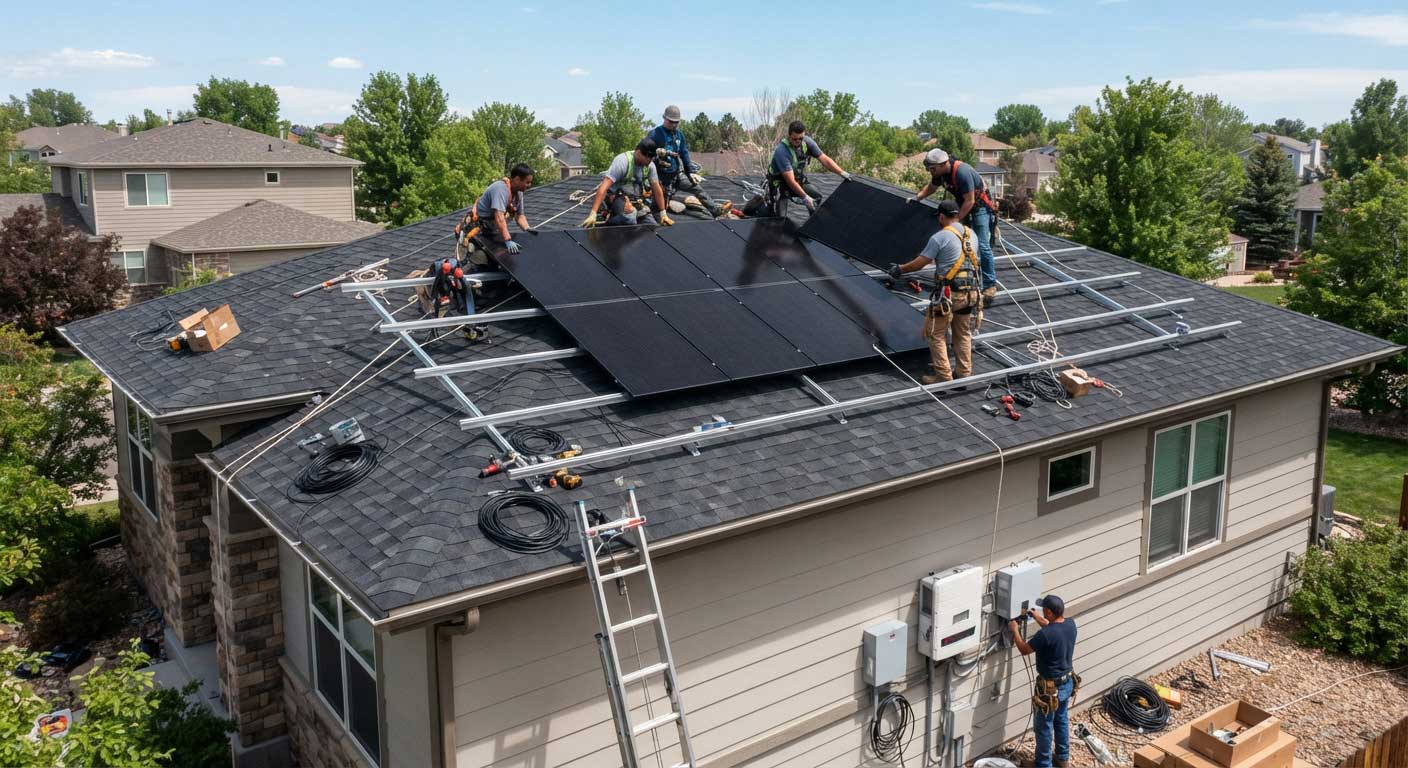
If you literally mean placing and securing a single module, the physical task can take much less than a day. But professional solar installation is rarely organized around one panel at a time. The crew first prepares the roof, installs the mounting structure, routes wiring, and then places the complete array.
For a normal residential system, EnergySage reports that installation generally takes one to three days. Its 2026 installation guide says the exact duration depends on system size, roof complexity, and whether additional electrical equipment is required.
A typical installation day may include:
- Roof and attachment-point preparation
- Mounting hardware installation
- Racking installation
- Electrical wiring
- Panel placement and clamping
- Inverter installation
- System testing
- Cleanup and documentation
The panels themselves are not usually the slowest part.
I have seen the same thing repeatedly in solar project planning: once the racking and cable routes are ready, the actual module placement can move surprisingly fast. A difficult roof, however, can turn a straightforward installation into a two- or three-day job.
How long does a residential solar installation take?
For a conventional rooftop system, one to three days is a realistic physical installation window.
| Project type | Typical physical installation |
|---|---|
| Small, simple rooftop system | 1 day |
| Typical residential system | 1–3 days |
| Large residential system | 2–3 days |
| Solar + battery | 1–3+ days |
| Complex roof or electrical upgrade | Several days |
EnergySage reports that a panels-only project can sometimes be completed in one day, while a larger system may take two to three days. It also notes that battery installation can extend the work because of additional electrical connections and utility coordination.
The crew size matters, too. EnergySage’s current guidance says homeowners can expect roughly 5–10 installation-company employees on site, depending on project scope.
That explains something people often misread: a three-day installation does not necessarily mean the workers are standing on the roof for eight hours every day. Different specialists may arrive at different stages.
What can make solar panel installation take longer?
The physical installation becomes slower when the crew has to solve problems instead of simply following the approved design.
Common examples include:
- Steep or complicated roof geometry
- Multiple roof surfaces
- Tile or fragile roofing materials
- Long cable routes
- Limited attic access
- Electrical panel upgrades
- Roof repairs
- Battery storage
- Ground-mounted systems requiring trenching
- Poor weather conditions
The roof is particularly important.
A clean asphalt-shingle roof with easy attic access is a very different job from a tile roof with several roof planes and a crowded electrical panel. The number of panels might be similar, yet the labor requirement can be completely different.
EnergySage specifically notes that roof upgrades or additional site preparation can delay installation, while the U.S. Department of Energy explains that the PV installation itself generally takes only a few days.
How long does the entire solar installation process take?
This is where the answer changes substantially.
The complete residential process can commonly take 60–90 days, even though the physical installation may only occupy one to three days. EnergySage gives this 60–90-day range for many residential projects, while its 2026 guide describes the overall process as roughly two to three months from start to finish.
The U.S. Department of Energy makes the same distinction: PV installation generally takes only a few days, while permits and inspections can take weeks to months, depending on local requirements.
NREL’s residential solar adoption research provides an even more useful reality check. For its 2021 dataset, the median time from contract signing to permission to operate was 68 business days, while the median physical installation phase after approval was 9 business days. The overall average was 78 business days.
Those numbers explain why “installation takes three days” and “solar takes three months” can both be correct.
Why permitting can take longer than installation
The administrative side has its own schedule.
Before installation, the project may need:
- Final engineering and site verification
- System design approval
- Local building or electrical permit
- Utility interconnection approval
- Equipment scheduling
- Physical installation
- Local inspection
- Permission to operate
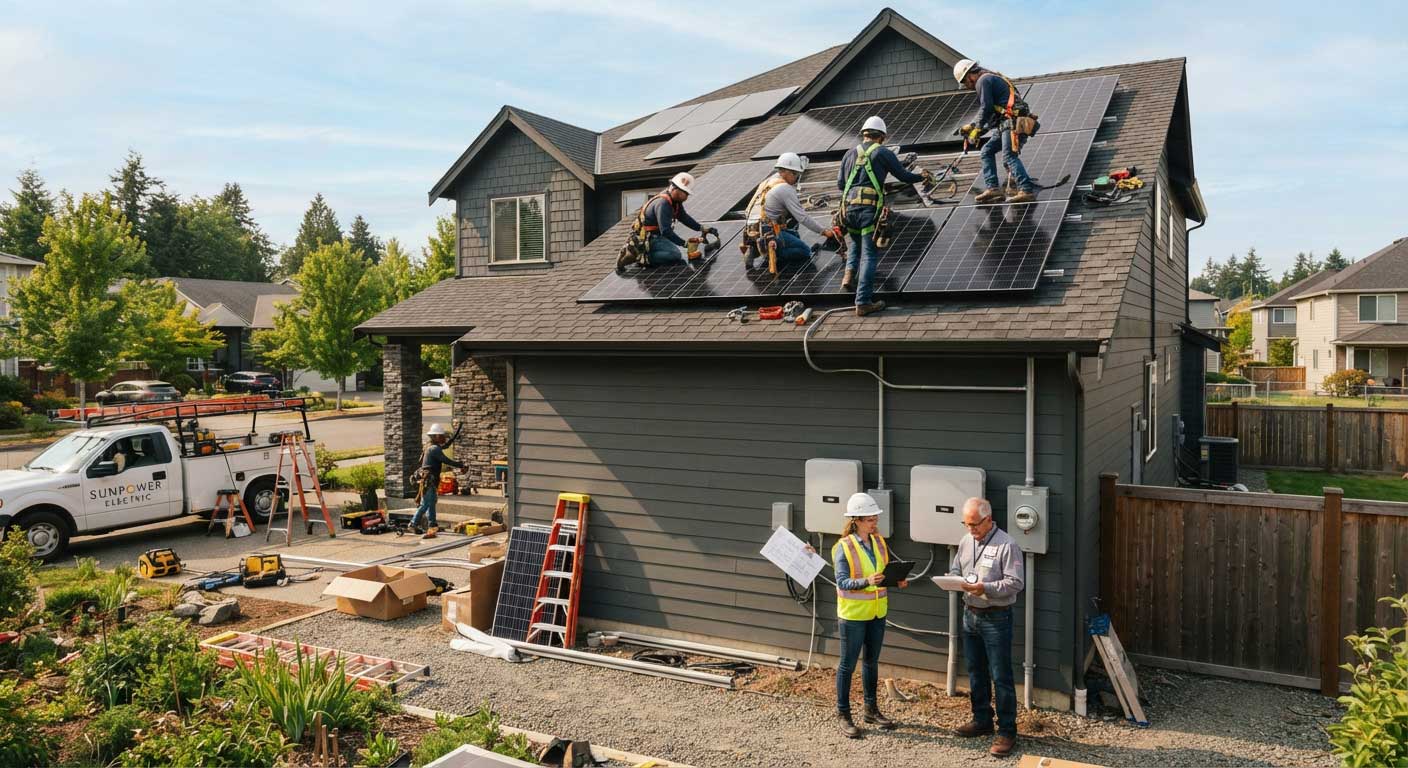
The Department of Energy states that permitting and inspection are generally required before a rooftop solar system can produce electricity onto the grid.
There is some encouraging movement. NREL reported that in 2023, residential PV projects using SolarAPP+ had a median 33-day period from permit submission to passed inspection, compared with 47.5 days for traditionally permitted projects—a reduction of about 14.5 business days, or 31%.
That is not a universal promise. It simply shows how much local permitting processes can influence the calendar.
How can you make solar panel installation faster?
The best way is to remove avoidable delays before installation day.
Before signing a contract, ask the installer:
- Is the roof ready for solar?
- Is an electrical panel upgrade required?
- Are the panels and inverter already available?
- Who handles permitting?
- How long is the current installation queue?
- Who schedules the final inspection?
- Who submits the utility interconnection application?
- How long does PTO usually take in my utility area?
There is also a simple homeowner-side improvement: respond quickly.
If the installer needs a design approval, utility bill, property document, or access confirmation, leaving the request unanswered for several days adds time that has nothing to do with solar technology.
EnergySage specifically recommends responding promptly to installer questions and completing homeowner approvals quickly to keep the project moving.
FAQ: how long does it take to install a solar panel?
How long does it take to install a solar panel?
Installing a complete residential solar array usually takes one to three days once permits, equipment, and site preparation are ready. A single panel itself requires much less physical installation time.
Can solar panels be installed in one day?
Yes. A small and uncomplicated residential system can sometimes be completed in one day. Larger arrays, complex roofs, batteries, or electrical upgrades can require additional days.
How long does it take to install 20 solar panels?
A 20-panel residential array will commonly fit within a one-to-three-day installation window, assuming the roof and electrical system are straightforward and all equipment is ready.
Why does solar installation take months if the panels take days?
Because the installation crew is only one part of the process. Design, permitting, utility interconnection, inspection, and permission to operate can add several weeks.
Does a battery make solar installation take longer?
Usually. A battery adds electrical equipment, wiring, commissioning, and potentially additional utility coordination. The physical installation may still be completed within several days.
How long after installation before solar panels start producing electricity?
The panels can generate electricity immediately when exposed to sunlight, but a grid-connected residential system normally should not be switched into official operation until required inspections and permission to operate are completed.
What is the fastest realistic solar installation timeline?
For a simple project with an approved permit, available equipment, an uncomplicated roof, and no electrical upgrades, the physical installation can be completed in one day. The complete project still depends on local permitting and utility procedures.
Conclusion
how long does it take to install a solar panel depends on what you mean by “install.” The physical work for a typical residential array usually takes one to three days, while the complete project can take 60–90 days because permitting, inspection, interconnection, and approval happen around the installation itself.
For Bright Solar, the practical takeaway is simple: the panels are usually not what makes a solar project slow. Roof complexity, electrical work, local permitting, installer scheduling, and utility approval have a much bigger effect on the calendar.
Related recommendations
-

How Many Watts Does a Solar Panel Produce?
228Learn how many watts does a solar panel produce, understand solar panel output, energy generation factors, and kWh production with Bright Solar.
View details -
How Much for One Solar Panel?
195How much for one solar panel? Discover real solar panel prices, wattage options, cost factors, and expert buying advice from Bright Solar.
View details -
how to mount flexible solar panels on van?
249Learn how to mount flexible solar panels on van roofs safely and efficiently. Discover real installation methods, adhesive tips, airflow advice, and expert RV solar insights from Bright Solar.
View details -
Do Solar Panels Add Value to Your House?
81Solar panels can add value to a house, but the effect is not guaranteed. Ownership, system condition, documented performance, local electricity prices, and b...
View details