How Flexible Are Solar Panels Keep From Over Heating?
How Flexible Are Solar Panels Keep From Over Heating?
Flexible solar panels help manage overheating through advanced cell designs, heat-resistant materials, and proper installation practices. While they generally operate hotter than traditional framed panels, quality flexible solar panels can maintain reliable performance when sufficient airflow, proper mounting, and premium surface materials are used.
Several summers ago, I received a call from an RV owner traveling through Arizona. It was mid-July. Ambient temperatures were exceeding 110°F (43°C). His concern wasn’t power generation.
It was heat.
The roof beneath his flexible solar panels felt almost too hot to touch.
He assumed something was wrong.
Interestingly, nothing was.
The panels were performing exactly as expected.
That conversation highlights one of the most misunderstood aspects of flexible solar technology. People often focus on flexibility, power output, or weight savings. Heat management rarely gets the same attention until temperatures climb and questions start appearing.
The reality is that all solar panels generate heat.
Flexible solar panels simply handle that heat differently.
Why Do Flexible Solar Panels Get Hot?
Solar panels convert sunlight into electricity.
But they do not convert all sunlight into electricity.
A significant portion of solar energy becomes heat.
That applies to every solar technology.
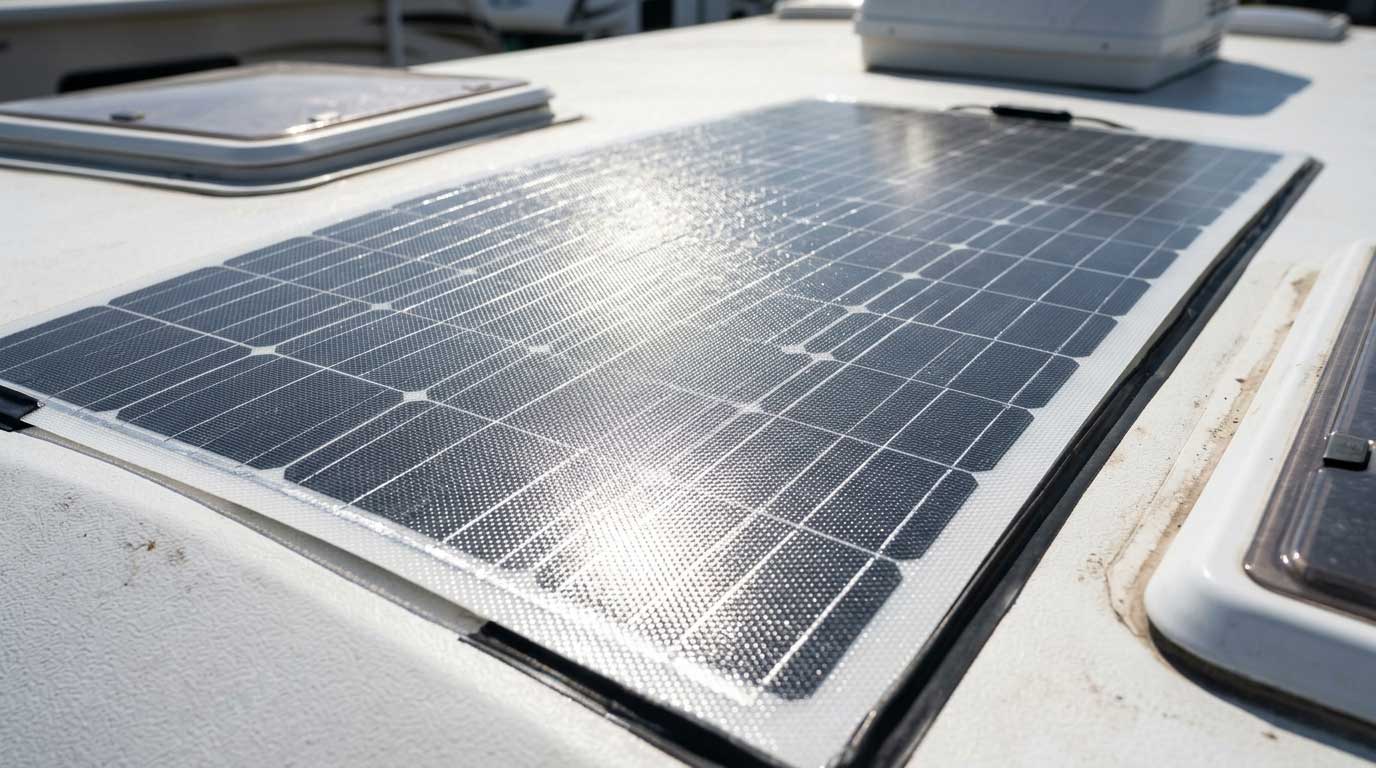
Flexible solar panels often appear hotter because they sit closer to the mounting surface.
Traditional framed panels usually have several inches of clearance underneath.
Air moves freely.
Heat escapes more easily.
Flexible panels are different.
They often sit directly against:
- RV roofs
- Boat cabins
- Camper vans
- Curved fiberglass surfaces
- Portable structures
Less airflow means more retained heat.
According to the International Energy Agency (IEA), solar module efficiency decreases as operating temperatures increase above standard testing conditions.
Source:
https://www.iea.org
This isn’t unique to flexible solar panels.
It’s simply more noticeable.
How Flexible Solar Panels Keep From Over Heating
A common misconception is that flexible solar panels lack thermal management.
In reality, modern designs incorporate several strategies that help reduce excessive heat buildup.
Advanced Surface Materials
Premium flexible panels increasingly use ETFE rather than older PET materials.
ETFE offers:
- Better UV resistance
- Improved weather durability
- Enhanced thermal stability
- Longer service life
The difference becomes especially noticeable in desert and marine environments where surfaces remain exposed to intense sunlight for extended periods.
According to material performance data published by DuPont, ETFE maintains excellent optical and thermal properties under prolonged outdoor exposure.
Source:
https://www.dupont.com
High-Efficiency Monocrystalline Cells
Higher efficiency doesn’t just improve power generation.
It can also improve energy conversion.
More incoming solar energy becomes electricity instead of heat.
According to the U.S. Department of Energy, monocrystalline solar cells generally deliver higher efficiencies than many alternative silicon technologies.
Source:
https://www.energy.gov
That doesn’t eliminate heat.
It simply improves the balance.
What Temperatures Do Flexible Solar Panels Reach?
This question surprises many first-time buyers.
Panel temperatures can become significantly higher than ambient air temperatures.
On a sunny summer day:
| Condition | Approximate Temperature |
|---|---|
| Air Temperature | 86°F (30°C) |
| Standard Solar Panel Surface | 122°F–149°F (50°C–65°C) |
| Flexible Solar Panel Surface | 131°F–167°F (55°C–75°C) |
These temperatures may sound alarming.
They’re not unusual.
Solar equipment is designed to operate in elevated temperatures.
The more important measurement isn’t panel temperature itself.
It’s whether performance remains stable.
Most quality flexible solar panels are engineered to withstand operating temperatures well above typical field conditions.

Installation Matters More Than Most People Realize
Years of reviewing customer installations have revealed a consistent pattern.
Many overheating complaints have little to do with the panel itself.
Instead, they originate from installation decisions.
One example stands out.
A customer mounted flexible panels directly onto a dark-painted steel roof using a full-surface adhesive. The roof acted like a giant heat sink.
Temperatures climbed dramatically.
A similar installation on a white fiberglass RV roof performed noticeably cooler.
The panels were identical.
The mounting surface wasn’t.
Several factors influence operating temperature:
- Roof color
- Surface material
- Air circulation
- Geographic location
- Mounting method
- Solar irradiance levels
These details rarely appear in product advertisements, yet they often determine real-world performance.
Does Overheating Damage Flexible Solar Panels?
Heat alone isn’t usually the problem.
Prolonged heat combined with poor materials can become problematic.
Earlier generations of flexible panels sometimes suffered from:
- Surface yellowing
- Delamination
- Reduced light transmission
- Accelerated aging
Modern ETFE-based panels have improved significantly.
The National Renewable Energy Laboratory (NREL) continues to study module durability and environmental stress factors, including thermal cycling and long-term heat exposure.
Source:
https://www.nrel.gov
Quality materials make a substantial difference.
That’s one reason why premium panels often command higher prices.
You’re not just paying for wattage.
You’re paying for durability.
Practical Ways to Reduce Flexible Solar Panel Temperature
Experienced installers often focus on simple solutions rather than complicated modifications.
Some of the most effective strategies include:
Choose Light-Colored Mounting Surfaces
White fiberglass roofs typically remain cooler than dark metal roofs.
Use Premium ETFE Panels
Better materials generally tolerate heat more effectively.
Avoid Shaded Hotspots
Partial shading can create uneven heating conditions across cells.
Maintain Clean Panel Surfaces
Dust and dirt increase heat absorption while reducing efficiency.
Follow Manufacturer Installation Guidelines
Most overheating issues I’ve encountered involved installation shortcuts rather than product failures.
What We Have Learned from Marine and RV Applications
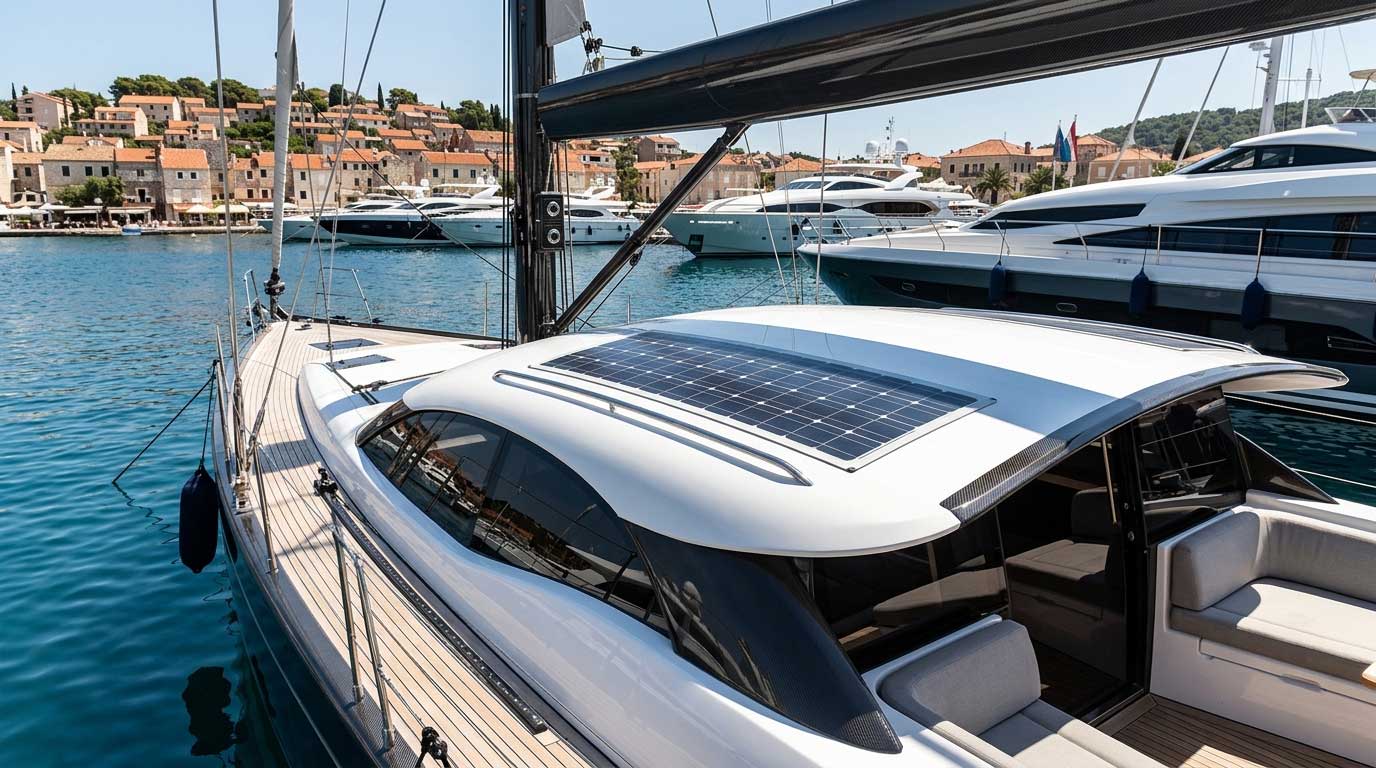
Marine installations offer an interesting perspective.
Boat owners routinely expose flexible solar panels to:
- Salt spray
- High UV exposure
- Continuous vibration
- Elevated surface temperatures
Yet many quality systems continue performing for years.
Why?
Because installation quality and material selection often outweigh environmental severity.
A well-designed system on a sailboat can outperform a poorly installed system on a stationary RV roof.
That reality tends to surprise people.
Solar performance isn’t determined by a single specification.
It’s the result of multiple decisions working together.
FAQ:How Flexible Are Solar Panels Keep From Over Heating?
How flexible are solar panels keep from over heating compared to rigid panels?
Flexible panels generally run hotter because they sit closer to mounting surfaces, but quality materials and proper installation help manage temperatures effectively.
Do flexible solar panels lose efficiency when hot?
Yes. Like all photovoltaic modules, efficiency decreases as operating temperatures rise.
Is ETFE better for heat resistance?
Yes. ETFE provides better UV stability, thermal performance, and environmental durability than many older surface materials.
Can flexible solar panels be used in desert climates?
Absolutely. High-quality flexible solar panels are commonly used in hot environments, including deserts, RV travel routes, and off-grid monitoring systems.
What causes flexible solar panels to overheat?
Poor airflow, dark mounting surfaces, low-quality materials, improper installation, and extreme environmental conditions can all contribute to higher operating temperatures.
Final Thoughts
When people ask how flexible are solar panels keep from over heating, the answer isn’t found in flexibility alone. Modern flexible solar panels manage heat through advanced materials, efficient monocrystalline cells, and thoughtful installation practices. While they naturally operate warmer than some framed panels, quality designs combined with proper installation can deliver reliable performance even in demanding environments.
Related recommendations
-

How Good Are Flexible Solar Panels?
267How good are flexible solar panels for RVs, boats, and off-grid systems? Discover real-world performance, durability, efficiency, and expert insights from Bright Solar.
View details -
How Flexible Monocrystalline Solar Panels Work?
205How flexible monocrystalline solar panels work in real applications? Learn the technology, efficiency, durability, and installation insights from Bright Solar experts.
View details -
do solar panels give off radiation?
197do solar panels give off radiation? Learn whether solar panels produce harmful radiation, electromagnetic fields, and what science says about solar energy safety.
View details -
how to calculate solar panel needs for home?
242Learn how to calculate solar panel needs for home with energy usage, sunlight hours, system losses, and panel output factors for accurate solar sizing.
View details