Solar Panel for AC: How Many Solar Panels Are Needed to Run an Air Conditioner?
A solar panel for ac systems can effectively power residential, RV, and off-grid air conditioners when properly sized with batteries and inverters. Most residential AC units require between 1,500W and 5,000W of solar capacity depending on cooling demand, operating hours, and climate conditions.
The question appears simple, yet it usually arrives in the middle of summer.
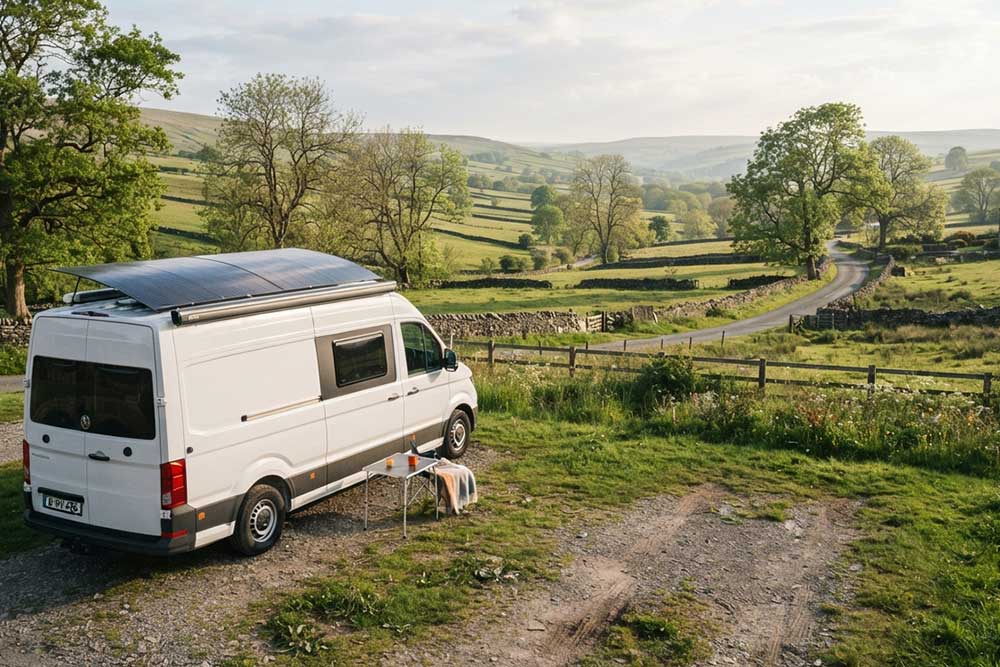
Several years ago, while helping a customer retrofit a camper trailer in southern Arizona, I watched the owner turn off his air conditioner every afternoon because his battery bank simply could not keep up. The rooftop temperature exceeded 65°C. The inside of the vehicle felt like an oven. His original assumption was straightforward:
“One solar panel should run one air conditioner.”
Reality is far more complicated.
At Bright Solar, our engineering team has participated in flexible solar panel projects for RVs, mobile cabins, off-grid structures, marine applications, and small residential systems. Air conditioning remains one of the largest electrical loads in any solar installation.
This article explains exactly how a solar panel for ac systems works, how to size them correctly, and where most installation mistakes occur.
Why Air Conditioners Are Difficult Loads for Solar Systems
Most electrical devices inside a home consume modest amounts of energy:
| Appliance | Power Consumption |
|---|---|
| LED lights | 10-50W |
| Laptop | 60-120W |
| Refrigerator | 100-300W |
| Television | 80-200W |
| Microwave | 800-1500W |
| Air conditioner | 500-3500W+ |
Air conditioners contain compressors. Compressors create startup surges.
A 1,200W air conditioner may briefly demand 2,500W or even 3,000W during startup.
That single detail changes the entire solar design.
According to the U.S. Department of Energy, air conditioning accounts for roughly 19% of electricity consumption in U.S. homes.
Source:
https://www.energy.gov/energysaver/air-conditioning
During site visits in Texas and Florida, I have seen cooling loads exceed every other household appliance combined.
The solar array is rarely the problem.
The inverter is.
How Does a Solar Panel for AC System Work?
The process usually follows five stages:
- Solar panels generate DC electricity.
- Charge controller regulates charging.
- Batteries store energy.
- Inverter converts DC to AC power.
- Air conditioner consumes AC electricity.
Grid-Tied Systems
Homes connected to the utility grid often run air conditioners directly from solar production during the day.
Advantages:
- Lower battery costs.
- Higher efficiency.
- Net metering potential.
- Smaller storage requirements.
Off-Grid Systems
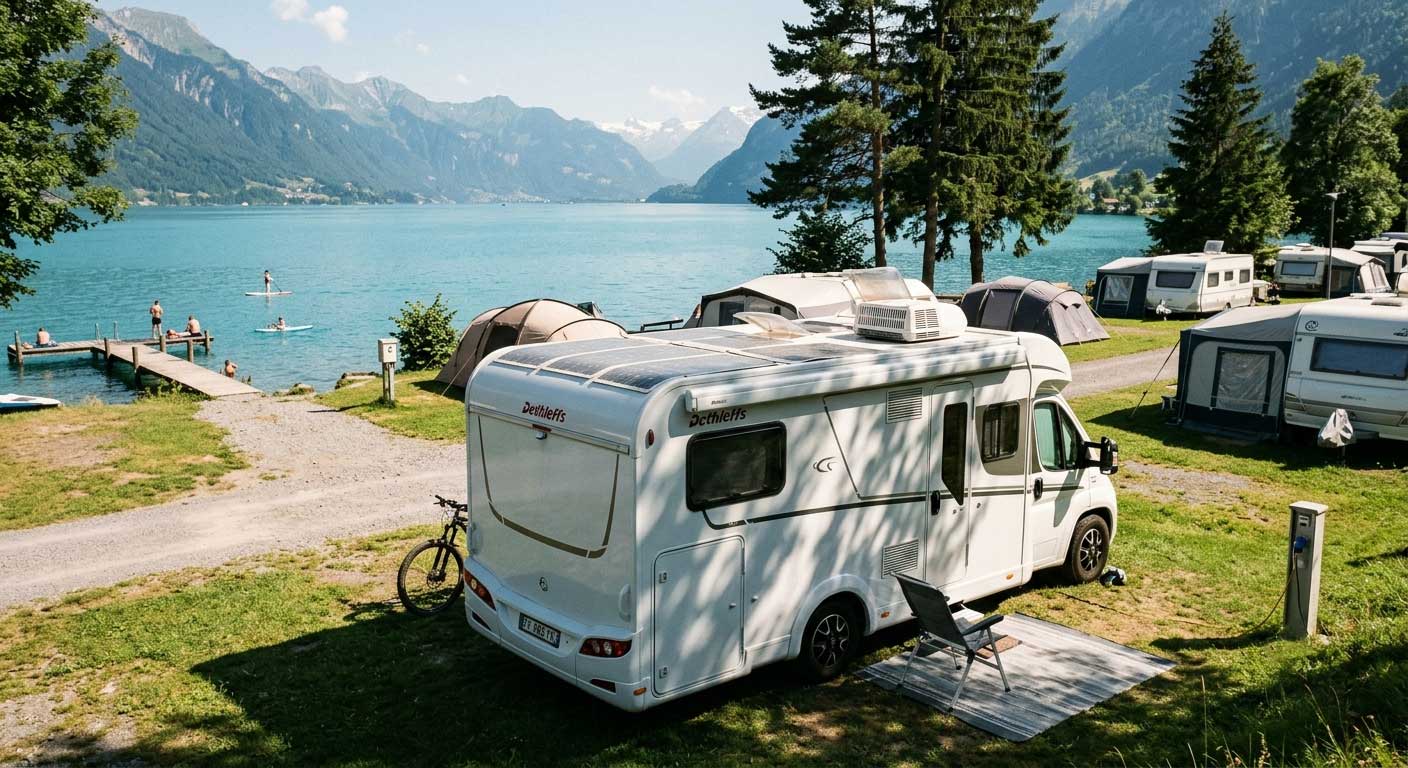
Cabins, RVs, boats, and mobile homes require batteries.
Typical configuration:
- 800W–3000W solar array.
- Lithium battery bank.
- Pure sine wave inverter.
Without storage, nighttime cooling becomes impossible.
How Much Power Does an Air Conditioner Use?
| AC Type | Running Watts | Startup Watts |
|---|---|---|
| RV AC 9,000 BTU | 900-1200W | 1800-2500W |
| Mini Split 12,000 BTU | 800-1400W | 1600-2500W |
| Window AC | 500-1500W | 1000-2500W |
| Central AC | 3000-5000W | 6000-10000W |
The Air Conditioning Contractors of America (ACCA) reports that improper system sizing remains one of the most common efficiency issues.
Source:
https://www.acca.org
In practice, actual power consumption depends on:
- Outdoor temperature.
- Indoor temperature setting.
- Humidity.
- Insulation.
- Compressor technology.
A modern inverter mini split often consumes dramatically less energy than older systems.
How Many Solar Panels Are Needed?
The answer depends on daily energy use.
Example 1: RV Air Conditioner
- AC power: 1000W
- Runtime: 5 hours
- Daily consumption: 5 kWh
Assuming 5 peak sun hours:
5,000 Wh ÷ 5 hours = 1,000W solar capacity.
Accounting for losses:
1,000W × 1.25 = 1,250W.
Recommended system:
- Three 400W panels.
- 48V lithium battery.
- 3000W inverter.
Example 2: Residential Mini Split
- 1200W average consumption.
- 8 hours daily.
Energy use:
9.6 kWh.
Solar requirement:
Approximately 2,000W to 2,500W.
Flexible Solar Panels vs Rigid Panels for AC Applications
| Factor | Flexible Panels | Rigid Panels |
|---|---|---|
| Weight | Very low | Heavy |
| Roof load | Minimal | Higher |
| Installation | Easy | Requires mounting |
| RV use | Excellent | Good |
| Residential roofs | Limited | Excellent |
| Curved surfaces | Yes | No |
For RV cooling systems, flexible panels often make more sense.
On one camper project, the aluminum roof structure could not safely support additional rigid panels. Flexible modules reduced rooftop weight by nearly 70%.
That single change allowed the owner to install 800W of capacity.
Visit product page:Flexible Solar Panel
Why Batteries Matter More Than Most People Think
Customers frequently ask:
“Can solar panels directly run my AC?”
Technically, yes.
Practically, usually no.
Clouds pass.
The compressor starts.
The sunlight changes.
Without storage, voltage fluctuations become common.
According to the National Renewable Energy Laboratory (NREL), battery storage significantly improves solar utilization and load management.
Source:
https://www.nrel.gov
Typical battery recommendations:
| AC Size | Battery Capacity |
|---|---|
| 1000W | 200Ah 24V |
| 1500W | 300Ah 24V |
| 2000W | 400Ah 24V |
| 3000W | 600Ah 48V |
Lithium batteries now dominate new solar installations because of:
- Higher cycle life.
- Faster charging.
- Lower weight.
- Greater usable capacity.
Common Mistakes When Sizing a Solar Panel for AC
Ignoring Startup Surge
Many systems fail immediately after installation.
The inverter trips because startup demand exceeds capacity.
Buying Too Few Batteries
The panels may produce enough energy, but the batteries cannot sustain evening cooling.
Oversizing the Air Conditioner
A larger AC unit does not necessarily improve comfort.
Oversized units cycle frequently and waste energy.
Underestimating Temperature
A system that works perfectly in Oregon may struggle in Arizona.
Environmental conditions matter.
Real Project Example
In 2024, a customer in southern Spain requested a cooling solution for a mobile office container.
System:
- 1600W flexible solar array.
- 5kWh lithium battery.
- 3000W inverter.
- 12000 BTU mini split.
Results:
- 7-8 hours of cooling daily.
- Interior temperature reduced by 12°C.
- Generator runtime reduced by 85%.
The interesting observation was not the energy production.
It was how quickly occupants changed behavior.
Doors remained closed.
Shade structures were added.
Energy efficiency improved naturally.
When Does a Solar Panel for AC Make Sense?
Ideal applications include:
- RVs.
- Tiny homes.
- Mobile offices.
- Off-grid cabins.
- Boats.
- Vacation homes.
- Outdoor structures.
- Hybrid residential systems.
Large central air systems can certainly run on solar, but they require larger investments.
Smaller inverter air conditioners deliver much faster returns.
Choosing the Right Inverter for a Solar Panel for AC System
The inverter is usually the first component that fails when an air conditioning system is undersized.
I remember a customer in southern Texas who installed four 300W panels and a 1500W inverter to run a 13,500 BTU RV air conditioner. The solar production was acceptable. The batteries were adequate. The inverter, however, shut down every afternoon.
The compressor startup current reached nearly twice the inverter’s continuous rating.
For most air conditioning applications, Bright Solar engineers typically recommend:
| Air Conditioner Size | Recommended Inverter |
|---|---|
| 5,000 BTU | 1500W Pure Sine Wave |
| 9,000 BTU | 2000W Pure Sine Wave |
| 12,000 BTU | 3000W Pure Sine Wave |
| 18,000 BTU | 5000W Pure Sine Wave |
| Central AC | 6000W+ Split Phase |
Pure sine wave output is especially important because compressor motors can overheat when supplied with modified sine wave electricity.
The U.S. Department of Energy provides additional guidance regarding efficient cooling systems and inverter-driven equipment:
https://www.energy.gov/energysaver/air-conditioning
Seasonal Performance of Solar Panel for AC Systems
One issue rarely discussed in sales brochures is seasonal variation.
A solar array that performs beautifully in June may struggle in December.
Summer Advantages
- Longer sunlight hours.
- Higher solar production.
- Increased cooling demand.
- Better battery charging.
Winter Challenges
- Reduced sunlight.
- Lower sun angle.
- More cloudy days.
- Less production.
Ironically, solar production often peaks when cooling demand is highest.
The National Renewable Energy Laboratory reports that solar generation and cooling loads frequently align during summer afternoons, making solar-powered cooling particularly effective.
Reference:
https://www.nrel.gov
Step-by-Step Installation Process
Step 1: Calculate AC Consumption
Determine:
- Running watts.
- Startup watts.
- Daily operating hours.
Step 2: Determine Daily Energy Use
Example:
1200W × 6 hours = 7200Wh.
Step 3: Size the Solar Array
7200Wh ÷ 5 sun hours = 1440W.
Add 20% system losses.
Recommended array:
1700W to 1800W.
Step 4: Size Battery Storage
One evening of operation:
7200Wh.
With lithium batteries:
Approximately 8kWh storage.
Step 5: Select Inverter
Startup surge must be considered.
A 3000W inverter often works better than a 2000W model for the same air conditioner.
Solar Panel for AC Applications in Different Markets
Residential Homes
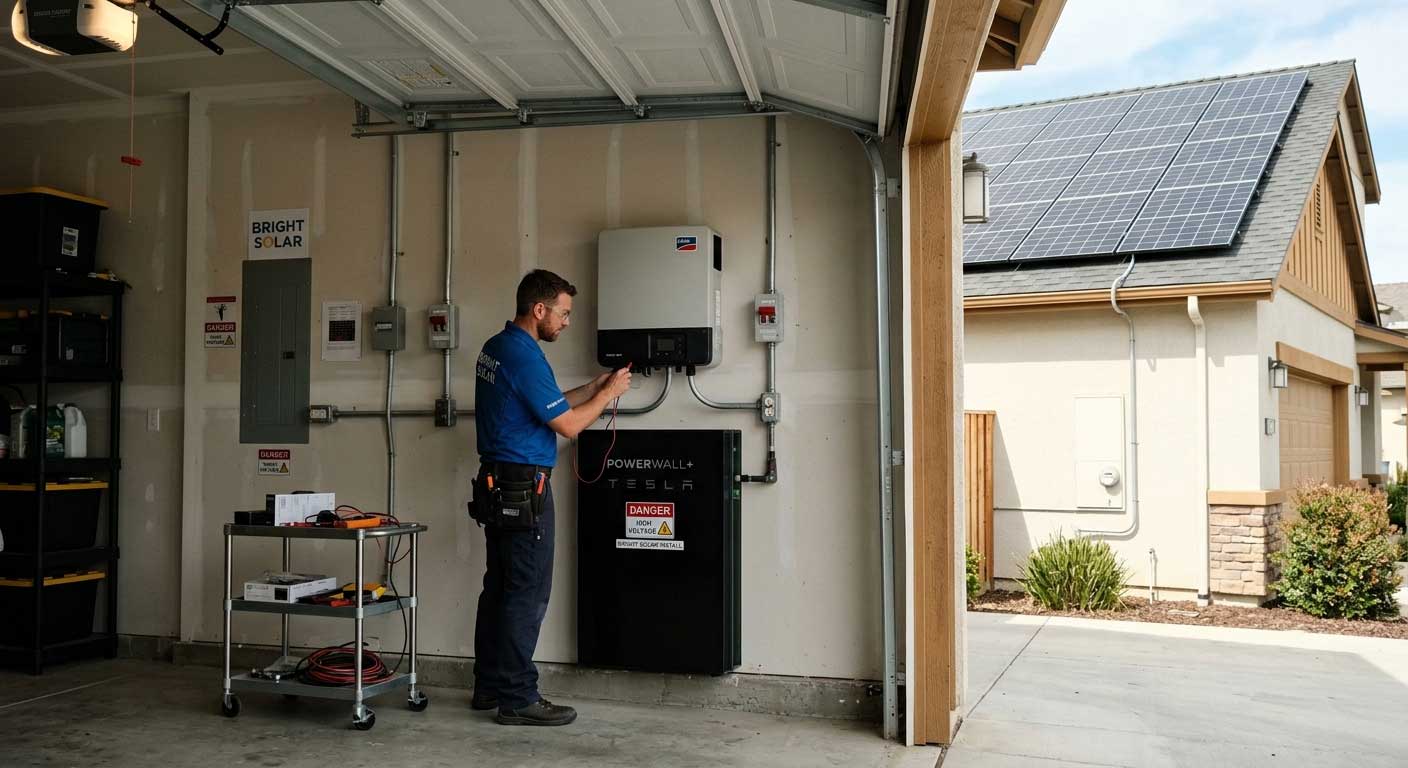
Grid-tied systems dominate.
Solar offsets daytime cooling expenses.
RV Applications
Weight becomes critical.
Flexible panels reduce roof loading.
Tiny Homes
Space limitations favor high-efficiency modules.
Mobile Offices
Battery storage allows silent operation.
Agricultural Buildings
Ventilation and cooling systems increasingly use solar energy.
The U.S. Energy Information Administration reports that cooling demand continues to increase across warmer regions.
Source:
Real Customer Case: Arizona Mobile Office
In 2024, a contractor operating temporary offices near Phoenix needed cooling inside two site trailers.
The initial generator solution produced:
- Fuel costs exceeding $350 monthly.
- Noise complaints.
- Frequent maintenance.
The final system included:
- 1800W solar array.
- 10kWh battery storage.
- 24,000 BTU mini split.
After six months:
- Generator operation reduced by 90%.
- Interior temperatures remained below 26°C.
- Fuel expenses dropped substantially.
The project demonstrated something interesting.
Workers started arriving earlier because the trailers became comfortable before sunrise.
Sometimes energy projects solve human problems rather than electrical ones.
Cost Analysis
| System Size | Estimated Cost |
|---|---|
| Small RV System | $1,500-$3,000 |
| Medium Off-Grid System | $4,000-$8,000 |
| Residential Mini Split | $5,000-$10,000 |
| Whole House Cooling | $15,000-$30,000 |
According to the Solar Energy Industries Association, installed solar prices have declined significantly over the past decade.
Reference:
The economics improve further when electricity prices rise.
FAQ About Solar Panel for AC
Can one solar panel run an air conditioner?
Usually no. Most air conditioners require multiple panels because cooling loads are relatively large.
Can I run AC directly from solar panels?
Possible, but battery storage greatly improves reliability.
What is the best solar panel for AC systems?
High-efficiency monocrystalline panels generally provide the best performance.
Can flexible panels run an RV air conditioner?
Yes. Many RV owners use lightweight flexible modules to reduce roof weight.
How long do batteries last?
Modern lithium batteries often exceed 4,000 charge cycles.
Why Bright Solar Focuses on Lightweight Solutions
Traditional rigid modules remain excellent for rooftops.
However, many air conditioning applications involve:
- RV roofs.
- Mobile homes.
- Vans.
- Boats.
- Portable buildings.
In these environments, reducing structural weight matters.
Bright Solar flexible panels help installers place more solar capacity on limited roof areas without heavy aluminum mounting systems.
The result is often greater usable energy and simpler installation.
Final Thoughts
A properly designed solar panel for ac system is no longer experimental. Advances in solar efficiency, lithium storage, and inverter technology have made solar cooling practical for homes, RVs, mobile offices, and off-grid buildings.
The projects that perform best are rarely the largest systems. They are the ones that balance solar production, battery capacity, inverter sizing, and cooling demand realistically.
For many customers, the objective is not running the air conditioner continuously. It is creating several hours of comfortable cooling without relying entirely on the grid or a generator.
That goal is now very achievable with modern solar technology and carefully engineered system design.
Related recommendations
-

ETFE Solar Panel Flexible: Benefits, Uses and Buying Guide
159An ETFE solar panel flexible uses an ETFE front surface and a bendable module construction. It can suit RV, marine, and off-grid projects, but selection depe...
View details -
Solar Panels for Shade: How to Reduce Power Loss
217Solar panels can work in shade, but output decreases as sunlight falls. Proper site assessment, panel placement, bypass diodes, and module-level electronics ...
View details -
800w flexible solar panel (Ultra High Power Off-Grid Energy System Guide from Bright Solar)
177800w flexible solar panel explained with real off grid field data, RV and marine case studies, installation insights, and system design performance analysis.
View details -
12 V Solar Panel: Complete Guide for RV, Marine & Off-Grid Systems
230Learn how a 12 v solar panel works, how to charge a 12V battery, choose the right wattage, wire panels, and build reliable RV, marine, and off-grid systems.
View details