Solar Pergolas for Outdoor Living and Clean Energy Generation
Solar pergolas provide functional outdoor shade while generating renewable electricity. A properly designed solar pergola can lower electricity costs, improve outdoor living spaces, and create additional solar capacity when roof space is limited.
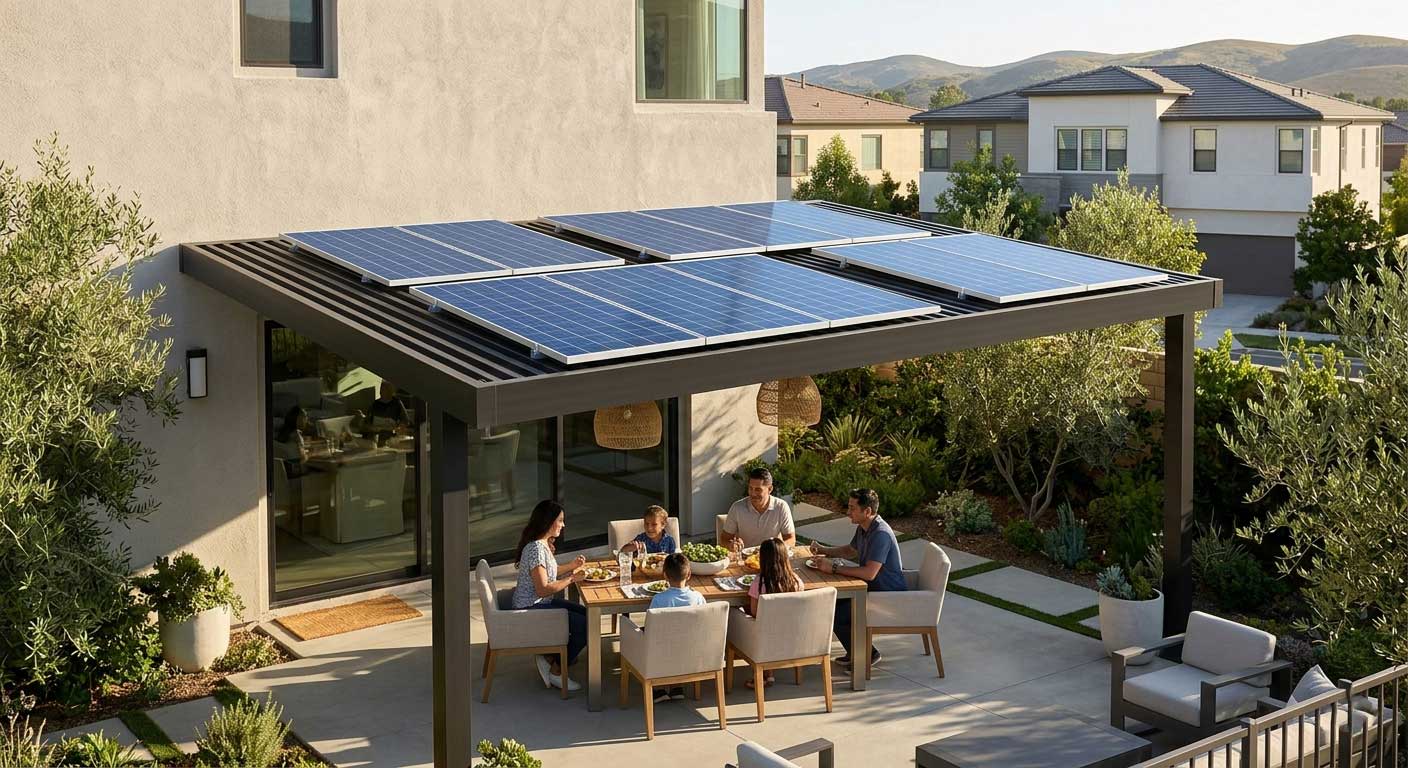
Not long ago, I visited a residential project in Southern California where the homeowner faced a surprisingly common problem: their roof simply wasn’t suitable for additional solar panels.
Too many vents.
Too many roof angles.
Too much shading from neighboring trees.
The solution ended up sitting twenty feet away from the house.
A solar pergola.
What began as an outdoor seating area became a 5.4kW solar power system that generated enough electricity to offset much of the family’s daytime energy consumption while creating a comfortable shaded patio.
That experience reinforced something we’ve seen repeatedly at Bright Solar:
Solar pergolas are no longer niche architectural features. They are becoming a practical energy solution.
Author Experience & Industry Background
This article is written from the perspective of the Bright Solar engineering and project support team.
Over the past decade, our team has worked with:
- Flexible solar panel installations
- Residential solar projects
- RV solar systems
- Marine solar applications
- Custom solar structures
We regularly assist homeowners, contractors, RV builders, and architects in selecting lightweight solar solutions for projects where traditional rooftop systems are not ideal.
What Are Solar Pergolas?
A solar pergola is an outdoor structure designed to support solar panels while simultaneously providing shade and weather protection.
Unlike traditional pergolas that use wooden slats or decorative beams, solar pergolas integrate photovoltaic modules into the roof structure.
The result is dual functionality:
| Feature | Traditional Pergola | Solar Pergola |
|---|---|---|
| Shade | Yes | Yes |
| Outdoor Living Space | Yes | Yes |
| Electricity Generation | No | Yes |
| EV Charging Potential | No | Yes |
| Energy Cost Reduction | No | Yes |
For many homeowners, the biggest advantage isn’t aesthetics.
It’s creating a new solar surface when roof limitations exist.
Why Solar Pergolas Are Becoming More Popular
Several market trends are driving interest.
According to the U.S. Energy Information Administration (EIA), residential electricity prices have increased significantly across many states over the past decade.
Source:
https://www.eia.gov/electricity/
At the same time, outdoor living investments continue growing.
The National Association of Realtors has consistently reported strong homeowner demand for outdoor improvements that increase property usability and value.
Source:
https://www.nar.realtor
Instead of choosing between:
- patio shade
- outdoor entertaining
- solar energy
many homeowners now combine all three.
Where Solar Pergolas Work Best
Backyard Patios
The most common application.
Benefits include:
- outdoor dining areas
- lounge spaces
- poolside coverage
- summer heat reduction
In Arizona and Nevada projects we’ve reviewed, shaded patio temperatures were noticeably lower than adjacent exposed concrete surfaces during summer afternoons.
Outdoor Kitchens
Outdoor kitchens typically consume power for:
- lighting
- refrigeration
- ventilation
- entertainment systems
A solar pergola can offset much of that demand.
One homeowner in Texas installed a 4kW pergola system above an outdoor kitchen and reported that most daytime energy consumption for the entertainment area was covered by solar production during summer months.
Carports and Vehicle Protection
Solar pergolas are increasingly used as:
- solar carports
- EV charging stations
- driveway covers
The concept is simple:
The same structure protects vehicles from sunlight while generating electricity.
This dual-purpose use often improves project economics compared with standalone solar arrays.
How Much Electricity Can Solar Pergolas Generate?
Production depends on:
- location
- orientation
- panel efficiency
- shading
- system size
The National Renewable Energy Laboratory (NREL) provides solar resource data showing substantial differences between regions.
Source:
https://www.nrel.gov
Example annual production estimates:
| System Size | Estimated Annual Production |
|---|---|
| 3 kW | 3,900–5,100 kWh |
| 5 kW | 6,500–8,500 kWh |
| 8 kW | 10,000–13,600 kWh |
A 5kW solar pergola can often offset a meaningful portion of household electricity consumption.
Roof Solar vs Solar Pergolas
This is one of the most common questions we receive.
Should solar panels go on the roof or on a pergola?
The answer depends on the property.
Roof Solar Advantages
- Lower structural cost
- Uses existing space
- Easier permitting in some regions
Solar Pergola Advantages
- Better orientation flexibility
- Easier maintenance access
- Additional outdoor living space
- Useful when roofs have shading issues
- Creates architectural value
In many projects, the best answer is actually both.
We have seen homeowners combine rooftop solar with a solar pergola to maximize total generation capacity.
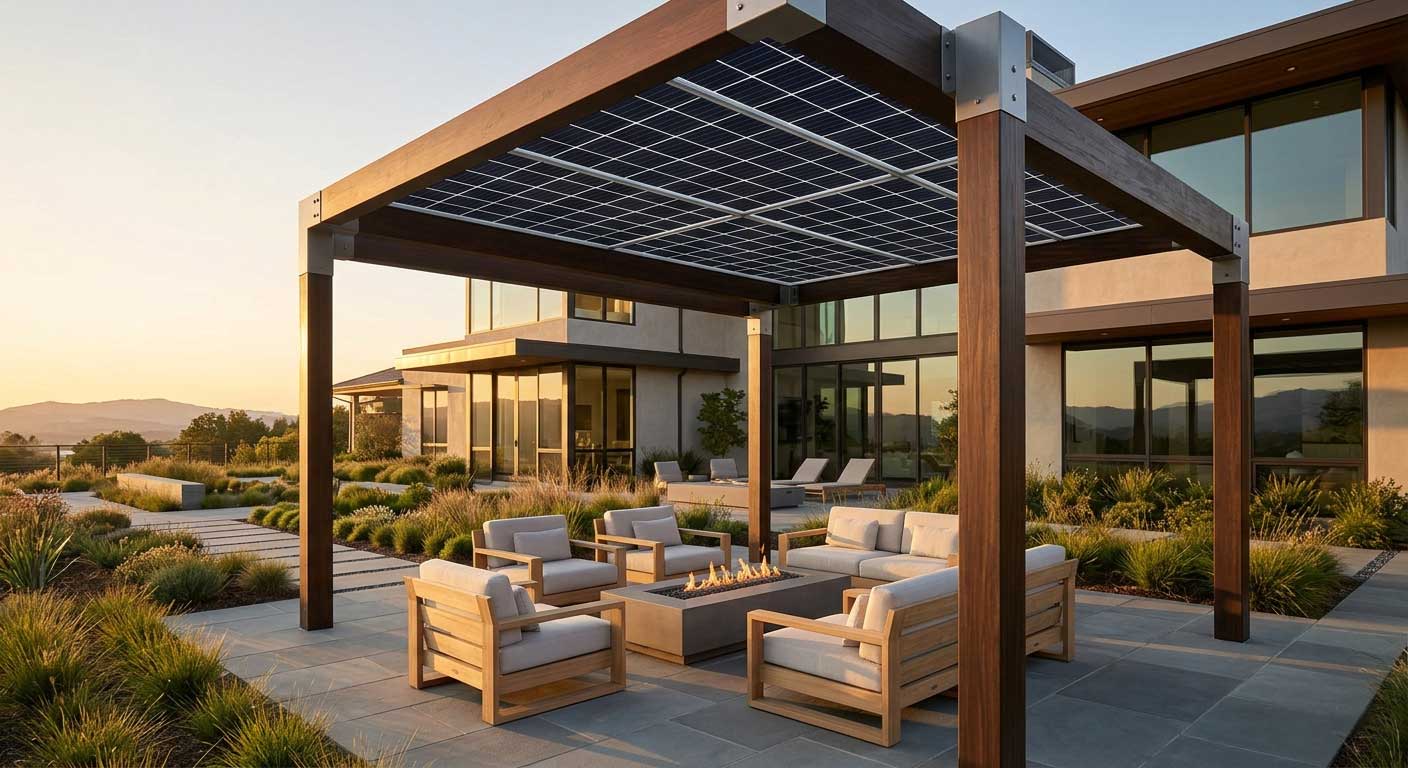
Why Flexible Solar Panels Are Changing Solar Pergola Design
Traditional pergolas often rely on glass-framed modules.
However, architects increasingly seek:
- lower structural weight
- cleaner appearance
- custom integration
This is where lightweight solar technology becomes interesting.
Structural Load Matters
A typical glass solar panel may weigh around:
20–25 kg (44–55 lbs)
Flexible panels can weigh dramatically less depending on construction.
Reduced weight can:
- simplify support structures
- reduce engineering requirements
- improve retrofit possibilities
This becomes particularly important on:
- rooftop terraces
- elevated decks
- lightweight aluminum pergolas
Real Project Example
One project we supported involved a waterfront residence.
The owner originally planned a conventional pergola.
After reviewing local electricity costs and available sunlight, the design team modified the structure to support lightweight solar modules.
Project Summary:
| Item | Value |
|---|---|
| Location | Florida |
| Structure Area | 430 sq ft |
| Solar Capacity | 6.2 kW |
| Estimated Annual Output | 8,700+ kWh |
| Primary Use | Patio & Pool Area |
Interestingly, the homeowner’s original objective wasn’t energy savings.
It was shade.
The solar generation became the unexpected bonus.
Solar Pergolas and Property Value
Property value discussions are often controversial.
Many factors affect resale prices.
However, studies referenced by the U.S. Department of Energy indicate that solar-equipped homes frequently command higher market interest.
Source:
https://www.energy.gov
What solar pergolas uniquely contribute is visible functionality.
Buyers immediately understand:
- shaded outdoor area
- renewable energy production
- modern home design
That combination tends to create strong visual appeal during property showings.
Design Considerations Before Building a Solar Pergola
Before choosing a system, evaluate:
Sun Exposure
Avoid:
- tall trees
- neighboring structures
- chimneys
- utility poles
Even partial shading can reduce production.
Orientation
Ideal solar-facing directions vary by region.
Generally:
- South-facing performs best in North America.
- Southwest orientations can improve late-afternoon generation.
Structural Engineering
Important considerations include:
- wind load
- snow load
- local building codes
- foundation requirements
Solar panels often remain in service for 25 years or more.
The supporting structure should be designed accordingly.
Future Energy Needs
Think beyond current consumption.
Many homeowners later add:
- EV chargers
- battery storage
- heat pumps
- pool equipment
Oversizing slightly during construction can prevent costly upgrades later.
How Much Do Solar Pergolas Cost?
This is usually the first question after homeowners see a completed project.
The answer is frustratingly broad because a solar pergola is really two projects combined into one:
- An outdoor architectural structure
- A solar power generation system
In North America, residential solar pergola projects typically range from:
| Project Type | Typical Range |
|---|---|
| Small Patio Solar Pergola | $8,000–$18,000 |
| Mid-Size Residential Solar Pergola | $15,000–$35,000 |
| Premium Custom Solar Pergola | $30,000–$70,000+ |
Actual costs depend on:
- Aluminum vs wood structure
- Ground preparation
- Electrical work
- Battery integration
- Utility interconnection
- Local permitting requirements
One homeowner in Arizona initially budgeted $12,000.
The final project cost reached nearly $24,000 after adding:
- EV charging preparation
- Integrated LED lighting
- Battery backup capability
Yet six months later he told the installer something interesting:
“The electricity savings matter. The outdoor space matters more.”
That comment appears repeatedly across successful solar pergola projects.
The energy generation gets attention.
The lifestyle improvement keeps people satisfied.
Understanding Solar Pergola ROI
A common mistake is evaluating solar pergolas solely as power systems.
That misses half the equation.
Traditional ROI calculations look like this:
Annual Energy Savings ÷ Installation Cost
But solar pergolas create value through multiple channels:
| Benefit | Potential Value |
|---|---|
| Electricity Savings | High |
| Outdoor Living Space | High |
| Property Appeal | Moderate |
| Shade & Comfort | High |
| EV Charging Potential | Moderate |
| Future Energy Expansion | Moderate |
According to the U.S. Department of Energy, solar energy systems can reduce household electricity expenses significantly depending on regional utility rates.
Source:
https://www.energy.gov
In high-rate states such as:
- California
- Hawaii
- Massachusetts
- Connecticut
payback periods tend to be shorter.
The New Direction: Lightweight Solar Pergolas
This is where the market becomes particularly interesting.
Five years ago most solar pergolas used conventional glass modules.
Today architects increasingly ask for:
- lower weight
- cleaner aesthetics
- reduced structural load
- custom integration
At Bright Solar, we’ve noticed this shift accelerating, particularly for residential luxury projects.
The discussion is no longer:
“Can we install solar?”
Instead, it becomes:
“Can we make the solar disappear into the design?”
That distinction matters.
Many homeowners dislike the industrial appearance of traditional framed panels.
Lightweight solar technologies allow designers more flexibility.
Solar Pergolas vs Solar Carports
Many property owners compare these two options.
While they appear similar, their primary purposes differ.
Solar Pergolas
Designed primarily for:
- outdoor living
- entertaining
- poolside areas
- backyard comfort
Solar Carports
Designed primarily for:
- vehicle protection
- EV charging
- parking coverage
In practice, the technologies overlap.
Several recent projects have blurred the distinction entirely.
One project in Texas used a structure that functioned as:
- weekend entertaining space
- outdoor dining area
- EV charging station
The homeowner jokingly called it:
“The hardest working structure on my property.”
Maintenance Requirements Are Lower Than Most People Expect
One misconception persists.
People assume solar pergolas require constant maintenance.
In reality, maintenance demands are generally limited.
Typical annual tasks include:
Visual Inspection
Check for:
- loose wiring
- debris accumulation
- structural movement
Surface Cleaning
Most regions require cleaning only a few times annually.
Rain handles much of the work.
Desert environments may require additional cleaning because of dust accumulation.
Electrical Review
Every few years:
- inspect connectors
- check inverter performance
- review production data
According to NREL research, soiling losses vary considerably by location but remain manageable with periodic maintenance.
Source:
https://www.nrel.gov
Common Design Mistakes I See Repeatedly
After reviewing numerous solar projects, several mistakes appear again and again.
Mistake #1: Prioritizing Appearance Over Solar Orientation
A beautiful pergola facing the wrong direction may sacrifice significant production.
Design matters.
Performance matters too.
The best projects balance both.
Mistake #2: Ignoring Future Energy Demand
Many homeowners size systems around current usage.
Then they purchase:
- electric vehicles
- heat pumps
- battery storage
Suddenly the original system feels undersized.
Mistake #3: Underestimating Shade Patterns
Morning sunlight and afternoon sunlight behave differently.
Seasonal shadows behave differently.
I’ve seen locations that appeared perfect in July perform poorly in December.
Professional shading analysis prevents expensive surprises.
Can Solar Pergolas Support Battery Storage?
Absolutely.
Many modern installations pair solar pergolas with batteries.
Benefits include:
- nighttime energy use
- backup power
- improved self-consumption
- reduced utility dependence
The popularity of residential battery systems has increased substantially over the last several years as homeowners seek greater energy resilience.
For regions prone to outages, battery integration often becomes one of the most attractive features.
Who Should Consider Solar Pergolas?
Based on real-world projects, solar pergolas make the most sense for:
Ideal Candidates
✓ Homeowners with limited roof space
✓ Homes with roof shading issues
✓ Backyard renovation projects
✓ Pool and patio upgrades
✓ EV owners
✓ Luxury residential developments
✓ Outdoor hospitality venues
✓ Restaurants with outdoor seating
Less Suitable Applications
✗ Properties with severe year-round shading
✗ Extremely limited yard space
✗ Temporary structures
✗ Locations with major zoning restrictions
Bright Solar Recommendation
At Bright Solar, we generally encourage property owners to view solar pergolas as hybrid investments.
They are not simply solar systems.
They are not simply outdoor structures.
They occupy the space between architecture and energy.
For projects prioritizing:
- aesthetics
- weight reduction
- installation flexibility
lightweight solar panel technologies often deserve serious consideration.
Particularly when designers want solar power generation without the visual heaviness associated with traditional rooftop arrays.
FAQ About Solar Pergolas
Are solar pergolas worth the investment?
Yes. When designed correctly, solar pergolas provide electricity generation, outdoor comfort, and property enhancement simultaneously.
How long do solar pergolas last?
Most structural components can last decades. Solar panels commonly carry performance warranties of 25 years or more depending on the manufacturer.
Can solar pergolas charge electric vehicles?
Yes. Many homeowners connect solar pergolas to EV charging systems through their home’s electrical infrastructure.
Do solar pergolas require planning permission?
Requirements vary by jurisdiction. Always verify local building codes and permitting regulations before construction.
Can flexible solar panels be used on solar pergolas?
Yes. Lightweight solar technologies are increasingly used where reduced structural weight and cleaner aesthetics are desired.
Visit the product page:Flexible Solar Panel
Final Thoughts
The most successful solar pergola projects rarely begin with electricity.
They begin with a simple desire for a better outdoor space.
A place to sit.
A place to gather.
A place that remains comfortable during summer afternoons.
The electricity arrives almost as a bonus.
That combination of lifestyle value and energy production explains why solar pergolas continue gaining momentum across residential and commercial projects alike. For property owners facing roof limitations—or simply looking to make better use of outdoor space—a thoughtfully designed solar pergola may deliver more long-term value than many conventional solar installations.
Related recommendations
-

1000W Solar Panels: Output, Cost, Sizing & Uses
228Learn how 1000w solar panels work, how much electricity they produce, how many panels you need, battery sizing, wiring options, and real-world applications.
View details -
Flexible 100 Watt Solar Panel for RV, Marine and Off-Grid Applications
82Discover flexible 100 watt solar panel solutions from Bright Solar. Learn efficiency, applications, installation tips, and why lightweight solar fits RV, marine, and off-grid energy needs.
View details -
Solar Panel Wiring Series vs Parallel: Which Is Better?
137Solar panel wiring series vs parallel depends on voltage, current, controller limits, cable distance, and shading conditions.
View details -
Flexible Solar Panel Installation for RVs, Boats, and Off-Grid Systems
113Learn flexible solar panel installation for RVs, boats, vans, and off-grid systems. Discover lightweight mounting methods and real-world tips.
View details