1000W Solar Panel Guide: What a 1000W Solar Panel Can Really Power
A 1000W solar panel system can generate approximately 4–6 kWh of electricity per day under average sunlight conditions, making it suitable for RVs, cabins, boats, backup power systems, and small off-grid applications. Actual output depends on location, panel efficiency, weather, and installation angle.
A surprising number of buyers search for a “1000W solar panel” expecting a single panel rated at 1000 watts.
In reality, that’s rarely what exists in today’s market.
Most modern solar modules range between roughly 100W and 700W per panel depending on technology and application. When people search for a 1000W solar panel, they are usually referring to a solar array with a combined capacity of approximately 1000 watts.
I’ve seen this misunderstanding repeatedly during customer consultations.
A customer will call and ask:
“Can I buy one 1000W solar panel?”
What they actually need is a complete 1000W solar solution made up of multiple panels working together.
Understanding that distinction is where good system design begins.
Author Experience
This guide is written from the perspective of the Bright Solar technical team.
Over the years, our engineers have supported solar projects involving:
- RV solar systems
- Marine solar installations
- Mobile homes
- Off-grid cabins
- Portable solar solutions
- Flexible solar panel applications
One pattern appears consistently:
Customers who understand energy consumption before purchasing solar equipment almost always end up with better-performing systems.
Those who shop purely by wattage often overspend—or worse, underbuild.
What Does 1000W Mean in Solar?
The 1000W rating refers to the total peak generating capacity of the solar array under Standard Test Conditions (STC).
Under laboratory conditions:
- Solar irradiance = 1000 W/m²
- Cell temperature = 25°C
- Air mass = 1.5
These standards are defined by the photovoltaic industry and used globally for comparing solar modules.
Source:
https://www.nrel.gov
The important detail?
Real-world conditions rarely match laboratory conditions.
On a hot summer roof, panel temperatures can exceed 60°C (140°F).
When that happens, output decreases.
How Many Panels Make Up a 1000W Solar Panel System?
The answer depends on panel wattage.
Example Configurations
| Panel Size | Number of Panels | Total Capacity |
|---|---|---|
| 100W | 10 Panels | 1000W |
| 200W | 5 Panels | 1000W |
| 250W | 4 Panels | 1000W |
| 500W | 2 Panels | 1000W |
| 550W | 2 Panels | 1100W |
For RVs and boats, flexible panels commonly range between:
- 100W
- 150W
- 200W
- 250W
Therefore many mobile applications achieve solar panel 1000w system using four to eight panels.
How Much Electricity Does a 1000W Solar Panel System Produce?
This is where buyers should focus.
Solar systems don’t produce wattage.
They produce energy.
Energy is measured in:
- Watt-hours (Wh)
- Kilowatt-hours (kWh)
A useful calculation is:
Daily Output = System Size × Peak Sun Hours
Example Production
| Peak Sun Hours | Daily Output |
|---|---|
| 4 Hours | 4 kWh |
| 5 Hours | 5 kWh |
| 6 Hours | 6 kWh |
| 7 Hours | 7 kWh |
According to the National Renewable Energy Laboratory (NREL), average solar resources vary significantly across the United States.
Source:
https://www.nrel.gov/gis/solar.html
For example:
Arizona
5.5–7.0 sun hours
Texas
4.5–6.0 sun hours
Florida
4.5–5.5 sun hours
Washington State
3.0–4.5 sun hours
The exact same 1000W solar panel system can therefore generate dramatically different amounts of electricity depending on location.
What Can a 1000W Solar Panel Power?
This question is more useful than asking how many watts the system produces.
Let’s look at actual loads.
Everyday Appliances
| Device | Power Consumption |
|---|---|
| LED Light | 10W |
| Laptop | 60W |
| WiFi Router | 10W |
| Television | 100W |
| Refrigerator | 100–250W |
| CPAP Machine | 30–60W |
| Portable Fan | 30–70W |
A 1000W solar system generating 5 kWh daily can comfortably support:
- lighting
- electronics
- internet equipment
- refrigeration
- battery charging
for many off-grid scenarios.
Why 1000W Has Become a Popular Size
There’s a practical reason.
It sits in the sweet spot between portability and meaningful production.
Smaller systems:
- 100W
- 200W
- 400W
often struggle during cloudy weather.
Larger systems:
- 3000W
- 5000W
- 10000W
require significantly larger investments.
A 1000W solar panel setup can often handle:
- weekend cabins
- small RVs
- marine systems
- emergency backup power
without becoming excessively expensive.
Real Project Example: A 1000W RV Solar Upgrade
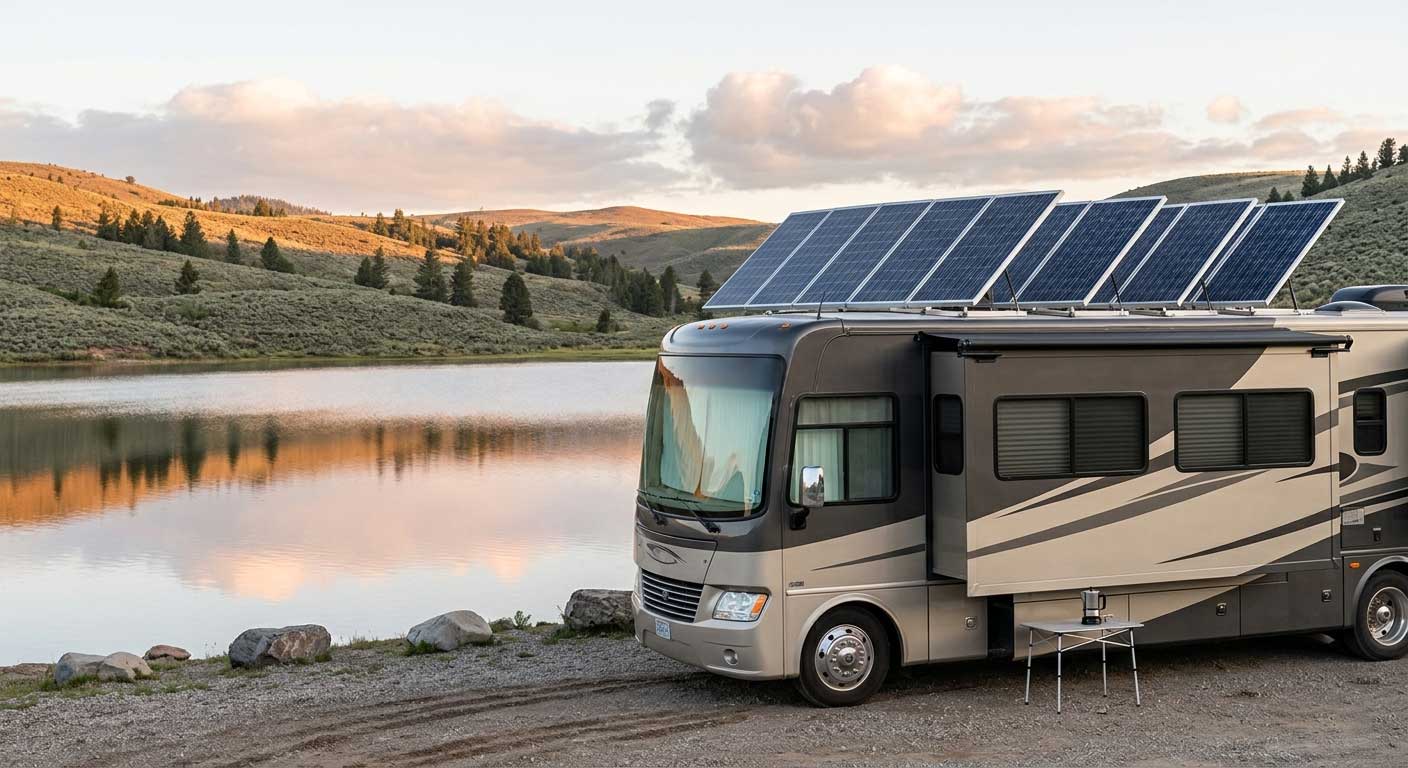
A customer from Colorado contacted us after repeatedly running out of battery capacity during extended camping trips.
His original system:
- Two 100W panels
- 200Ah AGM battery bank
The setup worked in summer.
It struggled in spring and fall.
After reviewing energy consumption logs, we helped redesign the system around approximately 1000W of solar capacity.
The final configuration included:
- Five 200W panels
- MPPT charge controller
- Lithium battery storage
The improvement wasn’t subtle.
Instead of carefully rationing power, the owner began using:
- laptops
- Starlink internet
- refrigeration
- lighting
without daily anxiety about battery levels.
What changed wasn’t just production.
It was confidence.
Flexible vs Rigid Panels in a 1000W System
This discussion appears frequently among RV and marine owners.
Flexible Solar Panels
Advantages:
- lightweight
- lower profile
- easier installation
- reduced roof loading
Best for:
- RV roofs
- boats
- curved surfaces
- mobile homes
Rigid Solar Panels
Advantages:
- maximum lifespan
- higher structural rigidity
- lower cost per watt
Best for:
- ground mounts
- residential roofs
- permanent structures
At Bright Solar, we’ve seen growing demand for lightweight flexible solutions where weight reduction matters more than absolute lowest cost.
Common Mistakes Buyers Make
Mistake #1: Ignoring Energy Consumption
People often purchase systems before calculating demand.
This reverses the proper design process.
Mistake #2: Underestimating Weather
Cloudy days matter.
Battery storage matters.
Solar sizing should account for both.
Mistake #3: Confusing Watts With Watt-Hours
A solar panel 1000w system does not continuously produce 1000W.
Production varies throughout the day.
Understanding this prevents unrealistic expectations.
Is a 1000W Solar Panel System Right for You?
It may be an excellent fit if you need:
- RV energy independence
- marine battery charging
- cabin power
- emergency backup energy
- portable off-grid electricity
However, energy requirements always come first.
A properly designed 600W system can outperform a poorly designed solar panel 1000w system.
Likewise, some users genuinely require 2000W or more.
The answer starts with consumption—not panel size.
What Can a 1000W Solar Panel System Run?
One of the biggest misunderstandings I encounter is the assumption that a “1000W solar panel” means constant 1000W output all day. It does not.
Solar panels produce their rated power only under Standard Test Conditions (STC): 1000W/m² irradiance, 25°C cell temperature, and ideal sunlight conditions.
In the real world, output fluctuates.
A 1000W solar panel system installed in Arizona behaves differently from the same system mounted on a shaded RV roof in Oregon.
Real Daily Production Estimates
According to the U.S. National Renewable Energy Laboratory (NREL), average peak sun hours vary significantly across North America.
| Location | Average Peak Sun Hours | Daily Energy from 1000W System |
|---|---|---|
| Arizona | 6.0 hours | ~6.0 kWh |
| Texas | 5.5 hours | ~5.5 kWh |
| Florida | 5.2 hours | ~5.2 kWh |
| California | 5.8 hours | ~5.8 kWh |
| Washington | 3.8 hours | ~3.8 kWh |
Source: NREL Solar Resource Data.
After accounting for inverter losses, cable losses, temperature losses and controller efficiency, most systems deliver about 75–85% of theoretical output.
Therefore:
A realistic daily production from a 1000W solar panel system is usually 4–6 kWh per day.
Appliances Supported by a 1000W Solar Panel System
| Appliance | Power Draw | Daily Runtime Possible |
|---|---|---|
| LED Lights | 10–30W | Entire evening |
| Laptop | 50–100W | 8–12 hours |
| Refrigerator | 100–200W cycling | Full day |
| WiFi Router | 10W | 24 hours |
| TV | 80–150W | 6–8 hours |
| Water Pump | 100–300W | Intermittent use |
| CPAP Machine | 30–60W | Overnight |
| RV Ventilation Fan | 30–80W | Entire day |
For off-grid cabins and RVs, a 1000W solar panel system is often the threshold where energy independence starts becoming practical rather than merely supplemental.
Real Customer Example — Replacing a Generator with a 1000W Solar Panel System
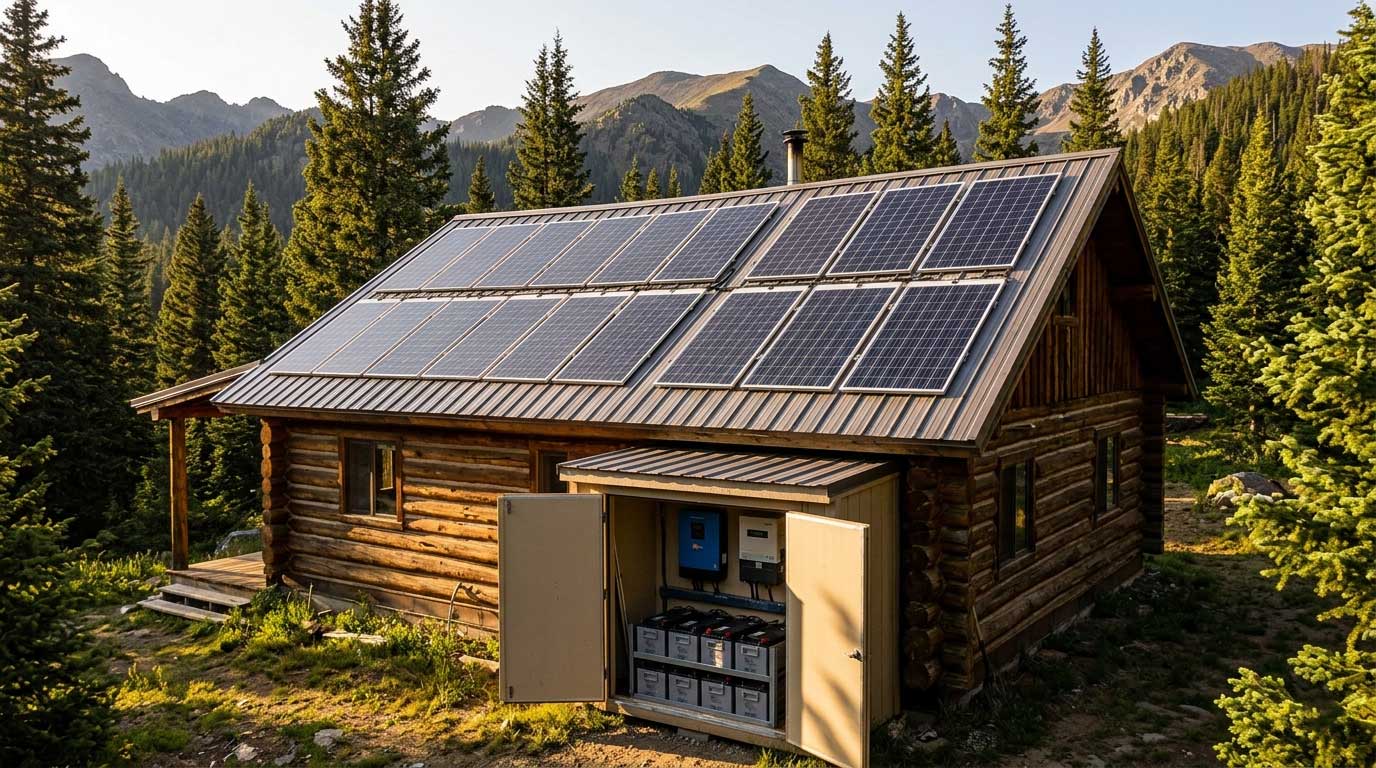
Last year, a customer from Colorado contacted Bright Solar regarding power generation for a small hunting cabin.
The cabin had:
- One refrigerator
- LED lighting
- Laptop charging
- Water pump
- Security cameras
Historically, he relied on a gasoline generator.
His average fuel consumption:
- 5–6 gallons weekly
- Approximately $1,000+ annually in fuel and maintenance
We designed:
- 1000W flexible solar panel array
- 200Ah LiFePO4 battery bank
- MPPT controller
- 2000W inverter
Three months later, he reported:
“The generator now only runs during extended snowstorms.”
His solar system produced approximately:
- 4.8–5.5 kWh daily in summer
- 3.2–4.0 kWh daily in winter
The most interesting observation was not energy savings.
It was silence.
Many users initially focus on economics, but after installation they often mention something else first: no engine noise, no fuel smell, no maintenance schedule.
That shift rarely appears in marketing brochures, yet it is one of the strongest reasons people continue investing in solar.
Flexible vs Rigid Solutions for 1000W Solar Panel Installations
Not every roof welcomes traditional glass modules.
That becomes obvious after climbing onto older RV roofs, marine decks or lightweight structures.
Flexible Solar Panels
Advantages:
- Extremely lightweight
- Lower roof loading
- Easier transportation
- Better for curved surfaces
- Reduced mounting hardware
Common Applications:
- RVs
- Camper vans
- Marine vessels
- Tiny homes
- Mobile offices
Traditional Rigid Panels
Advantages:
- Lower cost per watt
- Higher impact resistance
- Better airflow beneath modules
- Longer historical track record
Common Applications:
- Residential rooftops
- Ground-mount systems
- Commercial buildings
At Bright Solar, we increasingly see customers selecting flexible technology when structural weight becomes the primary constraint rather than available space.
Cost Analysis of a 1000W Solar Panel System
Costs vary by region and component selection.
Typical system pricing in 2026:
| Component | Estimated Cost |
|---|---|
| 1000W Solar Panels | $500–$1,200 |
| MPPT Controller | $150–$500 |
| LiFePO4 Battery | $500–$2,000 |
| Inverter | $200–$1,000 |
| Wiring & Hardware | $100–$500 |
| Installation | $500–$2,500 |
Total Typical Investment
| System Type | Cost Range |
|---|---|
| DIY System | $1,500–$3,500 |
| Professionally Installed | $3,000–$7,000 |
The economics improve significantly when replacing fuel-powered generation.
According to the U.S. Energy Information Administration (EIA), average residential electricity prices continue trending upward in many regions, making self-generation increasingly attractive.
Common Mistakes Buyers Make
Mistake #1: Focusing Only on Wattage
A 1000W solar panel system without adequate battery storage often disappoints users.
Generation and storage must be designed together.
Mistake #2: Ignoring Shading
Even small shadows can significantly reduce performance.
Nearby antennas, vents, trees and air conditioners frequently create hidden losses.
Mistake #3: Underestimating Future Consumption
Most users consume more electricity after installation.
This is called the rebound effect.
Once power becomes readily available, people tend to add devices.
Mistake #4: Choosing the Cheapest Components
The lowest-cost panel is rarely the lowest-cost system over ten years.
Connector failures, controller faults and warranty issues often erase initial savings.
FAQ About 1000W Solar Panel Systems
Is there a single 1000W solar panel?
Not for mainstream residential applications. Most 1000W solar panel systems are built using multiple panels connected together.
How many batteries are needed for a 1000W solar panel system?
A common setup includes 200Ah–400Ah of LiFePO4 battery storage, depending on daily energy requirements.
Can a 1000W solar panel system run an air conditioner?
Small high-efficiency air conditioners may operate for limited periods when paired with sufficient battery capacity and inverter sizing.
Are flexible solar panels suitable for 1000W systems?
Yes. Multiple flexible modules can be combined to create a complete 1000W solar panel array while keeping roof weight significantly lower.
How long does a 1000W solar panel system last?
Quality solar panels typically maintain useful output for 25 years or more. Modern LiFePO4 batteries commonly provide 4,000–8,000 charge cycles depending on operating conditions.
Final Thoughts on Choosing a 1000W Solar Panel System
After evaluating hundreds of installations across RVs, cabins, marine applications and lightweight structures, one conclusion keeps repeating itself:
The best 1000W solar panel system is not necessarily the one with the highest power rating. It is the one properly matched to energy consumption, available roof space, battery storage and environmental conditions.
For many users, a carefully designed 1000W solar panel setup becomes the point where solar transitions from a supplemental power source into a dependable daily energy solution. Whether powering a mobile lifestyle, an off-grid retreat or a lightweight rooftop installation, modern flexible technology from Bright Solar makes that transition easier than ever.
Related recommendations
-

Solar Panels for Semi Trucks: Complete Guide to Truck Solar Power Systems
150Solar panels for semi trucks provide reliable power for long-haul vehicles. Learn system sizing, installation, benefits, and real truck applications with Bright Solar flexible solar solutions.
View details -
10W Flexible Solar Panel: Compact Power for Portable and Off-Grid Use
106A 10W flexible solar panel is a compact power source for low-energy, portable, marine, RV, and small off-grid applications.
View details -
100 Watt Flexible Solar Panel: Lightweight Solar Power for Real Off-Grid Travel
140Discover how a 100 watt flexible solar panel delivers lightweight, reliable off-grid charging for RVs, boats, campers, and portable power systems.
View details -
12 Volt DC Solar Panel Guide for RVs, Boats, Mobile Homes and Off-Grid Power
194Discover how a 12 volt DC solar panel powers RVs, boats, mobile homes, and off-grid systems. Learn sizing, wiring, battery charging, and real-world performance insights.
View details