Solar Panels for Tiny House: Complete Guide to Off-Grid Energy Solutions
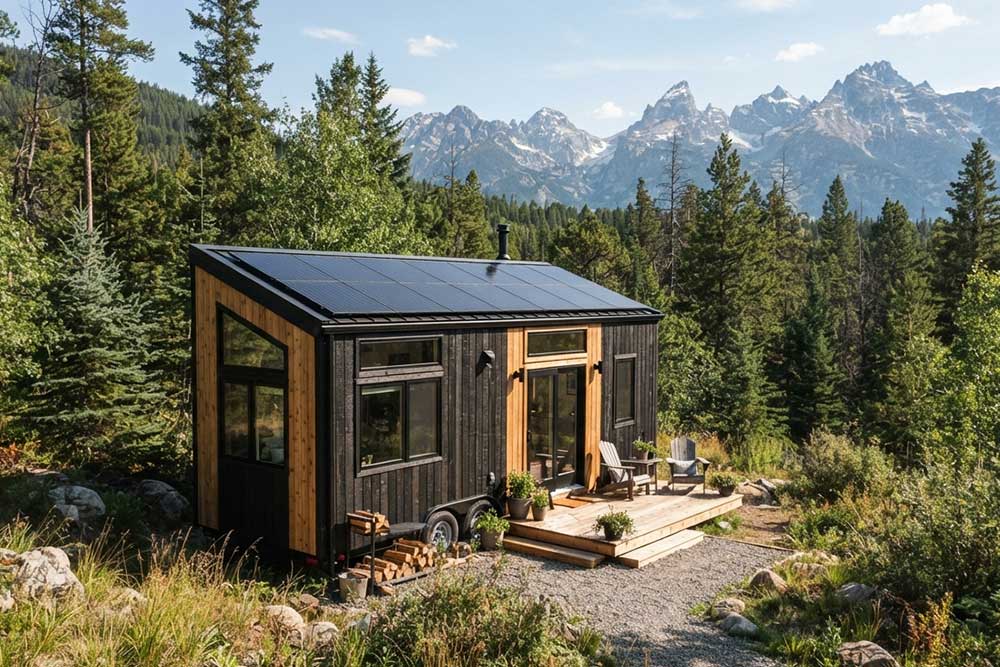
Solar panels for tiny houses provide a practical way to generate clean electricity, reduce energy costs, and support independent living. The right solar system depends on your daily power usage, available roof space, sunlight conditions, and whether your tiny house is connected to the grid or operates completely off-grid.
Tiny homes are designed around efficiency, and solar energy fits naturally into this lifestyle. With proper system sizing, battery storage, and installation planning, a tiny house can run essential appliances and even achieve full energy independence.
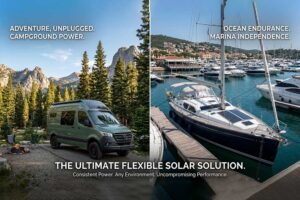
Bright Solar provides flexible solar panel solutions designed for space-limited applications, including tiny houses, RVs, cabins, and off-grid projects where lightweight and adaptable solar power is needed.
Why Choose Solar Panels for a Tiny House?
Solar energy has become one of the most popular power solutions for tiny houses because these homes typically have lower electricity requirements compared with traditional houses.
A properly designed solar system can help tiny house owners generate their own electricity while reducing dependence on utility companies.
Achieve Energy Independence
One of the biggest advantages of installing solar panels on a tiny house is energy independence.
For homeowners living in remote areas, connecting to the electrical grid can be expensive or impossible. Solar panels allow tiny houses to produce electricity anywhere with sufficient sunlight.
A complete tiny house solar system can provide power for:
- LED lighting
- Refrigerators
- Mobile devices
- Computers
- Water pumps
- Kitchen appliances
- Heating and cooling equipment
With enough solar capacity and battery storage, many tiny homes can operate completely off-grid.
Reduce Long-Term Electricity Costs
Although solar installation requires an initial investment, it can significantly reduce electricity expenses over time.
Tiny houses usually consume less energy than traditional homes, which means a smaller solar system may provide a large percentage of daily electricity needs.
The long-term savings come from:
- Lower utility bills
- Reduced fuel costs for generators
- Less dependence on rising electricity prices
- Increased energy control
For people planning long-term tiny house living, solar panels can become an important investment in energy security.
Support Sustainable Living
Tiny houses are often built around environmental responsibility, and solar energy supports this goal.
Solar panels generate electricity without producing direct emissions during operation.
Using solar power helps reduce:
- Fossil fuel consumption
- Carbon emissions
- Generator noise pollution
- Dependence on traditional energy sources
For environmentally conscious homeowners, combining a tiny house with solar energy creates a more sustainable lifestyle.
Can a Tiny House Run Completely on Solar Power?
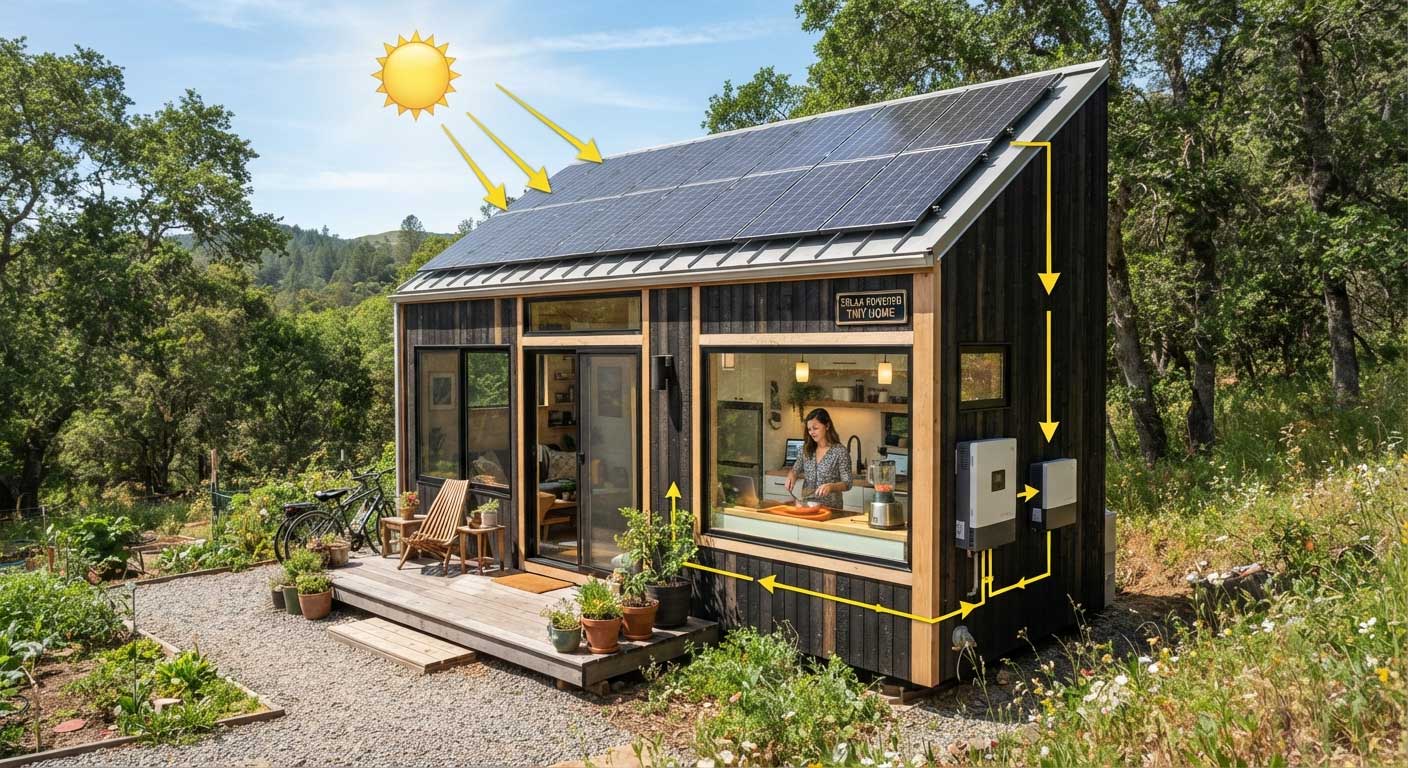
Yes, a tiny house can run completely on solar power when the solar system is properly designed according to energy consumption, climate conditions, and battery capacity.
However, achieving full energy independence requires more than simply installing solar panels.
The system must include:
- Enough solar generation capacity
- Reliable battery storage
- Efficient appliances
- Proper energy management
Factors That Affect Solar Independence
Several factors determine whether a tiny house can operate entirely on solar energy.
Location and Sunlight Availability
Solar production depends heavily on sunlight hours.
A tiny house located in a sunny region will generally generate more electricity than one located in areas with frequent cloudy weather.
Important factors include:
- Average daily sunlight
- Seasonal changes
- Panel orientation
- Shading from trees or buildings
Energy Consumption Habits
Energy usage directly affects solar system size.
A tiny house using only basic appliances may require a small solar system.
A home using:
- Air conditioning
- Electric heating
- Large refrigerators
- High-power equipment
will require more solar capacity and battery storage.
Battery Storage Capacity
Solar panels generate electricity during the day, but most homes also need power at night.
Battery storage allows excess daytime energy to be stored for later use.
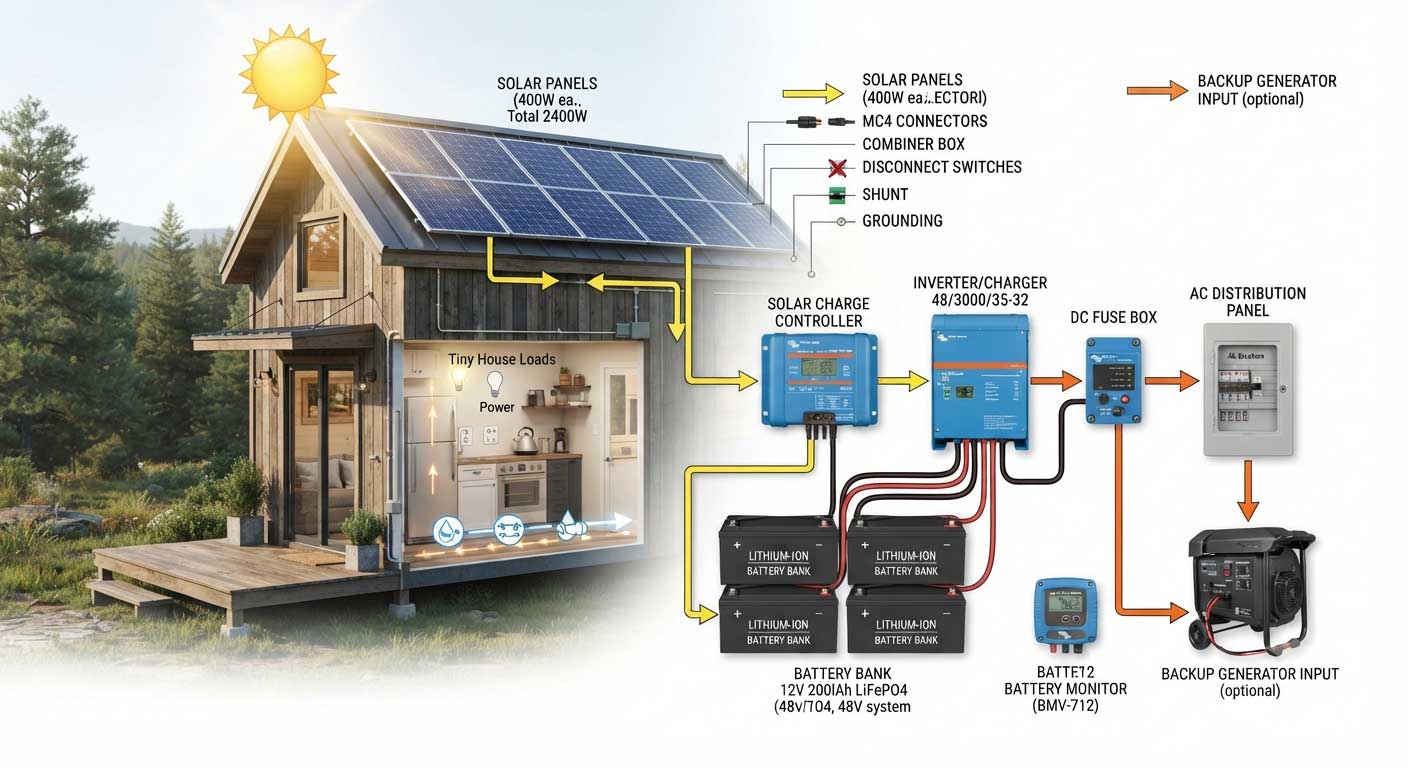
A complete off-grid tiny house system usually includes:
- Solar panels
- Charge controller
- Battery bank
- Inverter
Grid-Tied vs Off-Grid Solar Systems for Tiny Houses
Before choosing solar panels for a tiny house, homeowners should decide whether they need a grid-connected system or a completely off-grid solution.
Both options have advantages depending on location and lifestyle.
Grid-Tied Tiny House Solar System
A grid-tied system connects the tiny house to the local electricity network.
During sunny periods:
- Solar panels produce electricity
- The home uses solar power first
- Excess energy may be sent back to the grid
Advantages:
- Lower battery requirements
- Lower initial cost
- Simple operation
- Reliable backup from the grid
This option works well for tiny houses located near existing electrical infrastructure.
Off-Grid Tiny House Solar System
An off-grid solar system allows a tiny house to operate independently without utility connections.
These systems require:
- Larger solar capacity
- Battery storage
- Energy-efficient appliances
- Careful planning
Advantages:
- Complete energy independence
- Suitable for remote locations
- No monthly electricity bills
- Flexible installation options
Off-grid systems are commonly used for:
- Remote cabins
- Mobile tiny homes
- Rural properties
- Eco-friendly housing projects
Grid-Tied vs Off-Grid Comparison
| Feature | Grid-Tied System | Off-Grid System |
|---|---|---|
| Utility connection | Required | Not required |
| Battery storage | Optional | Required |
| Installation cost | Lower | Higher |
| Energy independence | Medium | High |
| Suitable locations | Developed areas | Remote areas |
How Many Solar Panels Does a Tiny House Need?
The number of solar panels needed for a tiny house depends on electricity usage, panel wattage, location, and whether the system includes battery storage.
Most tiny houses require between 1kW and 5kW of solar capacity, depending on lifestyle and appliance requirements.
Calculate Your Tiny House Energy Consumption
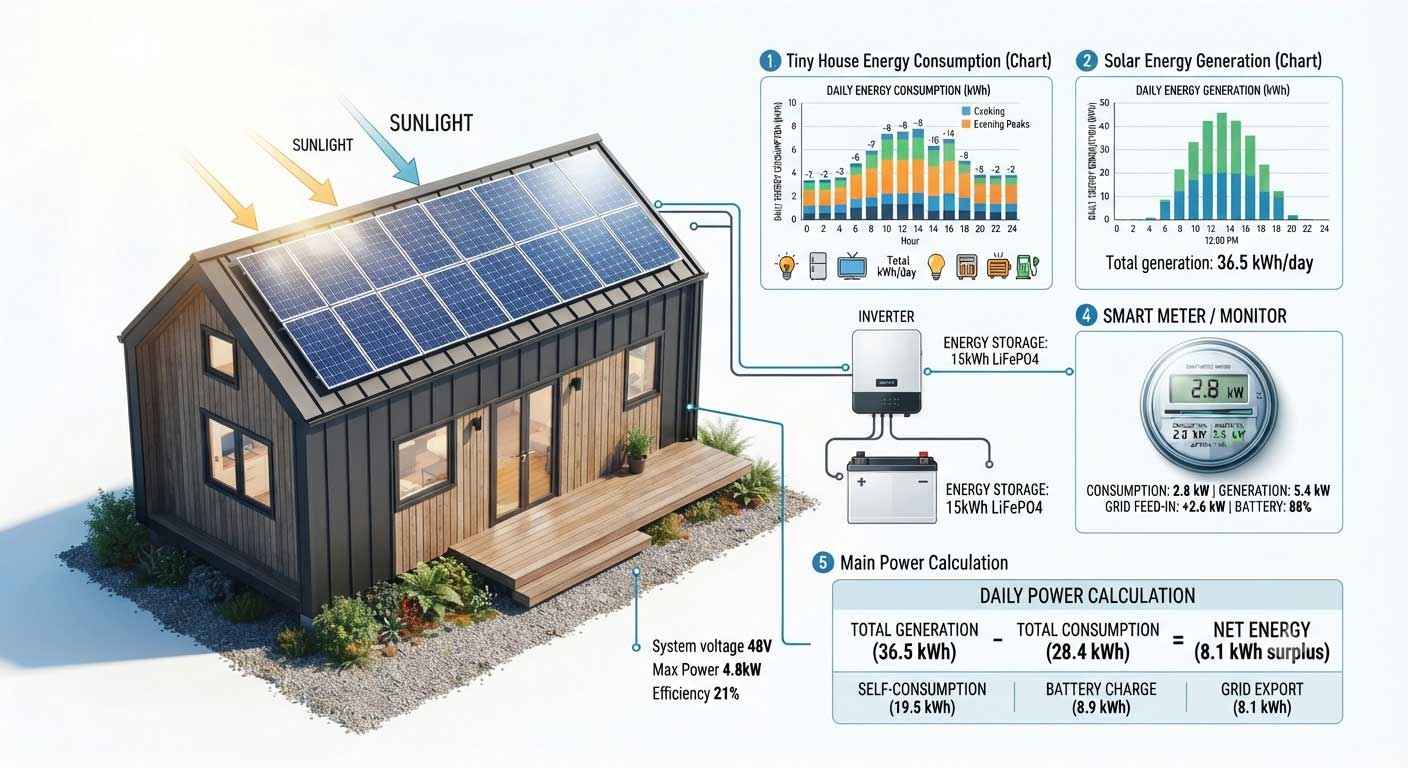
Before buying solar panels, calculate how much electricity your tiny house uses each day.
Example daily energy consumption:
| Appliance | Daily Energy Use |
|---|---|
| LED lights | 0.1–0.3 kWh |
| Refrigerator | 1–2 kWh |
| Laptop | 0.2–0.5 kWh |
| Water pump | 0.1–0.3 kWh |
| Small appliances | 0.5–1 kWh |
A low-energy tiny house may use around:
3–5 kWh per day
A more comfortable tiny home with more appliances may use:
5–10 kWh per day
Estimate Solar Panel Requirements
The basic calculation is:
Daily Energy Requirement ÷ Daily Solar Production = Required Solar Capacity
For example:
A tiny house requires:
5 kWh/day
A 400W solar panel may generate approximately:
1.5–2 kWh/day depending on sunlight conditions.
The system may require:
3–4 panels of 400W capacity.
Actual requirements vary depending on climate, installation angle, and energy usage.
Common Tiny House Solar System Sizes
Small System: 1–2kW
Suitable for:
- Basic lighting
- Phone charging
- Small electronics
- Minimal appliances
Medium System: 3–5kW
Suitable for:
- Full-time tiny house living
- Refrigerators
- Computers
- Kitchen appliances
Large System: 5kW+
Suitable for:
- Off-grid living
- High energy consumption
- Multiple appliances
- Extended independence
Types of Solar Panels for Tiny Houses
Choosing the right solar panels for a tiny house depends on your available roof space, installation method, energy requirements, and whether the home is permanent or mobile.
The most common options include rigid solar panels, flexible solar panels, and portable solar panels. Each type has different advantages depending on the application.
Rigid Solar Panels for Tiny Houses
Rigid solar panels are the traditional choice for many permanent tiny houses.
They usually feature:
- Tempered glass surfaces
- Aluminum frames
- Strong mechanical protection
- Long-term outdoor durability
Rigid panels are commonly installed on flat or sloped roofs using mounting brackets.
Advantages of Rigid Solar Panels
High Durability
The framed structure provides strong protection against:
- Wind
- Rain
- Snow
- Outdoor impacts
For stationary tiny houses, rigid panels can provide reliable long-term performance.
Better Heat Dissipation
Rigid solar panels are typically installed with a small gap between the panel and the roof.
This allows airflow underneath, helping reduce operating temperatures.
Lower panel temperatures can improve energy performance, especially in hot climates.
Suitable for Permanent Installations
Rigid panels are a good choice when:
- The tiny house has a strong roof structure
- Maximum durability is required
- Installation space is sufficient
Flexible Solar Panels for Tiny Houses
Flexible solar panels are becoming increasingly popular for tiny homes because they provide installation flexibility and reduce structural load.
Unlike traditional framed panels, flexible panels use lightweight materials that allow them to adapt to different surfaces.
They are especially useful for:
- Small roofs
- Curved surfaces
- Mobile tiny houses
- Off-grid cabins
Bright Solar flexible solar panels are designed for applications where lightweight construction and space efficiency are important.
Advantages of Flexible Solar Panels
Lightweight Design
Tiny houses often have limited roof capacity.
Flexible solar panels reduce additional weight while still providing renewable energy generation.
Benefits include:
- Lower roof load
- Easier transportation
- Simpler installation
Low-Profile Installation
Flexible panels sit close to the installation surface.
This creates:
- Cleaner appearance
- Reduced wind resistance
- Better integration with compact designs
For mobile tiny homes, a low-profile solar solution can be especially valuable.
Suitable for Unique Roof Designs
Not every tiny house has a standard flat roof.
Flexible solar panels can work well on:
- Slightly curved roofs
- Compact structures
- Custom-built homes
This makes them a practical option for creative tiny house designs.
Portable Solar Panels for Tiny Houses
Portable solar panels are another option for tiny house owners who need temporary or movable power solutions.
They are commonly paired with:
- Portable power stations
- Battery generators
- Outdoor energy systems
Advantages include:
- Easy setup
- No permanent installation
- Flexible placement
Portable solar panels are suitable for:
- Temporary tiny homes
- Camping cabins
- Emergency backup power
However, they usually provide less permanent energy capacity compared with a rooftop solar system.
Flexible vs Rigid Solar Panels for Tiny Houses
| Feature | Flexible Solar Panels | Rigid Solar Panels |
|---|---|---|
| Weight | Lightweight | Heavier |
| Installation | Easier | Requires mounting hardware |
| Roof compatibility | Excellent | Best for flat roofs |
| Durability | Good | Excellent |
| Appearance | Low profile | Traditional design |
| Best applications | Tiny homes, RVs, curved roofs | Permanent tiny houses |
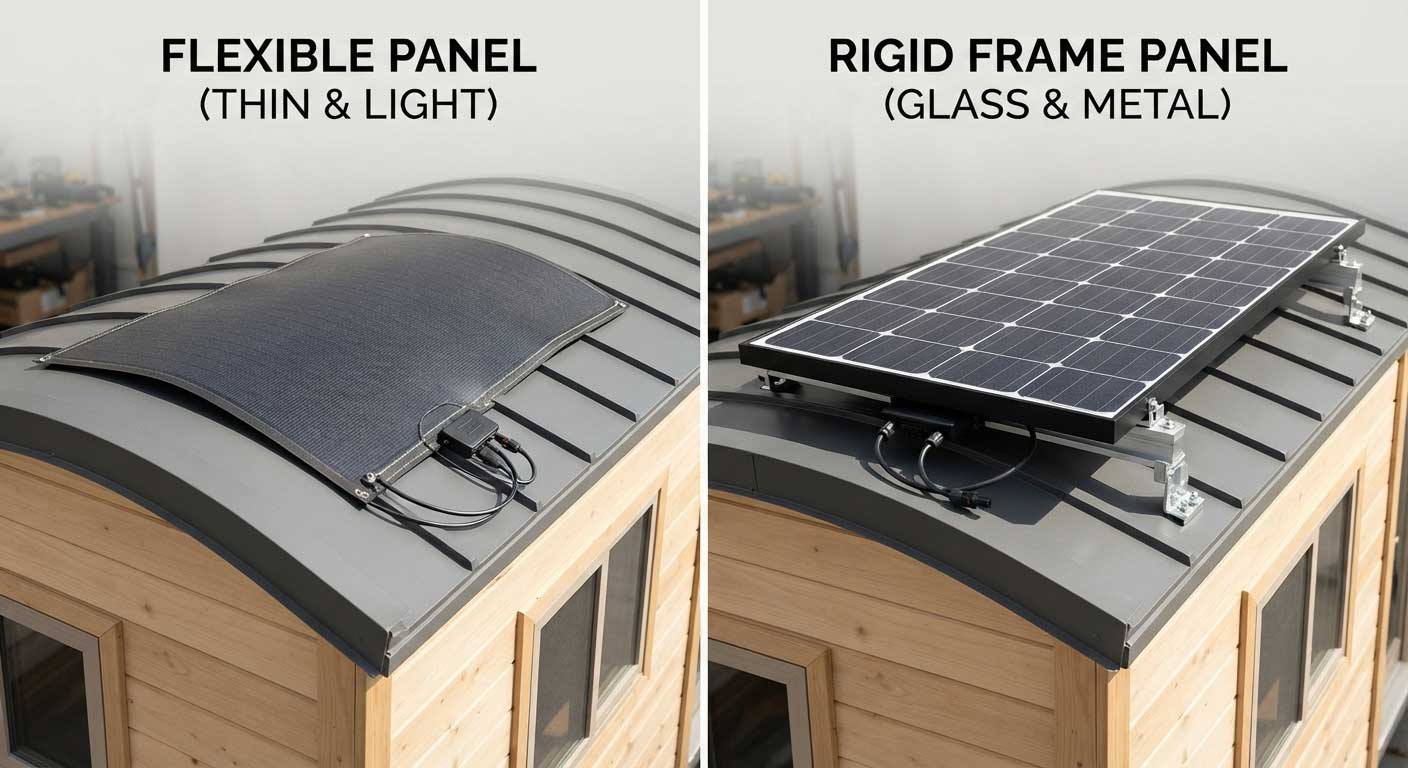
Flexible Solar Panels for Tiny House Applications
Flexible solar panels are a practical choice for tiny house owners who want efficient solar power without adding unnecessary weight or complex mounting systems.
Tiny homes often have limited roof space, unusual designs, or lightweight structures. Flexible solar technology helps overcome these challenges.
Why Flexible Solar Panels Work Well for Tiny Houses
1. Maximize Limited Roof Space
Tiny houses are designed to use every available area efficiently.
Flexible solar panels can be installed in locations where traditional panels may not fit easily.
Examples include:
- Small roof sections
- Curved surfaces
- Custom-designed structures
2. Reduce Structural Load
Because tiny houses often prioritize lightweight construction, reducing additional weight is important.
Flexible panels help minimize:
- Roof stress
- Transportation weight
- Installation complexity
This makes them suitable for:
- Tiny houses on trailers
- Mobile homes
- Portable cabins
3. Easier Installation Process
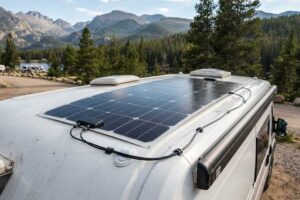
Many flexible solar panels can be installed with adhesive mounting methods.
This can reduce the need for:
- Roof drilling
- Heavy brackets
- Complex mounting structures
However, proper surface preparation and waterproofing remain essential.
Bright Solar Flexible Solar Panels for Tiny House Projects
Bright Solar develops flexible solar panel solutions for applications requiring lightweight and adaptable energy systems.
For tiny houses, flexible solar panels can support:
- Off-grid living
- Remote cabins
- Mobile homes
- Small renewable energy systems
Key advantages include:
- Lightweight construction
- Space-efficient installation
- Flexible application options
- Compatibility with different surfaces
For homeowners building a tiny house with energy independence in mind, flexible solar technology provides another way to integrate renewable power without compromising the compact design.
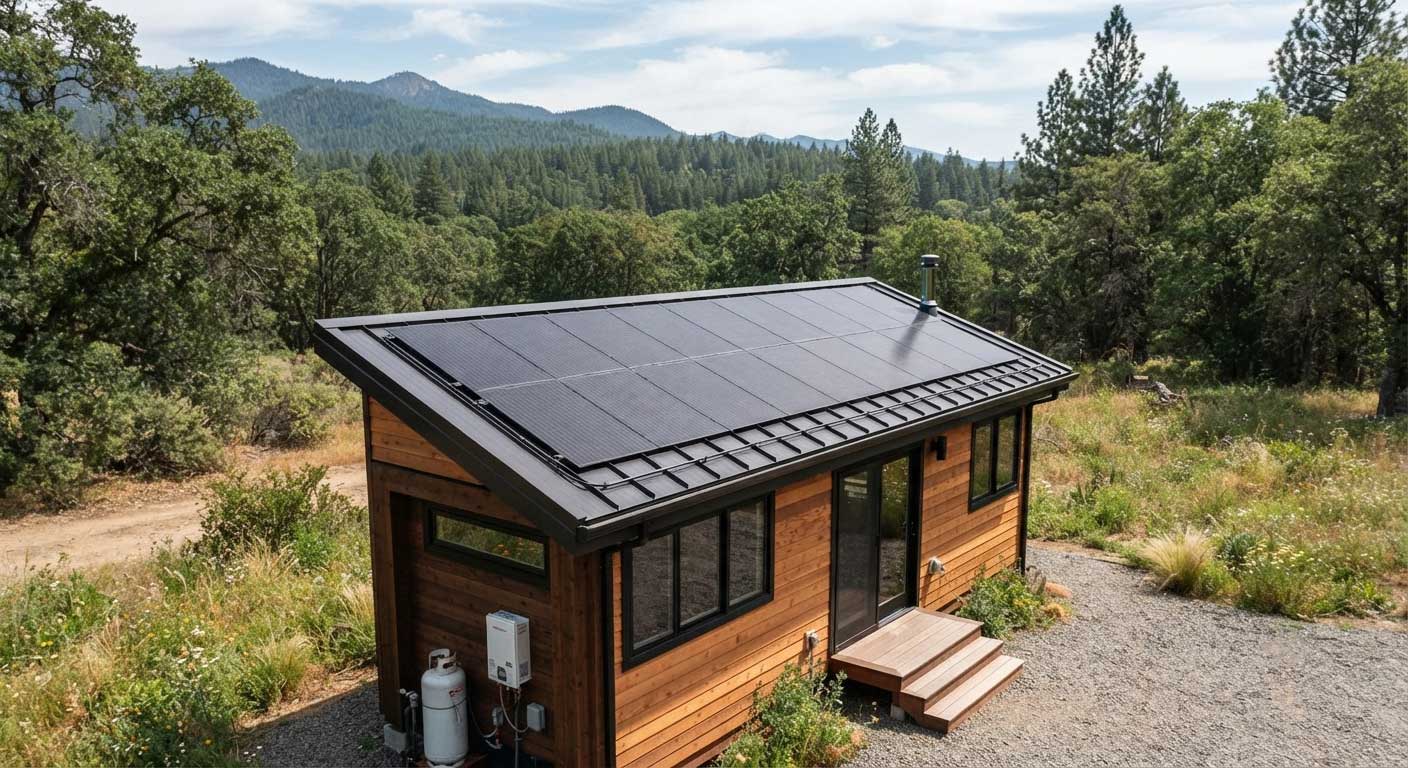
How to Install Solar Panels on a Tiny House
Installing solar panels on a tiny house requires proper planning to ensure maximum energy production, secure mounting, and long-term reliability.
A successful installation should consider:
- Roof structure
- Solar position
- Panel type
- Electrical connections
- Weather protection
Step 1: Evaluate the Tiny House Roof
Before installation, inspect the roof condition and available space.
Consider:
Roof Orientation
The best solar location usually faces the direction receiving the most sunlight.
Roof Angle
The installation angle affects solar production.
A suitable angle helps improve energy generation throughout the year.
Shading Issues
Avoid installing panels near:
- Trees
- Chimneys
- Roof equipment
- Nearby buildings
Even partial shading can reduce solar output.
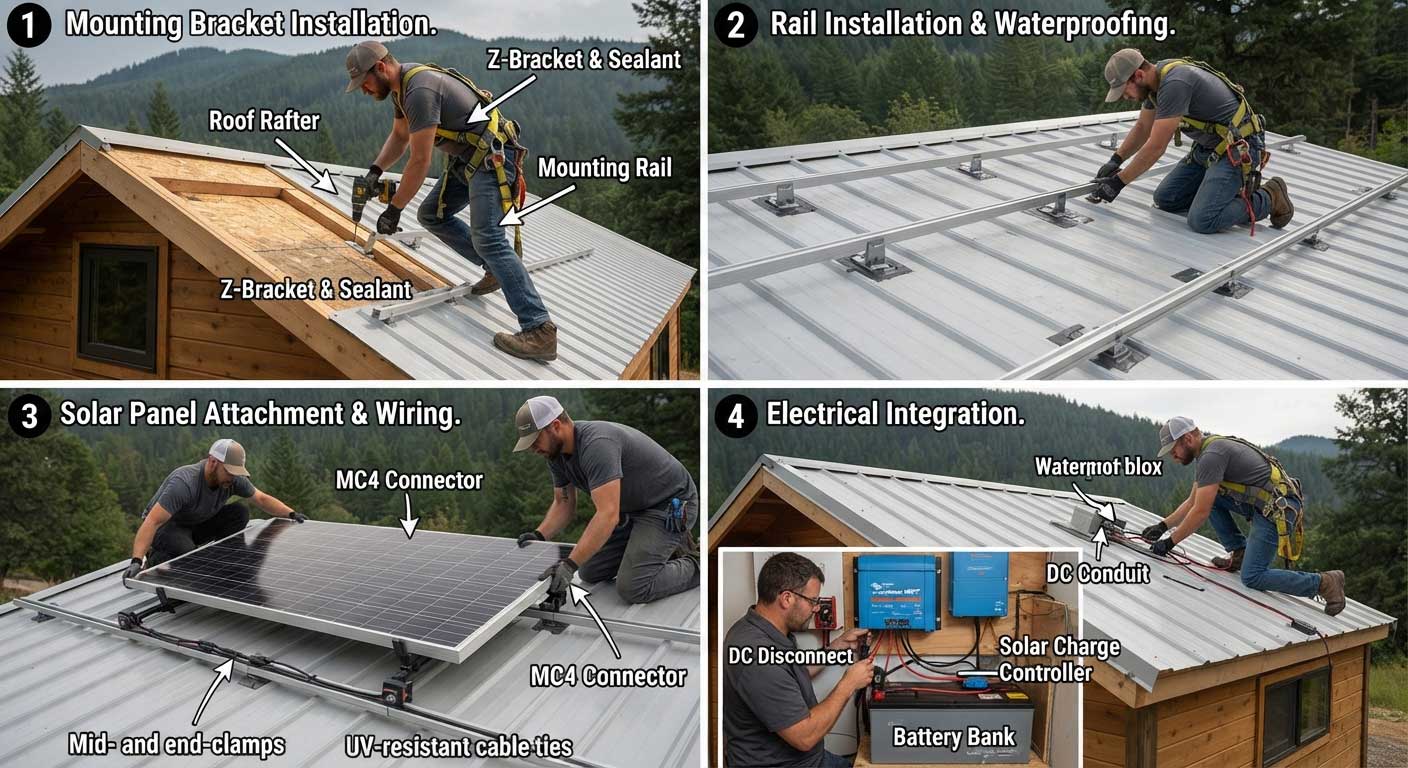
Step 2: Choose the Right Mounting Method
The mounting method depends on the solar panel type.
Mounting Rigid Solar Panels
Typical installation:
- Install mounting brackets
- Position solar panels
- Secure fasteners
- Seal mounting points
This method provides strong mechanical support.
Mounting Flexible Solar Panels
Typical installation:
- Clean roof surface
- Apply suitable adhesive
- Position panel carefully
- Connect wiring
- Seal cable entry points
Flexible panels provide a cleaner, lower-profile installation.
Step 3: Install Solar Electrical Components
A complete tiny house solar system usually includes:
- Solar panels
- Charge controller
- Battery bank
- Inverter
- Monitoring system
The basic connection order is:
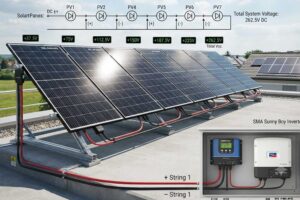
Solar Panels → Charge Controller → Battery → Inverter → Home Appliances
Each component should be correctly matched according to system voltage and power requirements.
Step 4: Test the Solar System
After installation, check:
- Solar output
- Battery charging status
- Electrical connections
- Inverter operation
Testing ensures the system operates safely before daily use.
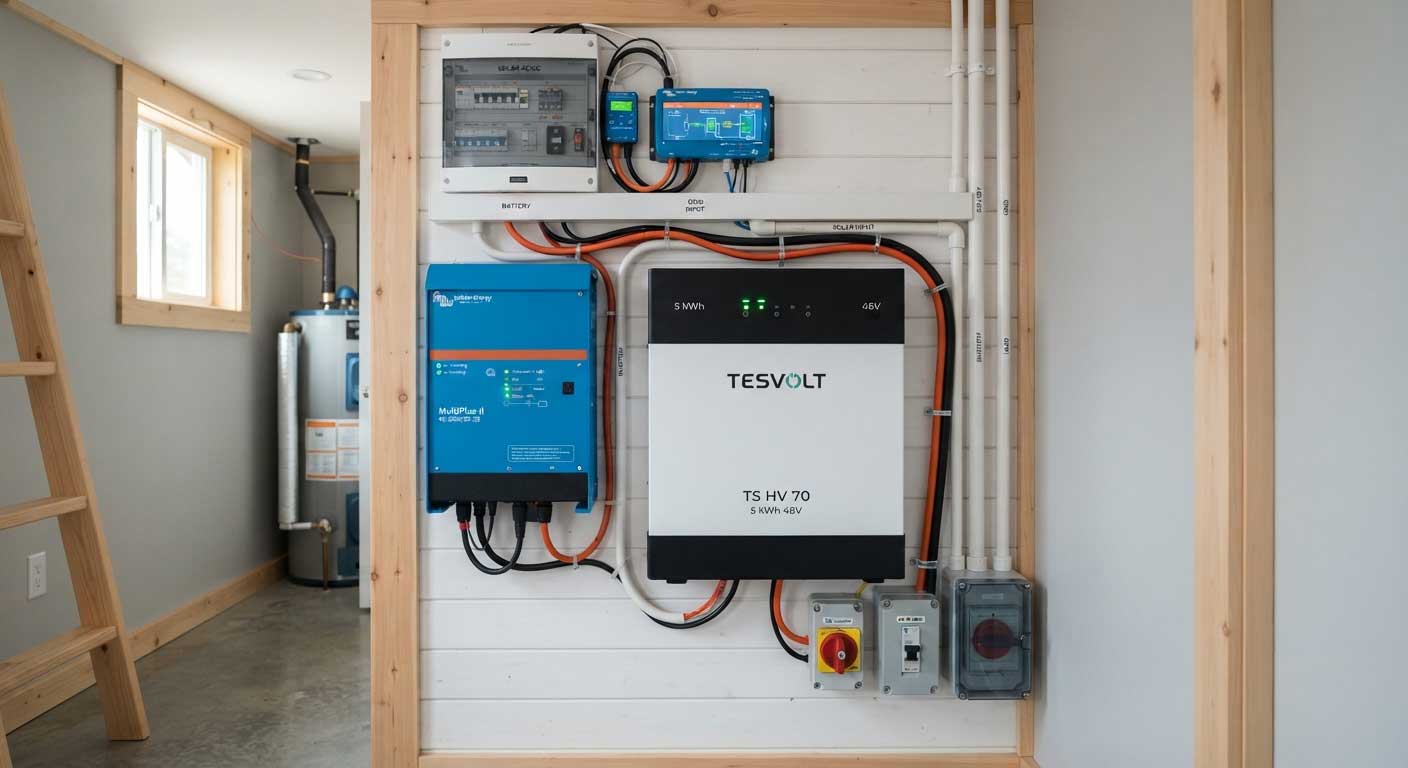
Battery Storage Guide for Tiny House Solar Systems
Battery storage is a critical part of a tiny house solar system, especially for homeowners who want reliable power after sunset or during cloudy weather.
Solar panels produce electricity during daylight hours, but batteries store excess energy for later use.
Why Tiny Houses Need Solar Batteries
Battery storage provides:
- Night-time electricity
- Backup power
- Energy independence
- Better solar utilization
For off-grid tiny houses, batteries are essential because there is no utility connection available.
Lithium vs Lead-Acid Batteries
Lithium Batteries
Advantages:
- Longer lifespan
- Higher efficiency
- Lower weight
- Deeper discharge capability
Lithium batteries are increasingly popular for modern tiny house solar systems.
Lead-Acid Batteries
Advantages:
- Lower upfront cost
- Widely available
Disadvantages:
- Heavier
- Shorter lifespan
- Lower usable capacity
How to Size a Battery for a Tiny House
Battery size depends on:
- Daily energy consumption
- Backup days required
- Solar production
- System voltage
A larger battery provides more energy independence but increases system cost.
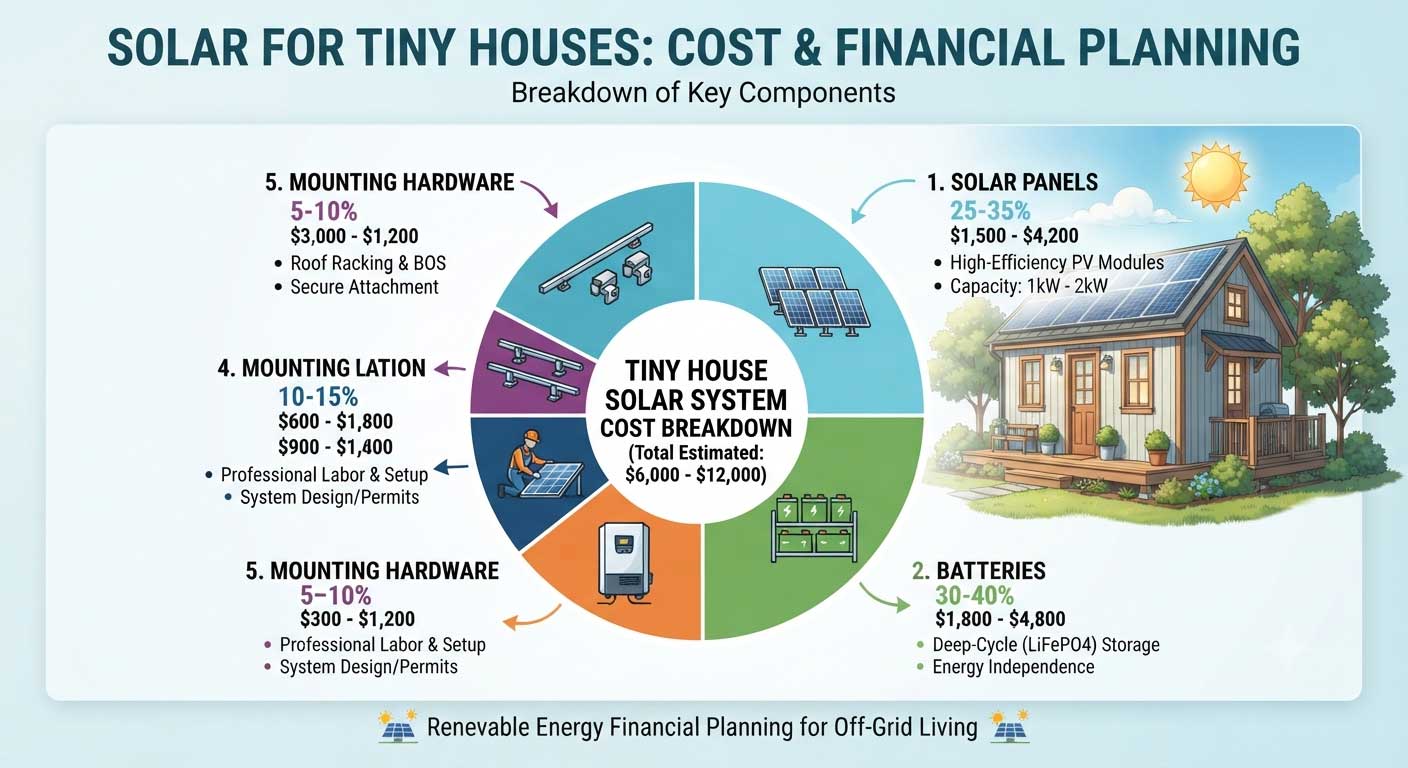
Solar Panels for Tiny House Cost Breakdown
The cost of solar panels for a tiny house depends on system size, panel type, battery capacity, installation method, and energy requirements.
A small solar system designed for basic electricity needs may cost a few thousand dollars, while a complete off-grid system with battery storage can require a larger investment.
Understanding each cost component helps tiny house owners create a realistic budget before installation.
Solar Panel Cost
Solar panels are one of the main components of a tiny house solar system.
The price depends on:
- Panel wattage
- Solar technology
- Brand quality
- Installation type
Typical solar panel options:
| Solar Panel Type | Typical Cost Range | Best Application |
|---|---|---|
| Rigid solar panels | Lower cost per watt | Permanent tiny houses |
| Flexible solar panels | Higher cost per watt | Lightweight and custom installations |
| Portable solar panels | Variable | Temporary power solutions |
Flexible solar panels may have a higher upfront cost because they use specialized lightweight materials and designs.
However, they can provide advantages where installation space and weight are limited.
Battery Storage Cost
For off-grid tiny houses, battery storage is often one of the largest expenses.
Battery cost depends on:
- Storage capacity
- Battery chemistry
- Brand
- Expected lifespan
Common options include:
Lithium Battery Systems
Higher initial investment but provide:
- Longer service life
- Higher energy efficiency
- Better usable capacity
- Lower maintenance requirements
Lead-Acid Battery Systems
Lower upfront cost but typically:
- Require more maintenance
- Have shorter lifespan
- Provide less usable energy
For full-time off-grid tiny house living, lithium batteries are often preferred because they offer better long-term value.
Solar Installation Cost
Installation expenses depend on:
- Roof design
- Mounting method
- Electrical complexity
- Labor requirements
Installation costs may include:
- Mounting hardware
- Wiring
- Charge controller installation
- Inverter setup
- Waterproofing materials
A simple DIY installation may reduce labor costs, while professional installation provides additional expertise and safety.
Estimated Tiny House Solar System Costs
Typical price ranges:
Basic Solar System
Approximate cost:
$2,000–$5,000
Suitable for:
- Small energy needs
- Basic appliances
- Occasional use
Includes:
- Small solar array
- Basic battery storage
- Essential components
Medium Solar System
Approximate cost:
$5,000–$10,000
Suitable for:
- Full-time tiny house living
- Refrigerators
- Computers
- More daily appliances
Complete Off-Grid Solar System
Approximate cost:
$10,000+
Suitable for:
- Remote tiny houses
- Long-term independent living
- Higher electricity consumption
Includes:
- Larger solar array
- High-capacity battery storage
- Advanced energy management
How to Choose the Best Solar Panels for a Tiny House
Choosing solar panels for a tiny house requires balancing energy production, available space, installation limitations, and budget.
The best solar panel is not always the largest one. It should match your home’s actual energy needs and design.
Consider Your Daily Energy Usage
Start by identifying the appliances you use most often.
Important questions:
- How many people live in the tiny house?
- Do you use electric heating or cooling?
- How often do you run appliances?
- Is the home occupied year-round?
A realistic energy estimate prevents buying an oversized or undersized solar system.
Check Available Installation Space
Tiny houses usually have limited roof areas.
Before selecting panels, measure:
- Roof dimensions
- Available sunlight area
- Roof obstacles
- Mounting possibilities
Flexible solar panels can provide an advantage when roof space is irregular or limited.
Choose Between Permanent and Portable Systems
Your lifestyle determines the best solar solution.
Permanent Solar Installation
Best for:
- Full-time tiny houses
- Fixed locations
- Long-term energy independence
Usually includes:
- Roof-mounted panels
- Battery storage
- Inverter system
Portale Solar Solution
Best for:
- Temporary tiny houses
- Mobile cabins
- Backup power
Usually includes:
- Portable panels
- Solar generators
- Mobile battery systems
Consider Future Energy Needs
A common mistake is designing a solar system only for current usage.
Future changes may include:
- Adding appliances
- Increasing occupancy
- Working remotely
- Installing electric equipment
A slightly expandable system can provide better long-term value.
Common Mistakes When Installing Solar Panels for Tiny Houses
Many tiny house solar problems happen because of poor planning rather than solar technology limitations.
Avoiding common mistakes can improve system performance and extend equipment life.
Mistake 1: Installing Too Few Solar Panels
Some homeowners underestimate their electricity needs.
A small system may work initially but become insufficient after adding more appliances.
Before installation:
- Calculate daily energy usage
- Consider seasonal sunlight changes
- Plan future expansion
Mistake 2: Ignoring Battery Capacity
Solar panels generate power during the day, but tiny houses often need electricity at night.
Without enough battery storage:
- Energy may run out after sunset
- Backup power becomes necessary
- Solar investment becomes less effective
Battery capacity should match your lifestyle and energy requirements.
Mistake 3: Poor Solar Panel Placement
Solar performance depends heavily on panel positioning.
Avoid installing panels where they are affected by:
- Tree shadows
- Roof equipment
- Nearby structures
Even small shaded areas can reduce overall system output.
Mistake 4: Choosing the Wrong Solar Panel Type
Different tiny houses require different solar solutions.
Rigid panels may not be ideal for:
- Lightweight structures
- Curved roofs
- Mobile tiny homes
Flexible panels may be better when:
- Roof weight is limited
- Installation space is restricted
- Low-profile appearance is preferred
Mistake 5: Poor Waterproofing During Installation
Roof protection is essential.
Incorrect installation can lead to:
- Water leaks
- Roof damage
- Higher repair costs
Always pay attention to:
- Cable entry points
- Mounting holes
- Sealant quality
Maintenance Tips for Tiny House Solar Systems
A well-maintained solar system can provide reliable energy for many years.
Although solar panels require little maintenance, regular inspections help maintain efficiency and safety.
Clean Solar Panels Regularly
Dust, leaves, and dirt can reduce solar output.
Cleaning frequency depends on:
- Local weather
- Environment
- Installation location
Use:
- Soft brushes
- Clean water
- Non-abrasive materials
Avoid harsh cleaning methods that may damage the panel surface.
Check Electrical Connections
Inspect:
- Solar connectors
- Wiring
- Charge controller
- Battery terminals
Loose connections can reduce system efficiency.
Monitor Solar Performance
Many modern systems include monitoring tools.
Track:
- Daily energy production
- Battery status
- System warnings
- Long-term performance
Monitoring helps identify issues before they become serious problems.
Inspect Mounting and Waterproof Sealing
Check the physical installation regularly.
Look for:
- Loose brackets
- Damaged adhesives
- Cracked sealant
- Cable wear
Regular inspection is especially important for off-grid tiny houses exposed to changing weather conditions.
FAQ About Solar Panels for Tiny House
How many solar panels do I need for a tiny house?
Most tiny houses require around 4–12 solar panels depending on energy usage, panel wattage, location, and battery requirements.
A small energy-efficient tiny house may need fewer panels, while an off-grid home with more appliances may require a larger solar array.
Can a tiny house run only on solar power?
Yes, a tiny house can run entirely on solar power with proper system design.
The system must include:
- Enough solar capacity
- Battery storage
- Efficient appliances
- Proper energy management
Are solar panels worth it for a tiny house?
Yes, solar panels are often a valuable investment for tiny houses, especially in locations where reducing utility costs or achieving energy independence is important.
Benefits include:
- Lower electricity expenses
- Off-grid capability
- Renewable energy generation
What are the best solar panels for a tiny house?
The best solar panels depend on your installation requirements.
Rigid panels are suitable for permanent installations, while flexible solar panels are useful for lightweight designs, limited spaces, and unique roof structures.
Can flexible solar panels work on tiny houses?
Yes. Flexible solar panels work well for many tiny houses because they are lightweight, thin, and adaptable.
They are especially useful for:
- Mobile tiny homes
- Curved roofs
- Off-grid cabins
Bright Solar flexible solar panels are designed for applications where traditional panels may not be practical.
How much does it cost to install solar panels on a tiny house?
The cost of installing solar panels on a tiny house depends on system size, battery storage, installation method, and equipment selection.
A basic system may cost a few thousand dollars, while a complete off-grid solar system with batteries and advanced components can cost significantly more.
The main cost factors include:
- Solar panel capacity
- Battery storage size
- Inverter type
- Mounting hardware
- Installation labor
A properly designed system can help avoid unnecessary expenses by matching solar capacity with actual energy needs.
Can I install solar panels on a tiny house myself?
Yes, many tiny house owners install solar panels themselves, especially smaller systems.
A DIY installation requires knowledge of:
- Solar wiring
- Roof preparation
- Mounting methods
- Waterproof sealing
- Electrical safety
Flexible solar panels are often easier to install because they can reduce the need for heavy mounting structures.
However, larger off-grid systems may benefit from professional installation to ensure safe operation.
Do tiny houses need batteries with solar panels?
It depends on the type of solar system.
Grid-connected tiny houses may operate without batteries because they can use electricity from the utility network when solar production is unavailable.
Off-grid tiny houses require batteries because stored energy is needed during:
- Nighttime
- Cloudy weather
- Low sunlight periods
Battery storage is one of the most important components for achieving energy independence.
What size inverter do I need for a tiny house solar system?
The inverter size depends on the total power requirements of your appliances.
Consider:
- Maximum simultaneous power usage
- Starting power of appliances
- Future energy expansion
For example:
A tiny house using only basic electronics may need a smaller inverter, while a home with air conditioning or electric appliances may require a larger capacity inverter.
Are flexible solar panels better for tiny houses?
Flexible solar panels are not always better than rigid panels, but they provide advantages in specific situations.
They are especially useful when a tiny house requires:
- Lightweight construction
- Low-profile installation
- Flexible mounting options
- Limited roof loading
Rigid panels may still be preferred when maximum durability and airflow are the priority.
The best choice depends on the tiny house design and energy goals.
Can solar panels power a tiny house in winter?
Yes, solar panels can still produce electricity during winter, although output may decrease due to:
- Shorter daylight hours
- Snow coverage
- Cloudy conditions
- Lower sun angle
To maintain reliable power in winter:
- Increase solar capacity
- Use sufficient battery storage
- Reduce unnecessary energy consumption
- Keep panels clean
Proper system sizing is especially important for off-grid tiny houses in colder climates.
How long do solar panels last on a tiny house?
High-quality solar panels can typically provide reliable performance for decades when properly installed and maintained.
The actual lifespan depends on:
- Panel quality
- Environmental conditions
- Installation method
- Maintenance practices
A well-designed tiny house solar system can provide long-term renewable energy with minimal maintenance.
Bright Solar Solutions for Tiny House Applications
Bright Solar provides flexible solar panel solutions designed for tiny houses, off-grid homes, RVs, and other space-limited renewable energy applications.
Tiny houses often require solar systems that are different from traditional residential installations.
Common challenges include:
- Limited roof space
- Lightweight construction
- Unique architectural designs
- Remote installation locations
Bright Solar flexible solar panels help address these challenges by providing a lightweight and adaptable solar solution.
Lightweight Solar Design for Compact Homes
Tiny houses are built around efficiency, and every kilogram matters.
Traditional solar installations may add significant weight through:
- Aluminum frames
- Mounting brackets
- Additional hardware
Flexible solar panels offer a lighter alternative while maintaining reliable solar power generation.
Benefits include:
- Reduced roof load
- Easier transportation
- Simpler installation
Flexible Installation for Unique Tiny House Designs
Not every tiny house has a standard roof.
Some designs include:
- Curved surfaces
- Compact structures
- Mobile platforms
- Custom-built layouts
Bright Solar flexible solar panels provide more installation flexibility compared with traditional rigid panels.
They can support solar integration where space and design limitations make conventional panels difficult to install.
Supporting Off-Grid Tiny House Living
Many tiny house owners choose solar because they want greater independence.
A reliable off-grid system combines:
- Efficient solar panels
- Proper battery storage
- Smart energy management
- Suitable electrical components
Bright Solar focuses on flexible solar technology that supports independent energy solutions for modern tiny homes.
Suitable Applications Beyond Tiny Houses
Although designed for compact solar applications, flexible solar panels can also support:
- RV solar systems
- Camper vans
- Boats
- Remote cabins
- Portable energy solutions
The lightweight design makes flexible solar technology suitable for many mobile and off-grid environments.
Final Checklist Before Installing Solar Panels for Tiny House
Before purchasing and installing a solar system, review the following checklist.
Energy Planning Checklist
✓ Calculate daily electricity usage
✓ Identify essential appliances
✓ Consider future energy needs
✓ Decide between grid-tied and off-grid systems
Solar Panel Selection Checklist
✓ Choose suitable panel type
✓ Check available roof space
✓ Compare rigid and flexible options
✓ Confirm panel wattage requirements
Installation Checklist
✓ Inspect roof condition
✓ Plan panel placement
✓ Use correct mounting materials
✓ Protect cable entry points
✓ Apply proper waterproof sealing
Battery System Checklist
✓ Select suitable battery capacity
✓ Match battery with solar output
✓ Check inverter compatibility
✓ Plan backup power requirements
Conclusion: Choosing the Right Solar Panels for Tiny House Living
Solar panels for tiny houses provide a practical way to achieve cleaner energy, lower electricity costs, and greater independence.
The ideal solar solution depends on several factors:
- Daily energy consumption
- Available installation space
- Roof structure
- Climate conditions
- Battery requirements
- Lifestyle goals
Rigid solar panels remain a strong choice for permanent tiny homes that prioritize durability.
Flexible solar panels provide additional advantages for lightweight structures, mobile tiny houses, and installations where traditional panels may not be suitable.
Before installing a solar system, focus on correct sizing, reliable components, and proper installation methods.
Bright Solar flexible solar panels offer a lightweight and adaptable option for tiny house owners looking to integrate renewable energy into compact living spaces.
With the right solar design, a tiny house can become more efficient, sustainable, and independent while supporting a modern off-grid lifestyle.
Related recommendations
-

How Flexible Are Solar Panels?
205How flexible are solar panels in real-world use? Discover actual bend limits, durability facts, RV and marine applications, and expert insights from Bright Solar.
View details -
How Many Solar Panels Can Be Connected in Series?
209Learn how many solar panels can be connected in series with voltage calculations, Voc limits, inverter requirements, and wiring tips for safe solar system design.
View details -
Solar Panels on RV Roof: Complete Guide for Off-Grid RV Power
167Solar panels on RV roofs provide off-grid electricity by combining solar generation, battery storage, charge control, and proper roof planning to meet real t...
View details -
100W Flexible Solar Panel – RV & Off-Grid
176Bright Solar’s 100W flexible solar panel combines 100W peak power with a lightweight, 2.8 mm-thick design for RV, marine, and off-grid applications.
View details