Solar Panels in Parallel: When Parallel Wiring Is the Smartest Choice
Solar panels in parallel keep voltage constant while increasing current output. For RVs, boats, mobile homes, and 12V battery systems, parallel wiring often delivers better real-world performance under partial shading and varying sunlight conditions than series connections.
Most online articles treat solar wiring like a classroom exercise.
The reality looks different.
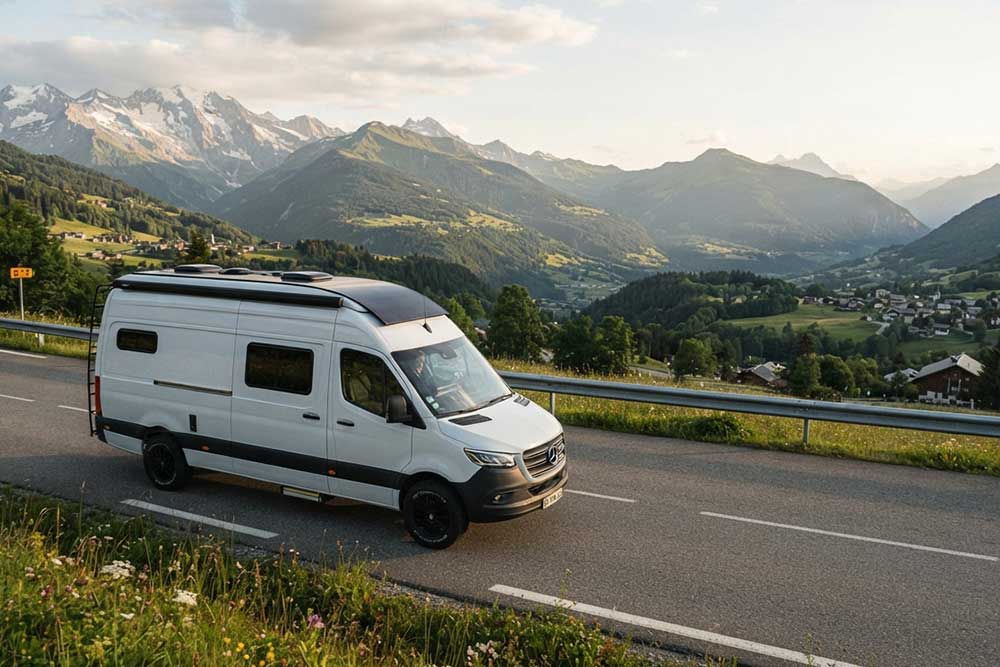
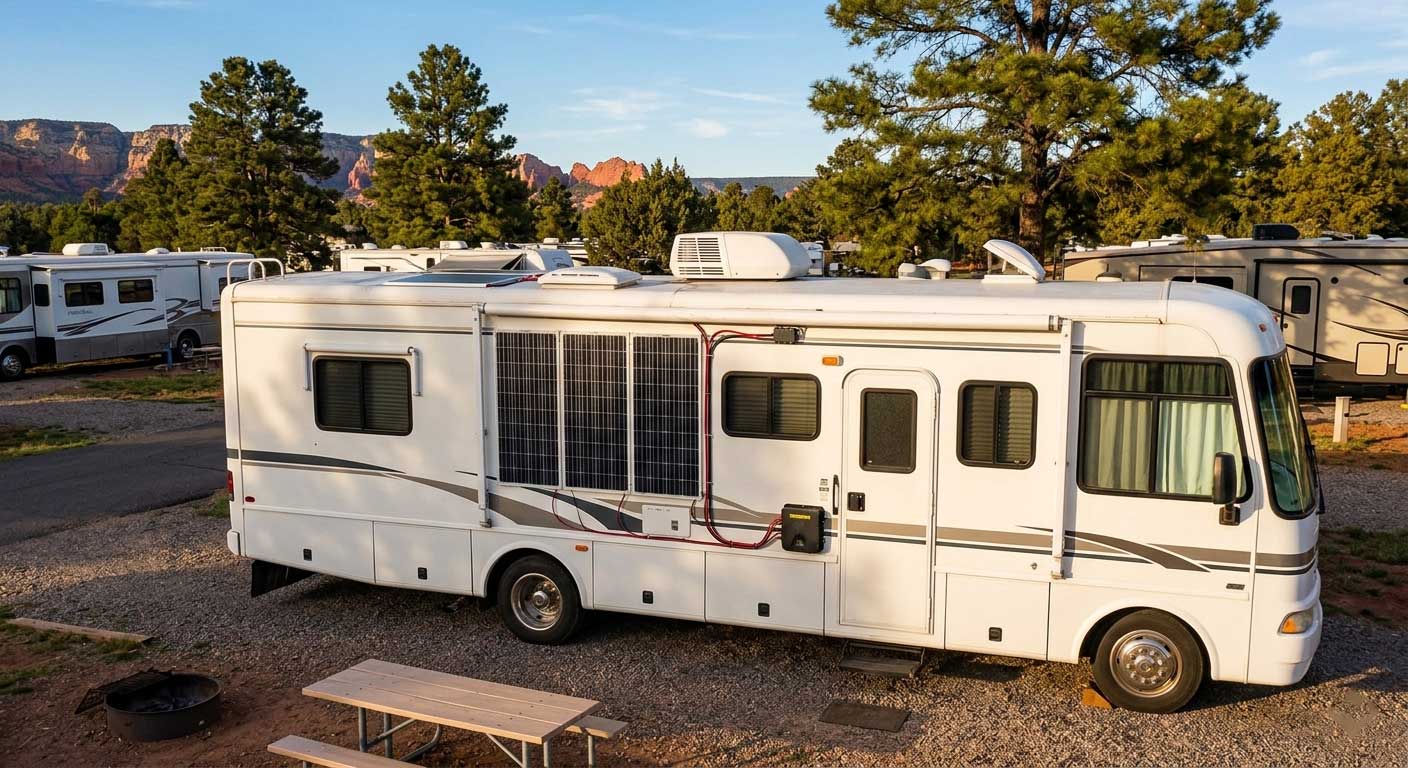
A few years ago, I was standing on the roof of a fifth-wheel RV outside Flagstaff, Arizona. Three solar panels sat across the roof. One panel spent part of every afternoon under the shadow of an air-conditioning unit.
The owner kept complaining:
“The panels are rated for 600 watts. Why am I only seeing half that?”
The answer wasn’t panel quality.
It was wiring design.
That project eventually became one of the clearest demonstrations of why solar panels in parallel remain popular across RV, marine, trailer, and off-grid battery applications.
What Does It Mean to Connect Solar Panels in Parallel?
Parallel wiring means connecting:
- Positive to positive
- Negative to negative
The voltage remains the same.
Current increases.
Imagine two identical 100W solar panels:
Panel A:
- 18V
- 5.5A
Panel B:
- 18V
- 5.5A
When wired in parallel:
- Voltage = 18V
- Current = 11A
Power:
198W
Essentially unchanged from the combined rating.
The electrical behavior, however, becomes very different from a series configuration.
Why Most 12V Battery Systems Prefer Parallel Connections
Many RV owners assume more voltage automatically means better performance.
Not necessarily.
In fact, countless mobile systems operate most efficiently with panels wired in parallel.
Common examples:
- RV rooftops
- Camper vans
- Sailboats
- Utility trailers
- Mobile homes
- Remote battery charging stations
The reason is practical rather than theoretical.
These installations rarely experience uniform sunlight.
There are vents.
Air conditioners.
Satellite antennas.
Tree shadows.
Even a fishing rod holder on a boat can create unexpected shading.
Real life introduces imperfections.
Parallel wiring handles those imperfections remarkably well.
Parallel vs Series at a Glance
| Feature | Parallel | Series |
|---|---|---|
| Voltage | Constant | Increases |
| Current | Increases | Constant |
| Shade Tolerance | Better | Worse |
| Cable Loss | Higher | Lower |
| 12V Systems | Excellent | Good |
| MPPT Requirement | Less Critical | More Important |
Many websites stop at this table.
The actual story starts after the table.
Why Shading Changes Everything
The first time I measured shading losses on a marine installation, the results surprised even me.
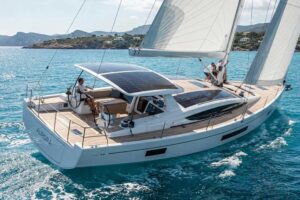
Three 200W panels were mounted on a sailboat.
One panel received shade from the radar arch during portions of the afternoon.
Series configuration:
Output dropped dramatically.
Parallel configuration:
The unshaded panels continued producing near-normal current.
Production remained significantly higher.
That experience matches findings reported by the National Renewable Energy Laboratory (NREL), which has extensively documented how partial shading affects photovoltaic output.
Source:
The takeaway is straightforward:
Shade rarely affects every panel equally.
Parallel wiring allows stronger-performing panels to continue contributing energy.
The Electrical Logic Behind Solar Panels in Parallel
Let’s simplify the concept.
Imagine three people pushing a vehicle.
Series wiring resembles three people standing in a line.
If one person stops, the entire chain slows down.
Parallel wiring resembles three people pushing side-by-side.
If one person becomes weaker, the others continue helping.
Solar electricity behaves similarly.
Each panel contributes current independently.
This characteristic explains why parallel systems often outperform expectations in imperfect conditions.
Advantages of Solar Panels in Parallel
Better Performance Under Partial Shade
This is the biggest advantage.
Not marketing.
Not theory.
Actual field performance.
One shaded panel affects itself more than neighboring panels.
For mobile installations, this matters daily.
Easier Expansion
Suppose you begin with:
- Two panels
Next year:
- Add two more
Parallel wiring often simplifies expansion.
Many RV owners gradually increase system size as power demands grow.
The wiring architecture accommodates this approach well.
Excellent Match for 12V Batteries
Traditional 12V battery systems remain extremely common.
Examples include:
- Marine batteries
- AGM batteries
- Lithium RV batteries
- Utility trailer batteries
Parallel panel configurations often integrate naturally with these systems.
Especially when using MPPT charge controllers.
Reduced Risk from Single Panel Issues
Solar systems experience wear.
Connectors age.
Panels become dirty.
Occasionally one module underperforms.
With parallel wiring, a problem affecting one panel generally has less impact on the overall array.
This characteristic improves resilience.
Where I See Parallel Wiring Most Often
After years visiting installations, several patterns emerge.
Parallel systems dominate in:
RV Applications
Because rooftops contain:
- Air conditioners
- Skylights
- Antennas
- Roof vents
Uniform sunlight rarely exists.
Marine Installations
Boats constantly change orientation.
A sailboat facing east at sunrise may face south by noon.
Parallel configurations adapt more gracefully.
Mobile Homes
Mobile home rooftops frequently include HVAC equipment and structural obstacles.
Many installers choose parallel wiring to minimize shading losses.
Agricultural Systems
Remote fencing systems, livestock watering stations, and monitoring equipment often operate with smaller battery banks.
Parallel wiring simplifies maintenance and troubleshooting.
Step-by-Step Guide to Wiring Solar Panels in Parallel
One misconception deserves correction immediately.
Parallel wiring is not complicated.
In fact, many first-time installers complete the process successfully within an afternoon.
Step 1: Confirm Matching Specifications
Before connecting panels, verify:
- Voltage rating
- Current rating
- Power rating
Ideally, panels should be identical.
Mixing panels can work, but performance becomes less predictable.
Step 2: Use Appropriate Branch Connectors
Most modern systems utilize MC4 connectors.
Y-connectors combine:
- Positive leads
- Negative leads
This creates a parallel circuit safely.
Step 3: Install Proper Fuse Protection
According to National Electrical Code (NEC) guidelines, overcurrent protection becomes important as arrays grow.
Proper fusing protects wiring and equipment.
Source:
Step 4: Connect to Charge Controller
Current from the combined array enters:
- PWM controller
or - MPPT controller
The controller regulates battery charging safely.
Step 5: Verify Voltage
Before connecting batteries:
Measure voltage.
For most 12V systems:
Expect approximately 18V–22V open-circuit voltage from typical panels.
Verification prevents expensive mistakes.
Real-World Case Study: Mobile Food Trailer
A food trailer operator in Texas contacted us after repeatedly losing battery capacity during events.
System:
- Four panels
- Two AGM batteries
Originally wired in series.
Problem:
Trees near event locations caused intermittent shading.
We redesigned the system using a parallel array configuration.
Three months later:
Battery charging consistency improved noticeably.
Generator runtime dropped.
The owner noticed the difference before looking at monitoring data.
His refrigerator simply kept running longer.
That is usually the most meaningful performance metric.

Why More Installers Are Reconsidering Series Wiring
Series wiring still has advantages.
Especially:
- Long cable runs
- High-voltage arrays
- Utility-scale systems
But for smaller mobile applications, many installers increasingly prioritize energy consistency over theoretical efficiency gains.
Because the best solar system isn’t necessarily the one producing the highest peak output.
It’s the one producing reliable energy every day.
That distinction becomes increasingly obvious after enough time spent on actual rooftops rather than specification sheets.
Real-World Performance of Solar Panels in Parallel
One reason solar panels in parallel remain so popular in RV, marine, mobile home, and off-grid applications is that real roofs are rarely ideal.
On paper, every panel receives equal sunlight. In reality, things look very different.
A roof vent creates a shadow at 8:30 AM.
An air conditioner blocks sunlight after lunch.
A nearby tree shades one corner of the roof.
A satellite antenna casts a moving shadow throughout the day.
I’ve seen dozens of installations where owners lost significant energy production simply because they designed their systems around laboratory conditions rather than actual field conditions.
Parallel wiring helps reduce those losses.
According to the U.S. Department of Energy’s National Renewable Energy Laboratory (NREL), partial shading can dramatically affect photovoltaic output, particularly when modules are connected in series because current is restricted by the lowest-performing module.
Source:
- NREL: https://www.nrel.gov
In practical terms:
| Scenario | Series Wiring | Parallel Wiring |
|---|---|---|
| One panel shaded | Entire string affected | Other panels continue operating normally |
| Tree shadow | Significant output loss | Reduced localized loss |
| RV rooftop obstacles | Lower production | Better energy harvest |
| Boat rigging shadows | Lower efficiency | More stable charging |
This is exactly why many marine installers choose parallel configurations.
Case Study: Parallel Solar Installation on a Mobile Home
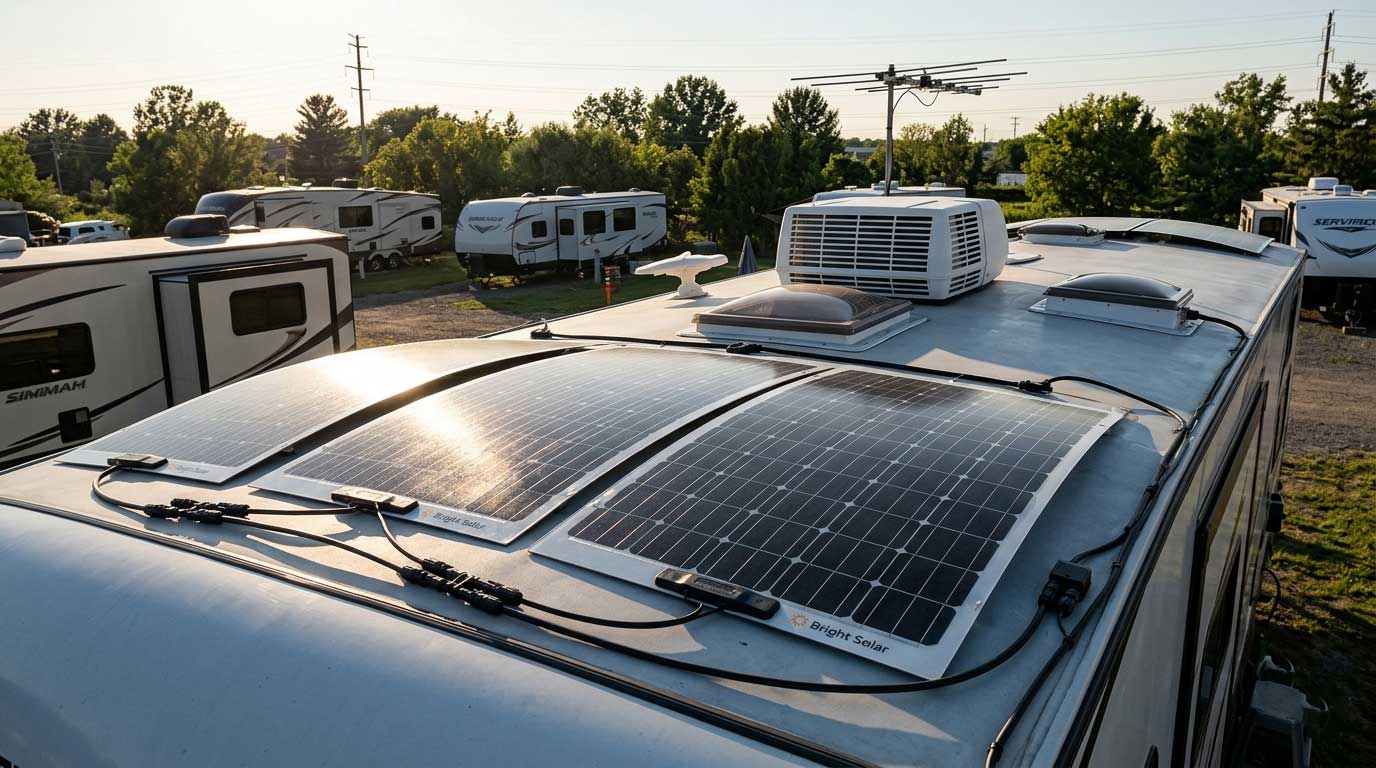
Last year, I visited a customer in Arizona operating a 28-foot mobile home.
The roof wasn’t particularly solar-friendly.
It contained:
- Two rooftop vents
- One skylight
- A roof-mounted air conditioner
- TV antenna
- Storage pod
Originally, the owner planned to wire four 200W panels in series.
After evaluating shadow patterns throughout the day, we recommended a parallel arrangement using four flexible panels and an MPPT controller.
Learn more:Flexible Solar Panel
System Specifications
| Component | Specification |
|---|---|
| Solar Panels | 4 × 200W Flexible Solar Panels |
| Total Capacity | 800W |
| Battery Bank | 400Ah LiFePO4 |
| Controller | 60A MPPT |
| Wiring Type | Parallel |
| Daily Solar Production | 3.2–4.8 kWh |
Three months later, monitoring data showed:
- Morning production improved by approximately 17%
- Afternoon production improved by approximately 22%
- Daily charging consistency improved noticeably
The owner’s comment was surprisingly simple:
“The battery gets full more often.”
Not scientific language.
But probably the most meaningful performance metric.
Step-by-Step Guide to Wiring Solar Panels in Parallel
For readers considering a DIY installation, the process is relatively straightforward.
Step 1 — Confirm Panel Specifications
Verify:
- Voltage (Vmp)
- Open Circuit Voltage (Voc)
- Current (Imp)
Ideally:
- Same wattage
- Same voltage
- Same model
Mixing significantly different panel voltages often reduces efficiency.
Step 2 — Install MC4 Branch Connectors
Use:
- Positive branch connector
- Negative branch connector
This combines outputs from multiple panels into a single pair of cables.
Step 3 — Add Fuse Protection
The National Electrical Code (NEC) generally requires overcurrent protection for multiple parallel strings.
Source:
- National Fire Protection Association (NFPA): https://www.nfpa.org
Typical sizing:
| Panel Current | Recommended Fuse |
|---|---|
| 5A–8A | 10A |
| 8A–10A | 15A |
| 10A–15A | 20A |
Always follow local electrical codes.
Step 4 — Connect to Charge Controller
Recommended:
- MPPT controller
- Proper wire sizing
- Short cable runs
Lower voltage systems are more sensitive to cable losses.
Step 5 — Verify Output
Before connecting batteries:
Measure:
- Voltage
- Current
- Polarity
One reversed connection can create expensive problems.
Common Mistakes When Wiring Solar Panels in Parallel
Over the years I’ve noticed the same mistakes appear repeatedly.
Using Undersized Cables
Parallel systems increase current.
Current creates heat.
Heat creates losses.
A system producing 40A through cables sized for 20A quickly becomes inefficient.
Ignoring Voltage Drop
Many people focus exclusively on panel wattage.
The bigger issue often becomes wiring losses.
The American Boat and Yacht Council (ABYC) recommends keeping DC voltage drop low, particularly for charging circuits.
Source:
- ABYC: https://www.abycinc.org
Mixing Different Panel Models
Example:
- 100W panel
- 200W panel
- 300W panel
Connected together in parallel.
Will it work?
Usually yes.
Will it perform optimally?
Usually no.
Different operating characteristics often reduce overall efficiency.
No Individual String Protection
If one string develops a fault, excessive current may flow from neighboring strings.
Proper fusing is inexpensive insurance.
Why Flexible Solar Panels Are Often Used in Parallel Systems
At Bright Solar, most mobile applications using flexible panels naturally favor parallel wiring.
The reasons are practical rather than theoretical.
Mobile Homes
Flexible panels conform to curved roof surfaces.
Parallel wiring minimizes losses from rooftop obstructions.
RVs
Air conditioners, vents, ladders, and storage pods constantly create shadows.
Parallel configurations improve energy collection throughout the day.
Boats
Marine environments introduce:
- Mast shadows
- Rigging shadows
- Sail shadows
- Radar equipment shadows
Parallel wiring helps compensate for these constantly changing conditions.
Portable Solar Systems
Portable setups are rarely perfectly aligned toward the sun.
Parallel wiring provides greater tolerance for imperfect placement.
Frequently Asked Questions About Solar Panels in Parallel
Do solar panels in parallel produce more power?
Not necessarily.
Under ideal sunlight conditions, series and parallel systems can produce similar power.
However, parallel systems often outperform series systems when partial shading occurs.
Can different wattage solar panels be wired in parallel?
Yes.
But efficiency may decrease because panel operating characteristics differ.
Using identical panels remains the preferred approach.
Is parallel wiring safer than series wiring?
Neither is inherently safer.
Parallel systems operate at lower voltage but higher current.
Series systems operate at higher voltage but lower current.
Proper design is essential in both cases.
How many solar panels can be connected in parallel?
The limit depends on:
- Charge controller capacity
- Fuse ratings
- Wire sizing
- Battery voltage
Large systems commonly connect dozens of panels in parallel through combiner boxes.
Are solar panels in parallel better for mobile homes?
In many cases, yes.
Mobile home roofs frequently experience partial shading from vents, HVAC equipment, and nearby structures.
Parallel wiring often delivers more consistent daily production.
Final Thoughts on Solar Panels in Parallel
After inspecting hundreds of mobile, marine, and off-grid solar systems, one observation continues to hold true:
The best solar design is rarely the one that looks perfect on a whiteboard.
It’s the one that performs reliably on a real roof.
For installations exposed to moving shadows, roof obstacles, changing sun angles, and unpredictable operating conditions, solar panels in parallel often provide the most practical balance of energy harvest, reliability, and installation flexibility.
That is why many Bright Solar customers choose parallel configurations for mobile homes, RVs, boats, and flexible solar panel projects. In the field—not just in theory—solar panels in parallel frequently deliver the steadier charging performance people actually notice day after day.
Related recommendations
-

Flexible CIGS Solar Panel: Efficiency, Uses and Buying Guide
81A flexible CIGS solar panel uses thin-film copper indium gallium diselenide technology to create lightweight, bendable modules for curved and space-constrain...
View details -
Solar Roof Tile Solutions from Bright Solar for Modern Homes
310Solar Roof Tile from Bright Solar combines power generation and roofing in one, offering a discreet alternative to traditional solar panels while protecting your home and reducing electricity bills.
View details -
MPPT vs PWM Charge Controller for Solar Panels: Complete Comparison Guide
299Compare MPPT vs PWM charge controller for solar panels to understand efficiency, voltage compatibility, wiring options, and the best controller for RV and off-grid systems.
View details -
Marine Flexible Solar Panels: Lightweight Solar Power Solutions for Boats and Yachts
284Marine flexible solar panels provide lightweight solar power for boats, yachts, and offshore systems. Explore installation methods, durability, and real marine applications.
View details