
Solar Panels for Semi Trucks: Complete Guide to Truck Solar Power Systems
Direct Answer :
Solar panels for semi trucks provide clean auxiliary power by converting sunlight into electricity for truck batteries, refrigerators, electronics, and cabin equipment. A properly designed solar system helps reduce engine idling, lower operating costs, and improve energy reliability for long-haul drivers who need power during stops.
Why Solar Panels Are Being Added to Modern Semi Trucks
The trucking industry is changing quickly. A semi truck today is no longer just an engine and trailer combination. Drivers rely on refrigerators, communication devices, navigation equipment, lighting systems, laptops, and climate-control accessories during long routes.
The challenge appears when the engine stops.
A parked truck still consumes electricity.
From my experience working with mobile solar applications at Bright Solar, I found that many transportation customers initially focus only on panel wattage. However, the real challenge is not installing more solar power. It is designing a system that matches the truck’s daily energy habits.
A truck operating on highways in Germany, the United States, or Canada faces very different conditions from a stationary solar installation:
- Limited roof space
- Constant vibration
- High-speed wind pressure
- Extreme temperature changes
- Dust, rain, and road debris
Because of these conditions, solar panels used for semi trucks must balance power output, weight, durability, and installation flexibility.
The U.S. Department of Energy identifies idle reduction technologies as an important method for reducing fuel consumption and emissions in heavy-duty vehicles. Reducing unnecessary idling can help transportation operators improve efficiency while lowering environmental impact.
Source:
https://www.energy.gov/
For many owner-operators, solar power is not replacing the truck’s electrical system. It works as a supporting energy source that keeps batteries healthier and reduces dependence on engine-generated electricity.
How Solar Panels for Semi Trucks Work in Real Driving Conditions
A semi truck solar system works through a simple energy process:
Sunlight → Solar Panel → Charge Controller → Battery → Electrical Equipment
However, the installation environment makes truck solar systems more complex than residential solar.
A typical system includes:
| Component | Purpose |
|---|---|
| Solar panel | Converts sunlight into electrical energy |
| MPPT charge controller | Improves charging efficiency and protects batteries |
| Battery bank | Stores electricity for nighttime operation |
| Inverter | Converts DC power into AC power when required |
| Monitoring system | Tracks charging performance |
During daylight hours, solar panels generate electricity and charge the battery system.
At night or during cloudy weather, stored energy powers equipment such as:
- Mini refrigerators
- LED interior lights
- Mobile devices
- Communication systems
- Small appliances
The important point is that solar panels do not need direct sunlight all day to provide value. Even while a truck is parked at a rest area, solar generation can continue charging the battery.
Choosing the Right Solar Panel Type for Semi Trucks
Not every solar panel design works well on commercial trucks.
Traditional rigid solar panels can provide excellent efficiency, but many truck owners face installation limitations because of:
- Roof curvature
- Weight restrictions
- Aerodynamic considerations
- Limited mounting space
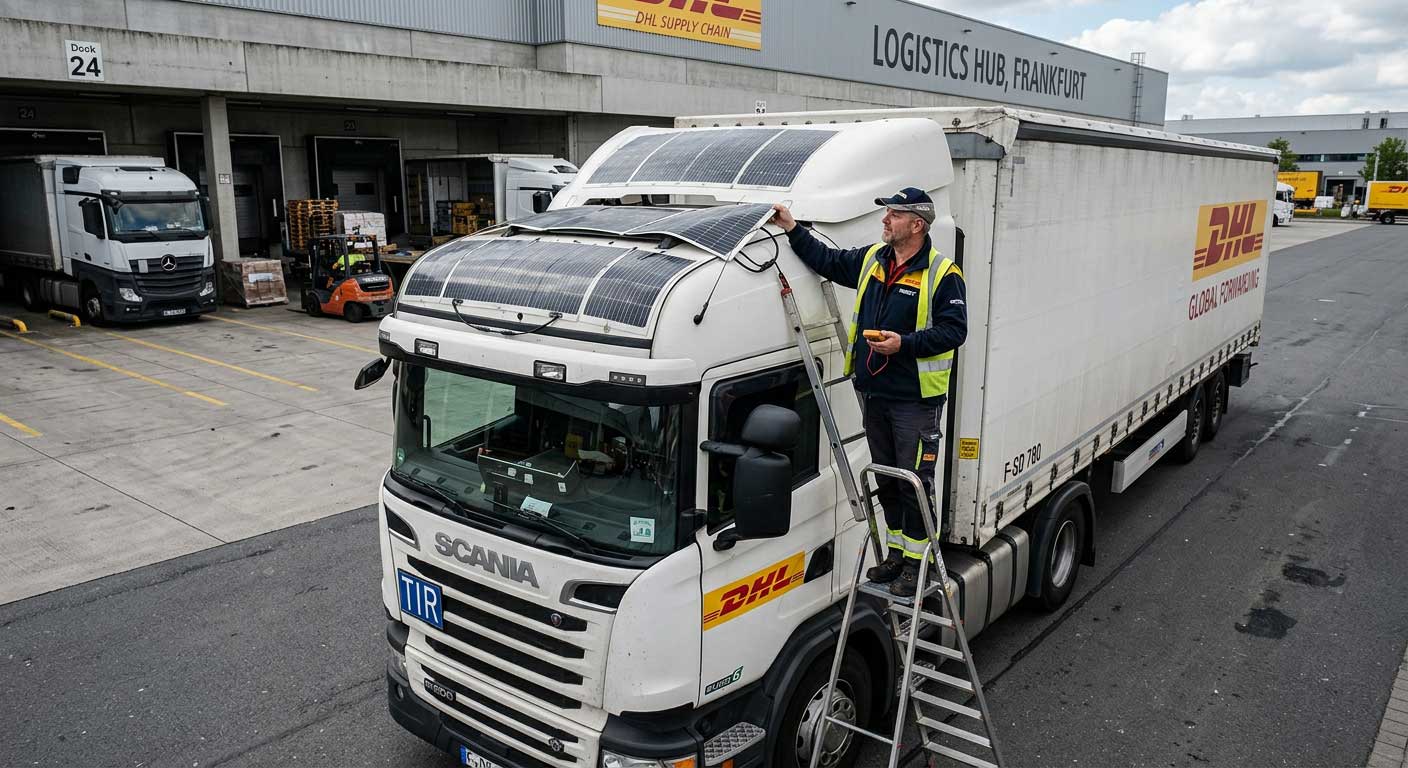
Flexible solar panels are increasingly used in vehicle applications because they are lightweight and easier to integrate into irregular surfaces.Visit the product page:Flexible Solar Panels for Semi Trucks
At Bright Solar, our flexible solar panel designs focus on several practical requirements:
Lightweight Construction
Every additional kilogram matters in commercial transportation.
Truck operators calculate operating costs carefully because additional weight can affect fuel efficiency and payload flexibility.
Flexible panels allow manufacturers and installers to add solar generation without significantly increasing roof load.
Durability Against Outdoor Conditions
Semi trucks experience harsher conditions than many residential systems.
Panels must withstand:
- UV radiation
- Temperature cycling
- Rain exposure
- Road vibration
- Long-distance travel
Bright Solar flexible panels use ETFE surface technology designed for outdoor applications where protection against environmental exposure is important.
Flexible Installation Options
Truck roofs are not always perfectly flat.
Flexible panels can adapt to different vehicle surfaces, making them suitable for:
- Semi trucks
- RVs
- Delivery vehicles
- Marine applications
- Off-grid transportation systems
How Much Solar Power Does a Semi Truck Need?
The correct solar capacity depends on the truck’s actual electricity consumption.
Many mistakes happen because people choose panels based only on available roof space.
A better approach starts with energy calculation.
Formula:
Daily Energy Usage = Device Power × Operating Hours
Example:
A long-haul driver uses:
| Equipment | Power | Daily Usage |
|---|---|---|
| Refrigerator | 50W | 10 hours |
| Laptop and electronics | 40W | 6 hours |
| LED lighting | 20W | 5 hours |
| Communication equipment | 15W | 8 hours |
Estimated daily consumption:
Approximately 900Wh per day.
Considering charging losses, weather changes, and battery efficiency, a 200W–300W solar system may provide suitable support for many owner-operator applications.
Common system sizes:
| Solar Capacity | Typical Usage |
|---|---|
| 100W–150W | Battery maintenance and small electronics |
| 200W–300W | Refrigerator, devices, cabin equipment |
| 400W+ | Larger auxiliary power requirements |
The final design depends on:
- Route location
- Average sunlight hours
- Battery capacity
- Driver lifestyle
- Electrical equipment
A truck traveling through Arizona may produce significantly more solar energy than the same vehicle operating in northern Europe during winter.
Real Application Experience: Solar Power for Long-Haul Trucking
One project we reviewed involved a European owner-operator who frequently traveled between distribution centers.
The truck had:
- 300W flexible solar panels
- 12V battery system
- MPPT controller
- Refrigerator
- Cabin electronics
Before installation, the driver frequently relied on engine idling during overnight parking.
After adding solar charging support, the truck maintained battery levels more consistently during rest periods.
The biggest improvement was not maximum power generation. It was energy stability.
The driver no longer needed to start the engine simply to maintain basic cabin equipment overnight.
This experience reinforced an important point: truck solar systems should be designed around usage patterns, not only panel specifications.
Installation Considerations Before Adding Solar Panels to Semi Trucks
Professional installation affects system performance more than many customers expect.
Important installation steps include:
1. Evaluate Roof Space
Measure:
- Available mounting area
- Roof material
- Curved surfaces
- Cable routing locations
2. Select Proper Mounting Method
Common methods include:
- Industrial adhesive mounting
- Mechanical brackets
- Custom mounting solutions
The method depends on truck design and operating conditions.
3. Protect Cable Connections
Water intrusion is one of the most common installation problems.
Proper installation requires:
- Waterproof cable entry points
- UV-resistant wiring
- Secure connectors
4. Match Solar System With Battery Capacity
Installing a large solar array with a small battery system can reduce efficiency.
The solar panel, controller, and battery should work together as one system.
Solar Panels for Semi Trucks: Key Benefits for Fleet Operators
Lower Engine Idling
Solar-assisted power reduces dependence on engine-generated electricity when trucks are parked.
Improved Battery Support
Regular solar charging helps maintain battery condition.
Better Driver Comfort
Drivers can operate essential devices without constantly running the engine.
Support Sustainable Transportation Goals
Many logistics companies are exploring renewable energy solutions to reduce emissions and improve operational efficiency.

Cost of Solar Panels for Semi Trucks and Expected ROI
The cost of installing solar panels for semi trucks depends on the required power capacity, panel technology, battery configuration, and installation method.
Unlike residential solar systems, truck solar systems are usually customized because every vehicle has different electrical demands.
A typical semi truck solar setup may include:
| System Type | Approximate Capacity | Suitable Use |
|---|---|---|
| Basic system | 100W–150W | Battery maintenance, GPS, small electronics |
| Medium system | 200W–300W | Sleeper cab accessories, refrigerator, lighting |
| High-power system | 400W–600W+ | Refrigeration units, larger auxiliary loads |
The investment is usually influenced by:
- Solar panel type
- Charge controller quality
- Battery condition
- Wiring complexity
- Installation labor
For fleet operators, the return is not only measured by fuel savings.
The bigger value often comes from:
- Fewer battery failures
- Reduced roadside assistance
- Less engine idling
- Longer battery service life
The North American Council for Freight Efficiency (NACFE) notes that solar panels on tractors can support battery-powered HVAC systems and hotel loads, helping extend battery runtime and reduce unnecessary engine idling.
A solar system should therefore be evaluated as an operational efficiency investment rather than simply a hardware purchase.
Solar Panels for Semi Trucks vs Traditional Engine Idling
For decades, many truck drivers have solved overnight power problems by leaving the diesel engine running.
It works.
But it is expensive.
A semi truck engine consumes fuel while idling without producing transportation value.
Common problems caused by excessive idling include:
- Higher fuel consumption
- Increased engine wear
- More maintenance requirements
- Additional emissions
- Noise during rest periods
Solar-assisted power provides another option.
Instead of using diesel fuel only to maintain cabin electricity, solar panels can support battery charging during daylight hours.
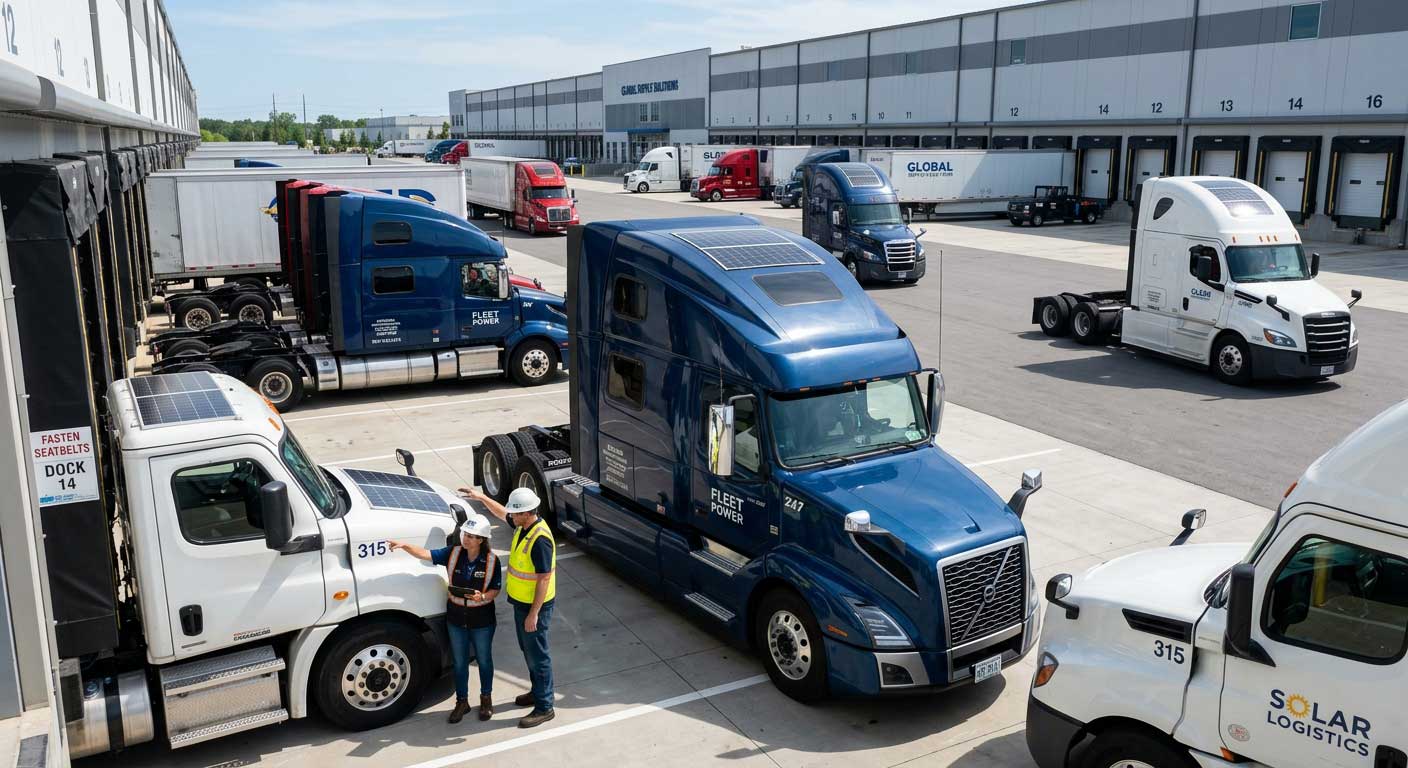
A real-world field evaluation involving C.R. England tested a 440W truck solar system that maintained starter and auxiliary power batteries during a month-long period, helping avoid battery-driven engine auto-start charging events under demanding operating conditions.
However, based on our experience at Bright Solar, solar should not be marketed as a complete replacement for every truck energy source.
The better approach is:
Solar + Battery + Efficient Electrical Equipment + Smart Energy Management
This combination creates a more reliable system.
Maintenance Tips for Semi Truck Solar Systems
Semi trucks operate in environments where dust, insects, road spray, and weather exposure are unavoidable.
Regular maintenance improves long-term performance.
Clean Solar Panels Regularly
Dirt accumulation reduces sunlight absorption.
Recommended cleaning:
- Use clean water
- Use soft cloth or sponge
- Avoid aggressive brushes
- Avoid strong chemical cleaners
For trucks operating in dusty industrial areas or construction zones, cleaning frequency may need to increase.
Inspect Cable Connections
Truck vibration is one of the biggest differences between vehicle solar and stationary solar.
Check:
- Connector tightness
- Cable protection
- Waterproof seals
- Mounting points
Small connection problems can gradually reduce system output.
Monitor Battery Performance
Solar panels generate energy, but the battery determines how effectively that energy is stored.
Important battery checks:
- Voltage stability
- Charging cycles
- Discharge depth
- Battery temperature
FAQ About Solar Panels for Semi Trucks
Can solar panels run a semi truck completely?
No. Solar panels are usually designed as a supplemental energy source. They support batteries and auxiliary equipment but do not replace the truck engine, alternator, or complete electrical system.
The main purpose is reducing battery stress and supporting onboard electrical loads.
What size solar panel is best for a semi truck?
Most semi trucks use systems between 100W and 600W depending on energy requirements.
A truck with only basic electronics may need around 100W–200W, while trucks running refrigerators, HVAC support systems, or larger equipment may require higher capacity.
Are flexible solar panels better for semi trucks?
Flexible solar panels are often preferred because they are lightweight, low-profile, and easier to install on curved truck surfaces.
The NACFE reports that solar panels designed for tractors are commonly flexible, thin, and suitable for mounting on curved vehicle surfaces.
Can solar panels reduce semi truck idling?
Yes. Solar panels can reduce charging-related idling by maintaining battery levels and supporting auxiliary loads.
The actual reduction depends on:
- Climate
- Battery size
- Driver habits
- Electrical demand
How long do solar panels for semi trucks last?
High-quality flexible solar panels designed for transportation applications can typically operate for many years when properly installed and maintained.
Actual lifespan depends on:
- Material quality
- UV exposure
- Installation method
- Vehicle operating conditions
Can solar panels charge truck batteries while driving?
Yes.
While driving, solar energy can supplement the alternator system and help maintain battery charge.
The solar system works together with the existing truck electrical architecture.
Are solar panels worth installing on semi trucks?
For many long-haul operators, the answer is yes when the system matches actual energy needs.
The strongest benefits usually come from:
- Reduced idle time
- Better battery reliability
- Fewer power-related interruptions
- Improved driver comfort
Why Bright Solar Flexible Solar Panels for Truck Applications
Bright Solar focuses on flexible solar solutions designed for demanding mobile environments.
For semi truck applications, we pay attention to details that are often overlooked:
- Panel weight
- Surface protection
- Weather resistance
- Installation flexibility
- Long-term outdoor reliability
A truck solar system is exposed to thousands of kilometers of movement every year.
It needs more than laboratory efficiency numbers.
It needs practical performance on real roads.
Our approach is to help customers select solar capacity based on actual vehicle usage rather than simply recommending the largest possible panel.
Related recommendations
-

Walkable Solar Panels for Boats, RVs and High-Traffic Surfaces
286Discover how walkable solar panels provide reliable power while supporting foot traffic on boats, RVs, and marine decks. Learn key specifications, durability, and installation tips.
View details -
Solar Panel Flexible: A Practical Guide to Lightweight Solar Power
235Explore solar panel flexible technology for RVs, marine applications, camping, and off-grid systems. Learn benefits, efficiency, durability, and installation tips.
View details -
Solar Series vs Parallel: Which Wiring Setup Is Better?
268Solar series vs parallel explained with wiring examples, voltage and current calculations, MPPT limits, shading effects, and setup tips from Bright Solar.
View details -
Flexible CIGS Solar Panel: Efficiency, Uses and Buying Guide
83A flexible CIGS solar panel uses thin-film copper indium gallium diselenide technology to create lightweight, bendable modules for curved and space-constrain...
View details