1000W Solar Panels: Output, Cost, Sizing & Uses
1000W Solar Panels: The Short Answer
1000W solar panels provide 1kW of rated solar capacity and can generate roughly 3–5 kWh of energy per day in a favorable solar location before site-specific losses. Actual output depends on sunlight, orientation, temperature, shading, system design, and location.
There is an important distinction here.
“1000W solar panels” can mean a single 1000W-class solar module, or it can mean a 1kW solar array made from several smaller panels.
Those are not necessarily the same product.
A 1kW array could consist of:
- 2 × 500W panels
- 4 × 250W panels
- 5 × 200W panels
- 10 × 100W panels
The nameplate capacity is the same:
1,000W = 1kW
But the physical installation, voltage, current, roof area, wiring, module efficiency, and mounting requirements can be completely different.
At Bright Solar, this is one of the first distinctions we make when discussing custom solar projects. Wattage tells you the rated capacity. It does not tell you how much electricity the system will actually deliver on a particular roof on a particular day.
For production estimates, NREL‘s PVWatts Calculator models system capacity together with location, array orientation, tilt, system losses and weather data. The current PVWatts Version 8 uses updated NSRDB weather datasets and improved PV, thermal and inverter models.
What Does 1000W Solar Power Mean?
A 1000W solar system has a rated DC capacity of:
1,000 watts = 1 kilowatt
If the panels could operate at exactly 1,000W for one hour, they would produce:
1,000W × 1 hour = 1,000Wh = 1kWh
But solar panels do not produce their nameplate rating continuously throughout the day.
Morning production starts low.
It rises toward midday.
It falls again in the afternoon.
Clouds can pull output down sharply. High module temperature can reduce voltage. Shade from a nearby tree can change the output of an entire string.
So when someone asks:
“How much does a 1000W solar panel produce per day?”
the technically useful answer is not simply “1kWh.”
The real question is:
How much solar energy reaches the array at this location, and how efficiently does the complete system convert it into usable electricity?
NREL describes PVWatts as a tool for estimating electricity production from grid-connected PV systems using relatively simple system inputs, while also warning that actual output contains uncertainty and site-specific variation.
1000 Watt Solar Panel Output Per Day
A useful planning calculation is:
Daily energy ≈ System capacity × equivalent peak-sun hours × system performance factor
For a 1kW array:
| Equivalent Peak Sun | Theoretical Daily Energy |
|---|---|
| 2 hours | 2.0 kWh |
| 3 hours | 3.0 kWh |
| 4 hours | 4.0 kWh |
| 5 hours | 5.0 kWh |
| 6 hours | 6.0 kWh |
Those are simplified energy figures before applying real-world system effects.
For example, using a simplified 14% system-loss assumption:
| Peak-Sun Equivalent | Before Losses | Approx. After 14% Loss |
|---|---|---|
| 2 hours | 2.0 kWh | 1.72 kWh |
| 3 hours | 3.0 kWh | 2.58 kWh |
| 4 hours | 4.0 kWh | 3.44 kWh |
| 5 hours | 5.0 kWh | 4.30 kWh |
| 6 hours | 6.0 kWh | 5.16 kWh |
NREL’s published PVWatts V5 documentation identifies a 14% default total system-loss assumption, incorporating effects such as soiling, shading, mismatch, wiring, connections, availability and other losses. It also emphasizes that the total is calculated multiplicatively rather than by simply adding individual percentages.
The current PVWatts model is more sophisticated than this simplified calculation, so these numbers should be treated as an easy way to understand scale—not as a production guarantee. PVWatts Version 8 incorporates updated weather data and improved module, thermal and inverter modeling.
How Many Solar Panels Make 1000W?
There is no fixed number.
It depends on the wattage of each module.
| Panel Rating | Panels Needed for ~1kW | Total Capacity |
|---|---|---|
| 100W | 10 | 1,000W |
| 200W | 5 | 1,000W |
| 250W | 4 | 1,000W |
| 400W | 3 | 1,200W |
| 450W | 3 | 1,350W |
| 500W | 2 | 1,000W |
| 550W | 2 | 1,100W |
This is where the phrase 1000 watt solar panel can be misleading.
If a customer has only 100 square feet of usable roof, choosing ten 100W panels may not be physically equivalent to using two 500W modules.
Panel dimensions and efficiency matter.
A higher-wattage module can sometimes deliver the same total array capacity using fewer physical modules, reducing the number of mounting points and electrical connections.
On the other hand, smaller modules can be easier to fit around vents, skylights, RV equipment, curved surfaces or irregular roof geometry.
For Bright Solar flexible-panel applications, the physical constraints of the installation are often just as important as the electrical rating.Visit product page:Flexible Solar Panels
1000W Solar Panels: One Large Panel vs 1kW Array
A single 1000W-class module sounds attractive.
Fewer panels.
Fewer module-to-module connections.
Potentially simpler installation.
But there are trade-offs.
Large-format modules can be physically difficult to handle and may require more careful structural planning. They are also not automatically suitable for every charge controller or inverter because voltage and current can vary significantly between module designs.
A 1kW array made from four 250W modules may have completely different electrical characteristics from one 1000W module.
Consider two simplified examples.
Example A: One 1000W Module
Suppose a hypothetical module operates around:
- Vmp: 50V
- Imp: 20A
- Rated power: 1,000W
Then:
50V × 20A = 1,000W
Example B: Four 250W Modules
Suppose each module operates around:
- Vmp: 25V
- Imp: 10A
- Rated power: 250W
Four modules could be wired in different configurations.
Four in series:
100V × 10A = 1,000W
Two series strings in parallel:
50V × 20A = 1,000W
Same nominal power.
Very different electrical architecture.
This is why I would not select a controller or inverter based only on “1kW solar.”
The actual Voc, Vmp, Isc and Imp need to be checked.
How Much Roof Space Does a 1000W Solar System Need?
The physical area depends primarily on module efficiency and dimensions.
For illustration, if a module has approximately 20% efficiency, the module’s rated power density is roughly:
1,000W/m² × 20% = 200W/m²
A 1kW array would therefore require approximately:
1,000 ÷ 200 = 5m²
of active module area under simplified assumptions.
A higher-efficiency module can achieve the same capacity using less surface area.
But real installation planning needs additional clearance for:
- Mounting hardware
- Roof edges
- Walkways
- Service access
- Drainage
- Obstacles
- Fire-access requirements
- Structural limitations
So do not interpret 5m² as a universal roof-space requirement.
The U.S. Department of Energy identifies roof orientation, tilt, shading and available roof area among the factors that affect whether a site is suitable for solar PV.
1000W Solar System for Home Use
A 1kW solar system is relatively small for a conventional all-electric American home.
But that does not make it useless.
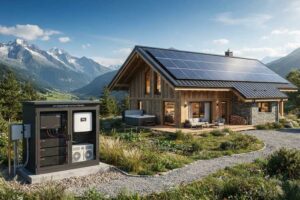
It can be appropriate for:
- Small cabins
- Tiny homes
- Sheds
- Remote monitoring
- RVs
- Boats
- Small off-grid buildings
- Supplemental residential generation
- Low-energy workshops
- Agricultural equipment
For a conventional house, a 1kW array generally represents a supplemental system rather than a complete whole-home solution.
Imagine a home using 20kWh per day.
A 1kW array producing 4kWh on a favorable day would cover only part of that demand.
Now consider a small off-grid cabin using 3kWh/day.
The same 1kW array could become a much more meaningful energy source.
The equipment has not changed.
The load has.
1000W Solar Panels for RV and Off-Grid Applications
This is where a 1kW solar array becomes particularly interesting.
An RV with:
- 12V refrigerator
- LED lighting
- Laptop
- Internet equipment
- Water pump
- Fans
- Small electronics
may have a very different energy profile from a full-time RV using:
- Air conditioning
- Induction cooking
- Electric water heating
- Microwave
- Electric heating
A 1kW array can provide a meaningful amount of energy for the first scenario.
It may still be insufficient for the second without a larger array, substantial battery storage, or supplemental power.
The same principle applies to tiny homes.
A 1kW system is not “large” or “small” in isolation.
It is large or small relative to the load.
1000W Solar Panels and Battery Storage
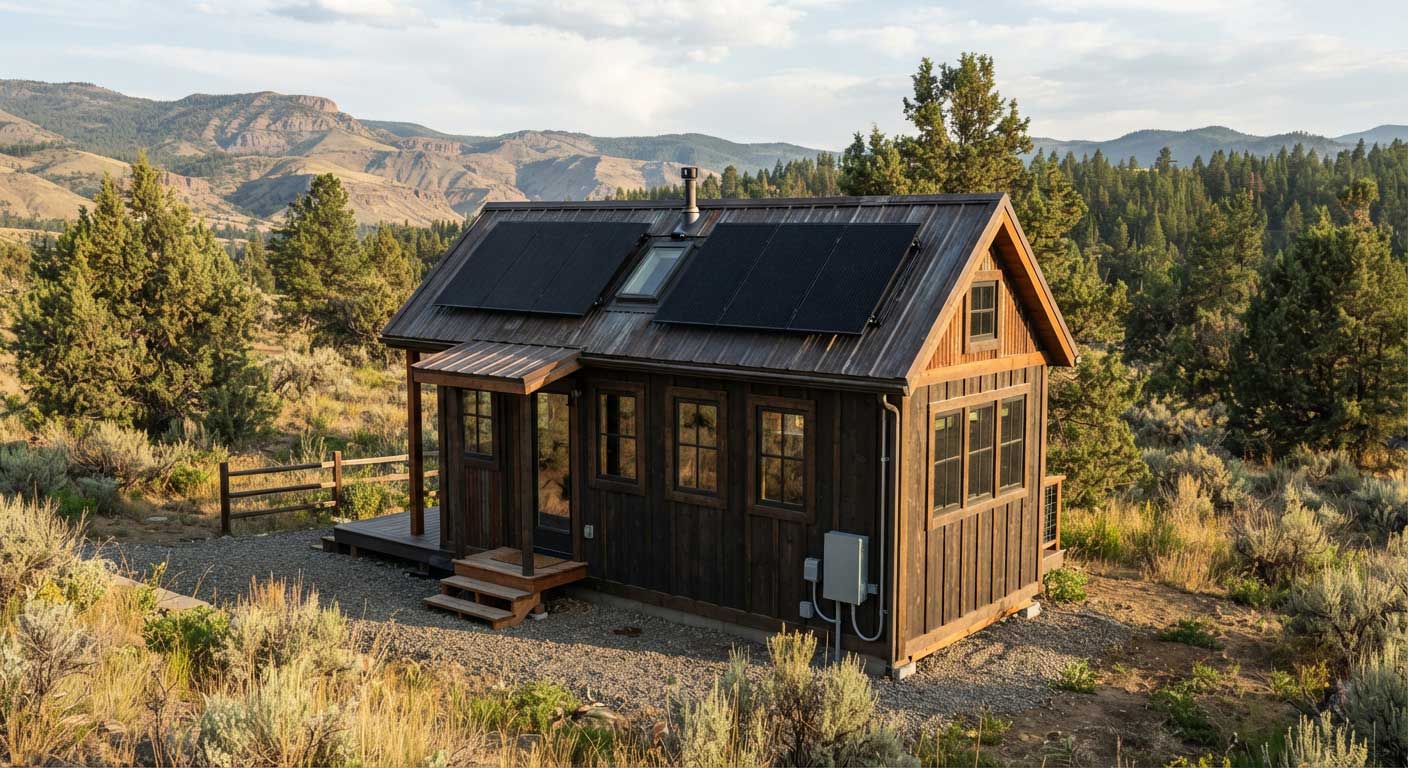
A 1kW solar array is often paired with battery storage in off-grid applications.
But the battery should be sized from the load profile, not from the solar-panel number.
For example, suppose a small cabin uses:
3kWh/day
and the owner wants approximately one day’s usable energy storage.
A battery system with around 4kWh of nominal capacity might provide an appropriate starting point depending on chemistry, reserve requirements and the manufacturer’s recommended depth of discharge.
The exact number must be calculated from the battery specification.
Example: 12V Battery Bank
A nominal:
12V × 200Ah = 2.4kWh
battery bank.
A 1kW solar array can theoretically provide much more charging power than a small 12V 200Ah battery may comfortably accept under all conditions.
That is why battery voltage and charge-controller ratings matter.
Example: 48V Battery Bank
A 48V architecture can make more sense for larger off-grid systems because the same power requires less current.
For 1,000W:
At 12V:
1,000 ÷ 12 ≈ 83A
At 48V:
1,000 ÷ 48 ≈ 21A
Real systems operate at charging voltages rather than exactly 12V or 48V, and conversion losses also exist. Still, the comparison illustrates why system voltage becomes increasingly important as power increases.
1000W Solar Panels and Inverter Sizing
A 1kW PV array does not automatically require a 1kW inverter.
The correct inverter size depends on:
- Maximum AC load
- Continuous load
- Surge load
- Battery voltage
- PV input specifications
- Grid connection requirements
- Applicable electrical codes
- Whether energy storage is included
A small cabin might have a 1,500W inverter connected to a 1kW PV array.
That can be perfectly reasonable.
The inverter does not need to match the PV nameplate watt-for-watt.
Conversely, a 3kW inverter does not mean the solar array can continuously supply 3kW.
It simply means the inverter can potentially handle a larger AC load within its specifications.
This distinction is especially important for off-grid systems.
1000W Solar Panels: Series or Parallel?
A 1kW array can often be wired in several ways.
Take four hypothetical 250W modules, each rated approximately:
- Vmp: 25V
- Imp: 10A
- Voc: 30V
- Isc: 10.5A
<h3>Four Panels in Series</h3>
Operating voltage:
25V × 4 = 100V
Current:
10A
Power:
100V × 10A = 1,000W
<h3>Four Panels in Parallel</h3>
Voltage:
25V
Current:
10A × 4 = 40A
Power:
25V × 40A = 1,000W
<h3>Two Series Strings in Parallel</h3>
Each string:
50V × 10A = 500W
Two strings:
50V × 20A = 1,000W
The total power is approximately the same.
The controller sees completely different voltage and current.
This matters because PV equipment has maximum voltage and current limits.
The array’s cold-weather Voc also needs to be checked before selecting a series configuration.
1000W Solar Panels: A Realistic Field Example
Consider a small off-grid workshop in the western United States.
The owner wants solar power for:
- LED lighting
- Wi-Fi
- Security cameras
- Laptop
- Small power tools
- Battery charging
- Occasional ventilation fan
Estimated daily consumption:
2.5–3.0kWh/day
The available roof area can accommodate approximately 1kW of PV.
Instead of immediately specifying a much larger system, the designer models the site with PVWatts.
The model considers:
- Location
- Array capacity
- Roof mounting
- Tilt
- Azimuth
- System losses
- Weather data
NREL’s current PVWatts Version 8 uses 2020 TMY weather datasets from the National Solar Radiation Database for covered locations, along with updated module, inverter and thermal models.
The resulting monthly production estimate is then compared with the workshop’s expected consumption.
This is a better design process than saying:
“1kW should produce about 4kWh, so we’re done.”
Because the workshop might need 3kWh in December and only 1.8kWh is available from the modeled winter production.
That changes the battery and backup strategy.
This is the kind of detail that separates a product specification from an actual solar system design.
Why a 1000W Solar Array Does Not Always Produce 1000W
This is one of the most common misunderstandings.
A 1kW array may produce:
- 100W in weak morning sun
- 500W during a partial-cloud period
- 850W around strong midday conditions
- Near its rated output briefly under favorable conditions
- Very little after sunset
And even excellent sunlight does not guarantee exactly 1,000W at the system output.
PV module temperature affects performance.
Soiling affects performance.
Shading affects performance.
Mismatch affects performance.
Wiring affects performance.
Inverter efficiency affects AC output.
NREL’s PVWatts documentation explicitly models multiple loss categories and notes that actual losses vary by equipment, installation and operating conditions.
A field installation evaluated in an NREL/PNNL resilience project, for example, used a 23% system-loss assumption when matching modeled production to recorded production for an existing 7kW rooftop array in Ouzinkie, Alaska. That does not mean every PV system loses 23%; it demonstrates why site-specific modeling matters.
That example is particularly useful because it shows how different real-world conditions can move a project away from generic assumptions.
1000W Solar Panels: How to Maximize Output
The biggest improvement does not always come from buying a more powerful panel.
Reduce Shade First
A shaded module can become a much bigger problem than a small difference in panel efficiency.
Look at the roof at:
- 9 a.m.
- Noon
- 3 p.m.
not just at the time of installation.
Keep the Array Clean
Dust and dirt reduce irradiance reaching the module surface.
NREL includes soiling as a modeled system-loss category in PVWatts.
Use Appropriate Wiring
Cable resistance causes voltage drop and electrical losses.
The correct conductor size depends on current, distance, installation method and applicable requirements.
Match the Controller to the Array
Check:
- Maximum PV voltage
- Maximum PV current
- Maximum PV power
- MPPT operating range
- Battery voltage
Do Not Ignore Temperature
Panel voltage changes with temperature.
A series string that appears safe under mild conditions can approach a controller’s maximum voltage limit during very cold weather.
1000W Solar Panels for Flexible Solar Applications
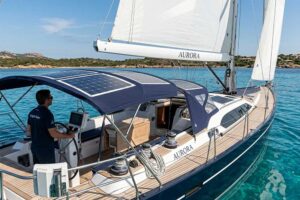
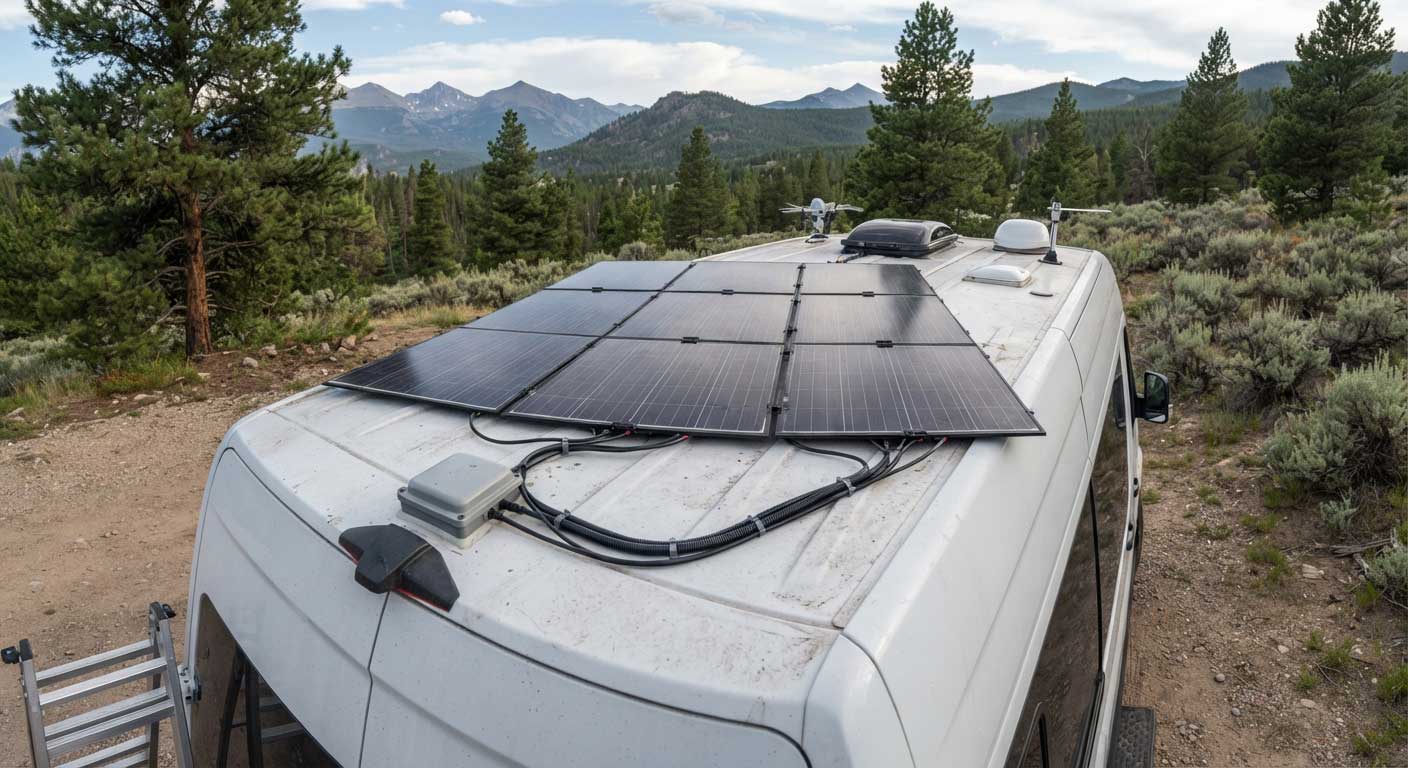
A 1kW flexible solar system can be particularly useful where rigid panels are difficult to mount.
Potential applications include:
- RV roofs
- Camper vans
- Boats
- Tiny homes
- Lightweight cabins
- Mobile workspaces
- Marine structures
- Curved architectural surfaces
The advantage is physical.
The electrical design remains conventional.
Bright Solar’s flexible solar-panel products are intended for applications where lower weight, unusual roof geometry, or alternative installation approaches can be important.
For a 1kW custom flexible array, I would review the installation in this order:
- Available surface area
- Surface curvature
- Mounting method
- Expected operating temperature
- Panel electrical characteristics
- Series/parallel configuration
- Cable route
- Charge controller or inverter
- Battery architecture
- Expected daily energy requirement
That sequence catches problems before the panels arrive.
1000W Solar Panels: Cost Considerations
The cost of a 1kW solar system cannot be accurately determined from panel wattage alone.
The final price may include:
- PV modules
- Mounting hardware
- Charge controller
- Inverter
- Battery
- Wiring
- Connectors
- Fuses and disconnects
- Combiner equipment
- Installation labor
- Engineering
- Monitoring
- Shipping
A 1kW panel-only purchase is very different from a complete 1kW off-grid power system.
For example:
1kW PV modules + grid-tied inverter
is a very different product from:
1kW PV modules + 10kWh battery + hybrid inverter + mounting + protection equipment
When comparing quotes, compare the complete bill of materials rather than the price per watt alone.
Common 1000W Solar Panel Mistakes
Treating 1kW as Daily Energy
1kW is capacity.
kWh is energy.
They are related, but they are not interchangeable.
Assuming 1kW Means 1kWh Every Hour
Solar production changes with irradiance and system conditions.
Choosing the Inverter First
The inverter should be matched to the loads and PV/battery architecture.
Ignoring the Battery
An off-grid system needs enough storage for the hours when solar production is unavailable.
Choosing Panels Based Only on Wattage
A 500W panel is not automatically better than two 250W panels.
Physical size, voltage, current, efficiency and installation constraints all matter.
Using Generic Production Estimates for a Specific Location
A national average is not a site assessment.
NREL’s PVWatts model uses location-specific weather information and provides an expected production range based on historical weather variability.
FAQ: 1000W Solar Panels
How much electricity does a 1000W solar panel produce per day?
A 1kW solar array can theoretically produce 1kWh for every hour it operates at its rated 1kW output. In practical use, daily production depends on location, sunlight, temperature, shading, orientation and system losses. A 1kW system producing for four equivalent peak-sun hours would yield about 4kWh before losses.
How many solar panels do I need for 1000 watts?
It depends on the individual panel rating. You could use ten 100W panels, five 200W panels, four 250W panels, two 500W panels, or another combination that totals approximately 1,000W.
Can 1000W solar panels power a house?
A 1kW array can provide useful supplemental electricity for a home, but it is generally too small to cover the complete electricity demand of a conventional all-electric U.S. household. It is more suitable for small cabins, tiny homes, RVs, workshops or supplemental generation.
What size battery do I need for a 1000W solar system?
There is no single correct battery size. The battery should be based on daily energy consumption, desired autonomy, battery chemistry, usable depth of discharge and inverter requirements. A small off-grid load may need only a few kWh, while a full-time system may require substantially more.
Can I use a 1000W solar system for an RV?
Yes. A 1kW RV solar array can provide meaningful energy for refrigerators, electronics, lighting, water pumps and other moderate loads. Air conditioning and other high-power appliances may still require additional solar capacity, battery storage or backup power.
Are 1000W solar panels suitable for off-grid systems?
Yes, particularly for small cabins, tiny homes, RVs and low-energy buildings. The system should include appropriately sized battery storage, inverter or charge controller, wiring and protection equipment.
Are 1000W solar panels better than several smaller panels?
Not automatically. A single high-wattage module can simplify some installations, while multiple smaller modules may offer more flexible roof layouts and string configurations. The better choice depends on physical space, electrical specifications, handling requirements and the controller or inverter.
Final Takeaway: 1000W Solar Panels
1000W solar panels represent 1kW of rated PV capacity, not a guaranteed daily energy output. In a favorable location, a 1kW system can produce several kilowatt-hours per day, but the actual number depends on solar resource, array orientation, temperature, shading, equipment and system losses.
The most useful way to evaluate a 1kW system is to stop looking at the wattage in isolation.
Ask:
- How much energy does the application consume?
- How much roof or ground area is available?
- What will the local solar resource provide?
- What battery capacity is required?
- What inverter or MPPT voltage range is available?
- Should the panels be wired in series, parallel or series-parallel?
- Is a rigid or flexible panel better for the installation?
For Bright Solar, those questions are more important than simply finding a panel with “1000W” printed on the datasheet.
A properly designed 1kW system can be extremely useful.
An improperly matched 1kW system can look impressive on paper and still disappoint in the field.
Related recommendations
-

Solar Power for RV Air Conditioner: Complete Guide
245Solar power for RV air conditioner systems can provide off-grid cooling. Learn solar panel sizing, battery capacity, inverter requirements, installation tips, costs, and practical RV applications.
View details -
Flexible Solar Panels Marine Solutions for Boats and Offshore Power
160Discover how flexible solar panels marine solutions provide lightweight, durable power for boats, yachts, and offshore vessels. Learn installation, efficiency, and marine benefits.
View details -
Off Grid Solar Power System: Complete Guide for Energy Independence
212Explore an off grid solar power system with complete guidance on components, sizing, installation, cost, and benefits for homes, RVs, farms, and remote energy solutions.
View details -
Best semi flexible solar panels: A Complete Guide for RV, Marine and Off-Grid Applications
194Explore the best semi flexible solar panels for RV, marine, and off-grid systems with expert advice, performance data, installation insights, and Bright Solar experience.
View details