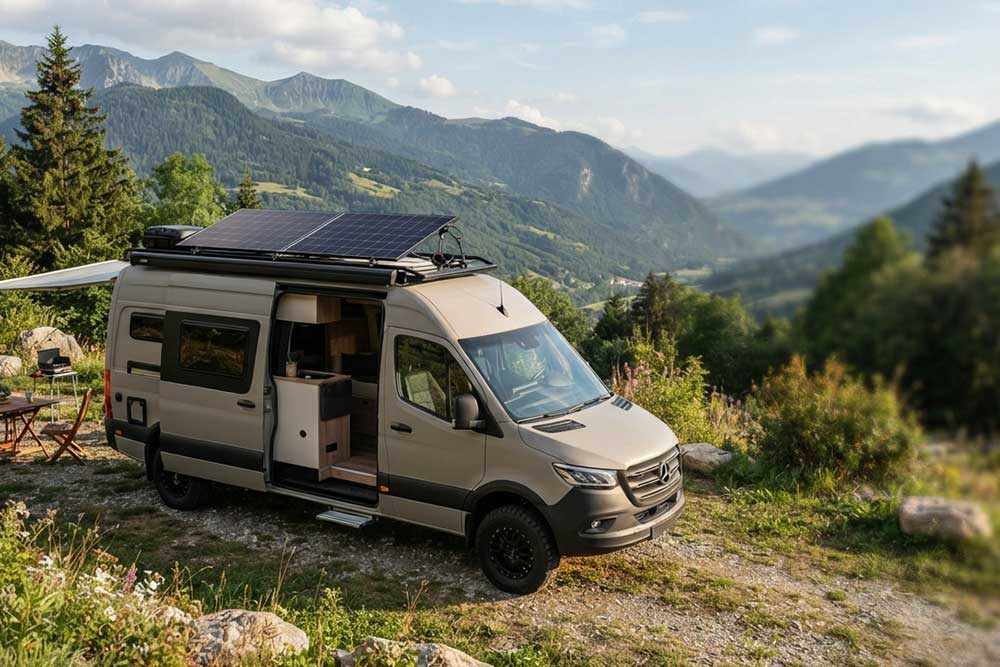
Flexible Amorphous Solar Panel: Technology, Uses and Selection Guide
A flexible amorphous solar panel is a thin-film photovoltaic module that uses non-crystalline silicon as its light-absorbing material and can be built on flexible substrates. It is suited to applications where low weight, thin construction, or unusual mounting surfaces matter more than maximizing power from every square meter.
The important distinction is that amorphous silicon (a-Si) describes the photovoltaic material, while flexible describes the module construction. A flexible module can use different thin-film technologies, and not every amorphous silicon panel is flexible. DOE identifies amorphous thin-film silicon as one of the principal thin-film PV technologies and notes that thin-film materials can be deposited onto flexible substrates.
What Is a Flexible Amorphous Solar Panel?
A flexible amorphous solar panel uses an amorphous form of silicon rather than the ordered crystal structure used in conventional monocrystalline or polycrystalline silicon cells.
The word amorphous refers to the structure of the semiconductor. Instead of arranging silicon atoms into a long-range crystal lattice, the silicon is deposited as a thin film. That thin active layer can be applied to a supporting substrate such as polymer, metal, or another suitable material.
This is one reason amorphous silicon became important in thin-film photovoltaic development. NREL’s historical thin-film roadmap describes amorphous-silicon technologies as using relatively thin a-Si:H layers deposited on supporting substrates, including polymer and metal, and identifies applications where the technology’s form factor can be advantageous.
DOE similarly explains that thin-film PV uses thin semiconductor layers deposited on substrates such as glass, plastic, or metal foil, making flexible configurations possible.
Amorphous silicon vs. crystalline silicon
The visual difference is often obvious, but the engineering difference is more important.
| Characteristic | Amorphous silicon | Crystalline silicon |
|---|---|---|
| Silicon structure | Non-crystalline | Ordered crystal structure |
| PV category | Thin film | Wafer-based silicon |
| Active layer | Very thin deposited film | Silicon wafer/cell |
| Flexible construction | Possible with suitable substrates | Possible in specialized thin designs, but conventional modules are generally rigid |
| Typical module efficiency | Generally lower than leading crystalline-silicon modules | Generally higher |
| Large-area deposition | Possible | Uses wafer/cell manufacturing processes |
| Potential application advantage | Lightweight, thin, form-factor flexibility | High power density and efficiency |
DOE has reported that thin-film solar cells are generally less efficient than conventional silicon technologies, while their ability to use thin deposited layers provides manufacturing and form-factor advantages.
That trade-off is still relevant when evaluating a flexible amorphous solar panel today. If roof area is extremely limited, power density may dominate the decision. If the installation has a difficult surface or unusually low weight tolerance, the physical construction can become more important.
How Does Amorphous Silicon Solar Technology Work?
The photovoltaic effect itself is straightforward.
When sunlight enters the semiconductor, photons transfer energy to electrons. The resulting charge carriers are separated and collected through electrical contacts, producing direct-current electricity. DOE describes this fundamental process as the movement of light-excited electrons through a semiconductor and the collection of that current by conductive contacts.
The difference is in how the absorber is manufactured.
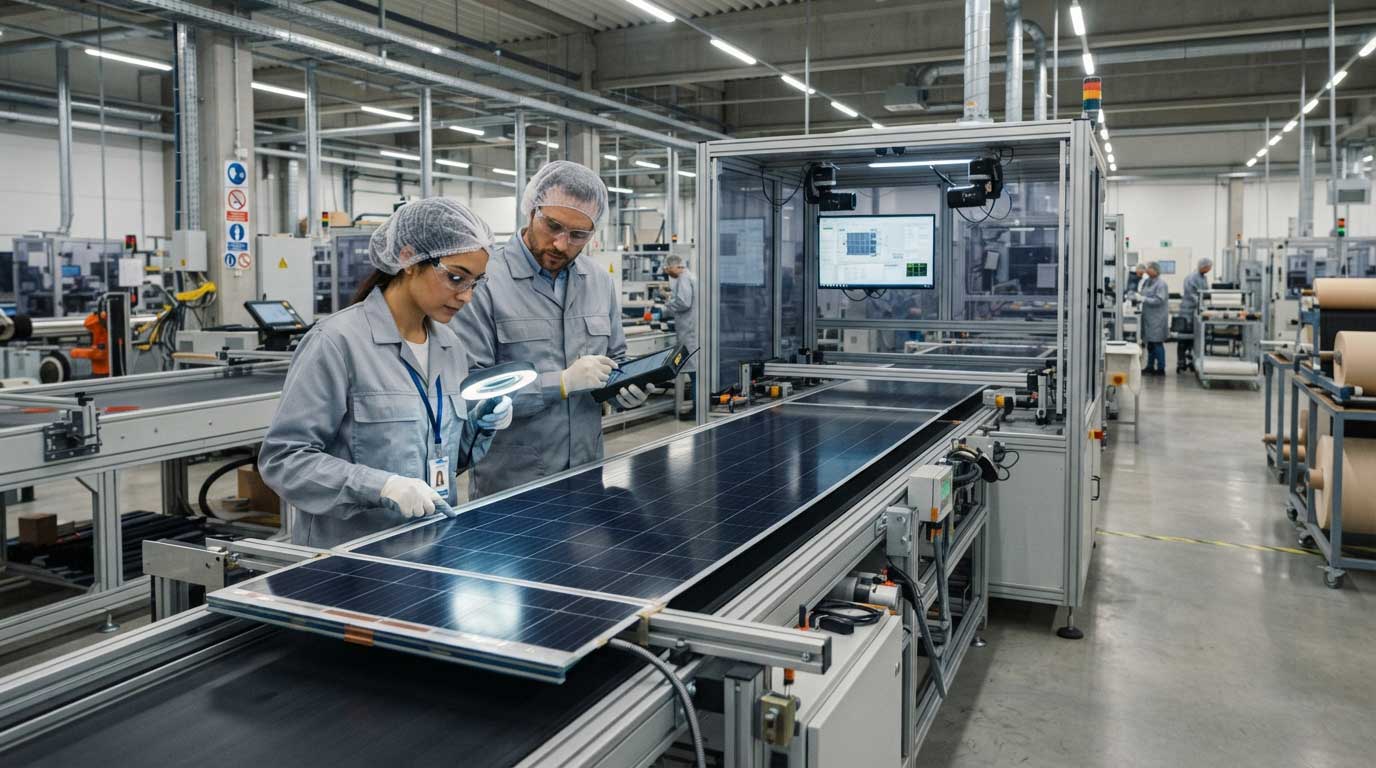
Rather than cutting a relatively thick crystalline silicon wafer into individual cells, thin-film manufacturing deposits a semiconductor layer onto a supporting material. The resulting structure can be much thinner than a conventional wafer-based module.
Historically, this opened a different design path for solar manufacturers. NREL documented amorphous-silicon modules fabricated over large areas and investigated methods for improving their stabilized performance.
Why amorphous silicon can be flexible
Flexibility does not come from amorphous silicon alone.
It comes from the combination of the thin-film absorber, substrate, encapsulation, electrical interconnections, and module construction.
A thin semiconductor layer can be deposited on a flexible substrate. If the remaining layers are also engineered for controlled bending, the finished module can conform to a surface that would be difficult to accommodate with a conventional framed panel.
That distinction matters when discussing product specifications. Saying “amorphous silicon is flexible” is too broad. The correct question is:
What is the permitted bending behavior of this particular module?
A flexible a-Si module can still have a minimum bending radius, handling restrictions, installation limitations, and areas that should never be folded or sharply creased.
Flexible Amorphous Solar Panel Efficiency and Output
Efficiency is one of the most frequently misunderstood parts of amorphous-silicon technology.
A lower module efficiency does not mean the panel cannot produce useful electricity. It means that more surface area may be required to produce the same rated power compared with a higher-efficiency module.
Historical NREL documentation reported commercial amorphous-silicon module efficiencies in the roughly 5% range and described stabilized module efficiency as a major technology challenge at that stage of development. Those figures are historical technology-roadmap data, not specifications for modern products and should not be copied into a current product page as if they were today’s universal values.
DOE’s more general thin-film overview likewise notes that thin-film technologies have historically been less efficient than crystalline silicon, while offering advantages in fabrication and substrate flexibility.
Power depends on more than efficiency
For a solar module:
Power = solar irradiance × active area × conversion efficiency
This is a simplified engineering relationship rather than a complete module-performance model.
Suppose two modules occupy the same roof area. The module with higher conversion efficiency can theoretically produce more rated power from that footprint. Conversely, a flexible amorphous module may become interesting when its construction allows installation across a surface that would otherwise remain unused.
That is the more useful comparison.
Do not ask only:
“Which solar technology has the highest efficiency?”
Ask:
“Which technology can produce useful energy from the surface that I actually have available?”
For RV roofs, vehicle-integrated surfaces, lightweight structures, and certain architectural applications, that distinction can materially change the design.
The Staebler-Wronski Effect and Amorphous Silicon
Any serious technical discussion of amorphous silicon should address the Staebler-Wronski effect.
Amorphous silicon has historically exhibited light-induced degradation: electrical performance can decrease after exposure to sunlight before reaching a more stable operating condition. NREL research has studied this phenomenon extensively. One NREL outdoor study followed identical a-Si modules across three different climates over four years and examined how light exposure and temperature affected stabilized performance.
This is not simply a theoretical laboratory issue. It is one reason a-Si technology has historically been evaluated using stabilized performance, rather than relying only on initial measurements.
NREL research has also demonstrated that the effect is connected to metastable changes in amorphous silicon and that temperature and light exposure influence recovery and degradation behavior.
Why this matters when comparing datasheets
When evaluating an amorphous silicon module, ask:
- Is the quoted efficiency initial or stabilized?
- What test standard was used?
- What degradation assumptions are included?
- Is the rating based on a particular stabilization procedure?
- Does the manufacturer provide long-term outdoor data?
- Are the warranty terms based on initial or stabilized power?
This is particularly important for B2B procurement. Two numbers that look comparable may have been obtained under different measurement conditions.
A technical datasheet without clear test conditions is not enough for a serious product comparison.
Where Can Flexible Amorphous Solar Panels Be Used?
The strongest application argument for flexible amorphous technology is usually not raw efficiency. It is access to surfaces or form factors that conventional modules handle poorly.
RVs and campervans
A curved or weight-sensitive RV roof may provide a useful application for a flexible module.
The practical assessment starts with the roof, not the panel.
Measure:
- Available roof length and width.
- Curved sections.
- Vents and air-conditioning equipment.
- Antennas and roof accessories.
- Cable-entry locations.
- Areas that receive recurring shade.
- Weight restrictions.
- Permitted mounting method.
A flexible panel can only use the roof space that remains electrically and mechanically practical.
Marine applications
Marine installations introduce vibration, moisture, salt exposure, temperature cycling, and sometimes foot-traffic concerns.
Do not assume that an amorphous flexible panel is automatically marine-rated. Verify the specific product’s environmental protection, encapsulation, connector specification, mounting method, and warranty conditions.
DOE’s vehicle-integrated PV research identifies factors such as limited surface area, form factor, temperature tolerance, walkability, installation, and standards compliance as important considerations when evaluating photovoltaic technologies for vehicles.
Building-integrated and architectural applications
Thin-film silicon has also been investigated for building-integrated applications because the technology can be deposited onto different supporting substrates.
NREL’s thin-film roadmap specifically identified building-integrated PV as an area where thin-film silicon could offer unique advantages.
For architectural projects, however, the engineering discussion becomes much broader than panel flexibility. Fire classification, weather sealing, structural attachment, electrical safety, appearance, replacement access, and applicable building codes all need consideration.

Flexible Amorphous Solar Panel vs. CIGS vs. Monocrystalline
“Flexible solar panels” is not a cell technology. It is a physical construction category. Amorphous silicon, CIGS, and specialized thin crystalline-silicon products can all be associated with flexible applications.
| Factor | Amorphous silicon | CIGS | Monocrystalline silicon |
|---|---|---|---|
| Technology | Thin-film a-Si | Thin-film CIGS | Crystalline silicon |
| Flexible formats | Available in suitable constructions | Widely associated with flexible thin-film designs | Specialized flexible designs exist |
| Power density | Generally lower | Can be higher than traditional a-Si | Generally high |
| Material structure | Non-crystalline silicon | Copper, indium, gallium, selenium compound semiconductor | Crystalline silicon |
| Typical strength | Thin-film form factor and flexibility | Flexibility and thin-film construction | High efficiency and mature manufacturing |
| Main design concern | Area requirement and stabilized performance | Product-specific efficiency and durability | Weight, rigidity, and mounting structure |
DOE identifies a-Si, CdTe, and CIGS as thin-film PV technologies and explains that thin-film cells can be deposited onto flexible substrates.
The practical choice should therefore be based on the application rather than on the word “flexible” alone.
How to Select a Flexible Amorphous Solar Panel
For B2B purchasing, begin with the installation requirement and work backward toward the technology.
1. Define the usable surface
Measure the actual usable area rather than the total roof or deck area.
Create a simple layout showing:
- Module footprint.
- Clearance around equipment.
- Shaded areas.
- Cable path.
- Service access.
- Curvature.
- Mounting boundaries.
A 2D roof drawing is often more useful at this stage than a product photograph.
2. Compare stabilized electrical specifications
Request the module’s:
- Rated power.
- Voc.
- Isc.
- Vmp.
- Imp.
- Module efficiency.
- Dimensions.
- Weight.
- Temperature coefficients.
- Maximum permitted bending radius.
- Operating temperature.
- Connector specification.
- Environmental rating.
- Warranty conditions.
Do not transfer values from another module simply because it uses the same cell technology.
3. Check mechanical construction
Ask what the module is built on and how it is intended to bend.
Important questions include:
- What substrate is used?
- What is the minimum bending radius?
- Is repeated flexing permitted?
- Is the module intended for permanent curvature?
- What mounting method is approved?
- What surface materials are compatible?
- How should edges and cable exits be supported?
The answer to these questions can matter more than a marketing statement such as “ultra-flexible.”
4. Review real environmental conditions
A laboratory rating does not automatically describe a vehicle roof in Arizona, a boat exposed to salt spray, or an industrial roof with large temperature swings.
Consider:
- UV exposure.
- Temperature cycling.
- Moisture.
- Salt.
- Wind.
- Vibration.
- Surface movement.
- Maintenance access.
For a B2B project, environmental requirements should be written into the product specification before samples are approved.
A Practical Case: Choosing Solar Technology for a Curved Vehicle Roof
The following is a hypothetical engineering scenario, not a verified Bright Solar customer installation.
A fleet integrator is designing a solar-assisted power system for a specialty vehicle. The available roof is long and gently curved, but several vents reduce the usable area. The design team initially considers a conventional framed module because of its higher power density.
The problem appears during the layout exercise.
The framed module requires a mounting structure that adds height and consumes clearance around the roof equipment. The alternative flexible design covers more of the usable surface with less structural hardware, but its lower power density means the team must calculate whether enough area remains to achieve the desired system output.
Instead of asking which panel is “better,” the team compares three measurable quantities:
Available area → achievable rated power → mechanical integration
The engineers then review electrical ratings, thermal conditions, bending limits, cable routing, environmental requirements, and expected maintenance access.
That is a more defensible selection method than choosing a cell technology from a product brochure.
It also reveals an important point about flexible amorphous solar panels: the value may come from making previously awkward surface area usable, not from winning an efficiency comparison on a laboratory chart.
Installation Considerations for Flexible Amorphous Solar Panels
Installation begins with the surface.
Surface preparation
Inspect the mounting area for:
- Loose coatings.
- Corrosion.
- Sharp edges.
- Cracks.
- Contamination.
- Standing-water locations.
- Excessive surface movement.
Use only the mounting method approved for the exact module.
Avoid excessive bending
Never interpret “flexible” as “foldable.”
Maintain the specified bending radius during transport, handling, installation, and operation. Avoid concentrating stress at corners, cable exits, junction boxes, or connector areas.
Plan cable routing before mounting
Cable routing should be determined before the panel is permanently installed. Avoid sharp edges and moving parts, and provide appropriate protection and strain relief.
For systems containing batteries or other high-current DC equipment, follow applicable electrical requirements and use qualified installation personnel when required.
Leave a maintenance strategy
A panel that cannot be inspected or replaced without damaging the roof is difficult to maintain.
For commercial or fleet installations, document:
- Panel location.
- Serial number.
- Electrical configuration.
- Mounting method.
- Cable route.
- Installation date.
- Commissioning measurements.
- Warranty documentation.
That information becomes valuable when a vehicle changes operators or a system develops an unexpected fault several years later.
Common Mistakes When Buying Amorphous Flexible Solar Panels
Mistake 1 — Confusing cell technology with module construction
“Amorphous” tells you about the semiconductor. “Flexible” tells you about the module construction. They are related but not interchangeable terms.
Mistake 2 — Using old efficiency figures as current specifications
Historical NREL research contains valuable information about a-Si development, including early commercial efficiencies and stabilization behavior. Those figures provide technology history, not a current specification for every amorphous silicon product.
Always use the current manufacturer’s datasheet for procurement.
Mistake 3 — Ignoring stabilized performance
Because of the historical light-induced degradation associated with amorphous silicon, buyers should understand whether a quoted performance value is initial or stabilized. NREL’s long-term outdoor studies demonstrate why this distinction matters.
Mistake 4 — Selecting by wattage without checking surface area
A high-wattage panel is not useful if it cannot be installed correctly. Calculate usable area first.
Mistake 5 — Assuming flexibility solves every mounting problem
A curved roof may still have unsuitable curvature, poor surface condition, recurring shade, inadequate cable access, or environmental conditions outside the module’s approved range.
Bright Solar and B2B Flexible Solar Panel Selection
Bright Solar develops flexible and semi-flexible solar panel solutions for B2B applications. For OEM, ODM, and bulk projects, the product should be evaluated against the actual installation rather than selected solely from the cell technology name.
A technical inquiry should include:
- Application and installation environment.
- Required dimensions.
- Available mounting area.
- Desired rated power.
- Surface curvature.
- Weight restrictions.
- Electrical-system voltage.
- Controller and battery information.
- Environmental exposure.
- Required customization.
- Expected order quantity.
For a flexible amorphous solar panel project, request the exact model’s current datasheet and installation documentation before making a technical or procurement decision. Cell technology, encapsulation, substrate, dimensions, electrical parameters, and available configurations should all be confirmed for the specific product.
FAQ About Flexible Amorphous Solar Panel
What is a flexible amorphous solar panel?
It is a flexible photovoltaic module using amorphous silicon as the solar-cell material. The semiconductor is deposited as a thin film rather than formed as a conventional crystalline silicon wafer. Flexible construction depends on the complete module design and substrate.
Are amorphous solar panels flexible?
Some amorphous silicon modules are manufactured on flexible substrates, but amorphous silicon itself does not automatically make a module flexible. The substrate, encapsulation, interconnection, and complete module construction determine the permitted flexibility.
Are flexible amorphous solar panels efficient?
Amorphous silicon has historically had lower conversion efficiency than leading crystalline-silicon technologies. DOE identifies thin-film PV as generally less efficient than conventional silicon while highlighting its potential manufacturing and form-factor advantages. The efficiency of a current product must be taken from its specific datasheet.
What is the Staebler-Wronski effect?
It is a light-induced change in the performance of amorphous silicon that has historically caused output to decline during initial exposure before reaching a more stabilized condition. NREL has conducted multi-year outdoor studies of this behavior and its relationship with light exposure and temperature.
Can flexible amorphous solar panels be installed on an RV?
They can be considered for an RV when the module’s dimensions, bending limits, mounting method, environmental ratings, and electrical specifications are compatible with the vehicle. Roof shading and available surface area should also be assessed before installation.
Are flexible amorphous solar panels suitable for boats?
They may be suitable for selected marine applications, but flexibility alone does not establish marine suitability. Confirm the exact module’s environmental protection, encapsulation, connector system, mounting requirements, and warranty conditions.
What should a B2B buyer check before ordering?
Request the current model-specific datasheet, stabilized performance information where applicable, Voc, Isc, Vmp, Imp, dimensions, weight, bending radius, temperature characteristics, environmental ratings, mounting instructions, warranty terms, and customization options. Make sure all specifications apply to the exact configuration being quoted.
Conclusion
A flexible amorphous solar panel combines thin-film amorphous-silicon photovoltaic technology with a module construction designed for flexible applications. Its most relevant advantages are not simply a cell-material label; they lie in how the complete module can be integrated into surfaces where conventional Rigid Solar Panels may be difficult to use.
Amorphous silicon also comes with a technical history that should not be ignored, particularly the Staebler-Wronski effect and the importance of stabilized performance. NREL’s long-term research provides useful context for understanding that behavior.
For Bright Solar B2B projects, evaluate the actual installation area, mechanical limits, electrical requirements, environmental exposure, and current product documentation before selecting a module. The most useful flexible solar panel is not necessarily the one with the strongest marketing claim; it is the one whose construction and specifications match the surface and system it must serve.
Related recommendations
-

ETFE Flexible Solar Panels: Benefits, Uses and Buying Guide
168ETFE flexible solar panels use ETFE film as a protective front layer and may suit RV, marine, and off-grid applications. Selection should be based on the com...
View details -
400 Watt Flexible Solar Panel for Serious Off-Grid Energy Systems
184Discover how a 400 watt flexible solar panel delivers lightweight, high-output off-grid energy for RVs, boats, vans, and solar battery systems.
View details -
Flexible Solar Panels vs Rigid: Which Solar Panel Type Performs Better?
329Compare flexible solar panels vs rigid systems for RVs, boats, mobile homes, and off-grid power. Discover costs, durability, efficiency, and real-world performance.
View details -
Flexible 300W Solar Panel: Output, Uses and Installation Guide
179A flexible 300W solar panel can suit selected RV, marine, and off-grid systems, but actual energy output depends on sunlight, temperature, shading, orientati...
View details