Solar Panels for Shade: How to Reduce Power Loss
Solar panels for shade can still generate electricity, but shaded modules produce less power because less sunlight reaches the photovoltaic cells. Partial shade can also create electrical mismatch across an array. Proper panel placement, bypass diodes, module-level electronics, and careful site assessment can significantly reduce the impact.
Do Solar Panels Work in the Shade?
Yes, solar panels work in shade, but their electrical output decreases as available sunlight falls.
The important distinction is between partial shade and complete shade.
A panel sitting beneath a thin tree canopy may still receive scattered sunlight and continue generating power. A panel covered by a building shadow may produce dramatically less electricity. The exact loss cannot be reduced to one universal percentage because shade depends on its size, intensity, location on the module, duration, and the electrical configuration of the array.
The U.S. Department of Energy explains that environmental conditions including heat, dirt, and shade can reduce PV conversion performance. As long as sunlight continues reaching a PV module and its circuit remains connected, electricity can continue to be generated.
That sounds straightforward until you inspect an actual roof.
A chimney might shade only the lower-left corner of one panel at 9:00 a.m. By 10:30, the shadow has moved across another section. At noon, the same chimney may cause almost no problem. A tree behaves differently again because its shadow changes shape throughout the day and throughout the year.
This is why experienced solar design is less about asking, “Is this roof shaded?” and more about asking:
Which panel is shaded, when is it shaded, how much of the panel is shaded, and what happens electrically when that occurs?
Why Shade Is a Bigger Problem Than Lower Sunlight
Shade reduces irradiance, but that is only part of the story.
Solar panels are made from interconnected photovoltaic cells. A conventional module also contains bypass diodes designed to provide an alternative electrical path when part of the module becomes shaded.
The U.S. Department of Energy explains that bypass diodes can allow current to bypass a shaded section of a module. This helps prevent excessive heating and allows the remaining portions of the module to continue contributing power.
That does not mean bypass diodes eliminate shade losses.
They do not.
They are protection and mitigation components, not magic switches.
When part of a module is heavily shaded, the affected cell section can be bypassed. The module then loses the contribution from that section instead of allowing the shaded cells to create a severe electrical bottleneck.
This is particularly important when shade comes from:
- Tree branches
- Chimneys
- Roof vents
- HVAC equipment
- Neighboring buildings
- Satellite dishes
- Utility poles
- Snow
- Bird droppings
- Dirt or debris
Some of these obstructions move.
Some do not.
And some are surprisingly easy to overlook during a quick site inspection.
Partial Shade Creates Electrical Mismatch
This is where solar system design becomes more interesting.
Two panels can have identical rated wattage but receive very different irradiance at the same moment.
One panel may be in full sun.
The second may have a branch shadow crossing several cells.
The electrical operating conditions are no longer identical.
NREL research has shown that partial shading losses are nonlinear and depend strongly on the configuration of the PV system. In other words, you cannot reliably estimate the loss simply by saying that “30% of the panel is shaded, so 30% of its power is lost.”
That is one of the most useful practical insights when evaluating shaded installations.
How Much Power Do Solar Panels Lose in Shade?
There is no single percentage that applies to every shaded solar panel.
A small shadow in a relatively unimportant location may have a modest effect. A shadow crossing electrically significant cell strings can produce a much larger reduction.
NREL’s research on partial shading demonstrates exactly why simplified percentage assumptions can be misleading. The impact depends on the shading pattern and the electrical topology of the system.
For larger residential systems, NREL has also documented measurable annual performance losses associated with partial shading.
In one NREL analysis involving 542 monitored PV systems, the average power loss associated with partial shading was 8.3%. The study estimated that the loss would have been approximately 13% without the panel-level optimizers used in those systems, with about 36% of the power lost to partial shading recovered through module-level DC power electronics.
Those figures should not be treated as a guarantee for a particular home.
They are evidence of something more important:
shade is a measurable system-design problem, not merely a cosmetic concern.
Solar Panels in Partial Shade vs Full Shade
The practical difference between partial and full shade is significant.
| Shading condition | PV behavior | Design concern |
|---|---|---|
| Light tree-filtered sunlight | Reduced generation | Usually manageable |
| Narrow shadow on part of panel | Localized mismatch | Bypass diode behavior matters |
| One panel shaded by chimney | Panel-level loss | String configuration matters |
| Several panels shaded together | Larger array loss | Layout and inverter choice matter |
| Roof shaded most of the day | Very low generation | Relocate array if possible |
| Temporary morning shade | Limited daily impact | May be acceptable |
| Seasonal tree shade | Changes through year | Annual shading analysis recommended |
This table illustrates why a house with “some shade” is not automatically unsuitable for solar.
A roof may have three hours of morning shade but excellent exposure during the middle of the day.
Another roof may appear bright at noon but lose sunlight every afternoon when electricity demand is high.
The second situation can be more important.
How to Design Solar Panels for Shade
The best way to handle shade is to reduce it before the panels are installed.
That sounds obvious, but it is where many projects become unnecessarily expensive.
Step 1: Map the Shade Before Choosing the Panel Layout
Start with the roof rather than the product catalog.
Record:
- Roof orientation
- Roof pitch
- Trees
- Chimneys
- Vents
- Dormers
- HVAC equipment
- Neighboring structures
- Utility poles
- Seasonal obstructions
Do this at different times of day.
If possible, repeat the observation during different seasons.
A tree that appears harmless in June can produce a much longer shadow in December because the sun is lower in the sky.
Professional solar production models account for roof orientation, geography, shade, and other site-specific factors rather than relying only on the panel’s rated wattage.
Step 2: Keep the Most Valuable Roof Areas Unshaded
If one part of the roof is consistently shaded, do not automatically install panels there just because the space is available.
Sometimes fewer panels in better locations will produce more useful energy than a larger array spread across poor locations.
This is an important design tradeoff.
A roof with 20 available panel positions does not necessarily have 20 equally valuable solar positions.
Step 3: Separate Different Shading Conditions
Suppose a roof has two sections.
The southern roof plane is clear all day.
The eastern roof plane is shaded by a large tree until 10:30 a.m.
Putting every panel into one string may not be the best electrical arrangement.
Different orientations and shading patterns may need to be handled separately, depending on the inverter architecture.
This is where module-level power electronics can become useful.
Microinverters and Power Optimizers for Shaded Solar Panels
There are three common approaches to dealing with partial shade:
- Traditional string inverter
- Power optimizers with a string inverter
- Microinverters
They behave differently.
With a conventional string inverter, multiple panels are electrically connected together and operate as a string. Differences between modules can affect the string’s operating point.
Microinverters place power conversion at the module level.
Power optimizers provide module-level DC optimization while typically working with a central string inverter.
NREL’s field research provides useful evidence here.
In a controlled comparison of two side-by-side 8 kW PV systems, one using a standard string inverter and the other using microinverters, NREL reported that the microinverter system showed relative annual performance improvements of approximately 4% under light shading, 8% under moderate shading, and 12% under heavy shading.
Again, these are study results rather than a promise that every shaded roof will achieve those gains.
The lesson is more practical:
when shade creates module-to-module mismatch, module-level electronics can reduce part of the resulting penalty.
When Microinverters Make Sense
Microinverters can be attractive when:
- Several panels experience different shading patterns.
- Roof orientations vary.
- The system contains multiple small roof planes.
- One or two modules are occasionally shaded.
- Module-level monitoring is desirable.
They can also simplify the electrical behavior of a system in which one module’s operating conditions differ significantly from another’s.
But they are not automatically the best choice.
If a roof has almost no shading and a simple south-facing array, a traditional string architecture may remain perfectly appropriate.
When Power Optimizers Make Sense
Power optimizers are useful when the designer wants module-level power conditioning while retaining a central inverter architecture.
They can be particularly relevant when only certain modules experience shade.
The correct decision depends on:
- Shade pattern
- Roof layout
- Module count
- Inverter specifications
- Electrical code
- Monitoring requirements
- Installation cost
- Long-term maintenance strategy
There is no universal “best” inverter for every shaded roof.
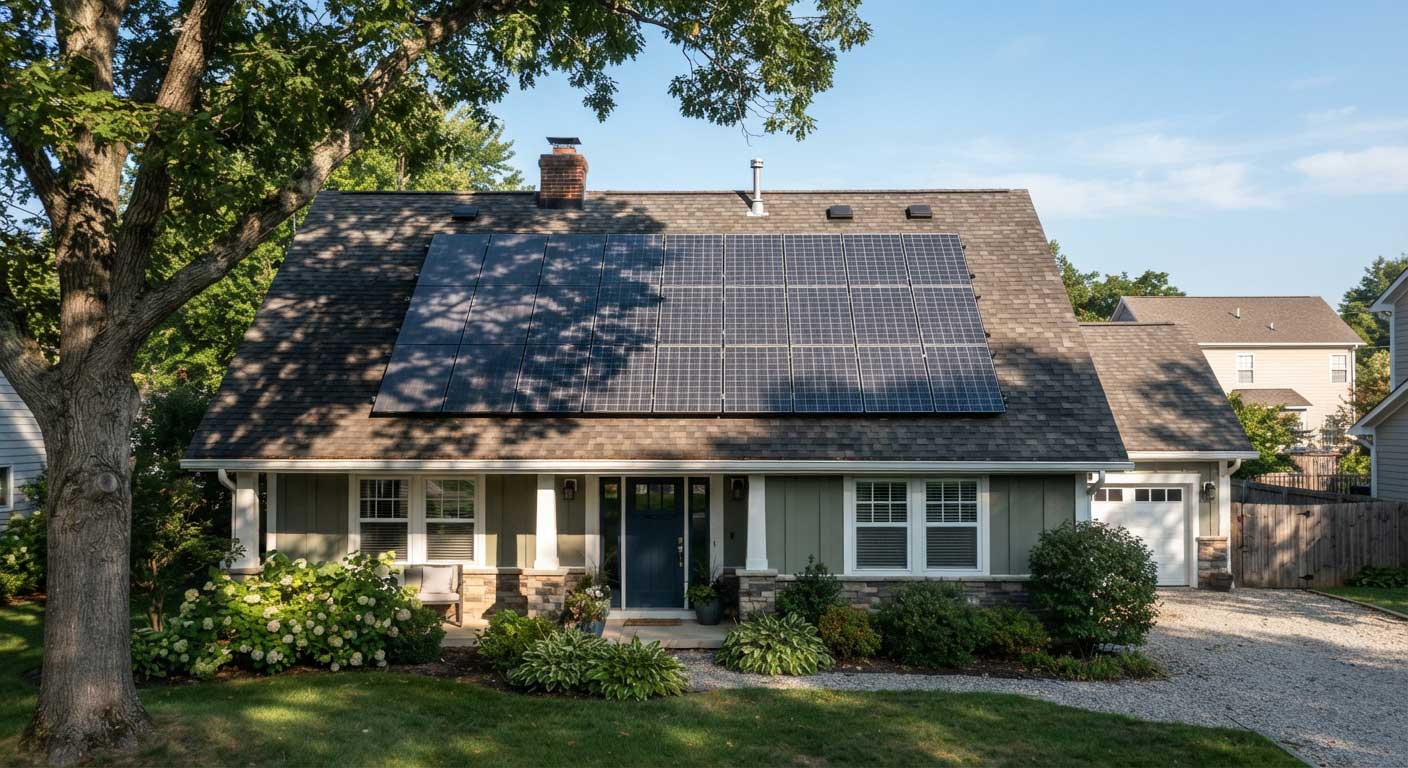
How to Reduce Solar Panel Shading Losses
If removing the obstruction is possible, physical shade reduction is often the simplest solution.
But tree removal is not always appropriate, and some obstructions cannot be moved.
In those situations, electrical and layout strategies become more important.
Trim Trees Carefully
Tree trimming can be effective when branches create intermittent shading.
The goal is not necessarily to remove the entire tree.
Often, the useful intervention is removing branches that cross the solar access path during high-value production hours.
Before cutting anything, evaluate the tree’s future growth.
A branch that is harmless today may become a major shading problem in three years.
Use Panel-Level Monitoring
If a system has optimizers or microinverters, module-level monitoring can reveal patterns that a whole-system meter hides.
Imagine the inverter reports that the array produced 18 kWh yesterday.
That number tells you the total.
It does not necessarily tell you that panel number 7 produced significantly less than neighboring modules because a tree shadow crossed it every afternoon.
Panel-level data can help identify persistent shading, wiring problems, module degradation, or other anomalies.
Clean the Modules
Shade is not the only source of reduced irradiance.
Dust, bird droppings, pollen, and other surface contamination also reduce the sunlight reaching the cells.
DOE includes dirt and shade among the environmental factors that can reduce PV performance.
For homes near agricultural areas, dusty roads, construction sites, or heavily wooded environments, periodic inspection is particularly worthwhile.
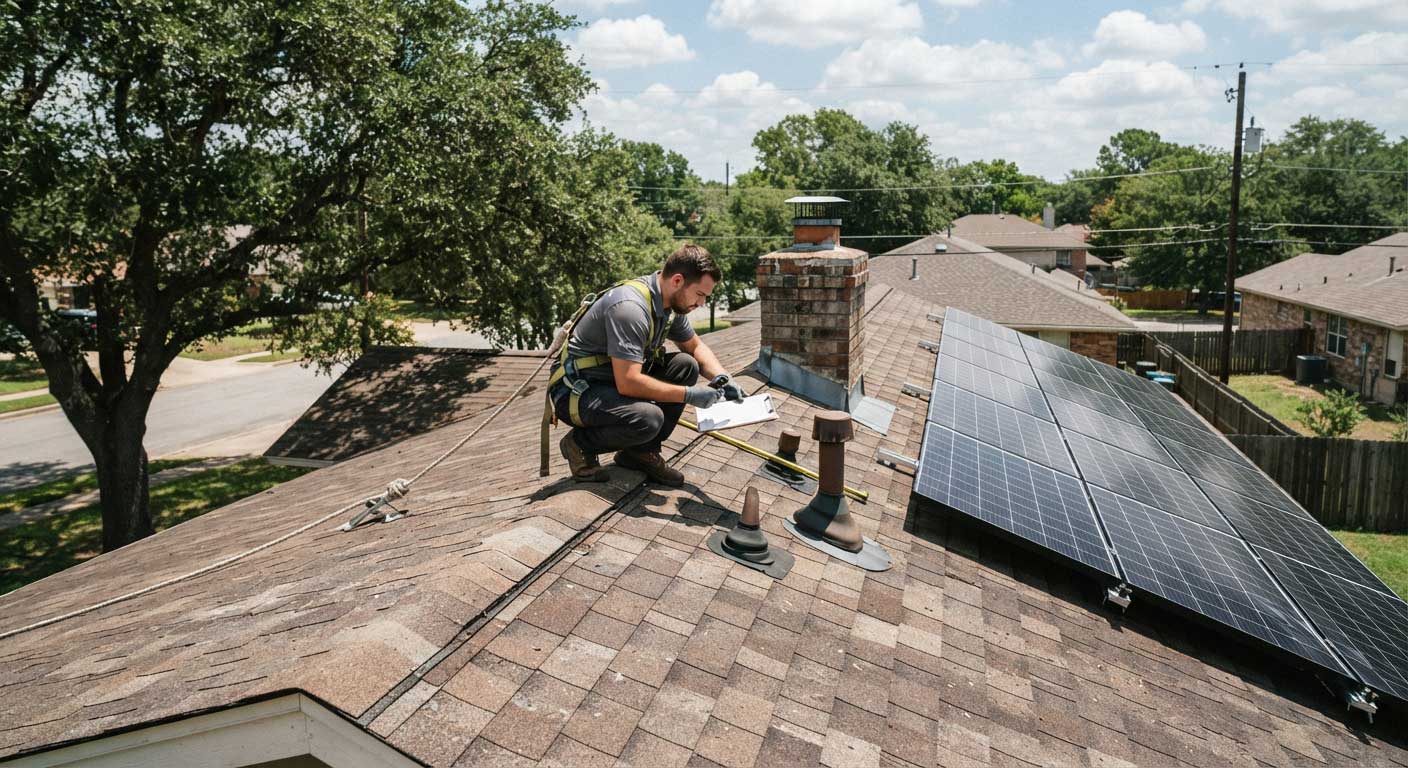
Can Flexible Solar Panels Work in Shaded Areas?
Yes, flexible solar panels can generate electricity in shaded conditions, but flexibility does not make a photovoltaic module immune to shade.
This distinction matters for RVs, boats, vans, curved roofs, and lightweight structures.
Flexible modules can make better use of difficult mounting surfaces because they are lightweight and low profile. But if a roof section is consistently shaded by an air conditioner, roof rack, antenna, tree, or nearby structure, the module still receives less irradiance.
For Bright Solar applications, the design priority should therefore be:
usable solar surface first, module technology second.
A flexible panel installed in a bright section of a curved RV roof can be more useful than a higher-rated module installed in a permanently shaded location.
The physical installation also needs careful attention to cable routing, waterproofing, thermal expansion, roof material compatibility, and long-term mechanical stress.
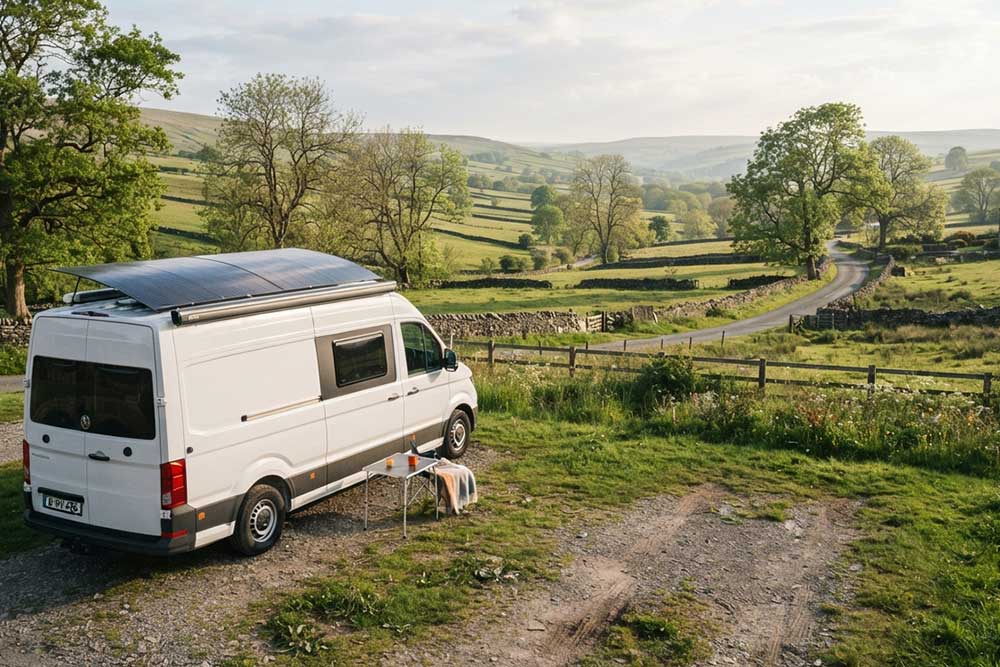
Shade on RV and Marine Solar Panels
Mobile applications create a special shading problem.
A trailer can move.
A boat can change orientation.
An RV can park beside a tree in the morning and beside an open field the next day.
A roof array that performs well at home may behave differently when the vehicle is traveling.
This is one reason portable and flexible solar systems benefit from realistic operating assumptions.
Do not evaluate only the panel’s rated wattage.
Look at where the vehicle will actually be parked.
A Practical Case: A Home With Morning Tree Shade
Consider a two-story home in the northeastern United States.
The owner has a large maple tree approximately 30 feet from the east side of the house. The south-facing roof receives strong midday sunlight, while the eastern section is shaded during the morning.
The original concept was to cover both roof planes.
That would have created a larger nameplate system, but not necessarily a better-performing one.
A more careful design puts the majority of modules on the unshaded southern roof and uses module-level electronics where the remaining partial shade cannot reasonably be avoided.
NREL research supports this type of approach. In its analysis of 542 PV systems, partial shading was associated with an average 8.3% power loss, while module-level DC electronics recovered a portion of that loss.
The design decision is not simply “install optimizers.”
It is:
- Identify the shade.
- Determine its timing.
- Avoid shade where practical.
- Electrically isolate unavoidable mismatch where appropriate.
- Monitor the result.
That sequence saves more trouble than adding expensive equipment after installation.
How to Check Your Roof Before Installing Solar Panels for Shade
A useful pre-installation inspection can be surprisingly simple.
Start outside.
Walk around the property in the morning, around midday, and in the afternoon.
Take photographs of the roof from several positions.
Mark:
- Tree locations
- Chimneys
- Utility poles
- Neighboring buildings
- Roof structures
- Seasonal obstructions
Then compare those observations with the intended panel layout.
For a professional installation, use a dedicated solar site-assessment or shading-analysis tool to estimate solar access over the year.
NREL’s solar research and modeling work emphasizes the importance of evaluating real irradiance and shading conditions rather than relying solely on laboratory-rated module efficiency.
This is where field experience matters.
A photograph taken at noon is not a shade analysis.
It is one moment.
The sun moves.
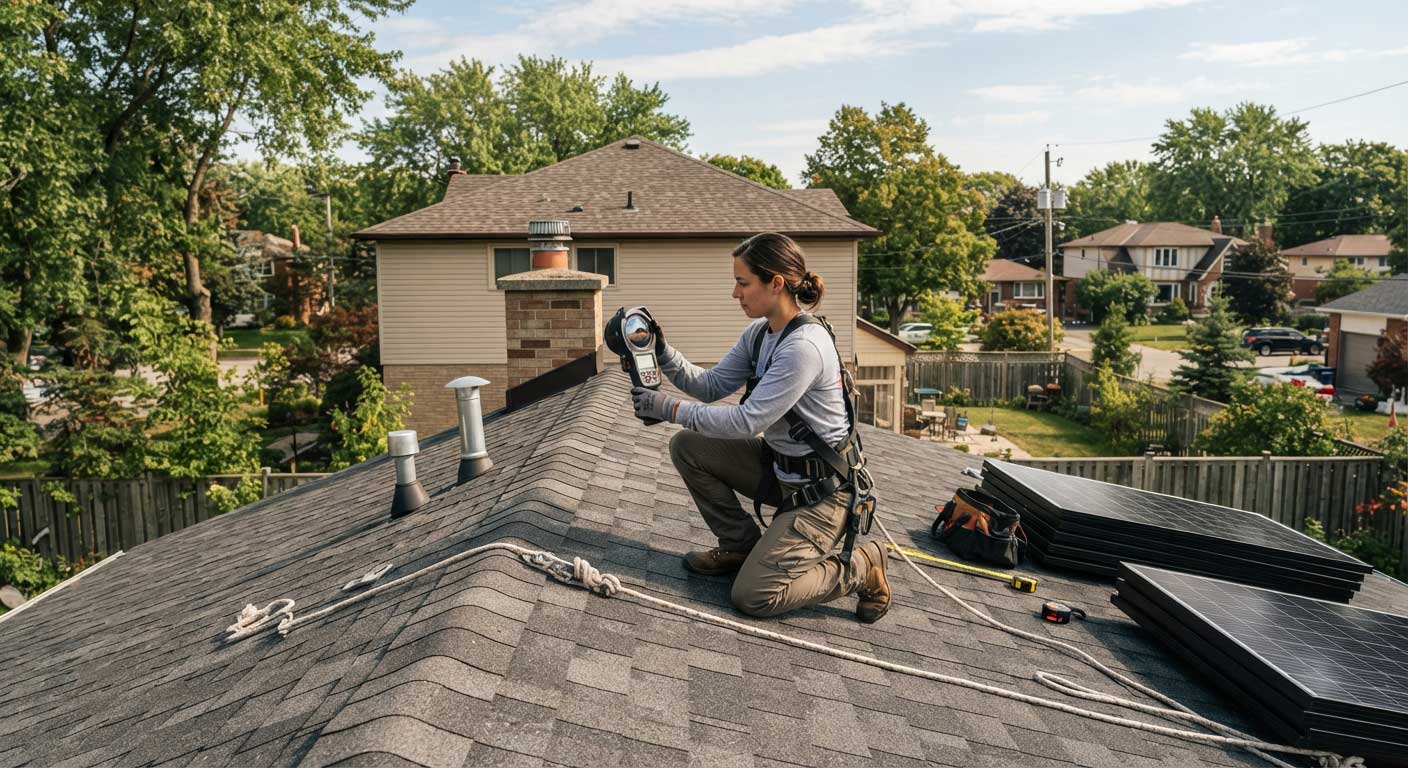
Solar Panel Shade: What Matters Most in Real Projects
After working through many different PV design scenarios, one pattern is easy to recognize: the panel specification is often not the first problem.
The roof is.
A 450W module can look impressive on a product sheet. But if a tree shades it every afternoon, its real annual energy yield may be less attractive than a smaller module placed where the sun actually reaches the roof.
That is why solar design should focus on energy yield, not just nameplate capacity.
The U.S. Department of Energy defines PV energy yield in terms of the actual electricity harvested from a system, including external influences such as heat, dirt, and shade.
This is also why Bright Solar’s flexible-panel applications should be evaluated around the available mounting area and real operating environment.
For an RV, the roof may be curved.
For a marine installation, equipment and rigging can create moving shadows.
For a residential roof, trees and chimneys may dominate the design.
The technology needs to fit the site.
Solar Panels for Shade: Quick Design Checklist
Before approving a shaded solar installation, check these items:
- Identify permanent and seasonal shade sources.
- Observe the site at multiple times of day.
- Check tree growth and seasonal sun angles.
- Avoid placing panels in persistent shade when possible.
- Consider microinverters or power optimizers for unavoidable partial shade.
- Verify the module’s bypass-diode configuration.
- Separate different roof orientations where appropriate.
- Use realistic annual production modeling.
- Inspect the system after installation.
- Monitor individual modules when module-level electronics are used.
- Keep panels reasonably clean.
- Recheck vegetation around the array periodically.
A slightly smaller array in strong sunlight is often a better engineering decision than a larger array spread across heavily shaded roof sections.
FAQ: Solar Panels for Shade
Do solar panels work in shade?
Yes. Solar panels can still generate electricity when shaded because some diffuse or indirect sunlight may reach the photovoltaic cells. However, output decreases as irradiance falls, and partial shading can also create electrical mismatch between modules.
How much power do solar panels lose in shade?
There is no fixed percentage. Shade losses depend on the location, size, duration, and pattern of the shadow and on the electrical design of the PV system. NREL research found an average 8.3% partial-shading power loss across 542 monitored systems in one study.
Are solar panels good for shaded areas?
Solar panels can be installed in partially shaded areas, but consistently shaded locations are usually less attractive. When shade cannot be avoided, careful layout and module-level power electronics can reduce some of the electrical mismatch caused by different irradiance levels.
Do microinverters help with shade?
Yes. Microinverters can reduce the effect of one shaded module on the operating performance of neighboring modules because each module is independently converted. NREL testing found measurable relative performance improvements under light, moderate, and heavy shading in a controlled comparison.
Can tree trimming improve solar panel output?
Yes. Removing or trimming branches that block sunlight can increase solar access. The best approach is to evaluate the tree’s seasonal shadow pattern rather than cutting vegetation based only on a single observation.
Do bypass diodes prevent solar panel shading losses?
No. Bypass diodes help manage partial shading within a module by allowing current to bypass affected cell sections. They reduce certain electrical problems and help protect the module, but they do not restore the energy that would have been produced by the shaded cells.
Can flexible solar panels be installed in shaded areas?
Yes, but flexible construction does not eliminate shading losses. Flexible panels are useful where low weight, low profile, or curved mounting surfaces matter. The best installation still places as much active panel area as possible in unobstructed sunlight.
Final Takeaway
Solar panels for shade are workable, but shade should be treated as a system-design issue rather than a simple reduction in sunlight. The most effective strategy is to identify the shading pattern first, place panels in the strongest solar-access areas, and then use bypass diodes, optimized layouts, microinverters, or power optimizers when unavoidable partial shade creates electrical mismatch.
For Bright Solar flexible-panel applications, the same principle applies whether the installation is on an RV, marine surface, curved roof, or another space-constrained structure.
Put the panel where the sunlight is—not simply where the empty roof space happens to be.
Related recommendations
-

ETFE Solar Panel Flexible: Benefits, Uses and Buying Guide
159An ETFE solar panel flexible uses an ETFE front surface and a bendable module construction. It can suit RV, marine, and off-grid projects, but selection depe...
View details -
Solar Panels for Trailer Homes: Complete Guide to Off-Grid Trailer Solar Systems
205Discover solar panels for trailer homes with expert sizing tips, installation advice, and real off-grid applications. Bright Solar helps trailer owners build reliable solar power systems anywhere.
View details -
300w flexible solar panel for RV, Marine and Off-Grid Solar Applications
274Explore 300w flexible solar panel technology from Bright Solar for RV, marine, and off-grid applications. Learn output, installation methods, materials, and real project experience.
View details -
Solar Battery Charger for Boat: Reliable Marine Battery Charging Anywhere
121Discover the best solar battery charger for boat applications. Keep marine batteries charged with efficient, waterproof solar charging systems for yachts and fishing boats.
View details