Solar Panels 300 Watt: Complete Guide to Power, Cost & Uses
Introduction
Solar panels 300 watt can produce approximately 1.2–1.8 kWh of electricity per day under normal sunlight conditions. The actual output depends on peak sun hours, installation angle, temperature, shading, and system efficiency.
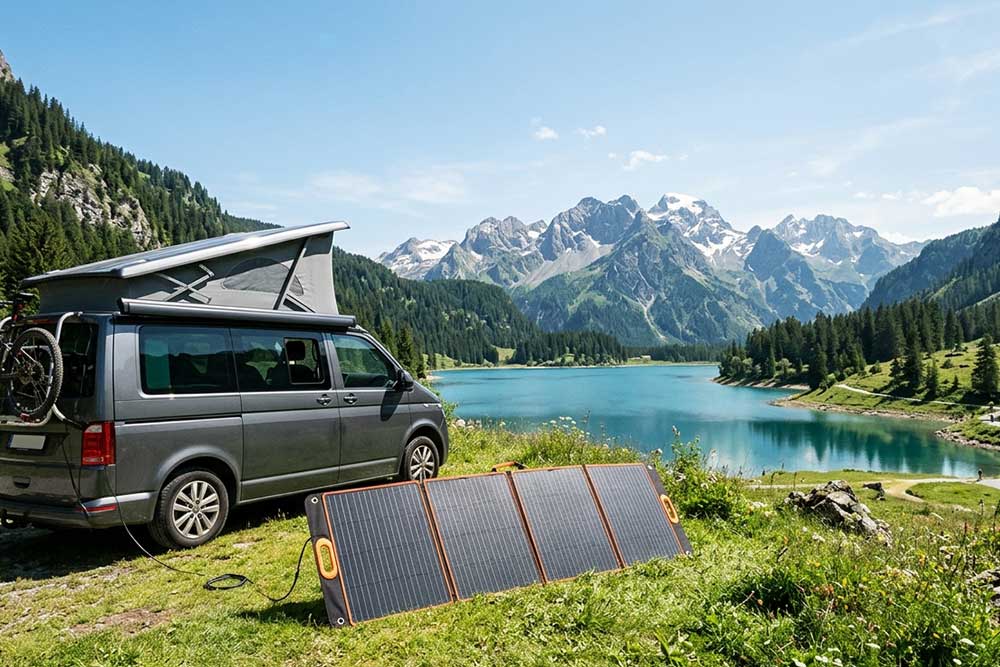
A 300 watt solar panel is one of the most commonly selected power ratings for small-scale solar applications because it offers a practical balance between energy production, size, and installation flexibility. It is widely used for RVs, boats, camping systems, remote cabins, backup power, and small off-grid projects.
When people search for solar panels 300 watt, they usually want to know more than just the rated power. They want to understand how much electricity a 300W panel can generate, what appliances it can run, how much it costs, and whether it is the right choice for their specific application.
This guide explains everything you need to know about 300 watt solar panels, including performance, specifications, applications, pricing, installation considerations, and buying tips.
Bright Solar provides flexible solar panel solutions designed for mobile and off-grid applications where lightweight design, durability, and reliable energy output are essential.
What Are Solar Panels 300 Watt?
Solar panels 300 watt are photovoltaic panels designed to produce a maximum output of 300 watts under standard test conditions (STC).
The “300 watt” rating represents the panel’s peak power generation capacity when tested under ideal laboratory conditions, including specific sunlight intensity and temperature.
In real-world situations, the actual output is usually lower because solar panels are affected by:
- Weather conditions
- Sunlight intensity
- Panel temperature
- Installation angle
- Shading
- System losses
A 300W solar panel does not continuously produce 300 watts throughout the day. Instead, it generates different amounts of electricity depending on available sunlight.
For example:
- Morning: lower output due to weaker sunlight
- Midday: highest production
- Evening: output decreases as sunlight fades
This makes energy calculation an important part of choosing the right solar system.
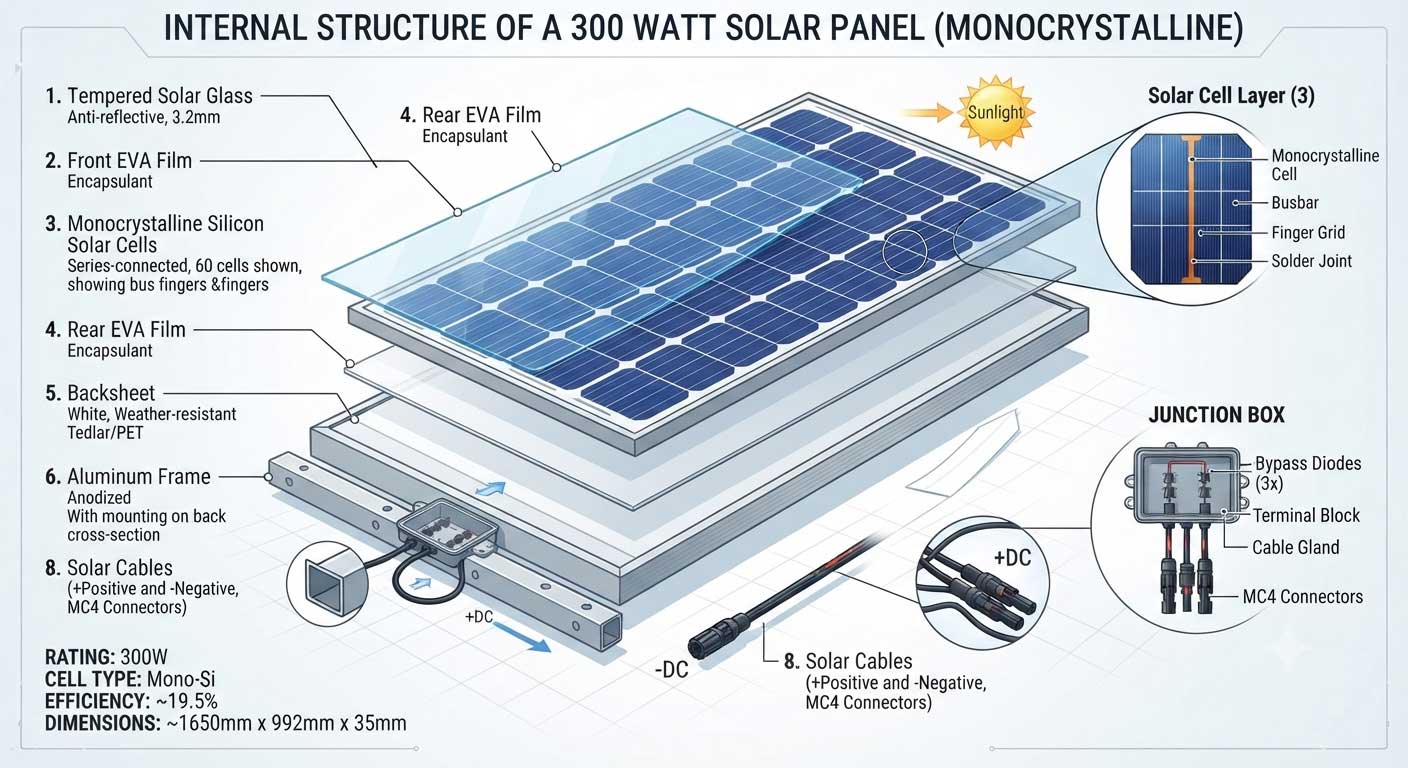
Typical Specifications of a 300 Watt Solar Panel
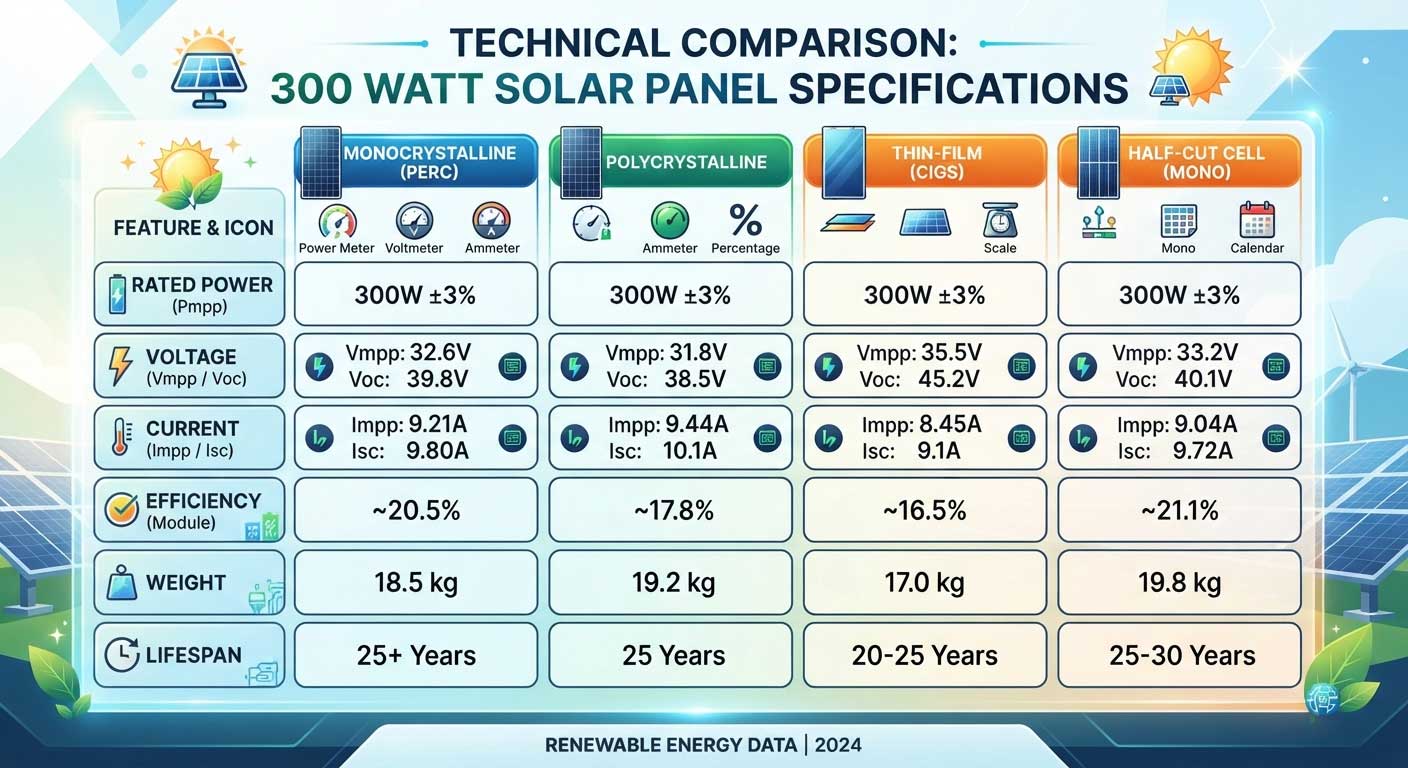
Although specifications vary between manufacturers, most 300W solar panels have similar characteristics.
| Specification | Typical Range |
|---|---|
| Rated Power | 300W |
| Solar Cell Type | Monocrystalline / Flexible Solar Cells |
| Panel Efficiency | 18%–23% |
| Operating Voltage | 30V–40V |
| Operating Current | 8A–10A |
| Weight | 12kg–20kg |
| Lifespan | 20–30 years |
Modern 300 watt solar panels often use monocrystalline cells because they provide higher efficiency and better performance in limited installation areas.
For applications such as RVs and marine systems, flexible 300W solar panels are becoming increasingly popular because they reduce weight and simplify installation.
How Much Power Does a 300 Watt Solar Panel Produce?
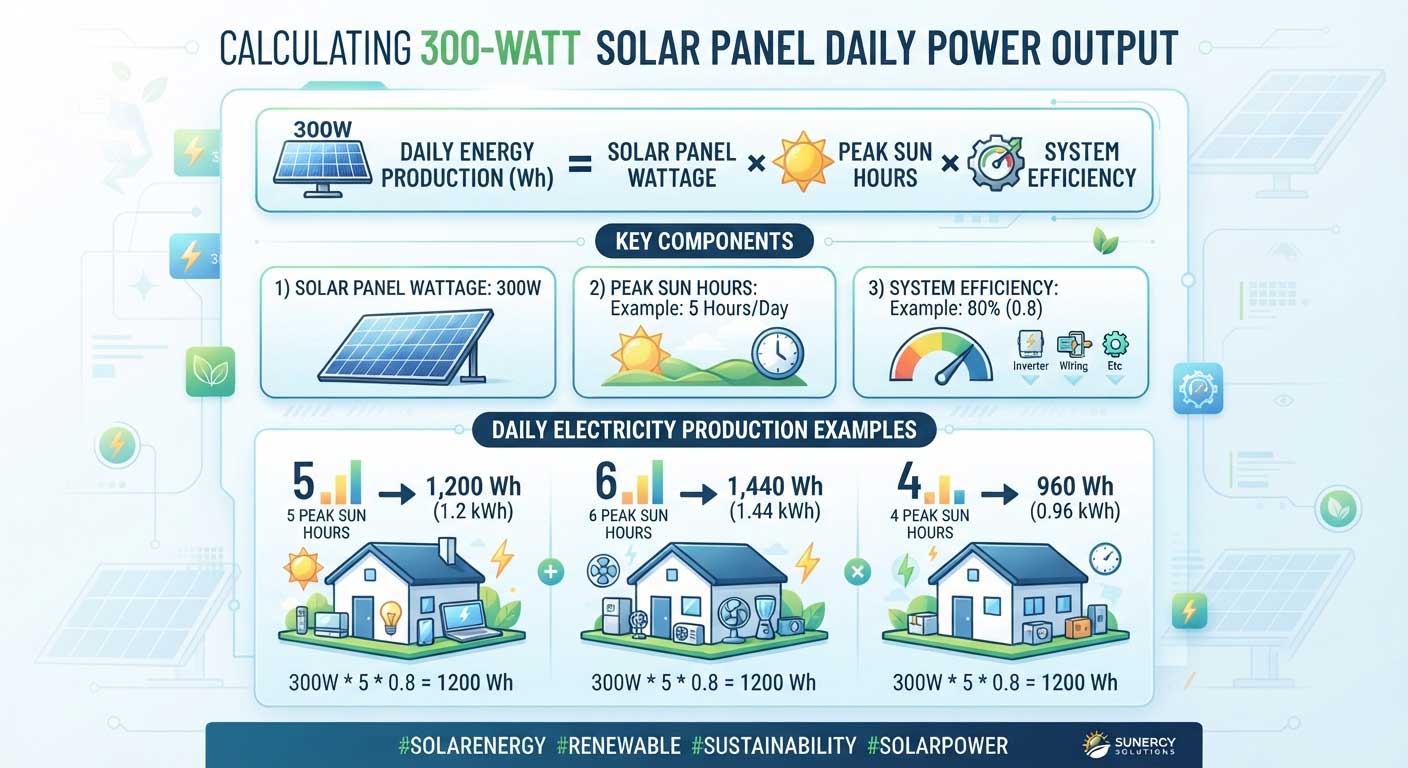
A 300 watt solar panel typically produces around 1.2–1.8 kWh of electricity per day, depending on sunlight conditions and system efficiency.
The basic calculation formula is:
Daily Energy Production = Solar Panel Wattage × Peak Sun Hours × System Efficiency
Example:
300W solar panel × 5 peak sunlight hours × 80% efficiency
=
Approximately:
1.2 kWh per day
In areas with stronger sunlight:
300W × 6 hours × 85%
=
Approximately:
1.5 kWh per day
The actual energy production varies based on location and installation conditions.
Factors That Affect 300 Watt Solar Panel Output
Sunlight Hours
The biggest factor affecting solar production is available sunlight.
A 300W panel installed in a sunny region will generate more electricity than the same panel installed in an area with frequent cloudy weather.
Installation Angle
The angle of the solar panel affects how much sunlight reaches the solar cells.
A properly positioned panel:
- Captures more sunlight
- Improves daily production
- Reduces energy losses
Temperature
Solar panels generally perform better in cooler temperatures.
High temperatures can reduce solar cell efficiency and lower power output.
Shading
Even partial shading can significantly reduce solar generation.
Common shading sources include:
- Trees
- Buildings
- Roof structures
- Equipment
A good installation location should receive direct sunlight for most of the day.
Panel Efficiency
Higher efficiency solar panels generate more electricity from the same surface area.
This is especially important for:
- RV roofs
- Boats
- Small cabins
- Limited installation spaces
What Can a 300 Watt Solar Panel Run?
A 300 watt solar panel can power many small electrical devices and support essential appliances when connected with a suitable battery and inverter system.
The actual appliances it can run depend on:
- Battery capacity
- Inverter size
- Daily sunlight availability
- Energy consumption
Small Electronics
A 300W solar panel can easily support:
- Smartphones
- Tablets
- Cameras
- Laptops
- WiFi routers
- LED lighting
These devices require relatively low power, making them ideal for small solar systems.
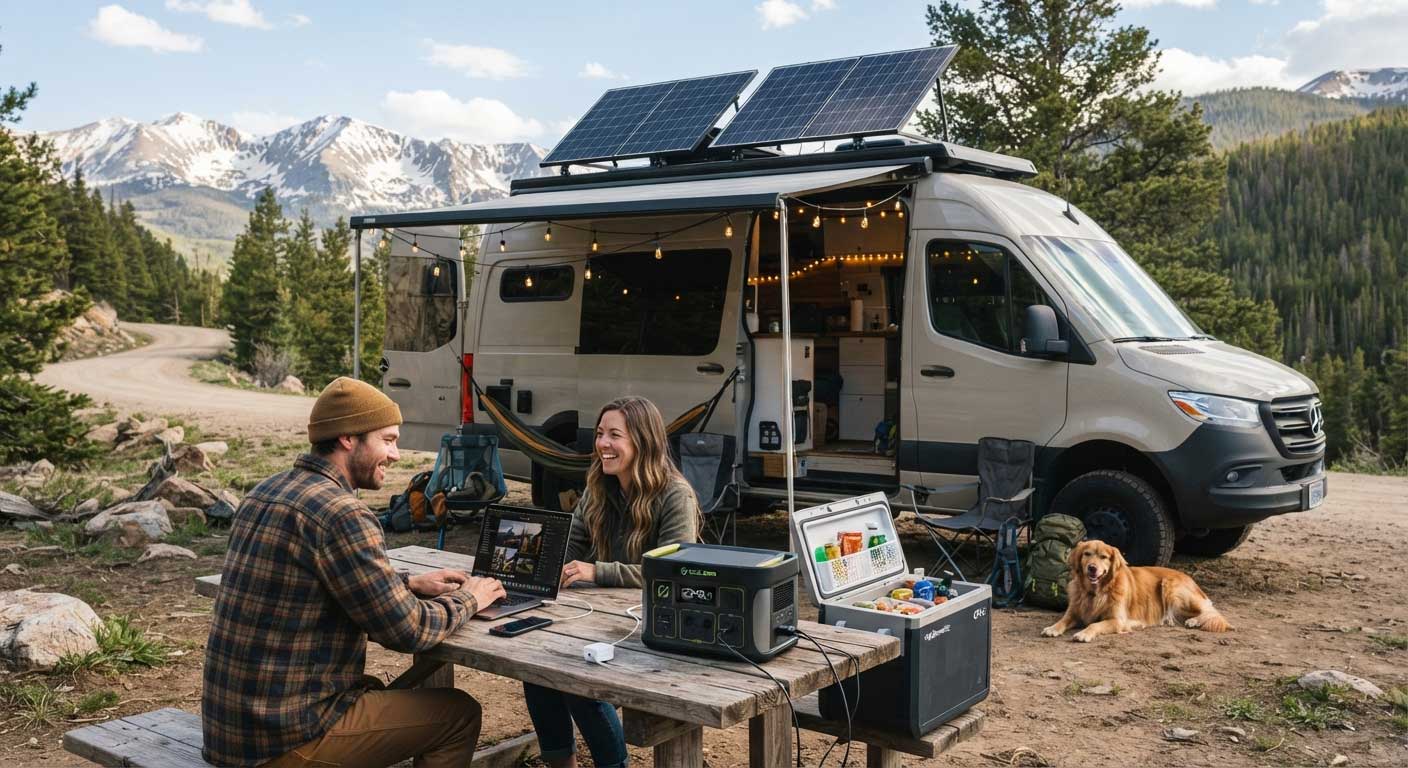
RV Applications
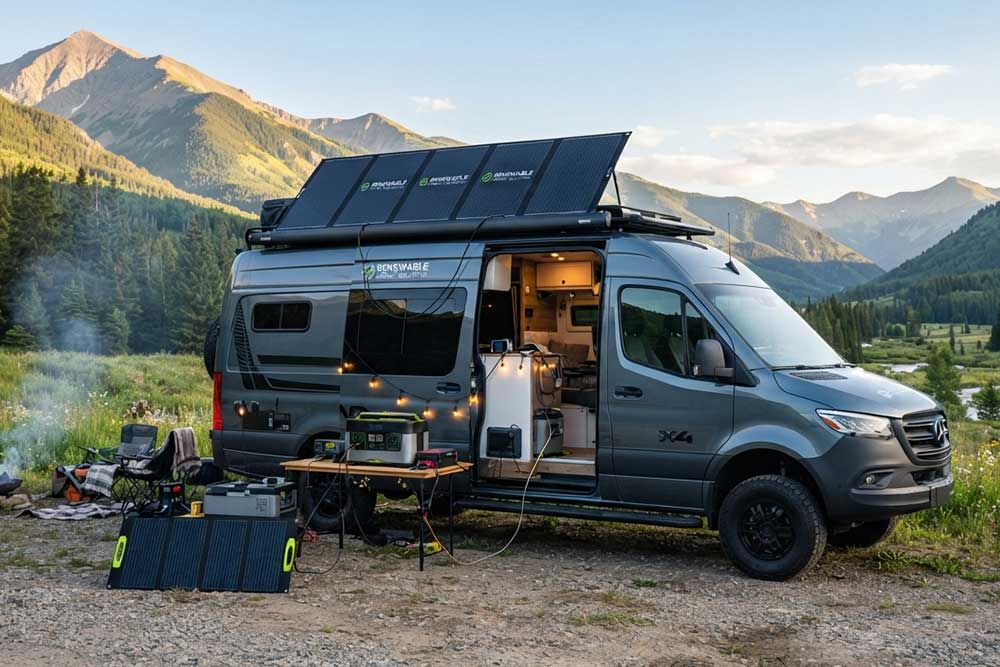
A 300 watt solar panel is a popular choice for RV owners because it provides enough energy for basic travel power needs.
Typical RV applications include:
- Interior LED lights
- Ventilation fans
- Phone charging
- Small refrigerators
- Entertainment devices
- Communication equipment
For RV users, flexible solar panels offer additional advantages because they are lightweight and easier to install on curved roofs.
Bright Solar flexible solar panels are designed for RV applications where reducing weight and maximizing available roof space are important considerations.
Camping and Portable Power
A 300W solar panel can also support outdoor applications such as:
- Portable power stations
- Camping equipment
- Emergency charging systems
- Remote work setups
Combined with battery storage, it provides a reliable renewable energy source for outdoor activities.
Small Off-Grid Systems
For cabins, workshops, and remote locations, multiple 300W solar panels can be connected together to create a larger solar power system.
Examples:
- 2 × 300W panels = 600W system
- 4 × 300W panels = 1200W system
- 6 × 300W panels = 1800W system
This modular approach allows users to expand their solar capacity over time.
300 Watt Solar Panel Specifications Explained
Solar Cell Technology
The type of solar cells used directly affects efficiency and performance.
Monocrystalline 300W Solar Panels
Monocrystalline panels are currently the most common option.
Advantages:
- Higher efficiency
- Better low-light performance
- Longer lifespan
- Space-saving design
They are suitable for:
- Residential systems
- RVs
- Off-grid applications
Flexible 300W Solar Panels
Flexible solar panels use lightweight materials instead of traditional glass and aluminum frames.
Advantages include:
- Lower weight
- Easier transportation
- Simple installation
- Better adaptability to curved surfaces
They are commonly used for:
- RV roofs
- Boats
- Vans
- Portable solar systems
Bright Solar flexible panels combine lightweight construction with durable surface protection, making them suitable for demanding outdoor environments.
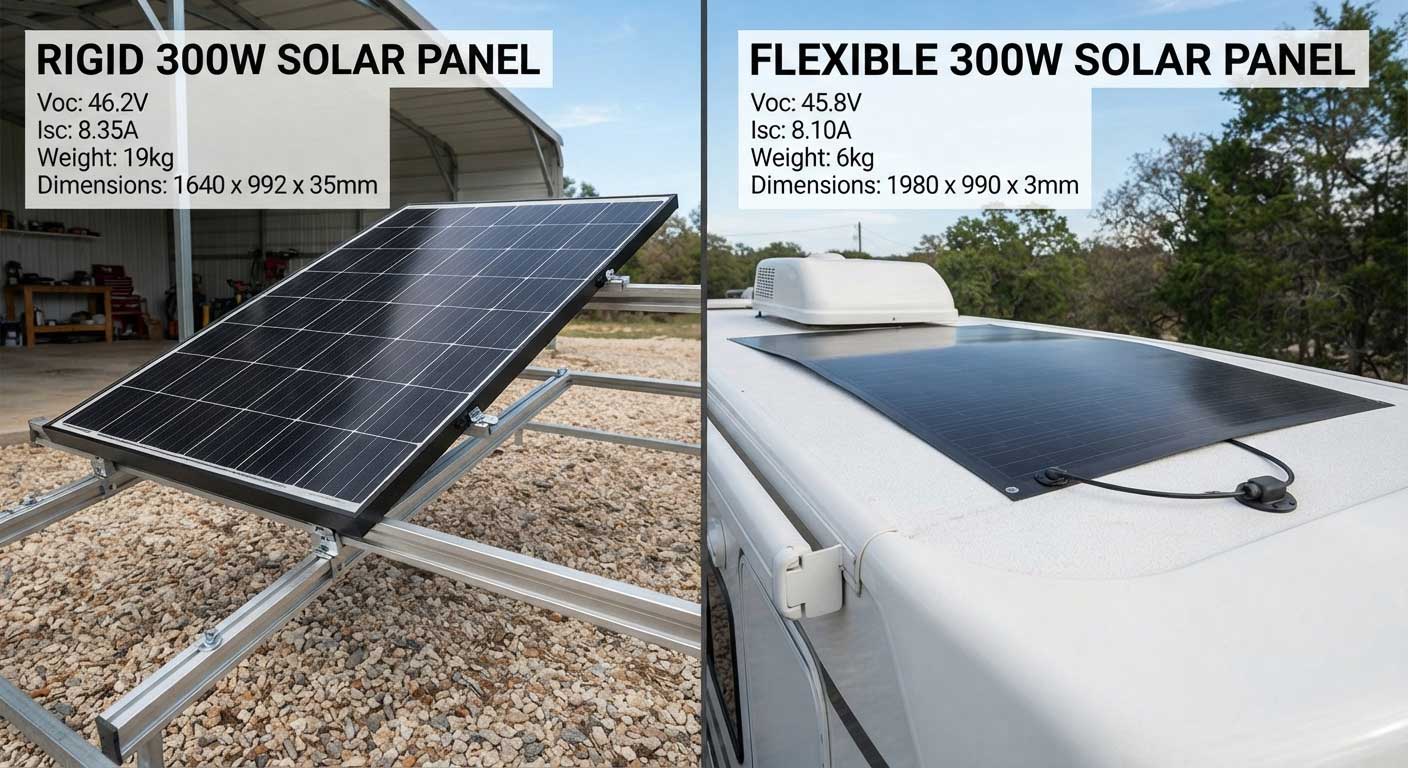
Panel Size and Weight Considerations
A standard rigid 300W solar panel usually weighs between:
15kg–20kg
Flexible versions can significantly reduce weight.
This difference matters for applications where:
- Roof load is limited
- Installation space is small
- Mobility is important
For RV owners and marine users, lightweight solar panels can make installation easier while maintaining reliable energy production.
How Much Does a 300 Watt Solar Panel Cost?
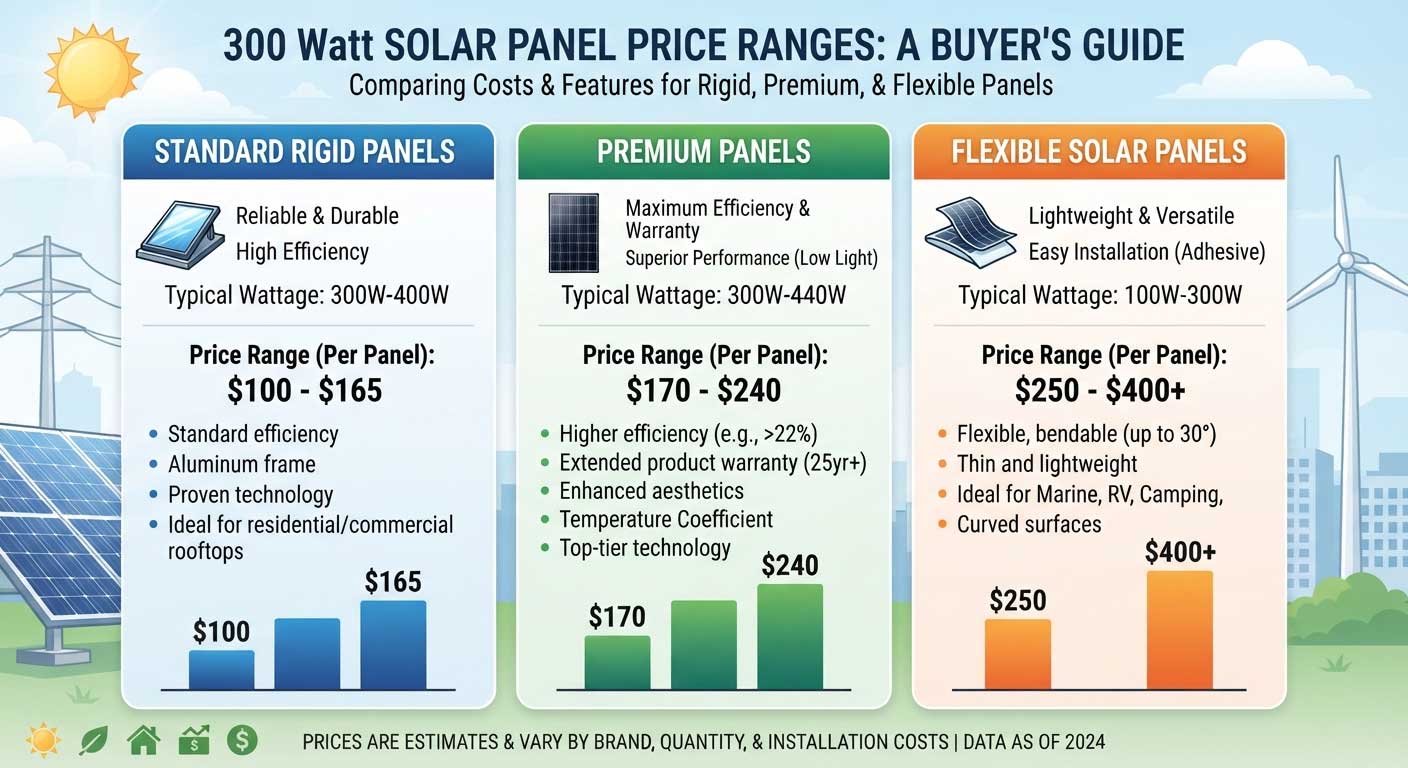
A 300 watt solar panel typically costs between $100 and $500, depending on the panel type, efficiency, materials, brand, and application.
The price difference mainly comes from the technology used. Standard rigid solar panels are usually more affordable, while flexible 300W solar panels generally cost more because they use lightweight materials and specialized manufacturing processes.
Typical price ranges:
| 300W Solar Panel Type | Average Price Range |
|---|---|
| Standard rigid 300W solar panel | $100–$250 |
| Premium high-efficiency 300W panel | $200–$350 |
| Flexible 300W solar panel | $280–$500 |
The panel price is only one part of the total solar investment. A complete system may also require:
- Solar charge controller
- Battery storage
- Inverter
- Mounting accessories
- Wiring components
For example, an RV solar system using a 300W panel may require a lithium battery and portable power management system, while a small off-grid cabin may need multiple panels combined together.
Factors That Affect 300 Watt Solar Panel Price
Solar Cell Quality
The solar cell technology has a direct impact on pricing.
Higher-quality cells usually provide:
- Better efficiency
- More stable output
- Longer operating life
Monocrystalline solar cells are generally more expensive than older polycrystalline technology because they provide higher efficiency and better performance.
Panel Construction Materials
The materials used in solar panel manufacturing affect both cost and durability.
Traditional rigid panels typically include:
- Tempered glass
- Aluminum frame
- Protective back sheet
Flexible solar panels often use:
- Lightweight composite materials
- ETFE protective coating
- Flexible solar substrates
These materials increase flexibility and reduce weight, making them suitable for mobile applications.
Efficiency Rating
A higher-efficiency 300W solar panel may cost more because it produces more electricity from the same surface area.
This is especially valuable when installation space is limited.
Examples:
- RV roofs
- Boat surfaces
- Small balconies
- Portable energy systems
Warranty and Manufacturer Support
Reliable solar manufacturers usually provide longer warranties because their products are tested for long-term outdoor use.
Important factors include:
- Product warranty
- Power output warranty
- Material durability
- Technical support
Choosing a lower-cost panel without considering reliability may result in higher replacement costs later.
300 Watt Solar Panel vs Other Wattages
Choosing the right solar panel size depends on your energy requirements, available installation space, and budget.
A 300W panel is considered a mid-range option that balances power output and portability.
| Solar Panel Wattage | Best Application |
|---|---|
| 100W | Portable charging and small devices |
| 200W | Camping and small backup systems |
| 300W | RVs, cabins, and small off-grid systems |
| 400W–600W | Residential and larger systems |
300W Solar Panel vs 100W Solar Panel
A 100W solar panel is mainly designed for basic power needs.
Suitable for:
- Phone charging
- Small lights
- Portable devices
Advantages:
- Lightweight
- Easy to transport
- Lower cost
Limitations:
- Limited electricity production
- Requires multiple panels for larger applications
A 300W solar panel provides approximately three times the rated output, making it more practical for users who need continuous power.
300W Solar Panel vs 400W Solar Panel
400W solar panels provide higher power output but are usually larger.
Advantages of 300W panels:
- Easier installation
- Lower weight
- More flexible system design
- Better for limited spaces
Advantages of 400W+ panels:
- Higher energy generation
- Fewer panels needed for large systems
For RVs, boats, and mobile applications, 300W panels can provide a better balance between performance and installation limitations.
300W Solar Panel vs 500W Solar Panel
500W solar panels are designed mainly for larger installations.
They are commonly used in:
- Commercial solar farms
- Large rooftop systems
- Industrial applications
However, they may not be suitable for:
- RVs
- Boats
- Small roofs
- Portable systems
A 300W solar panel remains a practical choice when installation flexibility is more important than maximum power density.
How Many 300 Watt Solar Panels Do You Need?
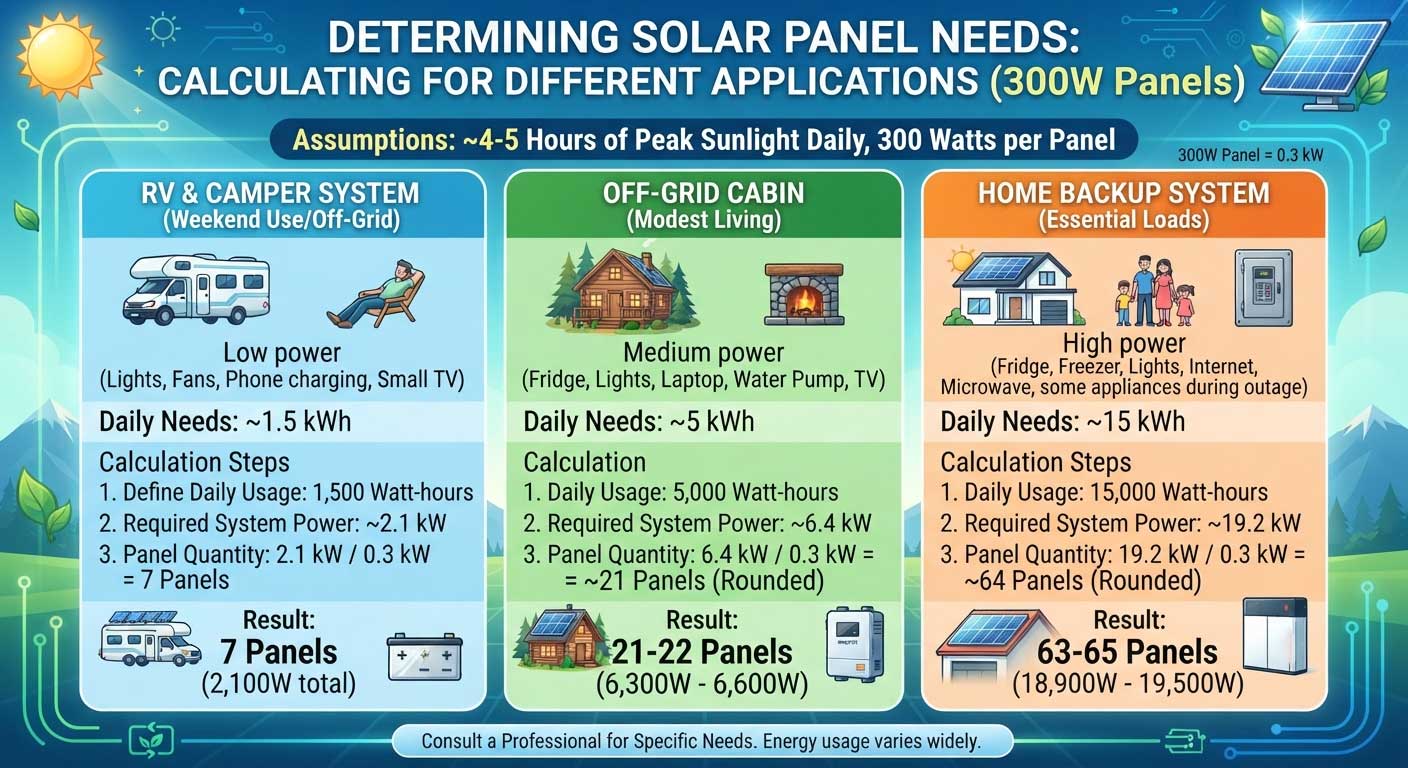
The number of 300 watt solar panels you need depends on your daily electricity consumption, available sunlight, battery capacity, and system goals.
The basic calculation is:
Required Solar Capacity = Daily Energy Consumption ÷ Daily Solar Production
For example:
If your energy requirement is:
5 kWh per day
and one 300W solar panel produces:
1.5 kWh per day
You need:
5 ÷ 1.5 = approximately 4 panels
Example: 300W Solar Panels for an RV
A typical RV setup may require:
Basic RV Use
1 × 300W solar panel
Suitable for:
- Lighting
- Phone charging
- Small electronics
Medium RV Energy Use
2 × 300W solar panels
Suitable for:
- Refrigerator
- Fans
- Entertainment equipment
- More daily charging needs
Heavy RV Energy Use
3–4 × 300W solar panels
Suitable for:
- Larger refrigerators
- More appliances
- Longer off-grid trips
Flexible 300W solar panels are especially useful for RV installations because they maximize available roof space without adding excessive weight.
Example: 300W Solar Panels for an Off-Grid Cabin
A small cabin may use:
2–4 × 300W solar panels
Depending on:
- Lighting requirements
- Appliance usage
- Battery capacity
- Seasonal sunlight availability
A larger off-grid home may require:
10 or more panels
to support higher electricity demand.
How to Install a 300 Watt Solar Panel
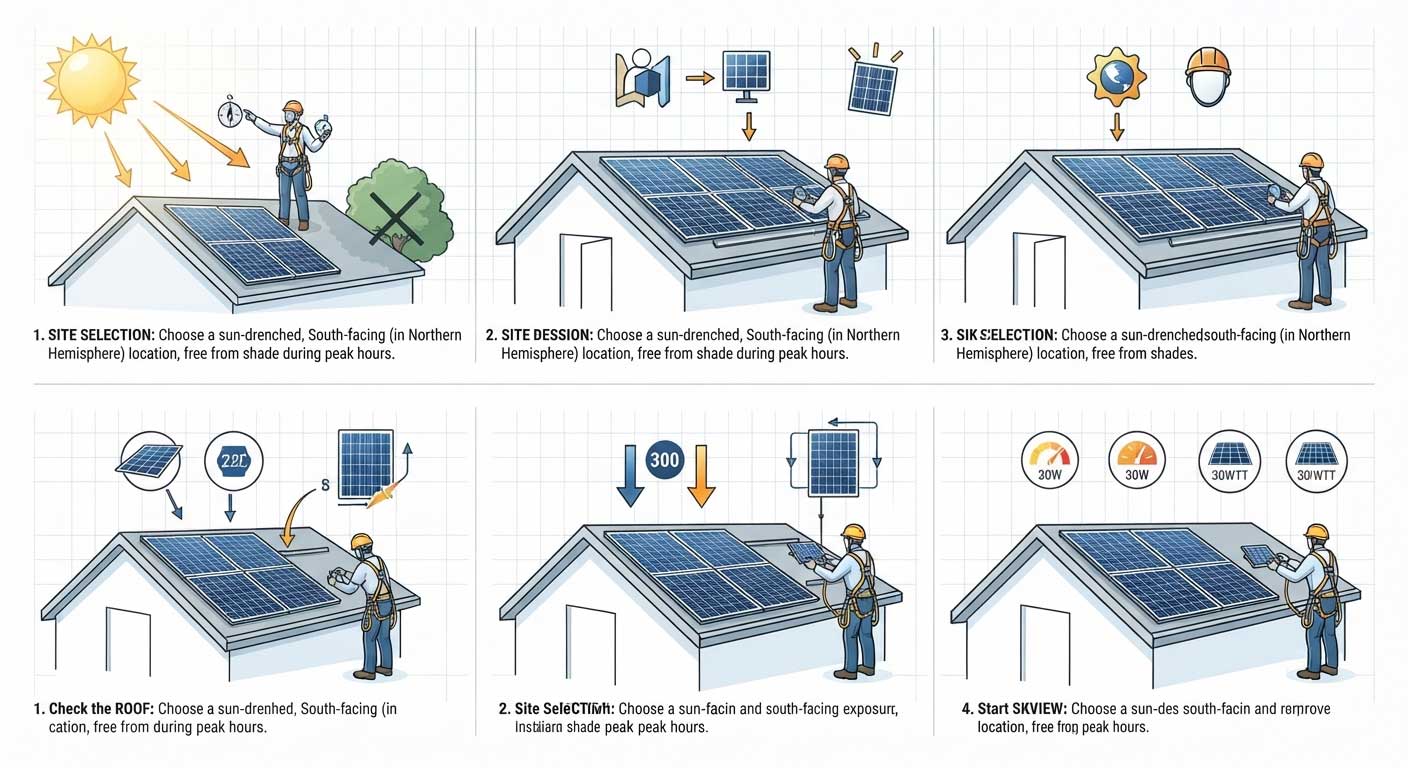
Installing a 300 watt solar panel requires selecting the right location, securing the panel properly, connecting electrical components, and testing system performance.
The installation process usually includes several steps.
Step 1: Choose the Installation Location
The solar panel should be installed where it receives maximum sunlight.
Consider:
- Direct sunlight exposure
- Minimal shading
- Proper orientation
- Suitable mounting surface
For RV installations, common locations include:
- Roof areas
- Awning structures
- Portable mounting systems
Step 2: Install the Mounting System
The mounting method depends on the panel type.
Rigid Solar Panels
Usually require:
- Aluminum brackets
- Rails
- Mechanical fasteners
Flexible Solar Panels
Often use:
- Adhesive mounting
- Lightweight brackets
- Industrial tapes
Flexible panels are easier to install on curved surfaces because they can follow different shapes.
Step 3: Connect the Solar Wiring
A typical connection includes:
Solar Panel → Charge Controller → Battery → Inverter → Appliances
Important considerations:
- Correct cable size
- Proper connectors
- Electrical protection devices
Incorrect wiring can reduce system efficiency or damage components.
Step 4: Test Solar Output
After installation, check:
- Voltage output
- Current production
- Battery charging performance
- Controller operation
Monitoring the system helps confirm that the panel is working correctly.
Step 5: Optimize Panel Performance
To maintain good output:
- Keep the panel surface clean
- Avoid shading
- Check connections regularly
- Monitor energy production
Proper maintenance can extend the useful life of the solar system.
Benefits of Choosing a 300 Watt Solar Panel
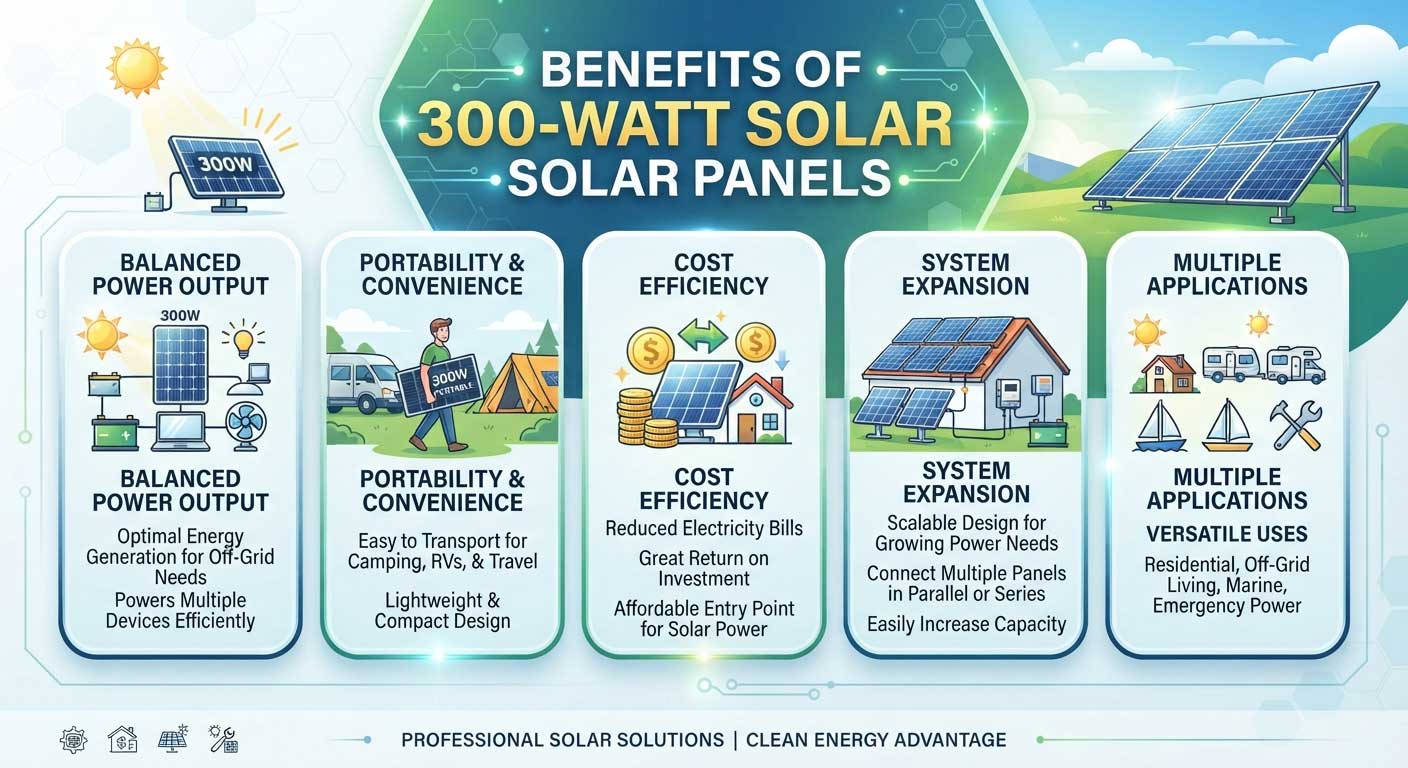
Balanced Power Output
A 300W solar panel provides a practical middle ground between small portable panels and larger residential panels.
It offers enough power for many applications while remaining manageable in size.
Suitable for Multiple Applications
300W solar panels can be used for:
- RV solar systems
- Camping power
- Marine applications
- Small cabins
- Backup electricity
This versatility makes them one of the most popular panel sizes.
Easy System Expansion
One advantage of 300W panels is scalability.
Users can start with one panel and expand later.
Examples:
- 300W starter system
- 600W upgraded system
- 1200W off-grid system
This allows users to increase solar capacity as energy needs grow.
Good Balance Between Cost and Performance
Compared with smaller panels, 300W models provide more electricity per panel.
Compared with larger panels, they are easier to install and transport.
This balance makes them attractive for mobile and off-grid applications.
Why Choose Bright Solar 300 Watt Flexible Solar Panels?
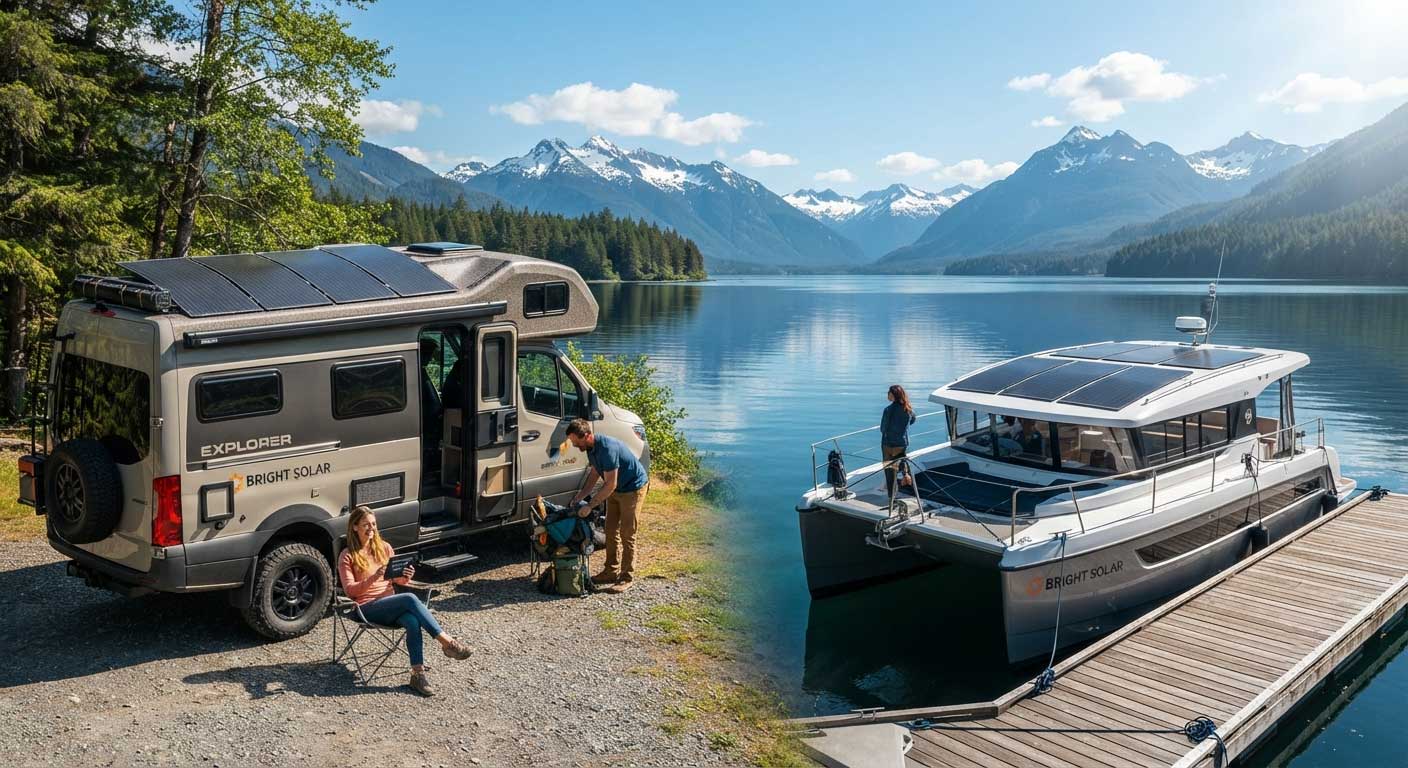
Bright Solar develops flexible solar solutions for users who need reliable power with easier installation.
Compared with traditional rigid panels, Bright Solar flexible 300W solar panels are designed for applications where:
- Weight reduction matters
- Installation space is limited
- Surface flexibility is required
Typical applications include:
- RV roofs
- Marine equipment
- Portable solar systems
- Remote off-grid locations
Key advantages include:
- Lightweight construction
- Flexible installation design
- Durable outdoor protection
- Reliable solar performance
For mobile energy users, choosing the right solar panel is not only about wattage. Installation flexibility, durability, and long-term reliability are equally important.
Common Mistakes When Buying Solar Panels 300 Watt
Choosing the right solar panels 300 watt requires more than comparing prices. Many buyers focus only on wattage and overlook important factors such as efficiency, compatibility, installation conditions, and long-term reliability.
Avoiding these common mistakes can help you select a solar panel that delivers better performance and value over time.
Mistake 1: Choosing a Solar Panel Based Only on Wattage
A common misunderstanding is that a higher watt rating always means a better solar panel.
The 300W rating only represents the panel’s maximum power output under standard testing conditions. It does not tell you:
- Real-world daily production
- Panel efficiency
- Durability
- Temperature performance
A high-quality 300W solar panel with better efficiency may outperform a cheaper panel with the same rated wattage.
When comparing panels, consider:
- Conversion efficiency
- Materials
- Warranty
- Manufacturer reliability
Mistake 2: Ignoring Available Installation Space
The physical size of a solar panel is an important consideration.
A 300W solar panel may work well for one application but not another.
For example:
RV Applications
Available roof space is often limited.
A lightweight flexible 300W solar panel may be more suitable because it:
- Reduces roof load
- Fits curved surfaces
- Simplifies installation
Residential Applications
A larger rigid panel may be acceptable because:
- Roof space is usually larger
- Weight limitations are less restrictive
Always measure the installation area before purchasing solar panels.
Mistake 3: Not Matching the Solar Panel With the Battery System
A solar panel does not work alone.
A complete solar power system requires compatibility between:
- Solar panel output
- Charge controller
- Battery voltage
- Inverter capacity
For example:
A 300W solar panel paired with an undersized battery may waste available energy.
A properly designed system should consider:
- Daily electricity usage
- Charging requirements
- Battery storage capacity
- Future expansion plans
Mistake 4: Choosing the Cheapest Solar Panel
Low prices can be attractive, but the cheapest option may not always provide the best value.
Lower-quality panels may experience:
- Faster performance degradation
- Lower efficiency
- Shorter lifespan
- Poor weather resistance
For outdoor applications, especially RV and marine environments, durability is extremely important.
A reliable solar panel should be designed to handle:
- UV exposure
- Rain
- Temperature changes
- Wind conditions
Mistake 5: Ignoring Solar Panel Warranty
A solar panel is a long-term investment.
Before purchasing, check:
- Product warranty
- Power output warranty
- Material quality guarantee
Most quality solar panels are designed to operate for decades.
A strong warranty indicates that the manufacturer has confidence in product performance.
Mistake 6: Installing Panels Without Considering Sunlight Conditions
Even the best 300W solar panel cannot perform well if installed incorrectly.
Common installation problems include:
- Excessive shading
- Poor orientation
- Incorrect tilt angle
- Dirty surfaces
Before installation:
- Analyze sunlight exposure
- Avoid shaded areas
- Position panels for maximum solar access
Good installation can significantly improve energy production.
Are Solar Panels 300 Watt Still Worth Buying in 2026?
Yes, solar panels 300 watt remain a practical choice in 2026, especially for RVs, off-grid systems, portable power solutions, and small-scale solar projects.
Although newer high-wattage panels such as 400W, 500W, and 600W models are becoming more common, 300W panels continue to offer several advantages.
Why 300 Watt Solar Panels Remain Popular
1. Balanced Size and Performance
A 300W panel provides a useful balance between:
- Energy output
- Physical size
- Installation flexibility
- Cost
It is large enough to provide meaningful electricity but still manageable for many applications.
2. Ideal for Mobile Applications
For RV owners, campers, and boat users, panel size and weight are important.
A 300W flexible solar panel can provide:
- Reliable charging capability
- Lower installation weight
- Better space utilization
This makes it suitable for mobile energy systems.
3. Easy System Expansion
Because 300W panels are widely available, users can easily expand their systems.
For example:
Initial setup:
- 1 × 300W panel
Future upgrade:
- Add another 300W panel
Expanded system:
- 600W total solar capacity
This modular approach provides flexibility for changing energy needs.
4. Strong Cost-to-Performance Ratio
A 300W solar panel often provides a better balance compared with smaller panels.
Compared with 100W or 200W panels:
- Higher output per installation
- Fewer panels required
- Better use of space
Compared with very large panels:
- Easier transportation
- Easier installation
- More suitable for limited spaces
FAQ About Solar Panels 300 Watt
How much electricity does a 300 watt solar panel produce?
A 300 watt solar panel typically produces around 1.2–1.8 kWh per day under normal sunlight conditions.
Actual production depends on:
- Peak sunlight hours
- Weather conditions
- Installation angle
- System efficiency
Can a 300 watt solar panel power a refrigerator?
Yes, a 300W solar panel can support a small energy-efficient refrigerator when connected with a suitable battery and inverter.
However, refrigerators require additional power during compressor startup, so the system should be properly sized.
For RV refrigerators, a 300W solar panel can often provide enough daily energy when combined with adequate battery storage.
Is a 300 watt solar panel enough for an RV?
Yes, a 300W solar panel is one of the most popular choices for RV solar systems.
It can support:
- Lighting
- Charging devices
- Fans
- Small refrigerators
- Communication equipment
For higher energy needs, multiple 300W panels can be combined.
How many batteries do I need for a 300 watt solar panel?
The battery size depends on your energy usage and backup requirements.
A typical setup may include:
- 12V lithium battery
- 24V battery system
- Larger battery banks for off-grid applications
Battery capacity should be selected based on:
- Daily electricity consumption
- Desired backup time
- Inverter requirements
How long does a 300 watt solar panel last?
A quality 300W solar panel can typically last:
25 years or more
Performance gradually decreases over time, but most panels continue producing electricity for decades.
The lifespan depends on:
- Manufacturing quality
- Weather exposure
- Installation conditions
- Maintenance
What is the difference between a 300W rigid and flexible solar panel?
The main differences are materials, weight, and installation methods.
Rigid 300W Solar Panels
Advantages:
- Strong glass structure
- Higher mechanical protection
- Traditional installation method
Suitable for:
- Homes
- Ground-mounted systems
Flexible 300W Solar Panels
Advantages:
- Lightweight
- Thin profile
- Easy installation
- Suitable for curved surfaces
Suitable for:
- RVs
- Boats
- Vans
- Portable systems
Bright Solar flexible solar panels are designed for applications where traditional rigid panels may be difficult to install.
How many 300 watt solar panels do I need for a house?
The number depends on household electricity consumption.
For example:
A small energy-efficient home may require:
- 8–12 panels
A larger home may require:
- 15+ panels
The calculation depends on:
- Daily kWh usage
- Location
- Solar hours
- Battery requirements
A professional system design provides the most accurate result.
Are flexible 300W solar panels reliable?
Yes, modern flexible 300W solar panels can provide reliable performance when manufactured with durable materials and installed correctly.
They are especially useful for:
- RVs
- Boats
- Mobile applications
- Remote power systems
Quality factors to consider include:
- Protective coating
- Cell technology
- Waterproof design
- Outdoor durability
Conclusion: Are Solar Panels 300 Watt the Right Choice?
Solar panels 300 watt provide a practical balance between power output, cost, size, and installation flexibility.
They are suitable for many applications, including:
- RV solar systems
- Camping power
- Marine energy systems
- Small off-grid projects
- Backup electricity solutions
A 300W solar panel can generate meaningful daily energy while remaining easy to install and expand.
When selecting a 300 watt solar panel, buyers should consider more than the rated power. Efficiency, durability, installation conditions, battery compatibility, and long-term reliability all affect the overall value.
For users who need lightweight and adaptable solar solutions, Bright Solar flexible solar panels offer an effective option for RVs, marine applications, and off-grid environments.
By choosing the right panel technology and designing the system around actual energy needs, a 300W solar panel can provide reliable renewable power for years.
Related recommendations
-

120W Solar Panel Folding: Output, Uses and Setup Guide
8A 120W solar panel folding system provides portable electricity for camping, RV travel, emergency charging, and small off-grid applications. Its actual energ...
View details -
Solar Roof Tile Solutions from Bright Solar for Modern Homes
312Solar Roof Tile from Bright Solar combines power generation and roofing in one, offering a discreet alternative to traditional solar panels while protecting your home and reducing electricity bills.
View details -
Solar Panels for Trailer Homes: Complete Guide to Off-Grid Trailer Solar Systems
205Discover solar panels for trailer homes with expert sizing tips, installation advice, and real off-grid applications. Bright Solar helps trailer owners build reliable solar power systems anywhere.
View details -
1000W Solar Panels: Output, Cost, Sizing & Uses
300Learn how 1000w solar panels work, how much electricity they produce, how many panels you need, battery sizing, wiring options, and real-world applications.
View details