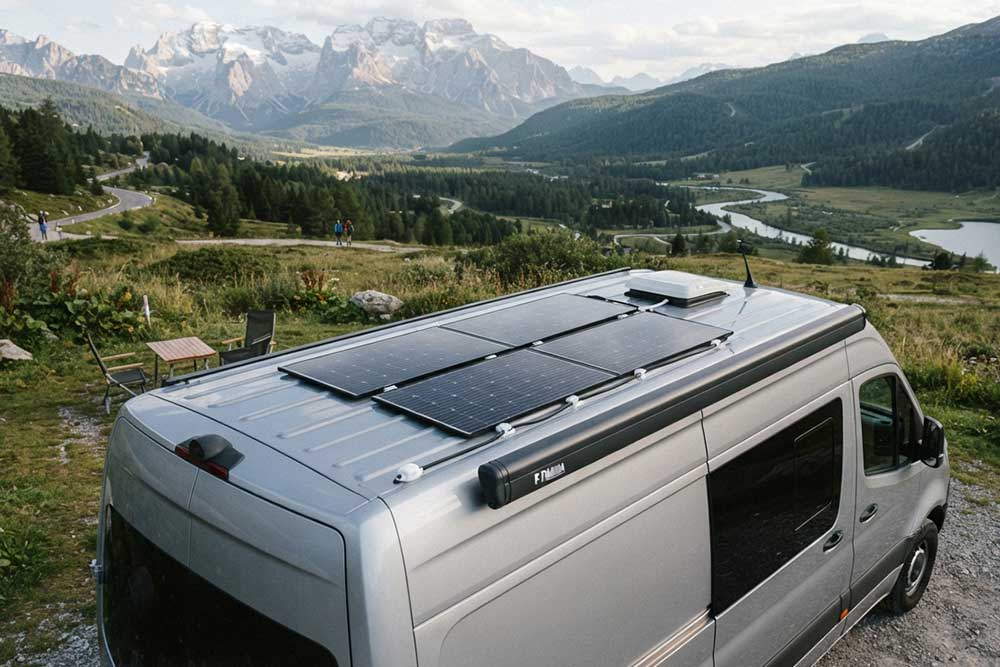
Solar Chargers for 12 Volt Batteries: How to Choose the Right Solar Charging System
A properly sized solar charger can reliably maintain or recharge a 12-volt battery without grid power. For most RVs, boats, trailers, farms, and backup systems, a solar charger between 20W and 200W paired with an MPPT controller delivers efficient, long-term battery charging while reducing maintenance and energy costs.
Author Experience & Industry Background
I have spent more than a decade working with off-grid solar applications, lightweight flexible solar panels, mobile energy systems, and marine charging projects. Over the years, I have visited RV installations in Arizona, mobile home communities in Texas, fishing docks along the Gulf Coast, and sailboats in Florida where battery charging failures often occur for one simple reason:
People underestimate how much energy a battery actually consumes.
The lessons learned from these installations form the foundation of this guide.
Why Solar Chargers for 12 Volt Batteries Are Becoming So Popular
A few years ago, most battery charging systems depended on generators or utility power.
Today the situation looks very different.
According to the U.S. Energy Information Administration (EIA), solar generation remains one of the fastest-growing electricity sources in the United States, driven by declining solar costs and improving efficiency.
Source:
Meanwhile, millions of RV owners, boat owners, ranch operators, and cabin users need power where electrical outlets simply do not exist.
A solar charger solves that problem.
Instead of plugging into the grid, sunlight becomes the charging source.
The setup is surprisingly simple:
- Solar panel
- Charge controller
- 12V battery
- Wiring and protection devices
Nothing more.
What Exactly Is a Solar Charger for a 12 Volt Battery?
Many people imagine a solar charger as a small trickle charger.
That definition is outdated.
Modern solar chargers range from compact 5W maintainers all the way to complete 400W battery charging systems.
Learn more:400 watt solar pane
A solar charging system converts sunlight into DC electricity and regulates voltage before sending power into a 12V battery.
Without regulation, battery damage becomes possible.
That is why charge controllers matter.
Basic Solar Charging Components
| Component | Function |
|---|---|
| Solar Panel | Generates electricity |
| MPPT Controller | Optimizes charging efficiency |
| Battery | Stores energy |
| Fuse Protection | Prevents overloads |
| Wiring | Transfers power safely |
The Biggest Mistake People Make
One summer in Nevada I inspected an RV equipped with a 20W solar charger.
The owner believed it would keep two deep-cycle batteries fully charged.
The math said otherwise.
His refrigerator control board, propane detector, inverter standby mode, and lighting consumed roughly 38Ah daily.
The panel generated less than half that amount.
The batteries slowly died.
The problem wasn’t the battery.
The problem was system sizing.
Understanding Battery Capacity Before Buying a Solar Charger
Battery capacity is normally measured in amp-hours (Ah).
Examples:
| Battery Size | Typical Capacity |
|---|---|
| Small ATV Battery | 20Ah |
| Marine Battery | 100Ah |
| RV House Battery | 100–200Ah |
| Lithium Battery Bank | 200–600Ah |
To estimate charging requirements:
Daily Solar Production ≈ Solar Panel Wattage × Peak Sun Hours
According to the U.S. National Renewable Energy Laboratory (NREL), many regions of the United States receive approximately 4–6 peak sun hours per day annually.
Source:
This number becomes the foundation of solar sizing calculations.
Choosing the Correct Solar Charger Size
The answer depends on battery use.
Not battery size alone.
Battery Maintenance Charging
For batteries stored during winter:
- Boat batteries
- Motorcycle batteries
- Trailer batteries
Recommended panel size:
- 10W–30W
Purpose:
- Offset self-discharge
- Maintain voltage
- Prevent sulfation
Weekend Recreational Use
For occasional use:
- Small campers
- Ice fishing huts
- Utility trailers
Recommended panel size:
- 50W–100W
Daily production:
- Approximately 15–35Ah
Enough for light loads.
Full-Time Off-Grid Operation
For continuous operation:
- RVs
- Mobile homes
- Boats
- Remote cabins
Recommended panel size:
- 200W–600W+
Daily production:
- 60Ah–200Ah+
This range supports real energy consumption.
Why Flexible Solar Panels Are Becoming a Preferred Charging Solution
Traditional framed panels remain effective.
But many modern installations are moving toward flexible solar technology.
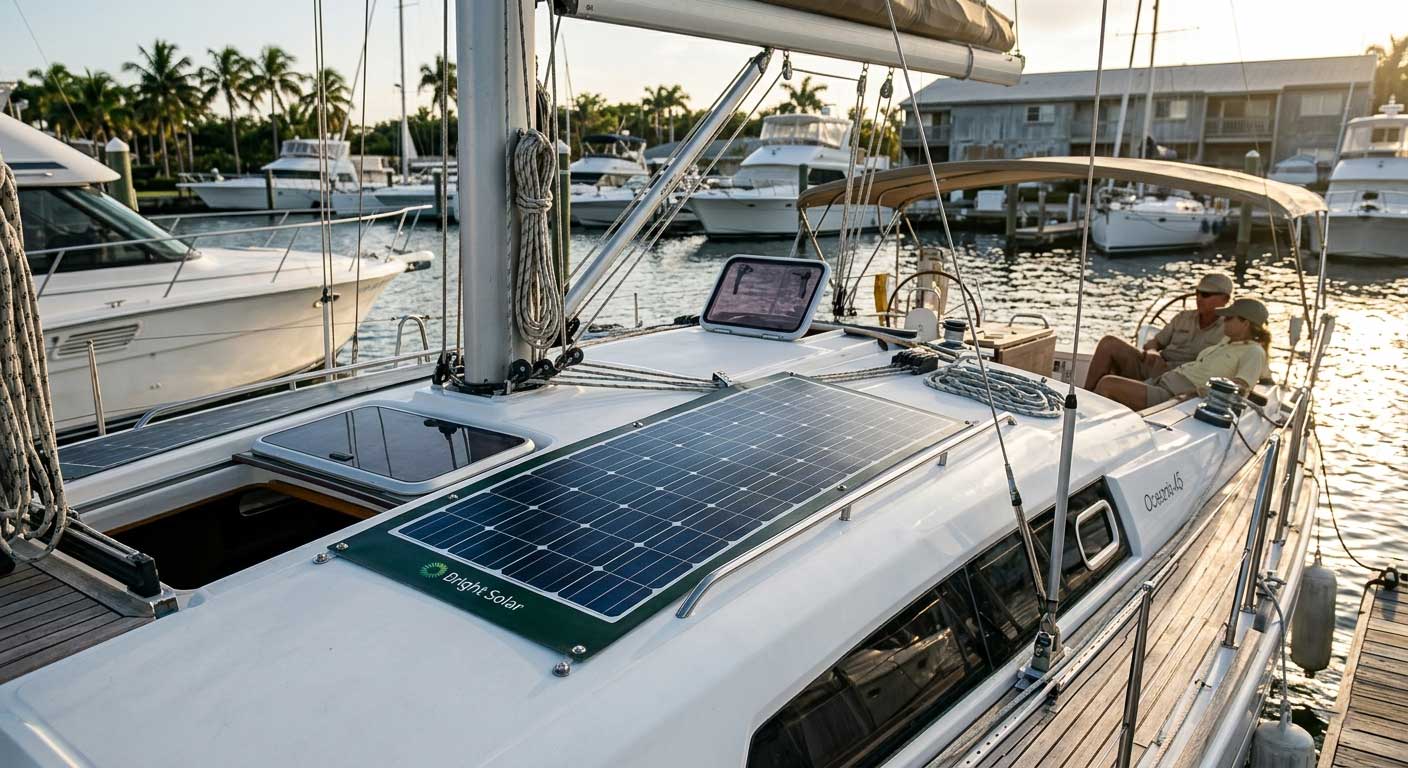
I first noticed this trend at a marina in Florida.
Five sailboats arrived within the same month.
Four carried flexible solar systems.
Only one used rigid panels.
The reasons were obvious immediately.
The flexible panels:
- Added less weight
- Reduced wind resistance
- Followed curved surfaces
- Required fewer mounting brackets
For boats, weight distribution matters.
For RV roofs, aerodynamics matter.
For mobile homes, installation simplicity matters.
Learn more:Flexible Solar Panel
PWM vs MPPT Controllers
This debate appears constantly.
The answer depends on system size.
PWM Controllers
Advantages:
- Low cost
- Simple design
- Reliable
Disadvantages:
- Lower efficiency
- Less effective in cold weather
Typical efficiency:
70–80%
MPPT Controllers
Advantages:
- Higher energy harvest
- Better performance in varying conditions
- Faster battery charging
According to multiple controller manufacturers and independent testing organizations, MPPT controllers can improve energy harvest by approximately 15–30% compared with PWM systems under favorable conditions.
Sources:
- Victron Energy
- Morningstar Corporation
For systems above 100W, MPPT generally delivers better long-term value.
Real Case Study: Ranch Water Pump System
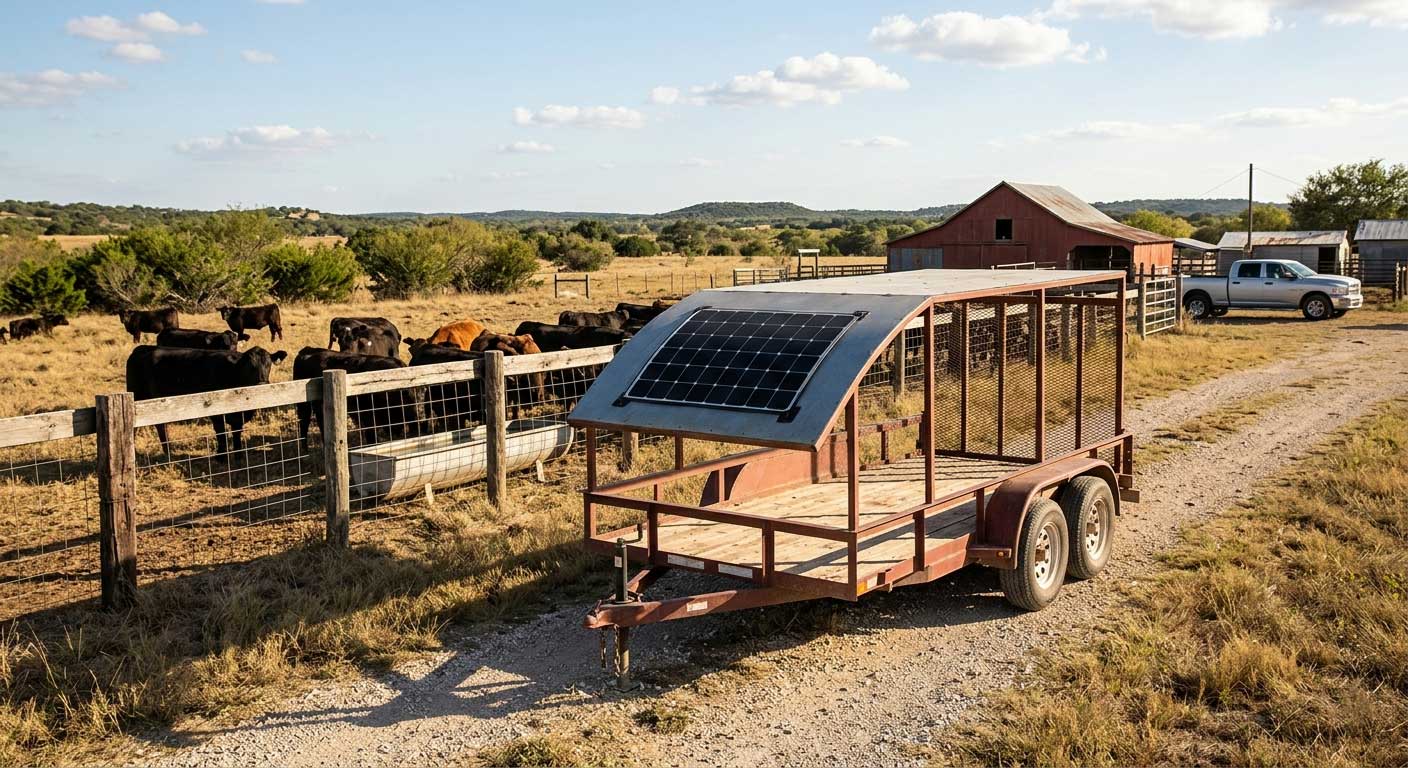
In West Texas, a livestock operation relied on a remote water pump located nearly two miles from utility power.
The original charging setup used:
- 30W panel
- 12V lead-acid battery
Summer performance seemed acceptable.
Winter performance did not.
Battery voltage regularly dropped below operational thresholds.
The upgrade included:
- 120W solar charger
- MPPT controller
- 100Ah AGM battery
Six months later:
- Zero pump interruptions
- No emergency generator visits
- Reduced maintenance trips
The interesting lesson wasn’t panel efficiency.
It was energy reserve planning.
Designing for average sunlight rarely works.
Designing for poor weather does.
How Weather Impacts Charging Performance
Many buyers focus entirely on wattage.
Weather often matters more.
Cloud cover can reduce output significantly.
Factors affecting production include:
- Panel temperature
- Cloud density
- Seasonal sunlight angle
- Dust accumulation
- Partial shading
A panel rated at 100W rarely produces 100W continuously.
Field conditions determine real output.
Flexible Solar Chargers vs Portable Solar Chargers
The distinction matters.
| Flexible Solar Charger | Portable Folding Charger |
|---|---|
| Permanent installation | Temporary setup |
| Weather resistant | Portable convenience |
| Best for RV roofs | Best for camping |
| Lower setup time | Greater mobility |
Both have advantages.
The correct choice depends on how often the battery system moves.

How Long Does It Take to Charge a 12V Battery?
The answer depends on three variables:
- Battery capacity
- Solar panel wattage
- Available sunlight
Example:
100Ah battery
100W solar charger
Average production:
Approximately 30–35Ah/day
Recharge time:
Roughly 3 days from a heavily discharged condition.
Real-world performance varies considerably.
A cloudy week changes everything.
A clear summer week changes everything again.
Lithium vs AGM Batteries for Solar Charging
A conversation I had with an RV owner in Utah still comes to mind.
He had spent nearly $2,000 upgrading his solar array but kept the same aging AGM batteries.
The panels performed perfectly.
The batteries did not.
Every afternoon his charge controller showed full production. Every morning battery voltage looked disappointing.
The solar panels weren’t the bottleneck.
Energy storage was.
That distinction matters more today than it did five years ago.
AGM Batteries Remain Popular
AGM batteries continue to dominate:
- Utility trailers
- Small boats
- Backup systems
- Agricultural fencing
- Seasonal cabins
Advantages:
- Lower upfront cost
- Widely available
- Proven reliability
- No routine watering
Disadvantages:
- Heavier weight
- Lower usable capacity
- Shorter cycle life
Typical usable energy:
A 100Ah AGM battery generally provides about 50Ah of practical daily use if longevity is important.
Repeated deep discharges shorten lifespan dramatically.
Lithium Batteries Change the Equation
Lithium iron phosphate (LiFePO4) batteries have transformed off-grid solar.
According to the U.S. Department of Energy’s battery research publications, lithium technologies generally offer significantly higher cycle life and energy density than traditional lead-acid designs.
Source:
In practical field installations, users often notice three immediate improvements:
- Faster charging
- Lower weight
- More usable capacity
A 100Ah lithium battery often provides close to 100Ah of usable energy.
That’s one reason mobile applications increasingly favor lithium.
How Much Solar Power Do You Actually Need?
Online calculators often assume perfect weather.
Real systems never operate under perfect conditions.
Instead, I usually start with energy consumption.
Not panel size.
Consider a typical RV battery system:
| Device | Daily Consumption |
|---|---|
| LED Lighting | 10Ah |
| Water Pump | 5Ah |
| Refrigerator Electronics | 12Ah |
| Vent Fans | 15Ah |
| Phone Charging | 4Ah |
| Miscellaneous Loads | 10Ah |
Daily Total:
56Ah
Add a safety margin:
56Ah × 1.3 = 72.8Ah
Now size solar production around that requirement.
This approach consistently produces more reliable systems.
The Hidden Cost of Undersized Solar Chargers
Most buyers worry about spending too much.
In practice, underspending causes more problems.
Several years ago I reviewed a mobile food trailer using a 50W maintenance panel to support refrigeration controls and lighting.
The owner saved perhaps $150 during installation.
Over the following year:
- Two battery replacements
- Generator fuel expenses
- Service visits
The “budget” solution became the expensive solution.
The lesson was straightforward:
Battery replacement costs often exceed the savings from buying a smaller solar charger.
Seasonal Performance Differences Matter More Than Most Buyers Expect
Many online guides use summer production figures.
That can be misleading.
The same solar charger can perform very differently depending on season.
Example:
100W Solar Panel
Summer:
- 450–600Wh/day
Winter:
- 150–350Wh/day
Depending on location.
The National Renewable Energy Laboratory (NREL) solar resource maps clearly show substantial seasonal variation across North America.
Source:
This explains why some systems appear oversized in July but struggle in December.
Smart system design considers worst-case conditions.
Not best-case conditions.

Common Installation Mistakes That Reduce Charging Efficiency
Most charging failures are not panel failures.
They are installation mistakes.
I see the same problems repeatedly.
Poor Panel Orientation
Many users mount panels wherever space is available.
Sun exposure becomes an afterthought.
The result:
Lower production every single day.
Excessive Cable Length
Long cable runs create voltage drop.
In smaller systems this effect can be surprisingly significant.
Especially when:
- Low voltage systems
- Thin wiring
- High current loads
Ignoring Shade
A small shadow can cause disproportionate power loss.
Tree branches, antennas, air conditioners, and roof vents frequently become hidden productivity killers.
The best solar charger cannot overcome poor placement.
Choosing PWM When MPPT Is Required
Small systems may function adequately with PWM controllers.
Larger systems often benefit significantly from MPPT optimization.
Particularly when:
- Panel voltage exceeds battery voltage substantially
- Temperatures fluctuate
- Charging windows are limited
Return on Investment of Solar Chargers for 12 Volt Batteries
Many buyers focus exclusively on purchase price.
Experienced users look at total ownership cost.
Example:
Traditional charging approach:
- Generator fuel
- Maintenance
- Battery wear
- Noise
- Transportation
Solar charging approach:
- Initial equipment investment
- Minimal operating cost
After installation, sunlight remains free.
For applications such as:
- Ranch gates
- Water pumps
- Mobile trailers
- RV battery maintenance
- Marine systems
Solar charging frequently delivers attractive long-term economics.
Why Flexible Solar Chargers Are Growing Faster Than Traditional Solutions
The growth isn’t driven by technology alone.
It’s driven by installation realities.
Modern users increasingly demand:
- Less roof weight
- Simpler installation
- Better aesthetics
- Greater mobility
Flexible solar panels address all four.
For mobile energy applications, the installation process often determines purchasing decisions more than efficiency ratings.
That’s something specification sheets rarely reveal.
FAQs About Solar Chargers for 12 Volt Batteries
Can a solar charger overcharge a 12V battery?
Not when a properly configured charge controller is used. Modern controllers automatically regulate charging voltage and prevent battery damage.
What size solar charger is needed for a 100Ah battery?
For maintenance charging, 20W–50W may be sufficient. For regular cycling, 100W–200W is typically more appropriate depending on daily energy consumption.
Can solar chargers work on cloudy days?
Yes. Output decreases significantly, but charging still occurs under most daylight conditions.
Are flexible solar chargers waterproof?
Most quality marine-grade flexible solar panels are designed to withstand rain, humidity, and marine environments. Always verify IP ratings and manufacturer specifications.
Is MPPT worth the extra cost?
For systems above approximately 100W, the efficiency gains often justify the investment, particularly in variable weather conditions.
How long do solar chargers last?
High-quality solar panels commonly operate for decades. Industry testing conducted by NREL and major manufacturers shows modern solar modules typically retain most of their output after many years of service.
Final Thoughts
The best solar chargers for 12 volt batteries are not necessarily the largest or most expensive.
They are the systems correctly matched to real-world energy demand.
After working around RV parks, marinas, agricultural operations, remote cabins, and mobile power installations, one pattern appears consistently:
Successful systems begin with energy planning.
Failed systems begin with guessing.
A properly sized charging system built around reliable components, quality wiring, and realistic sunlight expectations will quietly maintain batteries for years with little intervention.
That reliability is ultimately why solar chargers for 12 volt batteries continue gaining popularity across recreational, commercial, agricultural, and marine applications.
Whether the application is a fishing boat tied to a dock in Florida, a livestock trailer parked in Texas, or an RV exploring Arizona backroads, the same principle applies:
The sun arrives every day.
A properly designed charging system simply learns how to use it.
Related recommendations
-

Fitting Flexible Solar Panels to Van Roof: A Practical Guide
125Fitting flexible solar panels to a van roof requires a suitable surface, correct positioning, approved mounting, protected wiring, and compliance with the pa...
View details -
Solar Pergolas for Outdoor Living and Clean Energy Generation
145Discover how solar pergolas combine shade, clean energy, and modern outdoor living. Learn design options, costs, performance, and installation insights from Bright Solar.
View details -
Flexible solar panel 550 watt: High Power Solar Solution for RV, Marine and Off-Grid Use
140Explore flexible solar panel 550 watt solutions from Bright Solar. Learn power output, installation methods, applications, and why high-power flexible solar panels are ideal for RV, marine, and off-grid systems.
View details -
Sungrow Inverter Helps Chilean Photovoltaic Project in the Atacama Desert
215Sungrow Inverter turnkey PV inverter solutions and solar panel cleaning robots to a 480 MW photovoltaic project in Chile’s Atacama Desert, supporting the country’s Energy Policy 2050 with high-efficiency inverters, anti-PID technology, and waterle...
View details