Small Flexible Solar Panels: Lightweight Solar Power for Compact Spaces
Small flexible solar panels provide lightweight, space-saving solar power for RVs, boats, portable energy systems, camping equipment, and off-grid electronics. Their ability to conform to curved surfaces while maintaining reliable energy production makes them one of the most practical solar solutions for applications where traditional rigid panels are difficult to install.
The first thing most people notice about small flexible solar panels is their size.
The second thing they notice is where they can fit.
Traditional solar panels need space, brackets, and often structural support. Flexible panels change that equation. Over the last several years, our team at Bright Solar has worked with campervan builders, marine installers, and outdoor equipment manufacturers who needed power in places where conventional panels simply would not work.
One project involved a compact sailing yacht in southern France. The owner had less than one square meter of usable mounting space. A standard glass panel was never an option. A small flexible solar panel system powered navigation equipment throughout an entire summer season without requiring any structural modifications.
Sometimes the biggest advantage is not producing more electricity.
Sometimes it is making solar possible in the first place.
Why Small Flexible Solar Panels Are Becoming More Popular
The solar industry has traditionally focused on larger modules.
That made sense for residential rooftops.
Mobile power systems are different.
Modern users increasingly need solar energy for:
- Campervans
- Boats
- Portable power stations
- Fishing equipment
- Remote monitoring devices
- Outdoor workstations
- Emergency backup systems
In these situations, available installation space often becomes the limiting factor.
According to the U.S. Department of Energy, distributed energy technologies continue to expand as consumers seek more flexible energy solutions for transportation, recreation, and remote applications.
Reference Source:
https://www.energy.gov/eere/solar
Small flexible solar panels address several common challenges:
- Limited mounting space
- Weight restrictions
- Curved surfaces
- Temporary installations
- Transportation requirements
The result is a product category growing far beyond its original niche.
What Are Small Flexible Solar Panels?
Small flexible solar panels use thin photovoltaic cells combined with lightweight polymer materials instead of traditional glass and aluminum frames.
Unlike rigid panels, they can bend slightly and conform to uneven surfaces.
Typical power ranges include:
| Panel Size Category | Common Wattage Range |
|---|---|
| Ultra Compact | 10W–30W |
| Portable Charging | 30W–80W |
| Mobile Applications | 80W–150W |
| Advanced Flexible Systems | 150W–250W |
Most modern products use monocrystalline solar cells because of their higher efficiency and compact footprint.
The ability to generate useful power from a relatively small surface area is what makes these panels attractive.
Especially when roof space is scarce.
Real-World Applications for Small Flexible Solar Panels
The most successful installations often happen outside traditional solar markets.
Campervans and Compact RVs
European campervans frequently have:
- Skylights
- Roof vents
- Air conditioning units
- Storage racks
Available solar space disappears quickly.
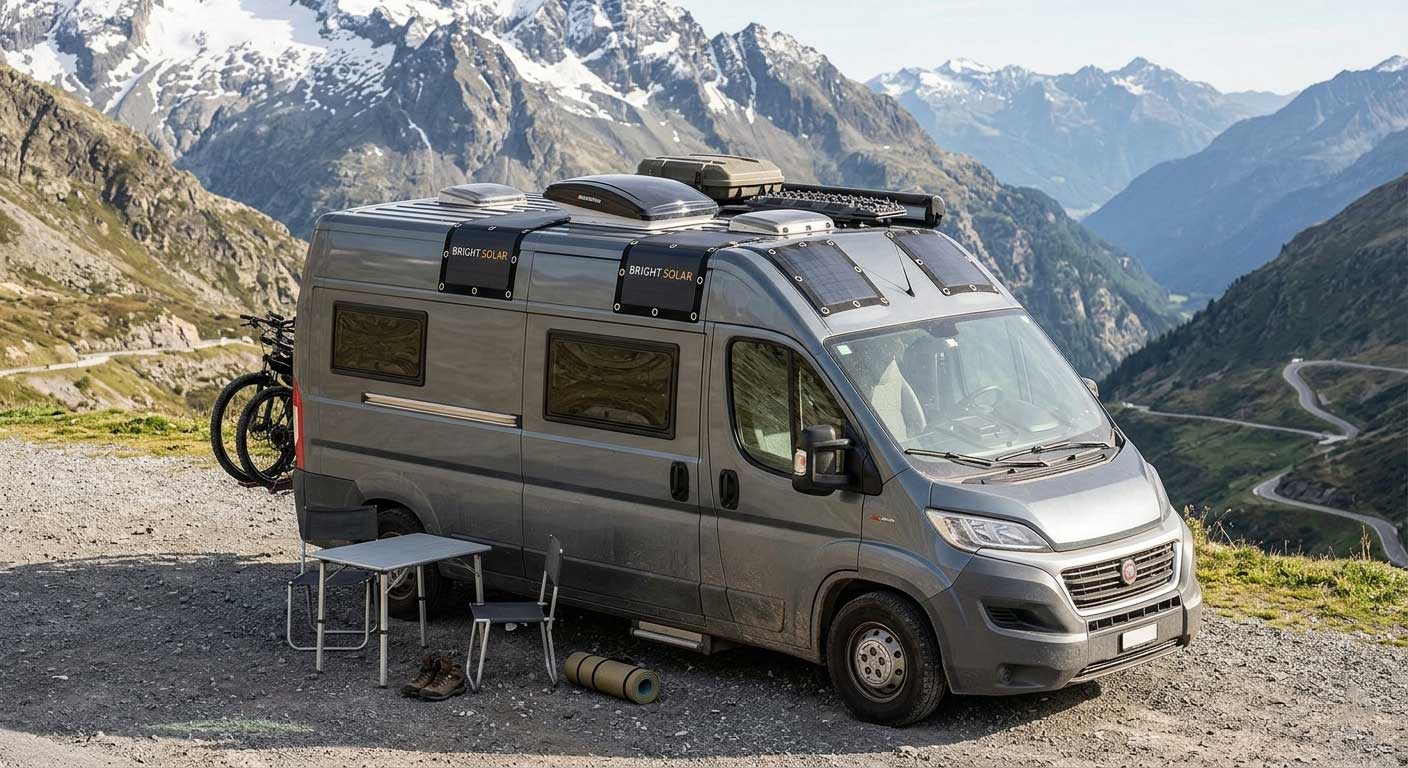
Small flexible solar panels allow installers to use irregular roof sections that would otherwise remain unused.
One Bright Solar customer in Germany added two 50W flexible panels around a roof vent instead of removing the vent entirely. The result was enough daily energy to support lighting, USB charging, and refrigeration monitoring.
Not every solar project needs hundreds of watts.
Sometimes 100W in the right location solves the problem.
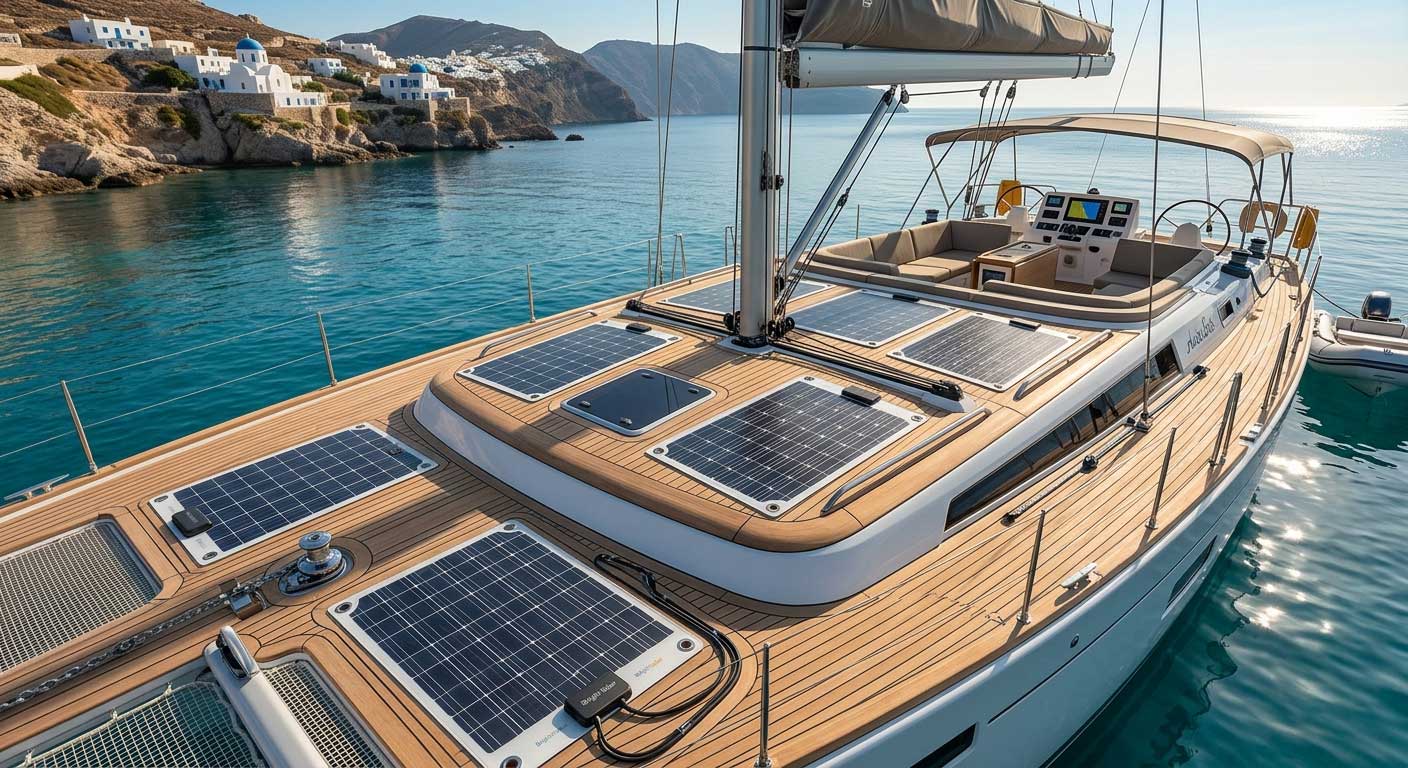
Marine Solar Installations
Marine environments present unique challenges.
Every kilogram matters.
Every square centimeter matters.
Boat owners frequently use small flexible solar panels for:
- Navigation equipment
- Communication systems
- Battery maintenance
- Cabin lighting
The curved surfaces commonly found on sailboats make flexible panels particularly valuable.
Traditional framed panels often require complicated mounting structures.
Flexible panels typically do not.
Portable Outdoor Power
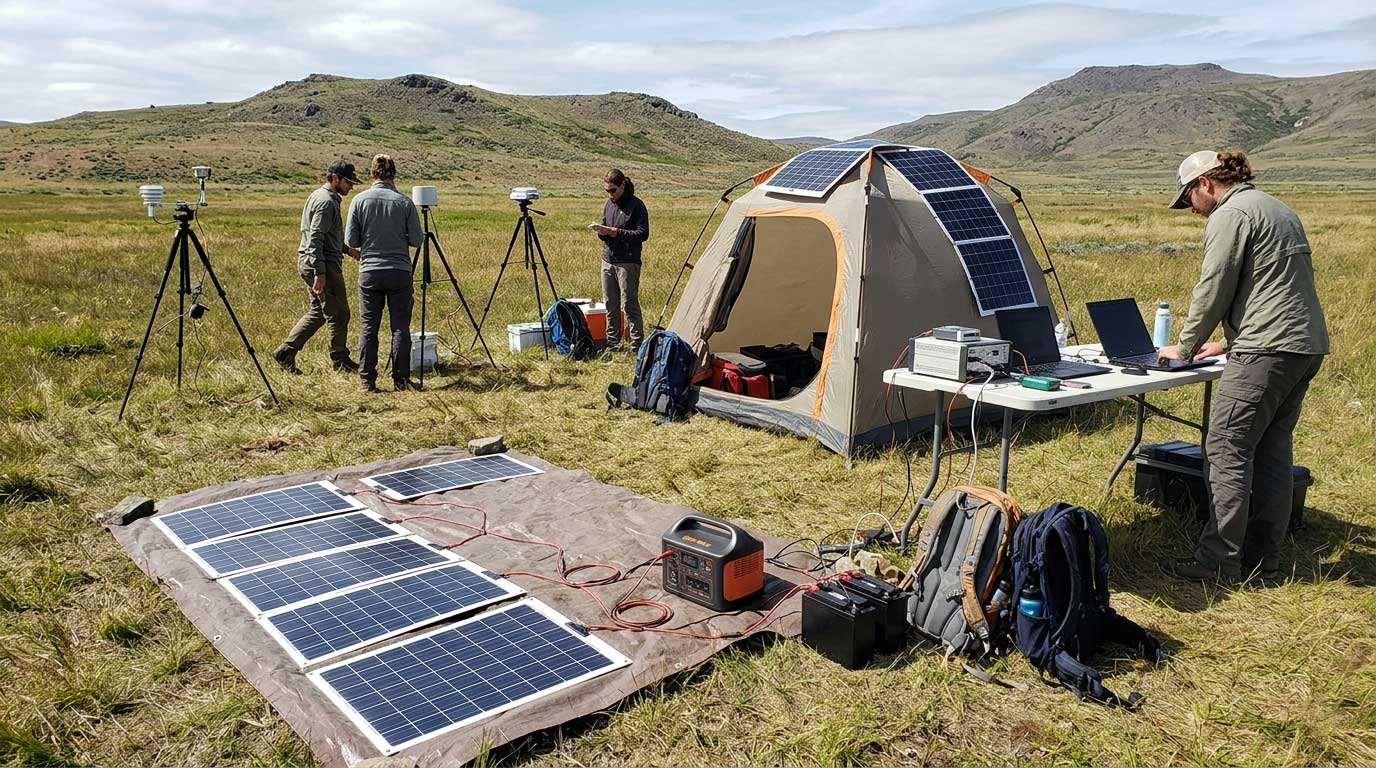
Outdoor professionals increasingly use small flexible solar panels alongside portable power stations.
Applications include:
- Wildlife research
- Field surveying
- Emergency response
- Photography expeditions
Weight savings become significant during extended travel.
A lightweight solar setup that fits inside a backpack creates possibilities unavailable with conventional equipment.
Why Lightweight and Flexible Solar Designs Continue Expanding
Lightweight Solar Panels for Mobile Homes and Modular Living Spaces
One trend that has become increasingly visible over the past few years is the growing demand for lightweight solar panels for mobile homes and compact living spaces.View more about:lightweight solar panels for mobile homes
Traditional framed modules work well on permanent buildings, but many mobile homes were never designed to carry large rooftop loads. Weight distribution becomes an important consideration, particularly on older structures.
At Bright Solar, we’ve seen more customers choosing lightweight solar panels for mobile home installations because they want to add renewable energy without reinforcing the roof structure. In many cases, reducing several kilograms per panel makes installation simpler and lowers long-term stress on the roof.
A similar pattern is appearing in prefabricated construction. Developers working with container buildings and temporary facilities are increasingly exploring lightweight solar for modular buildings where transport weight, installation speed, and roof load limitations all influence equipment selection.
Flexible PV Panels and Flexible Solar Power Panels in Space-Constrained Projects
Not every solar project has the luxury of wide-open roof space.
Some installations involve curved surfaces, equipment housings, utility trailers, communication shelters, or compact recreational vehicles. In these situations, flexible solar power panels often provide installation options that conventional modules cannot.
Modern flexible PV panels combine lightweight construction with respectable power output, allowing installers to utilize irregular mounting areas more effectively.
One customer working on a mobile environmental monitoring station had less available roof space than expected after antennas and sensors were installed. Instead of redesigning the enclosure, he used flexible solar technology to fit around existing equipment. The solution wasn’t complicated, but it worked.
Sometimes flexibility creates opportunities that additional wattage cannot.
Mini Flexible Solar Panels and Narrow Solar Panel Designs
Large modules dominate residential solar discussions.
Field applications tell a different story.
Mini flexible solar panels are frequently used for battery maintenance, remote sensors, portable electronics, marine instruments, and low-power communications equipment. Their appeal is not maximum energy production. It is targeted power generation in locations where larger panels would be impractical.
Similarly, a narrow solar panel can solve layout problems on crowded roofs.
I’ve seen campervan builders install slim solar modules alongside roof vents, cargo racks, and skylights where standard panel dimensions simply would not fit. The total system output was modest, but the available roof area was utilized far more efficiently.
That kind of design flexibility often matters more than raw panel size.
Bendable Solar Panel Technology and Flexible Solar Sheets
People sometimes use different terms for similar products.
You’ll hear phrases such as bendable solar panel, flexible solar sheets, lightweight flexible modules, or ultra-thin solar laminates. While construction methods vary between manufacturers, the basic objective remains the same: deliver solar power where rigid glass panels create installation challenges.
In practice, these products are commonly selected for:
- campervans
- sailboats
- mobile homes
- portable energy systems
- curved roof structures
- temporary field equipment
One thing I’ve noticed after reviewing numerous Bright Solar customer projects is that the success of a bendable solar installation rarely depends on the maximum bending angle advertised by the manufacturer.
More often, success comes down to practical details:
- proper mounting surfaces
- heat management
- waterproof cable routing
- realistic power expectations
The technology itself is mature enough for many mobile applications. The installation still determines the outcome.
How Efficient Are Small Flexible Solar Panels?
Efficiency is often misunderstood.
Many buyers assume small automatically means weak.
That assumption is outdated.
Modern monocrystalline flexible solar cells frequently achieve efficiency levels exceeding 20%.
According to the National Renewable Energy Laboratory (NREL), ongoing photovoltaic advancements continue improving cell performance across multiple solar technologies.
Reference Source:
https://www.nrel.gov/
What matters most is not panel size.
What matters is:
- Cell efficiency
- Sun exposure
- Temperature management
- Installation quality
A properly positioned 100W flexible panel can easily outperform a larger panel suffering from poor placement.
Solar energy has always been highly dependent on context.
Weight Advantages Over Traditional Solar Panels
Weight becomes increasingly important in mobile systems.
A comparison illustrates the difference:
| Solar Panel Type | Typical Weight (100W) |
|---|---|
| Traditional Glass Panel | 6–9 kg |
| Lightweight Composite Panel | 2–4 kg |
| Small Flexible Solar Panel | 1.5–3 kg |
For vehicle applications, reducing roof weight can improve:
- Vehicle stability
- Fuel efficiency
- Payload capacity
- Installation flexibility
These benefits are difficult to appreciate until you’ve worked on a heavily loaded roof.
Then every kilogram starts to matter.
Common Misconceptions About Small Flexible Solar Panels
Some myths continue to circulate online.
Most are outdated.
“Flexible Panels Are Always Less Efficient”
Not necessarily.
Cell technology has improved dramatically.
Many premium flexible panels now use the same high-efficiency monocrystalline cells found in rigid modules.
“Flexible Panels Are Only for Camping”
Flexible solar technology is now widely used in:
- Marine systems
- Commercial vehicles
- Industrial monitoring equipment
- Emergency infrastructure
Their use extends far beyond recreational applications.
“Small Panels Cannot Produce Meaningful Power”
Power demand matters.
A remote sensor requiring 20Wh per day does not need a 400W array.
Proper system sizing remains more important than maximum wattage.
Installation Considerations
Flexible solar panels simplify installation.
That does not mean installation details can be ignored.
Experienced installers focus on:
- Surface preparation
- Cable protection
- Heat dissipation
- Waterproof routing
- UV-resistant materials
One recurring issue involves airflow.
Panels bonded directly to hot surfaces may operate at higher temperatures.
Heat reduces solar performance.
Good installers account for this from the beginning.
A marine technician we worked with summarized it well:
“The panel isn’t usually the weak point. The installation is.”
That observation has proven remarkably consistent.
Small Flexible Solar Panels vs Portable Foldable Panels
Both products target mobile energy users.
However, they solve different problems.
| Feature | Small Flexible Solar Panels | Foldable Solar Panels |
|---|---|---|
| Permanent Installation | Yes | No |
| Weight | Very Low | Low |
| Mobility | Moderate | High |
| Weather Resistance | Excellent | Moderate |
| Space Efficiency | Excellent | Moderate |
Many RV owners combine both systems.
Permanent rooftop charging during travel.
Portable folding panels when parked.
The combination often works surprisingly well.
Durability and Lifespan Expectations
Buyers often ask:
“How long will small flexible solar panels last?”
The answer depends heavily on quality.
Premium products designed for outdoor use can withstand:
- UV exposure
- Rain
- Salt spray
- Vibration
- Thermal cycling
The International Electrotechnical Commission (IEC) publishes testing standards that many solar manufacturers use to evaluate environmental durability.
Reference Source:
https://www.iec.ch/
The biggest durability factor is often installation quality rather than panel technology itself.
Poor cable routing causes more failures than solar cells.
That reality surprises many first-time buyers.
FAQ About Small Flexible Solar Panels
Are small flexible solar panels waterproof?
Most outdoor-rated models are designed to withstand rain and environmental exposure, but installation practices remain important.
Can small flexible solar panels charge batteries?
Yes. They are commonly used with charge controllers to maintain or recharge batteries in RVs, boats, and portable systems.
Do flexible solar panels work on curved surfaces?
Yes. Slight flexibility allows installation on many curved roofs, decks, and vehicle surfaces.
Are small flexible solar panels suitable for boats?
Absolutely. Marine applications remain one of the most common uses due to limited space and weight restrictions.
How much power can a small flexible solar panel produce?
Output depends on wattage, sunlight conditions, and installation angle. Many systems provide sufficient power for lighting, electronics, communications equipment, and battery maintenance.
Final Thoughts on Small Flexible Solar Panels
The appeal of small flexible solar panels is not simply their size.
It is their adaptability.
They bring solar energy to locations where traditional panels often cannot go.
At Bright Solar, we have seen them installed on:
- Campervans crossing Europe
- Offshore sailboats
- Wildlife monitoring stations
- Portable emergency systems
- Remote communications equipment
Each project looked different.
The common thread was limited space.
As solar technology continues evolving, flexibility may become just as important as efficiency.
For many mobile and off-grid applications, small flexible solar panels already prove that point every day.
Related recommendations
-

Top Rated RV Solar Panels: How to Choose the Right One
203The best RV solar panels balance power, roof space, weight, efficiency, durability, shading, and battery-system compatibility rather than maximizing wattage ...
View details -
flexible solar panels for rv (Real Field Engineering Guide from Bright Solar)
107flexible solar panels for rv explained with real installation cases, durability insights, RV roof design tips, and off-grid performance data for travelers.
View details -
Best Solar Panel Setup for RV and Off-Grid Systems: Complete Guide
204Discover the best solar panel setup for RV and off-grid systems with wiring options, battery sizing, MPPT controllers, and flexible solar panel solutions.
View details -
Flexible solar panel 200w home: Lightweight Solar Power for Modern Homes
122Discover flexible solar panel 200w home solutions from Bright Solar. Learn how 200W flexible panels support home backup power, installation tips, output, and real applications.
View details