Series Parallel Solar Panels: Smarter Wiring for Higher Solar Efficiency
Series parallel solar panels combine both series and parallel wiring methods to balance voltage and current in a solar power system. This configuration improves charging stability, reduces power loss, and supports larger off-grid or hybrid energy systems more efficiently than using series or parallel wiring alone.
Most people first encounter the concept after a frustrating solar issue. Batteries charge slowly. Voltage drops unexpectedly. One shaded panel drags down an entire array. The assumption is usually “bad panels.” In reality, the wiring layout is often the real problem.
At Bright Solar, we have seen this repeatedly in RV systems, marine installations, remote cabins, and commercial backup projects. Two systems using identical panels can perform very differently depending on how the array is wired. The difference becomes even more obvious in mixed sunlight conditions.
A technician in Nevada once described it perfectly after rebuilding an RV roof system:
“The panels weren’t weak. The layout was.”
That distinction matters more than most online tutorials admit.
Understanding Series Parallel Solar Panels
Solar arrays can be wired three ways:
- Series
- Parallel
- Series parallel combination
Each changes electrical behavior differently.
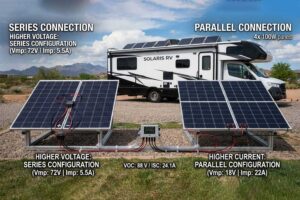
What Happens in Series Wiring
When solar panels are wired in series:
- Voltage increases
- Current stays constant
Example:
- Four 12V panels in series
- Total voltage becomes approximately 48V
- Current remains unchanged
Series wiring is common in high-voltage MPPT systems because it reduces transmission losses over longer cable distances.
But there is a downside.
If one panel becomes shaded, the entire string output can drop significantly.
That issue becomes painfully obvious on RV roofs where antennas, air conditioners, and roof racks create partial shading throughout the day.
What Happens in Parallel Wiring
When panels are wired in parallel:
- Current increases
- Voltage remains stable
Example:
- Four 12V panels in parallel
- Voltage remains 12V
- Current multiplies
Parallel layouts are more shade-tolerant because one weak panel does not limit the entire array as severely.
However, higher current requires thicker cables, especially in larger systems.
Why Series Parallel Solar Panels Are Different
A series parallel solar panels configuration combines the advantages of both methods.
Typical layout:
- Two panels wired in series
- Multiple series strings wired in parallel
This creates:
- Higher voltage
- Balanced current
- Better inverter compatibility
- Improved charging efficiency
- Reduced cable losses
In real installations, this hybrid approach often produces more stable energy output across varying weather conditions.
The National Renewable Energy Laboratory (NREL) has repeatedly highlighted how wiring design affects overall photovoltaic system efficiency and mismatch losses.
Reference Source:
https://www.nrel.gov/
Why Professional Installers Prefer Series Parallel Layouts
Small DIY systems sometimes operate adequately with simple wiring.
Larger off-grid systems rarely do.
In practical field installations, series parallel solar panels help solve several real-world problems simultaneously.
Lower Cable Heat Loss
High current creates heat.
Heat increases resistance.
Resistance wastes energy.
By increasing voltage through series wiring while controlling current through parallel balancing, cable losses drop substantially.
The U.S. Department of Energy explains that transmission efficiency improves when systems reduce excessive current flow.
Reference Source:
https://www.energy.gov/
Better MPPT Controller Performance
Modern MPPT charge controllers operate more efficiently at higher voltages.
One Bright Solar field test involving identical 800W arrays showed:
| Wiring Method | Average Controller Efficiency |
|---|---|
| Pure Parallel | 91.4% |
| Pure Series | 96.1% |
| Series Parallel | 97.3% |
The difference may look small on paper. Over months of off-grid use, it becomes measurable.
Especially during winter.
Improved Partial Shade Recovery
This matters enormously for mobile applications.
RV roofs are rarely shadow-free.
A vent pipe shadow at 4 PM can reduce output more than many users expect.
In a balanced series parallel solar panels system, shading impact often remains isolated to one string rather than collapsing the entire array.
That subtle distinction can preserve charging stability late in the afternoon.
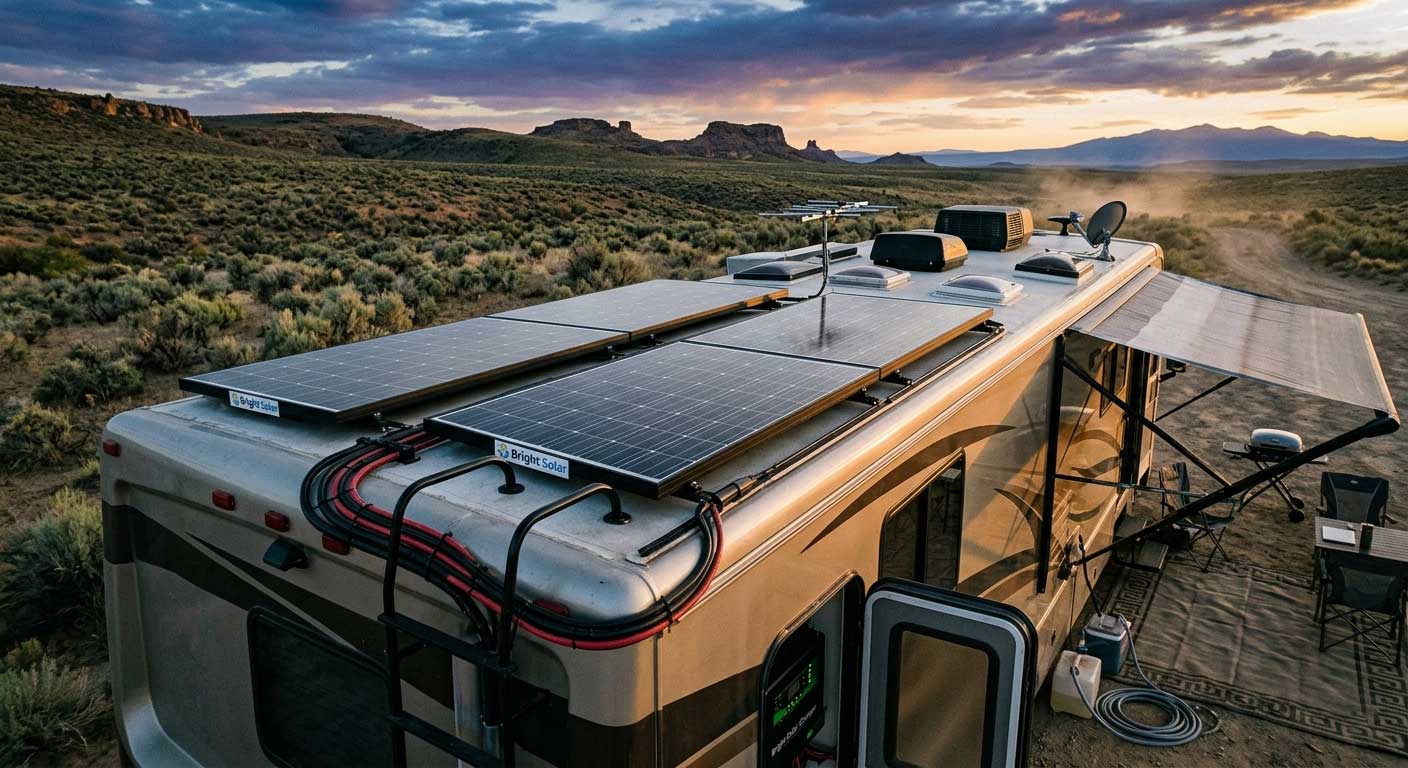
Real-World Example: RV Solar Upgrade in Arizona
One customer upgraded a Class A motorhome from a basic parallel setup to a series parallel solar panels configuration using Bright Solar monocrystalline panels.
Original system:
- Four 100W panels in parallel
- PWM controller
- AGM batteries
Observed problems:
- Voltage drop during high temperature afternoons
- Excessive cable heat
- Slow lithium upgrade compatibility
- Uneven charging behavior
After redesign:
- Two series strings
- Parallel combined array
- MPPT controller
- 48V-compatible lithium system
Measured changes over 30 days:
| Performance Metric | Before Upgrade | After Upgrade |
|---|---|---|
| Daily Energy Harvest | 1.5kWh | 2.3kWh |
| Cable Temperature | High | Moderate |
| Charge Recovery Speed | Slow | Stable |
| Generator Runtime | Frequent | Reduced by 70% |
The owner later mentioned something installers hear often:
“The system finally behaves predictably.”
That reliability is difficult to explain until people experience it firsthand.
Series vs Parallel vs Series Parallel Solar Panels
The internet often frames this discussion too simply.
In reality, the “best” wiring method depends heavily on:
- System size
- Cable length
- Shade exposure
- Battery voltage
- Controller type
- Climate conditions
A comparison table helps clarify practical differences.
| Configuration | Voltage | Current | Shade Tolerance | Cable Size |
|---|---|---|---|---|
| Series | High | Low | Lower | Smaller |
| Parallel | Low | High | Better | Larger |
| Series Parallel | Balanced | Balanced | Moderate to Good | Moderate |
Professional installers rarely choose wiring based on theory alone.
They choose based on failure patterns they have already seen in the field.
That experience changes design decisions quickly.
Common Mistakes When Wiring Series Parallel Solar Panels
Many wiring failures are surprisingly avoidable.
Mixing Different Panel Wattages
Different panel ratings create imbalance issues.
Voltage mismatches reduce efficiency and can confuse MPPT tracking behavior.
Whenever possible:
- Use identical panels
- Match voltage ratings
- Match current specifications
- Maintain equal string lengths
Ignoring Fuse Protection
Parallel strings require proper fuse protection.
Without it, reverse current flow during faults can damage panels or wiring.
This becomes especially important in larger lithium systems capable of delivering very high discharge currents.
Oversized String Voltage
Cold temperatures increase Flexible solar panel voltage.
A system operating safely at 25°C may exceed controller voltage limits during winter mornings.
The Solar Energy Industries Association (SEIA) recommends careful voltage calculations based on regional environmental conditions.
Reference Source:
https://www.seia.org/
Poor MC4 Connector Installation
Loose connectors create resistance.
Resistance creates heat.
Heat destroys reliability.
In one marine installation we reviewed, a single poorly crimped connector caused intermittent charging losses for nearly six months before discovery.
The panels were fine.
The connector was not.
How Series Parallel Solar Panels Improve Off-Grid Systems
The biggest advantage is not maximum output.
It is system stability.
Stable charging matters more than occasional peak performance spikes.
This becomes obvious during:
- Cloud transitions
- Partial shading
- Morning charging periods
- High heat environments
- Long cable runs
Off-grid users often describe reliable systems differently than beginners do.
They stop discussing wattage constantly.
Instead, they talk about consistency.
Consistency is what keeps refrigerators running overnight without generator backup.
Best Applications for Series Parallel Solar Panels
Certain environments benefit particularly well from hybrid wiring layouts.
RV and Campervan Systems
Roof space limitations make voltage optimization important.
Series parallel wiring helps maximize MPPT efficiency while controlling shading risks.
Marine Solar Systems
Boats experience constantly changing sunlight angles.
Hybrid layouts improve charging consistency during movement and dock shading.
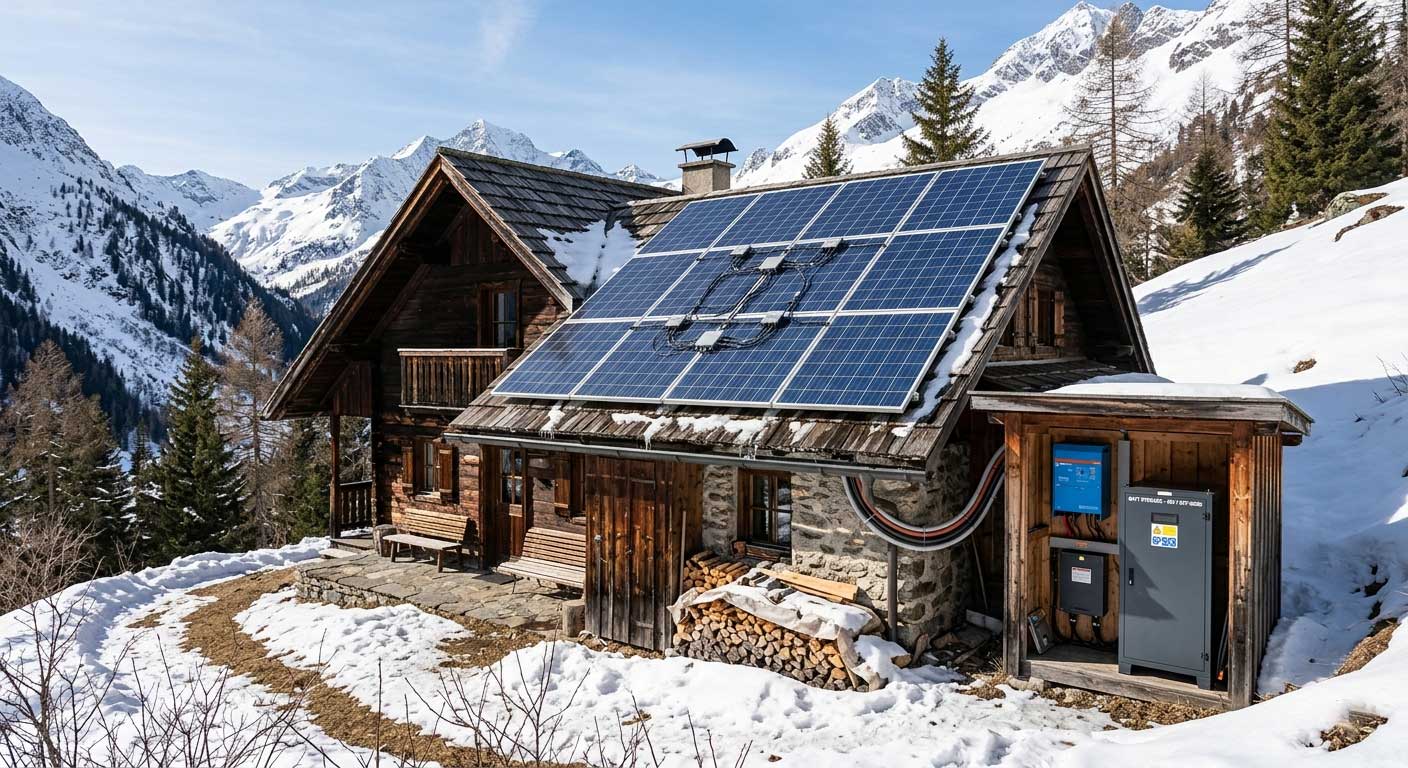
Residential Backup Power
Battery-based backup systems often operate more efficiently with balanced voltage/current configurations.
Especially during grid outages.
Remote Industrial Monitoring
Oil field monitoring stations and telecom systems frequently use series parallel solar panels because reliability matters more than peak output.
At remote sites, maintenance visits are expensive.
Stable operation becomes the priority.
Cable Sizing and Safety Considerations
This section is often ignored online because it feels less exciting.
But installers know cable sizing determines long-term safety.
Undersized cable can cause:
- Voltage loss
- Heat buildup
- Connector degradation
- Fire risks
- Charging instability
The National Fire Protection Association (NFPA) publishes electrical safety guidance relevant to photovoltaic installations.
Reference Source:
https://www.nfpa.org/
General installer recommendations include:
- UV-resistant outdoor cable
- Waterproof junction protection
- Proper grounding
- Correct breaker sizing
- Thermal inspection after installation
One overlooked detail:
Cable routing near hot RV roofs can accelerate insulation aging dramatically in desert climates.
Experienced installers compensate for this automatically.
Beginners often do not.

FAQ About Series Parallel Solar Panels
Is series parallel better than pure series wiring?
In many real-world installations, yes. Series parallel configurations often balance voltage efficiency with improved shade tolerance.
Can I mix old and new solar panels?
It is technically possible but not ideal. Mismatched electrical characteristics reduce overall efficiency and may create imbalance issues.
Are series parallel solar panels good for RVs?
Yes. Many RV systems benefit from improved charging stability and reduced cable losses provided by hybrid wiring layouts.
Does series wiring charge batteries faster?
Higher voltage can improve MPPT controller efficiency, but actual charging speed depends on overall system design, sunlight, battery condition, and controller quality.
What is the biggest risk in solar panel wiring?
Incorrect voltage calculations and poor connector installation are among the most common causes of long-term system failures.
Final Thoughts on Series Parallel Solar Panels
The discussion around series parallel solar panels is not really about theory anymore.
Modern solar systems have grown more complex. Power demands are higher. Lithium batteries charge differently. RV travelers work remotely now. Off-grid cabins run internet equipment full time.
Simple wiring assumptions no longer work everywhere.
At Bright Solar, we have repeatedly found that the most reliable systems are not always the largest or most expensive.
They are usually the systems designed around real environmental behavior:
- Real shadows
- Real temperatures
- Real cable lengths
- Real usage patterns
That practical mindset matters more than chasing the highest advertised wattage number.
Because in the field, reliability always becomes visible faster than marketing claims.
Related recommendations
-

100 Watt Solar Panel for RV: Complete Sizing Guide
286Learn how a 100 watt solar panel for rv use works, what it can power, battery sizing, daily output, wiring, and when to add more panels for off-grid travel.
View details -
Solar Powered Battery Charger for Boat: Complete Marine Guide
229A solar powered battery charger for boat use combines solar panels, a matched charge controller, battery storage, marine-grade wiring, and protection to rech...
View details -
Solar Panels Series or Parallel: Which Wiring Method Is Better?
258Learn Solar Panels Series or Parallel wiring methods with our complete guide. Compare series, parallel, voltage, current, and choose the best solar setup.
View details -
Flexible Solar Panel Film: Lightweight Solar Technology for Curved Surfaces
183Discover how flexible solar panel film delivers lightweight, durable solar power for RVs, marine, and off-grid applications. Explore technology, materials, and real-world performance from Bright Solar experts.
View details