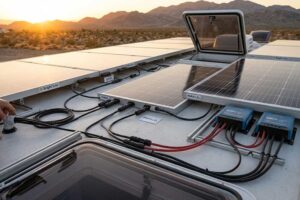
flexible solar panels for van roof: Lightweight Solar Solution for Camper Conversions
Flexible solar panels for van roof provide a lightweight and adaptable power solution for campervans, converted vans, and mobile living vehicles. They fit curved roofs, reduce installation weight, and support off-grid energy needs.
At Bright Solar, we design flexible photovoltaic solutions based on real outdoor applications. Van conversions are different from residential solar projects. A campervan roof has limited space, constant vibration during driving, and strict weight considerations.
After working with mobile energy applications, we found that many van owners do not need the largest solar system. They need a solar panel that fits their lifestyle, survives road conditions, and uses every available roof area efficiently.
A successful van solar system depends on:
- Roof design
- Energy consumption
- Panel flexibility
- Installation method
- Long-term durability
The right solution is not simply adding more watts. It is creating a balanced energy system for life on the road.
What are flexible solar panels for van roof?
Flexible solar panels for van roof are lightweight photovoltaic modules designed specifically for campervans, converted vans, and mobile off-grid applications.
Unlike traditional rigid solar panels, flexible models use lightweight materials that allow them to adapt to curved vehicle surfaces.
A typical flexible van solar panel includes:
| Component | Function |
|---|---|
| Monocrystalline solar cells | Convert sunlight into electricity |
| ETFE protective coating | Improves UV and weather resistance |
| Flexible backing layer | Allows curved installation |
| Encapsulation material | Protects internal components |
| Junction box | Provides electrical connection |
Van roofs are often complicated spaces.
They may include:
- Roof vents
- Air conditioners
- Skylights
- Storage equipment
- Curved surfaces
Flexible solar technology allows better use of available roof space.
Why choose flexible solar panels for van roof?
Van owners usually have different priorities compared with homeowners.
A house may have hundreds of square feet of roof area.
A van may only have a few square meters.
Every centimeter matters.
Lightweight design for better vehicle efficiency
Weight is a major consideration during van conversion.
A converted vehicle already carries:
- Bed systems
- Kitchen equipment
- Water tanks
- Batteries
- Storage cabinets
Adding heavy solar equipment increases the total vehicle load.
Flexible solar panels offer advantages:
- Lower weight
- Easier transportation
- Reduced roof stress
- Simplified installation
For small campervans, weight savings can make a noticeable difference.Visit the product page: Flexible Solar Panel for RV
Better fit for curved van roofs
Most commercial vans do not have perfectly flat roofs.
Common examples include:
- Sprinter vans
- Transit vans
- Ducato conversions
- Camper conversions
Rigid solar panels often require:
- Mounting brackets
- Extra clearance
- More installation hardware
Flexible panels can follow the roof shape more naturally.
This creates a cleaner appearance and reduces installation complexity.
How do flexible solar panels for van roof work?
Flexible van solar panels work through the photovoltaic effect.
The process is simple:
- Solar cells capture sunlight
- Photovoltaic materials generate DC electricity
- Charge controller regulates power
- Battery stores energy
- Van appliances use stored electricity
A complete system usually includes:
Flexible Solar Panel → MPPT Controller → Battery → Van Electrical System
What can flexible van solar panels power?
A properly designed solar system can support:
| Equipment | Application |
|---|---|
| LED lighting | Interior illumination |
| Laptop computers | Remote work |
| Mobile phones | Daily charging |
| Fans | Ventilation |
| Refrigerators | Food storage |
| Cameras and equipment | Travel activities |
Many van travelers use solar power to reduce dependence on:
- Campsite electricity
- Fuel generators
- External charging stations
How much power do flexible solar panels for van roof produce?
Solar output depends on several conditions:
- Panel wattage
- Geographic location
- Sunlight availability
- Installation angle
- Temperature
A simple calculation:
Daily Energy = Solar Wattage × Peak Sun Hours × System Efficiency
Example:
A 200W flexible solar panel system:
200W × 5 peak sunlight hours × 80%
≈800Wh daily energy production
This can support basic campervan electrical needs.
According to the National Renewable Energy Laboratory (NREL), photovoltaic performance depends on solar radiation, module characteristics, temperature, and system design.
For van applications, energy planning is more important than selecting the highest wattage panel.
Real application case: Flexible solar panels for van roof conversion
Bright Solar worked with a camper conversion customer in France who transformed a commercial van into a weekend adventure vehicle.
The main requirements were:
- Keep roof weight low
- Maintain clean appearance
- Generate enough energy for travel equipment
The original plan used rigid solar panels.
However, the customer faced several challenges:
- Limited roof space
- Uneven roof surface
- Additional mounting weight
The flexible solar solution allowed better roof utilization.
The final system supported:
- Interior lighting
- Laptop charging
- Portable refrigerator
- Communication devices
The project showed an important point:
For mobile solar systems, installation efficiency can be more valuable than simply increasing panel size.

Flexible solar panels for van roof vs rigid solar panels
Both technologies can provide renewable energy, but their applications are different.
| Feature | Flexible Solar Panels | Rigid Solar Panels |
|---|---|---|
| Weight | Lightweight | Heavier |
| Roof compatibility | Curved surfaces | Flat surfaces |
| Installation | Simple | Requires brackets |
| Appearance | Low profile | More visible |
| Maintenance | Application dependent | Easier replacement |
Flexible panels are often preferred for:
- Compact vans
- Stealth camper conversions
- Lightweight builds
- Custom roof designs
Rigid panels remain popular for:
- Large RVs
- Flat roof systems
- Maximum power installations
How to install flexible solar panels for van roof?
A proper installation process includes several steps.
Step 1: Measure the available roof space
Check:
- Roof dimensions
- Obstructions
- Cable routes
- Shadow areas
Do not install panels before confirming placement.
Step 2: Prepare the roof surface
Clean the surface carefully.
Remove:
- Dust
- Oil
- Dirt
- Moisture
A clean surface improves attachment reliability.
Step 3: Connect the electrical system
A typical setup includes:
- Solar panel
- Charge controller
- Battery
- Inverter
Professional wiring protection is important because vans experience constant movement.

Detailed Installation Guide for flexible solar panels for van roof
Installing flexible solar panels for van roof requires more attention than simply attaching a panel to the vehicle surface. A van is constantly moving, so the solar system must handle vibration, weather changes, and long-term outdoor exposure.
At Bright Solar, we recommend treating a van solar installation as a complete energy project rather than a simple panel installation.
The installation process should consider:
- Roof structure
- Panel position
- Adhesion strength
- Cable protection
- Electrical safety
A well-designed installation can improve reliability and reduce future maintenance.
Step 1: Select the best roof location
Before installation, inspect the entire van roof.
Important factors include:
| Consideration | Reason |
|---|---|
| Sunlight exposure | Improves daily energy production |
| Roof obstacles | Prevents shading problems |
| Cable distance | Reduces wiring complexity |
| Roof shape | Determines panel compatibility |
Common roof obstacles include:
- Ventilation fans
- Roof racks
- Skylights
- Air conditioning units
Even a small shadow can reduce solar output because photovoltaic cells are connected together electrically.
<h3>Step 2: Prepare the van roof surface</h3>
Surface preparation is one of the most important installation steps.
Recommended process:
Clean the surface
Remove:
- Dust
- Road pollution
- Oil residue
- Water stains
Dry completely
The roof must be completely dry before installation.
Test positioning
Before final attachment:
- Place the panel temporarily
- Check alignment
- Confirm cable direction
Many installation failures are caused by rushing this step.
Step 3: Attach flexible solar panels securely
There are two common installation approaches.
Adhesive installation
This is widely used for campervan conversions.
Advantages:
- No drilling
- Lower weight
- Cleaner appearance
- Reduced leakage risk
Suitable for:
- Camper vans
- Stealth builds
- Lightweight conversions
Important installation details:
- Use outdoor-rated adhesive
- Ensure full surface contact
- Avoid trapped air pockets
Mechanical mounting
Mechanical mounting uses brackets or supports.
Advantages:
- Easy replacement
- Additional ventilation
- Adjustable positioning
However, it can add:
- Extra weight
- More hardware
- Higher installation complexity
For many van conversions, adhesive installation provides the best balance between simplicity and performance.
Electrical System Design for flexible solar panels for van roof
A complete van solar system normally includes:
Flexible Solar Panel → Charge Controller → Battery → Inverter → Appliances
Each component affects system performance.
Choosing the right solar controller
The charge controller manages electricity between the solar panel and battery.
Common options:
| Type | Characteristics |
|---|---|
| PWM Controller | Simple and affordable |
| MPPT Controller | Higher energy harvesting efficiency |
MPPT controllers are commonly selected for van conversions because solar conditions change during travel.
Factors include:
- Parking direction
- Weather
- Shade
- Seasonal sunlight
Battery selection for van solar systems
The battery determines how much stored energy is available.
Common choices:
| Battery Type | Advantages |
|---|---|
| Lithium battery | Lightweight, high usable capacity |
| AGM battery | Reliable, lower initial cost |
| Lead-acid battery | Traditional option |
Many modern camper conversions use lithium batteries because weight is important in mobile applications.
Maintenance Tips for flexible solar panels for van roof
Flexible solar panels require limited maintenance, but regular inspection improves long-term performance.
Recommended checks:
Monthly inspection
Check:
- Cable connections
- Panel surface
- Junction box
- Adhesive condition
Before long trips
Inspect:
- Roof attachment
- Wiring protection
- Battery connection
- Controller operation
Cleaning schedule
Remove:
- Dust
- Leaves
- Bird residue
- Road contamination
A clean panel surface allows more sunlight to reach photovoltaic cells.
How much do flexible solar panels for van roof cost?
The cost depends on:
- Panel wattage
- Solar cell technology
- Installation method
- Supporting equipment
Typical price range:
| System Size | Estimated Cost |
|---|---|
| 100W flexible van solar panel | $100–$200 |
| 200W flexible van solar system | $250–$500 |
| 400W complete van solar system | $600–$1,500 |
| Full camper electrical system | $1,500–$5,000+ |
A complete installation may include:
- Flexible solar panels
- MPPT controller
- Battery
- Inverter
- Wiring
- Safety equipment
According to the Solar Energy Industries Association (SEIA), solar system costs depend on equipment selection, installation complexity, and project requirements.
For van conversions, the cheapest option is not always the most economical. Reliability matters because remote travelers may have limited repair options.
Why choose Bright Solar flexible solar panels for van roof?
Bright Solar focuses on developing flexible solar products for applications where traditional solar panels are difficult to install.
Our experience covers:
- Mobile energy systems
- Marine applications
- Outdoor solar solutions
- Customized photovoltaic products
Designed for mobile environments
Van solar panels experience different conditions compared with fixed rooftop systems.
They must handle:
- Road vibration
- Changing temperatures
- Outdoor exposure
- Frequent movement
Product design needs to consider real usage conditions.
Flexible customization options
Different van projects have different requirements.
Bright Solar can provide customization including:
| Custom Option | Benefit |
|---|---|
| Panel size | Fits limited roof space |
| Cable length | Matches vehicle layout |
| Connector selection | Improves compatibility |
| Power output | Meets energy requirements |
This supports:
- Camper manufacturers
- RV builders
- Outdoor equipment companies
- Individual van conversions

FAQ About flexible solar panels for van roof
Are flexible solar panels good for van roofs?
Yes. Flexible solar panels are ideal for many van conversions because they are lightweight, adaptable, and suitable for curved roof surfaces.
Can flexible solar panels be installed without drilling?
Yes. Many van owners use adhesive installation methods that avoid drilling holes and reduce roof leakage risks.
How many watts of solar do I need for a campervan?
The required wattage depends on daily electricity usage. Small vans often use 100W–300W systems, while larger builds may require higher capacity.
Can flexible solar panels power a refrigerator in a van?
Yes. With proper system sizing and battery storage, flexible solar systems can support portable or built-in refrigerators.
Are flexible solar panels waterproof?
Quality flexible solar panels are designed for outdoor environments and include protective layers against moisture and weather exposure.
Do flexible solar panels work in winter?
Yes. They can generate electricity in winter, although shorter daylight hours and lower sunlight intensity may reduce output.
How long do flexible solar panels for van roof last?
Lifespan depends on product quality, materials, installation, and environmental exposure. High-quality flexible solar panels are designed for long-term outdoor use.
Conclusion: Are flexible solar panels for van roof the right choice?
Flexible solar panels for van roof provide a practical renewable energy solution for camper conversions, mobile homes, and off-grid travelers who need lightweight and adaptable solar power.
They offer important advantages:
- Lower installation weight
- Better roof compatibility
- Cleaner appearance
- Flexible application options
For van owners, solar energy is not only about electricity generation.
It is about freedom.
A reliable solar system allows travelers to stay longer away from traditional power sources and explore remote locations with greater confidence.
At Bright Solar, we focus on creating flexible photovoltaic solutions that match real-world mobility requirements.
The best van solar system is the one that fits the vehicle, supports daily energy needs, and continues performing through thousands of kilometers of travel.
Related recommendations
-

Solar Pergolas for Outdoor Living and Clean Energy Generation
145Discover how solar pergolas combine shade, clean energy, and modern outdoor living. Learn design options, costs, performance, and installation insights from Bright Solar.
View details -
Solar Panels Series or Parallel: Which Wiring Method Works Better?
143Learn whether solar panels series or parallel wiring is better for RVs, boats, homes, and off-grid systems. Compare efficiency, shading, and performance.
View details -
Solar Panels in Parallel vs Series: A Complete Guide to Solar Panel Wiring
305Solar panels in parallel vs series explained with voltage, current, wiring methods, shading effects, and installation tips. Learn the best solar connection method with Bright Solar.
View details -
Best RV Solar Kit for Off-Grid Travel
197Find the best rv solar kit for off-grid travel. Learn how to size solar panels, batteries, charge controllers and wiring for reliable RV power.
View details