Lightweight Solar Panels for Mobile Homes
Lightweight solar panels for mobile homes offer a practical way to generate electricity without adding excessive roof weight. Modern lightweight and flexible solar technologies can reduce roof loading by 50–80% compared to traditional glass panels while still providing dependable power for appliances, lighting, battery storage, and off-grid living.
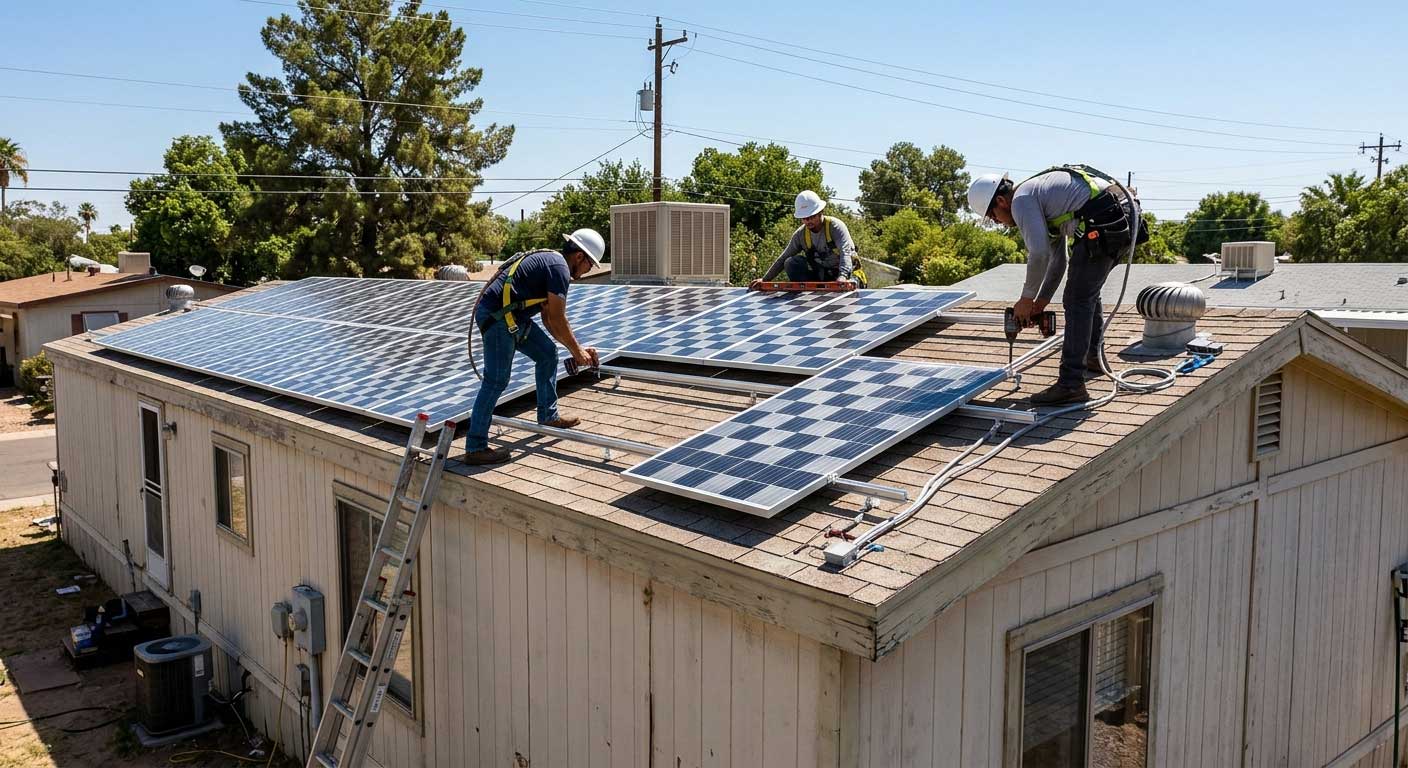
A few years ago, I climbed onto the roof of a mobile home in Arizona where the owner had already received two conflicting recommendations.
One installer wanted to use conventional framed panels.
The other insisted flexible modules were the only option.
Neither conversation focused on the actual roof.
That was the problem.
The roof structure determines everything.
Before discussing watts, batteries, or inverters, I always start with weight.
Not because solar panels are heavy.
Because mobile home roofs often aren’t designed like standard residential roofs.
At Bright Solar, our team has worked on solar projects involving RVs, marine vessels, cabins, travel trailers, and mobile homes across different climates. One lesson appears repeatedly: successful installations begin with understanding structural limitations before electrical requirements.
That’s especially true when discussing lightweight solar panels for mobile homes.
Why Weight Matters More on Mobile Homes
Traditional residential homes generally have stronger roof structures.
Mobile homes are different.
Many were designed decades ago with roofing systems optimized for affordability rather than future solar installations.
Adding several hundred pounds of equipment can affect:
- Roof deflection
- Fastener performance
- Water intrusion risk
- Long-term structural durability
This becomes more significant in older units.
A homeowner often sees solar as an electrical project.
An experienced installer sees it as both a structural and electrical project.
Those are not the same thing.
Understanding Typical Roof Load Concerns
A conventional residential solar panel typically weighs between 40 and 50 pounds (18–23 kg).
According to specifications published by major manufacturers such as Canadian Solar and Trina Solar, standard glass-framed modules commonly fall within this range.
Source:
A lightweight solar panel may weigh substantially less.
Some flexible modules weigh under 6 pounds (2.7 kg) per panel.
The difference becomes meaningful when installing multiple panels.
Consider this comparison:
| Solar Panel Type | Typical Weight |
|---|---|
| Standard Glass Panel | 40–50 lbs |
| Lightweight Composite Panel | 8–15 lbs |
| Flexible Solar Panel | 4–8 lbs |
A six-panel installation could reduce roof loading by well over 200 pounds.
That’s not a marketing statistic.
That’s a structural advantage.
The Shift Toward Lightweight Solar Technology
Ten years ago, lightweight solar options often meant sacrificing efficiency.
That gap has narrowed considerably.
Modern lightweight modules frequently use:
- Monocrystalline solar cells
- Composite backing materials
- ETFE protective coatings
- Reinforced polymer substrates
The result is a product that combines lower weight with respectable energy production.
According to the International Energy Agency (IEA), solar module efficiency improvements have continued steadily over the past decade as manufacturers refine cell technologies and production processes.
Source:
Today’s lightweight panels are dramatically different from early-generation flexible products that struggled with durability and performance consistency.
Mobile Home Owners Are Solving Different Problems Than House Owners
One mistake I see online is advice written for traditional residential rooftops being applied directly to mobile homes.
The priorities aren’t identical.
A homeowner in a suburban neighborhood may prioritize:
- Maximum production
- Lowest cost per watt
- Long-term energy savings
A mobile home owner often prioritizes:
- Roof weight
- Ease of installation
- Structural compatibility
- Limited roof space
- Reduced maintenance
The conversation changes.
Weight becomes part of the economics.
How Much Power Does a Mobile Home Actually Need?
Many people immediately search for the largest system they can afford.
That’s usually backward.
Start with consumption.
During a recent energy audit for a full-time mobile home resident in New Mexico, daily consumption averaged roughly:
| Appliance | Daily Usage |
|---|---|
| LED Lighting | 0.5–1.5 kWh |
| Refrigerator | 1–2 kWh |
| Electronics | 0.5–1 kWh |
| Water Pump | 0.2–0.5 kWh |
| Miscellaneous Loads | 1–2 kWh |
Daily demand ranged between 4 and 7 kWh.
That is significantly lower than many conventional houses.
Yet it supported comfortable daily living.
The lesson is simple.
Energy efficiency often reduces system costs more effectively than purchasing additional panels.
Flexible vs Lightweight Rigid Panels
The internet often treats these categories as interchangeable.
They aren’t.
Flexible Panels
Advantages:
- Extremely lightweight
- Low-profile appearance
- Easier installation on curved surfaces
Limitations:
- Generally shorter service life
- Higher operating temperatures
- Potentially lower long-term durability
Lightweight Rigid Panels
Advantages:
- Better heat dissipation
- Higher durability
- Stronger structural support
Limitations:
- Slightly heavier
- More mounting hardware required
In practice, the best solution depends on the specific roof rather than online trends.
I have recommended flexible panels for some projects and lightweight rigid panels for others.
The roof decides.
Not the marketing brochure.
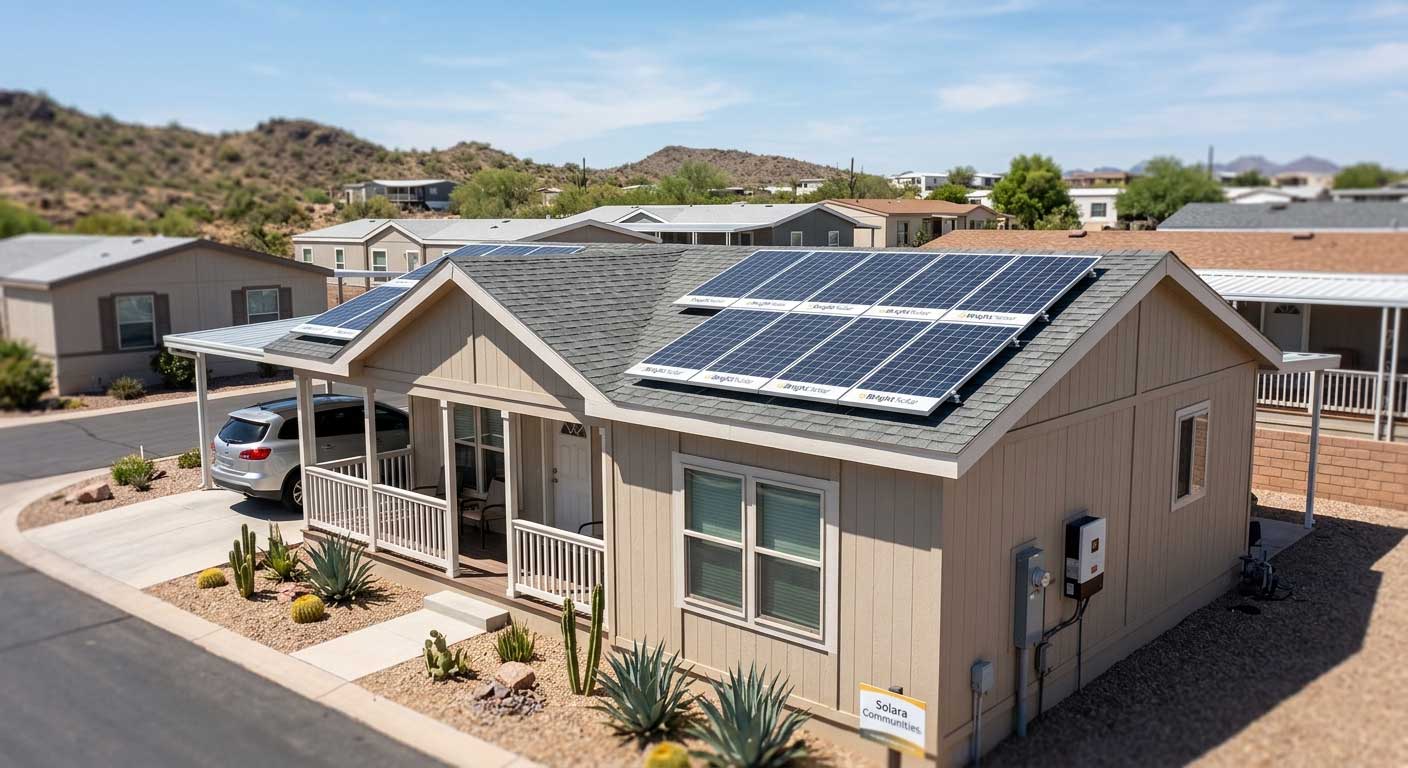
Real Installation Case Study: Southern Arizona Mobile Home
One project involved a retired couple living year-round in a mobile home community near Tucson.
Their goals were straightforward:
- Lower utility costs
- Avoid major roof reinforcement
- Maintain a clean roof appearance
Initial estimates using traditional glass modules increased total roof loading significantly.
After reviewing the structure, we selected lightweight modules.
The final system included:
- 1.8 kW solar array
- Lithium battery storage
- MPPT charge controller
- Hybrid inverter
Within the first year, utility consumption declined noticeably.
More importantly, the homeowners avoided structural modifications that would have increased project costs substantially.
That outcome often gets overlooked.
Sometimes the biggest savings aren’t electrical.
They’re structural.
Roof Space Is Often More Important Than Roof Weight
Weight receives attention.
Space deserves equal consideration.
Mobile homes typically offer less usable roof area than conventional houses.
Common obstacles include:
- Roof vents
- Air conditioning units
- Antennas
- Skylights
- Plumbing penetrations
The challenge becomes fitting sufficient solar production into a limited footprint.
This is where higher-efficiency monocrystalline panels often provide an advantage.
More energy can be generated from the same available area.
The economics improve quickly when roof space becomes the limiting factor.
Weather Exposure Creates Different Challenges
A mobile home in Florida experiences very different conditions than one in Colorado.
I’ve inspected installations in both.
The contrast is striking.
Florida systems often battle:
- Humidity
- Salt exposure
- Hurricane winds
Colorado systems face:
- Snow loads
- Freeze-thaw cycles
- Rapid temperature changes
Panel selection should reflect local conditions.
The “best panel” in one climate may not be the best panel elsewhere.
Too many buying guides ignore this reality.
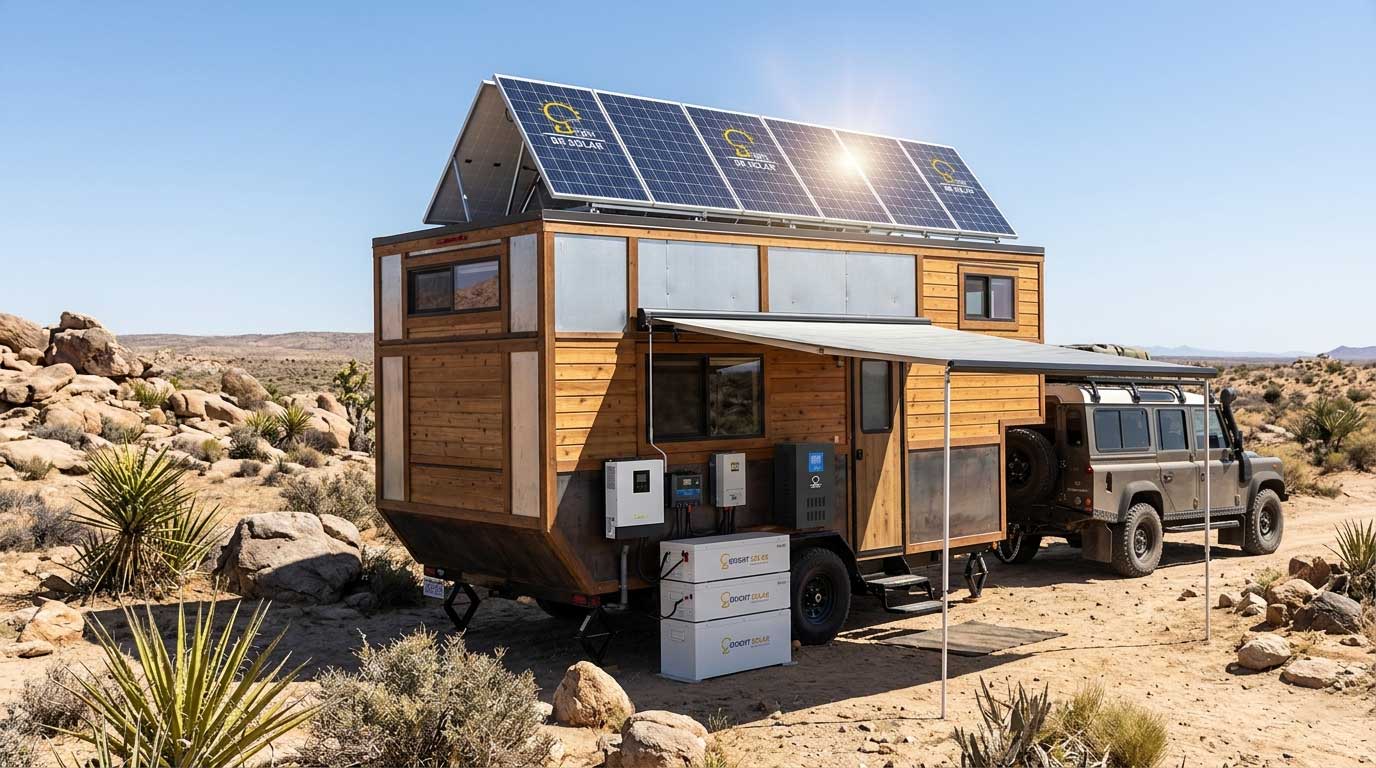
The Battery Conversation Nobody Wants to Have
When people shop for solar, they usually focus on panels.
Panels are visible.
Batteries are expensive.
That creates an imbalance.
A poorly sized battery bank can undermine an excellent solar array.
For mobile homes, storage frequently determines:
- Overnight autonomy
- Backup capability
- Energy independence
- System reliability
The most successful systems are balanced.
Oversized panels paired with undersized batteries rarely perform as expected.
That reality becomes obvious after sunset.
Long-Tail Keyword Section: Mobile Home Solar Power System Design
Many searches related to lightweight solar panels for mobile homes eventually lead to a larger question:
“What does a complete mobile home solar power system look like?”
A typical system includes:
- Solar panels
- Charge controller
- Battery bank
- Inverter
- Monitoring equipment
- Mounting hardware
- Safety disconnects
The specific sizing depends entirely on energy consumption patterns.
Two mobile homes of identical size can have dramatically different electrical requirements.
Usage matters more than square footage.
Cost Analysis: Are Lightweight Solar Panels Worth the Premium?
A question I hear frequently is whether lightweight solar panels justify their higher upfront price.
The answer depends on what costs you’re comparing.
Many buyers only compare panel prices per watt.
Experienced installers compare total project costs.
There is a difference.
A standard glass-panel system might cost less per watt but require:
- Additional roof reinforcement
- More complex mounting hardware
- Higher labor costs
- Additional waterproofing work
A lightweight system may reduce or eliminate those expenses entirely.
I remember a mobile home project in Nevada where structural modifications were estimated at nearly $2,400 before a single solar panel was installed.
Switching to lightweight composite modules removed most of that requirement.
The panel cost increased.
The total project cost decreased.
That’s why cost-per-watt can be misleading.
The correct metric is total installed system cost.
Typical Cost Comparison
| System Type | Average Installed Cost |
|---|---|
| Standard Glass Solar | $2.50–$3.50/W |
| Lightweight Solar System | $2.80–$4.20/W |
| Flexible Solar System | $3.00–$5.00/W |
Actual pricing varies by region, roof condition, and electrical requirements.
The key takeaway is simple:
The cheapest panel is not always the cheapest project.
Long-Term Energy Savings for Mobile Home Owners
According to data published by the U.S. Energy Information Administration (EIA), the average residential electricity price in the United States has increased significantly over the past decade.
Source:
For mobile home owners in states with high electricity costs, solar can provide meaningful savings.
Consider a mobile home consuming approximately 7,000 kWh annually.
At an electricity rate of $0.18 per kWh:
Annual electric cost:
7,000 × $0.18 = $1,260
Over 20 years:
$25,200
That calculation excludes future utility rate increases.
Solar doesn’t eliminate every bill.
But it can significantly reduce exposure to rising energy costs.
The Installation Mistakes I See Repeatedly
After reviewing dozens of mobile home solar projects, the same mistakes appear repeatedly.
Not technical failures.
Planning failures.
Mistake #1: Buying Panels Before Measuring Roof Space
Many homeowners purchase panels first.
Then discover:
- Air conditioners block placement
- Roof vents reduce usable area
- Shading impacts production
The roof should be mapped before equipment is selected.
Always.
Mistake #2: Ignoring Heat
Solar panels produce electricity.
They also absorb heat.
Mobile homes located in Arizona, Nevada, Texas, and Southern California can experience roof temperatures exceeding 150°F (65°C).
Poor airflow beneath panels reduces efficiency.
Thermal management matters.
Mistake #3: Undersized Battery Storage
Many people budget heavily for panels and minimize battery capacity.
The result:
Great daytime production.
Limited nighttime usability.
Solar systems should be balanced.
Mobile Home Solar Performance in Different Climates
Climate changes everything.
One reason generic solar advice often fails is because weather conditions vary dramatically.
Desert Regions
Advantages:
- High annual solar production
- Minimal snow concerns
Challenges:
- Extreme heat
- UV degradation
- Dust accumulation
Coastal Regions
Advantages:
- Moderate temperatures
Challenges:
- Salt exposure
- Corrosion risk
- Humidity
Northern States
Advantages:
- Improved panel efficiency in cooler temperatures
Challenges:
- Snow loads
- Reduced winter sunlight
This is why Bright Solar engineers evaluate environmental conditions before recommending equipment.
The same panel behaves differently in Arizona than it does in Maine.
Mobile Home Solar ROI: A Real-World Scenario
Let’s use a realistic example.
System Size:
4 kW
Annual Production:
Approximately 5,500–6,500 kWh depending on location.
Electricity Cost:
$0.17 per kWh
Annual Savings:
Approximately $935–$1,105
Estimated Installed Cost:
$9,000–$14,000
Simple Payback:
8–12 years
However, this calculation ignores:
- Utility inflation
- Tax incentives
- State rebates
- Increased property appeal
Actual ROI can be significantly better.
Long-Tail Keyword Section: Flexible Solar Panels for Mobile Homes
Many mobile homeowners researching lightweight solar panels eventually compare them to flexible solar panels for mobile homes.
The two technologies overlap but serve slightly different priorities.
Flexible panels are often selected when:
- Roof weight is extremely limited
- Roof surfaces are curved
- Low-profile appearance is desired
Lightweight rigid panels are often selected when:
- Maximum lifespan matters
- Higher energy production is required
- Better heat dissipation is needed
Neither option is universally superior.
Project requirements determine the right solution.
What I Would Do If This Were My Own Mobile Home
People often ask what I would install personally.
The answer surprises them.
I wouldn’t start with panels.
I’d start with an energy audit.
After that I would:
- Upgrade lighting to LED.
- Improve insulation where possible.
- Measure daily consumption.
- Map roof space.
- Evaluate structural capacity.
- Select panel technology.
Most successful projects follow this sequence.
Most failed projects don’t.
Solar should solve an energy problem.
Not create an engineering problem.
Industry Trends Driving Lightweight Solar Adoption
The market for lightweight solar technology continues expanding.
According to the International Renewable Energy Agency (IRENA), continued advancements in solar manufacturing are reducing costs while improving performance.
Source:
Several trends are accelerating adoption:
- Improved monocrystalline cell efficiency
- Better polymer materials
- Enhanced UV resistance
- Reduced panel thickness
- Lower transportation costs
The technology available today is dramatically better than products available even five years ago.
FAQ: Lightweight Solar Panels for Mobile Homes
Are lightweight solar panels durable enough for permanent installation?
Yes. Quality lightweight panels are designed for long-term outdoor exposure and can provide many years of service when installed correctly.
Can lightweight solar panels power an entire mobile home?
Yes. A properly sized system with battery storage can supply most or all daily energy needs depending on consumption levels.
Are flexible solar panels better than lightweight rigid panels?
Not necessarily. Flexible panels prioritize low weight and adaptability, while lightweight rigid panels often provide better lifespan and thermal performance.
Do lightweight solar panels work in cloudy weather?
Yes. Production decreases during cloud cover, but modern monocrystalline panels continue generating electricity under diffuse sunlight.
How many panels does a mobile home need?
Most systems fall between 2 kW and 8 kW depending on energy usage, roof area, and desired level of energy independence.
Can I install lightweight solar panels myself?
DIY installation is possible, but structural assessments, electrical connections, and permitting requirements often justify professional assistance.
Final Thoughts on Lightweight Solar Panels for Mobile Homes
The biggest misconception about lightweight solar panels for mobile homes is that they exist only to reduce weight.
Weight reduction is important.
But it isn’t the whole story.
The best systems create a balance between structural safety, energy production, durability, installation simplicity, and long-term economics.
Over the years, I’ve seen homeowners spend months comparing panel efficiency differences of one or two percentage points while overlooking roof limitations that ultimately determined the project’s success.
The roof comes first.
The solar equipment comes second.
When designed properly, lightweight solar panels for mobile homes can provide reliable power, lower utility costs, reduce structural concerns, and support greater energy independence for decades.
Related recommendations
-

1000 Watt Solar Panel: Reliable Solar Power for Off-Grid and Home Energy Systems
3241000 watt solar panel systems provide powerful off-grid and backup energy solutions. Learn real output, installation tips, efficiency, and sizing.
View details -
Flexible Fabric Solar Panels: Uses, Design and Buying Guide
105Flexible fabric solar panels integrate photovoltaic technology with lightweight fabric-compatible structures for portable, curved, and flexible applications.
View details -
300 w flexible solar panel (High-Power Mobile Energy System Guide from Bright Solar)
264300 w flexible solar panel explained with real RV field performance data, installation insights, energy output behavior, and off-grid system design notes.
View details -
Folding Portable Solar Panels: Uses, Setup and Buying Guide
104Folding portable solar panels provide mobile solar power for camping, RVs, emergency backup, outdoor work, and portable power stations.
View details